
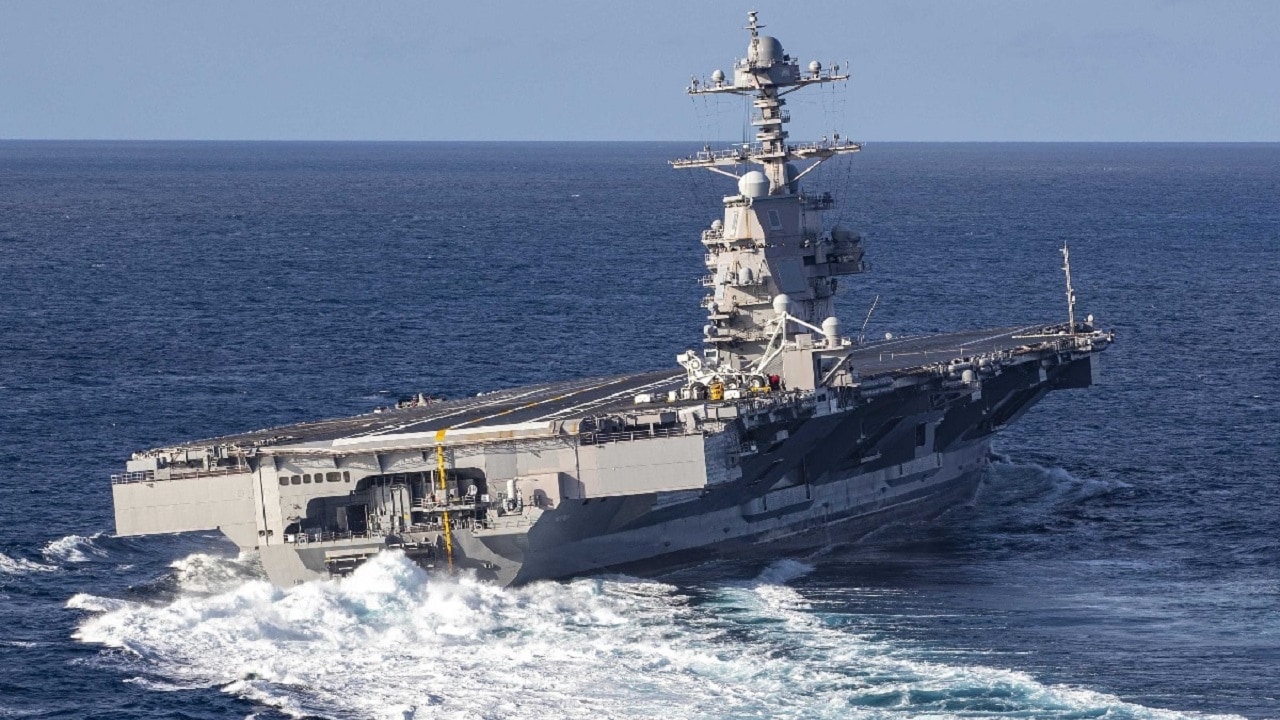
Key Points and Summary – Once mocked as an overpriced, late, and possibly obsolete mistake, the Ford-class is quietly becoming the centerpiece of America’s future at sea. No wonder the U.S. Navy sent this aircraft carrier, the largest ever, to waters near Venezuela.
-USS Gerald R. Ford and her follow-ons bring game-changing tech: EMALS for smoother, higher-tempo launches; Advanced Arresting Gear that cuts manning and maintenance; and A1B reactors that generate far more power for sensors, weapons, and future systems.
-Paired with F/A-18E/Fs, F-35Cs, and eventually F/A-XX plus MQ-25 tankers, these carriers are built to fight from outside China’s anti-ship missile envelope. Expensive? Yes. But over a 50-year life, they redefine what U.S. naval power projection looks like.
The Ford-Class ‘Crisis’ Is Over: Why America’s New Supercarriers Just Got a Reboot
The Ford-class aircraft carriers, just a few years ago, suffered from what I would call a crisis of reputation. Many experts panned them as overpriced, late, and obsolete.
But, now, the good news: The Ford-class is having a moment for sure, and that reputation is getting a little bit of a reboot.
In fact, the U.S. Navy’s Ford-class supercarriers are ushering in a new era of naval warfare.
They may be expensive — the USS Gerald R. Ford has set the Navy back $13.3 billion — but they are built for the long haul. As carriers are meant to do, they will project power, keep sea lines of communication open, deter enemies, and secure freedom of navigation in the Indo-Pacific and other regions.
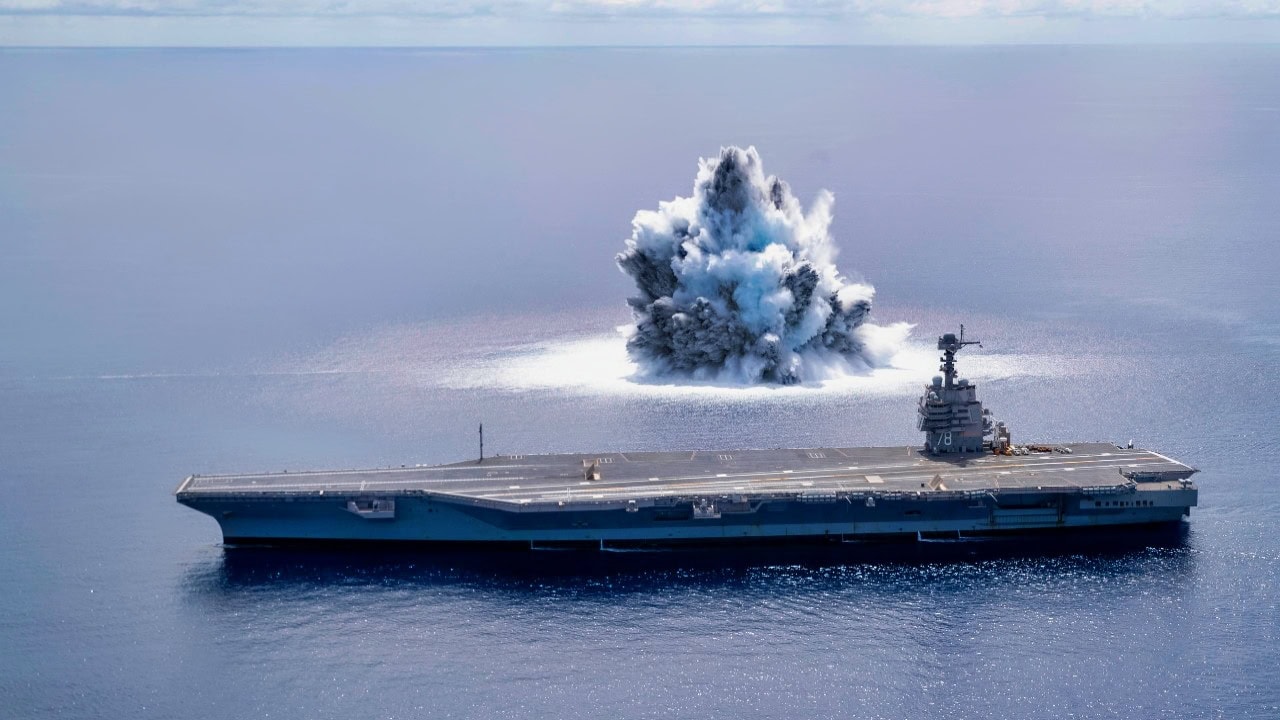
The aircraft carrier USS Gerald R. Ford (CVN 78) completes the first scheduled explosive event of Full Ship Shock Trials while underway in the Atlantic Ocean, June 18, 2021. The U.S. Navy conducts shock trials of new ship designs using live explosives to confirm that our warships can continue to meet demanding mission requirements under harsh conditions they might encounter in battle. (U.S. Navy photo by Mass Communication Specialist 3rd Class Riley B. McDowell)
The Ford-class features standout new flight deck technologies, a better radar and sensor system, and modern, state-of-the-art nuclear reactors, along with the ability to launch and arrest F-35C Lightning II fighter jets. Maybe someday they will also deploy the F/A-XX sixth-generation warplane.
EMALS Is Second-to-None
The electromagnetic aircraft launch system (EMALS) stands apart from its predecessor technologies. The EMALS allows for smoother launches and generates a higher sortie rate. The Gerald R. Ford is the first carrier with an EMALS, and it is a big improvement over the steam-powered launch systems on the Nimitz-class. Its acceleration is a boon for all types of aircraft, in particular for F/A-18 E/F Super Hornets and F-35Cs fully loaded with munitions. It can also launch lighter aircraft, such as drones.
The Navy claims the EMALS will have “better reliability and efficiency; more accurate end-speed control and smoother acceleration; expanded operational capability with increased sortie rates; and cost reduction over time due to decreased manning and maintenance requirements.”
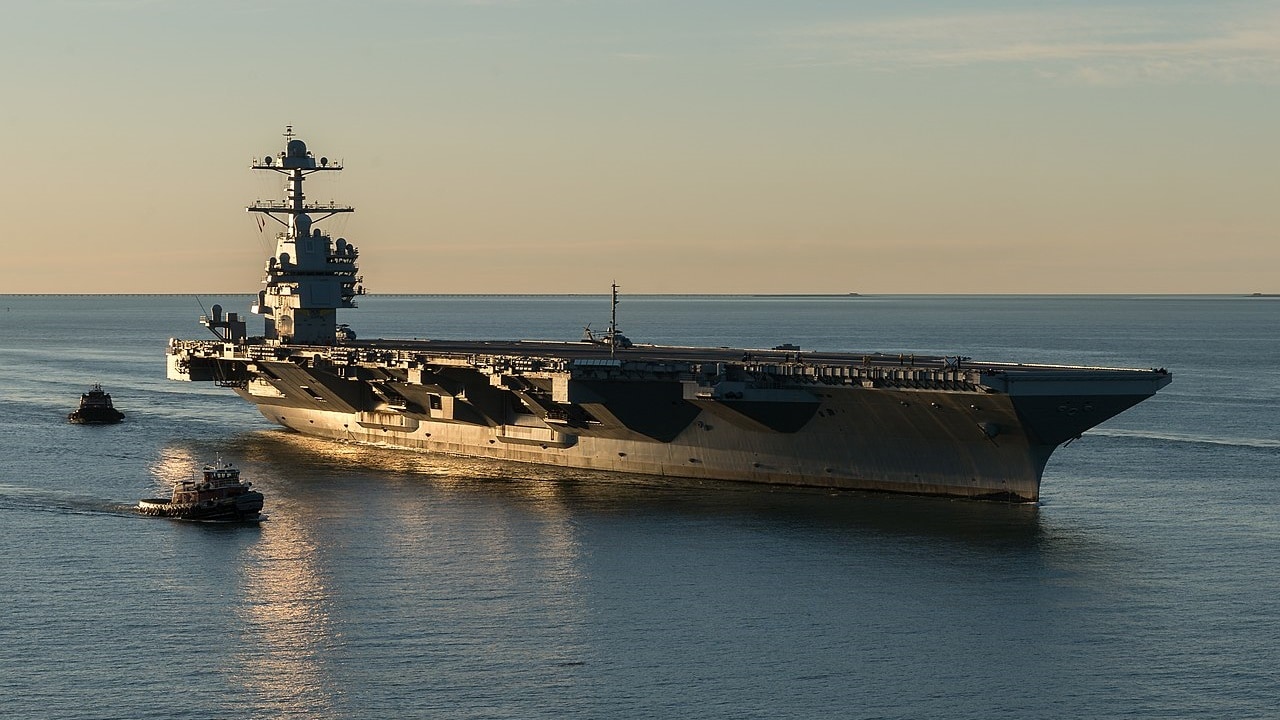
Ford-Class Aircraft Carrier. Image Credit: Creative Commons.
Advanced Arresting Gear Needs Less Maintenance
The advanced arresting gear (AAG) is an improvement over previous systems to arrest aircraft on carriers. The “AAG is a modular, integrated system consisting of energy absorbers, power conditioning equipment and digital controls,” NAVAIR said.
The AAG will be more reliable, with shorter maintenance periods. It will be safer, reducing accidents that could send aircraft overboard. There are fewer sailors needed to operate the system. This manpower advantage, and the lesser need for repairs, pays for itself by saving funds that can be spent on other technologies.
Better Nuclear Reactors
The Ford-class carriers incorporate two modern A1B nuclear reactors. These propel the ship and power the electricity on board. The A1B is an improved reactor compared to the A4W, with a 25 percent increase in thermal power output.
The A1B produces 125 megawatts of electricity and 350,000 shaft horsepower. Fewer personnel are needed to operate the reactors, and less maintenance is required, which will save even more funds over the long run.
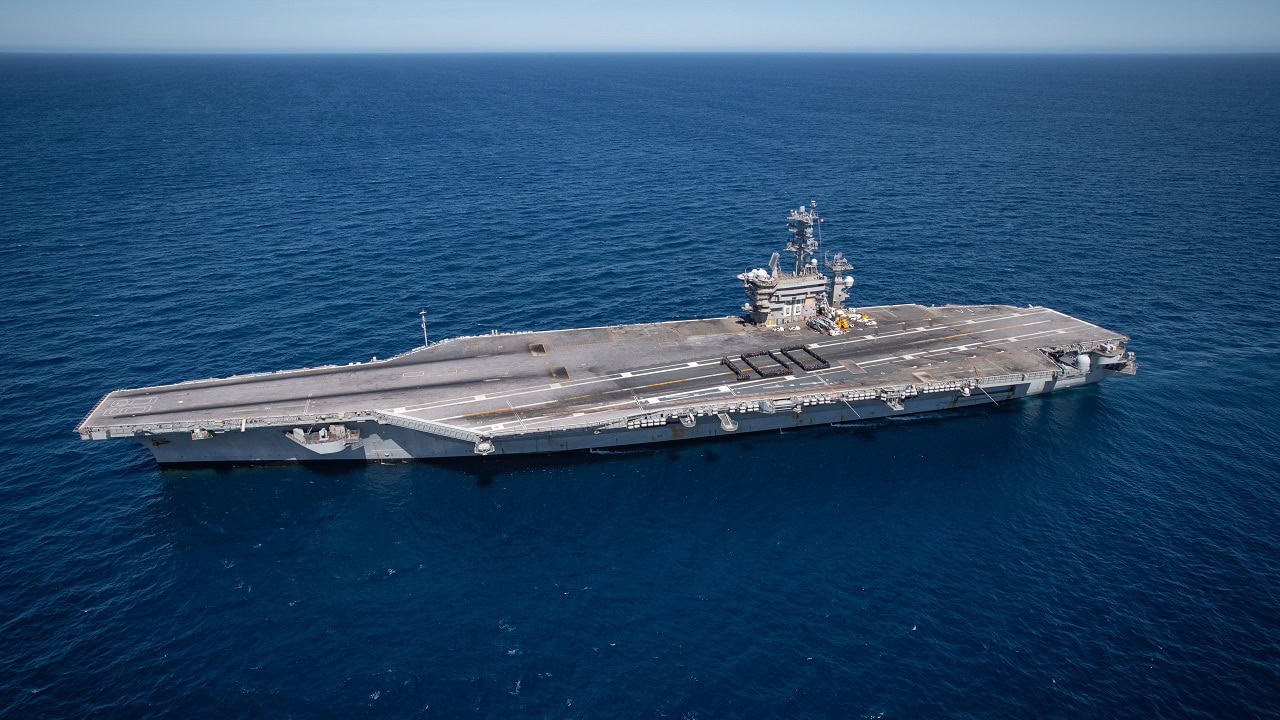
(Mar. 12, 2022) Sailors aboard USS Nimitz (CVN 68) assemble on the flight deck and form a human ‘100’ to commemorate the centennial of the aircraft carrier. On March 20, 1922 the former USS Jupiter (Collier #3) recommissioned as the USS Langley (CV 1), the U. S. Navy’s first aircraft carrier. One hundred years later, Nimitz and Ford-class aircraft carriers are the cornerstone of the Navy’s ability to maintain sea control and project power ashore. Nimitz is the first in its class and the oldest commissioned aircraft carrier afloat., carrying with it a legacy of innovation, evolution and dominance. Nimitz is underway in the 3rd Fleet Area of Operations. (U.S. Navy photo by Mass Communication Specialist 3rd Class Elliot Schaudt)
Radar Systems Are Only Getting Better
The Gerald R. Ford has dual band radar, but the future John F. Kennedy will have the Enterprise air surveillance radar, or EASR. This will be one of the best radar systems in the fleet perfect for identifying, tracking, and helping destroy targets from enemy airplanes; anti-ship carrier-killing missiles; and drones of the type that were so prevalent in recent engagements with the Houthis in the Red Sea and Gulf of Aden.
As Kris Osborn writes, “EASR uses gallium nitride (GaN) semiconductor technology and builds upon standard hardware, software, and processing elements of the Navy’s next-generation AN/SPY-6(V) Air and Missile Defense Radar now on the service’s Flight III DDG 51 destroyers.”
Fighter Jet Squadrons Are the Best in the World
Fighter wings on the Ford-class carriers for now comprise Super Hornets and F-35Cs, but someday they may include the future F/A-XX. The stealthy F-35C can bring the fight to the enemy while remaining virtually undetectable. The Super Hornet is exceptionally maneuverable and speedy. Both are great dogfighters with the ability to destroy targets on the ground. They match up well against Russian and Chinese fighters.
If the Navy proceeds with its proposed F/A-XX sixth-generation fighter, the outcome for naval warfighters will be exceptional. The F/A-XX will likely have next-generation traits such as ultra-stealth; speeds between Mach 2 and Mach 3; the ability to quarterback drones; artificial intelligence in the cockpit; and hypersonic weapons.
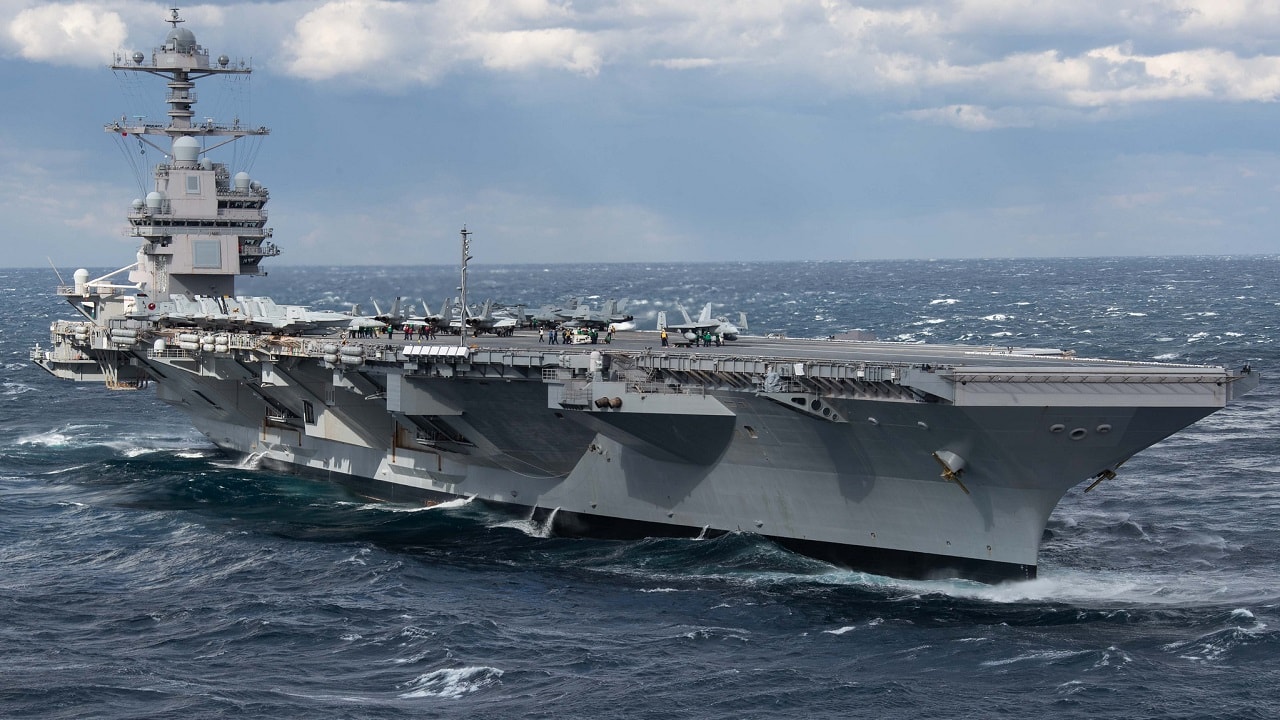
The aircraft carrier USS Gerald R. Ford (CVN 78) transits the Atlantic Ocean, March 26, 2022. Gerald R. Ford is underway in the Atlantic Ocean conducting flight deck certification and air wing carrier qualifications during the ship’s tailored basic phase before operational deployment.
The F/A-XX and the F-35C could provide an excellent one-two punch from carriers on Day One of warfare. After those platforms suppress enemy air defenses, Super Hornets could also swoop in to attack ground targets during conventional warfare on Day Two.
While the Ford-class carriers are expensive and time-consuming to build, they bristle with modern features. They will be in service for 50 years. This is good news for a navy that is lagging in the number of ships it builds each year. There have been some delays and cost overruns, but there is much to love about these new carriers. Whether it is better flight deck technology or the improved nuclear reactors, the Ford-class will save money over time thanks to reduced crew needs and less maintenance.
The aviation wing will have powerful fighter jets — and the future F/A-XX, bolstered by the refueling power of the new MQ-25 Stingray drone tanker, would have the extended range needed to allow aircraft carriers to sail outside the range of enemy carrier-killing missiles. The Ford-class will thus be that much more survivable and suited for warfare in the Indo-Pacific, the Atlantic, or the Middle East.
Look out for this group of carriers as the Navy plans and carries out its best practices for naval warfare in the future.
About the Author: Brent M. Eastwood
Brent M. Eastwood, PhD is the author of Don’t Turn Your Back On the World: a Conservative Foreign Policy and Humans, Machines, and Data: Future Trends in Warfare plus two other books. Brent was the founder and CEO of a tech firm that predicted world events using artificial intelligence. He served as a legislative fellow for US Senator Tim Scott and advised the senator on defense and foreign policy issues. He has taught at American University, George Washington University, and George Mason University. Brent is a former US Army Infantry officer. He can be followed on X @BMEastwood.