
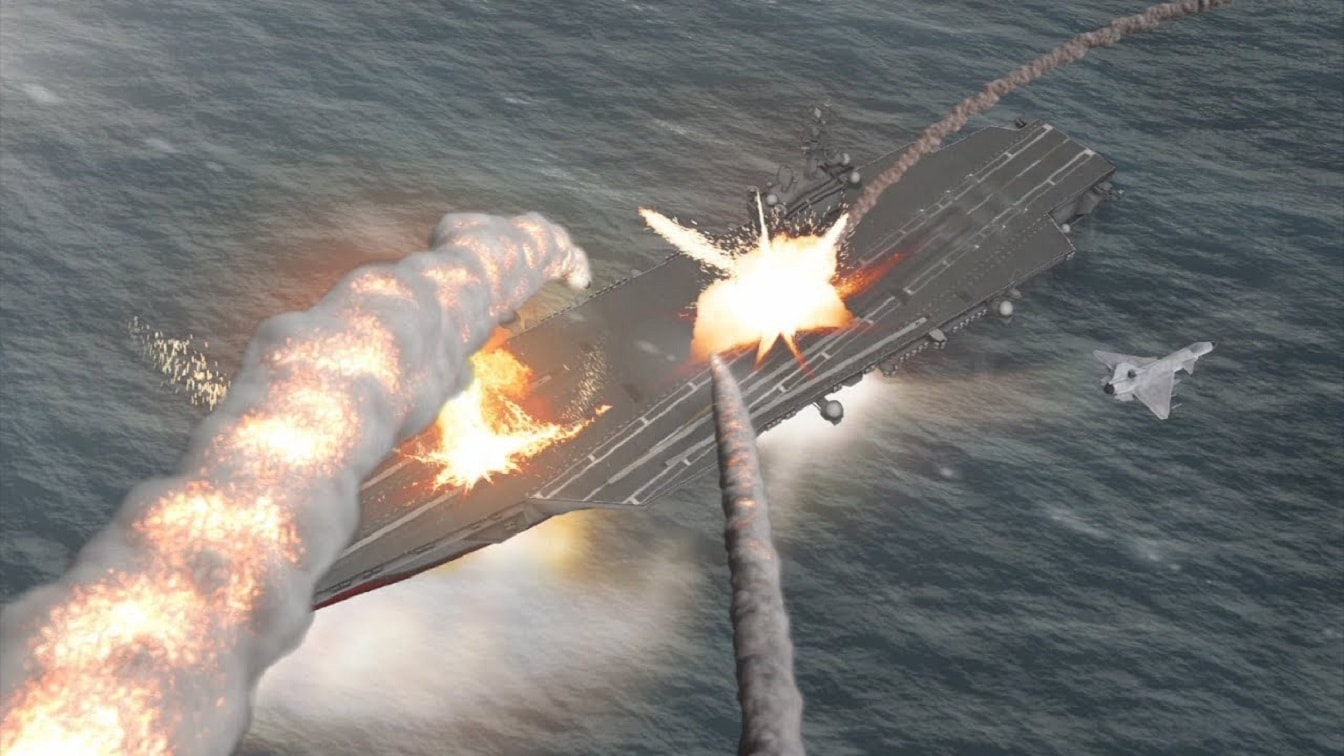
Key Points and Summary – China’s DF-27 is alarming less for its speed or range than for what it blurs: the line between conventional and nuclear attack.
-Reported as operational, the missile appears able to reach deep across the Pacific while carrying either a conventional payload or a nuclear warhead—potentially with a maneuvering or glide capability that complicates interception.
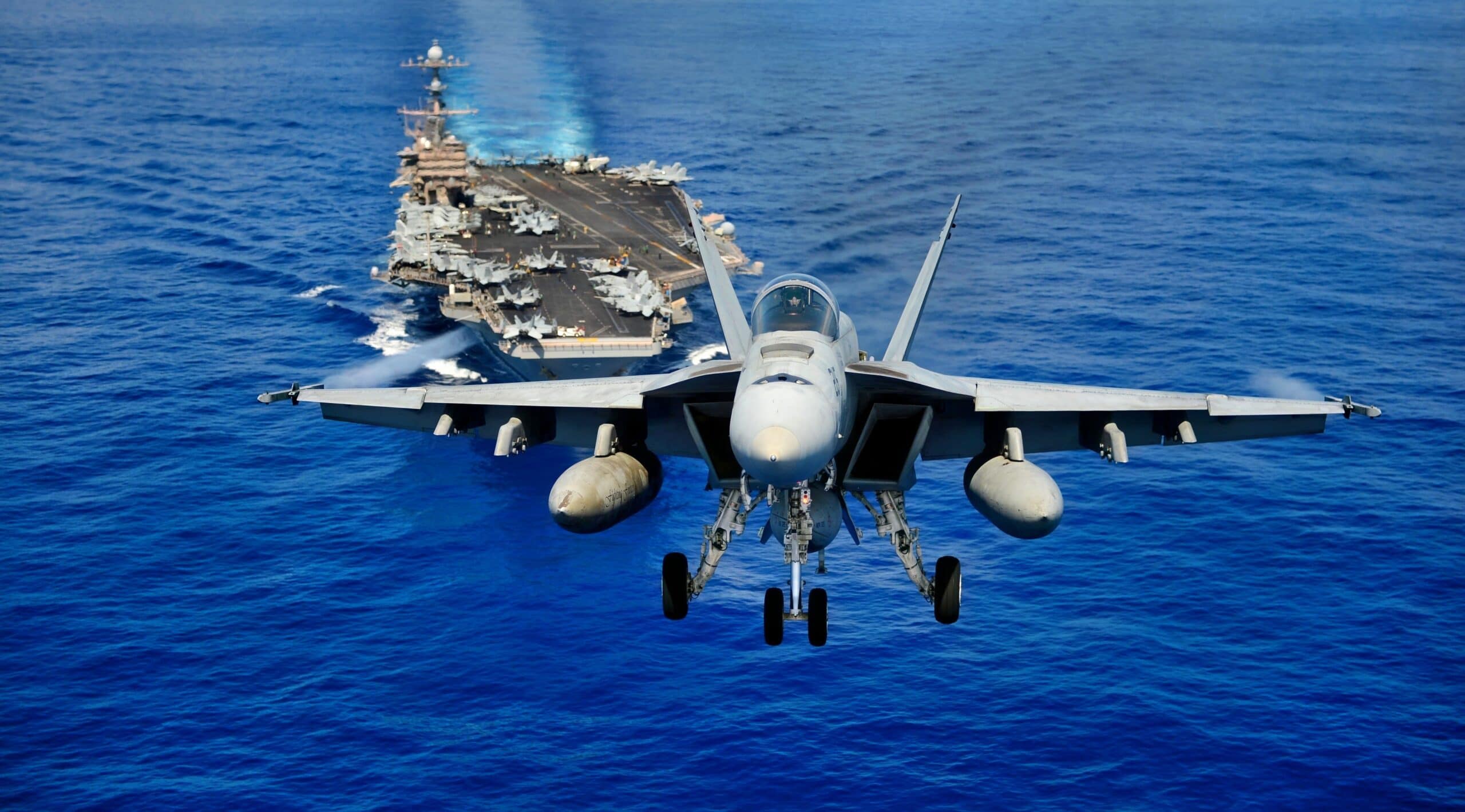
Aircraft Carrier. Image Credit: U.S. Navy.
-The strategic danger is escalation risk.
-If a missile is inbound and decision-makers cannot quickly tell whether it is nuclear or conventional, they may assume the worst and respond accordingly.
-That ambiguity pressures U.S. basing, missile defense, and crisis communications in any fast-moving confrontation.
The DF-27 Threat Isn’t Just Range—It’s Nuclear Confusion
China has a scary new missile, but the DF-27 is scary for different reasons than most ballistic missiles.
In addition to carrying a nuclear warhead, the DF-27 can carry a conventional payload at intercontinental distances, putting US military facilities and US warships at risk.
More importantly, there is no surefire way to determine whether a particular missile in flight would carry a nuclear or a conventional payload, putting the entire world at risk of an accidental nuclear exchange.
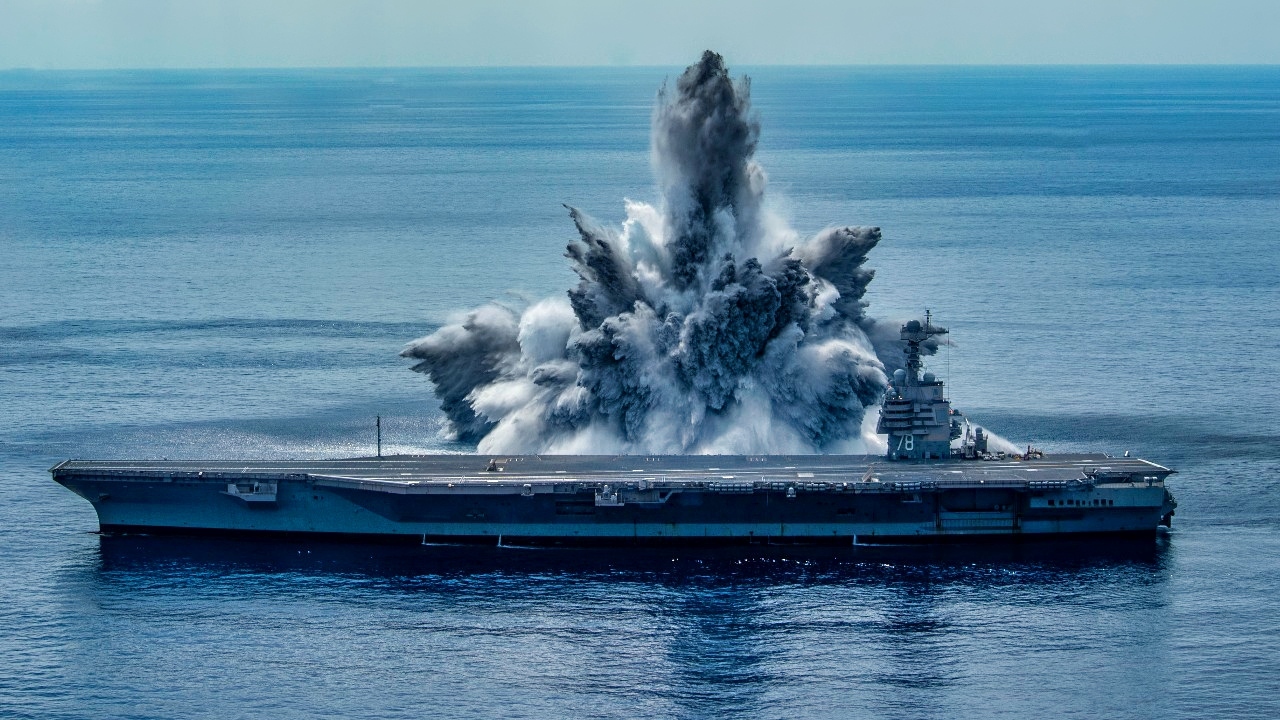
The aircraft carrier USS Gerald R. Ford (CVN 78) successfully completes the third and final scheduled explosive event of Full Ship Shock Trials while underway in the Atlantic Ocean, Aug. 8, 2021. The U.S. Navy conducts shock trials of new ship designs using live explosives to confirm that our warships can continue to meet demanding mission requirements under harsh conditions they might encounter in battle. (U.S. Navy photo by Mass Communication Specialist 3rd Class Novalee Manzella)
Conventional Ballistic Missile
The Pentagon’s latest report on Chinese missile programs suggests that the DF-27, first mentioned in 2021, has reached operational status.
Much as its predecessors, the DF-21 and the DF-26, the DF-27 is evidently capable of terminal maneuver and strikes against both ships and stationary facilities.
While information on the warhead is scarce, the missile’s estimated range is in the neighborhood of 5000-8000km.
The missile is expected to be capable of carrying nuclear and conventional payloads, along with a hypersonic glide vehicle that would extend range and survivability.
Military Utility
In effect, these missiles can expand China’s ability to strike military facilities and ships in transit all the way to the US West Coast.
Of course, every weapon needs eyes on the target, and strikes near the West Coast would require extraordinarily robust surveillance and reconnaissance systems over a wide area.
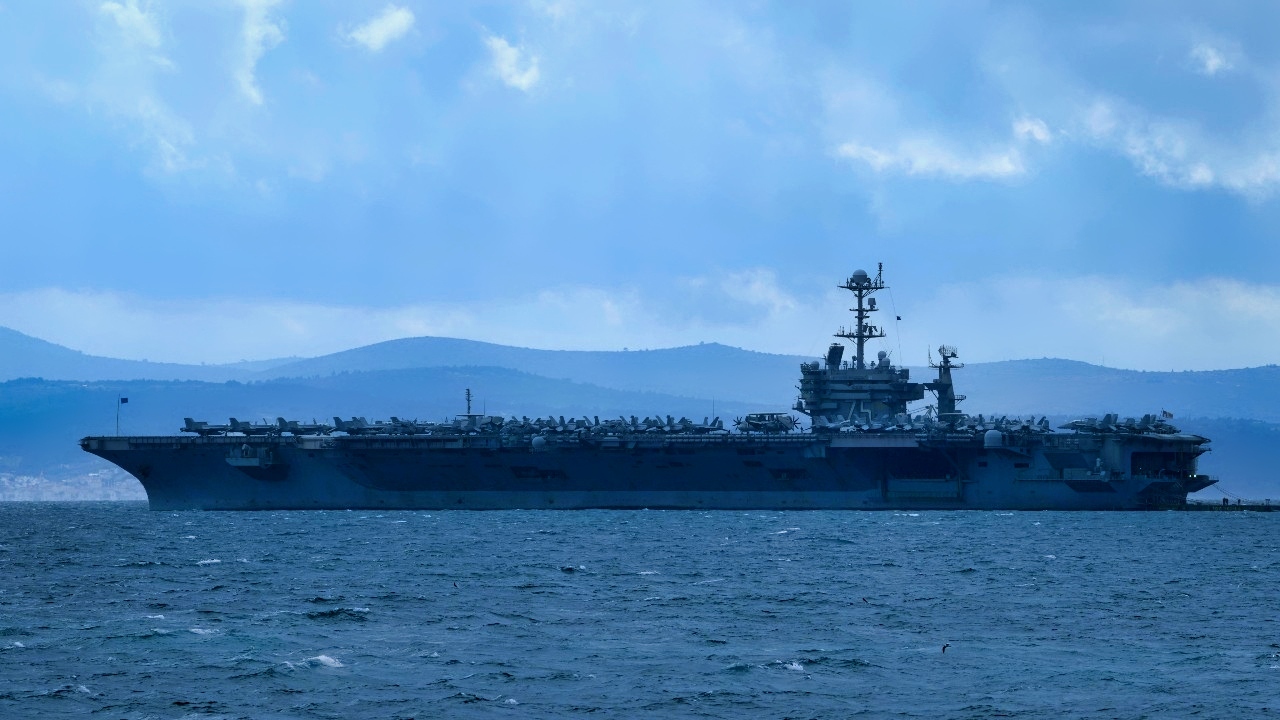
USS Harry S. Truman Aircraft Carrier. Image Credit: Creative Commons.
Even creating doubt about the safety of warships in the immediate vicinity of the West Coast would cause headaches for US military planners and operators.
The missile also gives China the capability to hold major military facilities across the Pacific at risk, including fleet support facilities in Honolulu, San Diego, and Seattle.
Attacking these bases would dramatically weaken US power-projection capacity.
However, in practice, the effect would likely be to force the United States to disperse its missile defense assets across a wider set of targets.
Apocalyptic Confusion
There is a reason countries generally don’t build conventionally capable ICBMs designed to operate alongside nuclear-capable ICBMs.
The ability of national and military leadership to distinguish between a nuclear and a conventional attack is one of the most critical firewalls keeping a conventional conflict from becoming nuclear.
If the United States cannot differentiate between a nuclear missile headed in the direction of Seattle and a conventional missile headed for the submarine pens at Bangor, the President might feel compelled to respond with nuclear force to the attack. Such concerns can be mitigated by careful design of communication protocols and the launch process, but they nonetheless pose a real danger of escalation.
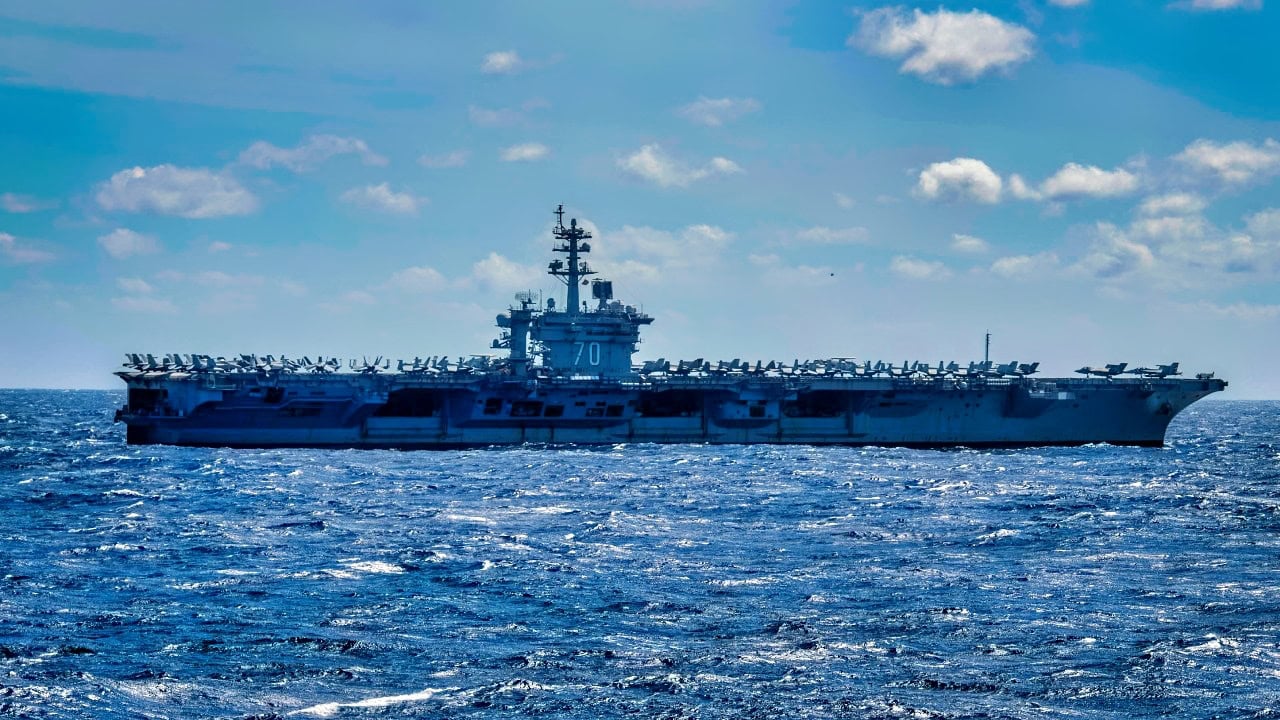
SOUTH CHINA SEA (Jan. 17, 2025) – The Nimitz-class aircraft carrier USS Carl Vinson (CVN 70) transits the South China Sea during a Maritime Cooperative Activity with the Philippine Navy, Jan. 17, 2025. The U.S. and Philippines work together as allies, enhancing the interoperability of maritime forces and supporting their shared goal of a free and open Indo-Pacific. Carrier Strike Group ONE, is underway conducting routine operations in the U.S. 7th Fleet area of operations. (U.S. Navy photo by Mass Communication Specialist 3rd Class Brianna Walker)
DF-27 ICBM: What Should We Think?
China has made conventional ballistic missiles a core element of its defense approach. These missiles have been designed and built to deter US naval and air forces from the Western Pacific, and are needed to destroy American ships and military facilities.
At the same time, China has rapidly expanded its force of nuclear delivery systems, including especially ICBMs capable of striking the mainland US. While discrimination problems have always beset this dual approach, the DF-27 puts the rubber on the road by combining in a single platform the capability of striking the mainland US with either conventional or nuclear munitions.
If China continues to pursue this kind of system, the US needs to take arms control discussions with Beijing very seriously.
Washington and Beijing must establish communications channels that can operate comfortably and efficiently in wartime and in crises short of war to avoid turning a catastrophic conventional war into a vastly more catastrophic nuclear war.
About the Author: Dr. Robert Farley, University of Kentucky
Dr. Robert Farley has taught security and diplomacy courses at the Patterson School since 2005. He received his BS from the University of Oregon in 1997, and his Ph. D. from the University of Washington in 2004. Dr. Farley is the author of Grounded: The Case for Abolishing the United States Air Force (University Press of Kentucky, 2014), the Battleship Book (Wildside, 2016), Patents for Power: Intellectual Property Law and the Diffusion of Military Technology (University of Chicago, 2020), and most recently Waging War with Gold: National Security and the Finance Domain Across the Ages (Lynne Rienner, 2023). He has contributed extensively to a number of journals and magazines, including the National Interest, the Diplomat: APAC, World Politics Review, and the American Prospect. Dr. Farley is also a founder and senior editor of Lawyers, Guns and Money.