
China Reveals New Details Of Hurricane 3000 Microwave Weapon
China’s defense industry has disclosed new technical details and outlined some enhanced capabilities for its truck-mounted Hurricane 3000 high-power microwave (HPM) weapon, a directed-energy system designed to counter unmanned aerial vehicles (UAVs) and drone swarms. The details were published by the South China Morning Post.
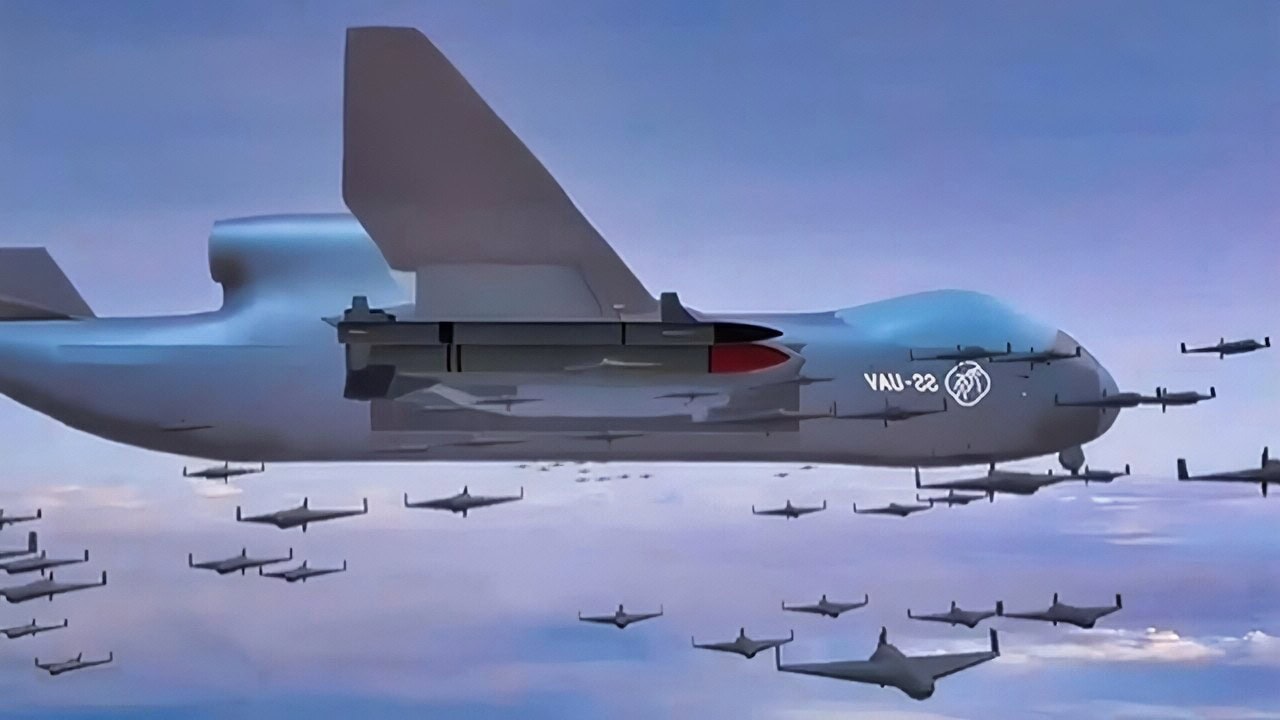
China Drone Aircraft Carrier. Image Credit: X Screenshot.
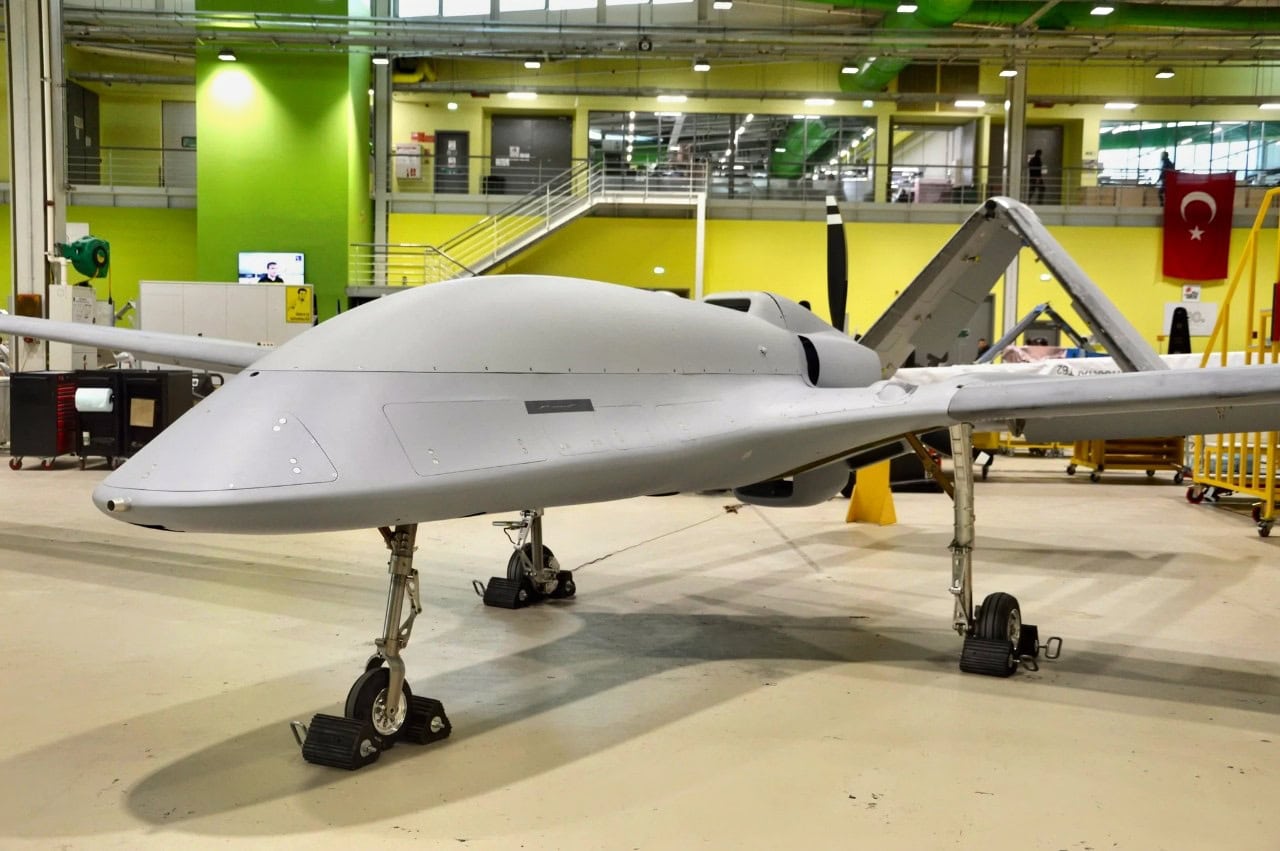
TB3 Drone. Image Credit: Creative Commons.
The Hurricane 3000, developed by state-owned Norinco, made its public debut at the September 2025 Victory Day Parade and has since been the subject of limited but growing official commentary. Chinese media has quoted Norinco engineers claiming that the system’s effective engagement range for small, low-altitude drones exceeds three kilometers – which, if true, would place it above comparable American microwave weapons in range.
Mounted on an 8×8 heavy truck chassis, the Hurricane 3000 reflects China’s growing investment in non-kinetic, directed-energy counter-UAV capabilities that aim to disrupt or destroy adversary electronics instead of relying on traditional missile or gun interceptors.
The Hurricane 3000 and How It’s Used
The Hurricane 3000 uses a combination of radar and electro-optical sensors to detect, track, and engage aerial targets. Once a threat is acquired, the weapon emits intense microwave pulses that overload and damage key electronic subsystems within UAVs, including sensors and flight-control processors. That method allows for a so-called “hard kill” of drones by destroying electronics rather than merely jamming radio links.
Chinese state media and defense commentators who have previously analyzed leaked details about the Hurricane 3000 and the HPM method have described how they allow operators to engage multiple drones in rapid succession with a low logistical footprint; no missiles or aerial projectiles are expended in the process. The system’s “magazine,” in effect, is limited primarily by fuel and power generation rather than the availability of interceptors.
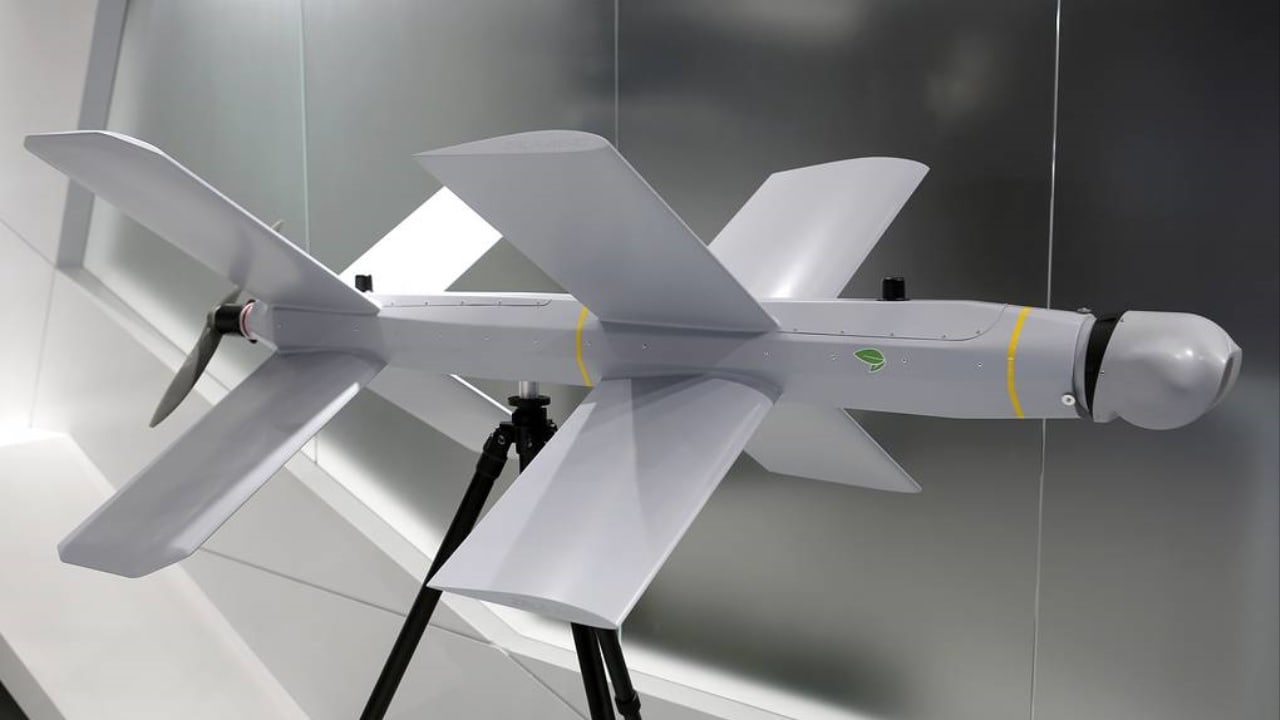
Lancet Drone. Image Credit: Russian State Media.
The system is also understood to be capable of integrating into a larger air defense network that includes laser systems and traditional artillery. Norinco representatives have described that capability as part of an “iron triangle” of counter-drone assets capable of various missions, from base defense to border security.
Drone Threats and Electromagnetic Warfare
The rapid proliferation and declining cost of both consumer and military UAVs have forced militaries worldwide to reconsider their air defense strategies.
Traditional kinetic interceptors (rockets and missiles) are expensive to employ against swarms of small, inexpensive drones – especially during repeated saturation attacks. Directed-energy systems, however, can address these kinds of attacks with a much lower cost per engagement and reduced collateral damage.
China’s investment in HPM weapons is part of a wider effort to strengthen its positions in electromagnetic and information warfare domains and bridge the technological capability gap with the U.S. military. Future conflicts are expected to hinge on controlling sensor networks, communication links, and command-and-control systems – and this is an opportunity for China to catch up with the West. A study of Chinese military technology trends published by Jamestown acknowledged this, noting that the People’s Liberation Army’s (PLA) expanding HPM arsenal is “part of its broader strategy to achieve dominance in the electromagnetic spectrum.”
How Does It Compare with Western Systems?
The new details about China’s Hurricane 3000 are arriving at a time when Western militaries are also developing their own HPM systems – albeit with different deployment profiles and with years of additional background work.
In the United States, private defense firm Epirus has developed the Leonidas high-power microwave platform, which has been demonstrated to disable UAVs, including advanced fiber-optic-controlled drones, in recent Pentagon-backed testing. Leonidas is part of the U.S. Army’s Indirect Fire Protection Capability-High-Power Microwave program and has been seen in operation in live tests, including engagements against FPV and other UAV threats.
Publicly available information about the program indicates that Leonidas and similar U.S. HPM systems have a more limited effective range than China’s claimed three-plus kilometers, with some sources suggesting Leonidas’ range is closer to 2 kilometers. However, U.S. development work focuses more on interoperability with existing command and control architectures and expeditionary maneuver concepts – meaning the way in which the weapon is operated and used. Specifically, the weapons are being developed for Marine and Army forces operating in contested environments.
Other Western prototypes, including the U.S. Air Force Research Laboratory’s THOR microwave system, have been tested against swarms of attack drones in controlled scenarios, demonstrating the viability of microwave energy as a weapon against multiple small drones. And, in addition to American systems, European options, such as the United Kingdom’s RapidDestroyer radio-frequency directed-energy demonstrator, show that NATO countries are also pursuing similar technologies.
China, therefore, is catching up and seeking to reach even greater heights in technology. The Hurricane 3000 and similar systems, once ready, will likely be deployed to protect high-value assets like command posts, logistics hubs, and airfields from swarming UAV attacks – and when they do, it’ll change combat dynamics all over again after they were fundamentally transformed during the war in Ukraine.
About the Author:
Jack Buckby is a British researcher and analyst specialising in defence and national security, based in New York. His work focuses on military capability, procurement, and strategic competition, producing and editing analysis for policy and defence audiences. He brings extensive editorial experience, with a career output spanning over 1,000 articles at 19FortyFive and National Security Journal, and has previously authored books and papers on extremism and deradicalisation.

