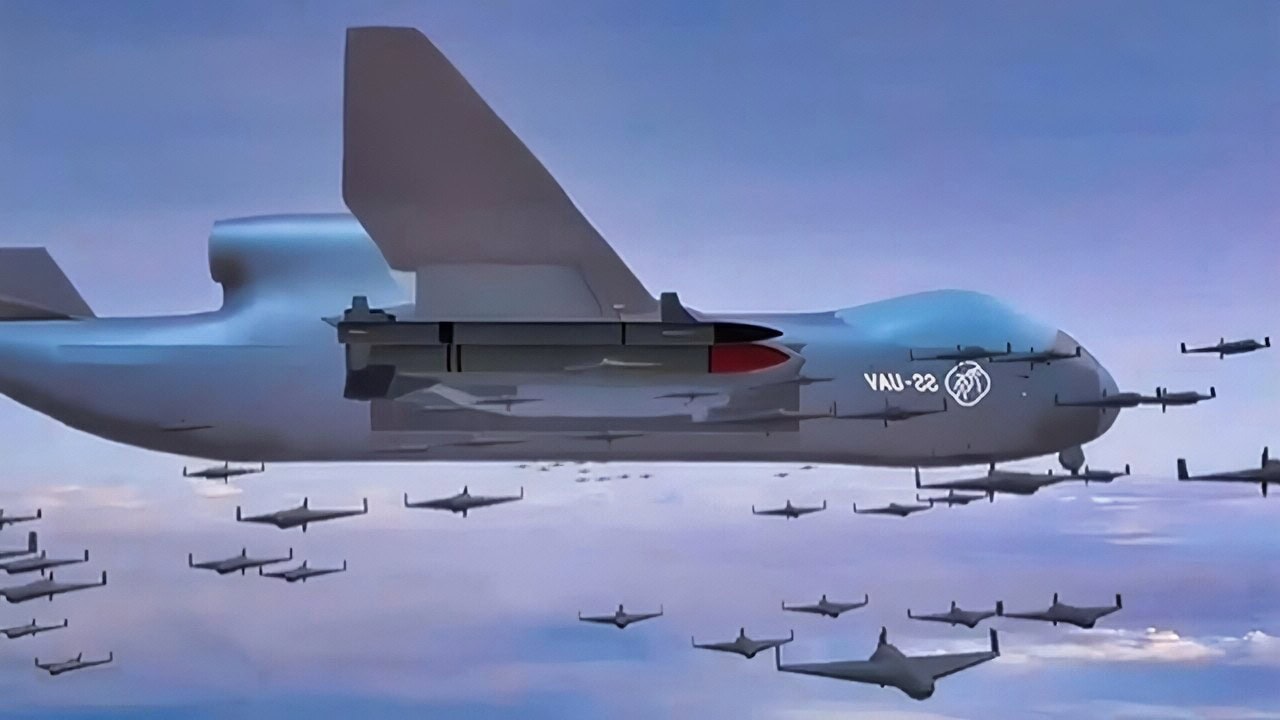
Key Points and Summary – China’s Jiu Tian “flying aircraft carrier” UAV reportedly completed an early flight test, spotlighting a new way to project mass in the Pacific.
-Designed to carry and release about 100 small drones, it could blanket an area with ISR, jam radars, seed decoys, or deliver loitering strikes without risking pilots.
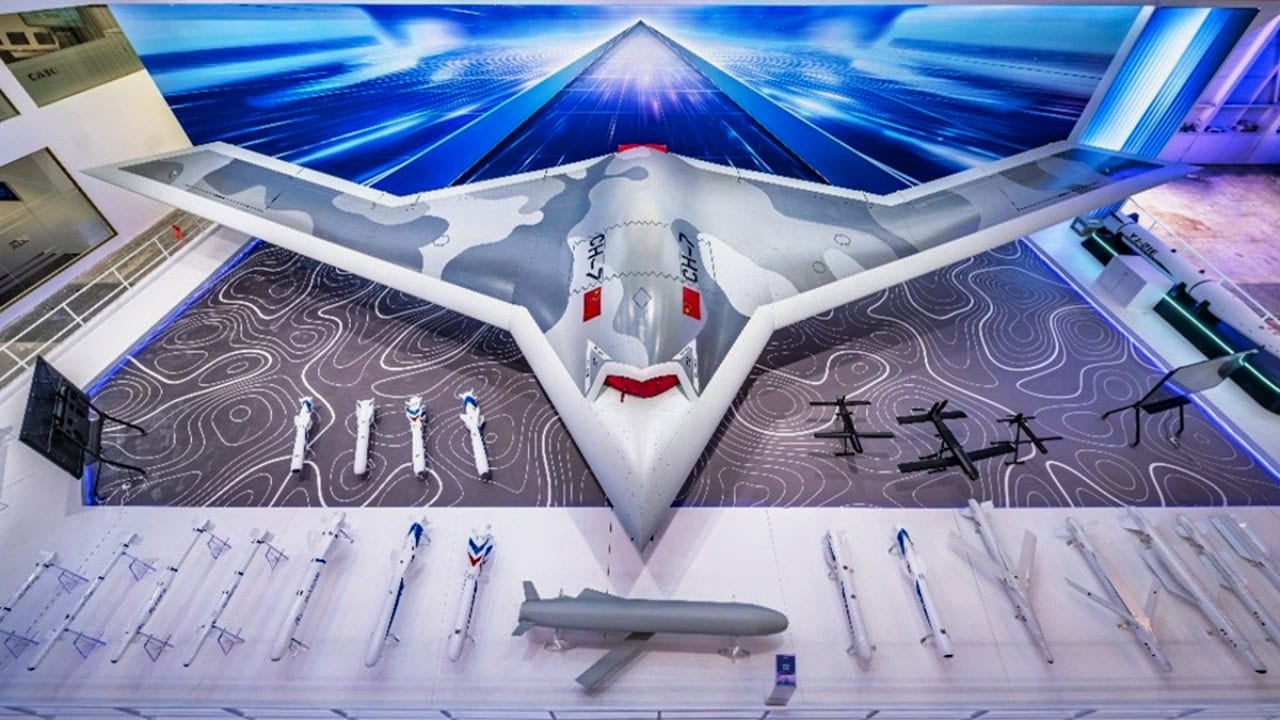
CH-7 Drone from China. From Chinese State Media.
-The concept echoes U.S. ‘arsenal plane’ ideas and C-130/C-17 drone-launch experiments, but shifts the mothership role to an unmanned platform.
-The decisive unknown is swarm sophistication—AI coordination, sensors, electronic warfare, and payload types.
-If mature, it could complicate defenses for Taiwan, Japan, the Philippines, and ships at sea in crisis.
The Drone Swarm Era Arrives as China Tests the Jiu Tian Mothership Flying Aircraft Carrier
“Flying aircraft carrier” is the term used to describe China’s fast-emerging unmanned aircraft, designed to transport and deploy 100 small drones at once. Without question, this introduces new tactical and strategic nuances that impact the overall threat equation.
The huge Jiu Tian is said to have made its first actual flight in Northwest China’s Shaanzi Province, according to a high volume of news reports, including one from Military Watch magazine.
Publish specs describe the drone-launching drone platform as having a 7,000km range, a 25-meter wingspan, and a 16.35-meter length.
Yet it’s the drone’s operational capabilities and potential applications that seem the most significant.
In terms of sheer size, the Jiu Tian is comparable to a US Air Force Global Hawk drone, yet capable of launching a massive swarm of small drones.
The ability to launch 100 drones at once may sound quite substantial. Yet the Jiu Tian is a fraction of the size of the C-130 or C-17 US Air Force cargo planes, platforms that have already experimented with drone swarm launches and are positioned to perform a similar mission.
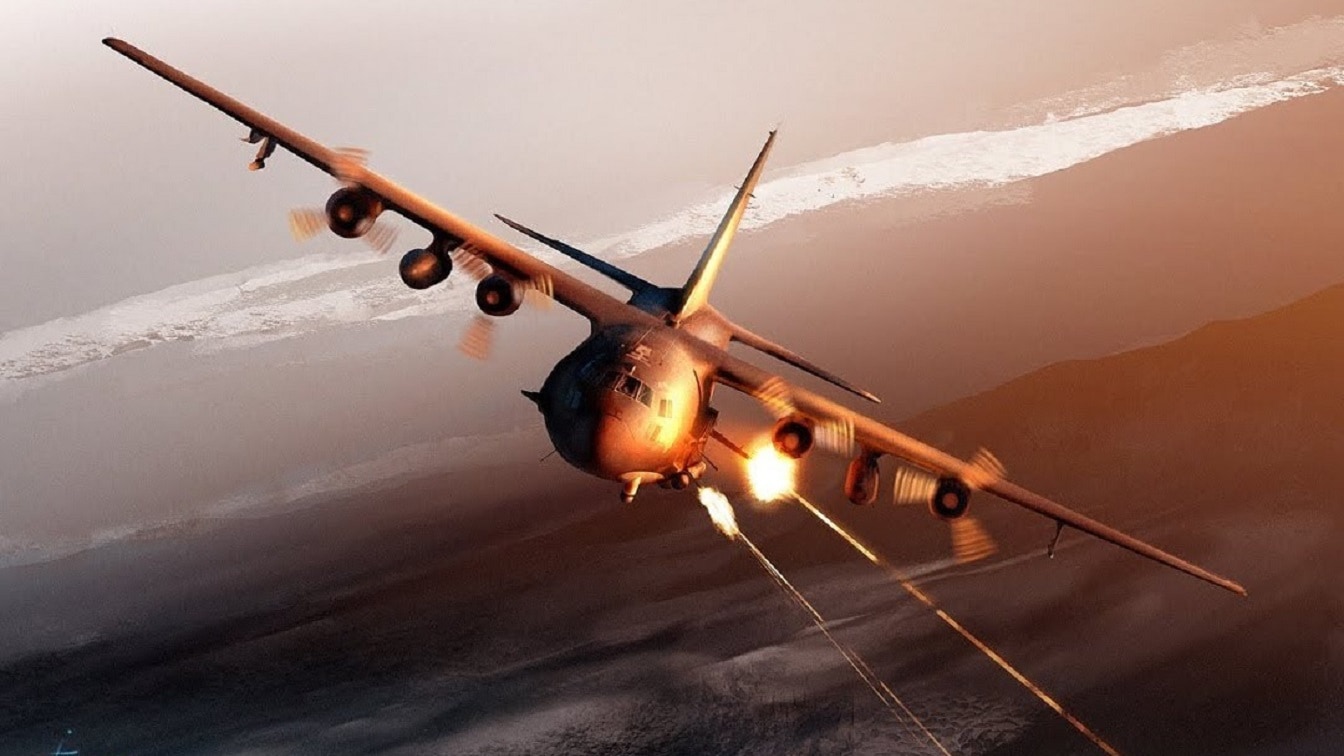
AC-130 Gunship. Image Credit: Creative Commons.
Alongside this possibility, it is also entirely conceivable to engineer a large “drone” or “unmanned” platform capable of performing a similar mission, as the Chinese appear to have done.
At one point in recent years, the Pentagon regularly spoke in a public way about developing a drone-launching, weapons-carrying “arsenal plane” able to fortify air attack campaigns and stealth aircraft from safer stand-off ranges. In today’s technological environment, aircraft of all sizes can reliably be configured to perform unmanned missions.
Drone Swarm Attack
There are likely as many questions and unknowns as there are concerns regarding China’s drone-attack platform, yet the aircraft does introduce new measures of survivability into possible air attack.
Drone swarms can, of course, blanket areas with Intelligence, Surveillance, Reconnaissance (ISR), test or “jam” enemy air defenses, or even themselves operate as explosives designed to descend upon and destroy a wide range of targets.
The Jiu Tian and the drones it launches clearly impact the survivability equation, simply because they can launch and attack autonomously, enabling drone launches to operate in high-risk enemy environments without placing humans at risk.
Should large numbers of these unmanned systems be launched simultaneously, hundreds of miles of territory could be attacked without humans within range of ground fire. Such a swarm attack could complement or precede a larger manned air attack campaign or support a missile strike.
The sheer question of “mass” creates redundancy, making it very difficult to stop attacks, verify systems in the air, and discriminate between actual targets and decoys or friendly air vehicles.
Given this equation, a Chinese drone-launching drone mothership could launch drone targeting and attacks on Taiwan, the Philippines, or Japan without having to place any person in harm’s way to get close-up Electro-Optical/Infra-Red (EO/IR), or infrared sensing data.
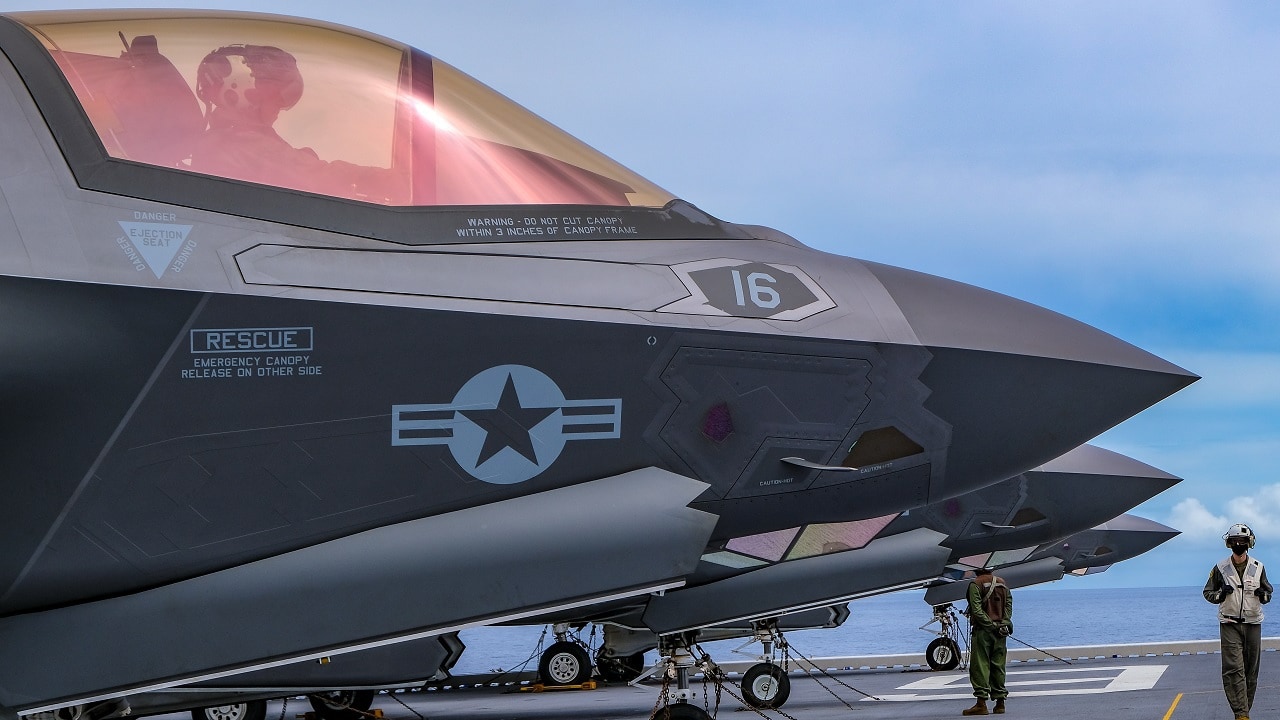
U.S. Marine Corps F-35B aircraft mechanic Lance Cpl. William Wiggins assigned to Marine Fighter Attack Squadron 121, currently attached to Marine Medium Tiltrotor Squadron 265 (Reinforced), 31st Marine Expeditionary Unit (MEU), monitors an F-35B aboard amphibious assault ship USS America (LHA 6), in the Philippine Sea Aug. 18, 2021. The F-35B’s fifth generation strike fighter capabilities bring more lethality and flexibility to combatant commanders than any other aircraft platform. The 31st MEU is operating aboard ships of America Expeditionary Strike Group in the 7th fleet area of operations to enhance interoperability with allies and partners and serve as a ready response force to defend peace and stability in the Indo-Pacific region. (U.S. Marine Corps photo by Staff Sgt. John Tetrault)
The operative question, however, would seem to pertain to the relative coordination or technological sophistication of the drones themselves.
Would they be AI-enabled, able to coordinate closely with one another, and adjust course or mission in response to changing information?
What kinds of sensing might they integrate, meaning will they combine sensing with offensive kinetic attacks, electronic warfare (EW), or high-powered microwave attacks?
Pacific Threats and Flying Aircraft Carriers
These possibilities seem to introduce new variables into any given threat scenario in the Pacific, particularly given the unique challenges drone swarms can pose to ground defenses, radar, and any air-, ground-, or surface-based weapons platform.
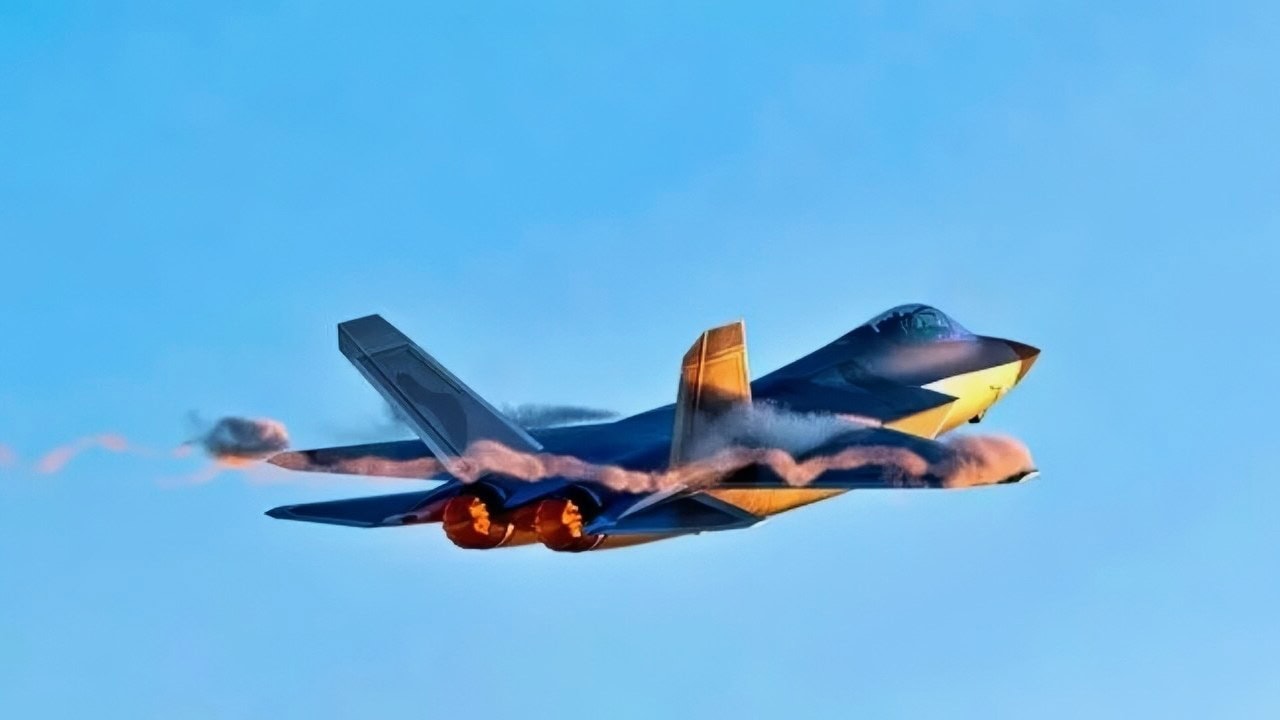
J-35A Fighter from China PLAAF. Image Credit: Creative Commons.
Ships at sea could be blanketed or swarmed with hundreds of small, air-launched drone explosives, creating redundancy and a “mass” attack able to hit and destroy US and allied warships.
The Jin Tian could extend China’s maritime attack reach, helping to close its current deficit with the US in sea-launched air attacks.
While China is now producing its carrier-launched stealth J-35, the aircraft is currently in small numbers, so the PLA does not have any maritime equivalents to the US F-35C and F-35B.
About the Author: Kris Osborn
Kris Osborn is the President of Warrior Maven – Center for Military Modernization. Osborn previously served at the Pentagon as a highly qualified expert in the Office of the Assistant Secretary of the Army—Acquisition, Logistics & Technology. Osborn has also worked as an anchor and on-air military specialist at national TV networks. He has appeared as a guest military expert on Fox News, MSNBC, The Military Channel, and The History Channel. He also has a Masters Degree in Comparative Literature from Columbia University.