
Key Points and Summary – Russia’s S-500 Prometheus is billed as a new upper-tier air-defense and missile-defense system, designed to complement S-400 batteries.
-Moscow claims a roughly 500-km reach and engagements up to about 200 km in altitude, with hit-to-kill interceptors for ballistic and hypersonic threats and, potentially, low-orbit targets.
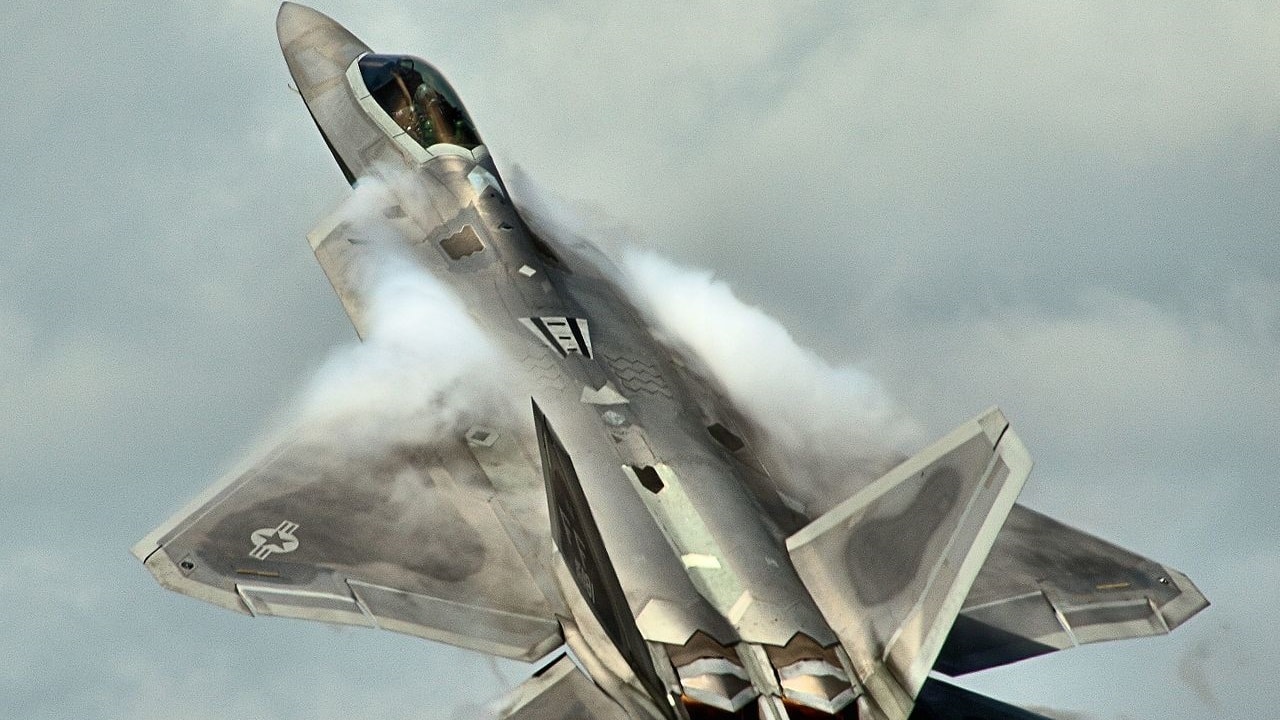
F-22 Raptor.
-Its multi-radar architecture aims to find and track complex targets under jamming, including stealth aircraft. But “seeing” is not the same as reliably tracking, cueing, and killing an F-22 or F-35 in combat conditions.
-Limited numbers and high-value tasking may constrain employment. That makes the S-500 more of a shield than a routine fighter killer.
S-500 vs. F-35: Can Russia Really Track and Kill a Stealth Jet?
The S-500 Prometheus (also known as 55R6M Triumfator-M) is Russia’s most advanced air defense system to date. While some designate it as an upgraded S-400, the system is actually an entirely new complex with significantly enhanced capabilities. The S-500 was designed to intercept high-priority threats like ballistic missiles, AWACS, and even satellites.
The system uses the most advanced search and tracking radars developed by Russia, making it more than capable of detecting and tracking fifth-generation stealth aircraft on paper.
Design and Development
The S-500 program began around 2009 as an attempt to build a system that could work in coordination with the S-400 “Triumf.”
Early plans anticipated production by 2014, but the complexity of integrating multi-band radar systems, high-velocity hit-to-kill interceptors, and rapid command-and-control links stretched timelines. Public indicators of progress came in stages: a long-range live test in May 2018 reportedly reached roughly 482 kilometers, and in July 2021, the Russian Ministry of Defense released video footage of a live-fire event at Kapustin Yar, framing the S-500 as ready to assume upper-tier duties in Russia’s integrated network.
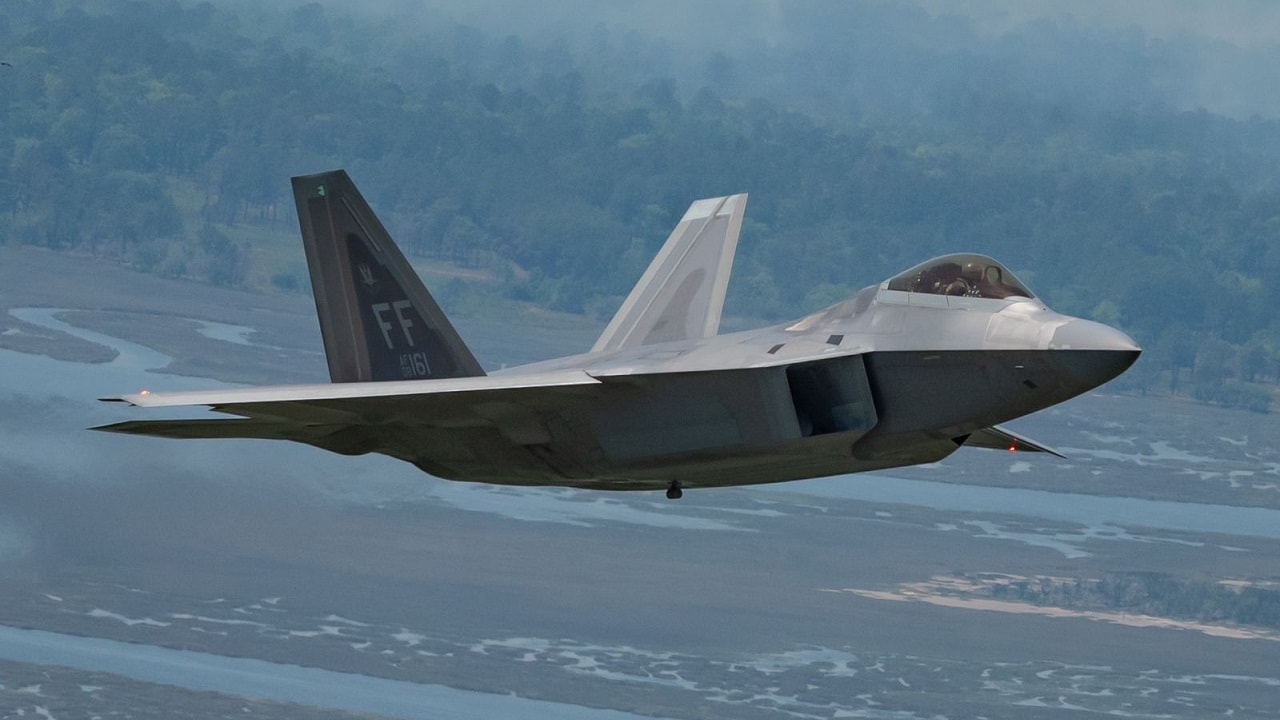
F-22 Raptor. Image Credit: Creative Commons.
In September 2021, Russian sources said the system entered limited service with the “Aerospace” branch; by December 18, 2024, General Valery Gerasimov announced the formation of the first regiment equipped with the S-500, an overt signal that the platform had crossed into operational deployment, albeit in small numbers.
What distinguishes the S-500 from predecessors is the scope and character of its engagement envelope. The system has a maximum range of around 500 km and can target threats at a height of around 200 km, making it capable of hitting orbiting satellites at the edge of space.
The S-500 can also reportedly intercept hypersonic missiles.
According to Russian claims, the system has already demonstrated its ability during tests (take such claims with a grain of salt).
To accomplish this, the system fields the 77N6-N and 77N6-N1 hit-to-kill anti-ballistic missile interceptors alongside a long-range air-defense 40N6M missiles, providing a mixed magazine that can be tailored to anticipated threats.
Defense Architecture
Underpinning these interceptors is a radar and sensor architecture designed to detect, classify, and track both stealth aircraft and fast, high-altitude ballistic missiles.
The S-500 features the 91N6A(M) battle management radar, 96L6-TsP acquisition radar, and 77T6 engagement radar, distributed across mobile platforms and integrated through a command post meant to fuse data and assign shooters rapidly.
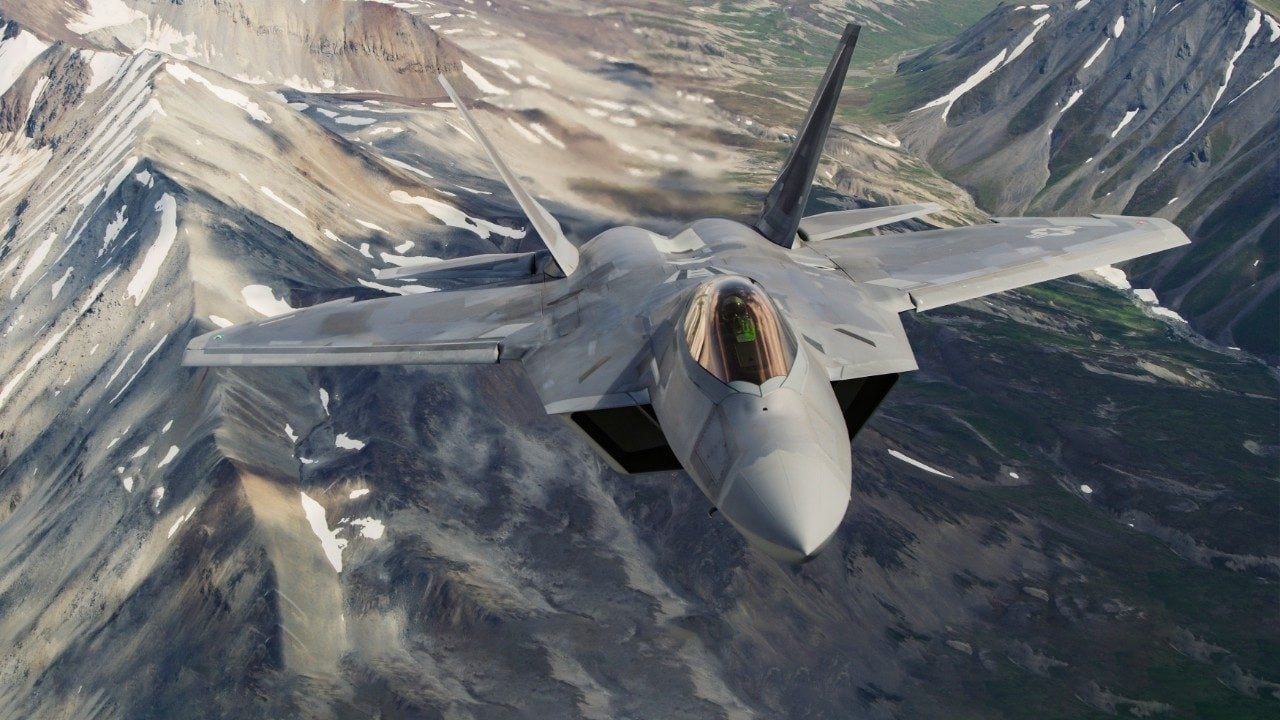
F-22 Raptor. Image Credit: Creative Commons.
For mobility, the system uses a TEL launcher with two missiles based on the BAZ-69096 10×10 truck; this mobility enhances its survivability while also adding to its flexibility.
The first publicly displayed TEL vehicle, shown at the Army-2024 exhibition, gave observers a concrete sense of the S-500’s footprint and the scale of its ABM interceptors, which are larger than legacy anti-air missiles and optimized for exo-atmospheric or near-space engagements.
The S-500 is marketed as both a complement to and a tier above the S-400. Russian doctrine emphasizes layered defense: shorter-range point systems like Pantsir-S1, medium-long range coverage from S-300 and S-400, and now the S-500 at the upper tier, where it seeks to defeat ballistic and hypersonic threats and hold at risk high-altitude ISR aircraft or low-orbit targets.
In December 2024 and early 2025, multiple reports linked the first S-500 regiment to defense of the Kerch Strait and the Crimean Bridge, infrastructure repeatedly targeted in the Russia-Ukraine war.
Ukrainian intelligence reports from mid-2024 suggested the experimental deployment of S-500 components in the region, underscoring the platform’s perceived utility in contested theaters and the Kremlin’s desire to field a deterrent against air and missile strikes on critical nodes.
Can the S-500 Intercept a Stealth Fighter Like the F-22 or F-35?
While the S-500 is primarily intended for ballistic missile defense, it is also capable of anti-aircraft defense.
Russian sources claim that the system is capable of taking on stealth aircraft but how true is this claim?
The key to answering this lies with the system’s radar architecture. The Yenisei 77T6 ABM Engagement Radar was explicitly designed for the S-500.
What separates this radar from other systems is its ability to operate automatically for long periods, unlike the S-400, which serves for limited periods.
The 77T6 is also built to operate against targets with electronic warfare and jamming capabilities. This system operates in tandem with other systems like the previously mentioned 91N6A(M), 96L6-TsP, and 76T6 radars, which represent the most sophisticated anti-air detection systems built by Russia.
The S-500 will likely be able to “see” a fifth-generation aircraft, but detection is not enough.
It all depends on whether the acquisition radars can track and lock onto the hypothetical aircraft. Given the sophistication of the systems’ radars, there is a high likelihood (though not a 100% guarantee) that the system can shoot down a fifth-generation aircraft.
However, even if the S-500 could intercept a stealth aircraft, would it ever be used for such purposes?
Russian sources claim that the S-500 would only ever be used to target the highest value targets like ballistic missiles, AWACS, and jamming aircraft.
Stealth fighters would likely be left to systems like the S-400. The system would likely be used to detect and intercept stealth bombers. However, realistically speaking, if a stealth bomber is detected anywhere near Russian airspace, that is probably a sign that nuclear missiles are about to start flying.
About the Author: Isaac Seitz
Isaac Seitz, a Defense Columnist, graduated from Patrick Henry College’s Strategic Intelligence and National Security program. He has also studied Russian at Middlebury Language Schools and has worked as an intelligence Analyst in the private sector.