Key Points and Summary – China is quietly opening a new front in undersea warfare. Beijing’s latest AI-enabled underwater drones can execute zero-radius turns, recharge at submerged stations, datalink with each other, and reportedly operate below 90 decibels—making them extremely hard to detect.
-Designed to block shipping lanes, threaten warships, and autonomously target and attack, these systems fit neatly into China’s broader effort to keep U.S. and allied navies away from Taiwan.
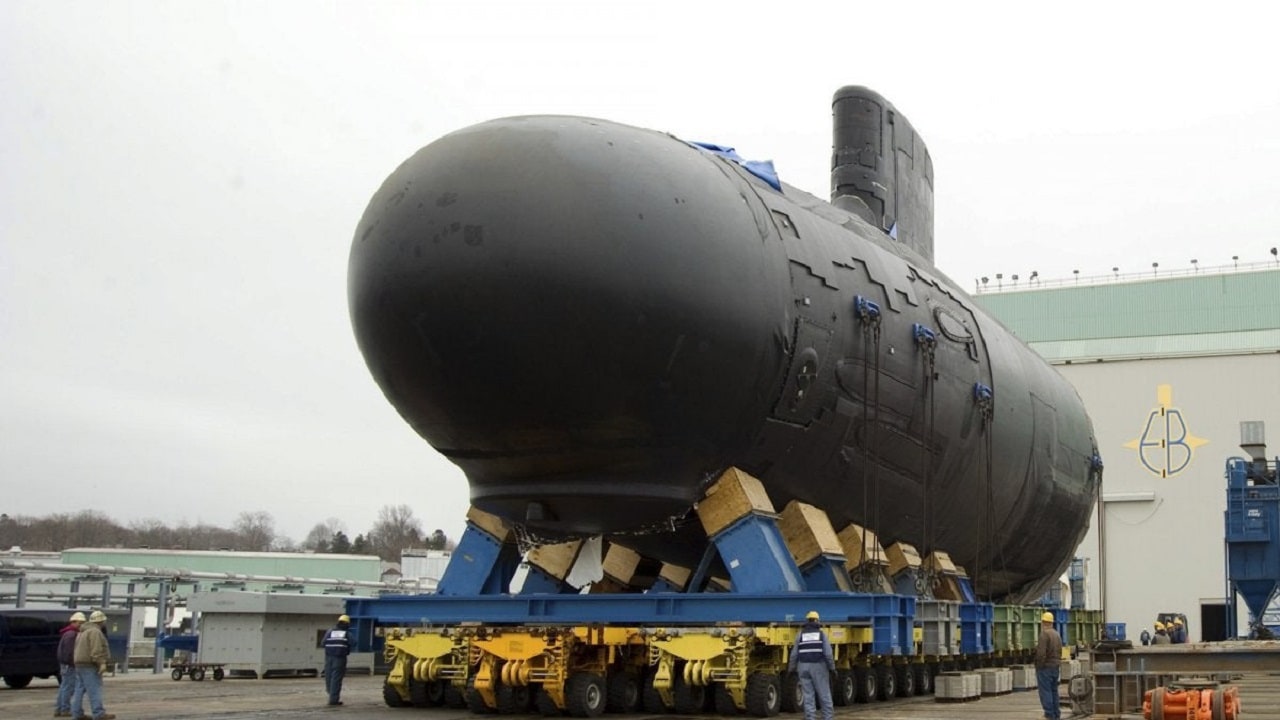
Image of Block III US Navy Virginia-class Submarine.
-Paired with new ASW platforms like the Wing Loong X UAV and Y-9Q, they signal a focused push to erode Western naval superiority beneath the waves.
Lurking Underwater: The Latest China Drone Innovation Is a Threat to the U.S. Navy
China continues to make progress in drone technology—especially in aerial combat designs.
Their vehicles are similar to those being developed in the West, such as Collaborative Combat Aircraft or “loyal wingman” programs.
On Sept. 3, observers in Beijing were able to get a glance at one of China’s latest military innovations—a platform that could cause headaches for the U.S. and its allies.
The new design is for an unmanned underwater drone system controlled by what is described as advanced AI capabilities.
This new technology developed for the People’s Liberation Army Navy (PLAN) could be a disruptive development and a ground-breaking capability in anti-submarine warfare.
The new underwater drones are purportedly capable of zero-radius turns and can operate in almost any maritime environment.
They are also promoted as being difficult to detect by modern sonar and other underwater sensor networks, since any noise they generate during operations is below 90 decibels.
According to a recent report by the South China Morning Post, the PLAN’s newest unmanned systems do not have to operate as solo platforms—they will datalink and coordinate with each other to carry out a host of different missions.
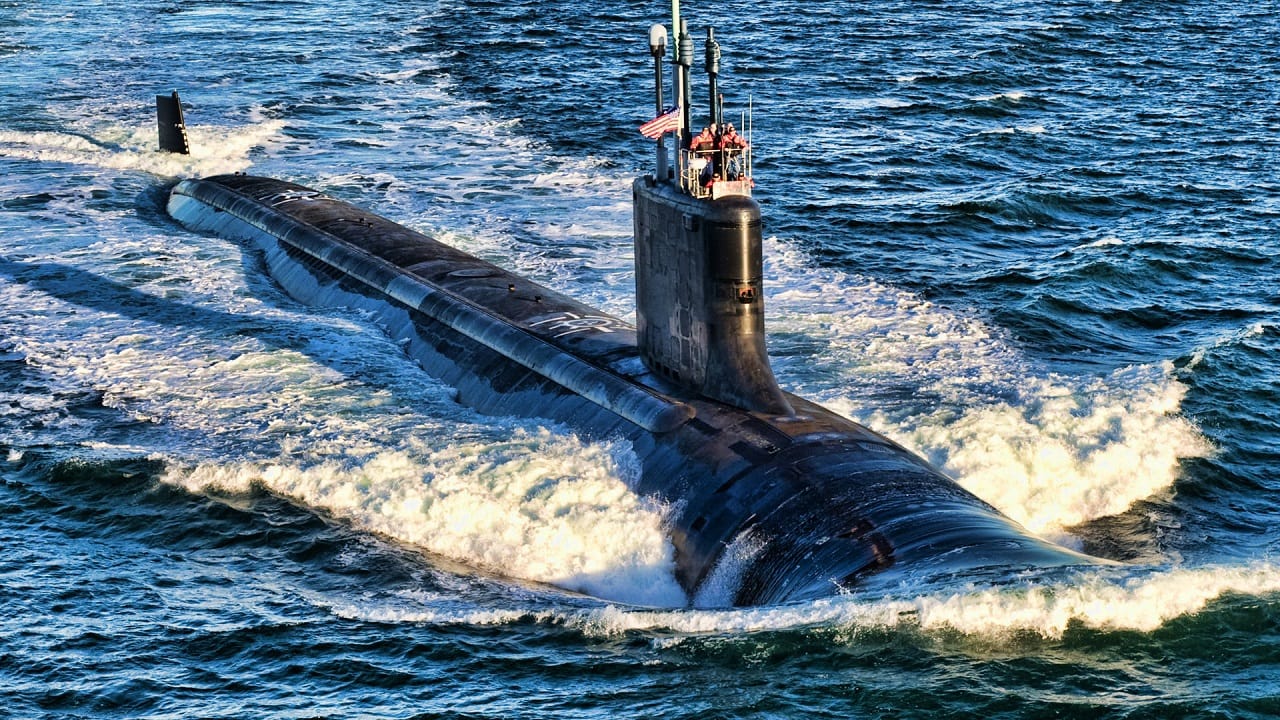
US Navy Attack Submarine. Image Credit: Creative Commons.
These would include blocking shipping lanes, threatening naval vessels at sea, and launching attacks on seaborne targets.
Detection Impossible
China’s new underwater drone systems are reportedly also capable of long-endurance missions, as they can recharge batteries at underwater stations.
Since they will operate in an almost self-aware mode using AI, they will be able to autonomously identify a target, develop a firing solution, and attack any platform they deem a threat.
The endurance capability, ability to operate without a datalink to an operator, and the extreme ranges at which they will be able to strike would all be new advancements in underwater unmanned vehicles.
However, the real worry for adversaries is these undersea drones’ unprecedented ability to evade detection.
As one recent article points out, “this could disrupt the current global maritime security governance.”
Several writers see this platform as another innovation aimed at permitting China to control all sea traffic around Taiwan.
The objective, said one retired U.S. naval intelligence official, “is to make it impossible for the U.S. Navy to affect any defense of the island nation in the event of a PLA invasion.”
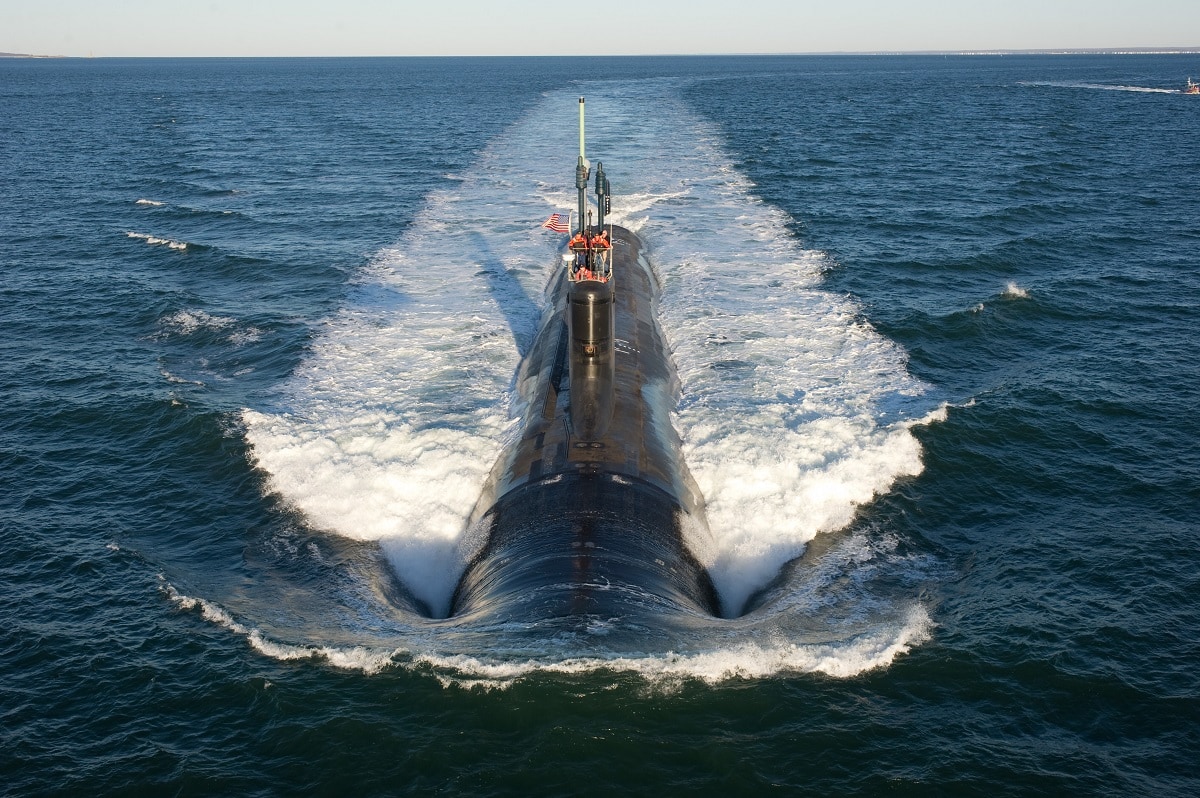
The Virginia-class attack submarine Pre-Commissioning Unit Mississippi (SSN 782) conducts alpha trials in the Atlantic Ocean. (U.S. Navy photo courtesy of General Dynamics Electric Boat)
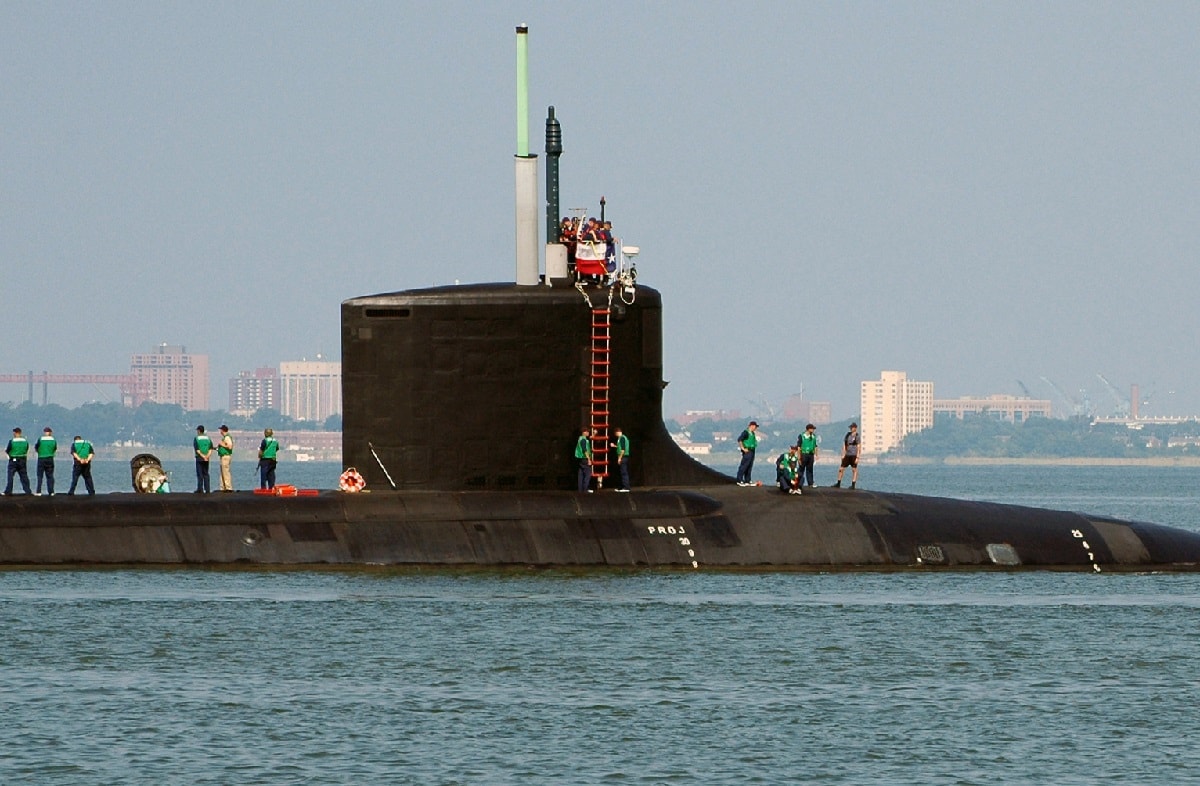
U.S. Navy Sailors stationed aboard the Virginia Class New Attack Submarine Pre-Commissioning Unit (PCU) TEXAS (SSN 775) stands topside as the boat gets underway from Naval Station Norfolk, Va., Aug. 22, 2006. TEXAS is the second Virginia Class submarine built and the first major U.S. Navy combatant vessel class designed with the post-Cold War security environment in mind. TEXAS will be commissioned Sept 9, 2006 in Galveston, Texas. (U.S. Navy photo by Mass Communication Specialist Seaman Kelvin Edwards) (Released)
Sea Drones in the Desert
Some of the latest models of these PLAN underwater drones were displayed at the biennial Dubai Airshow in November.
The version shown in Dubai revealed several advances in Chinese anti-submarine technologies.
The most notable system shown, however, was an export version of the Wing Loong-X unmanned aerial vehicle. According to the Aviation Industry Corporation of China and Chinese state media outlets, the Wing Loong X design has been specialized for the anti-submarine warfare role.
It is equipped with sonobuoy dispensers, lightweight torpedoes, and integrated maritime surveillance sensors—a combination that would make it a generational leap in unmanned maritime combat platform designs. U.S. naval technology analysts say that this design is the clearest signal yet sent by Beijing that they prioritize neutralizing Western naval superiority in undersea and surface warfare.
Overall, this drone is rated as having superior anti-submarine capabilities in several aspects to the U.S. Navy’s Boeing P-8 Poseidon and other manned anti-submarine aircraft.
Its introduction followed the display of a new anti-submarine and maritime surveillance aircraft, the Y-9Q, at the September Victory Parade. This aircraft was presented alongside two unmanned underwater vehicle designs, the HSU100 and AJX002.
The Navy is undoubtedly capable of its own innovations in this area. One of the latest and most unconventional U.S. inventions reportedly comes from the School of Mechanical and Electrical Engineering of Northwestern Polytechnical University.
The school has developed a transparent jellyfish-like robot that is nearly undetectable to sensors as it moves silently through the water. Utilizing a hydrogel electrode material, the device has a jellyfish-like shape, tentacles, and movements that can reportedly trick the human eye. It is also fitted with a tiny camera that can detect and identify underwater targets.
About the Author: Reuben F. Johnson
Reuben F. Johnson has thirty-six years of experience analyzing and reporting on foreign weapons systems, defense technologies, and international arms export policy. Johnson is the Director of Research at the Casimir Pulaski Foundation. He is also a survivor of the Russian invasion of Ukraine in February 2022. He worked for years in the American defense industry as a foreign technology analyst and later as a consultant for the U.S. Department of Defense, the Departments of the Navy and Air Force, and the governments of the United Kingdom and Australia. In 2022-2023, he won two awards in a row for his defense reporting. He holds a bachelor’s degree from DePauw University and a master’s degree from Miami University in Ohio, specializing in Soviet and Russian studies. He lives in Warsaw.