
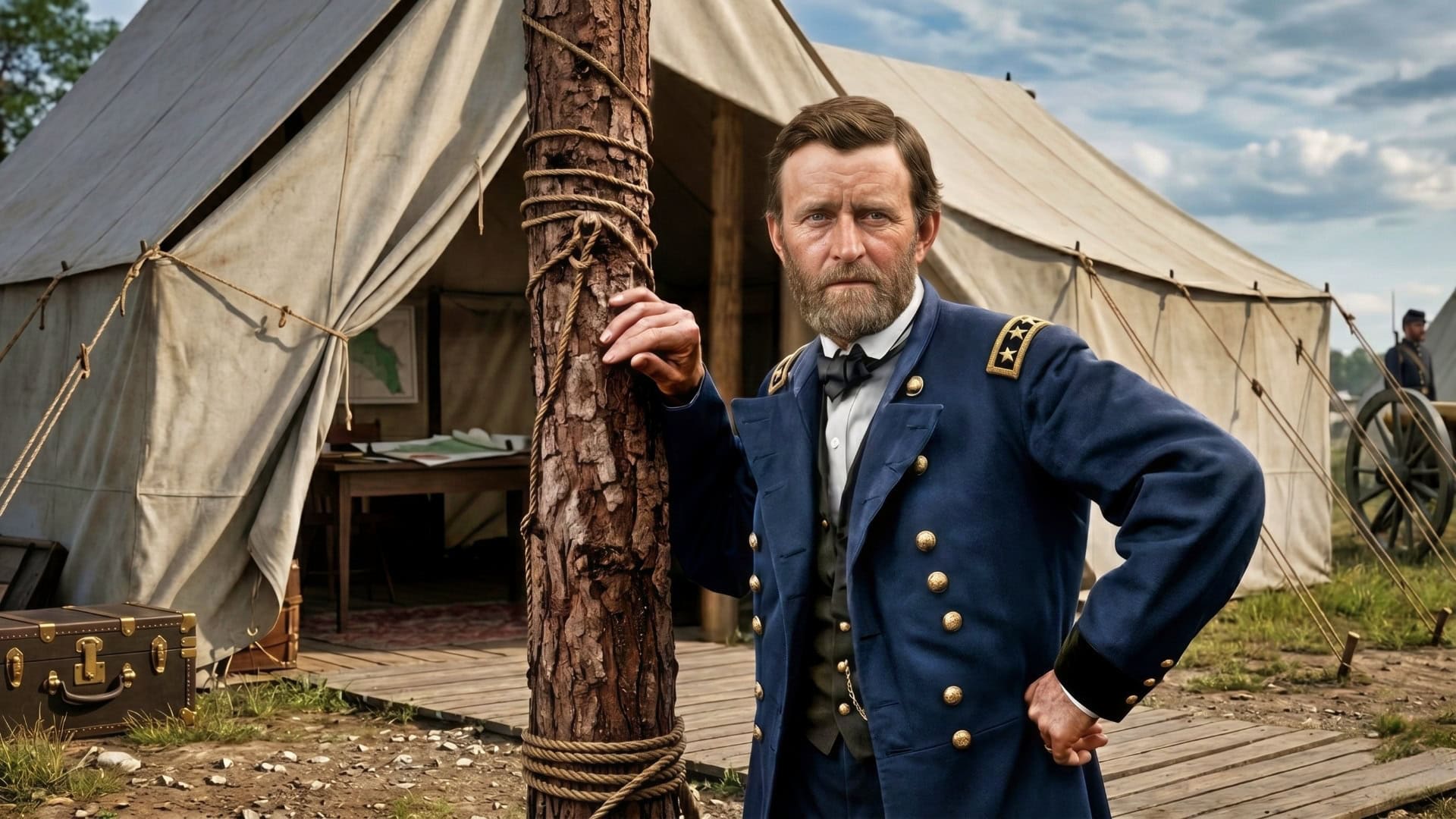
Ulysses S. Grant was one of the most fascinating figures in American history. He was a famous soldier and general who led the Union Army to victory in the Civil War. He then became a two-term President of the United States.
But Grant also failed at nearly every profession he ever held, excelling only as a soldier (a profession that he personally didn’t care for) and as a statesman.
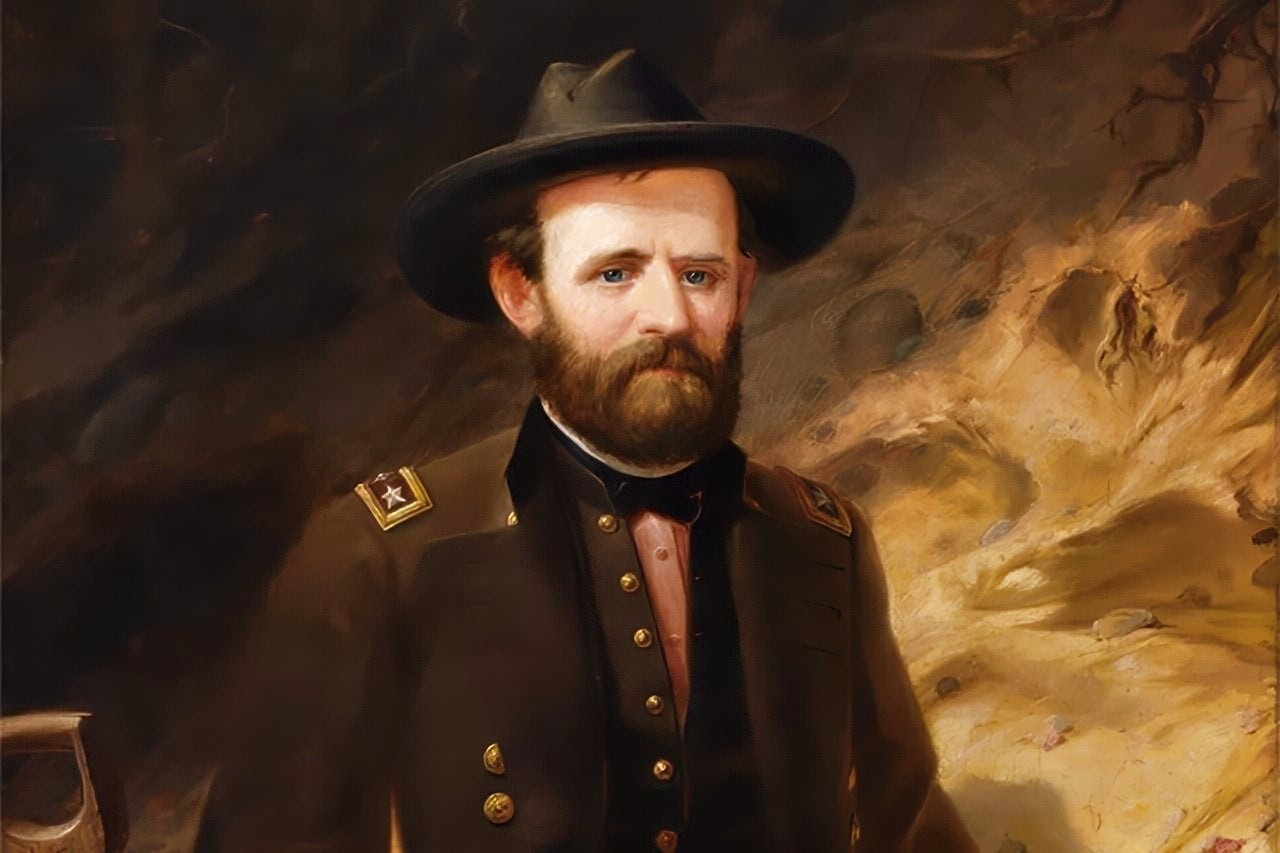
General Grant U.S. Army. Image Credit: Creative Commons.
After his presidency, his business failed, and he was saddled with debt and throat cancer. But Grant wrote his memoirs, “The Personal Memoirs of U.S. Grant,” which he finished just days before his death, and his family was well cared for long after.
Grant’s Entire Quote And Its Meaning:
Grant’s quote, which was reportedly given to John Hill Brinton, a Major and Surgeon, prior to the start of the Tennessee River Campaign in 1862 during the Civil War, was:
“The art of war is simple enough. Find out where your enemy is. Get at him as soon as you can. Strike him as hard as you can, and as often as you can, and keep moving on.”
Grant believed that warfare, while complex in execution, relied on the simple principle of identifying and relentlessly engaging the enemy until they were defeated.
Grant’s quote embodied his simple yet aggressive fighting spirit, which won him the admiration and trust of President Abraham Lincoln, who, after tiring of previous Union generals’ failures, decided to place Grant in overall command of the Union Army in 1864. Lincoln said of Grant, “I can’t spare this man (Grant), he fights.”
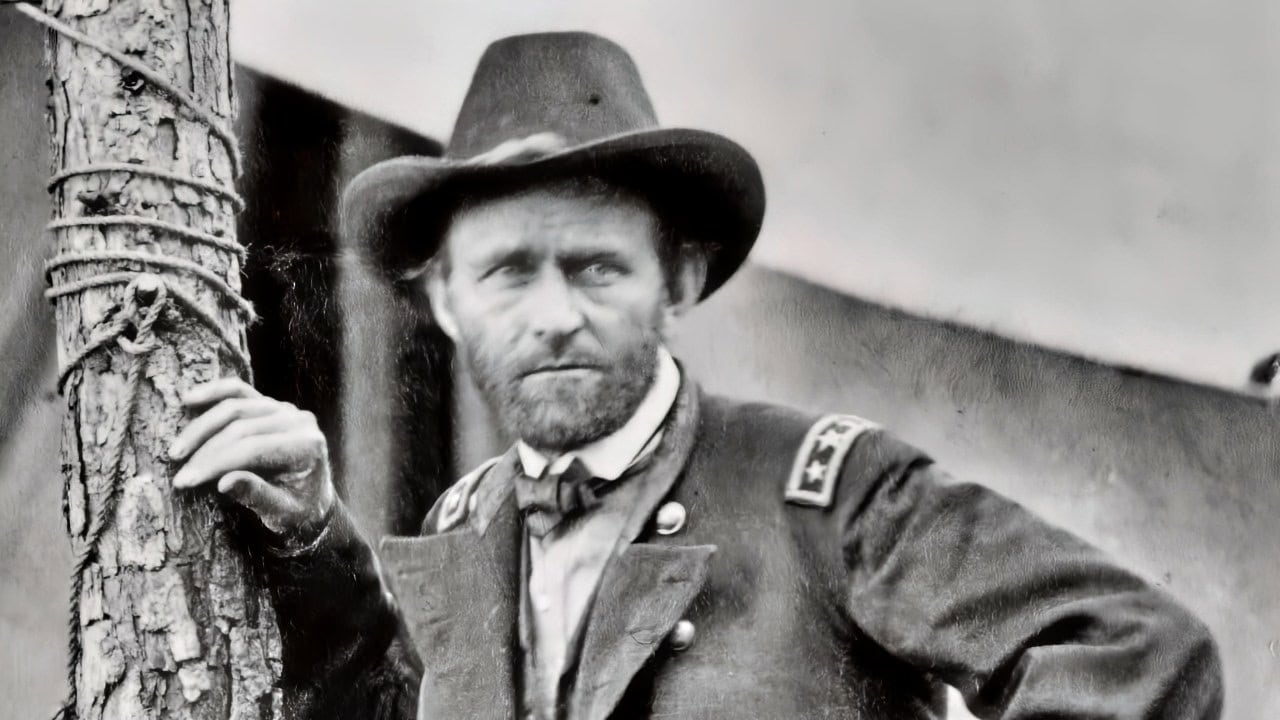
General Ulysses S. Grant at Cold Harbor. Image Credit: Creative Commons.
Early Years And Military Service:
Born on April 27, 1822, Hiram Ulysses Grant grew up in Georgetown, Ohio. His father, Jesse Root Grant, owned a tannery, but his son hated the horrible stench and the filth of the family business.
His father arranged an appointment for him at the US Military Academy at West Point, against Grant’s wishes. Upon arrival, Grant found that no one listed as a cadet was Hiram Ulysses Grant; instead, it was Ulysses S. Grant, and the young man quickly changed his name.
His classmates knew him as “Sam” Grant. He didn’t excel in studying but was an accomplished horseman and mathematician. He graduated 21st in a class of 39. After graduation, Grant was assigned to the 4th Infantry in Missouri, where he met his future wife, Julia, who was the sister of his classmate at the Point.
Mexican-American War:
Grant then served in the Mexican-American War as a Quartermaster, but also showed bravery under fire. Many officers Grant served with in Mexico would also continue to serve during the Civil War, on both sides, including Robert E. Lee. The pair met, but Lee didn’t recall the meeting, much later, when he surrendered at Appomattox Court House.

Ulysses S. Grant. Image: Creative Commons.
After the war, Grant was moved around, but he was unhappy with the Army and, after being separated from his wife and sons, decided to resign in 1854.
Grant tried and failed at several careers before working for his father in Illinois.
The Civil War And Fame As “Unconditional Surrender” Grant:
When the Civil War broke out, Grant was appointed as a colonel of the 21st Illinois Volunteers. Later that summer, President Abraham Lincoln promoted Grant to the rank of brigadier general after his victory at the Battle of Paducah.
Grant’s first major victory came in February 1862, when his troops captured Fort Donelson in Tennessee.
When the Confederate general in charge of the fort, Simon Bollivar Buckner, a friend and West Point classmate, asked about terms of surrender for the Battle of Fort Donelson, Grant famously replied, “Sir: Yours of this date proposing Armistice, and appointment of Commissioners, to settle terms of Capitulation, is just received. No terms except unconditional and immediate surrender can be accepted. I propose to move immediately upon your works.”
Battle Of Vicksburg, Grant Splits The Confederacy in Two:
While Lee’s Army of Northern Virginia was losing the epic Battle of Gettysburg in Pennsylvania, Grant’s army was winning an equally important victory in the West.
Grant’s siege campaign against the Confederate stronghold of Vicksburg, along with the US Navy’s use of gunboats in the Mississippi River were instrumental in getting the city to surrender.
The combined naval bombardment with Grant’s artillery on land was the catalyst for winning the battle. It effectively split the Confederacy in two and ensured that the United States controlled the Mississippi.
Wearing Down The Confederacy and Lee, And Success:
President Lincoln had had enough of generals who couldn’t fight, or in the case of the egomaniacal George McClellan, wouldn’t fight. He appointed Grant in charge of the Union Armies in 1864, thereby bringing the war to an end.
Grant initiated a grinding, horrible war of attrition against Lee and the Confederacy. It was a war the South could not ever hope to win. By early 1865, Lee knew he was defeated and met with Grant at the McLean House of Appomattox Court House, where he surrendered on April 9, 1865.
Rather than crowing about the victory, Grant showed a humble, conciliatory approach to victory. He wrote many years later in his memoirs, “I felt like anything rather than rejoicing at the downfall of a foe who had fought so long and valiantly, and had suffered so much . . .our men commenced firing a salute of a hundred guns in honor of the victory. I at once sent word, however, to have it stopped. The Confederates were now our prisoners, and we did not want to exult over their downfall.”
Grant’s two terms as president were known for his attempts to bring the North and South back together, but were beset with scandals by members of his party and administration.
About the Author: Steve Balestrieri
Steve Balestrieri is a National Security Columnist. He served as a US Army Special Forces NCO and Warrant Officer. In addition to writing on defense, he covers the NFL for PatsFans.com and is a member of the Pro Football Writers of America (PFWA). His work was regularly featured in many military publications.