
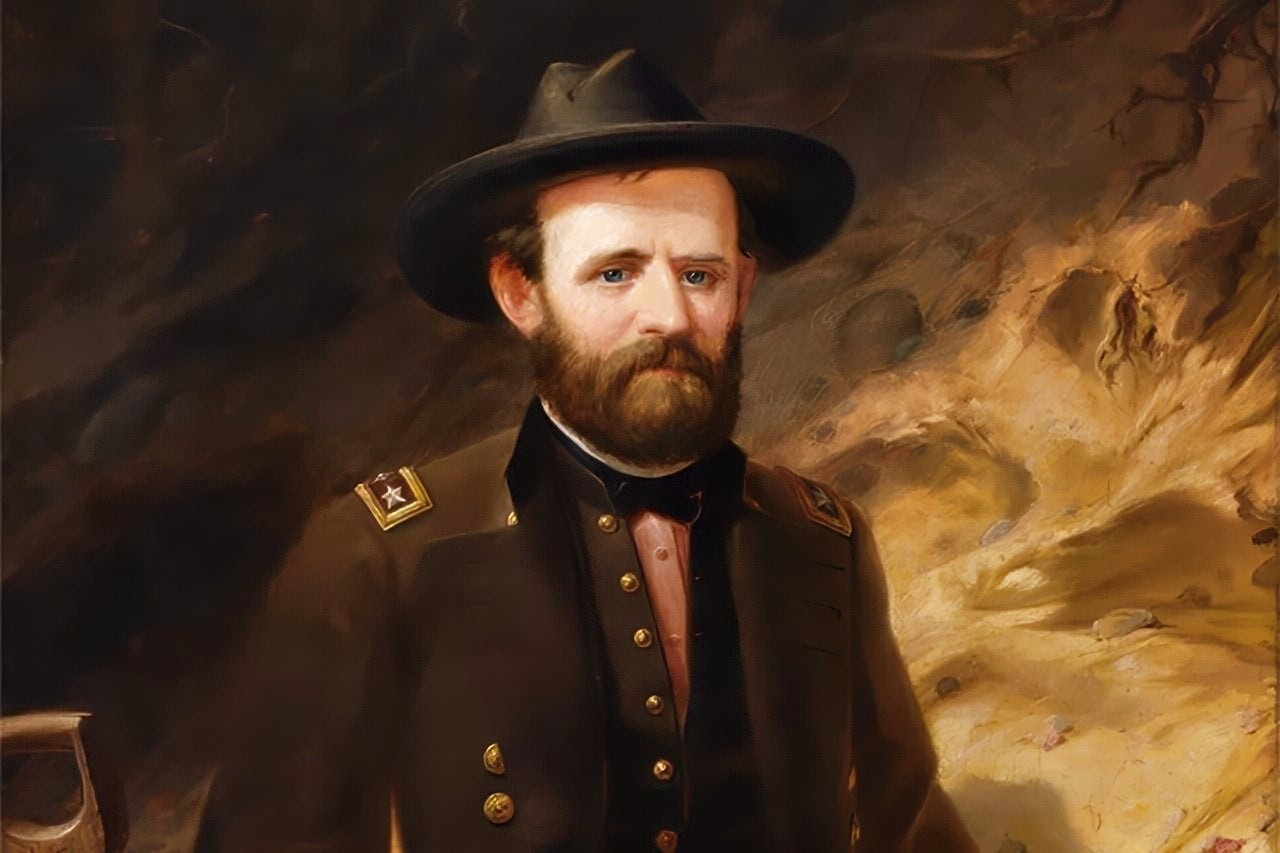
Key Point and Summary – Ulysses S. Grant’s wartime approach was simple: keep contact, keep moving, and keep the enemy under pressure.
-After early Confederate successes in the East, Grant brought his hard-earned Western mindset to Virginia in 1864. Instead of retreating after bloody fights in the Wilderness and Spotsylvania, he sidestepped south, forcing Robert E. Lee to react again and again.
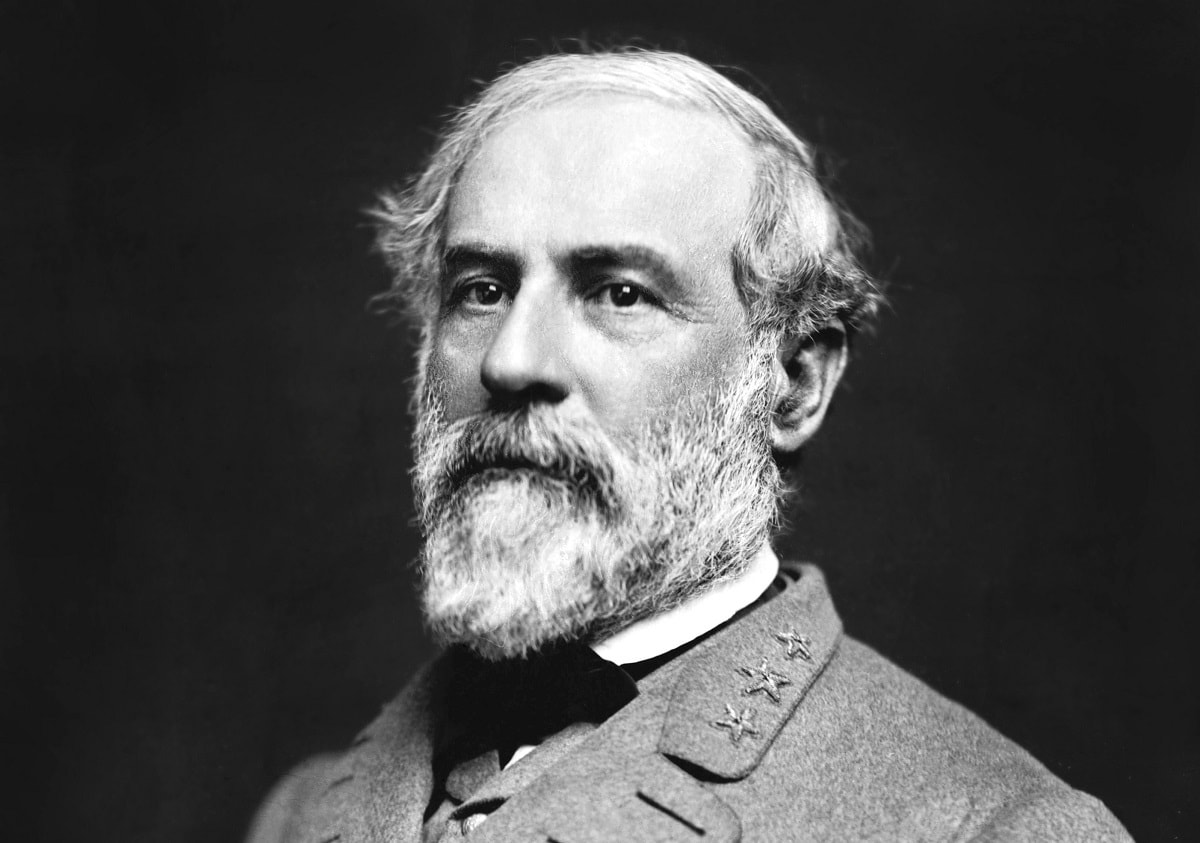
Robert E. Lee. Image: Creative Commons.

L. Prang and Co. print of the painting “Hancock at Gettysburg” by Thure de Thulstrup, showing Pickett’s Charge. Restoration by Adam Cuerden.
-The campaign became a grinding contest of endurance and logistics, one the Confederacy could not sustain. Continuous pressure set the conditions for the siege of Petersburg, the fall of Richmond, and Lee’s surrender at Appomattox.
-It’s why his reputation for relentless offense endures.
Ulysses S. Grant’s 1 Rule of War: Keep Attacking
“In every battle, there comes a time when both sides consider themselves beaten. Then he who continues the attack wins.” This quote from US General and President Ulysses S. Grant reflects the core principle of his strategy during the American Civil War.
During the war, Grant employed a tactic of Continuous Contact against the Confederate Army under General Robert E. Lee. The goal of this strategy was to maintain constant pressure on the enemy and deprive them of the initiative, thereby enabling the Union to counterattack and push the South back.
This tactic was used effectively during the Overland Campaign, where Lee regained the initiative.

Civil War. Image: Creative Commons.
The South on the Offensive
At the onset of the Civil War, the South quickly seized the initiative in the Eastern theater after the First and Second Battles of Bull Run. Under the able command of General Lee, the Confederates advanced deep into Virginia, winning many strategically important battles along the way.
Lee was a master of tactical operations and renowned for his ability to read terrain and enemy movements. It was thanks to his quick thinking and tactical prowess that he was able to turn a potential defeat at the Second Battle of Bull Run into a decisive victory for the South.
The Confederate Army continued to push into Virginia, and Lee kept pressing his advantage. At the Battle of Fredericksburg, Lee’s forces successfully seized Marye’s Heights, which gave the South the advantage over the attacking Union forces.
Suffering several significant defeats, the Union forces were forced back, allowing the enemy to gain a foothold in Maryland. The South continued to advance until the Battle of Gettysburg, during which Lee’s forces were halted and eventually driven back. This defeat proved a significant turning point in the war, ultimately leading to the South’s defeat.
General Ulysses S. Grant: Turning the Tide of the War
Meanwhile, in the Western theater, General Ulysses S. Grant was making a name for himself. Like Lee, Grant was an aggressive general. Unlike Lee, Grant had an overwhelming manpower advantage and could afford to take larger losses.

Ulysses S. Grant. Image: Creative Commons.
In contrast, the South had only a limited pool of manpower to call upon, making every Southern defeat all the more painful. Unlike many other Union generals, Grant was unafraid to leverage the numerical superiority of the North and was more than willing to invade the South and conquer it. His war-ending 1864 Overland Campaign against Lee’s army reflected Grant’s war-long philosophy that “the art of war is simple enough. Find out where your enemy is. Get to him as soon as you can. Strike him as hard as you can and as often as you can and keep moving on.”
In the West, Grant led the North to many victories, including the Battles of Fort Henry and Fort Donelson, which often resulted in large numbers of Confederate surrenders. In 1864, President Lincoln appointed Grant Commander of all Union Armies and ordered him to win the Civil War.
Lee may have been a master of tactical warfare, but Grant was a more strategic visionary. He knew that the best way to end the war decisively was to wage total war against the Confederacy.
On Grant’s orders, Maj. General William Sherman (the man after whom the M4 Sherman was named) seized provisions, destroyed homes, farms, and railroads. Grant justified these controversial measures, insisting that the Confederate Army would have used them otherwise.
Grant Stops Lee: Continuous Contact in Action
Grant’s forces would meet Lee during the Overland Campaign, in which Grant intended to draw Lee into a defense at Richmond, whereby the Union would attempt to pin down and ultimately destroy the Confederate Army. It was during this campaign that Grant utilized his doctrine of Continuous Contact.
Knowing full well that Lee was an aggressive general, Grant continued to press the Southern forces, never allowing them to gain the offensive initiative.
Both sides suffered tremendous casualties, but the South was forced to draw back numerous times. Both sides used entrenchment to slow counterattacks. Trench warfare had been introduced earlier in the Civil War, but it was during the Overland Campaign that it was most widely used.
The end of the Confederacy came at the Siege of Petersburg, when Lee’s forces attempted to break the Union’s hold on the city near Richmond. By this time, Lee’s army had been stretched thin due to heavy casualties and desertions. In a last-ditch attempt to free the city from Union control, he ordered one last offensive; Grant used it to surround the entire Petersburg-Lynchburg area, effectively cutting off the city.
Cannon Firing. Image Credit: Creative Commons.
It was at this point that Lee realized he had lost. He ordered a full retreat from the region, allowing the Union to seize the Confederate capital.
Lee may have been an excellent commander, but Grant’s strategic planning, combined with his ability to control the battlefield, put pressure on the Confederacy, never once allowing them to regain the offensive initiative.
Lee’s overaggressive strategy gave the South some of its most significant victories, but it also resulted in some of its most crushing defeats. Grant, meanwhile, possessed the manpower advantage, and he utilized that advantage to its fullest effect. His use of Continuous Contact proved decisive in the war, enabling the Confederacy’s complete and utter defeat.
About the Author: Isaac Seitz
Isaac Seitz, a Defense Columnist, graduated from Patrick Henry College’s Strategic Intelligence and National Security program. He has also studied Russian at Middlebury Language Schools and has worked as an intelligence Analyst in the private sector.