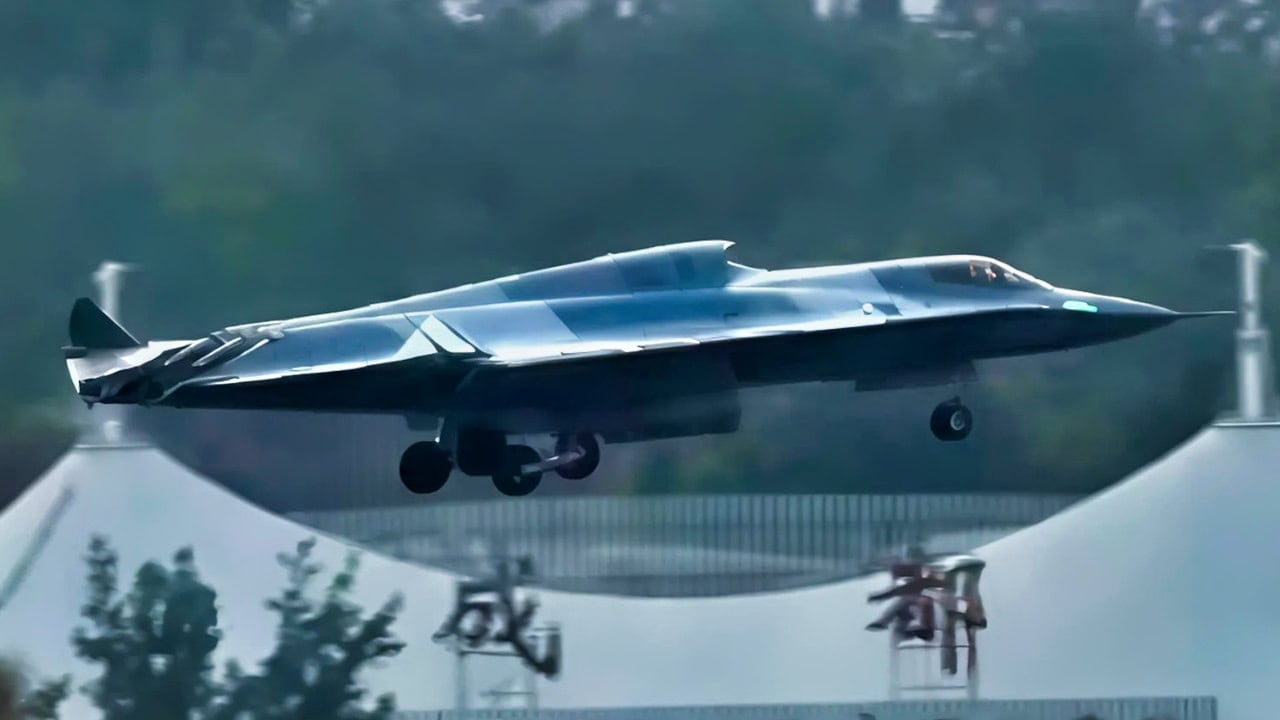
Key Points and Summary – China’s emerging J-36 sixth-generation aircraft may be pursuing a breakthrough most stealth jets still struggle with: exportable electrical power.
-Chinese research cited in recent analysis describes a “reconfigurable intelligent surface” that can harvest ambient electromagnetic energy and optimize beamforming, sensing, and communications—raising the possibility of a fighter-sized platform with unusually robust onboard power for advanced avionics, longer-range sensors, and potentially even airborne lasers.
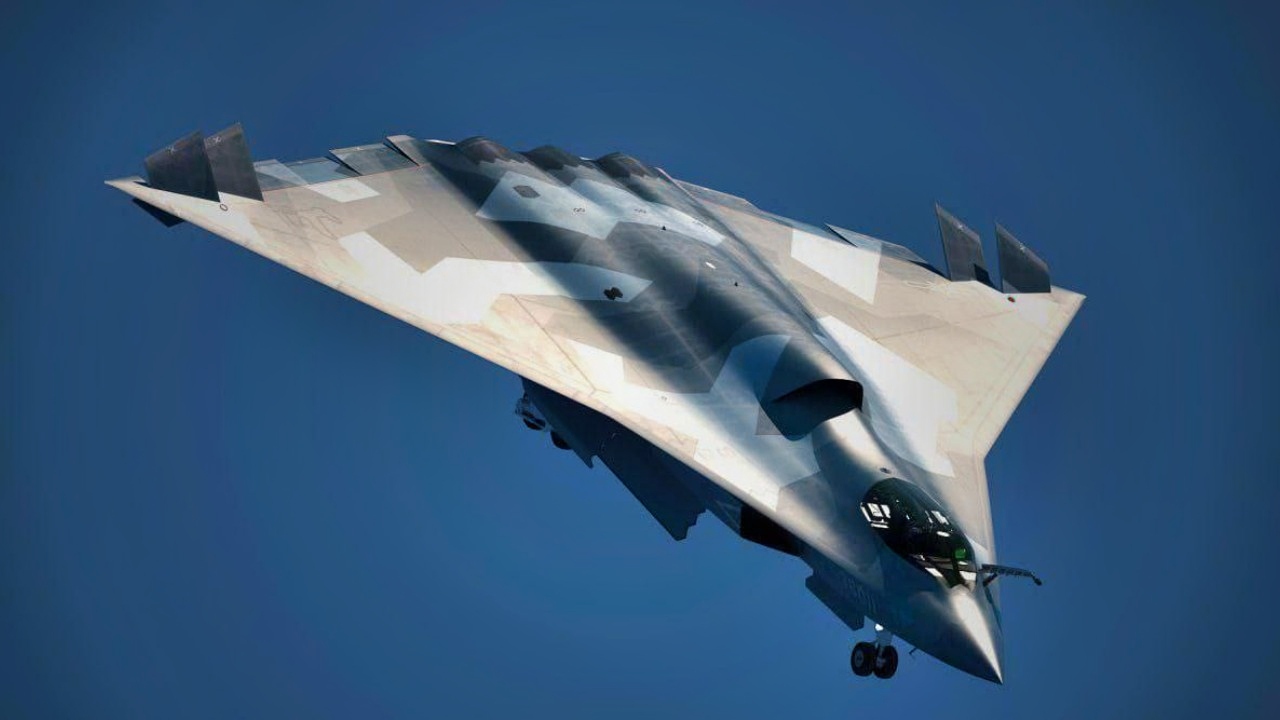
J-36 Fighter Artist Rendition. X Screenshot.
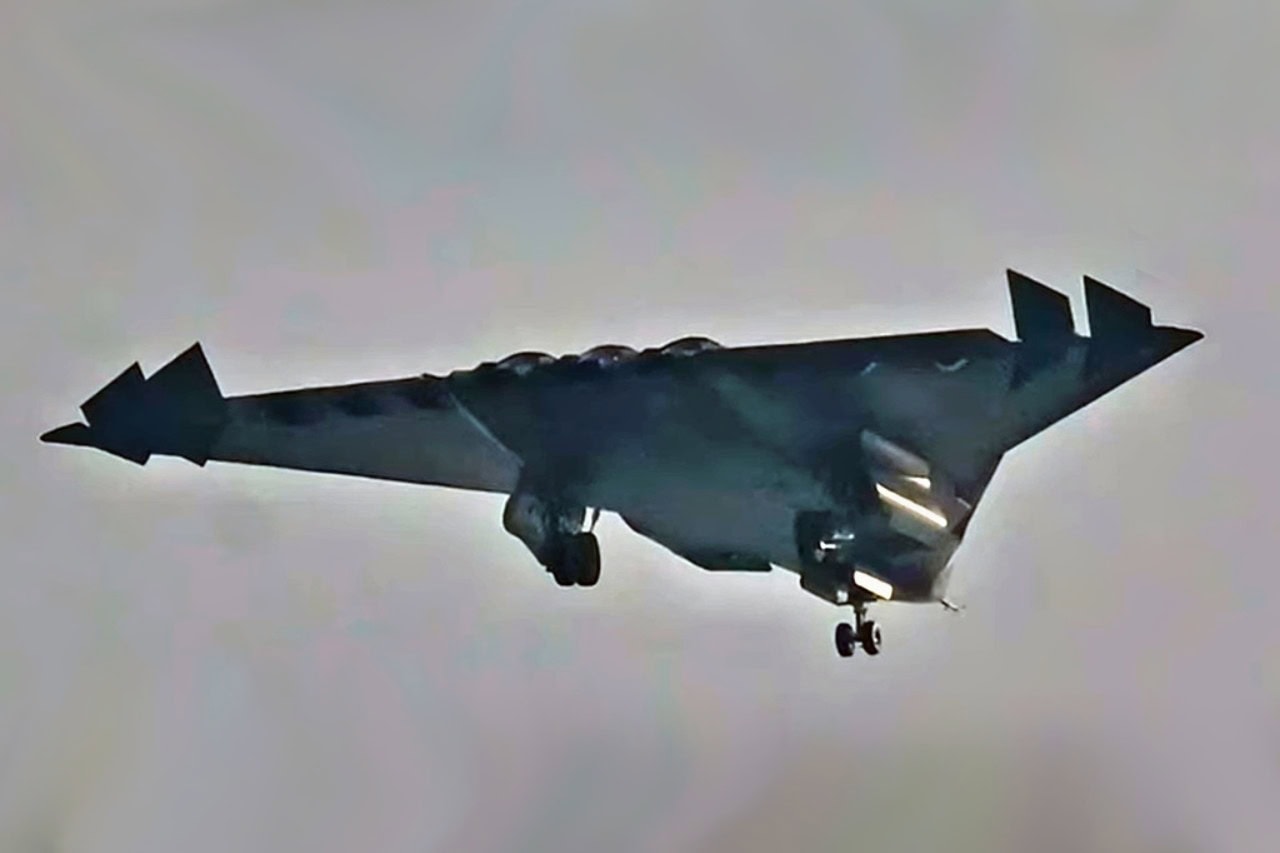
J-36 Fighter from China. Image Credit: Creative Commons.
-The aircraft’s tailless blended-wing shape and apparent three-engine layout add to the intrigue, suggesting a hybrid concept combining fighter agility with bomber-like payload and endurance.
-Still, key unknowns remain, including mission systems maturity and whether the jet is still a demonstrator.
Why the J-36 Looks Like a Bomber and a Fighter at Once
China’s fast-emerging 6th-gen J-36 aircraft may be breaking new ground in electronics and exportable power while also introducing unprecedented stealth configurations. The three-engine fuselage appears to incorporate elements of both a stealth bomber and a stealth fighter jet. Apart from its external configuration, which appears to feature a “F-47-like” blended wing-body with no tails, the aircraft may also include unprecedented technological breakthroughs, including a “smart” electromagnetic surface capable of converting ambient electromagnetic waves into electrical power.
Beamforming Capabilities
Chinese-authored research published in March 2025 in “IEEE Internet of Things Magazine” suggests that new kinds of sensing and electromagnetic, AI-enabled “beamforming” can generate sustained electrical power for the aircraft without needing traditional batteries.
The “smart” surface of the J-36 draws electrical power from radar or other environmental sources to sustain on-board avionics, sensing, and communications systems.
“In the case studies, by jointly optimizing parameters such as transceiver beamforming, robot trajectories, and RIS coefficients, solutions based on multi-agent deep reinforcement learning and multi-objective optimization are proposed to solve problems such as beamforming design, path planning, target sensing, and data aggregation,” said the Chinese-scientists researchers in the essay, called “Reconfigurable Intelligence Surface for Internet of Robotic Things.
“A reconfigurable intelligent surface (RIS)-aided IoRT (Internet of Robotic Things) network is proposed to enhance the overall performance of robotic communication, sensing, computation, and energy harvesting.”
Two-Dimensional Reflecting Material
This Chinese research, conducted by several scientists from Beijing University of Posts and Telecommunications and Tsinghua University, is cited in an essay from “Interesting Engineering” that posits that China’s J-36 may incorporate “two-dimensional reflecting material” capable of converting electromagnetic waves into usable power in real time.
The IEEE essay suggests the new technology would remove the need for batteries, which is undoubtedly significant, yet most fighter jets receive on-board power from engine-driven generators. It would be relevant to determine whether this kind of technological application can also supplement, support, or improve generator-driven power sources on fighter jets.
Regardless, new methods of self-generating on-board power could introduce significant new tactical possibilities, given the extent to which stealth fighter-jet systems rely on exportable power sources.
High-speed computer processing, sensors of all kinds, weapons integration, and fire control all require sustainable amounts of expeditionary electrical power.
Therefore, it seems conceivable that a massively increased ability to generate electrical power could support stronger computing, more durable avionics, longer-range high-fidelity sensing, and nose-radome radar sensitivity.
J-36 armed with Lasers
The most significant advantage may pertain to fighter-jet-mounted lasers. For many years, the Air Force Research Laboratory has been working on innovative methods of generating the amount of exportable power needed to support on-board laser weapons for fighter jets.
Lasers in particular require high levels of sustainable, expeditionary electrical power to function, and providing sufficient power in a small, mobile form factor has proven extremely difficult for weapons developers. Lasers are much more easily integrated into larger platforms, such as surface ships, capable of transporting large, yet mobile, power sources.
Engineering power sources strong enough yet small enough to integrate into a fighter jet remains challenging for weapons developers hoping to arm stealth fighter jets with lasers.
This new technology, proposed by Chinese researchers, should it come to fruition and be operational on the J-36, could, in theory, generate the amounts of electricity needed to support airborne-laser weapons.
Optimal Blend of Attributes
Does the J-36 strike an optimal blend of attributes capable of introducing unprecedented air-attack possibilities and laser-armed stealth air attack?
This certainly seems possible, yet there are still too many unknowns. For example, what kinds of sensing, mission systems, or fire-control technologies does the J-36 have?
Can it operate with F-35-like long-range high-fidelity sensors such that it can destroy enemy targets at standoff distances where it is not detected?
What kinds of computing, fire-control, and weapons interfaces does the aircraft incorporate? Does it really achieve a new degree of stealth, on-board power, and multi-role versatility?
The PLA itself might not yet have the answers to all of this, as the aircraft may only be in a demonstrator or experimental phase, not yet ready for production.
There is evidence to support this, according to an interesting essay from the Aviationist, which noted a forward data probe on the aircraft, a feature typically used during the initial testing and assessment phases of new platforms to collect data for further analysis.
J-36 Concepts of Operation
All of these variables raise questions about the intended Concepts of Operation for the fighter, because the J-36 could connect laser-armed fighter-jet-like speed with bomber-like payload carriage.
Available images of the J-36 do show a large internal weapons bay, suggesting a low-altitude tactical bomber capable of carrying a large B-2-like ordnance payload.
This allows an aircraft to operate with a longer dwell time and to drop a larger number of weapons on a target in a single mission. The larger body also means the aircraft could fly longer missions by carrying more fuel than a standard fighter.
About the Author: Aviation Expert Kris Osborn
Kris Osborn is the President of Warrior Maven – Center for Military Modernization. Osborn previously served at the Pentagon as a highly qualified expert in the Office of the Assistant Secretary of the Army—Acquisition, Logistics & Technology. Osborn has also worked as an anchor and on-air military specialist at national TV networks. He has appeared as a guest military expert on Fox News, MSNBC, The Military Channel, and The History Channel. He also has a Masters Degree in Comparative Literature from Columbia University.