
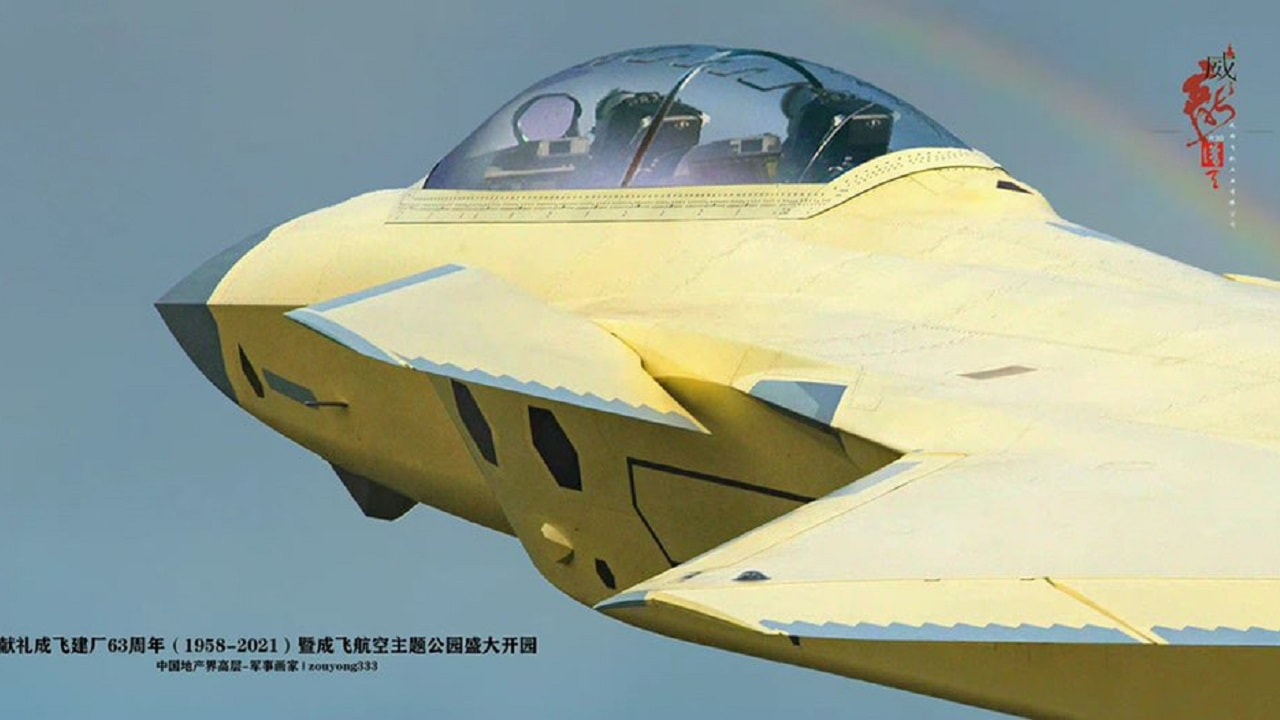
Synopsis: China used its September V-Day parade to showcase a new two-seat J-20S alongside the upgraded J-20A. Beijing says the extra cockpit is not just for training: it is intended to add a mission commander who can manage sensors, coordinate formations, and potentially control accompanying drones in manned-unmanned teaming.
-That concept hints at a stealth fighter acting as a small airborne command node, extending detection and strike reach beyond what a single pilot can handle.
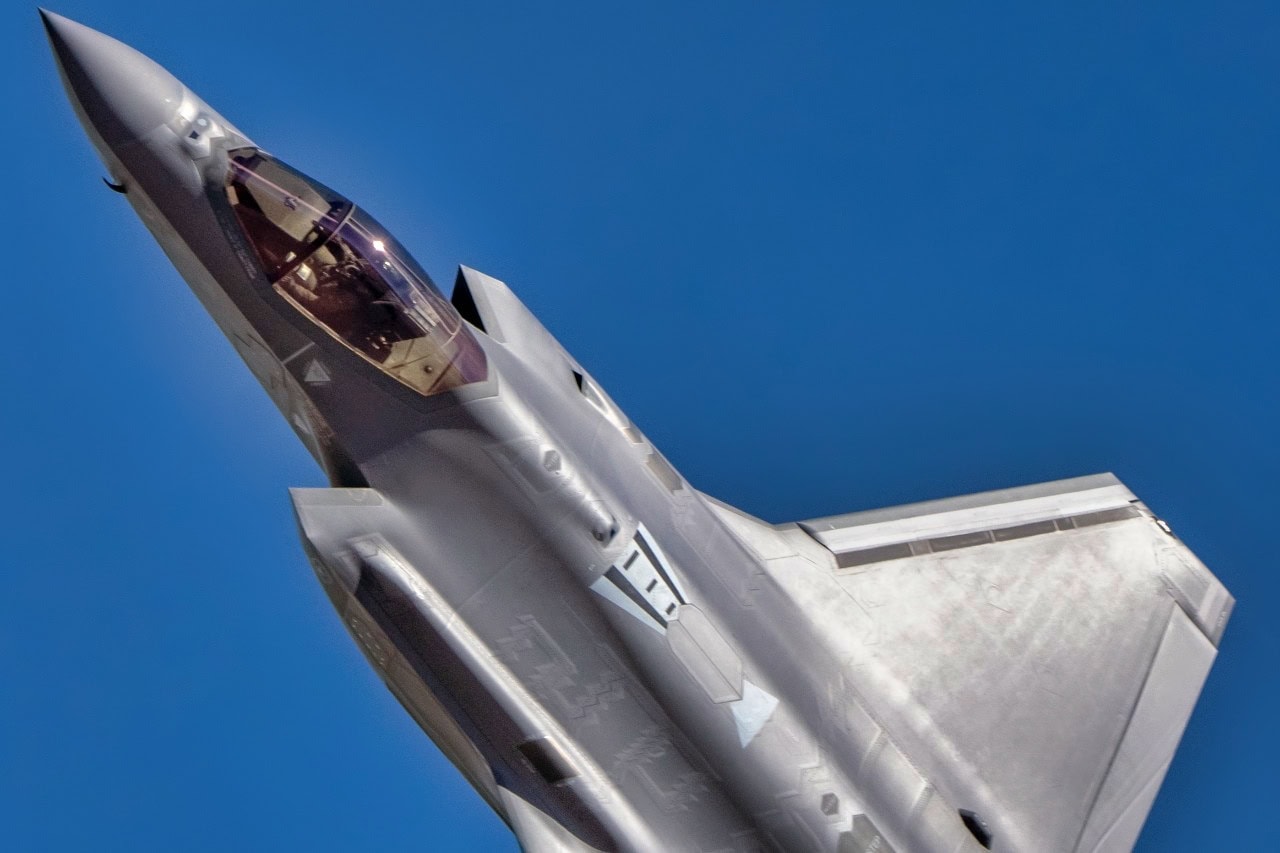
U.S. Air Force Maj. Kristin “BEO” Wolfe, F-35A Lightning II Demonstration Team pilot and commander, flies during the 2021 Reno Air Races, Reno, Nev., Sept. 18, 2021. The 2021 Reno Air Races featured performances from the U.S. Air Force F-35A Demo Team and the U.S. Air Force Thunderbirds. (U.S. Air Force photo by Capt. Kip Sumner)
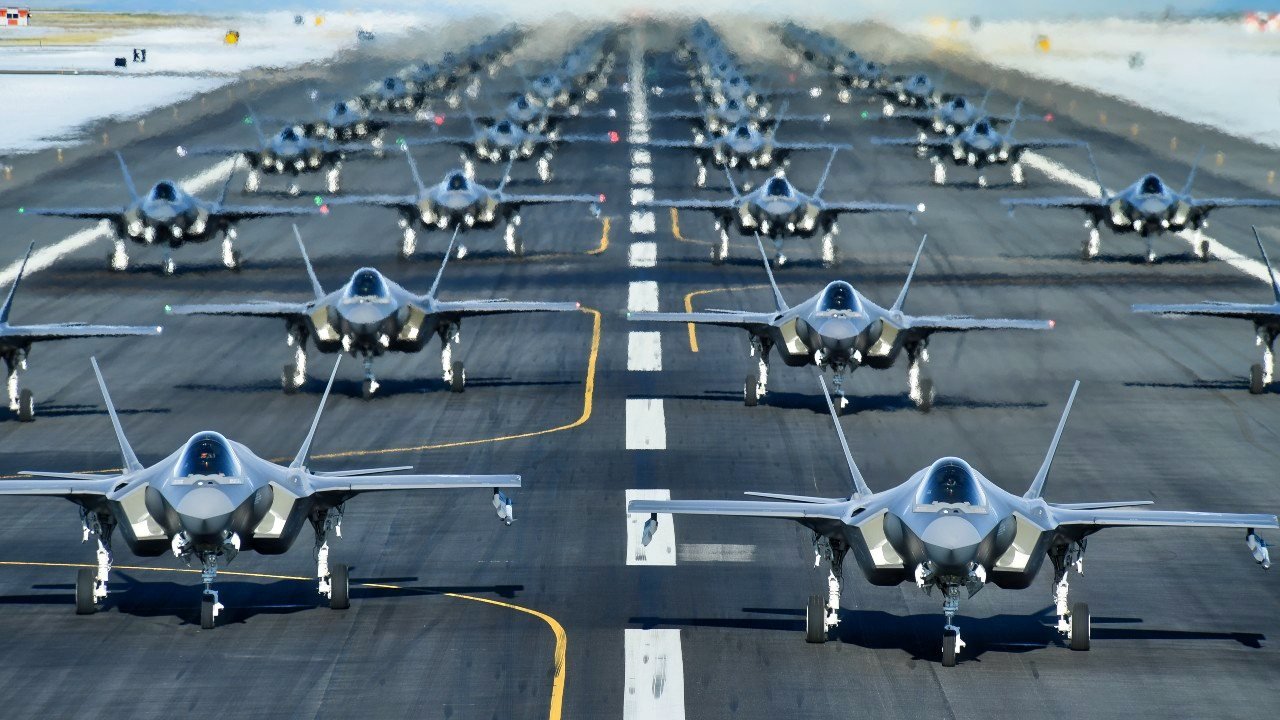
F-35 Elephant Walk. Image Credit: Creative Commons.
-The appearance also signals confidence in domestic engine and avionics progress—and a push to operationalize higher-end tactics, not just airframes.
-For Indo-Pacific planners, that raises stakes.
China’s Two-Seat J-20S Has a Message for the Pacific: “Mission Commander” Airpower
At its V-Day military parade in early September, China displayed a wide variety of new and previously unseen weapons, including the two-seat J-20 jet.
Per the state-run Global Times newspaper, the J-20S is the world’s first fifth-generation fighter jet to feature two seats. It was formally unveiled at the Zhuhai Airshow in 2024, after reports in 2021 appeared to confirm that such a jet was in the works.
The second seat, per that report, is “not a simple add up of a pilot, but will bring much higher combat performance, and the aircraft’s emergence will have pioneering significance.”
“Having one more pilot means having one more mission commander. In the era of the fifth-generation fighter jet, the addition of a pilot to the J-20S is like a number ten player in soccer, who could both score points on his own and command the members of the warplane formation in combat,” military expert Zhang Xuefeng told the Chinese outlet.
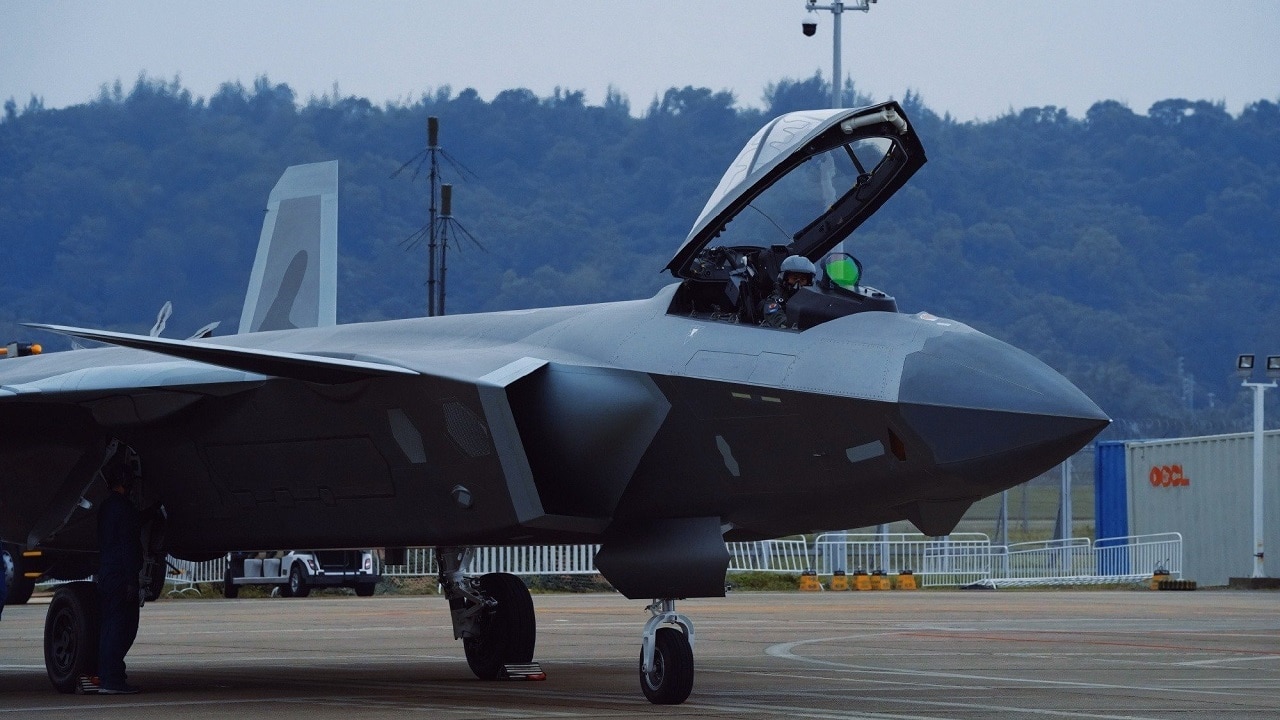
J-20 Fighter. Image Credit: Creative Commons.
The second pilot in the J-20S might serve a different function than has typically been the case.
“In the past, the function of the back seat of a two-seat fighter jet was used to train new pilots or for the second pilot to operate airborne weapons, allowing the front seat pilot to focus on flight missions. However, the addition of a second pilot to the J-20S may not have been for these tasks,” military affairs expert Fu Qianshao told the Global Times. Fu added that the J-20S should be seen as “the world’s first 5.5th generation fighter jet, putting China in a leading position in the field of manned-unmanned cooperative operations in the air.”
“Although the J-20 has made multiple appearances at military parades and air shows, every time it makes an appearance, it has new upgrades and improvements, and every time it brings surprises,” Fu added in the Global Times story.
The Unveiling
As reported a little over a year ago, the fighter arrived at the China International Aviation and Aerospace Exhibition in Zhuhai.
Last November, China’s Ministry of National Defence (MND) announced that the Aviation Industry Corp of China had “declassified” the J-20S.
The corporation, at the time, described the J-20S as “A heavy-duty radar-evading fighter jet with long-range operation and multifunction capabilities.”
That report added some more details about the jet.
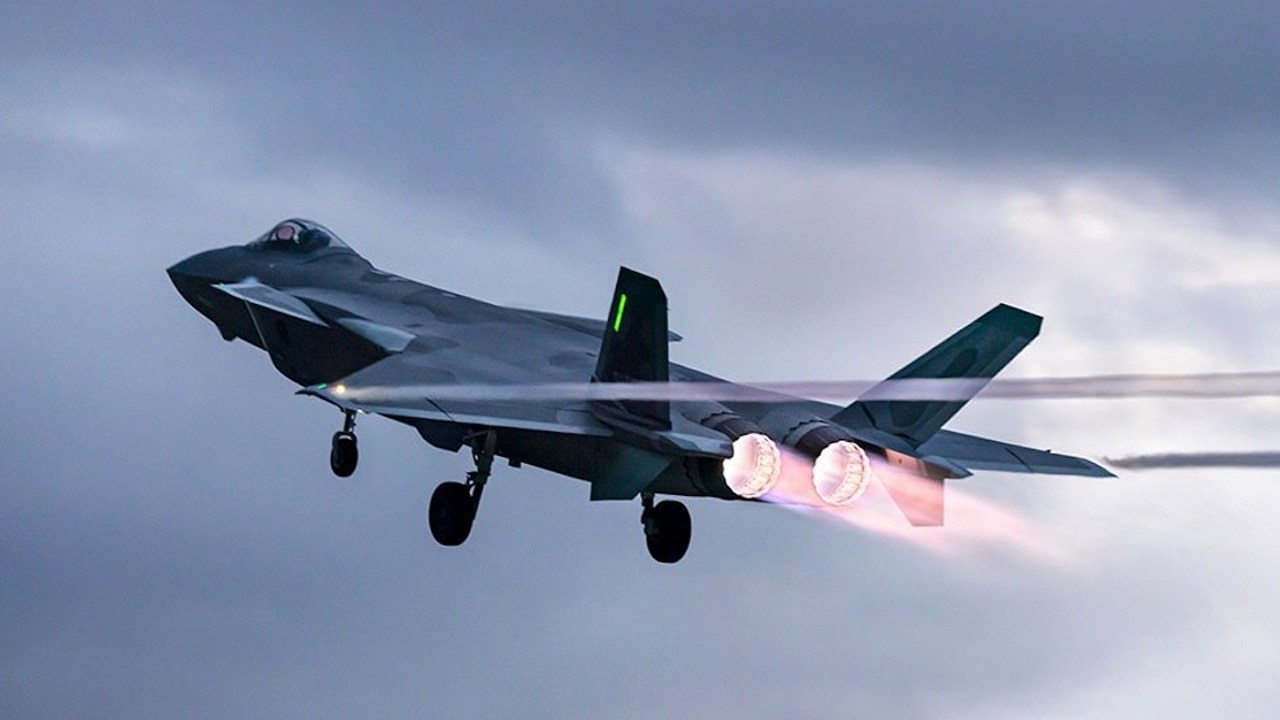
J-20 Fighter. Image Credit: Chinese internet.
The jet was “designed by the AVIC Chengdu Aircraft Design and Research Institute in Sichuan province based on its J-20 baseline, single-seat model, which is China’s first stealth combat aircraft. The J-20 conducted its debut flight in January 2011 and was officially declassified in November 2016, when it staged a brief flight performance at the 11th China International Aviation and Aerospace Exhibition.”
The original J-20 first flew in 2011 and was “declassified” five years later as China’s first stealth fighter jet, developed by a country outside the West.
The MND report in late 2024 cited Song Zhongping, described by Air Force Technology as a military affairs commentator and retired PLA officer.
“According to an introduction from the AVIC, the J-20S has good situational awareness capability, and that means it can act as a small-sized early-warning platform. The new model can also guide drones to carry out strikes against targets. All these new functions promise longer detection and fighting range,” he said.
J-20S Fighter from China’s Air Force: How It Works
When the J-20S debuted at the parade, Air and Space Forces reported that the parade featured the original J-20 Mighty Dragon, the “improved” J-20A, and the two-seat J-20S. Reports around the same time, including by The Aviationist, put the current J-20 fleet at least 300 jets.
“The jet can also be used as a trainer, as the government said the jet can be flown from the rear seat. It also noted that the J-20S is the only two-seat stealth fighter in operational service,” the report said.
Video has also surfaced of the J-20S at the parade.
Per The War Zone, “to accommodate a second crewmember, the J-20’s forward fuselage was redesigned. The aircraft also has enlarged tailfins and was powered from the start by locally developed WS-10C turbofan engines.” The site also noted that there is nothing especially similar in the arsenals of Western countries.
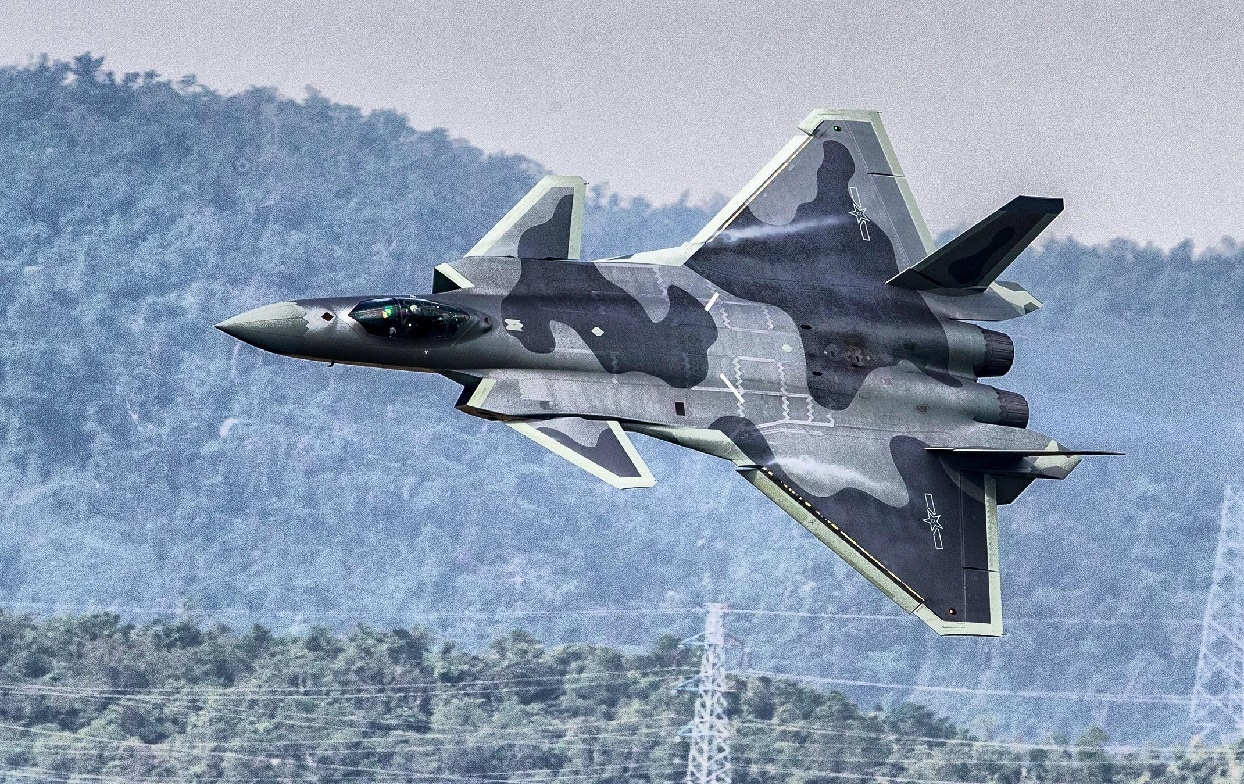
J-20 fighter Image: Creative Commons.
Entering Service
The War Zone reported in July, before the parade, that it appeared the fighter was either about to enter operational service or was close to doing so.
“A flurry of new images showing the two-seat variant of China’s J-20 stealth fighter has emerged online,” TWZ reported in June. “As well as providing new views of the two-seater, which also now wears a darker paint scheme, recent imagery published on Chinese social media reveals the progress being made in other fighter programs, including the J-35 family of carrier-based and land-based stealth fighters.”
Various clues are showing this, the outlet pointed out.
“At least one photo that emerged this month has been suggested as being an indication of operational service, with the J-20S aircraft in question wearing national insignia as well as five-digit serials associated with a frontline People’s Liberation Army Air Force (PLAAF) unit, specifically the 172nd Air Brigade,” TWZ reported.
By the time of the June report, there were already rumors, which later turned out to be true, that the J-20S would appear again at the September parade.
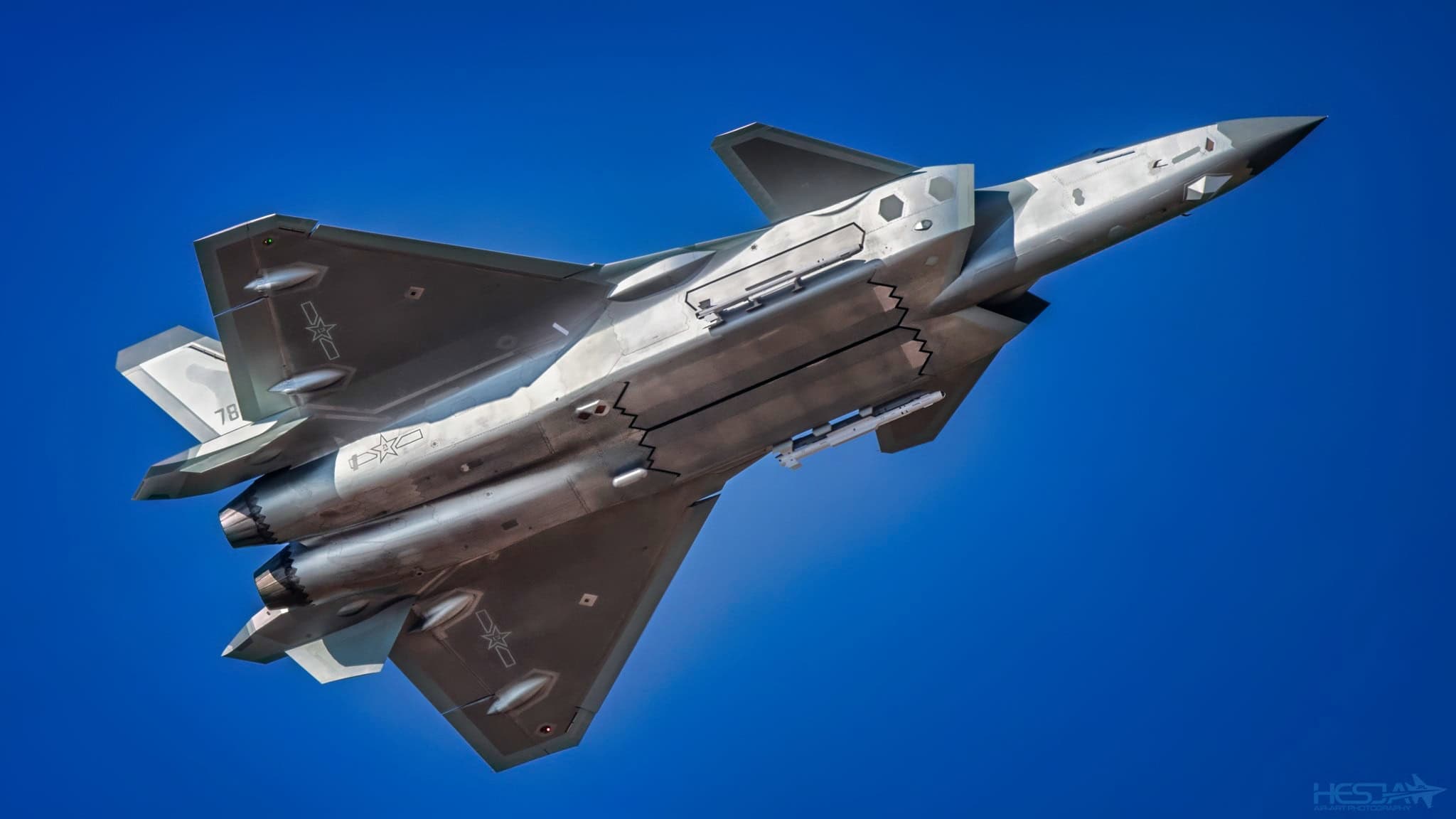
J-20 Fighter from China. Image Credit: Creative Commons.
TWZ also reported subtle differences in the aircraft compared to previous glimpses.
“First, the nose cone has been reprofiled compared with earlier J-20S aircraft. This suggests that it now accommodates the same radar found in the J-20A, the improved single-seat version of the stealth jet,” the outlet said.
“While unconfirmed, there are rumors that the active electronically scanned array (AESA) radar in the J-20A could feature gallium nitride (GaN) semiconductors. Compared with previous technology, GaN generates less heat and has the capacity to operate at higher voltages, meaning that output power can be increased, while component size can be reduced.”
About the Author: Stephen Silver
Stephen Silver is an award-winning journalist, essayist, and film critic, and contributor to the Philadelphia Inquirer, the Jewish Telegraphic Agency, Broad Street Review, and Splice Today. The co-founder of the Philadelphia Film Critics Circle, Stephen lives in suburban Philadelphia with his wife and two sons. For over a decade, Stephen has authored thousands of articles that focus on politics, national security, technology, and the economy. Follow him on X (formerly Twitter) at @StephenSilver, and subscribe to his Substack newsletter.