Key Points and Summary: F-47 NGAD Coming to Europe if FCAS Does Not Occur?
-European ambitions for a homegrown sixth-generation fighter are faltering. The Franco-German-Spanish Future Combat Air System (FCAS) envisions an AI-enabled Next-Generation Fighter teamed with “remote carrier” drones and tied together by a joint combat cloud.

FCAS. Image Credit: Industry Handout.
-But deep disputes over leadership, workshare, and control of key technologies, especially between Dassault and Airbus, have raised talk of canceling the fighter and salvaging only the cloud.
-If NGF slips or dies, NATO Europe may be forced to double down on upgraded F-35s or even adopt America’s F-47 concept, reinforcing dependence on U.S. airpower instead of breaking free from it.
FCAS vs F-47: Is Europe About to Hand the Future of Airpower Back to America?
French, German, and Spanish hopes for a 6th-gen fighter now linger in a haze of uncertainty. Early conceptual work continues on an ambitious effort to build an ultra-stealthy, fast, and highly networked European 6th-gen fighter.
The idea is as ambitious as it is potentially paradigm-changing, as the European countries envision an AI-enabled Future Combat Air System (FCAS) stealth fighter system capable of eluding advanced air defenses, controlling drone swarms, launching stand-off precision weapons, and seamlessly sharing information across domains in milliseconds, connecting air, surface, land, and space.
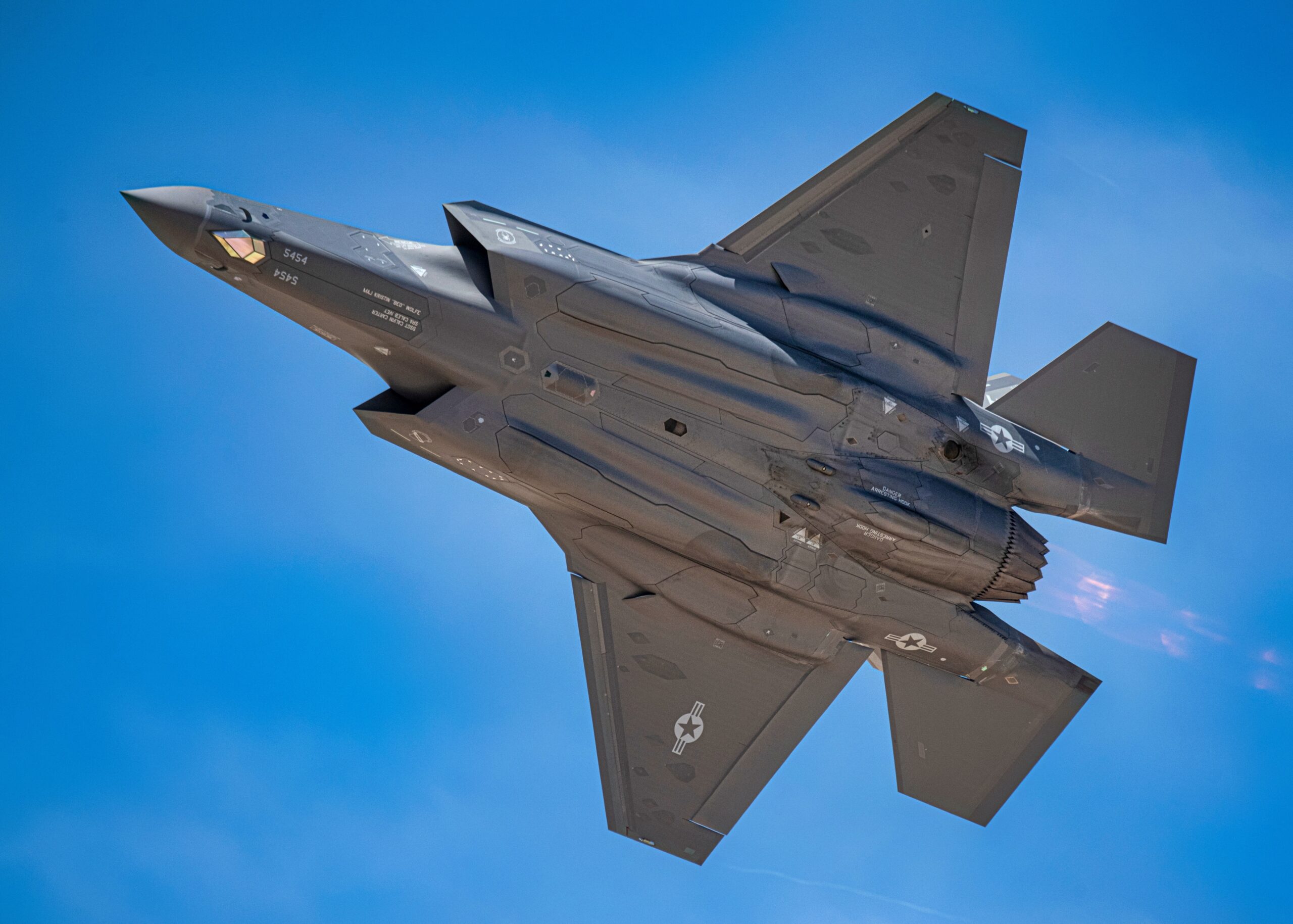
A U.S. Air Force F-35 Lightning II flies over Holloman Air Force Base, New Mexico, May 6, 2022. The F-35 Demonstration Team travels to shows around the country, as well as internationally, to highlight the combat capabilities of the F-35. The mission of the team is to recruit, retain and inspire. (U.S. Air Force photo by Senior Airman Jacob T. Stephens)
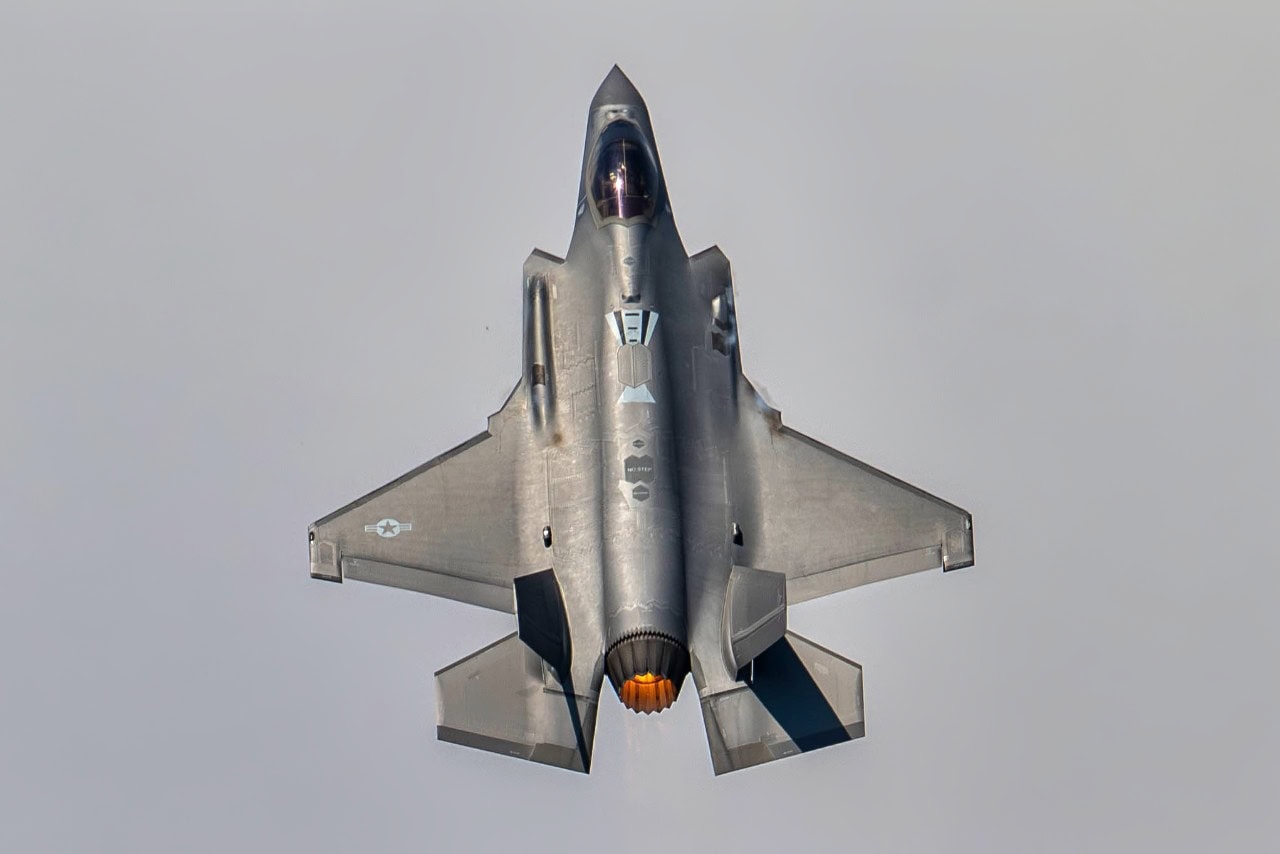
U.S. Air Force Maj. Kristin “BEO” Wolfe, F-35A Lightning II Demonstration Team commander, flies over Kennewick, Washington, during the Tri-Cities Water Follies Airshow Over the River, July 30, 2023. The F-35 Demonstration Team participated in the 2023 Tri-Cities Water Follies airshow and various other events in support of their mission to recruit, retain and inspire new and old generations of Airmen. (U.S. Air Force photo by Staff Sgt. Kaitlyn Ergish)
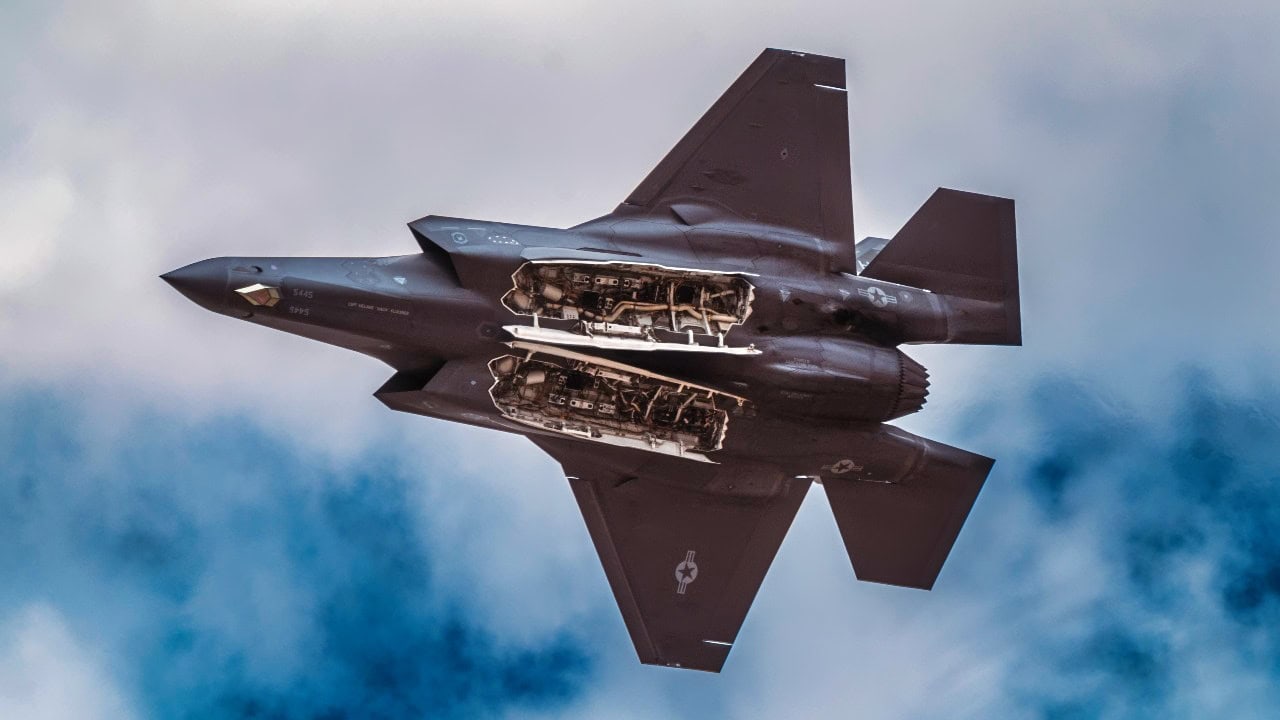
An F-35 Lightning II, assigned to the F-35 Demonstration Team, pays tribute to the past present, and future of Air Force aviation customs and capabilities during Luke Days airshow, March 23, 2024, at Luke Air Force Base, Arizona. Luke Days demonstrates the Air Force’s continuing progress in building the future of airpower with military and civilian air acts including the U.S Air Demonstration team the “Thunderbirds,” F-35A Lightning II, static displays, science, technology, engineering, and math exhibits, and military operations demonstrations. (U.S. Air Force photo by Airman 1st Class Mason Hargrove)
It is unclear whether the project will come to fruition, as there are public reports of friction between France and Germany over the industrial aspects of the jet’s development.
Should these differences be reconciled, the FCAS program will likely stay on its course to engineer an operational 6th-gen fighter by 2040 or sooner.
This manned centerpiece platform is called the NGF, for Next-Generation Fighter, a 6th-gen stealth platform aligned in concept with the Pentagon’s F-47 vision.
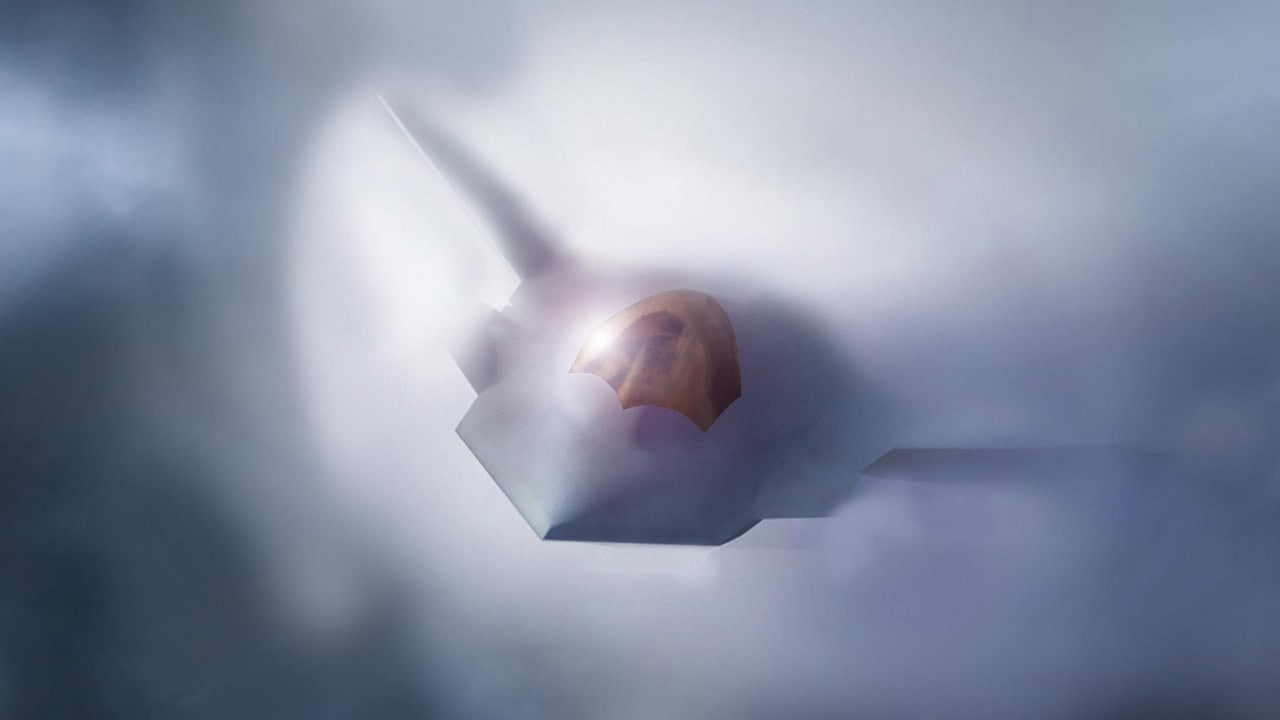
F-47 Fighter. Image Credit: U.S. Air Force.
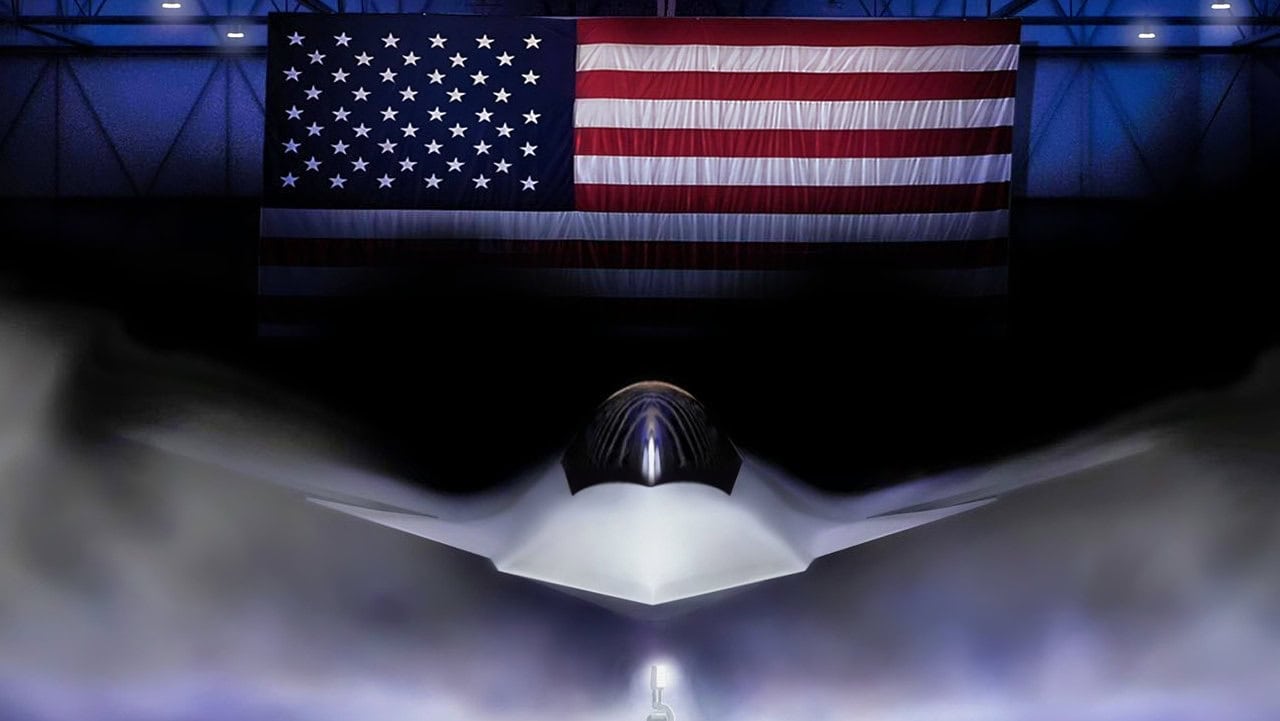
F-47 Fighter from U.S. Air Force.
“Once operational, the fighter jet was envisioned to operate alongside a ‘remote carrier’, built by Airbus and MBDA, that would act as a loyal wingman for its manned counterpart. These systems would be networked with other assets through a joint combat cloud, also to be developed under the FCAS banner,” an interesting essay from Forecast International states.
An interesting essay in Army recognition states that the primary reason for potential cancellation is deep and persistent industrial and political disagreements between France and Germany, especially over leadership, workshare distribution, and control of key technologies.
France’s aerospace champion Dassault Aviation has repeatedly sought to claim a dominant role in developing the Next Generation Fighter (NGF), reportedly pushing to handle up to 80% of the workshare for the aircraft’s design, engines, and sensors.
This demand has alarmed German leaders and industry partners, who see it as undermining the originally agreed balance of cooperation and reducing meaningful participation by Germany’s Airbus and Spain’s Indra.
Amid these tensions, France and Germany have even discussed scrapping the joint fighter entirely and refocusing collaboration on the “combat cloud”—a digital command-and-control network that links aircraft, drones, sensors, and other assets, according to an essay in the Financial Times.
While this cloud remains valuable for European defense cooperation, dropping the central fighter component would represent a dramatic downsizing of the original vision.
F-47 NGAD & Upgraded F-35 for Europe
Should the FCAS stall or reach an irrecoverable impasse, Europe may need to expand its collective F-35 effort further or acquire the F-47, should it be available for allied sale.
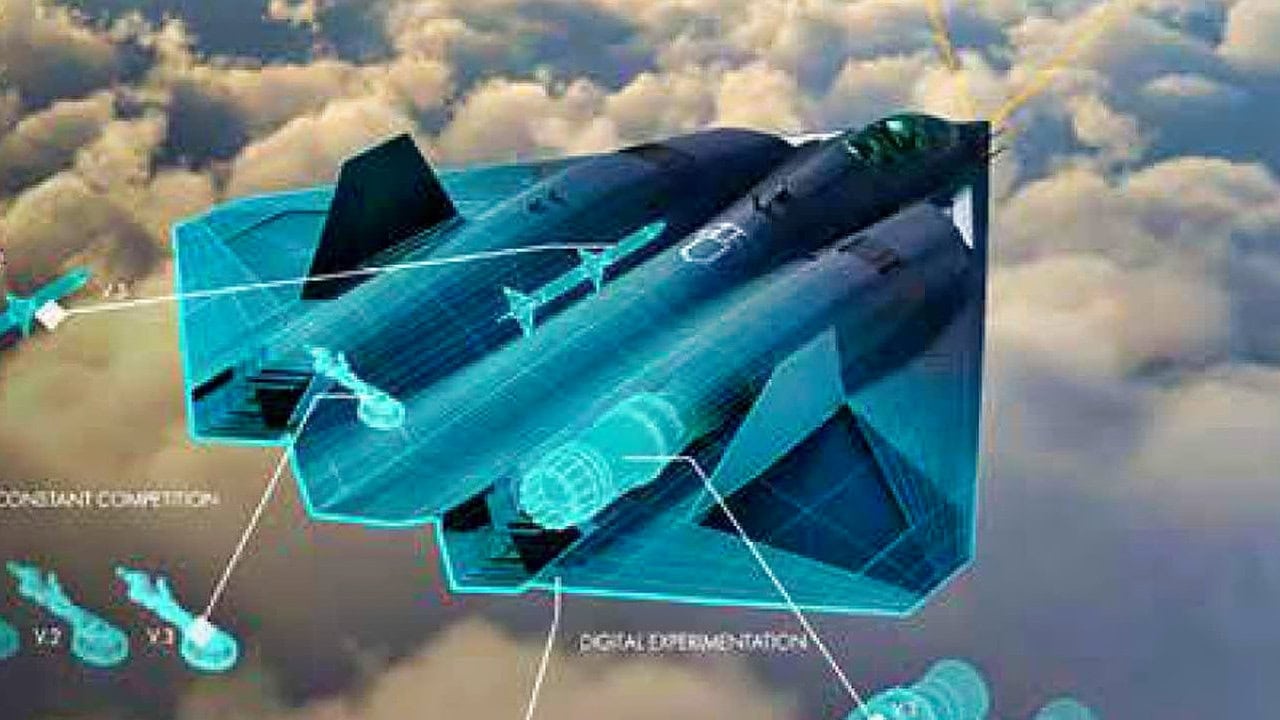
In concept, FCAS is similar to the F-47, as available renderings show a fully horizontal, blended-wing-body design optimized for stealth and speed.
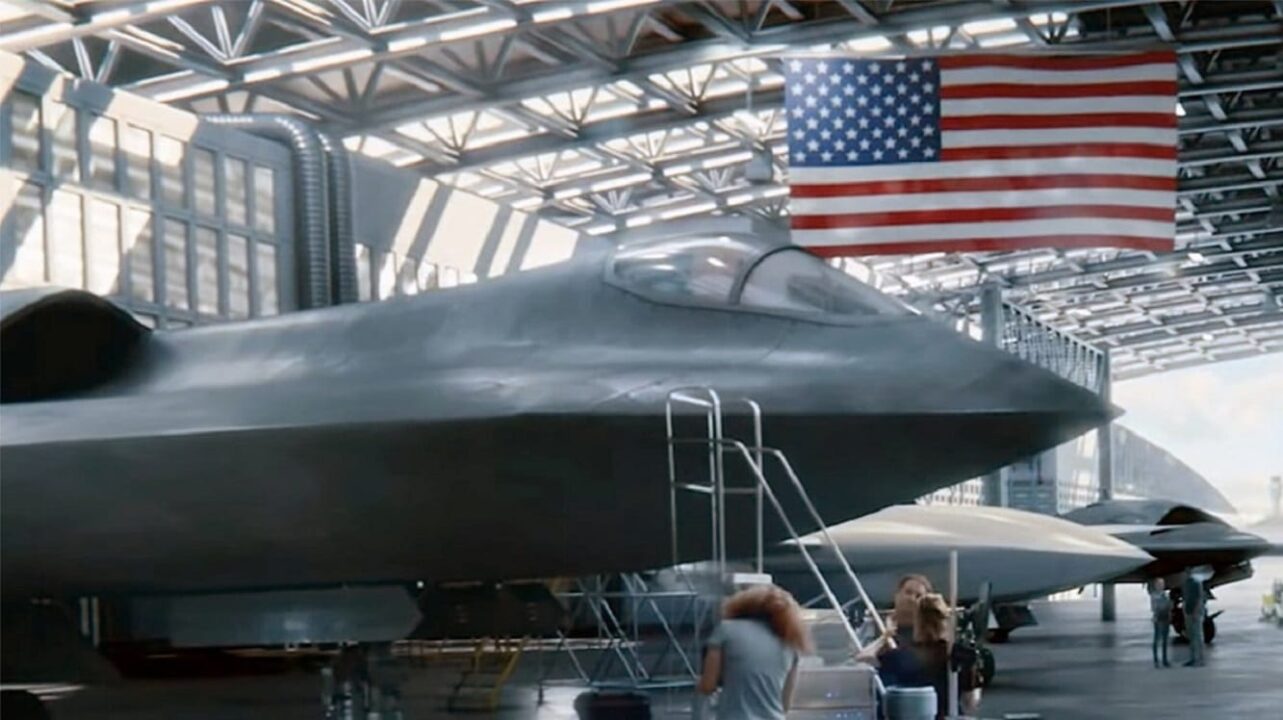
NGAD artist concept from Northrop Grumman.
Much like the tailless F-47, the FCAS configuration combines the stealth attributes of a bomber with the agility, vectoring, and speed of a 6th-gen fighter jet.
The most significant similarities between the F-47 and FCAS seem to be related to multi-domain networking and the concept of a combat “cloud.”
FCAS is intended to operate as an integrated system connecting drones to a manned fighter, much like the F-47s Collaborative Combat Aircraft, drones operating in a loyal wingman capacity to the host fighter in a position to operate their mission scope, flight path, weapons capability, and sensor payload from the cockpit of the aircraft.
Added to this concept of high-speed, next-generation manned-unmanned teaming, the FCAS program seeks to network satellites and enable the 6th-gen aircraft to function as an aerial “node” or “gateway” in the sky, positioned to receive, organize, analyze, and transmit time-sensitive combat data across multiple domains in near real-time.
NGAD will likely deploy laser weapons, employ advanced EW, and explore new propulsion applications to optimize the thrust-to-weight ratio.
About the Author: Kris Osborn
Kris Osborn is the President of Warrior Maven – Center for Military Modernization. Osborn previously served at the Pentagon as a highly qualified expert in the Office of the Assistant Secretary of the Army—Acquisition, Logistics & Technology. Osborn has also worked as an anchor and on-air military specialist at national TV networks. He has appeared as a guest military expert on Fox News, MSNBC, The Military Channel, and The History Channel. He also has a Masters Degree in Comparative Literature from Columbia University.