
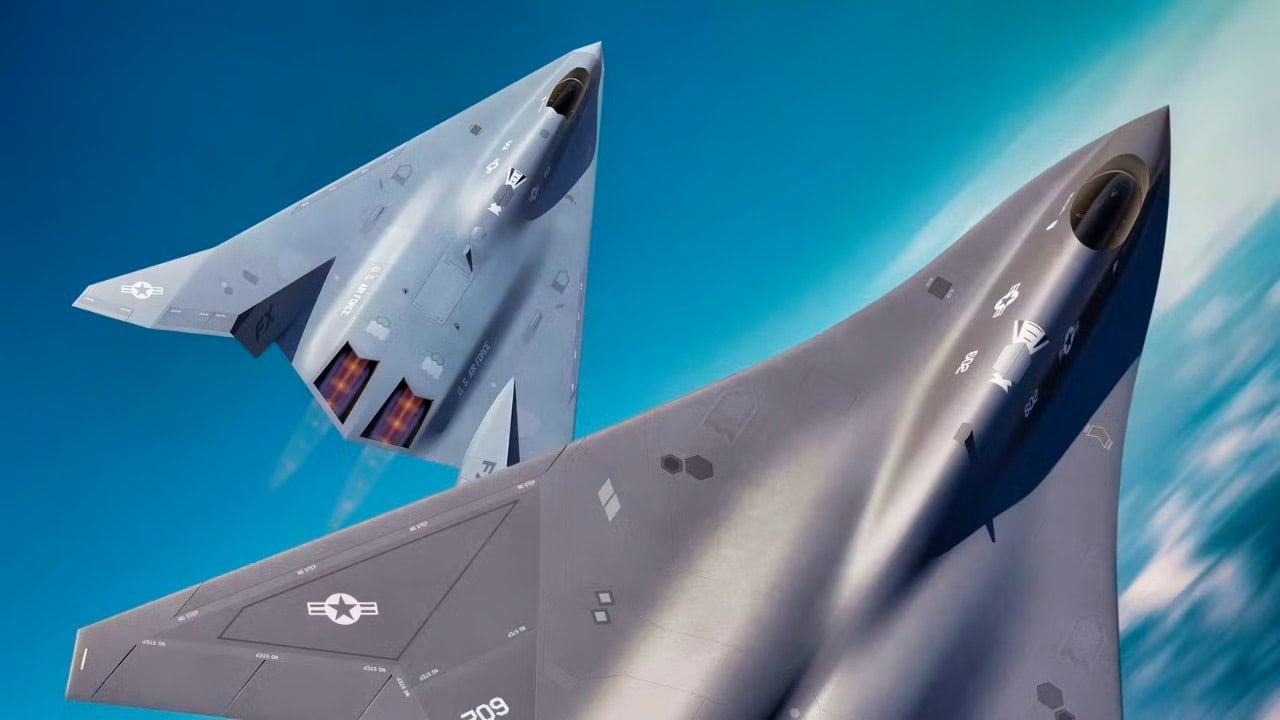
Summary and Key Points: The $20 billion F-47 NGAD contract marks the most aggressive shift in American air superiority since the Cold War.
-By confirming that this sixth-generation stealth fighter has been flying in secret for five years, the U.S. is signaling that the era of the F-22 Raptor is nearing its end.
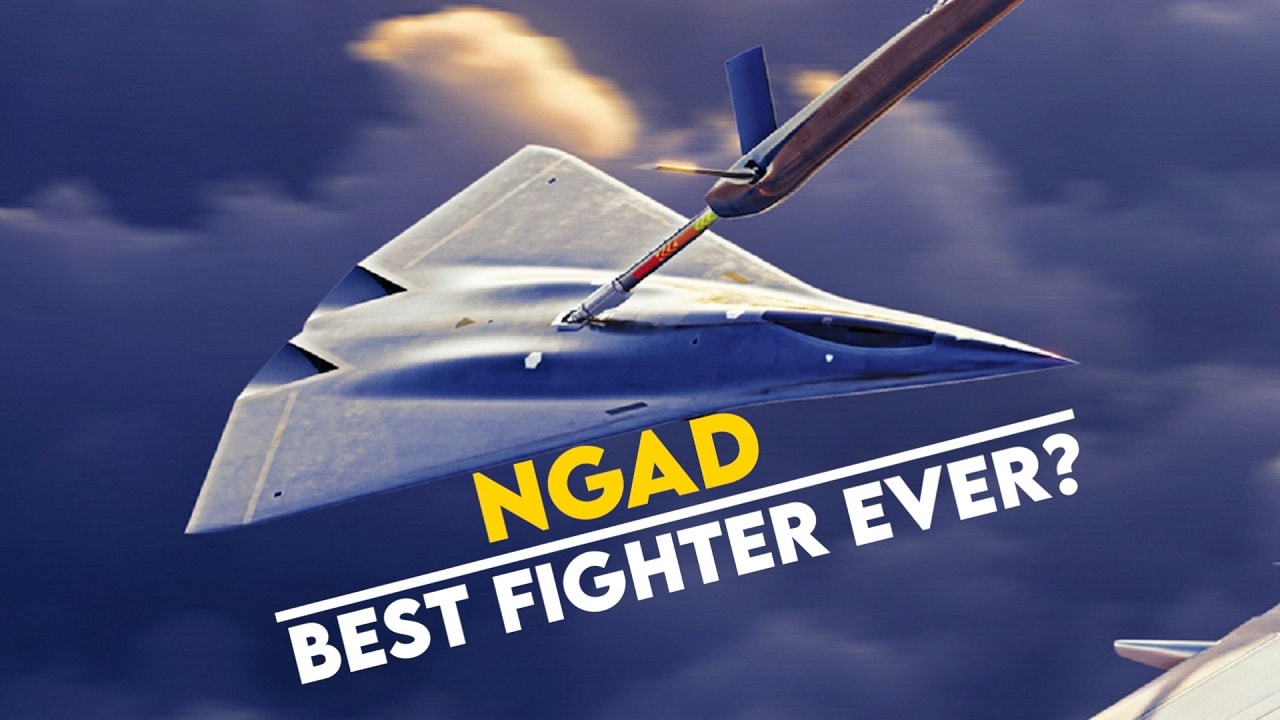
NGAD. Image Credit: Artist Rendering.
-The F-47 is designed to correct the “strategic blunders” of the past, combining Mach 2+ speeds with the ability to “quarterback” autonomous drone swarms.
-As Boeing takes the lead, the F-47 represents a $20 billion gamble to ensure that America’s enemies “never see it coming.”
The Raptor’s Successor: Why the Boeing F-47 Is the Deadliest Jet Ever Built
Last spring, President Trump confirmed that Boeing secured a contract to develop the U.S. military’s Next Generation Air Dominance (NGAD) program, a project valued at over $20 billion.
The NGAD sixth-generation stealth fighter will replace the F-22 Raptor. Trump confirmed the long-held rumors that the NGAD stealth fighter has been flying for the past five years. The new F-47 will replace the F-22 in the next decade.
“The F-47 will be the most advanced, most capable, most lethal aircraft ever built,” Trump told reporters. “America’s enemies will never see it coming,” he added.
The new aircraft will have state-of-the-art stealth capabilities, engines that will enable speeds above Mach 2, and the ability to operate as a quarterback for stealth drone fighters, keeping American air dominance intact.
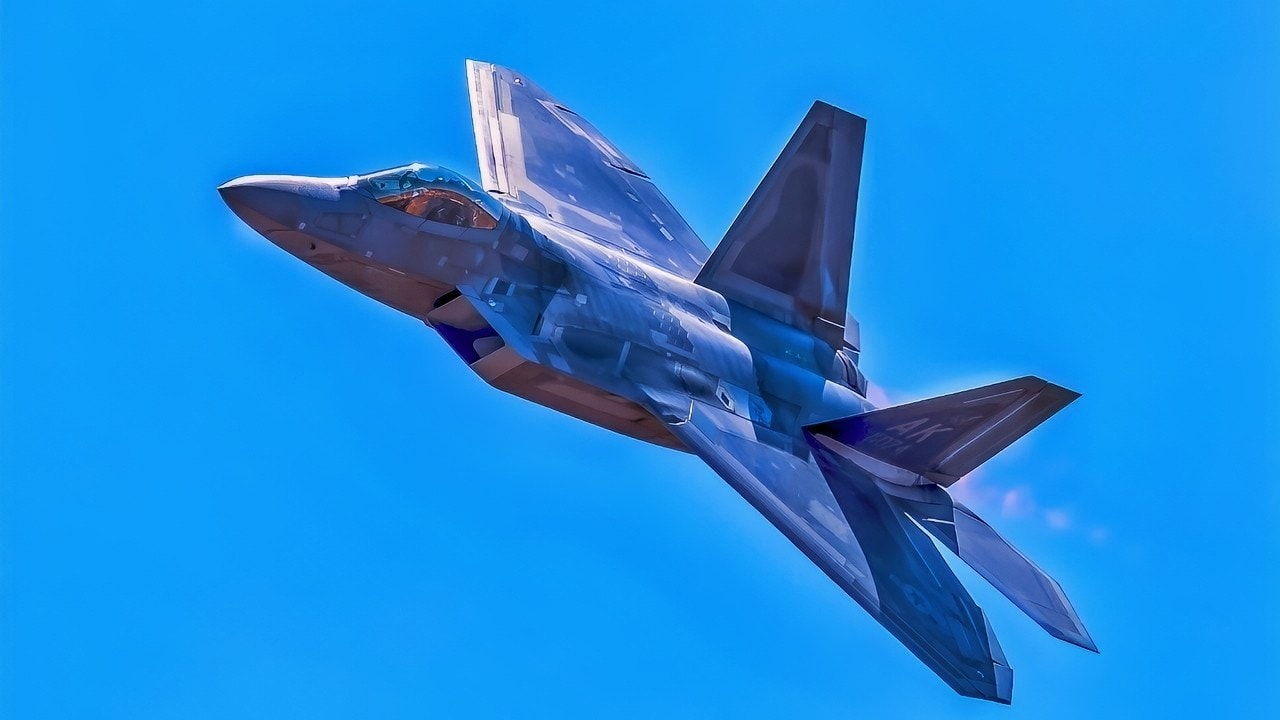
F-22 Raptor Fighter Flying High (1). Image Credit: Creative Commons.
Hopefully, the US will not make the same mistakes it did with the F-22 when it comes to the NGAD F-47. Which we’ll examine below.
The F-47 Has Big Shoes To Fill
The F-22 Raptor is the world’s oldest operational stealth fighter; it was designed in the 1990s and has been in service for more than 20 years. Despite this, it remains the stealthiest fighter, bar none. With a radar cross-section that’s generally estimated to be as much as 15 times smaller than the F-35 and maybe 100 times smaller than China’s J-20.
The F-22 remains the standard against which every other stealth fighter is measured. Even after 20 years of service, it remains the world’s best stealth fighter. But the rest of the world is slowly catching up.
But what would the Air Force look like today if the F-22 Raptor fleet had 750 or more aircraft?
Why Weren’t More Raptors Built?
More than anything, the Raptor was just a victim of bad timing. The USAF had this incredible fighter, but with no one left to fight, the Soviet Union had collapsed, and China was not anything close to the threat it is today.
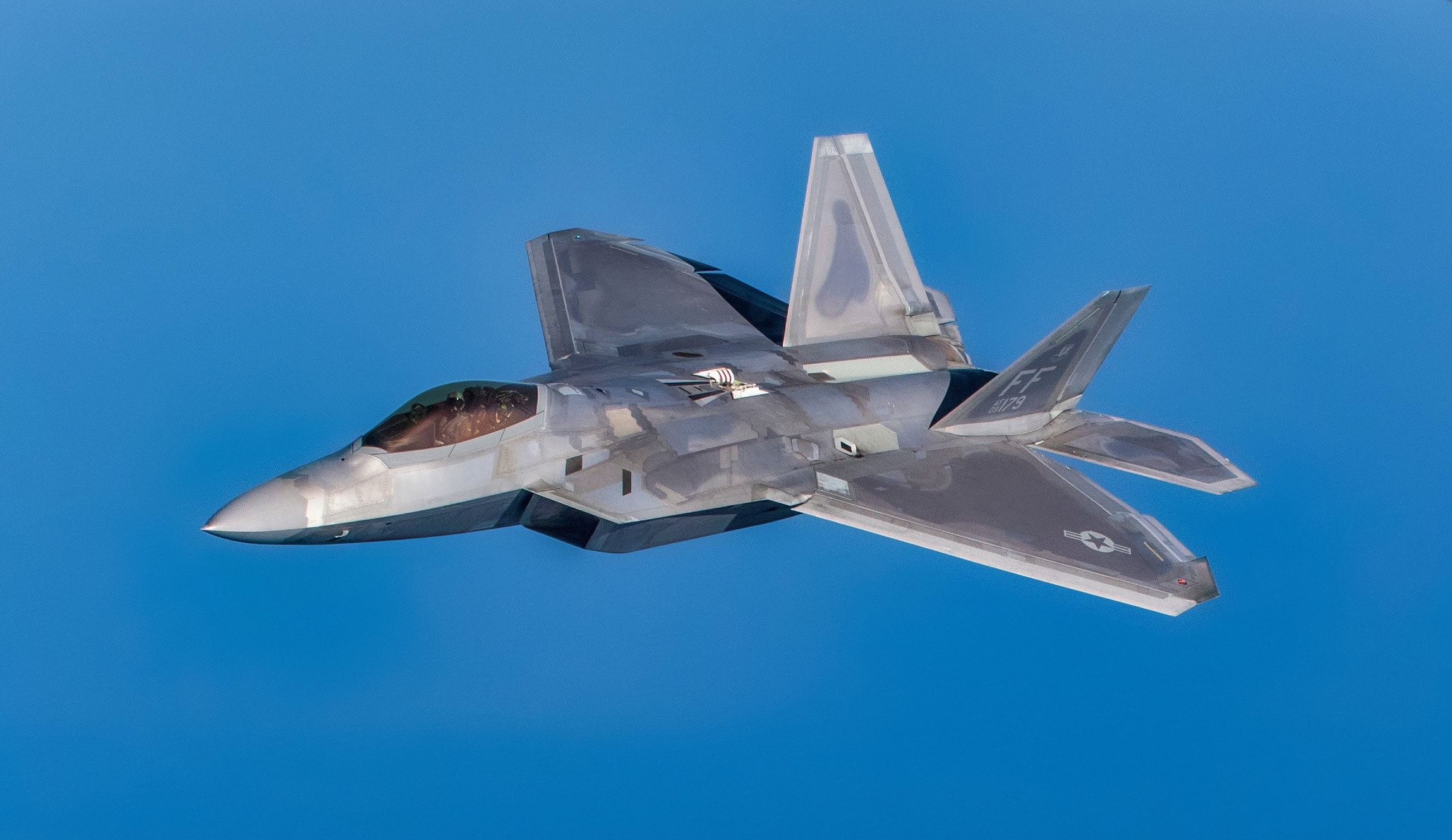
An F-22 Raptor assigned to the 192nd Fighter Wing, Virginia Air National Guard, Virginia flies over the Georgia coast during an air combat exercise at Sentry Savannah on May 5, 2022. Sentry Savannah is a joint force integrated exercise of fourth- and fifth-generation fighter jets, designed to showcase the Air Force’s air combat readiness in preparation for tomorrow’s fight. (U.S. Air Force photo by Senior Airman Erica Webster)
The US was spending trillions of dollars fighting two wars in Iraq and Afghanistan, and budget cuts were looming.
Then, the US made a strategic blunder, one of many during this time period. It didn’t pause the F-22 production line—it closed it. And while the F-22 was incredibly expensive, if they had continued production, the cost would have decreased. But the assembly line was shut down.
Originally, the Air Force wanted 750 F-22s. However, only 186 Raptors were produced, and currently, there are only between 150 and 180 combat-capable aircraft. The US has been pouring money into upgrades to stay on top, but that 180 number is a hard stop. If an aircraft suffers an accident or is lost in combat, it can not be replaced.
The high cost of maintenance and operation is prohibitive. And the Chinese have produced hundreds of J-20s. The NGAD F-47 will have a significant technological advantage over anything our adversaries have.
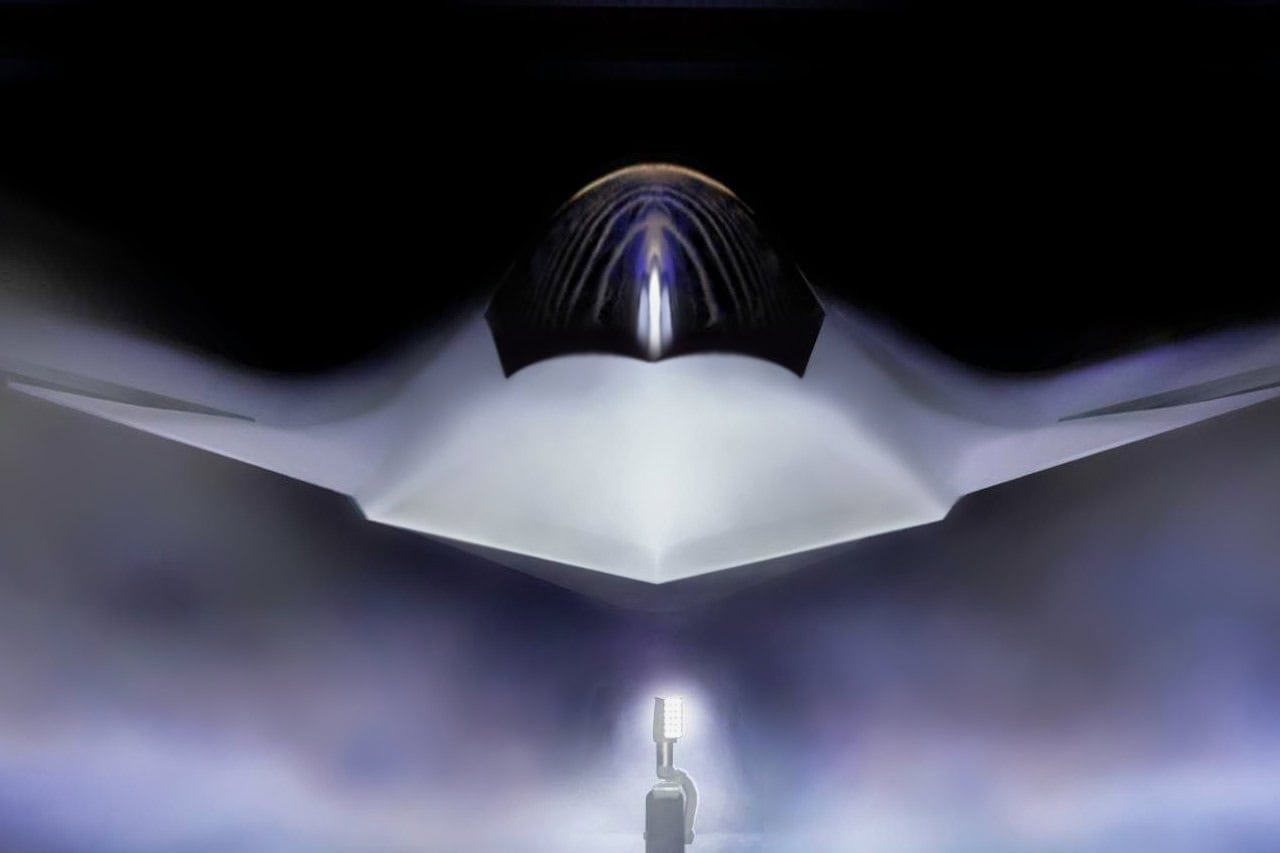
Shown is a graphical artist rendering of the Next Generation Air Dominance (NGAD) Platform. The rendering highlights the Air Force’s sixth generation fighter, the F-47. The NGAD Platform will bring lethal, next-generation technologies to ensure air superiority for the Joint Force in any conflict. (U.S. Air Force graphic)
With a production line pushing out F-47s, the F-22 Raptors will still be around until the fleet of F-47s is manned and ready. The good news is that, with the host of new technologies for the F-47, the F-22 will benefit from some of them as the Air Force upgrades the Raptors to keep them equipped with the best technology.
The Fighter Fleet The US Would Have Had With 750 Raptors
The Air Force wanted 750 F-22s, and had they built them, the US today would pretty much have air dominance, not superiority over any skies in the world. However, many argue that if the Air Force had built them that the servicewould not have been better off. While many of those arguments are valid, how could having nearly 600 more of the best fighters in the world be a bad thing?
Interoperability and strike missions would obviously look quite different. However, just as we learned the lesson with the F-35 and offered it to our allies, we would eventually have done the same with the Raptor for our staunchest allies. The cost would have been dramatically reduced.
And the cost per flight hour, which was an unsustainable $85,000 per flight hour might have been reduced as well. With larger, forward-deployed air wings, the availability rates and maintenance issues would have been improved.
And with the US and our allies flying F-22s, the skies then (and now) would be utterly dominated over any adversarial force.
And replacing the F-15C on a one-for-one basis would have protected the USAF’s strike aircraft, the F-15E Strike Eagle, a multirole strike fighter. The F-15E “Strike Eagle” combines long-range, high-speed, and heavy payload capacity, allowing it to fight its way to a target and back.
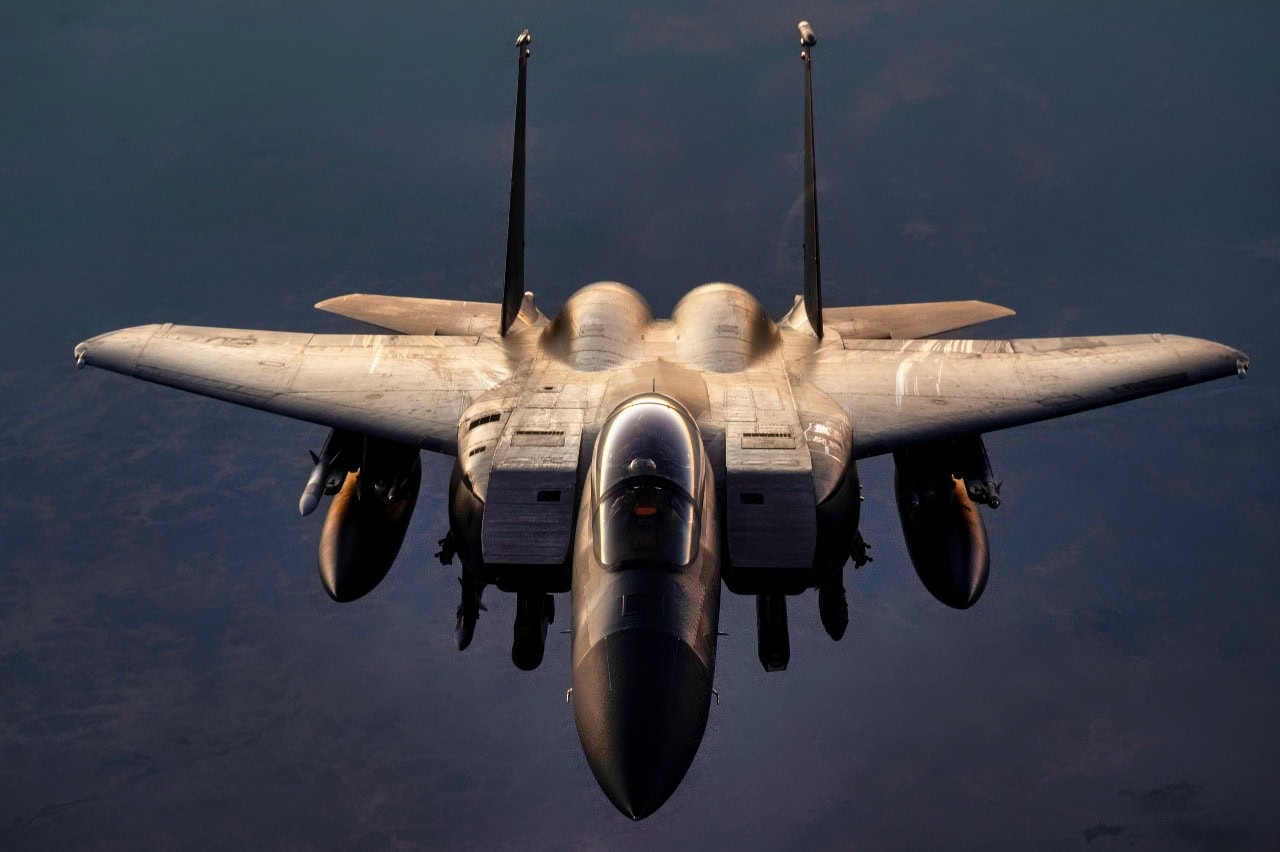
A U.S. Air Force F-15E Strike Eagle flies over the U.S. Central Command area of responsibility, Jan. 7, 2025. The F-15E’s superior maneuverability and acceleration are achieved through its high engine thrust-to-weight ratio and low-wing loading. (U.S. Air Force photo by Staff Sgt. William Rio Rosado)
Distinguished from older models by its darker camouflage, conformal fuel tanks (CFTs) for extra range/weapons, and a two-person crew (pilot and weapon systems officer). It has been heavily used in operations in Iraq, Afghanistan, Syria, and Libya.
With 750 or more Raptors, the Air Force could have forward-deployed fighter squadrons; however, the F-22 wasn’t designed for deep networking or electronic warfare.
The F-35 Would Still Be Needed And Built
The F-35 Lightning II’s calling card is being a mobile sensor platform that can assess the effectiveness of an entire fleet — a whole military front — by sharing data and coordinating information such that the situational awareness of every warfighter present is increased exponentially.
Advanced sensor fusion automatically analyzes data from sensors embedded throughout the aircraft and merges it into relevant information for pilots. This gives F-35 pilots an integrated, intuitive view of their surroundings, greatly enhancing survivability, effectiveness, and interoperability.
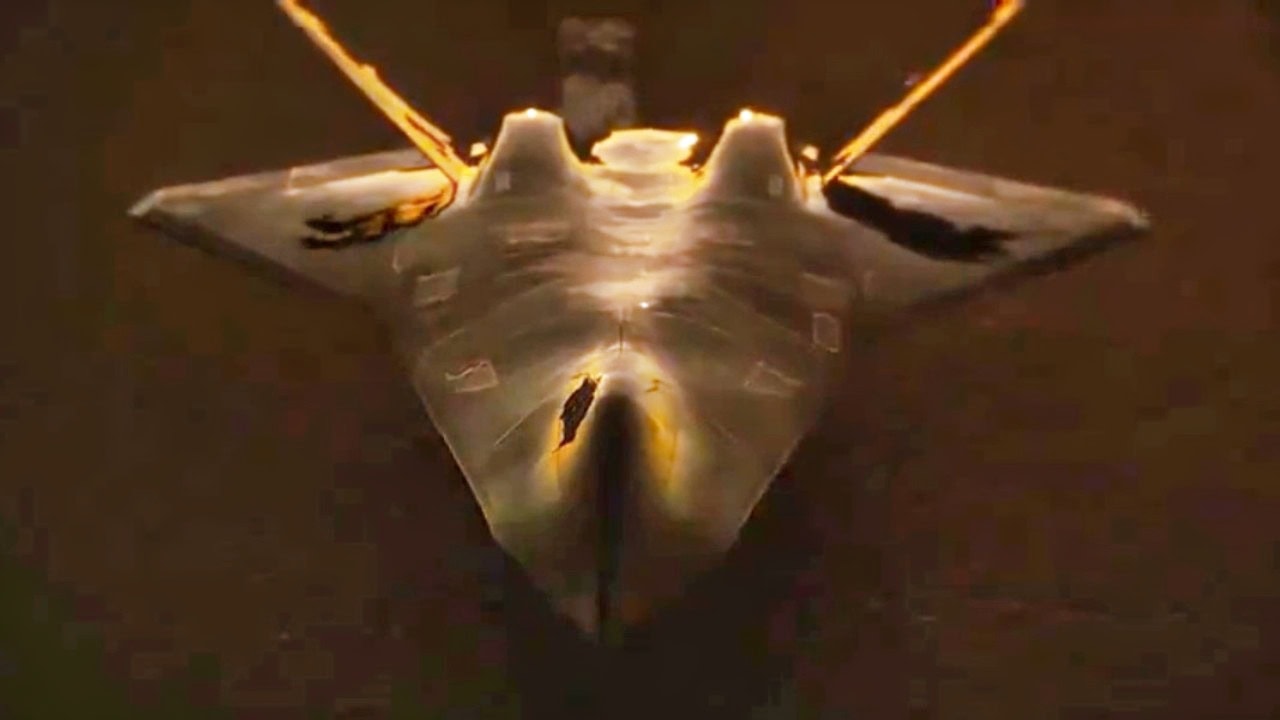
F-47 Fighter from Boeing. Image Credit: U.S. Air Force Screenshot.
And the US would have still needed to produce the F-35, replacing the legacy F-16s and A-10s, but obviously not in the numbers they have today.
The F-22’s short range would still be an issue, especially in the Indo-Pacific region. And this would have required purchasing more air-to-air refueling tankers. And the F-22 would have been paired with a large tanker fleet, which would have added expense.
Now The F-47 May Merge The F-22 And The F-35 In One Platform
The closure of the F‑22 production line freed resources for the Joint Strike Fighter and, over time, for NGAD.
Many analysts expect that the F‑47 will merge deep‑penetration stealth, long range, and manned‑unmanned teaming.
The demands of the F-47 might have looked very different–less need for pure air superiority, more emphasis on networking and flexibility if the Air Force had hundreds more F-22s.
The loss of the F-22 program did, however, allow the US to fully fund, develop, and build a large fleet of the versatile F-35s.
Meanwhile, the F-47 and the F-35 will both be capable of participating in the Air Force’s Collaborative Combat Aircraft (CCA) program, a multi-pronged initiative to test, develop, and implement new autonomous and manned-unmanned aircraft teaming concepts.
It is also known as the Loyal Wingman concept, capable of flying independently or in small groups that will be used to counter China’s anti-access/area-denial (A2/AD) capabilities. The F-22 is also planned to deploy with these.
Like all aviation enthusiasts, we love blistering-fast air dominance fighters like the F-22 Raptor, which is still the King of the sky. But the F-47 will fill those shoes and be more versatile for operating alongside the F-35.
About the Author: Steve Balestrieri
Steve Balestrieri is a National Security Columnist. He served as a US Army Special Forces NCO and Warrant Officer. In addition to writing on defense, he covers the NFL for PatsFans.com and is a member of the Pro Football Writers of America (PFWA). His work was regularly featured in many military publications.