

Summary and Key Points on the F-22 and Venezuela: On January 3, 2025, U.S. forces launched “Operation Absolute Resolve,” a massive military campaign involving over 150 aircraft to capture Venezuelan President Nicolas Maduro.
-While the operation culminated in a ground assault by Army Delta Force and the 160th Special Operations Aviation Regiment, the mission relied heavily on the deployment of F-22 Raptor stealth fighters.
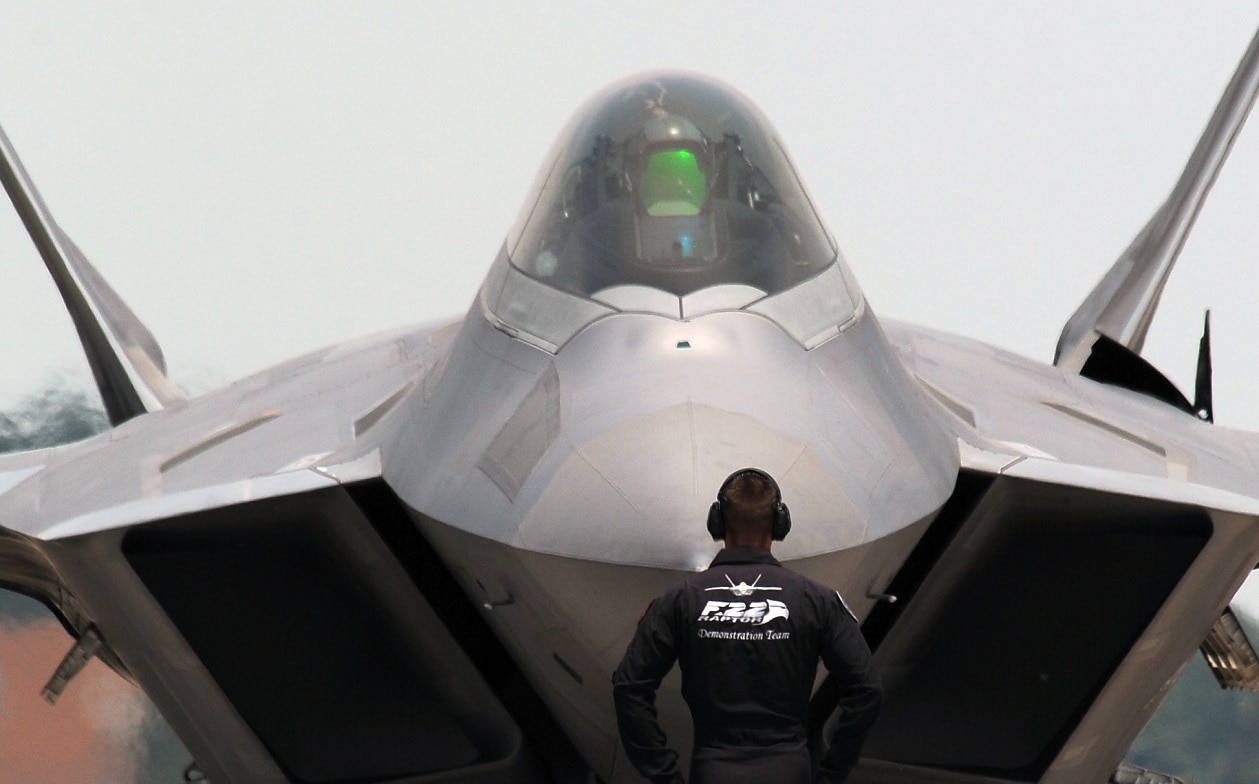
F-22 Raptor: Image Credit: Creative Commons.
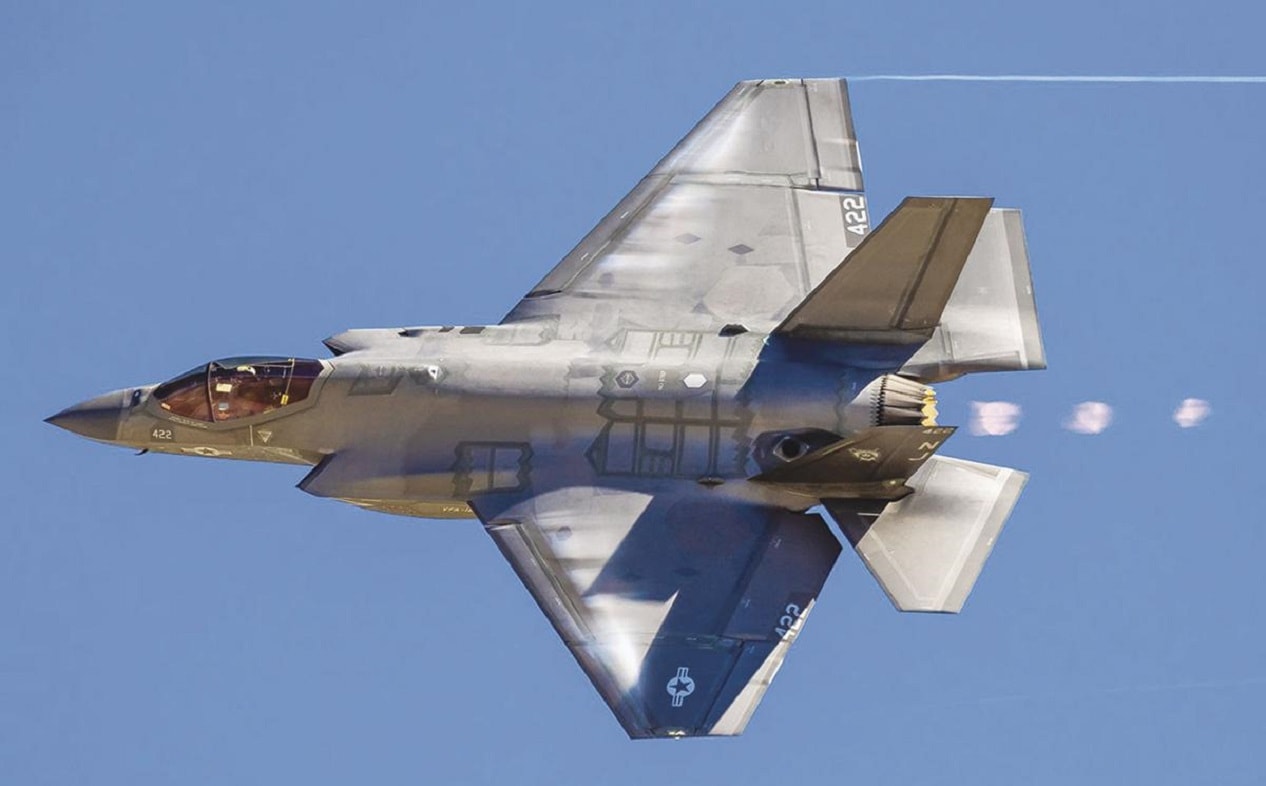
Image: Creative Commons.
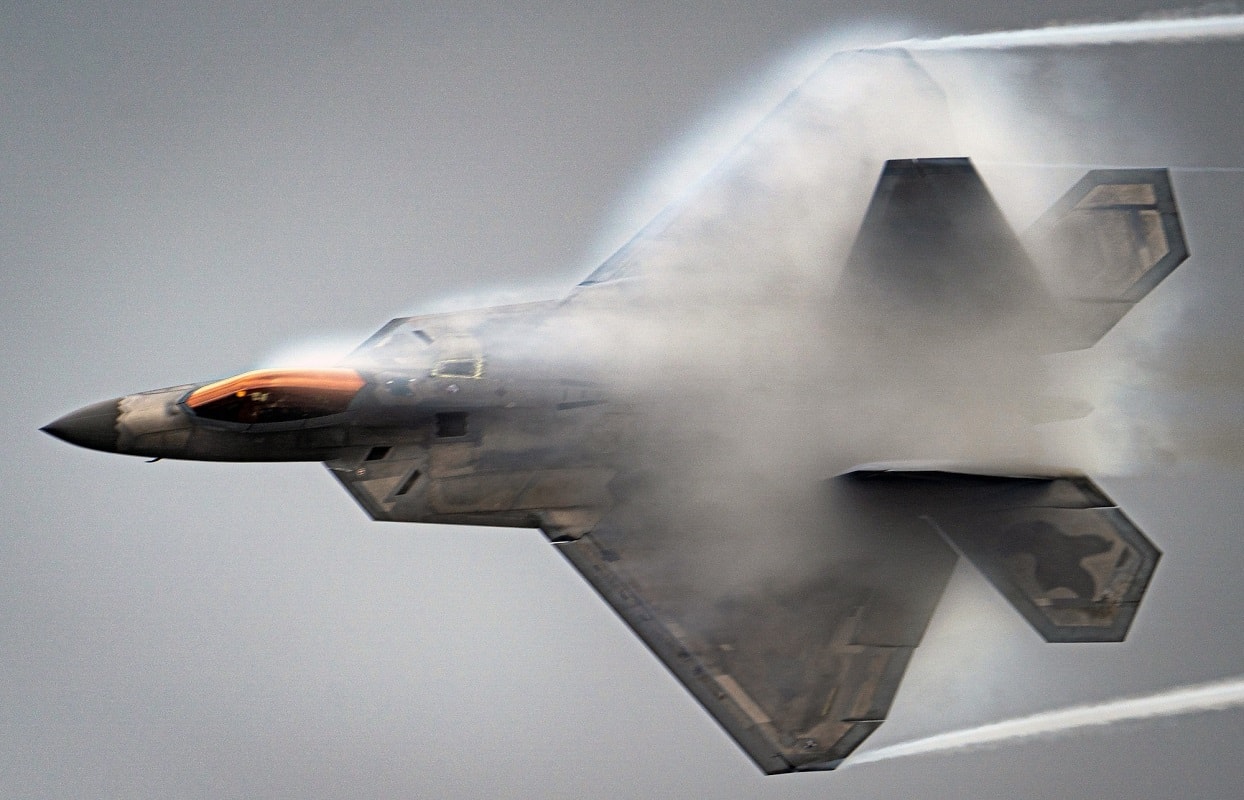
Image: Creative Commons.
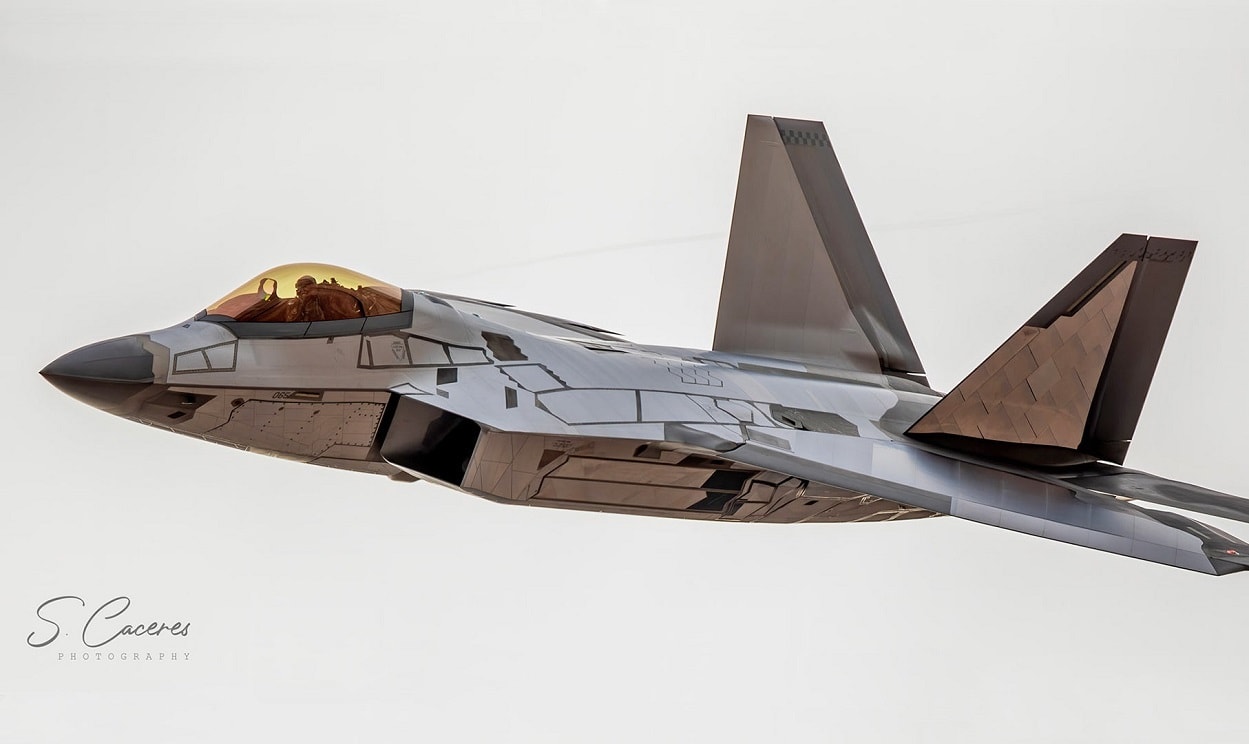
Image Credit: Santos Caceres via Instagram Account.
-Despite Venezuela’s lack of a near-peer air force, roughly a dozen F-22s were tasked with establishing total air dominance, ensuring a safe “umbrella” for the extraction team to seize Maduro and transport him to New York to face federal charges.
Operation Absolute Resolve: Why the US Deployed F-22 Raptors to Capture Maduro in Venezuela
On January 3, 2025, U.S. military forces launched a major operation in Caracas, Venezuela, that resulted in the capture of Venezuelan President Nicolas Maduro and his wife and brought them to New York to face federal charges.
The mission began with U.S. airstrikes on military sites in and near the Venezuelan capital, and concluded with U.S. special operations troops storming Maduro’s compound, taking him into custody, and flying him out of the country.
The operation involved a large and varied set of military assets, including more than 150 aircraft – fighter jets, bombers, helicopters, reconnaissance drones, tankers, and electronic-warfare planes. Among the aircraft were F-22 Raptor stealth fighters – a platform normally associated with air superiority missions against peer military threats rather than operations close to home in the Western hemisphere.
The deployment of the F-22 has drawn particular attention because of its rarity – the U.S. is believed to have fewer than 150 combat-ready F-22s today – and its specialized role.
The fact that the F-22 was used offers a look at how the United States planned and executed the mission from the beginning.
Dubbed Operation Absolute Resolve, the operation began in the early hours of January 3 with strikes against key Venezuelan infrastructure, including air defense sites around Caracas.
President Donald Trump announced the mission on his Truth Social online platform and in a press briefing the following morning, the United States Chairman of the Joint Chiefs of Staff Dan Caine announced that more than 150 aircraft were launched from roughly 20 bases across the Western Hemisphere, including stealth fighters like the F-22 and F-35 Lightning II, as well as B-1 Lancer bombers and a range of support aircraft.
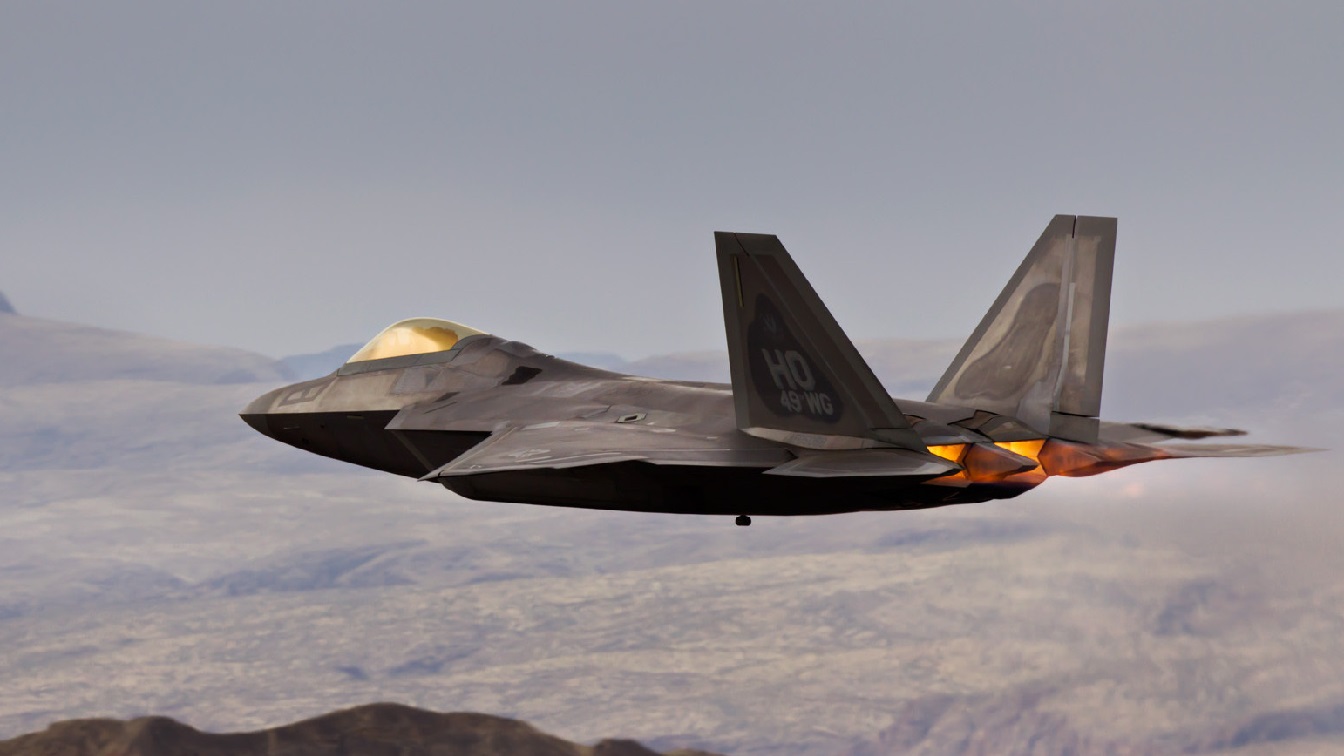
F-22 Raptor. Image Credit: Creative Commons.

F-22 Raptor. Image: Creative Commons.
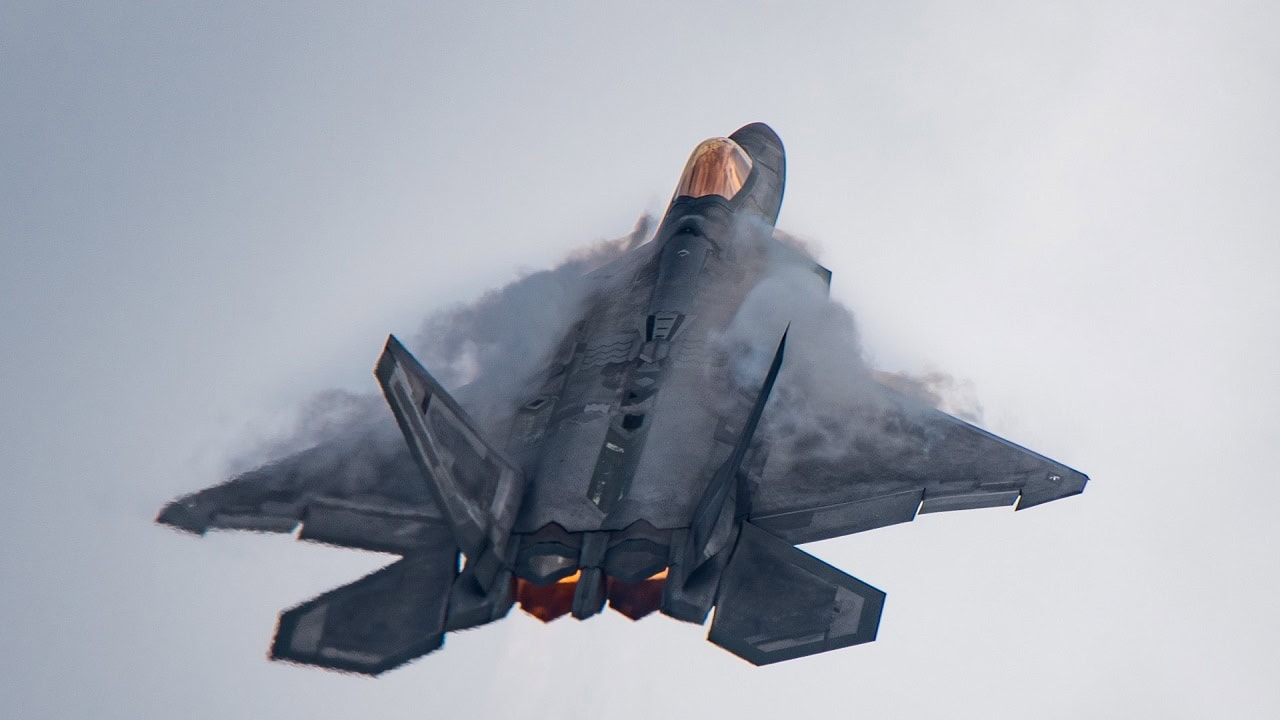
F-22 Raptor. Image Credit: Creative Commons.
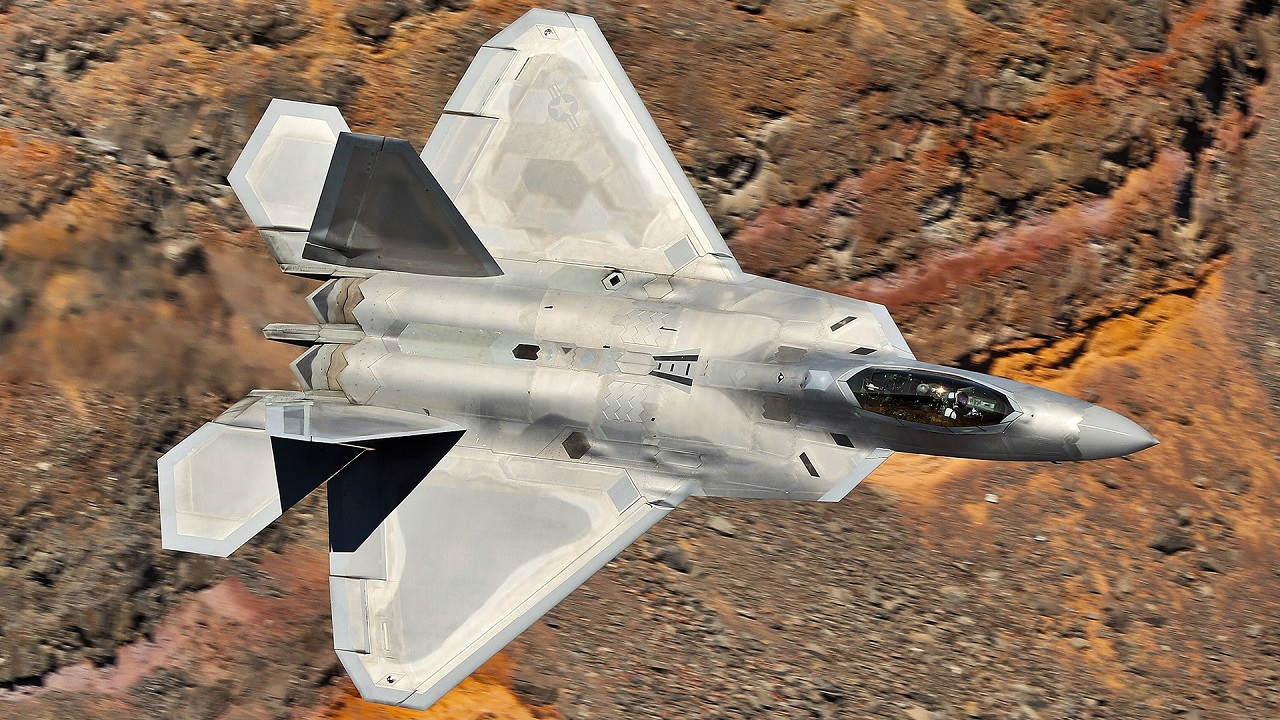
F-22 Raptor. Image Credit: Creative Commons.
The bombers and fighters were deployed to help suppress Venezuelan defenses, while drones and intelligence assets were used to monitor ground conditions.
Images shared on social media and through Western media outlets showed destroyed vehicles and debris at the La Carlota air base and other sites in Caracas after the strikes. One photograph circulated by the Trump White House also showed Maduro aboard the U.S. amphibious assault ship USS Iwo Jima following his capture.
The operation worked like this: military personnel and aircraft were used to create and maintain control of Venezuelan airspace while special operations forces inserted via helicopter to capture Maduro.
Personnel from elite units, including the Army Delta Force, and support from the 160th Special Operations Aviation Regiment conducted the ground assault and extraction. Reports indicated that U.S. helicopters approached Maduro’s compound under the umbrella of the U.S. air campaign, facing some ground resistance but still successfully managing to extricate him and his wife.
The Role of the F-22 Raptor
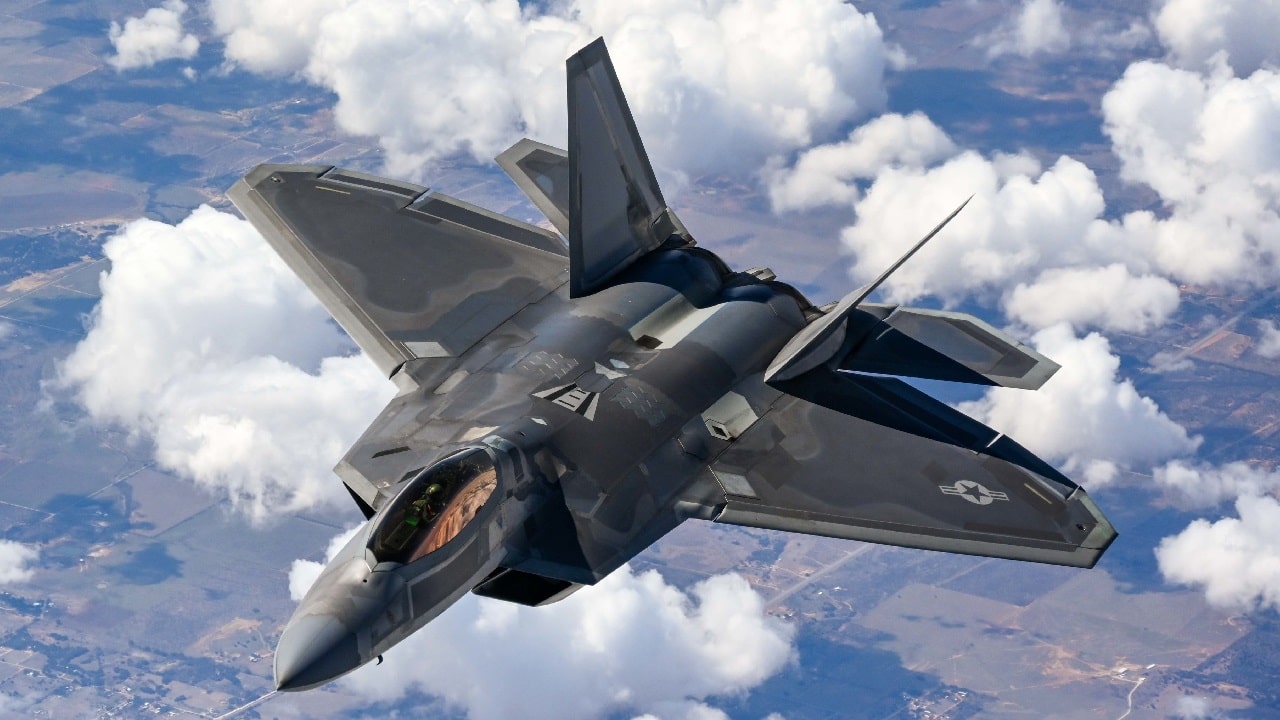
The F-22 is a fifth-generation air superiority fighter developed for the U.S. Air Force to establish and sustain control of contested airspace in high-end combat environments – and it was perfectly suited to the Venezuela operation.
The Raptor is designed ot detect, track, and defeat airborne threats at long range, using advanced sensors, integrated avionics, stealth features, and high performance to enable pilots to dominate in air-to-air engagements and to deny enemy aircraft access to a given airspace.
Deploying the F-22 – which was first introduced into U.S. Air Force service in the mid-2000s – over Venezuela was in some respects unusual because Venezuela was unusual in the sense that Venezuela does not have a modern fighter force or sophisticated aerial threat on par with Russia or China – near-peer competitors with which the F-22 was designed to compete.
The platform was well-suited but, in some ways, could be described as overkill.
However, reports suggested that about a dozen F-22s were assigned to the mission, tasked with achieving and sustaining air dominance over Venezuelan airspace at the outset of the operation to ensure that the arrest could take place with minimal resistance.
In this role, the Raptors provided assurance that no Venezuelan aircraft – whether fixed-wing fighters or attack helicopters – could challenge U.S. forces and disrupt the insertion and extraction of ground forces.
In addition to the F-22, U.S. forces also deployed other specialized aircraft that contributed to the campaign’s success, including electronic warfare jets like the EA-18G Growler, which reportedly jammed and suppressed Venezuelan radar and communications networks.
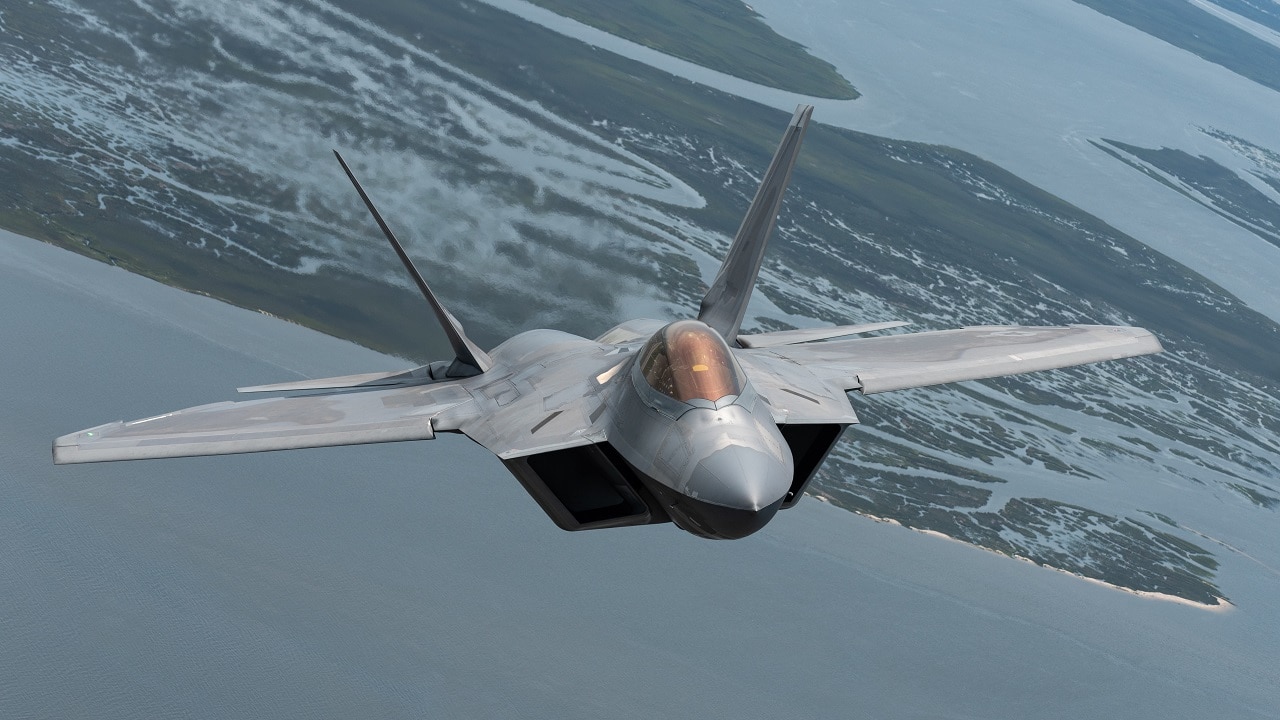
U.S. Air Force Maj. Paul ‘Loco’ Lopez, F-22 Demo Team commander/pilot, performs an aerial demonstration during the MCAS Beaufort air show, April 27, 2019. Maj. Lopez has over 1,500 hours flying both the F-15 and the F-22 and is in his second year as the commander of the F-22 Raptor Demonstration Team. (U.S. Air Force photo by 2nd Lt. Samuel Eckholm)
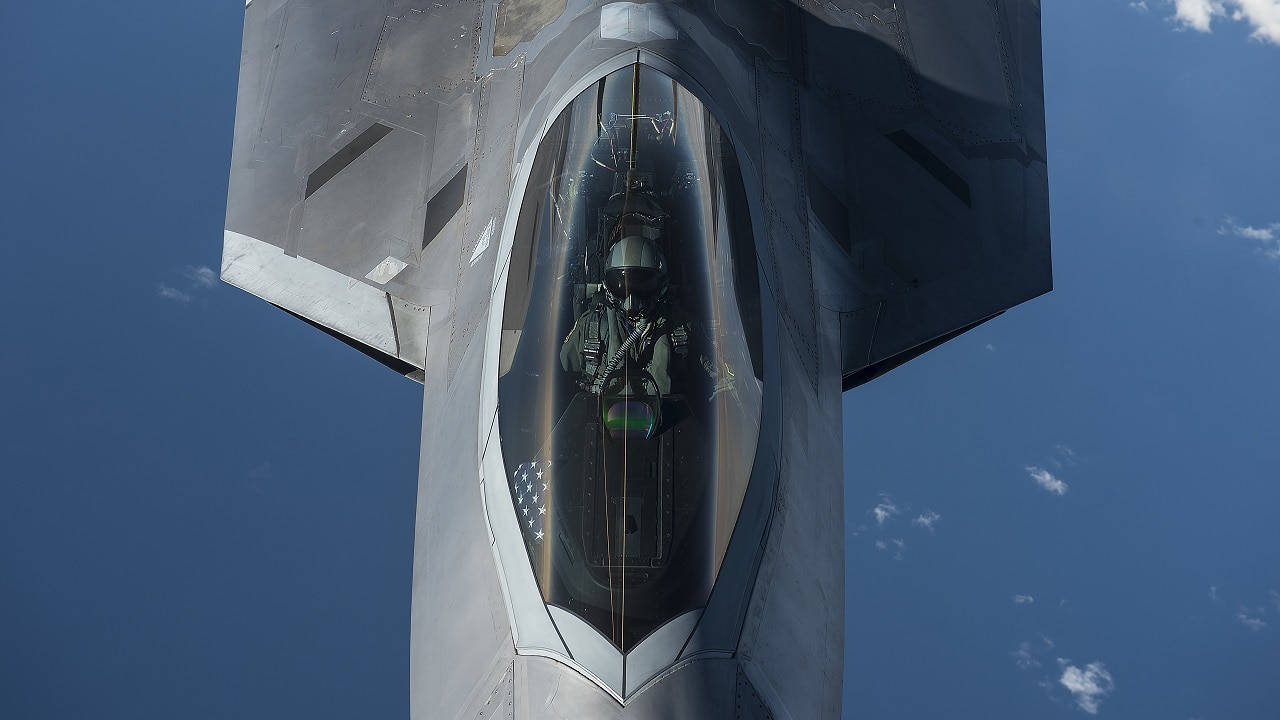
A U.S. Air Force F-22 Raptor pilot from the 95th Fighter Squadron, Tyndall Air Force Base, Fla., flies over the Baltic Sea Sept. 4, 2015. The U.S. Air Force has deployed four F-22 Raptors, one C-17 Globemaster III, approximately 60 Airmen and associated equipment to Spangdahlem Air Base, Germany. While these aircraft and Airmen are in Europe, they will conduct air training with other Europe-based aircraft. (U.S. Air Force photo by Tech. Sgt. Jason Robertson/Released)
An F-22 Raptor Demonstration Team pilot flies behind a KC-135 Stratotanker from the 465th Air Refueling Squadron assigned to Tinker Air Force Base, Oklahoma, March 8. 2021. The F-22 team from Joint Base Langley–Eustis, Virginia, is assigned to Air Combat Command and received fuel from the Okies during their flight back to their home station after performing at an air show. (U.S. Air Force photo by Senior Airman Mary Begy)
Bombers and conventional fighters, meanwhile, struck air defense sites and military infrastructure to degrade any realistic anti-air threat, while refueling tankers and reconnaissance drones extended the force’s reach and situational awareness.
What is clear from official statements and open source analysis so far is that the Raptors were used as part of a wider air dominance umbrella that was designed to deny any aerial interference from the beginning of the operation – and they contribute massively to its success.
The inclusion of the F-22 in the Venezuela operation speaks to how the United States views these rapid-reaction missions: even against a country without a sophisticated air force, planners opted to deploy a top-tier platform to establish air superiority quickly and decisively.
About the Author:
Jack Buckby is a British researcher and analyst specialising in defence and national security, based in New York. His work focuses on military capability, procurement, and strategic competition, producing and editing analysis for policy and defence audiences. He brings extensive editorial experience, with a career output spanning over 1,000 articles at 19FortyFive and National Security Journal, and has previously authored books and papers on extremism and deradicalisation.