
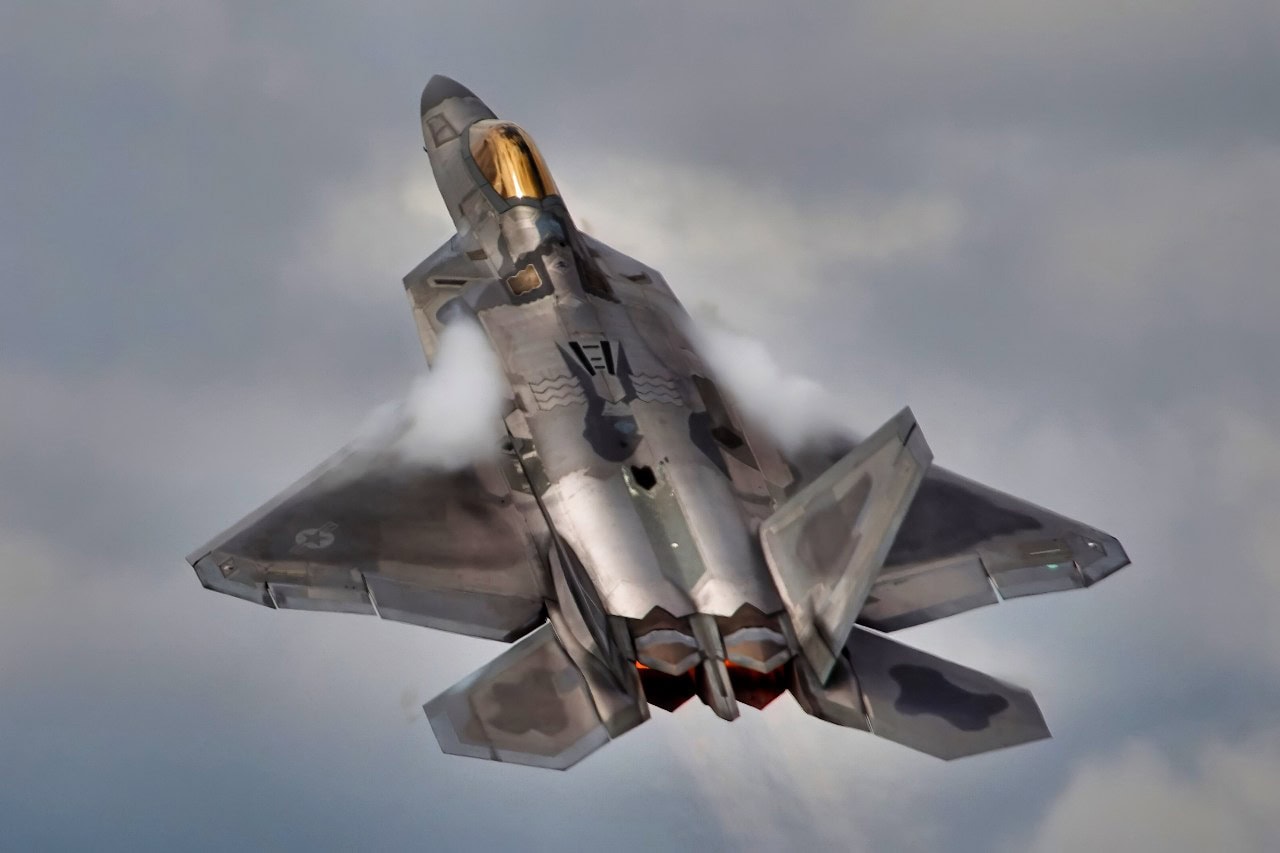
Key Points and Summary – The “Super F-22 Raptor” concept argues that the world’s best air-superiority fighter can be stretched further with new engines, sensors, electronic warfare, and even manned-unmanned teaming.
-But the F-22 is a tightly optimized design with limited internal volume, power, and thermal margin—and a small fleet that makes ambitious retrofits brutally expensive per aircraft.
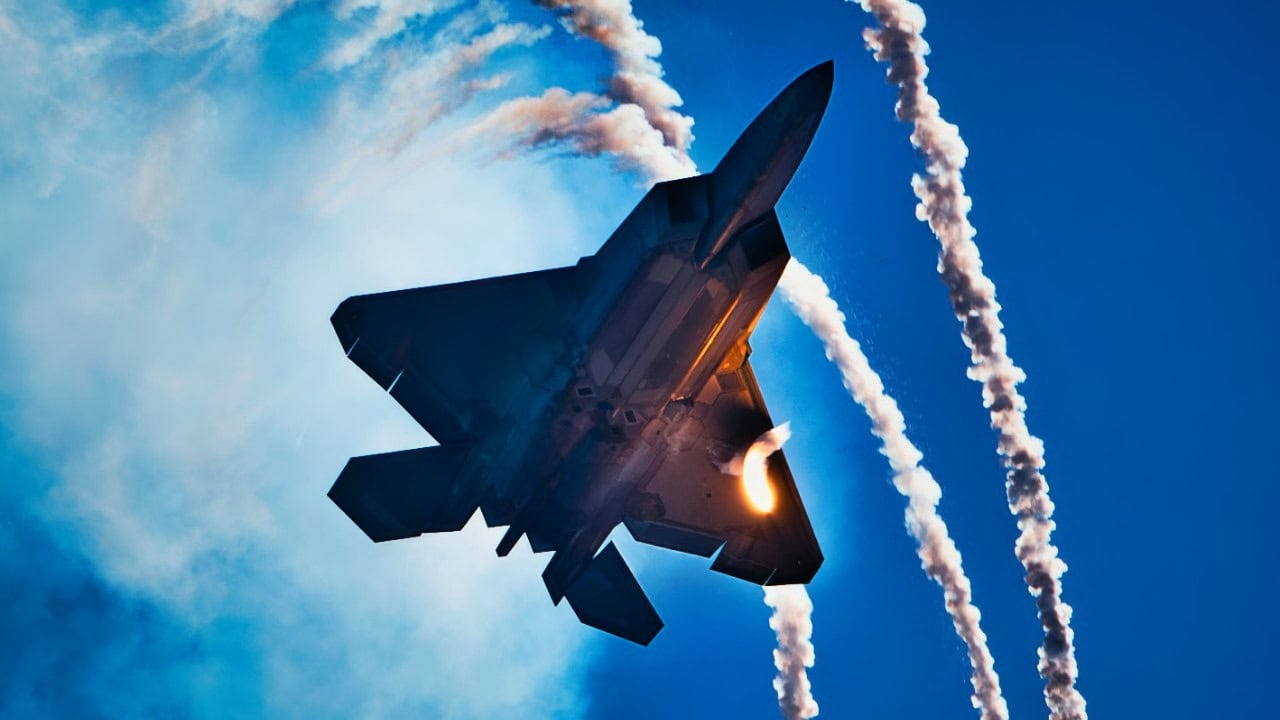
A U.S. Air Force F-22 Raptor, flown by Capt. Samuel “Razz” Larson, F-22 Raptor Demonstration Team pilot, deploys flares over the Gulf of Mexico during the 2024 Gulf Coast Salute Air Show at Panama City Beach, Florida, May 4. The F-22’s unique combination of stealth, speed, agility and situational awareness, combined with lethal long-range air-to-air and air-to-ground weaponry, makes it one of the most advanced fighters in the world. (U.S. Air Force photo by Staff Sgt. Stefan Alvarez)
-Incremental modernization makes sense and is already happening, yet major propulsion or structural changes risk turning modernization into a de facto redesign with high downtime and uncertain payoff.
-The core case: preserve the F-22 as a bridge, not a science project, while F-47 NGAD takes the leap.
The Super F-22: A Big Mistake?
The F-22 Raptor remains the world’s most capable air superiority fighter. Despite being a generation old, the F-22 is dominant in stealth and kinematics, and sensor fusion.
And with adversaries rushing to close the gap, the F-22 has naturally received attention as a potential upgrade option, into something like a “Super F-22” featuring new engines, sensors, and roles expanded beyond the simple air superiority mission.
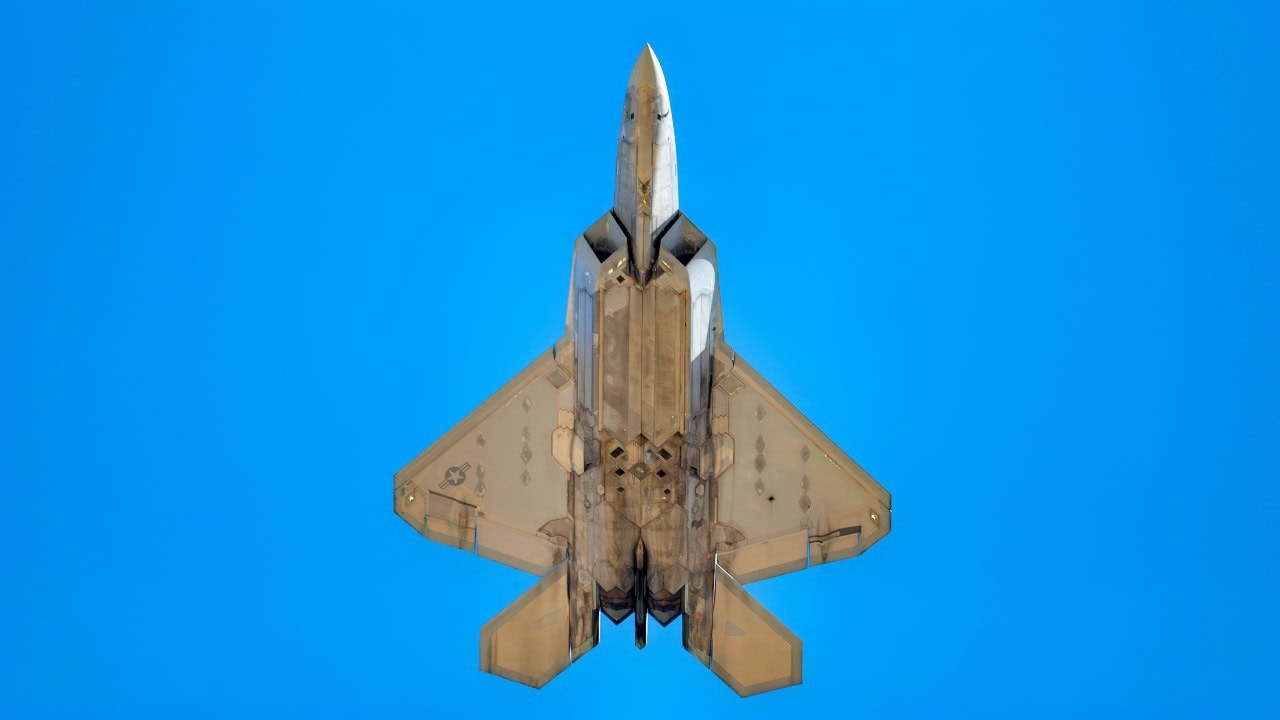
A U.S. Air Force F-22 Raptor performs an aerial demonstration at Davis-Mothan Air Force Base, Ariz. for the 2025 Heritage Flight Training and Certification Course, March 2, 2025. The Heritage Flight Training and Certification Course is an annual event where military and civilian pilots train together to fly in formations to showcase both modern and vintage military aircraft. These flights are often performed at airshows across the country to honor U.S. military aviation history and service members. (U.S. Air Force photo by Staff Sgt. Lauren Cobin)
On the surface, the logic is compelling; the F-22 is a known airframe that dominates the context in which it was designed.
But the question is: can more value be extracted from the F-22?
Or are further investments an example of diminishing returns?
What is the F-22?
The F-22 is designed specifically for air dominance in high-end peer conflict. Said simply, the F-22 was built to beat any other aircraft in the sky, one-on-one.
Accordingly, the F-22 was built with stealth optimized for air-to-air combat, supercruise, and extreme maneuverability (thanks in part to a 2D thrust-vectoring engine nozzle).
The airframe, engines, and sensors are tightly coupled to create the world’s best pure fighter.
And the fleet, discontinued sooner than originally planned, numbers just 180, meaning that further production would require restarting a discontinued production line.
But production issues aside, the F-22 was never meant to be multirole or exported or cheap to modify into some sort of one-size-fits-all platform.
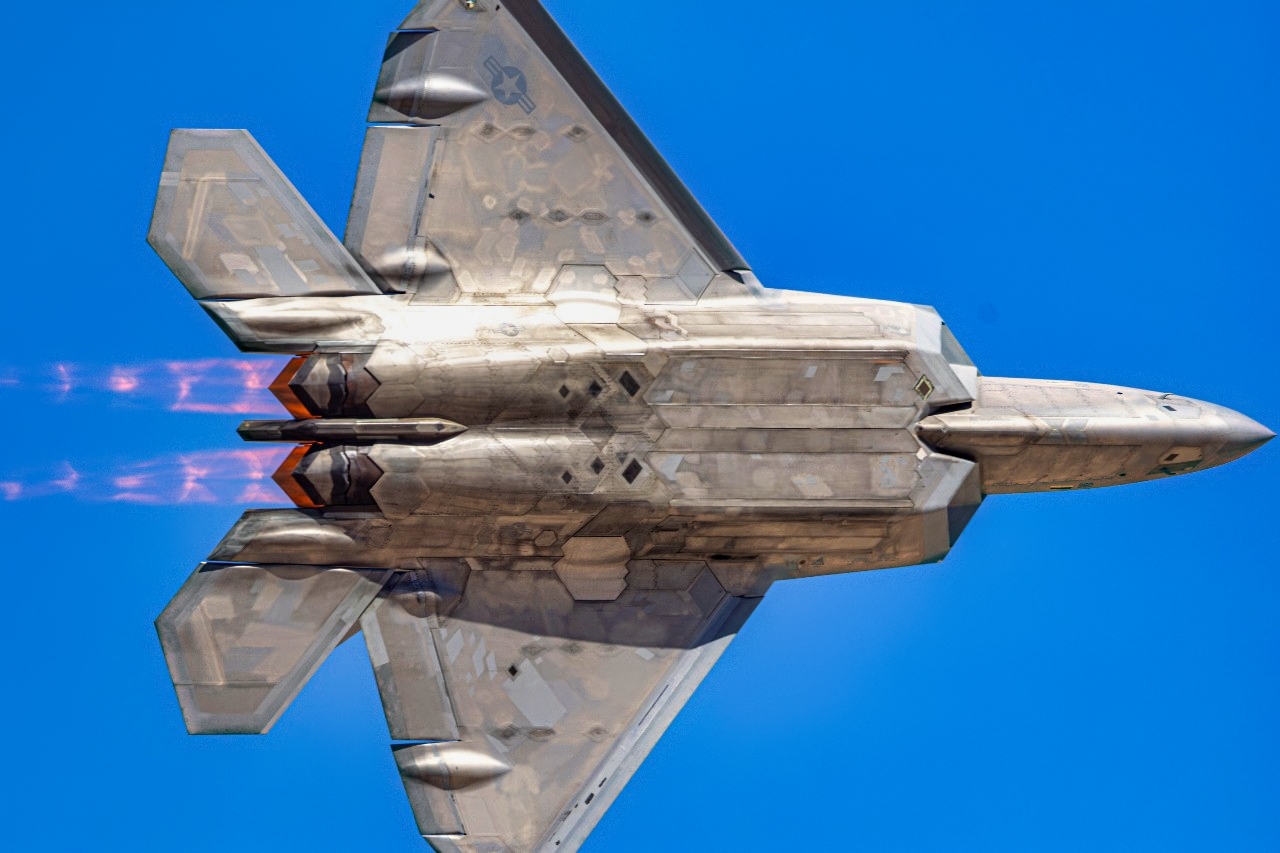
A U.S. Air Force F-22 Raptor performs an aerial demonstration during Aviation Nation 2025 at Nellis Air Force Base, Nevada, April 6, 2025. Aviation Nation is an airshow held at Nellis Air Force Base, showcasing the pride, precision and capabilities of the U.S. Air Force through aerial demonstrations and static displays. The F-22 Raptor performed there to highlight its unmatched agility and air dominance as part of the Air Force’s efforts to inspire, recruit and connect with the public. (U.S. Air Force photo by Staff Sgt. Lauren Cobin)

F-22 Raptor Fighter. Image Credit: Creative Commons.
So any sort of upgrade into a “super” version of the F-22 starts from a highly constrained baseline.
What Does the Super F-22 Entail?
Common upgrade ideas include adaptive-cycle engines, improved radar and sensors, advanced electronic warfare capabilities, and manned-unmanned teaming.
Many upgrades are already underway, including sensor modernization, integration of new weapons, and improved data links. But those upgrades are incremental and relatively modest.
The “super” variant upgrades might imply structural changes and/or major propulsion upgrades.
That’s neither incremental nor modest—and bound to brush up against very real constraints, like the airframe’s limited volume and finite thermal and power margins.
And at some point, if the upgrades become ambitious enough, you’re no longer modernizing or adapting but redesigning entirely.
Flirting with Adaptive Engines
Adaptive engines are an enticing premise and might be possible; they promise more thrust and better range, as well as improved cooling. Would this work on the Raptor?
The F-22’s current engines are already optimized for supercruise and high-altitude performance; retrofitting adaptive engines would require significant airframe modification, increasing costs and fleet downtime.
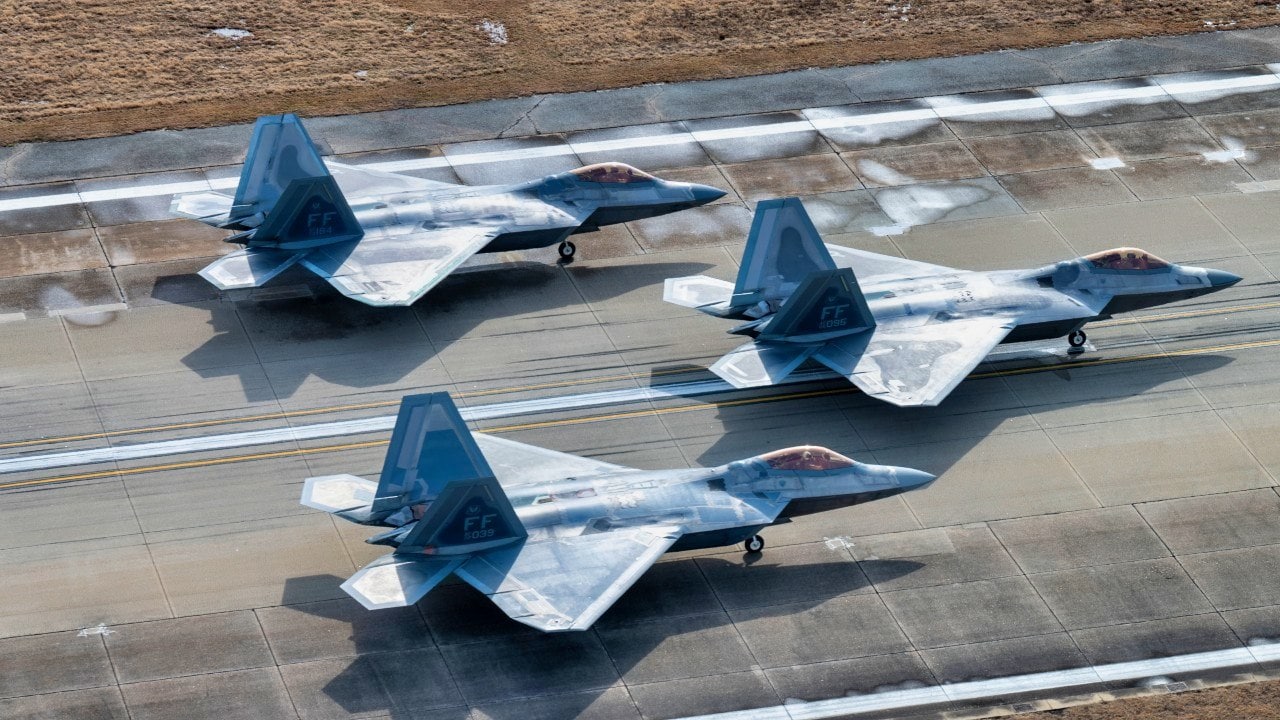
LANGLEY AIR FORCE BASE, Va. – F-22 Raptors from the 1st Fighter Wing sit in position on the runway during the Elephant Walk at Langley Air Force Base, Virginia, Jan. 31, 2025. The surge was designed to showcase the wing’s operational readiness and its ability to rapidly mobilize airpower. The 1st FW operates F-22 Raptors and T-38 Talons, maintaining combat capabilities that enable the U.S. Air Force to execute missions across the globe. With a focus on air superiority, the 1st FW plays a critical role in defending the nation’s interests. (U.S. Air Force photo by Tech Sgt. Matthew Coleman-Foster)
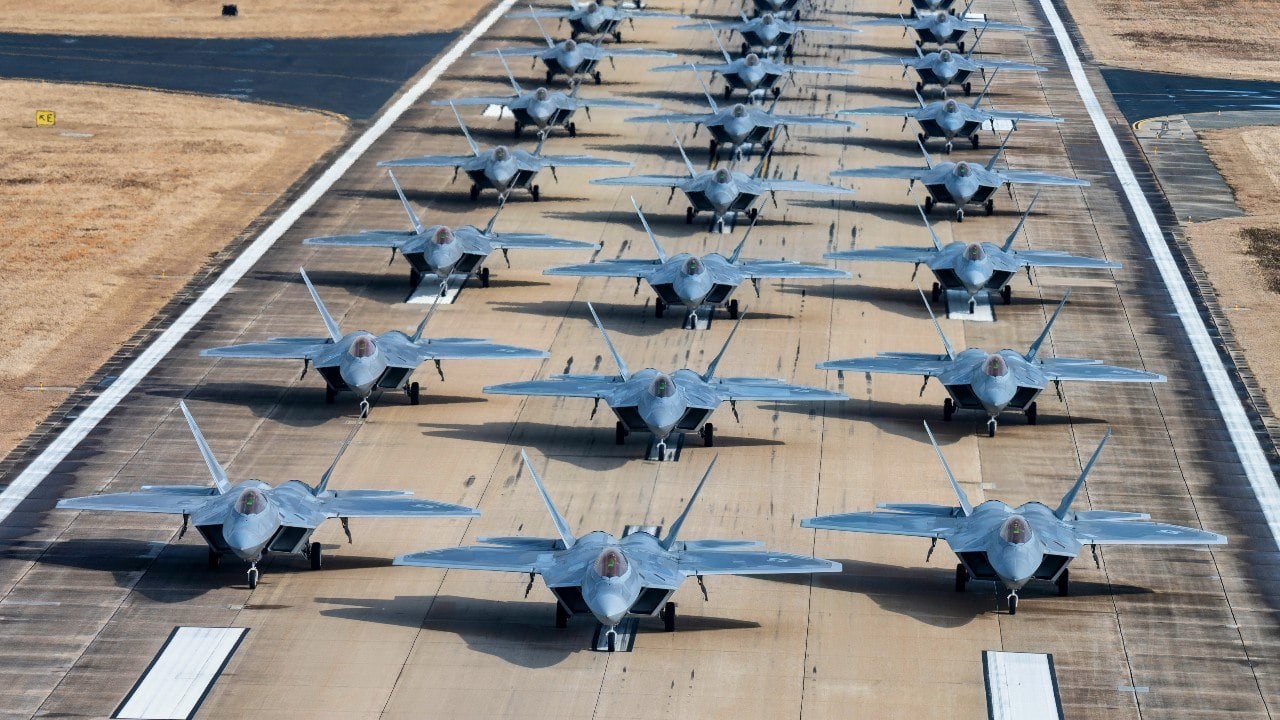
Aircraft from the 1st Fighter Wing conducted an Elephant Walk at Langley Air Force Base, Virginia, Jan. 31, 2025, showcasing the wing’s readiness and operational agility. This demonstration highlighted the wing’s capability to mobilize forces rapidly in high-stress scenarios. The wing’s fleet includes F-22 Raptors and T-38 Talons. As Air Combat Command’s lead wing, the 1 FW maintains unparalleled combat readiness to ensure national defense at a moment’s notice. (U.S. Air Force photo by Tech Sgt. Matthew Coleman-Foster)
And with such a small fleet, the cost per aircraft would skyrocket because costs can’t be distributed across a larger fleet. The question that inevitably arises is whether the large modernization investment makes more sense than investing solely in the clean-sheet NGAD.
An Attractive Idea
The “Super F-22” idea is attractive; nonetheless, the real F-22 outperforms adversaries today, despite being designed in the 1990s, so upgrades feel lower risk and faster than starting from a clean sheet.
The upgrade option has political appeal, too, as it avoids reopening debates over F-22 production or sparking a venomous acquisition fight for a brand-new aircraft. And operationally, there’s something attractive about preserving the F-22’s air superiority function during the transition to NGAD.
But that line of thought may be a trap of familiarity.
Risks of an Upgrade
The Raptor fleet is small and capped. Even if the “super” upgrade plan went off seamlessly, it would still affect a relatively small number of aircraft.
And survivability is not static. Just because the F-22 is survivable today, especially with respect to front-aspect stealth performance, circumstances change; adversary sensors improve; air defenses adapt.
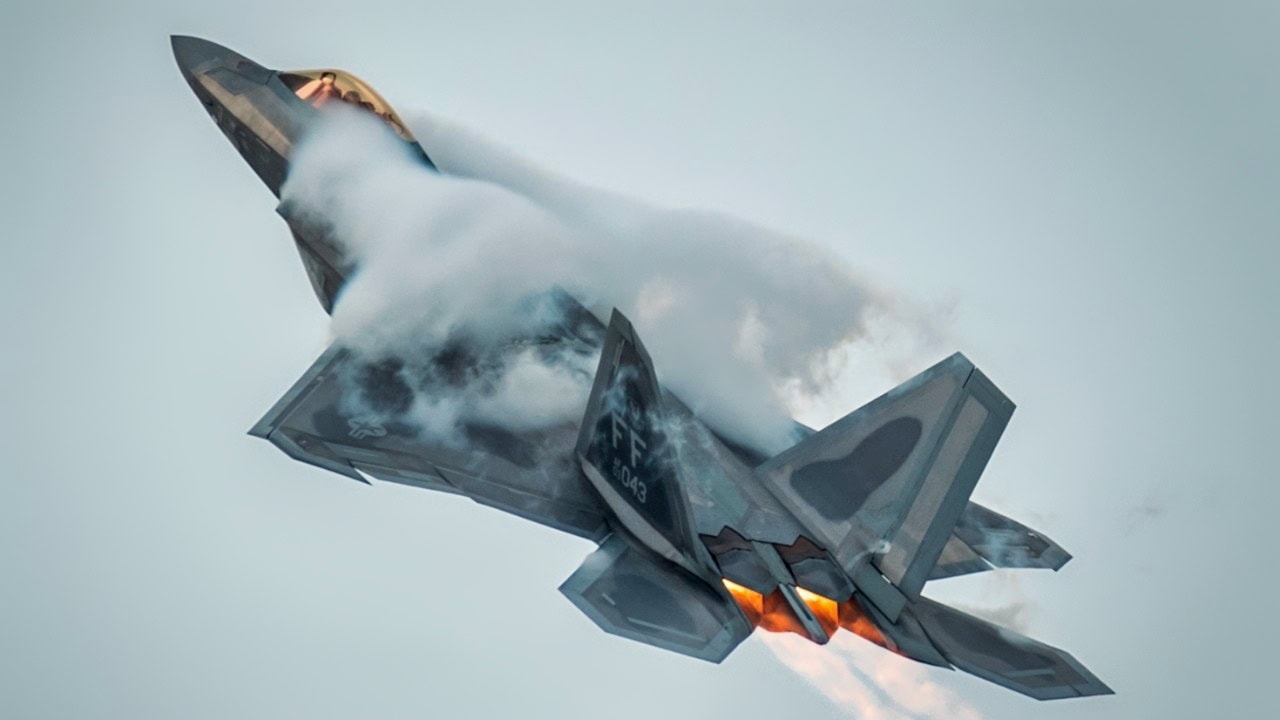
U.S. Air Force Capt. Samuel “RaZZ” Larson, F-22 Raptor Demonstration Team commander, performs an aerial maneuver in preparation for the ongoing airshow season at Joint Base Langley-Eustis, Virginia, July 9, 2024. Airshows play a crucial role in highlighting the importance of air power in modern warfare and help reinforce the deterrence capabilities of advanced fighter aircraft like the F-22 Raptor. (U.S. Air Force photo by Senior Airman Mikaela Smith)
The point is, the F-22 may be approaching a survivability precipice, as fourth-generation aircraft did a generation ago, prompting the development of the F-22 and F-35 to go where older aircraft no longer could.
Survivability aside, the Raptor has structural limits, i.e., a capped payload and a stealth-shaping that cannot be adjusted, meaning upgrades are contained within the existing structure.
Incremental Raptor upgrades are logical and are already happening. But a “Super F-22” retrofit carries the risk of high costs to low returns.
The aircraft works as is, and should be retained as is, and should not be used as a science experiment.
Keeping the core premise intact, as a bridge to the NGAD, whenever a sixth-generation aircraft is truly needed, is likely the smarter play than large-scale tinkering with the world’s best air-to-air vehicle.
About the Author: Harrison Kass
Harrison Kass is an attorney and journalist covering national security, technology, and politics. Previously, he was a political staffer and candidate, and a US Air Force pilot selectee. He holds a JD from the University of Oregon and a master’s in global journalism and international relations from NYU.