
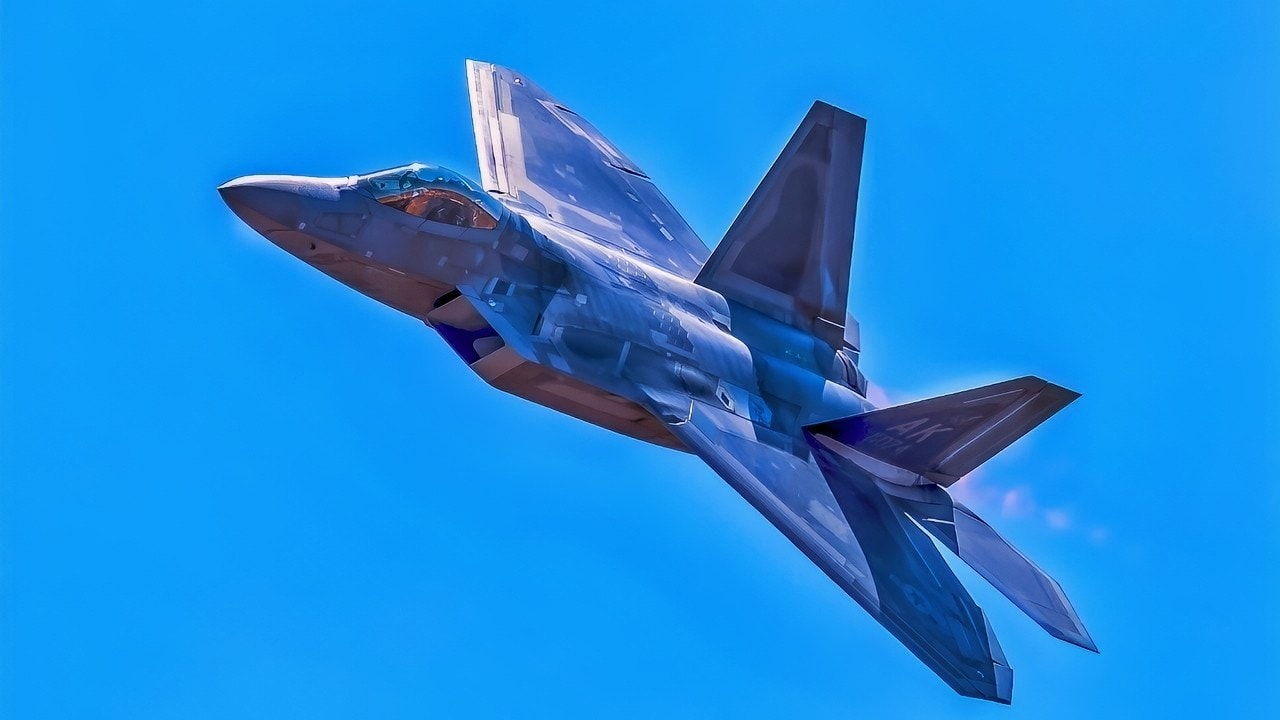
Synopsis: The U.S. Air Force is planning a new modernization push for the F-22 Raptor—often dubbed the “F-22 Super”—to keep the jet viable into the 2030s as next-generation air dominance platforms mature.
-The FY2026 budget request funds a “viability upgrade package” spanning sensors, survivability, radar performance, stealth refinements, and electronic warfare.
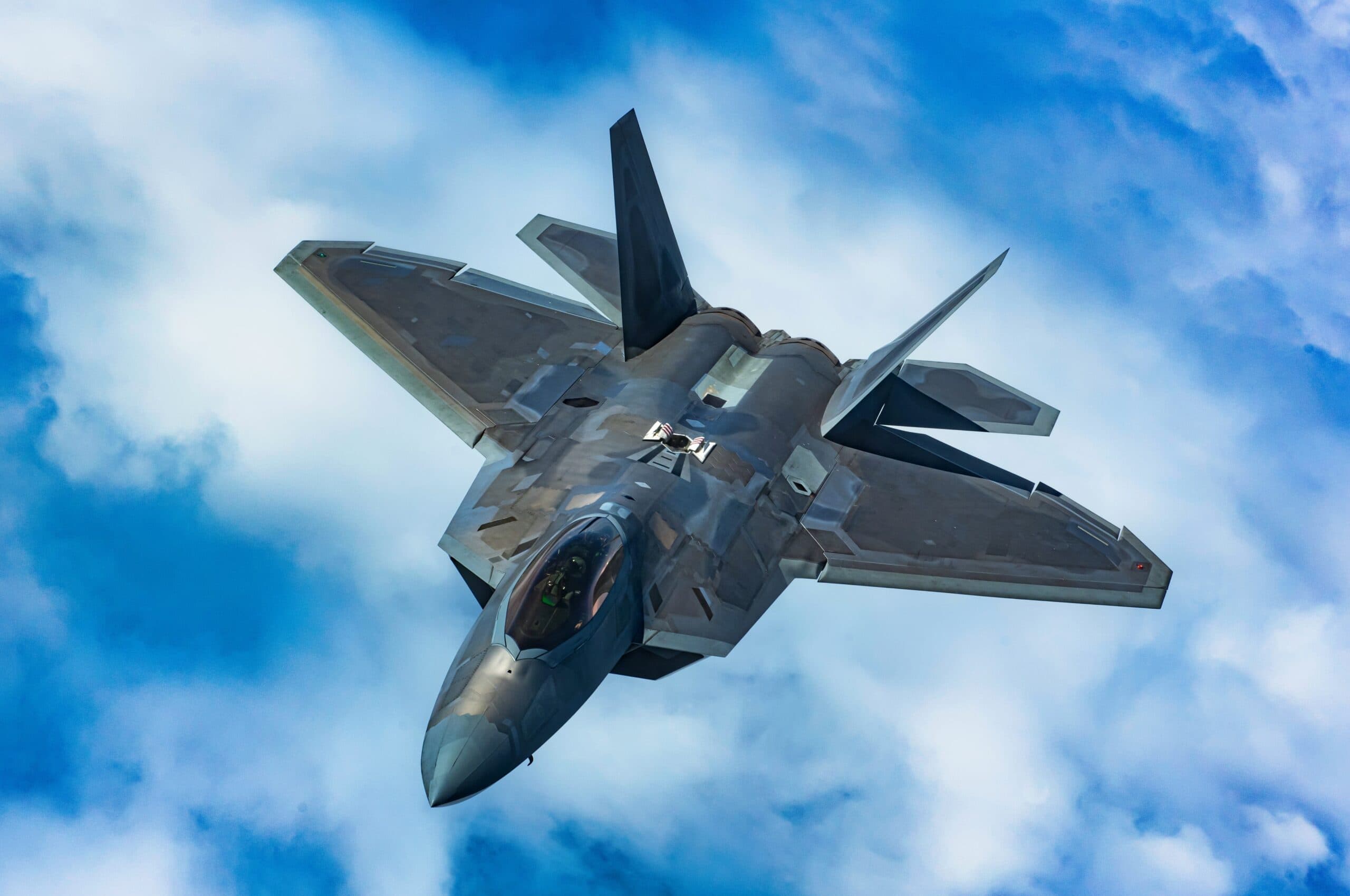
A Hawaii Air National Guard F-22 Raptor pulls away from a KC-135 Stratotanker after receiving fuel April 21, 2021, near Oahu, Hawaii. The fifth-generation aircraft, operated by Airmen from the 199th and 19th Fighter Squadrons, integrated with a Royal Australian Air Force command-and-control aircraft during exercise Pacific Edge 21. The exercise was held to enhance air-combat proficiencies through the integration of allied units and further the interoperability between the two countries’ aircraft. (U.S. Air National Guard photo by Staff Sgt. John Linzmeier)
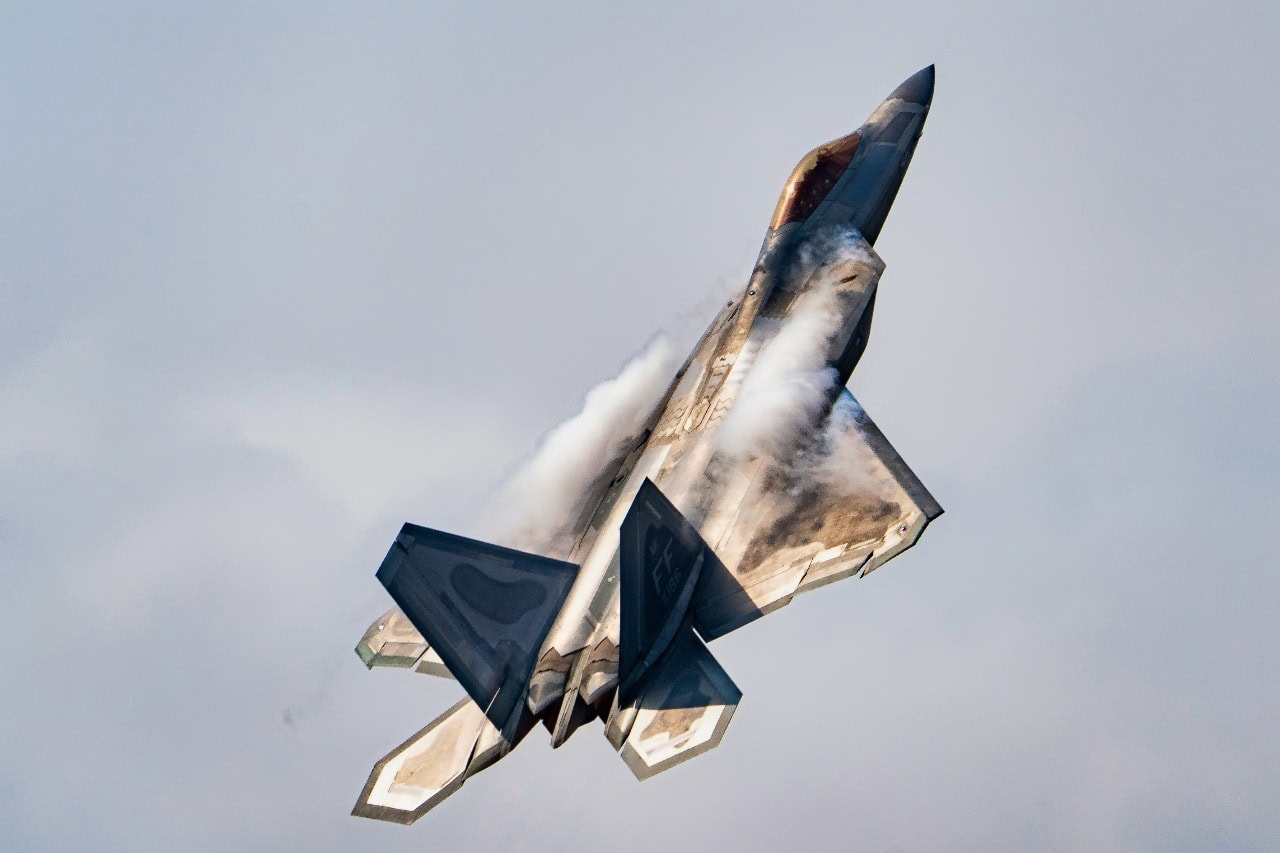
U.S. Air Force Maj. Josh Gunderson, F-22 Demo Team pilot and commander, pulls into a vertical climb during the Thunder Over New Hampshire Airshow, Sept. 12, 2021, at Portsmouth International Airport, Portsmouth, New Hampshire. The F-22 Raptor’s two Pratt and Whitney F119 Turbofan engines bring a combined 70,000 pounds of thrust, allowing the aircraft to takeoff straight into the vertical. (U.S. Air Force photo by Staff Sgt. Don Hudson)
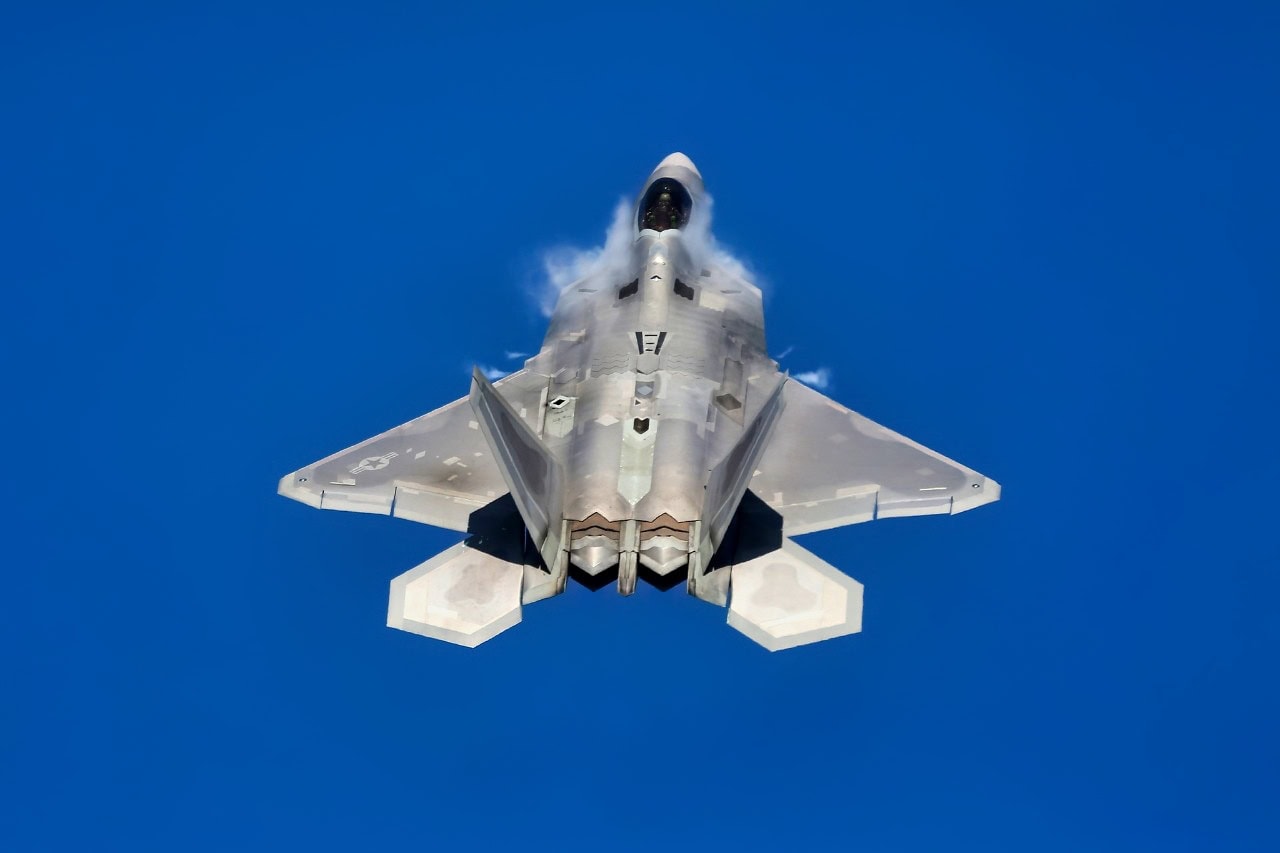
F-22 Raptor Fighter. Image Credit: Creative Commons.
-A central feature is IRDS, an embedded infrared defensive sensor suite designed to spot incoming threats and improve tracking in contested airspace.
-The case for upgrades is straightforward: preserve air dominance now. The risk is equally clear: pouring money into a limited, aging fleet while NGAD and other priorities compete for the same dollars.
Why the Air Force Is Betting on the F-22 “Super” Into the 2030s
The U.S. Air Force is moving ahead with plans for a new round of upgrades to its F-22 Raptor stealth fighter as part of an effort to keep the aircraft operationally relevant into the 2030s, more than three decades after the jet was initially designed. In fact, many now call this ‘new’ version of the Raptor the F-22 Super.
That push was confirmed in the service’s Fiscal Year 2026 budget request, which allocates funding for a viability upgrade package.
This umbrella term covers a series of improvements to the aircraft’s sensors, survivability, and electronic warfare systems.
At the center of the effort is the integration of the Infrared Defensive System (IRDS), a new set of embedded infrared sensors intended to help the F-22 detect incoming threats and track enemy aircraft in an increasingly contested airspace.
The broader upgrade package also includes enhancements to radar performance, stealth features, and onboard electronic warfare – all of which were promised in response to advances in Chinese and Russian air defenses that are eroding the advantages the F-22 was initially built to exploit.
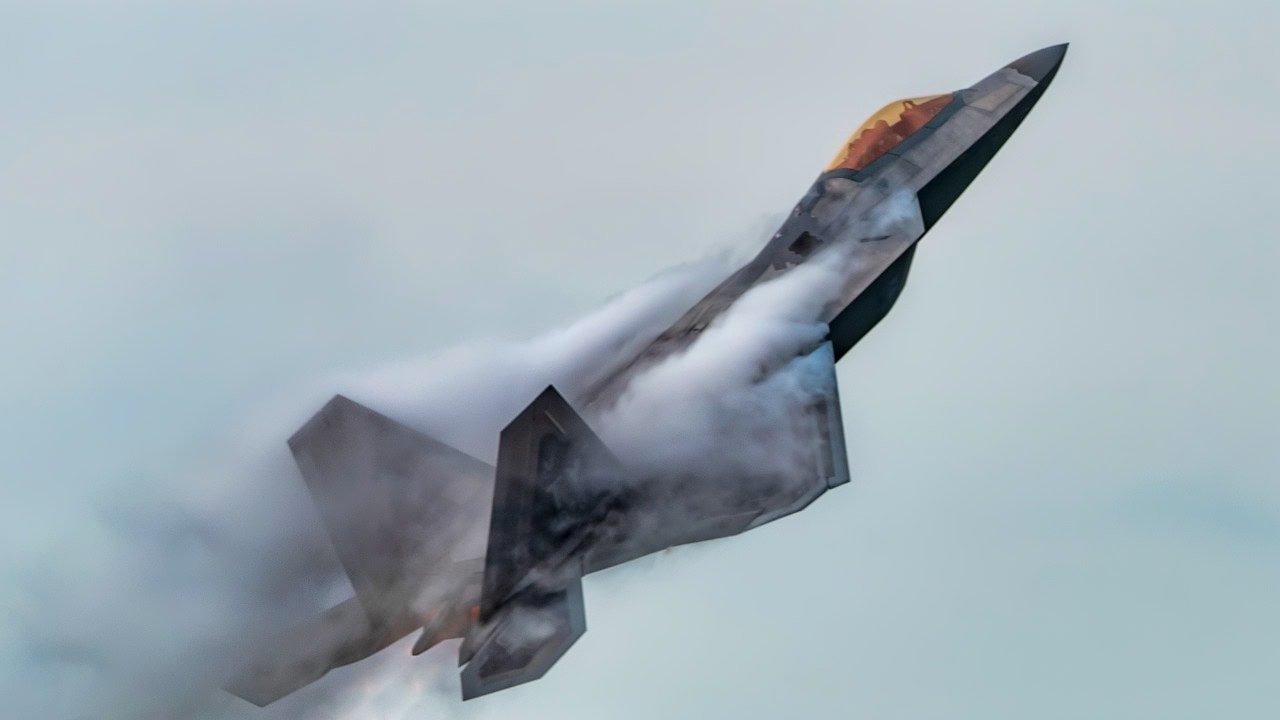
U.S. Air Force Maj. Paul Lopez, F-22 Demo Team commander, pulls into the vertical during the Battle Creek Field of Flight air show July 7, 2019. Maj. Lopez has over 1,500 hours flying both the F-15 Eagle and the F-22 Raptor and is in his second year as the commander of the F-22 Raptor Demonstration Team. (U.S. Air Force photo by 2nd Lt. Samuel Eckholm).
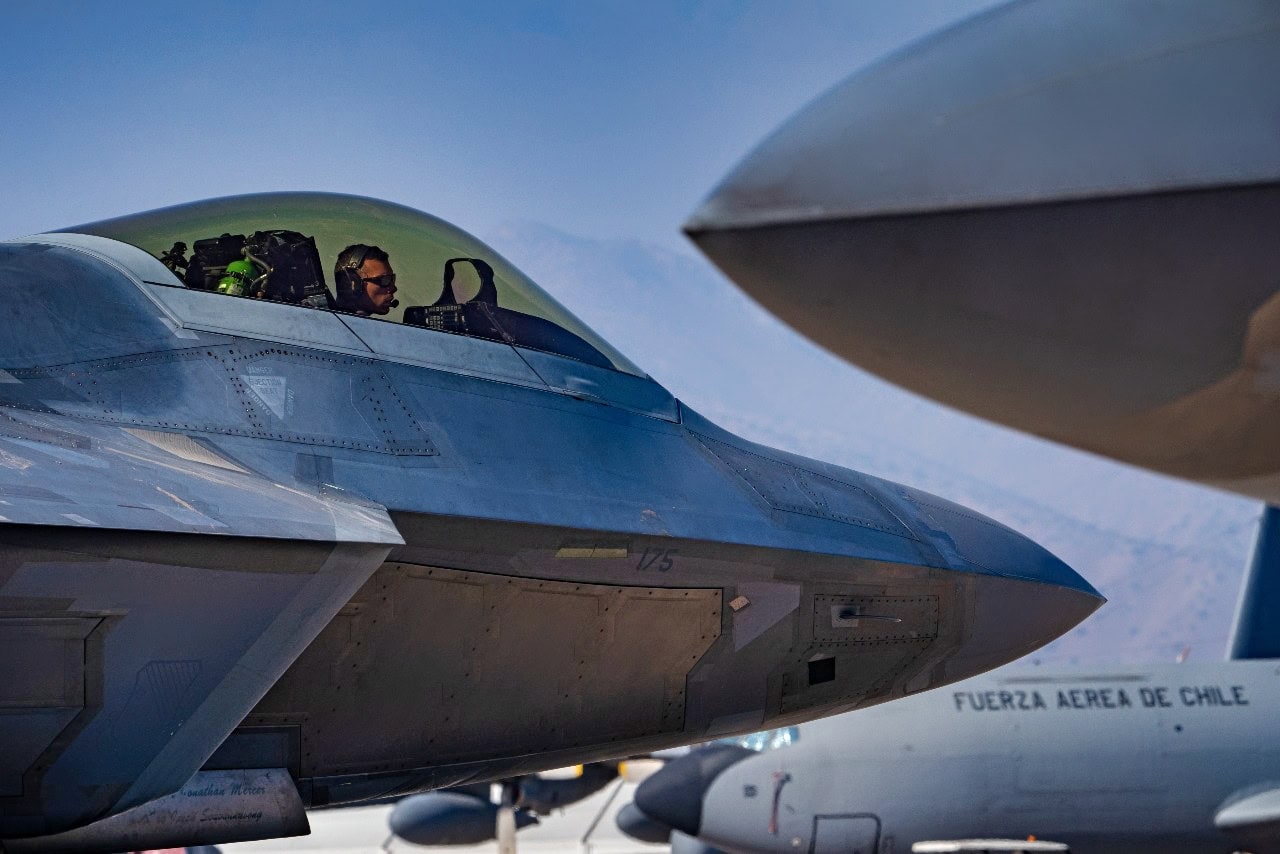
U.S. Air Force Technical Sgt. Fernando Llama, F-22 Demo Team avionics specialist, preforms an engine run to check all aircraft systems are good-to-go for the 2022 FIDAE Air & Trade Show, April 3, 2022 in Santiago, Chile. Avionics specialists like Llama are responsible for the maintenance of the onboard flight computers, integrated avionics, and many electrical systems and components. (U.S. Air Force photo by Staff Sgt. Don Hudson)
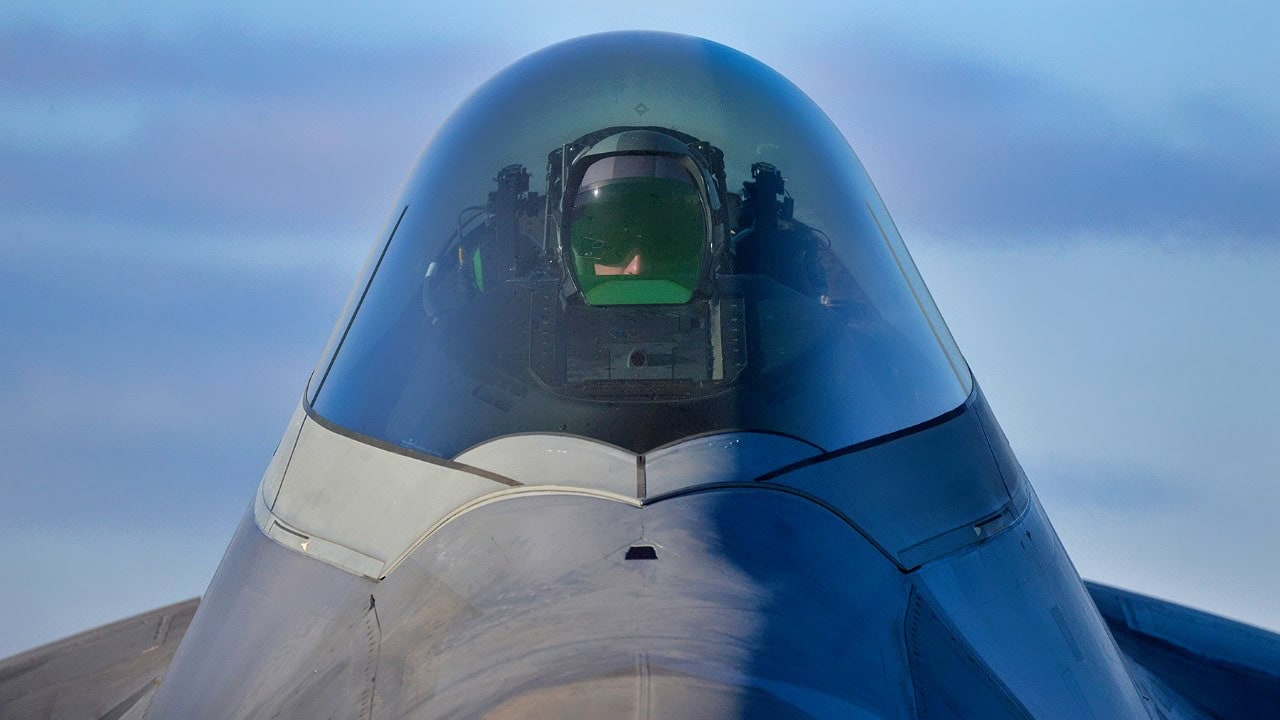
Maj. Philip “Stonewall” Johnson, 514th Flight Test Squadron F-22 test pilot, sits in the last F-22 Raptor to complete the F-22 Structural Repair Program Nov. 24, 2020, prior to performing a functional check flight with the aircraft at Hill Air Force Base, Utah. The 574th Aircraft Maintenance Squadron processed 135 F-22s through the program by performing structural modifications to increase total flying hour serviceability on each aircraft by 8,000 hours. (U.S. Air Force photo by Alex R. Lloyd)
While the Air Force has described the changes as necessary to bridge the gap until its next-generation fighter enters service, the plans have reopened a long-running debate over whether continued investment in a limited, Cold War-era frame is a prudent use of resources or just a costly attempt to stretch an aircraft beyond its limits and intended lifespan.
F-22 Super: Modernizing the Raptor
The F-22 entered service in the mid-2000s, after development began in the early 1990s, becoming the first operational fifth-generation fighter to combine stealth, supercruise, and advanced sensor fusion.
Designed originally to counter high-end air threats of the late Cold War and post-Cold War era, the jet remains one of the most capable air superiority platforms in the world. Its combination of low-observable characteristics, robust avionics, and agility has ensured that it remains one of the United States’ best air-dominance assets.
However, adversary capabilities have evolved since the F-22 entered service, and China and Russia have fielded advanced surface-to-air missile systems, long-range sensors, and new fighter designs that pose an increasingly difficult challenge to U.S. stealth aircraft.
In response, the Air Force and industry have begun integrating new defensive and sensor systems on the F-22.
A notable example is the Infrared Defensive System, developed by Lockheed Martin, that embeds distributed infrared search-and-track sensors into the airframe to improve threat detection and survivability against modern air defenses.
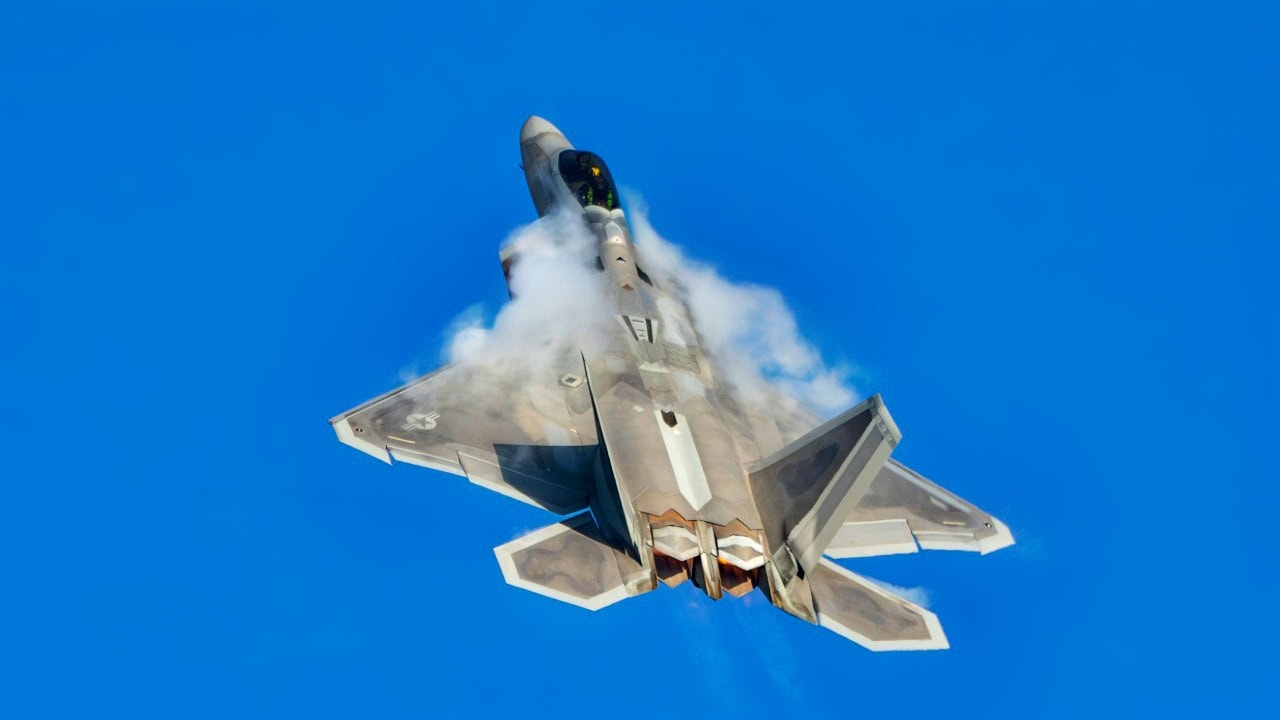
A U.S. Air Force F-22 Raptor, assigned to the F-22 Demonstration Team, executes precision aerial maneuvers during a practice airshow at Hill Air Force Base, Utah, Dec. 5, 2024. The practice session helps ensure the team maintains peak performance and readiness during the off-season. (U.S. Air Force photo by Senior Airman Nicholas Rupiper)
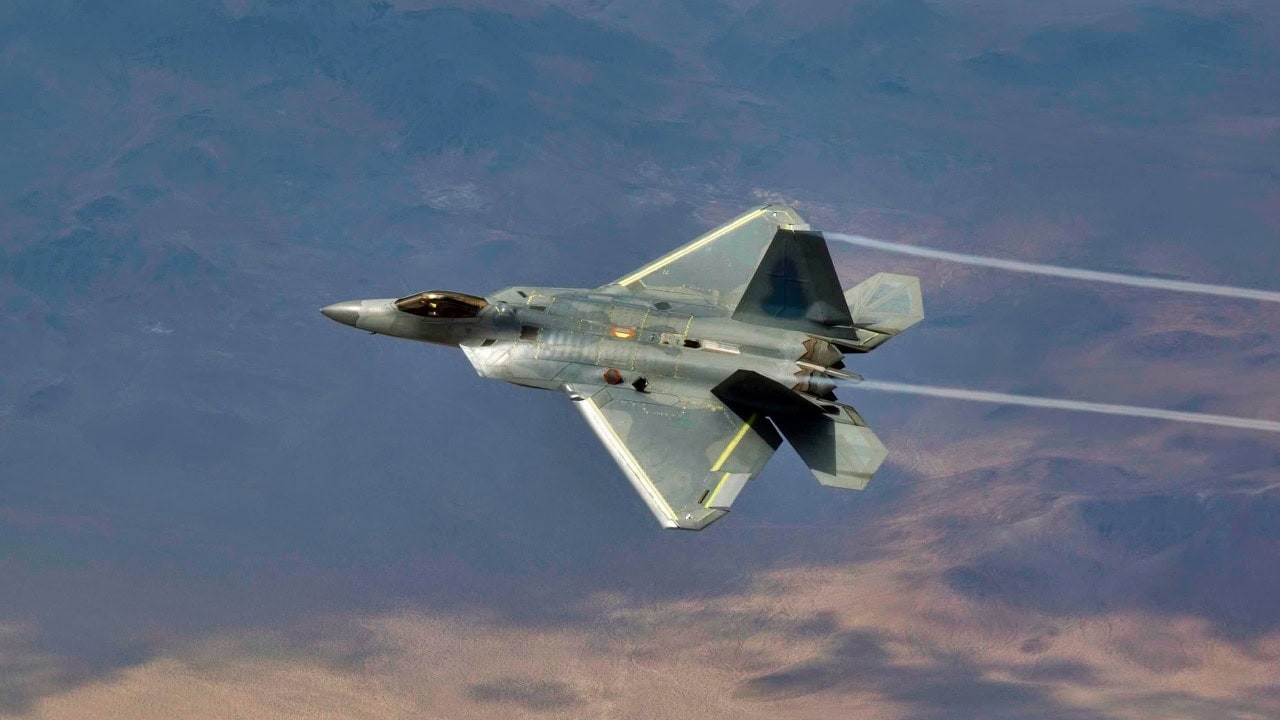
F-22 Raptor 4006 makes its second flight July 18 following an extensive refurbishment to get it back in the air. (Courtesy photo by Christopher Higgins/Lockheed Martin)
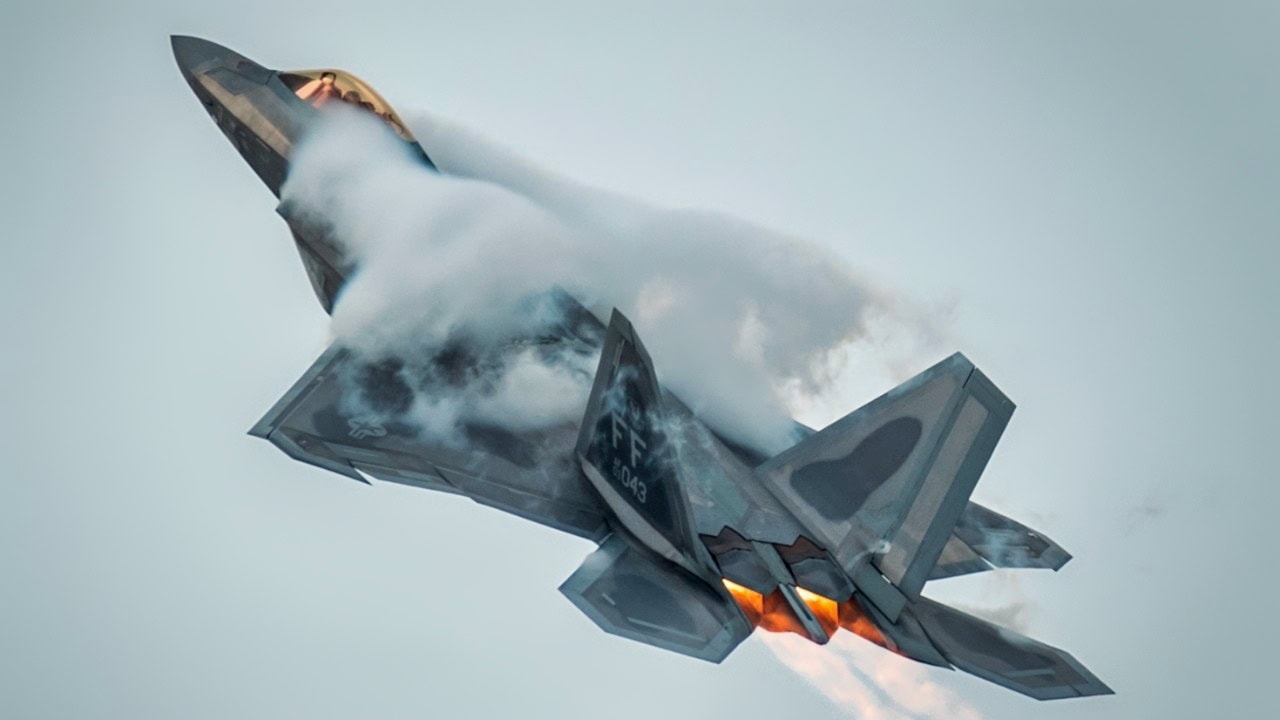
U.S. Air Force Capt. Samuel “RaZZ” Larson, F-22 Raptor Demonstration Team commander, performs an aerial maneuver in preparation for the ongoing airshow season at Joint Base Langley-Eustis, Virginia, July 9, 2024. Airshows play a crucial role in highlighting the importance of air power in modern warfare and help reinforce the deterrence capabilities of advanced fighter aircraft like the F-22 Raptor. (U.S. Air Force photo by Senior Airman Mikaela Smith)
The viability upgrade package detailed in the FY2026 budget request seeks to build on IRDS by enhancing the aircraft’s radar profile, electronic warfare suite, and other combat systems.
Those upgrades are essential if the Raptor is to remain relevant: it must, after all, operate as part of a sensor-rich, networked force; otherwise, it will fall behind during the 2030s and beyond.
There has also been talk of extending modernization to older Block 20 jets that were previously relegated to training duties. Doing so would boost the number of combat-capable aircraft available while the F-47 remains in development.
Costs, Opportunity Costs, and Trade-offs
Despite the technological merit of upgrades like IRDS, there remain a number of significant financial and strategic risks in upgrading an old platform like the Raptor.
First, the aircraft’s age and design constraints mean there are limits to how much new capability can be added before returns begin to diminish. While upgrades may enhance specific systems, they cannot fundamentally change the airframe’s basic architecture.
But more fundamentally, funding incremental upgrades on a platform nearing the end of its service diverts resources away from projects focused on fielding new capabilities.
The Air Force’s next-generation NGAD initiative is intended to provide a more sustainable long-term solution for air dominance in highly contested environments.
Balancing investment between keeping the F-22 relevant and ensuring the success of the NGAD program, therefore, poses difficult choices. Throw in proposals to upgrade the F-35 to a “Ferrari” model, and funding becomes a clear problem for the Air Force. If it can be secured, then great.
If it can’t, then the Air Force must choose between waiting for the F-47 to arrive in greater numbers or investing heavily in older systems that carry other risks on top of new maintenance, sustainment, and logistics burdens.

Shown is a graphical artist rendering of the Next Generation Air Dominance (NGAD) Platform. The rendering highlights the Air Force’s sixth generation fighter, the F-47. The NGAD Platform will bring lethal, next-generation technologies to ensure air superiority for the Joint Force in any conflict. (U.S. Air Force graphic)
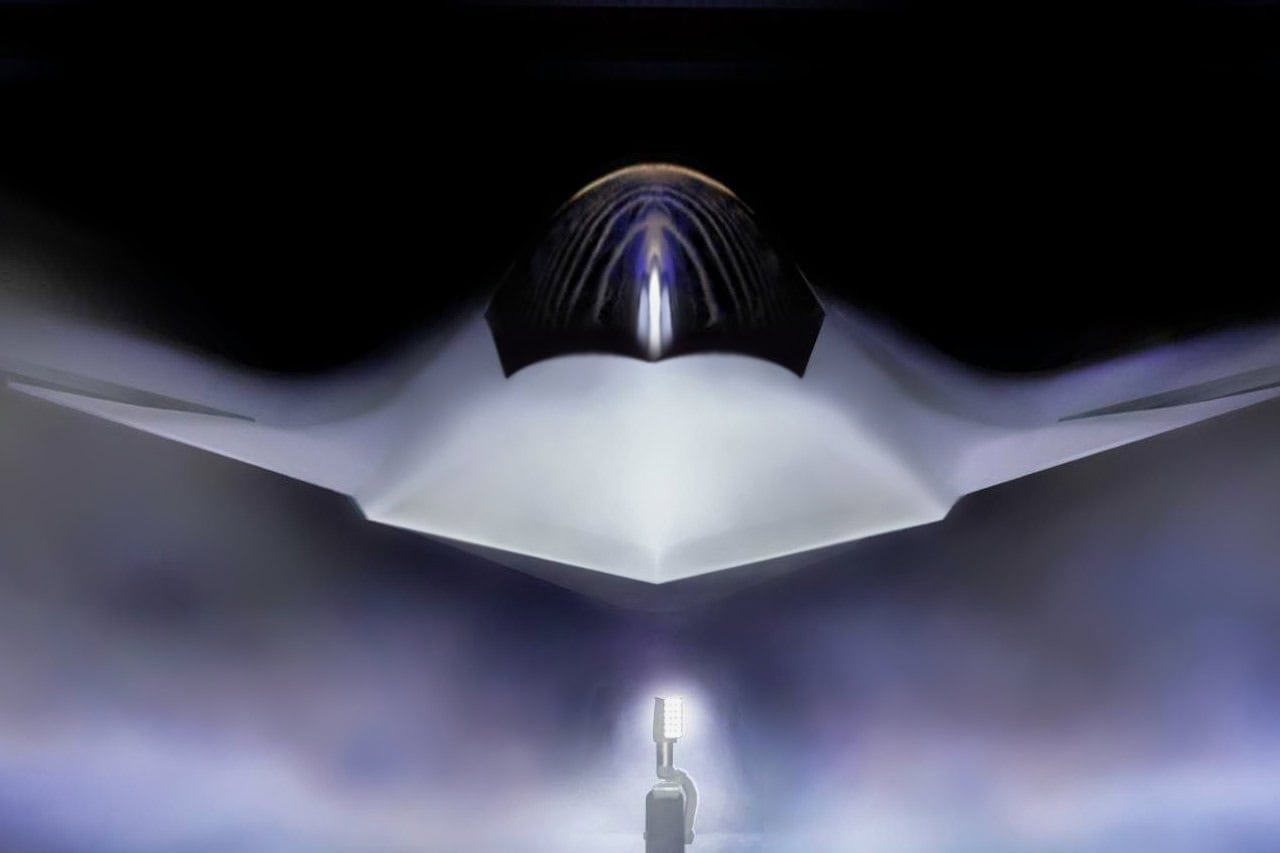
Shown is a graphical artist rendering of the Next Generation Air Dominance (NGAD) Platform. The rendering highlights the Air Force’s sixth generation fighter, the F-47. The NGAD Platform will bring lethal, next-generation technologies to ensure air superiority for the Joint Force in any conflict. (U.S. Air Force graphic)
And then there are operational considerations: the small size of the F-22 fleet – limited by production decisions two decades ago – means that even with upgrades, the United States has relatively few of the jets available compared to potential adversary numbers in a high-end conflict.
F-22 Super: Worth It For the Air Force?
So, is it worth it?
It’s hard to say – and it depends on a number of factors. Ultimately, the decision boils down to a judgment about strategy: how best can the U.S. Air Force maintain today’s edge while investing in tomorrow’s capabilities? If viability upgrades succeed in substantially enhancing survivability and sensor integration, they could provide a valuable bridge, keeping the Raptor credible for years to come.
On the other hand, unchecked investment in an aging platform risks trapping the Air Force in a cycle in which large sums of money prolong the lifespan of legacy systems at the expense of innovation.
Ultimately, it comes down to one thing: money.
About the Author: Jack Buckby
Jack Buckby is a British researcher and analyst specialising in defence and national security, based in New York. His work focuses on military capability, procurement, and strategic competition, producing and editing analysis for policy and defence audiences. He brings extensive editorial experience, with a career output spanning over 1,000 articles at 19FortyFive and National Security Journal, and has previously authored books and papers on extremism and deradicalisation.