
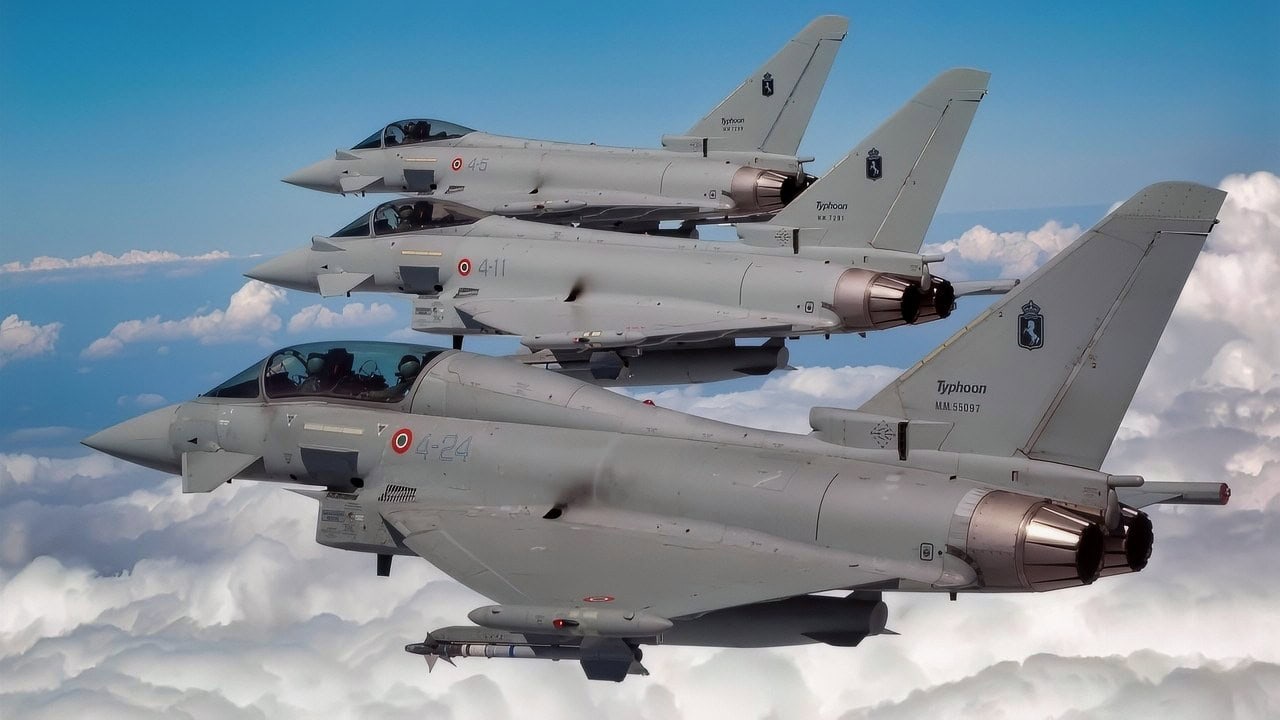
Key Points and Summary – The Eurofighter Typhoon has been the RAF’s workhorse for 20 years, and upgrades aim to keep it relevant into the 2040s.
-It is fast, agile, and a true “missile truck,” but it is not stealthy and cannot become one. That means, the F-22 and F-35, showing off stealth capabilites, mean the Eurofighter Typhoon could eventually become obsolete.
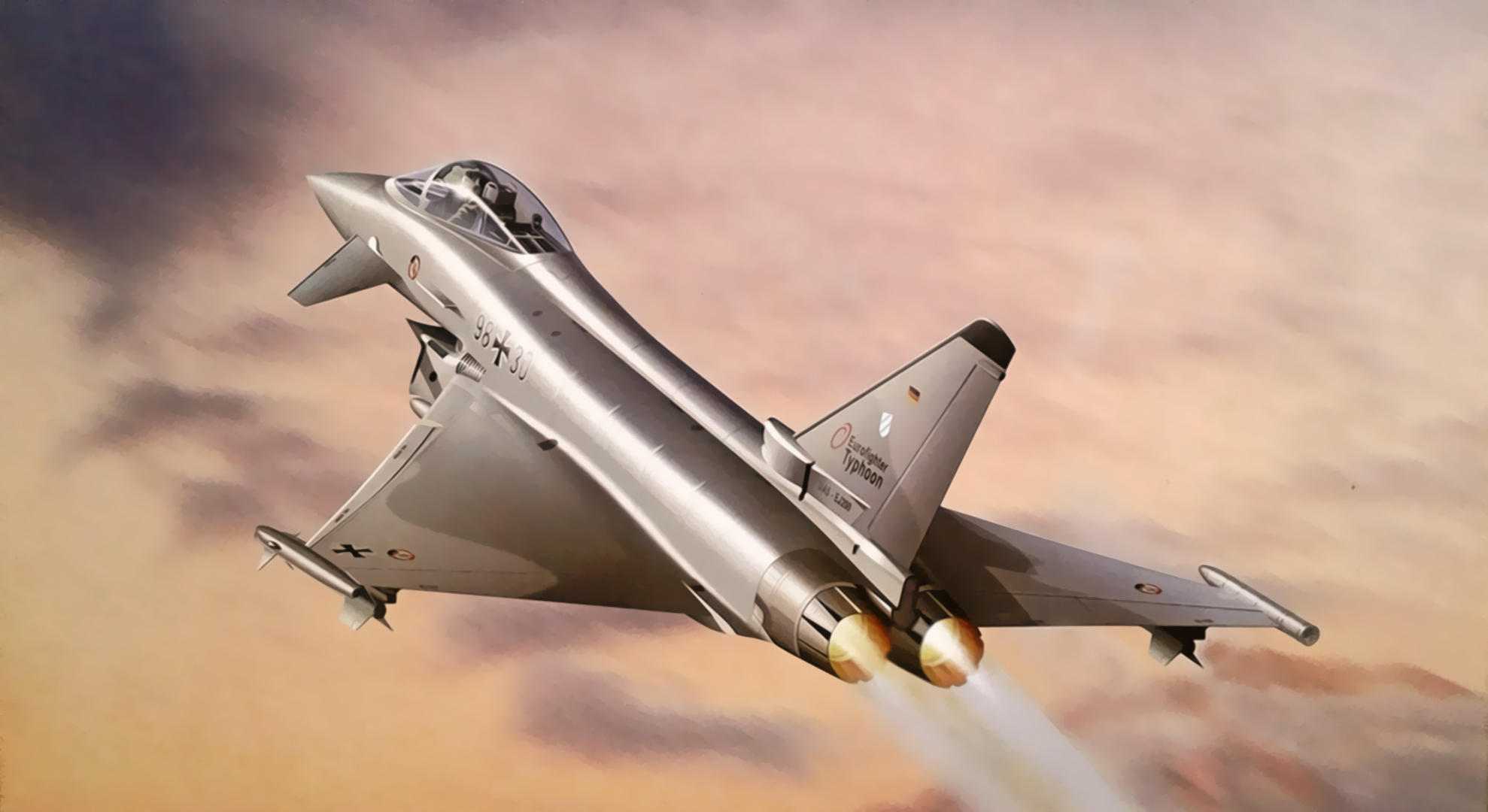
Eurofighter Typhoon. Image Credit: Creative Commons.
-Its future depends on a force-mix concept: F-35s and other low-observable assets penetrate, suppress defenses, and pass targeting data back to Typhoons operating at standoff range.
-New radars, electronic warfare improvements, and long-range weapons like Meteor and SPEAR 3 extend reach. That keeps air forces effective while buying time for sixth-gen.
Can the Typhoon Survive the F-35 Age? Here’s the Force-Mix Plan
The Eurofighter Typhoon, a fourth-generation multirole aircraft, has served as the Royal Air Force’s backbone for two decades.
The Typhoon’s first flight was back in 1994. Since then, over 700 Typhoons have been produced and are operated by Austria, Germany, Italy, Kuwait, Oman, Saudi Arabia, Spain, the UK, and Qatar. The popularity of the aircraft is due to its speed, range, and maneuverability.
Eurofighter Typhoon Specs
The Typhoon is powered by two Eurojet EJ200 afterburning turbofan engines, which push the aircraft to Mach 2.35, or 1,550 mph. It has a range of 1,800 miles, with 863 miles in a ground-attack role.
The aircraft is armed with a 27 mm Mauser BK-27 revolver cannon with 150 rounds of ammunition. This weapon was prone to jamming and was documented by UK pilots during airstrikes against ISIS in Syria.
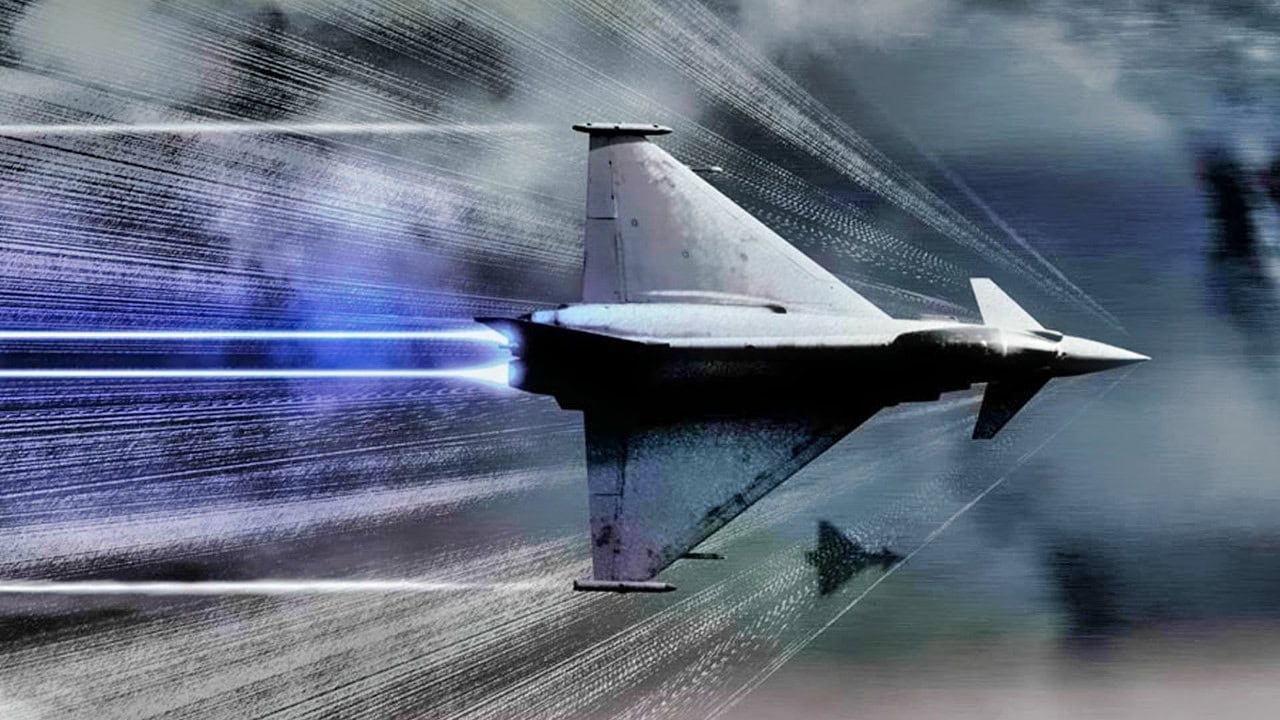
Eurofighter Typhoon Fighter. Image Credit: Creative Commons.
The Typhoon has 13 hard points for carrying ordnance. Eight under the wings and five under the fuselage allow the aircraft to carry up to 19,800 pounds of ordnance in the “missile truck configuration.
The mission profile would determine the exact configuration; however, a typical multi-role configuration would consist of 4 × AMRAAM, 2×ASRAAM/IRIS-T, 4 × EGBU-16/Paveway-IV, 2 × 1000-liter supersonic fuel tanks, and a targeting pod.
Reduced Radar Cross Section
While the Typhoon is not a stealth fighter, certain features were added to reduce the jet’s radar cross-section (RCS).
The engine’s inlets were placed to conceal the front of the engines from radar. The wings, canard, and fin leading edges are swept to avoid reflecting radar energy to the front of the airframe.
And some external weapons are mounted semi-recessed into the airframe, partially shielding these weapons from radar.
Airbus has utilized radar-absorbent materials (RAM) to coat many of the jet’s reflector spots, like the wing leading edges, intake edges, and the rudder, to lower its radar reflectivity.
What Does The Future Hold For The Eurofighter Typhoon?
While fifth-generation stealth fighters like the F-35 limit its future, the Typhoon remains a viable aircraft for certain mission profiles…for now.
The Typhoon is expected to remain operational until at least 2040, and possibly even until 2060 with continuous upgrades, regardless of the success or failure of next-generation programs like FCAS and GCAP.
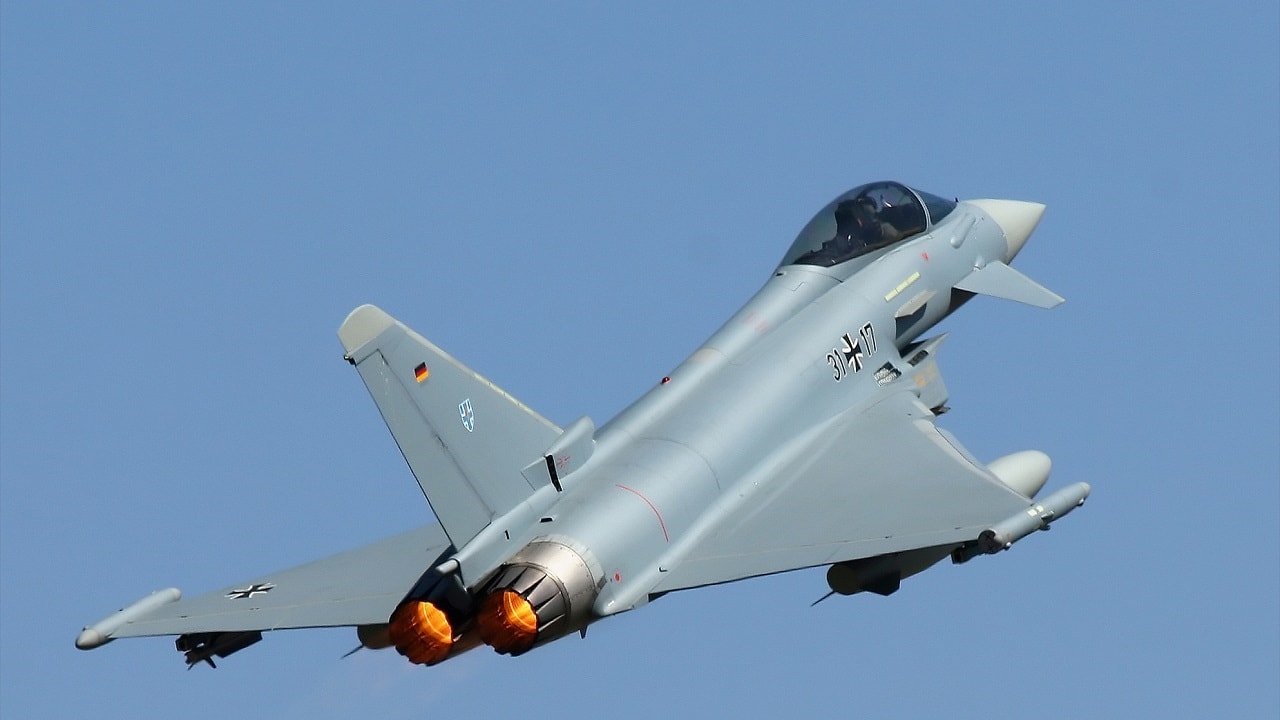
German Air Force Eurofighter. Image Credit: Creative Commons.
It will serve as a complement to stealth aircraft, much like the US uses the F-16, performing different roles in a networked environment. But can it survive against fifth-generation stealth fighters in a modern era?
Role and Viability in the Stealth Era
The Eurofighter Typhoon was not designed as a stealth aircraft. It cannot be converted into one due to fundamental aerodynamic design choices (such as the canard-delta configuration and external weapon points). However, its survival strategy in the stealth era relies on several key factors.
The primary operational concept involves the Typhoon operating alongside fifth-generation stealth fighters like the F-35. In this “force mix” strategy, the stealth aircraft would penetrate contested airspace, destroy air defenses, and feed targeting data back to the Typhoons operating from a safer distance.
Extensive upgrade programs, such as the Long-Term Evolution (LTE) and integration of new technologies, are underway to enhance the Typhoon’s capabilities. Key upgrades include:
The ECRS Mk2 AESA Radar is an advanced Active Electronically Scanned Array radar system to boost detection, tracking, and electronic-attack capabilities.
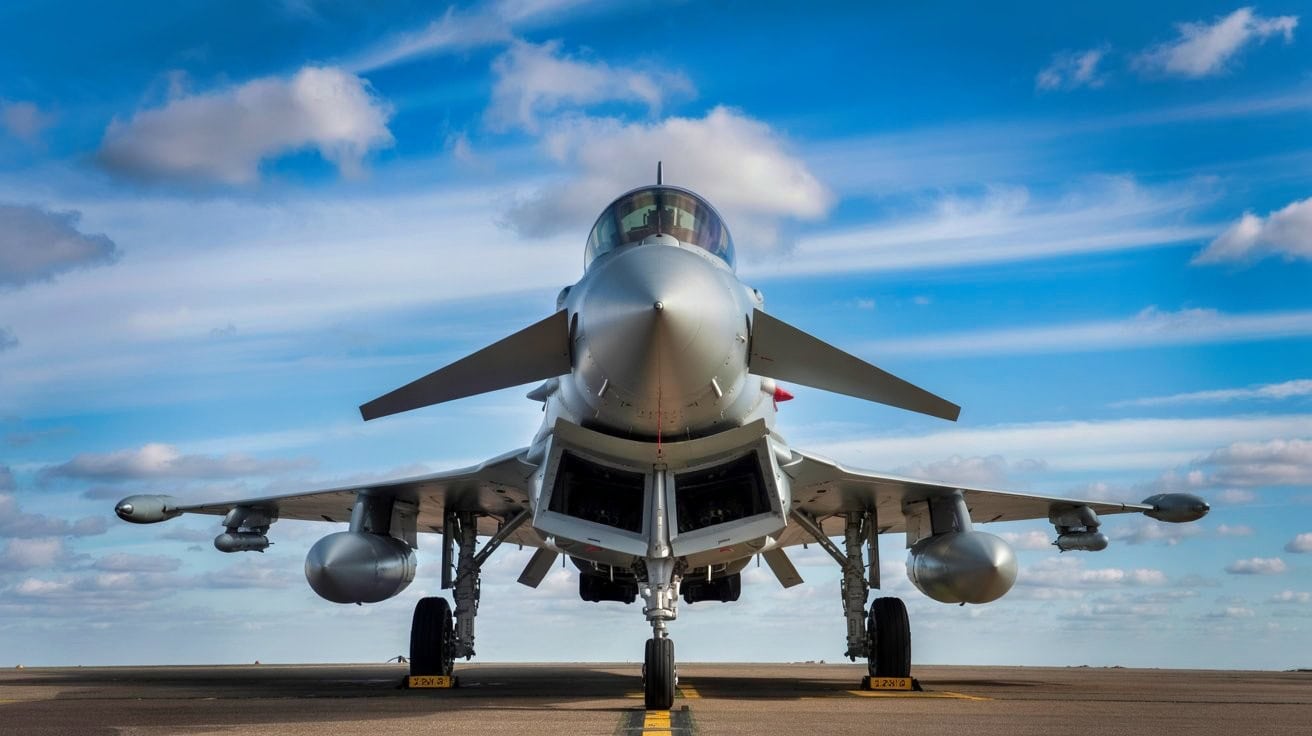
Eurofighter Typhoon. Image Created by Ideogram.
The Advanced Electronic Warfare (EW) system includes the Praetorian DASS suite and other enhancements that improve its self-protection and jamming abilities in contested environments.
New Weapons Increase Their Range
Integration of advanced standoff missiles such as the Meteor (beyond-visual-range air-to-air) and SPEAR-3 (standoff ground attack) enables it to engage targets from greater distances, reducing exposure to threats.
Upgrades for the Typhoon focus on sensor fusion, AI assistance, and high-speed data links to seamlessly integrate the Typhoon into a “combat cloud” that includes drones and other networked assets.
What Operational Roles Will The Typhoon Have:
While less suited for penetrating deep into highly contested, peer-level air defense bubbles due to its lack of stealth, the Typhoon remains highly effective for other essential roles
Air policing and quick reaction alert (QRA) missions.
Homeland defense.
“Missile truck” operations, carrying large weapon payloads, will once the F-35 has cleared a path.
Operations in non-stealth-dependent scenarios.
If FCAS or GCAP Fails, What Impact Will It Have On the Typhoon?
If either the FCAS (Future Combat Air System, involving Germany, France, and Spain) or GCAP (Global Combat Air Programme, involving the UK, Italy, and Japan) were to fail or experience significant delays, the reliance on the Eurofighter would actually increase in the short to medium term.
Nations such as Germany and Italy have already placed orders for new Tranche 4/5 Typhoons to bridge the gap until their next-generation replacements arrive (scheduled for around 2035-2040).
A failure of the next-gen programs would force continued investment in the Typhoon’s Long-Term Evolution program to maintain a capable domestic air force and retain essential aerospace industrial skills.
While the Eurofighter will continue to play a vital, evolving role for decades to come, without a viable fifth- or sixth-generation fighter to clear the way, it will suffer against its enemies’ stealth assets.
About the Author: Steve Balestrieri
Steve Balestrieri is a National Security Columnist. He served as a US Army Special Forces NCO and Warrant Officer. In addition to writing on defense, he covers the NFL for PatsFans.com and is a member of the Pro Football Writers of America (PFWA). His work was regularly featured in many military publications.