
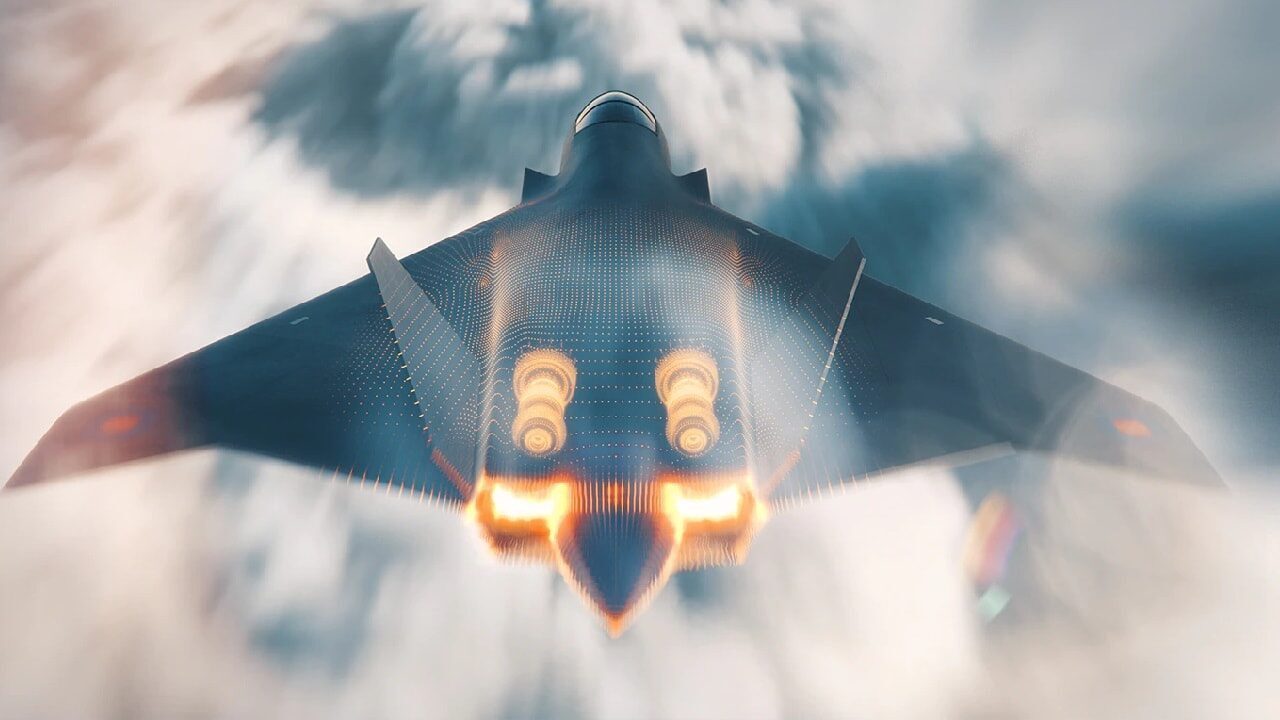
Key Points and Summary – Europe’s Future Combat Air System is billed as a true sixth-generation ecosystem: a stealth Next Generation Fighter, a powerful “combat cloud,” and swarming remote carriers all tied together by AI.
-On paper, it mirrors many of the ideas behind America’s F-47 NGAD.
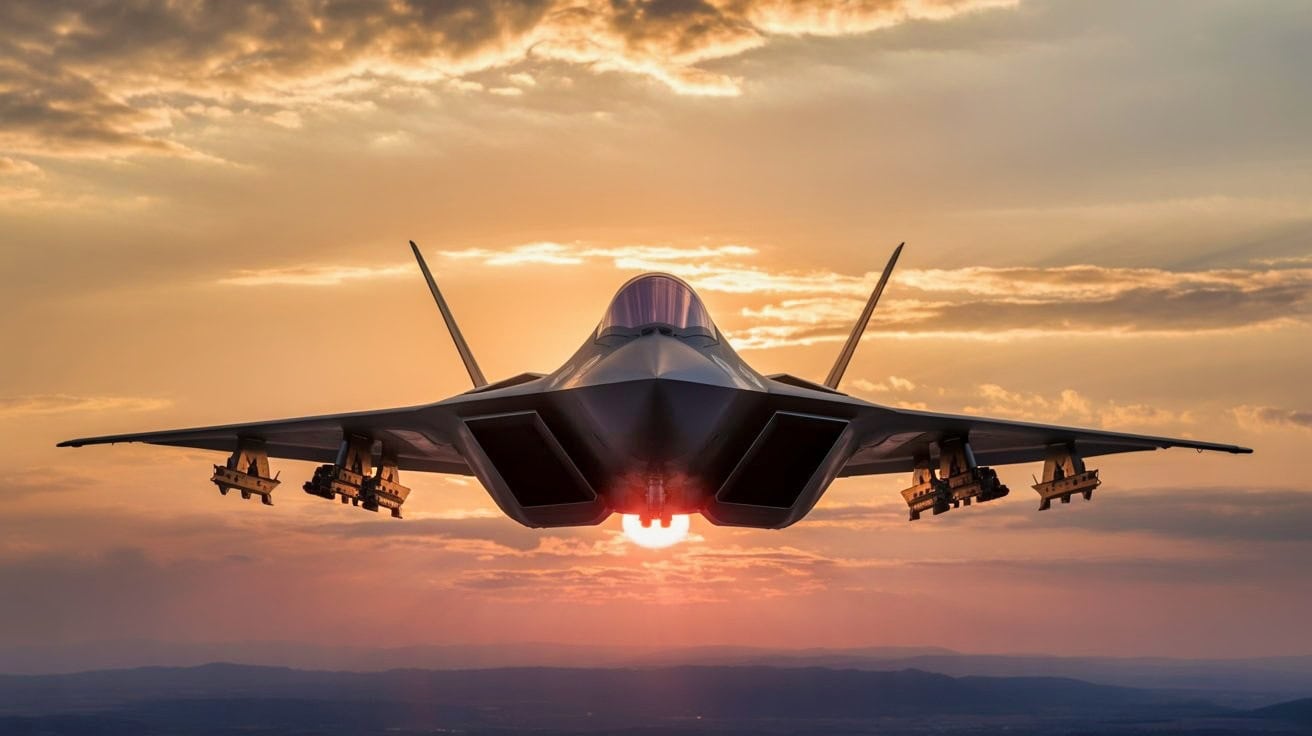
F-47 NGAD Fighter. Image Credit: Ideogram.
-In practice, FCAS is bogged down by politics, industrial rivalry, and disputes over leadership and intellectual property—echoing the failed FEFA effort of the 1980s.
-While the F-47 is already moving into limited production with a 2028 first flight in sight, FCAS still lacks a final design and a stable coalition, making parity with NGAD unlikely.
Will The FCAS Be An Elite Stealth Fighter And Equal To The F-47?
The European FCAS (Future Combat Air System) and the US F-47 (US Next Generation Air Dominance—NGAD) are both 6th-generation programs that aim to integrate AI, drones, and advanced connectivity.
The aircraft are designed for different strategic roles. The F-47 (US Next Generation Air Dominance/NGAD) is a faster-developing, centralized US effort to field a stealthy, AI-driven fighter that manages drone swarms (CCAs) for air dominance.
FCAS (Future Combat Air System) is a slower, multinational European project (France, Germany, Spain) aiming for a comprehensive air system (Next Gen Fighter + drones + cloud) focused on multi-domain integration, with both emphasizing unmanned teaming but differing in pace, scope, and national collaboration.
What capabilities does the FCAS possess, and will it be equal to the US F-47 Next Generation Air Dominance, or even better? However, serious issues are brewing inside the FCAS program that threaten the project.

Shown is a graphical artist rendering of the Next Generation Air Dominance (NGAD) Platform. The rendering highlights the Air Force’s sixth generation fighter, the F-47. The NGAD Platform will bring lethal, next-generation technologies to ensure air superiority for the Joint Force in any conflict. (U.S. Air Force graphic)
Political Differences Threaten To Derail The Program
We’ve seen this scenario play out before. The €100 billion Future Combat Air System (FCAS) program, meant to unite France and Germany in building a 6th-gen fighter, is threatening to fall apart.
The joint program between France, Germany, and Spain, which began in 2017, was always an ambitious project, perhaps overly so. The goal of the FCAS program sought to redefine air combat, promote military independence from the United States, and strengthen defense partnerships within NATO.
Just like the doomed Future European Fighter Aircraft Program (FEFA) in the 1980s, political strife over the sharing of intellectual property and the percentage of labor is once again rearing its ugly head.
The FEFA program fractured due to national demands (especially France’s desire for carrier capability), leading to France developing the Rafale independently and the other four forming the Eurofighter Typhoon project.
And the 1980s nightmare is playing out again, France’s Dassault is demanding to lead the project, refusing to be an equal partner with Germany’s Airbus.
Aerospace Global News reported that the French aerospace firm Dassault would likely break off from the program. “Dassault chief Eric Trappier has already stated that Dassault is willing and able to develop the aircraft alone.”
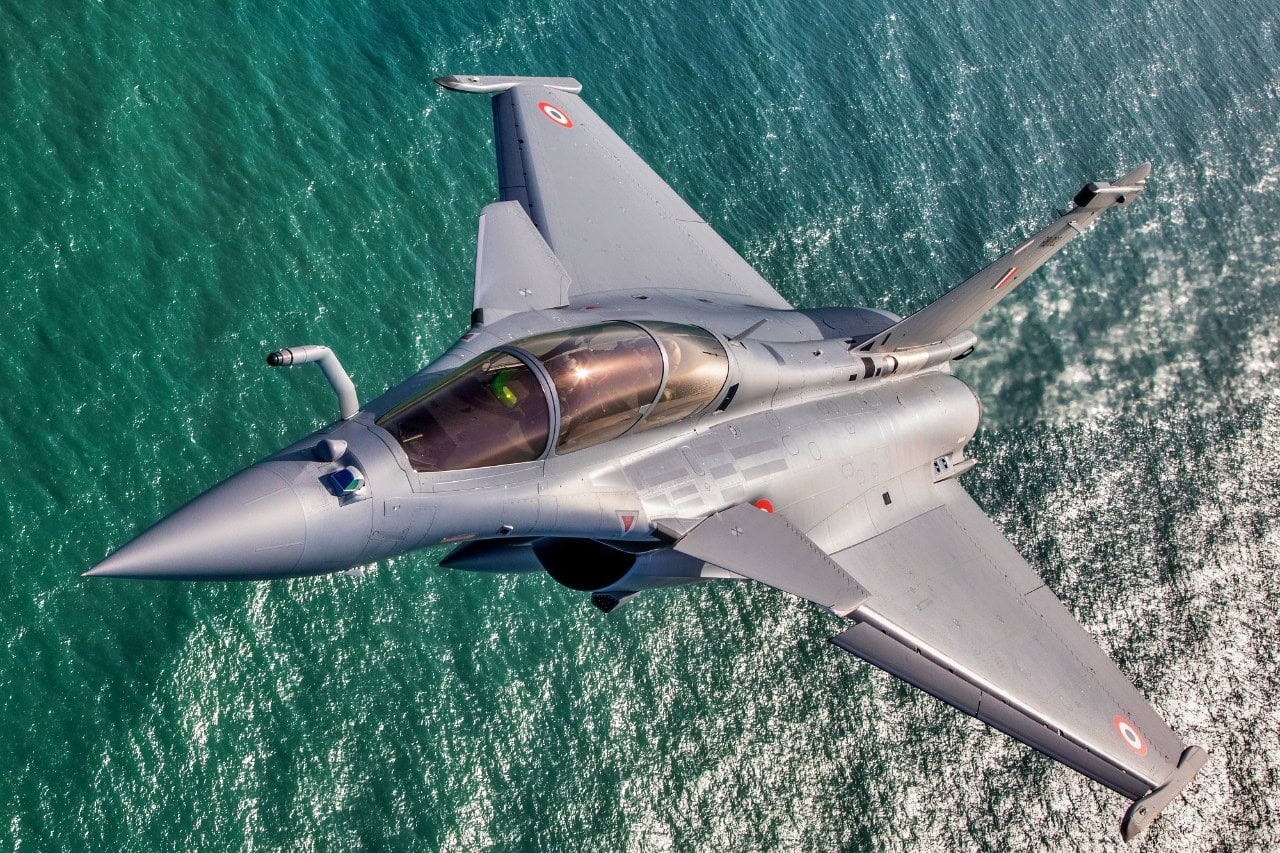
Dassault Rafale. Image Credit: Creative Commons.
Will the program fracture, as FEFA did, and force the partners to go their separate ways again, causing years of delay, or will the parties salvage the project?
What Are the FCAS Planned Capabilities?
The FCAS is slated to be Europe’s Next Generation Fighter (NGF): Europe has not produced a fifth-generation stealth aircraft. Now, they are jumping right into developing a true sixth-generation, potentially manned or unmanned, stealthy combat aircraft with advanced cockpits and AI assistance.
FCAS is more than a fighter aircraft. It consists of three pillars: the aircraft itself, also known as the Next Generation Fighter; the combat cloud, a system to link all parts of FCAS with each other and with other systems; and, third, the “remote carriers”, a swarm of highly autonomous, possibly armed drones.
Little is known about the aircraft itself, as no final design exists. So, the aircraft’s capabilities are unknown. However, the program’s developing capabilities are ambitious.
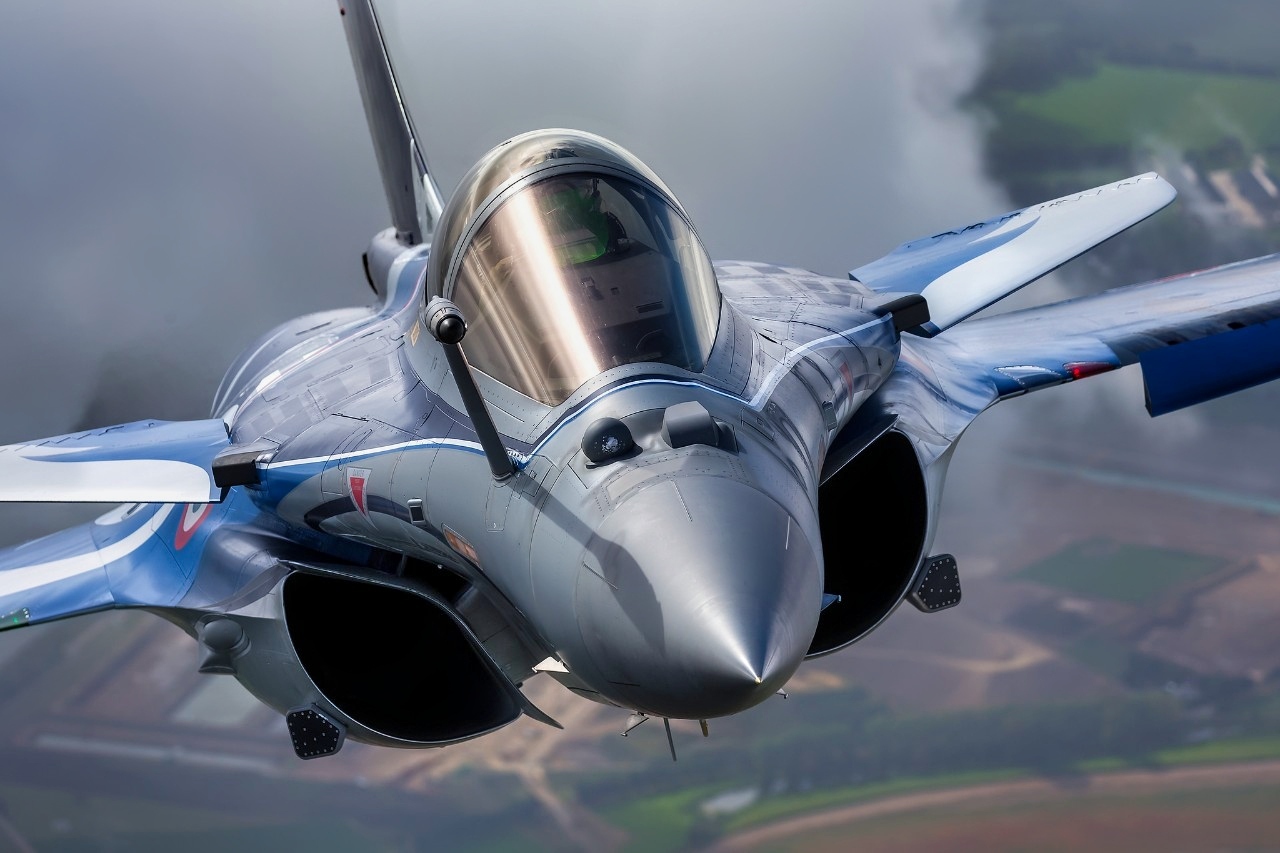
Dassault Rafale Fighter. Image Credit: Creative Commons.
The Combat Cloud
The FCAS Combat Cloud is the digital, multi-domain nervous system for FCAS, creating a secure, intelligent network to connect manned jets, drones, satellites, and ground systems for shared situational awareness and collaborative combat, transforming data into instant, actionable information for more effective missions, and is central to FCAS even as debates continue over the future of the physical fighter jet.
The cloud is a secure, decentralized network linking all assets, fusing data from manned jets, drones, satellites, and ground/sea systems for real-time, shared awareness and command/control.
FCAS Remote Carriers (RCs)
The FCAS Remote Carriers are autonomous, AI-driven drones designed as modular combat sidekicks for the Next Generation Fighter (NGF), acting as force multipliers by performing high-risk tasks such as reconnaissance, electronic warfare, and decoy operations, while carrying various payloads (sensors, weapons).
They are a key part of the program, supporting manned aircraft with Manned-Unmanned Teaming (MUM-T) and can be launched from platforms like the A400M. Airbus is developing both large and smaller “light” remote carriers, with demonstrators already testing launch and control from flying aircraft.
They will be autonomous, AI-enabled drones (light/expendable or heavy/reusable) that act as “loyal wingmen,” sensors, or weapons platforms, operating in swarms.
AI & Data Fusion
Data from various sources (aircraft, satellites, ground stations, unmanned carriers) will be instantaneously captured, shared, and processed by an AI-driven “Combat Cloud”. This fusion creates a single, cohesive picture of the battlefield that is shared across all connected platforms.
The FCAS’s AI acts as a virtual assistant, reducing pilot workload and presenting actionable information and options in real-time. This allows human operators to maintain “meaningful control” while making faster decisions at “machine speed”.
AI enables unmanned aerial vehicles (Remote Carriers) to perform autonomous missions, such as reconnaissance, electronic warfare, and precision strikes, either independently or in coordination with manned aircraft.
Sensor Data Evaluation: AI accelerates sensor data analysis for target recognition and threat analysis, which is critical to the system’s air superiority.
Planned Interoperability Is Important For Seamless Transition:
The FCAS program is designed to fully integrate with the Rafale, Eurofighter Typhoon, and future systems, ensuring future relevance.
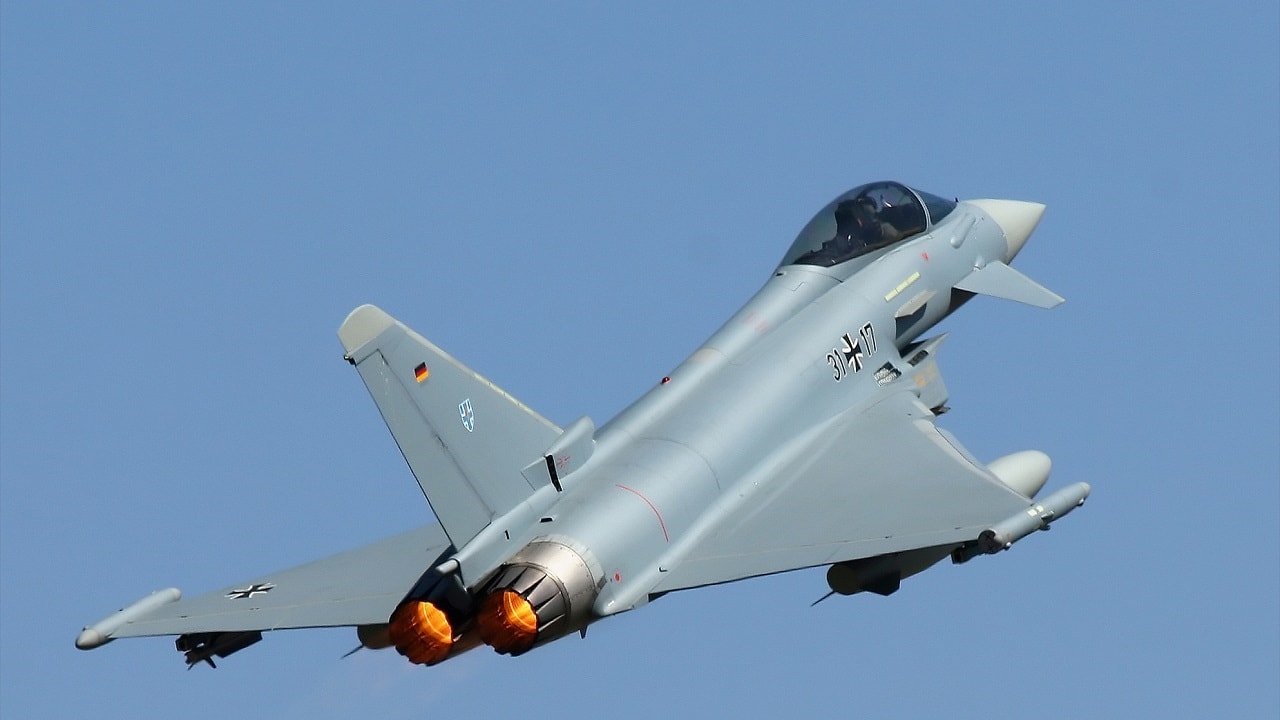
German Air Force Eurofighter. Image Credit: Creative Commons.
How Does FCAS Compare to the F-47?
The most significant difference between the two programs is that the F-47 has a single, centralized, rapid-development path led by the US Air Force. FCAS is in danger of splintering and may never fly.
Germany is slated to decide whether to continue the project or go their own way. France is already leaning that way. Thus, the F-47, which is already in limited production, is expected to have its first flight in 2028.
The F-47 is designed to be “a quarterback” of numerous AI-driven Collaborative Combat Aircraft (CCAs). The FCAS is being designed to operate within a European “combat cloud” for data sharing.
Will the FCAS be equal to or even better than the F-47? Doubtful, the entire program seems ready to collapse in on itself.
About the Author: Steve Balestrieri
Steve Balestrieri is a National Security Columnist. He served as a US Army Special Forces NCO and Warrant Officer. In addition to writing on defense, he covers the NFL for PatsFans.com and is a member of the Pro Football Writers of America (PFWA). His work was regularly featured in many military publications.