
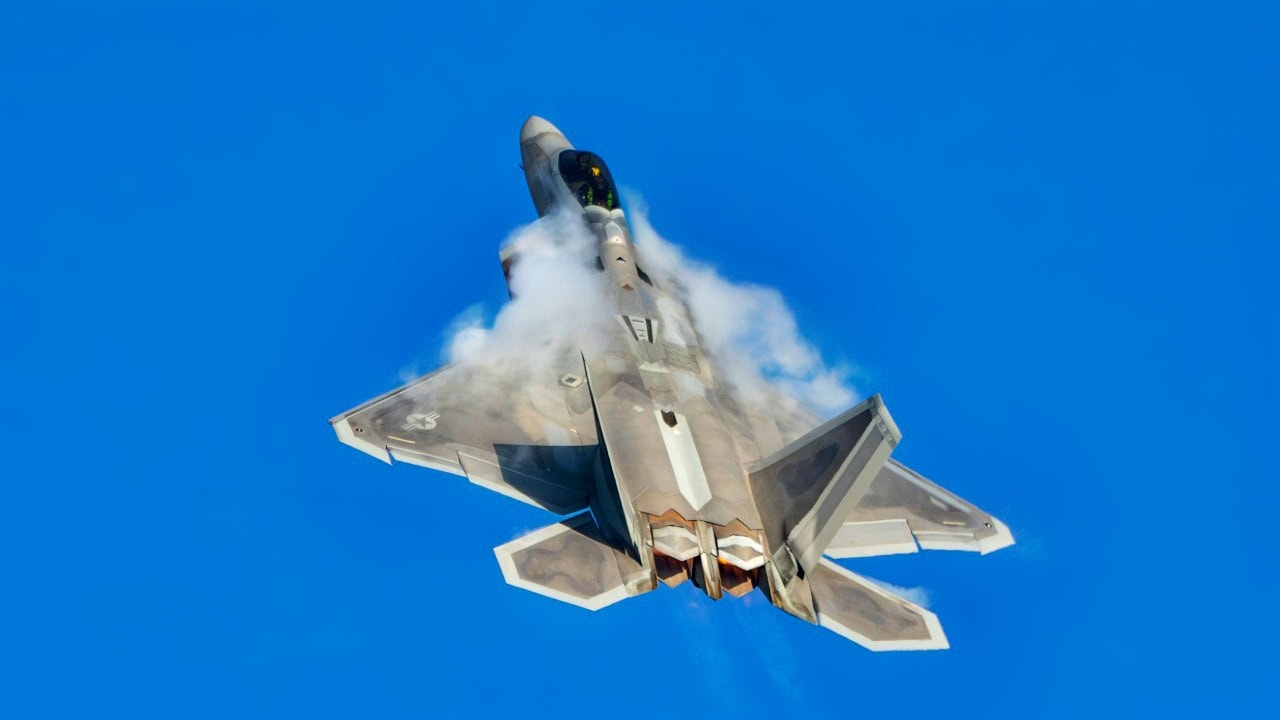
Key Points and Summary – Israel’s Qualitative Military Edge has enabled it to field uniquely customized American aircraft like the F-35I, F-16I, and F-15I—systems built to Israeli requirements and combat realities. But one fifth-generation jet remains out of reach: the F-22 Raptor.
-Despite its age, the F-22 still represents a gold standard for air dominance, pairing extreme stealth with speed, supercruise, and elite dogfighting performance.
-The problem is not Israel’s capability or trustworthiness.
-It’s policy.
-U.S. law and long-standing security concerns keep the Raptor’s most sensitive technologies locked inside the American inventory, making foreign sales politically and strategically radioactive.
No F-22 Raptor Fighter For Israel: Why?
While the long-standing US-Israel Qualitative Military Edge (QME) strategy ensures the Jewish state possesses a cutting-edge defense arsenal compared to its hostile neighbors, not every American-made product is part of this dynamic.
Today, the Jewish state flies specially modified US-made fighter jets that undoubtedly contribute to its ability to fend off threats.
The F-35I “Adir,” the F-16I “Sufa” and the F-15I “Ra’am” are widely considered to be some of the most lethal aerial platforms in service across the globe.
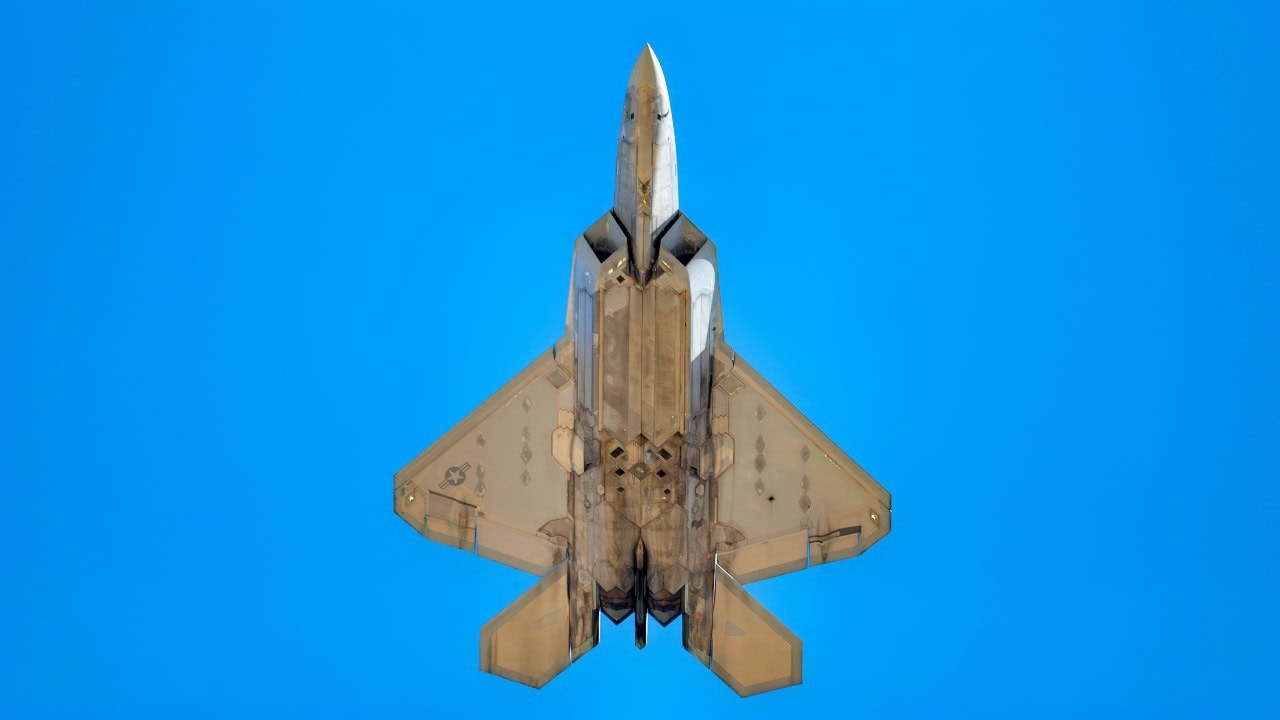
A U.S. Air Force F-22 Raptor performs an aerial demonstration at Davis-Mothan Air Force Base, Ariz. for the 2025 Heritage Flight Training and Certification Course, March 2, 2025. The Heritage Flight Training and Certification Course is an annual event where military and civilian pilots train together to fly in formations to showcase both modern and vintage military aircraft. These flights are often performed at airshows across the country to honor U.S. military aviation history and service members. (U.S. Air Force photo by Staff Sgt. Lauren Cobin)
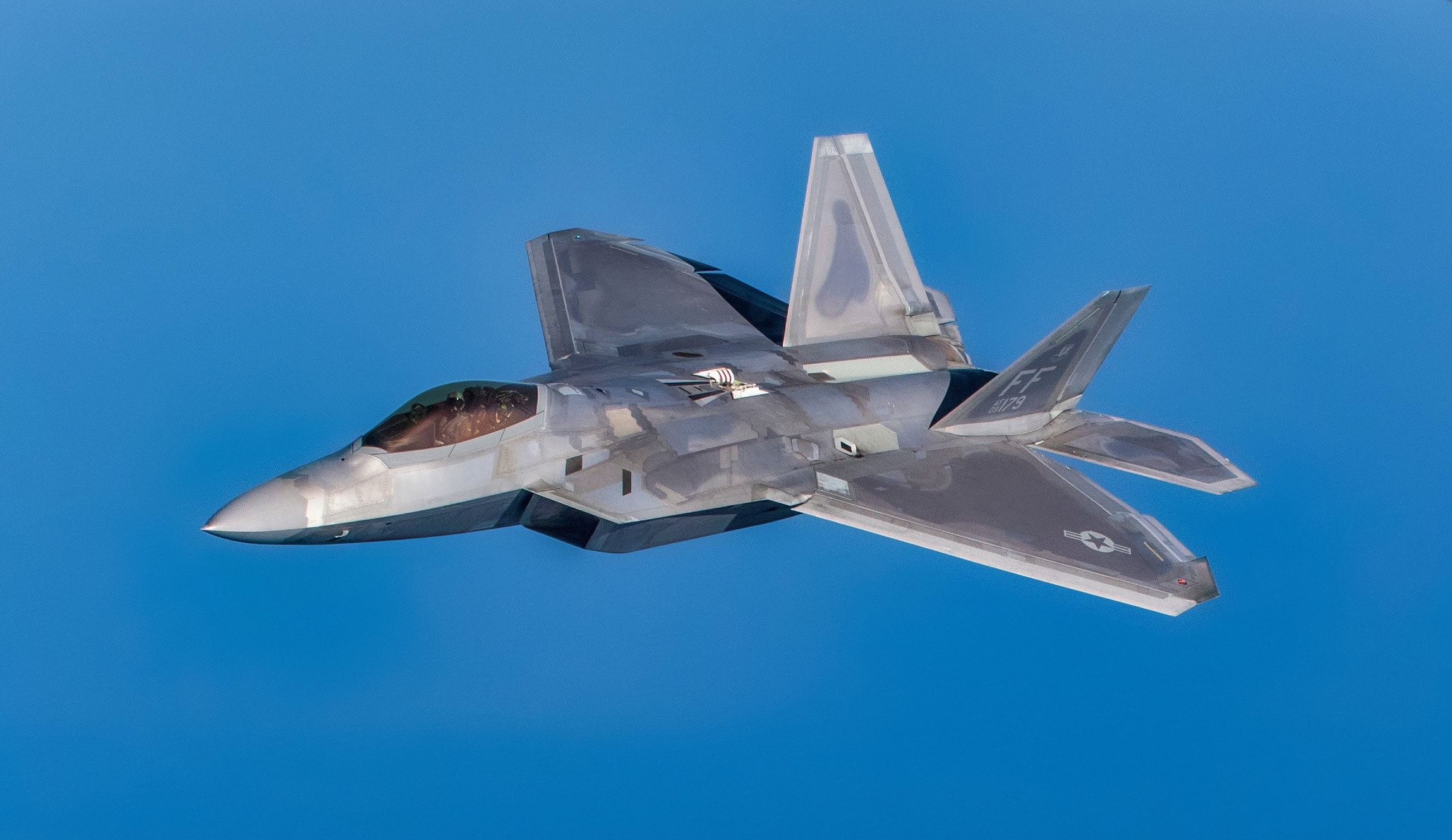
An F-22 Raptor assigned to the 192nd Fighter Wing, Virginia Air National Guard, Virginia flies over the Georgia coast during an air combat exercise at Sentry Savannah on May 5, 2022. Sentry Savannah is a joint force integrated exercise of fourth- and fifth-generation fighter jets, designed to showcase the Air Force’s air combat readiness in preparation for tomorrow’s fight. (U.S. Air Force photo by Senior Airman Erica Webster)
While these jets cover range, payload, stealth, and other key capabilities well, there is one advanced fifth-generation fighter Israel will likely never get its hands on.
The Lockheed Martin-designed F-22 Raptor may be a couple of decades old, but the legendary fighter platform continues to amaze military officials and aviation buffs alike. As the first fifth-gen jet platform to ever fly the skies, the Raptor is synonymous with innovation and ingenuity.
While the impressive fighter may be the best, it will only be sold to the US military and will avoid the export market altogether.
Due to the F-22’s sensitive and highly classified technologies, US law prohibits its sale to other nations (including allies) in order to ensure its inner workings are never revealed by American adversaries.
Israel and the F-22 Raptor: The Backstory
Although the F-22 was not officially introduced to service until the early 2000s, the fighter platform was conceptualized decades earlier during the Cold War as part of America’s efforts to field superior military products to the Soviet Union.
When the F-22 was officially introduced to service, it represented the only fifth-generation fighter jet across the globe.
While the platform’s stealth, armament power, avionics, and sensors were all considered truly unmatched, only 186 of the original 750 Raptor fleet were ever realized. Following the fall of the Soviet Union and the rise of the War on Terror, the US pivoted its defense priorities.
As explained by Sandboxx News, “While utility attracts money, current threats determine utility. And in that regard, the F-22 Raptor must be one of the “unluckiest” aircraft of all time because, despite its phenomenal capabilities, it came into service at a time when there was no enemy for it to fight, despite the nation having no shortage of enemies.”
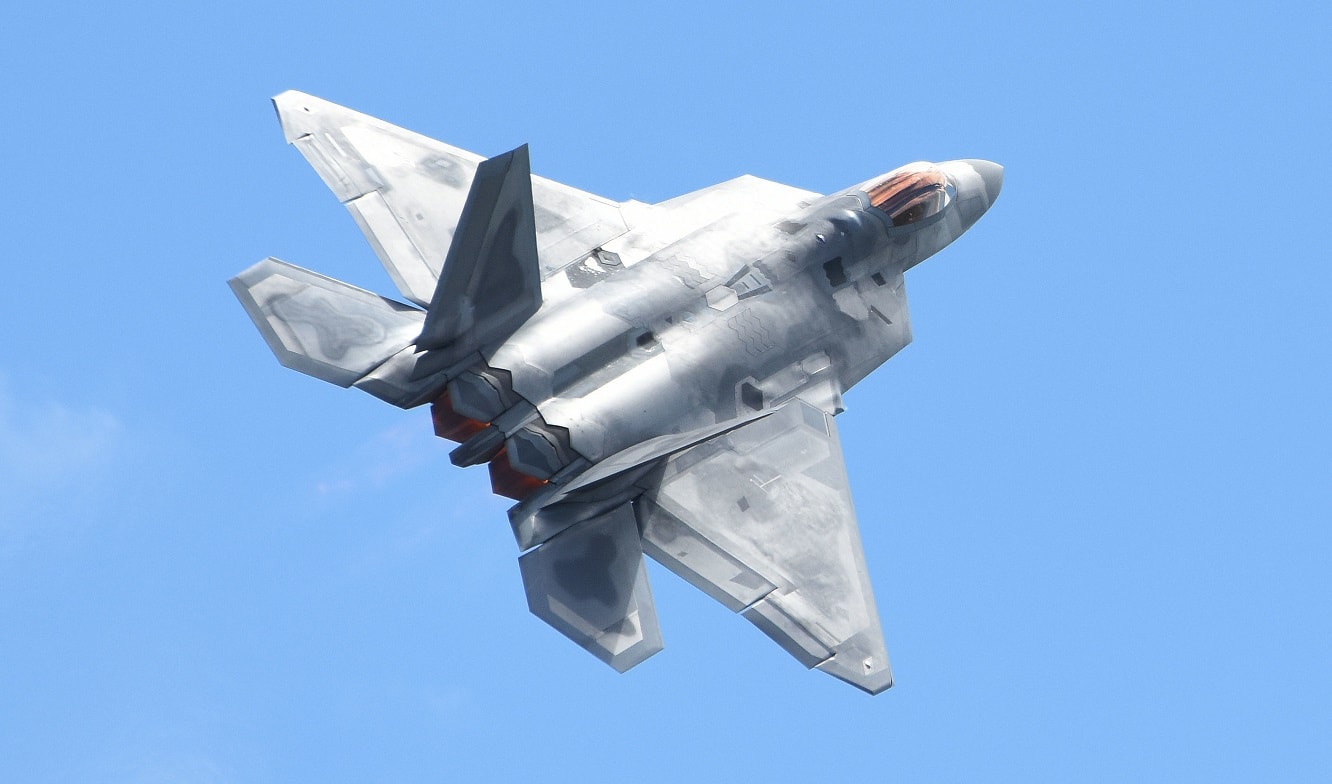
U.S. Air Force Maj. Paul Lopez, F-22 Demo Team commander, performers aerial maneuvers July 14, 2019, at the “Mission Over Malmstrom” open house event on Malmstrom Air Force Base, Mont. The team flies at airshows around the globe, performing maneuvers that demonstrate the capabilities of the fifth-generation fighter aircraft. The two-day event, featured performances by aerial demonstration teams, flyovers, and static displays. (U.S. Air Force photo by Airman 1st Class Jacob M. Thompson)
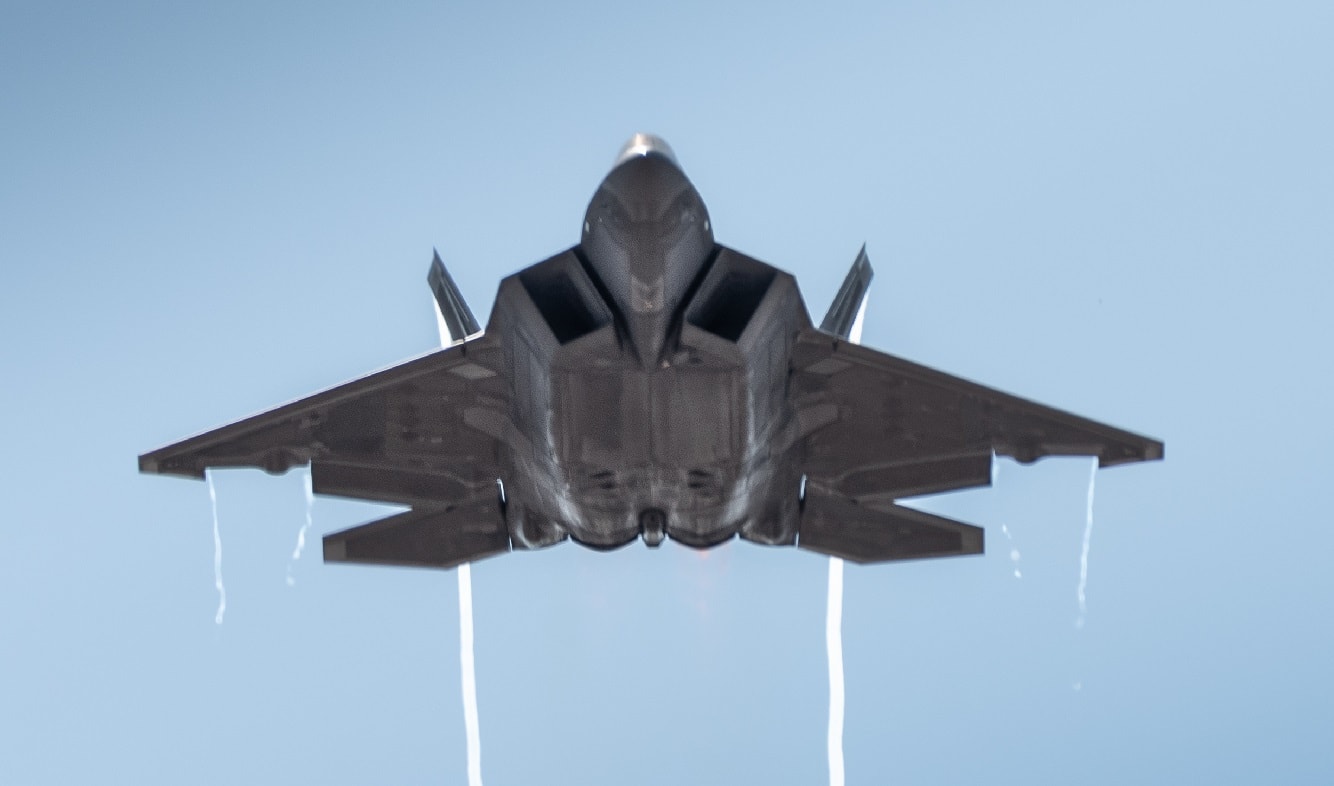
U.S. Air Force Maj. Paul Lopez, F-22 Demo Team commander, performs a high speed pass maneuver during the Fort Worth Alliance air show in Fort Worth, Texas, Oct. 19, 2019. Representing the U.S. Air Force and Air Combat Command, the F-22 Demo Team travels to 25 air shows a season to showcase the performance and capabilities of the world’s premier 5th-generation fighter. (U.S. Air Force photo by 2nd Lt. Sam Eckholm)
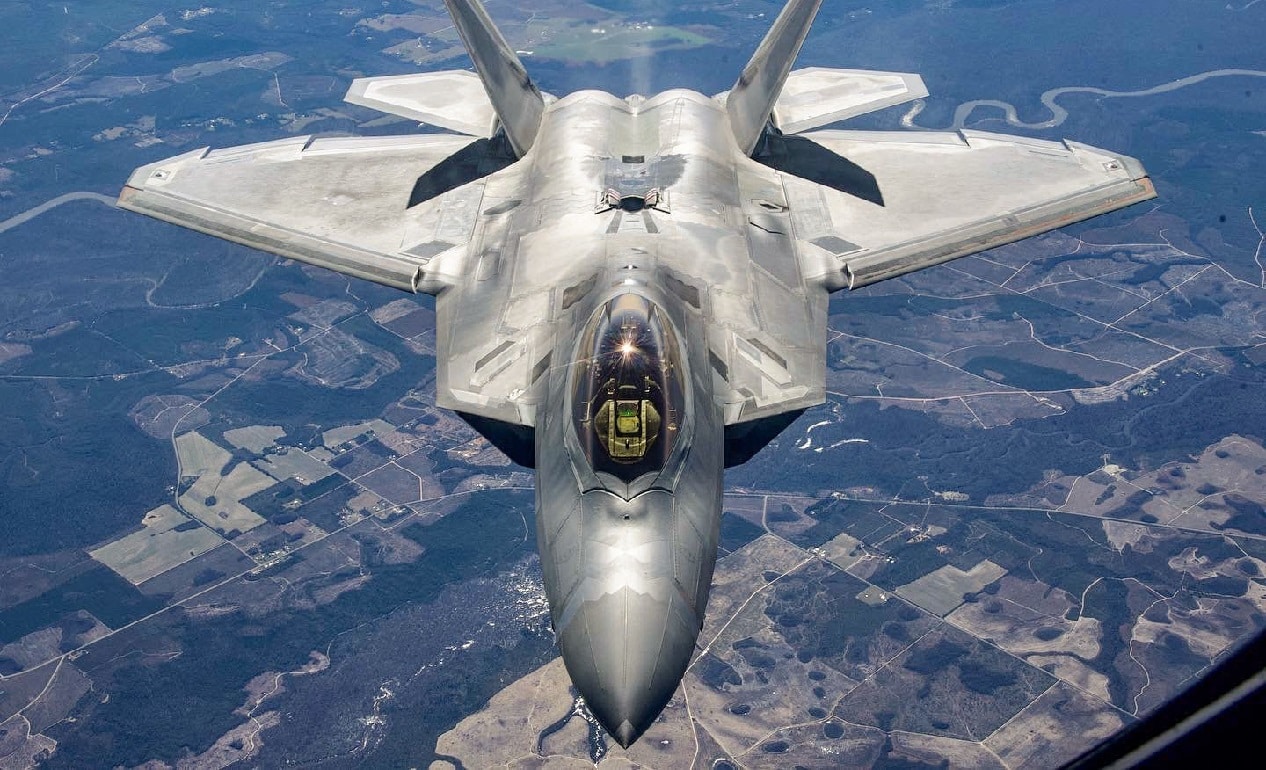
A U.S. Air Force KC-135 Stratotanker with the 434th Air Refueling Wing, Indiana, which had an aircrew with the 63rd Air Refueling Squadron, Florida, refuels a F-22 Raptor with the 325th Fighter Wing, Florida on February 23, 2021. The Stratotanker was on loan to MacDill Air Force Base. (U.S. Air Force photo by Senior Airman Tiffany A. Emery)
While the total Raptor fleet may be smaller than planned, the US has ensured that only its own Air Force will fly the infamous platform.
In the early 1990s, Congress voted to explicitly prohibit the sale of the Raptor, stating that “None of the funds made available in this Act may be used to approve or license the sale of F-22 advanced tactical fighters to any foreign government.”
Although friendly allies, including Israel, have actively tried to circumvent this legislation and procure the F-22, this scenario would be highly unlikely to come to fruition.
Specs & Capabilities of F-22 Raptor
When it comes to stealth, no other platform outshines the F-22, including the F-35 Lightning II. The Raptor features a tiny radar cross-section, which makes it roughly five to ten times less observable than its Joint Strike Fighter successor.
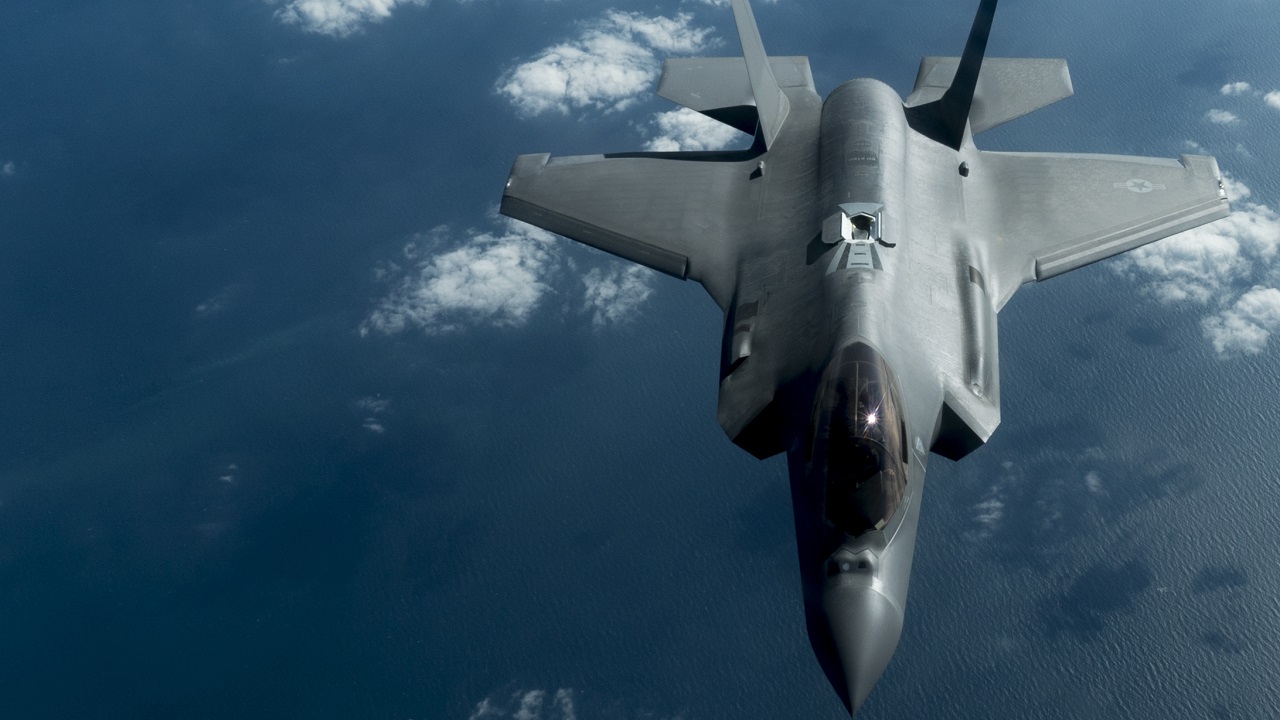
A U.S. Air Force F-35 Lightning II aircraft, assigned to the 34th Expeditionary Fighter Squadron, flies over the U.S. Central Command area of responsibility, Jan. 07, 2019. The Lightning II is a fifth-generation fighter, combining advanced stealth with fighter speed and agility that provides U.S. Air Forces Central Command lethal war-winning airpower. (U.S. Air Force photo by Senior Airman Brandon Cribelar)
In terms of speed, the F-22 is similarly impressive.
The jet can fly at speeds in excess of Mach 2.25 (twice the speed of sound), powered by two Pratt & Whitney F119-PW-100 turbofan engines, which provide a total thrust of around 70,000 pounds.
In addition to its top stealth and speed, the F-22 platform is also a formidable dogfighter. Armament-wise, the jet possesses three internal weapons bays and can carry two AIM-9 Sidewinder air-to-air missiles.
Six AIM-120 AMRAAM radar-guided air-to-air missiles in its side weapons bay at the same time, while carrying 2 AIM-120 AMRAAM and two GBU-32 JDAM bombs in its center weapons bay at the same time.
Based on these impressive specs and capabilities, the Jewish state’s ongoing interest in acquiring the Raptor makes sense.
At the end of his first term in office, President Donald Trump reportedly made moves to green-light the F-22 Raptor along with precision bombs to Israel.
Nearly two decades prior, then-President Bill Clinton also mirrored the potential of providing Israel with the aircraft.
Ultimately, however, no attempts to sell the F-22 Raptor platform to Israel have even come to fruition.
About the Author: Maya Carlin
Maya Carlin, national security writer with 19FortyFive, is an analyst with the Center for Security Policy and a former Anna Sobol Levy Fellow at IDC Herzliya in Israel. She has published over 1,000 articles on various defense issues over the last several years. Carlin has bylines in many publications, including The National Interest, Jerusalem Post, and Times of Israel. You can follow her on Twitter: @MayaCarlin.