
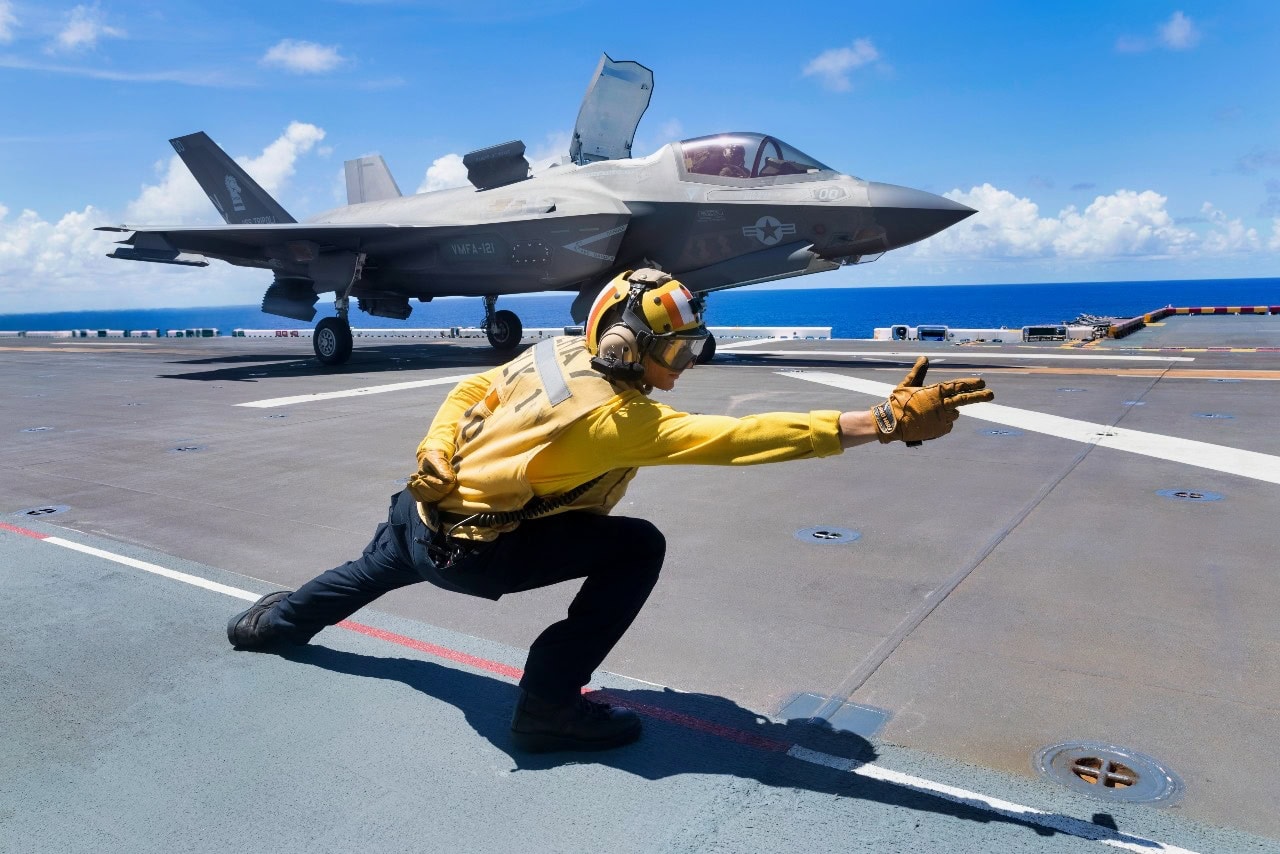
Synopsis and Key Points: U.S. Marine Corps F-35B Lightning II stealth fighters played a pivotal role in Operation Absolute Resolve on January 3, executing coordinated strikes against Venezuelan air defenses to enable the capture of President Nicolas Maduro.
-Part of a 150-aircraft joint force, the F-35s utilized advanced sensor fusion and stealth capabilities to neutralize radar sites, S-300 systems, and airfields around Caracas.
-These strikes established air superiority, allowing Army specialized helicopters to safely insert commandos into the capital for the high-stakes ground operation.
F-35B Was Crucial: STOVL Stealth Fighters Paved the Way for US Special Ops Teams
Local reports have claimed that U.S. Marine Corps F-35 Lightning II fighter aircraft participated in the United States’ military operation in Venezuela on January 3, striking military targets as part of Operation Absolute Resolve.
According to U.S. Chairman of the Joint Chiefs of Staff Dan Caine, more than 150 aircraft from the U.S. Navy, Air Force, and Marine Corps – including F-35s – were involved in the strikes and support missions that paved the way for the capture of Venezuelan President Nicolas Maduro in Caracas.
During a press conference the morning after the strikes and in subsequent reporting, it was confirmed that the initial phase of the operation involved coordinated air attacks designed to degrade Venezuelan air defenses and neutralize potential aerial threats.
Aircraft struck radar sites, military bases, and airfields, producing multiple explosions around Caracas in the early hours. Satellite imagery and eyewitness accounts also indicate that military installations, antennas, and runways were targeted in the early strikes.
U.S. military officials have since described the operation as a joint force effort in which air assets provided cover for airborne troops and special operations units tasked with securing Maduro.
Helicopters from the U.S. Army’s 160th Special Operations Aviation Regiment carried commandos into the capital with air support from fixed-wing aircraft, including stealth fighters and conventional jets.

Thirteen U.S. Marine Corps F-35B Lightning II with Marine Fighter Attack Squadron (VMFA) 122, Marine Aircraft Group 13, 3rd Marine Aircraft Wing (MAW), are staged aboard the amphibious assault ship USS America (LHA 6) as part of routine training in the eastern Pacific, Oct. 8, 2019. Integrating 3rd MAW’s combat power and capabilities while conducting realistic training is essential to generate readiness and lethality in our units. (U.S. Marine Corps photo illustration by Lance Cpl. Juan Anaya)
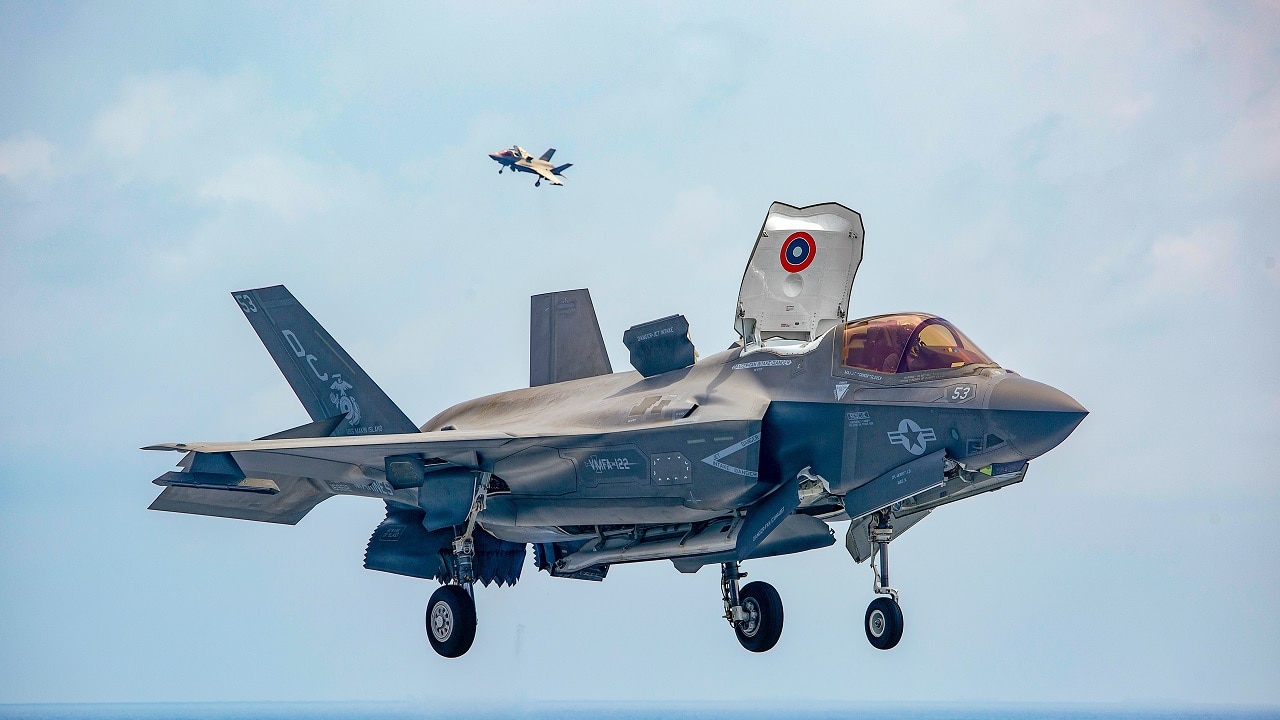
(April 8, 2021) U.S. Marine Corps F-35B Lightning IIs assigned to Marine Medium Tiltrotor Squadron 164 (Reinforced), 15th Marine Expeditionary Unit, land on the flight deck of the amphibious assault ship USS Makin Island (LHD 8). The Makin Island Amphibious Ready Group and embarked 15th MEU are operating in the U.S. 7th Fleet area of operations to enhance interoperability with allies and partners and serve as a ready response force to defend peace and stability in the Indo-Pacific region. (U.S. Marine Corps photo by Cpl. Patrick Crosley)
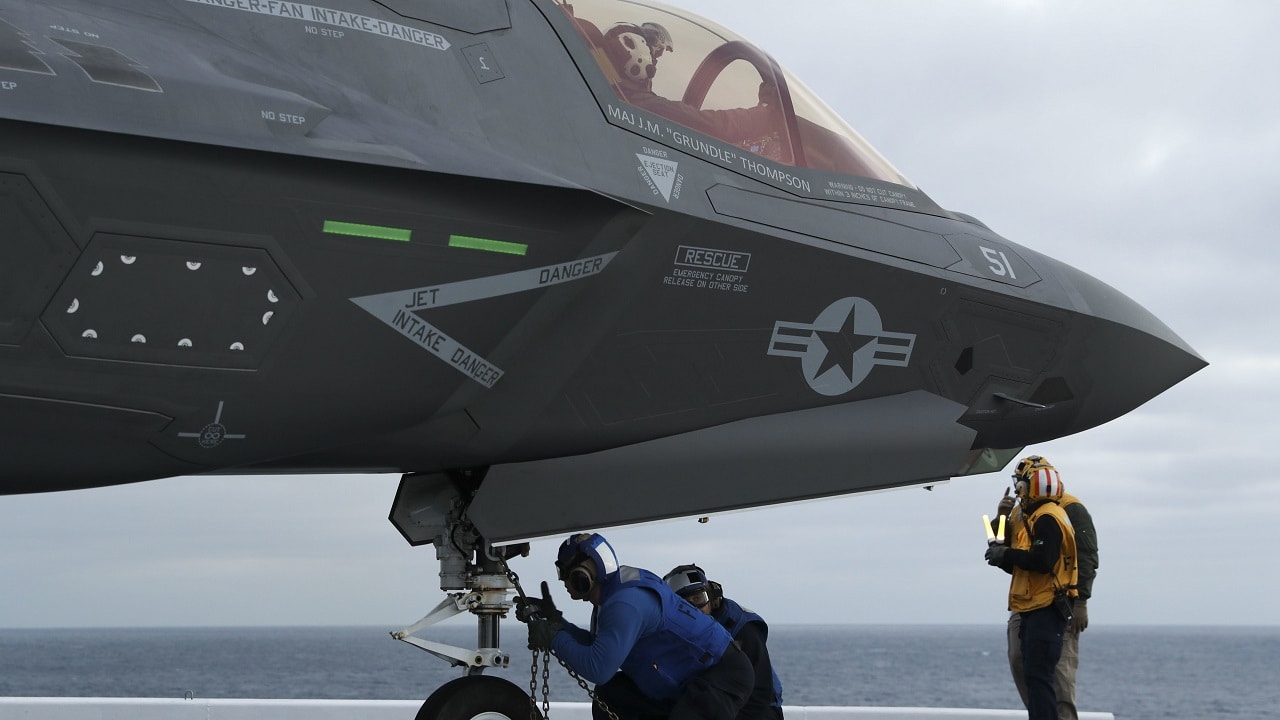
220119-N-CM110-2023 PACIFIC OCEAN (Jan. 19, 2022) — Sailors chain down an F-35B Lightning II attached to Marine Operational Test and Evaluation Squadron (VMX) 1 on the flight deck aboard amphibious assault ship USS Tripoli (LHA 7), Jan. 19. Tripoli is underway conducting routine operations in U.S. 3rd Fleet. (U.S. Navy photo by Mass Communication Specialist 3rd Class Maci Sternod)
The inclusion of Marine Corps F-35s is significant because the F-35 – including the Marine Corps’ short-takeoff/vertical-landing (STOVL) F-35B variant – is a fifth-generation combat aircraft built to operate in contested environments.
Fifth-generation fighters such as the F-35 combine low-observable (stealth) design with advanced sensors, data fusion, and networking capabilities to provide pilots with enhanced situational awareness and survivability in the face of sophisticated defenses.
F-35B: The Tech That Defeated Maduro
The F-35 is the most advanced fifth-generation stealth fighter on the planet, and its low-observable design and coatings are a significant reason it is also the most broadly used platform across NATO.
Its stealth technology reduces the aircraft’s radar signature, making it more difficult for ground-based air defense systems to detect and track compared with legacy fighters. That meant the F-35 could operate closer to defended areas – this time, in Venezuela – and increased the likelihood that the aircraft could reach and engage targets without being engaged itself.
Advanced sensor fusion also helped make the strike possible. It’s a defining feature of the F-35; the aircraft’s onboard computer systems are capable of integrating data from multiple onboard sensors – such as radar, infrared, and electronic surveillance systems – into a single, comprehensive picture of the battlespace.
That consolidated stream of data is then presented to the pilot in real time. It can also be shared with other platforms and operators across the joint force, thereby improving the collective understanding of both targets and threats.
These capabilities were critical in a campaign like the Venezuela operation because they enabled stealth fighters to identify, classify, and engage targets while minimizing their exposure to enemy air defenses.
In Operation Absolute Resolve, where suppressing defense systems and destroying airborne threats were core components of the mission, the F-35’s integrated avionics suite and data-sharing capabilities aided mission planners in rapidly sequencing strikes against airfields and other targets.
By understanding the environment, F-35 pilots and planners were able to minimize the exchange of fire and reduce the risk of loss of life.
The Marine Corps variant of the F-35, the F-35B, is designed explicitly for expeditionary campaigns like this, too. Its STOVL capability means it can operate from expeditionary (foreign or limited) airfields and amphibious assault ships, giving commanders flexibility in basing and employment.
In the Venezuela campaign, that flexibility was critical and would have complemented the mission’s broader intent and structure – meaning its integrated air strikes, special operations deployment, and helicopter lift missions.
Reports have also indicated that Marine F-35s flew alongside Navy F/A-18 Hornets, Air Force F-22A Raptors, bombers, refueling tankers, and electronic warfare aircraft.
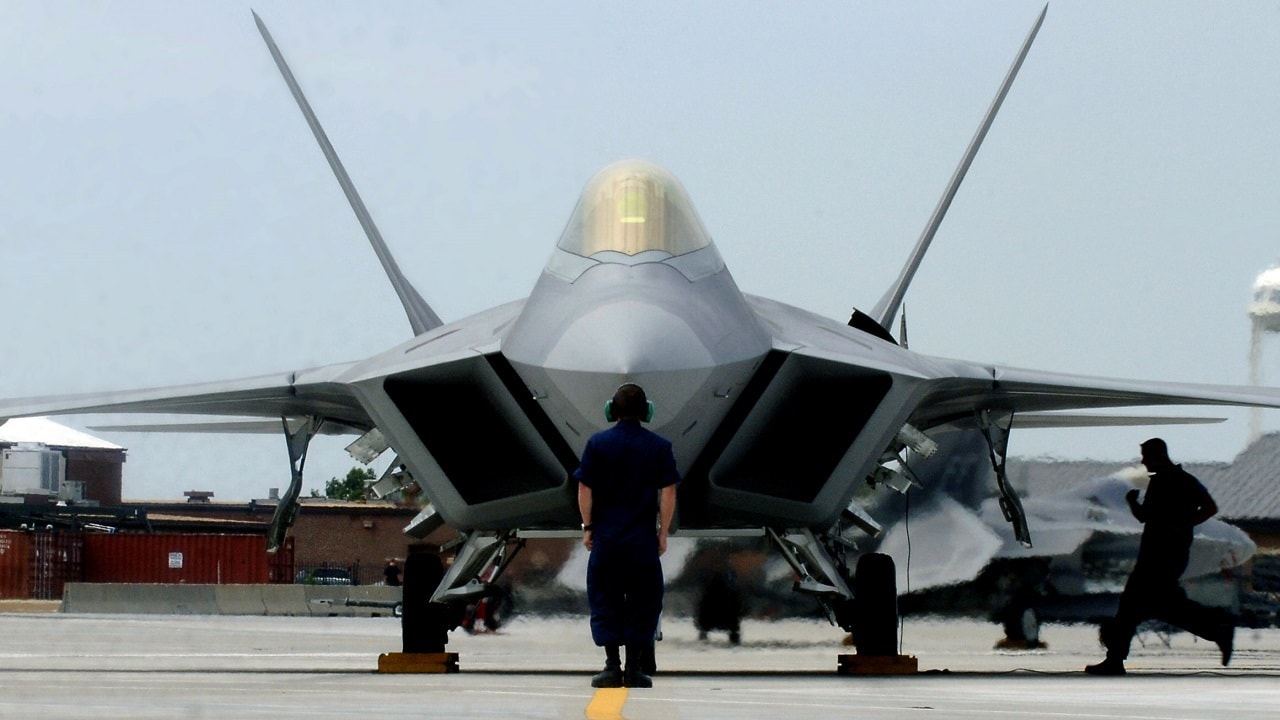
F-22 A Raptor Demonstration Team aircraft maintainers prepare to launch out Maj. Paul “Max” Moga, the first F-22A Raptor demonstration team pilot, July 13. (U.S. Air Force photo/Senior Airman Christopher L. Ingersoll)
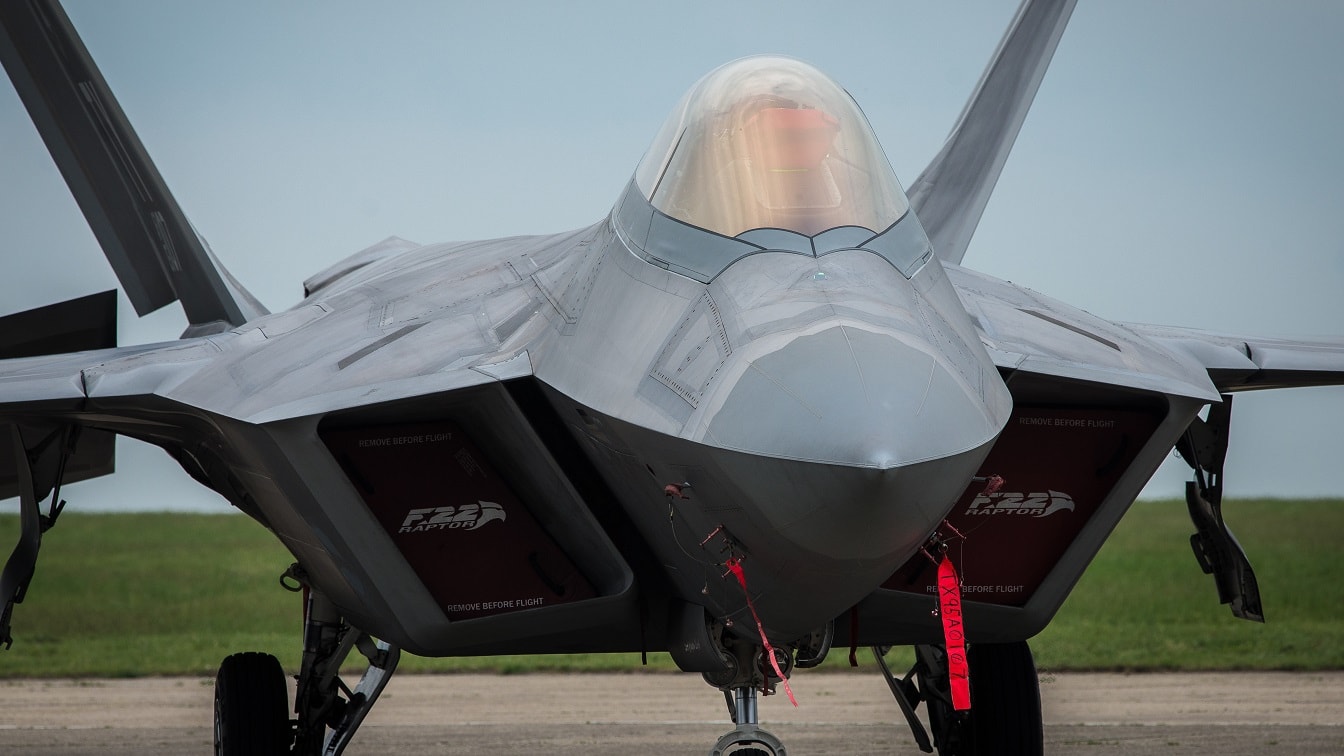
A U.S. Air Force F-22A Raptor parked on the flightline at Mihail Kogalniceanu Air Base, Romania, April 25, 2016. The aircraft will conduct air training with other Europe-based aircraft and will also forward deploy from England to maximize training opportunities while demonstrating the U.S. commitment to NATO allies and the security of Europe. The Raptors are deployed from the 95th Fighter Squadron, Tyndall Air Force Base, Florida. (U.S. Air Force photo by Tech. Sgt. Ryan Crane/Released)
How the Operation Unfolded
The air campaign was specifically structured to deny Venezuelan forces the ability to contest airspace during the helicopter insertions.
Reports described how the U.S. Army’s 160th Special Operations Aviation Regiment and the 22nd Marine Expeditionary Unit worked together, using CH-53E and MH-47G helicopters for ground operations, including the destruction and seizure of military and political assets.
F-35 strikes, meanwhile, were executed in such a way that Venezuelan forces were unable to scramble combat aircraft in response.
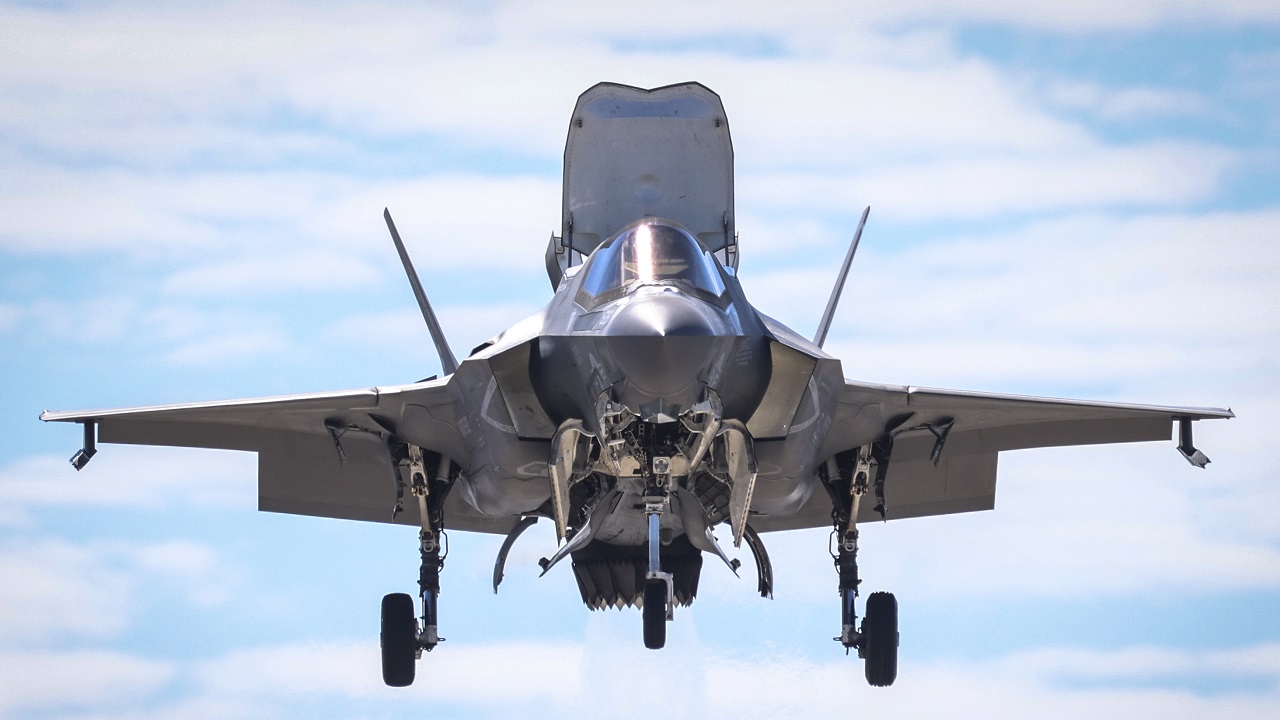
An F-35B Lightning II with 3rd Marine Aircraft Wing, based at Marine Corps Air Station Miramar, San Diego, California, conducts an aerial demonstration during the 2022 MCAS Air Show at MCAS Miramar, Sept. 24, 2022. The F-35B Lightning II, flown by aviators with Marine Fighter Attack Training Squadron 502, is equipped with short takeoff and vertical landing capability that expands its range by allowing it to operate from naval vessels and in austere, expeditionary environments. The theme for the 2022 MCAS Miramar Air Show, “Marines Fight, Evolve and Win,” reflects the Marine Corps’ ongoing modernization efforts to prepare for future conflicts. (U.S. Marine Corps photo by Lance Cpl. Jose S. GuerreroDeLeon)
Missile and air strikes reportedly first targeted long-range air defense systems, including reported S-300 and Buk-M2 sites, before subsequent strikes took out Venezuelan air bases.
Local accounts and imagery shared online suggest that multiple aircraft were destroyed on the ground before they could be launched.
About the Author: Jack Buckby
Jack Buckby is a British researcher and analyst specialising in defence and national security, based in New York. His work focuses on military capability, procurement, and strategic competition, producing and editing analysis for policy and defence audiences. He brings extensive editorial experience, with a career output spanning over 1,000 articles at 19FortyFive and National Security Journal, and has previously authored books and papers on extremism and deradicalisation.