
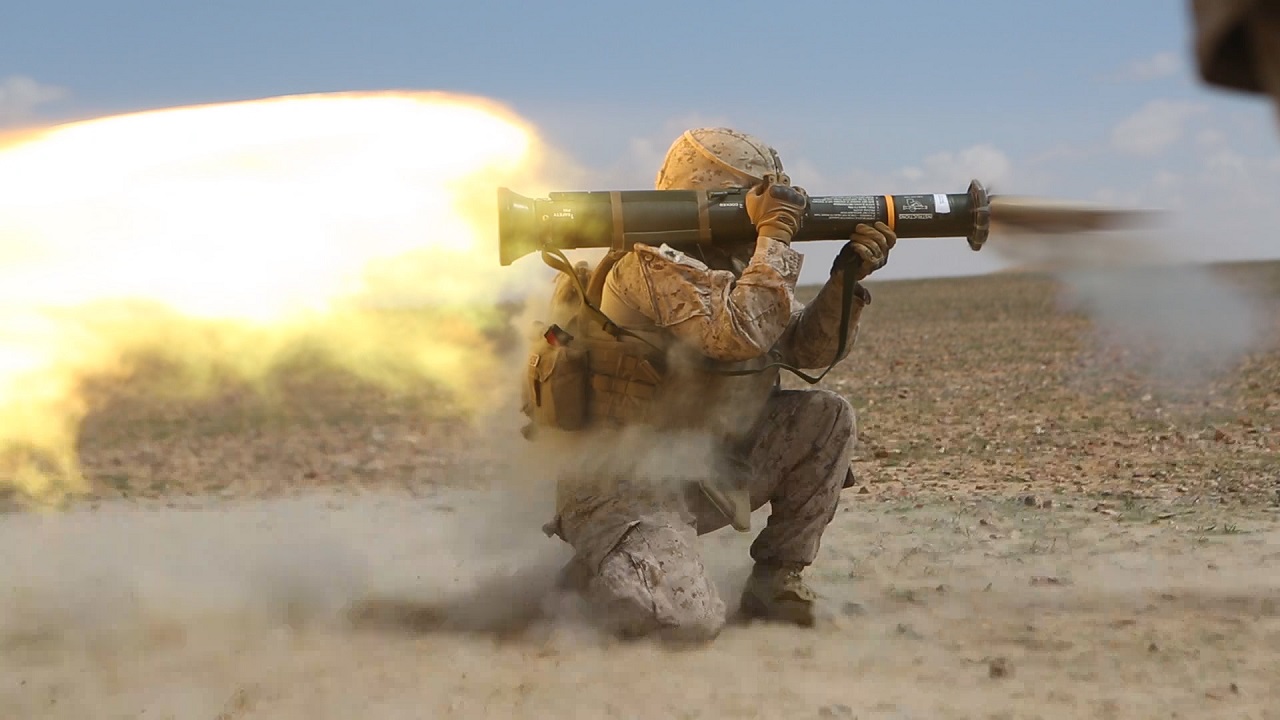
Synopsis: Dr. Robert E. Kelly argues that Trump’s seizure of Nicolás Maduro is not a clean, limited strike but the opening move of a potentially open-ended occupation.
-It focuses on Trump’s own language about “running” Venezuela and suggests that rebuilding the oil sector would require extensive U.S. security, control over unreliable local forces, and sustained political commitment—precisely the ingredients that have dragged the United States into long counterinsurgency campaigns before.
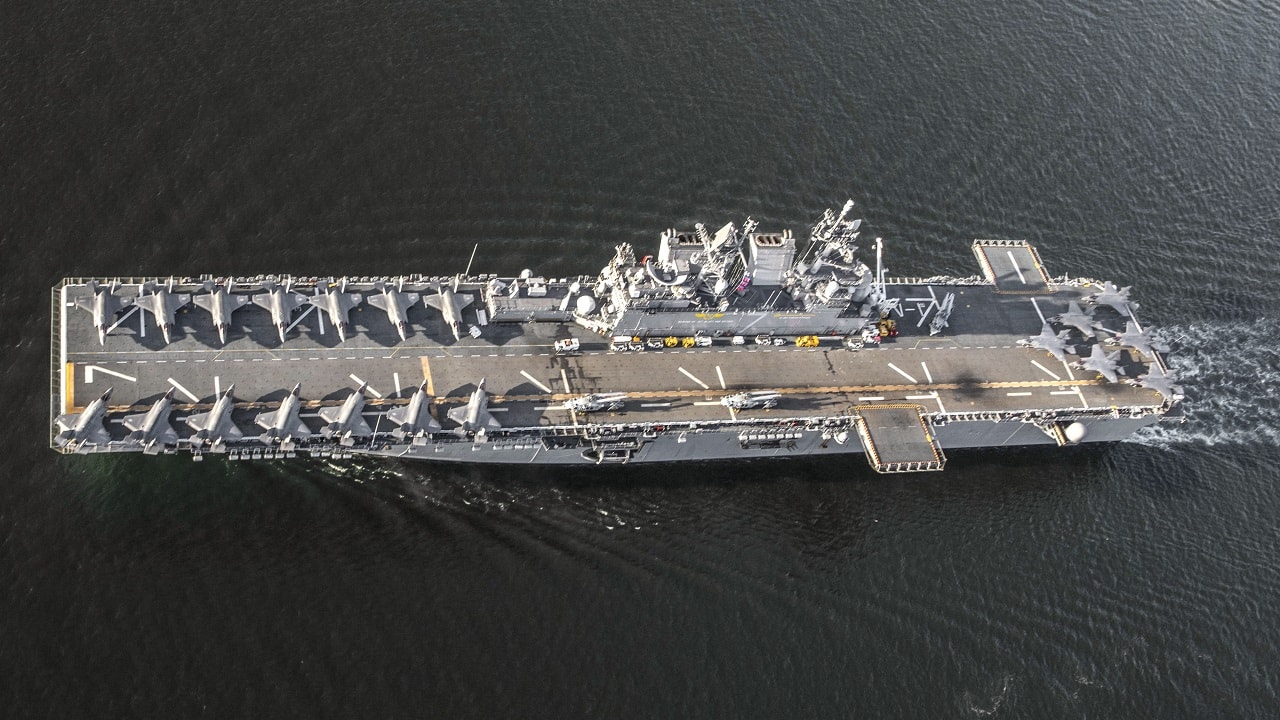
Amphibious assault ship USS Tripoli (LHA- 7) , departs Naval Air Station North Island, Calif., April 7, 2022. Tripoli completed flight deck operations with 20 F-35B Lightning II jets from Marine Fighter Attack Squadrons 211 and 225, Marine Aircraft Group 13, and 3rd Marine Aircraft Wing, as well as Marine Operational Test and Evaluation Squadron 1, as part of the U.S. Marine Corps’ Lightning carrier concept demonstration. The Lightning carrier concept demonstration shows Tripoli and other amphibious assault ships are capable of operating as dedicated fixed-wing strike platforms when needed, capable of bringing fifth generation Short Takeoff/Vertical Landing aircraft wherever they are required. (U.S. Marine Corps photo by Sgt. Samuel Ruiz)
-The author frames the decision as a sharp break from MAGA’s noninterventionist identity and calls on the movement to resist a drift back toward nation-building and unilateral war.
Venezuela Could Become the Next Forever War
This morning, US President Donald Trump ordered the kidnapping of Nicolas Maduro, the president of Venezuela.
Washington has been ramping up pressure on Venezuela for months. It has massed more force in the Caribbean Sea than at any time since the Cuban Missile Crisis sixty-four years ago.
It was unclear throughout 2025 what Trump’s goal in Venezuela was. A US incursion could create precisely the sort of unwinnable quagmire Americans called ‘forever wars’ for the last twenty years.
No one wants a repeat of the Iraq war.
Indeed, Trump’s willingness to call the Iraq war a mistake helped power him to victory in the 2016 Republican primary.
Hence, it is astonishing that in his press conference today, Trump said that the US was going to “run Venezuela” and was “not afraid of boots on the ground.”
This is a direct contradiction of the ‘America First’ philosophy of Trump’s MAGA (Make America Great Again) movement.
The coming weeks will be a test of MAGA’s commitment to its noninterventionist principles.
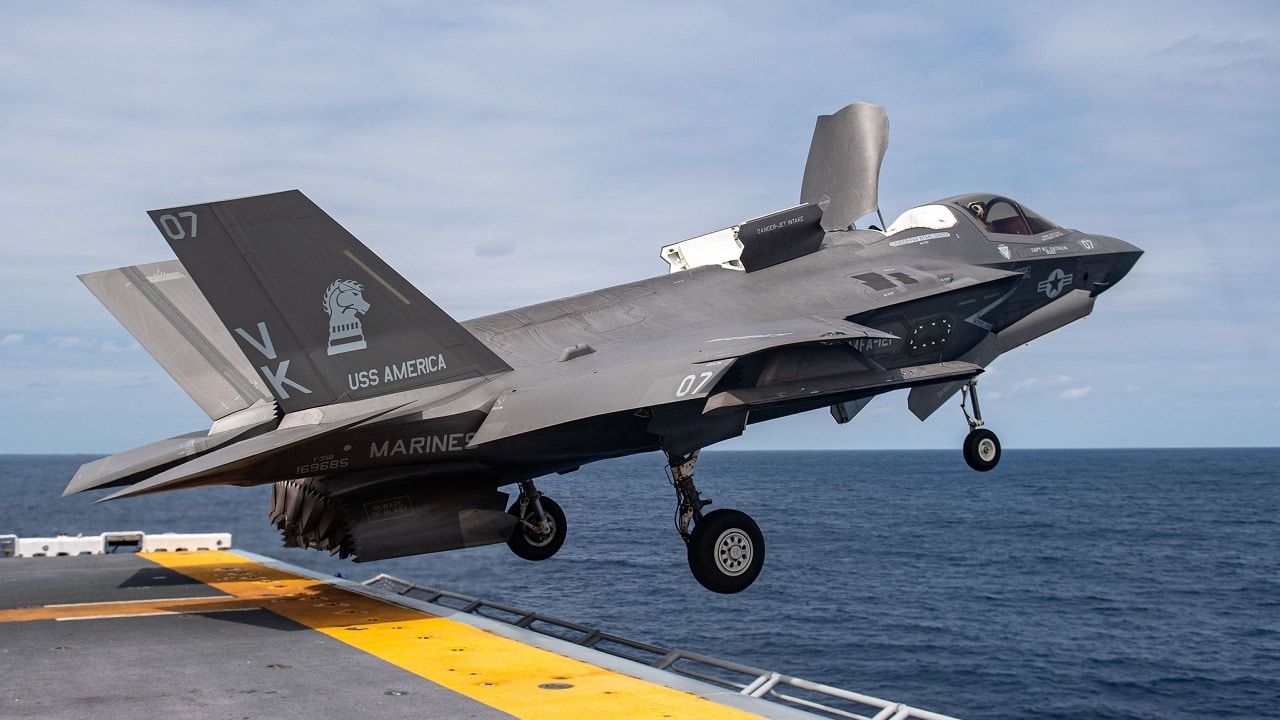
PHILIPPINE SEA (Feb. 9, 2022) An F-35B Lightning II fighter aircraft from the 31st Marine Expeditionary Unit (MEU) launches from the forward-deployed amphibious assault ship USS America (LHA 6) during joint Exercise Noble Fusion. Noble Fusion demonstrates that Navy and Marine Corps forward-deployed stand-in naval expeditionary forces can rapidly aggregate Marine Expeditionary Unit/Amphibious Ready Group teams at sea, along with a carrier strike group, as well as other joint force elements and allies, in order to conduct lethal sea-denial operations, seize key maritime terrain, guarantee freedom of movement, and create advantage for US, partner and allied forces. Naval Expeditionary forces conduct training throughout the year, in the Indo-Pacific, to maintain readiness. (U.S. Navy photo by Mass Communication Specialist 3rd Class Thomas B. Contant) 220209-N-BX791-1299
‘Run Venezuela’? That Means a Lot of Military Muscle
In his press conference, Trump repeatedly stated that the US would ‘run Venezuela.’
But he provided no details of how that would unfold.
He emphasized the reconstruction of the oil industry and the involvement of US oil companies in that effort.
That strongly suggests a major US occupation.
The oil industry is complex and labor-intensive, with high fixed-capital costs.
That is, it requires significant physical investment, which in turn requires a robust, safe operating environment.
All that would require a lot of expensive security to guarantee against terrorism, crime, and a possible insurgency.
The US does not control the Venezuelan military or police. Those institutions are likely filled with Maduro sympathizers.
The US will therefore have to provide, alone, a significant security force to protect the reconstruction of the oil industry. It may also need to act militarily in-country against resistant police and military, plus any insurgent activity, requiring yet more US forces on the ground.
Altogether, this is a massive undertaking, which today’s press conference – which emphasized the tactical skill of US special forces rather than the huge strategic burden the US just adopted – barely touched on.
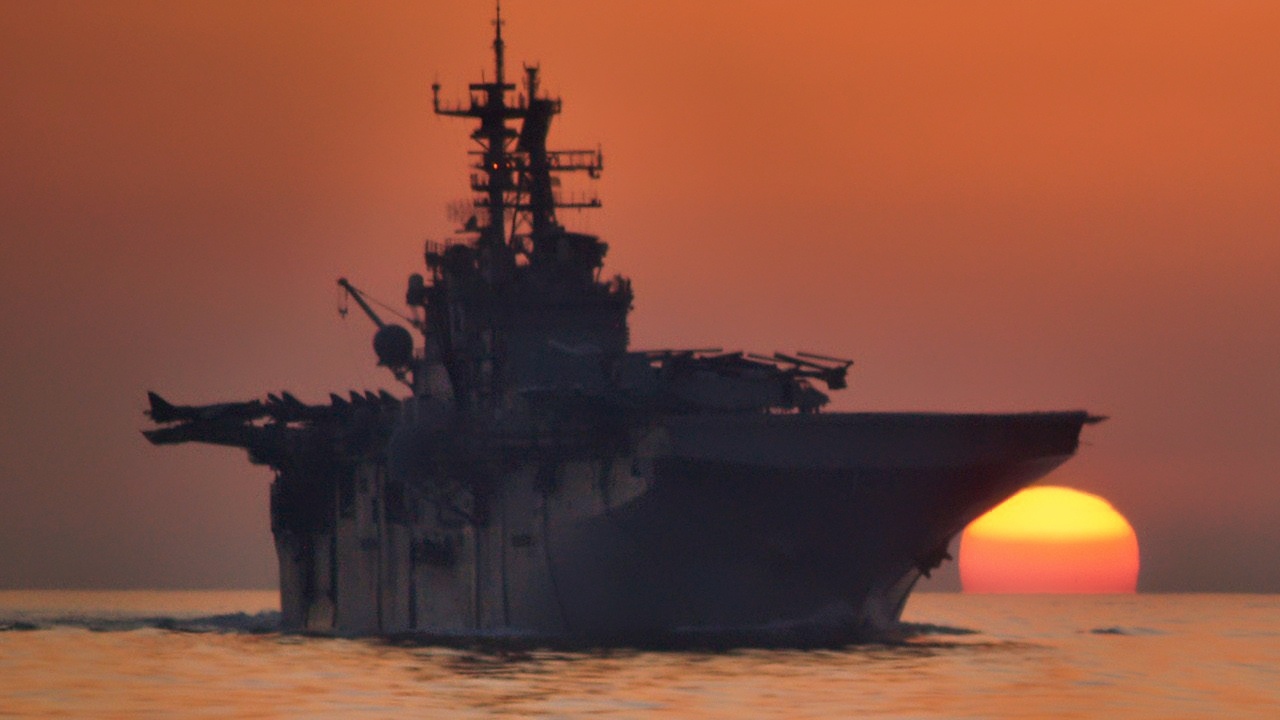
The amphibious assault ship USS Bataan (LHD 5) transits the Strait of Hormuz.
Ignoring the Lesson of US Wars in the Third World
Trump is a deeply polarizing figure, but one aspect of his presidency that even most critics like is his aversion to the direct use of US force in the developing world.
The apparent lesson of US wars in Vietnam, Afghanistan, Iraq, and Libya is that the US usually lacks the local knowledge and long-term public interest to fix fragmented, chaotic third-world societies.
Indeed, this is arguably the lesson of modern militaries in such environments, as the Soviet war in Afghanistan and the French wars in Vietnam and Algeria shared similar trajectories. Trump absorbed this lesson, and his ‘America First’ slogan suggested the US would leave these societies to their own devices.
So it is startling and disturbing that Trump has suddenly, and with little explanation, jettisoned this lesson for the indefinite occupation of yet another fragmented third-world state.
This is a remarkable, even shocking, U-turn. There is no public opinion data suggesting that the American public wants this particular war, nor that it has changed its mind on the post-Iraq War consensus that the US should avoid third-world quagmires and nation-building.
And yet we are suddenly back to the days of ‘you break it, you buy it.’
If the US cannot put Venezuela back together again rapidly, under a reasonably pro-American president, then it could easily get sucked into another huge, nation-building venture that takes years to complete.
As in Iraq, the US is acting alone in this war. If the mission devolves into a counterinsurgency, America will face the ensuing slog with no help.
MAGA Should Push Back
A common critique of MAGA is that it is actually a Trump personality cult rather than a legitimate movement. Trump’s volte-face on MAGA foreign policy today is a test of that.
Trump has violated a MAGA’s core foreign policy tenet – that the US avoid wars of globalism and neoliberalism – and for no apparent reason, too.
Venezuela is not a national security threat to the US, and its participation in drug-running into America is minimal.
Trump will obviously never win the Nobel Peace Prize now.
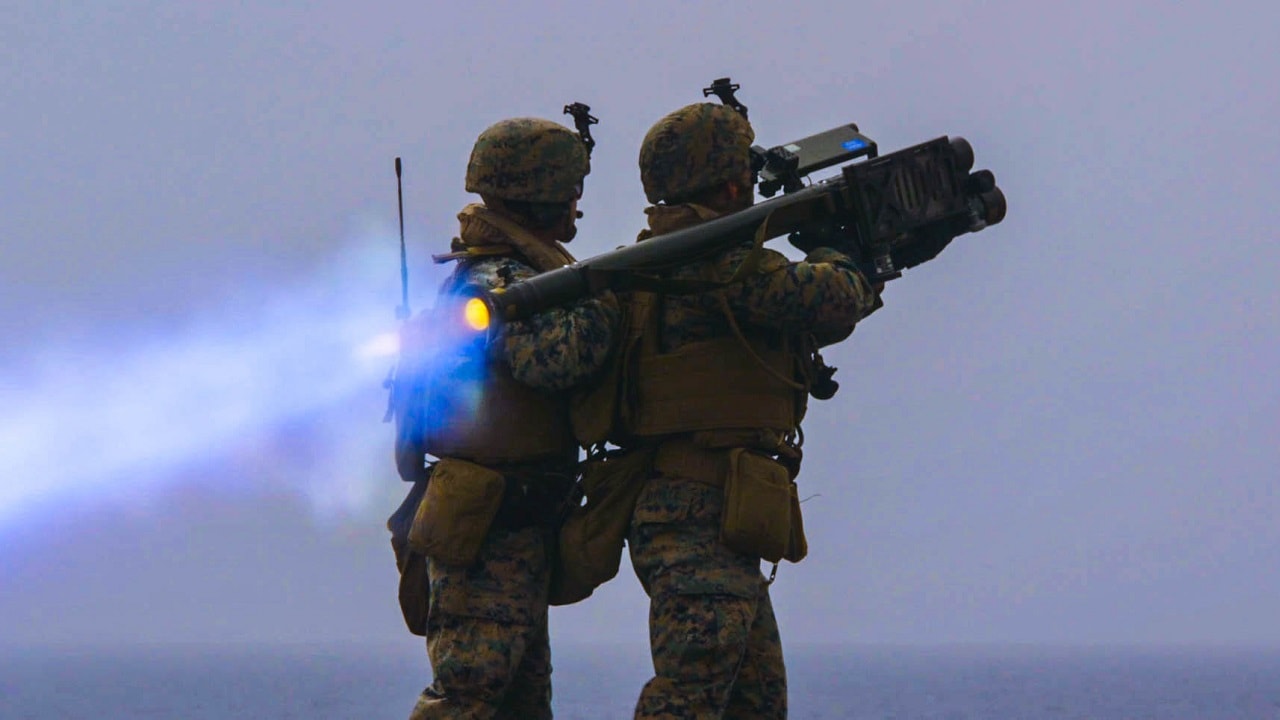
MEDITERRANEAN SEA (March 23, 2018) U.S. Marines with Marine Air Control Group (MACG) 28 Low Altitude Air Defense (LAAD) Detachment, Marine Medium Tiltrotor Squadron (VMM) 162 (Reinforced), 26th Marine Expeditionary Unit (MEU), fire a Stinger trainer missile at a Marine Corps AV-8B Harrier during a Stinger Trainer Launch Simulator (STLS) shoot aboard the amphibious assault ship USS Iwo Jima (LHD 7) in the Mediterranean Sea, March 23, 2018. Iwo Jima and the 26th MEU are conducting naval operations in the U.S. 6th Fleet area of operations. (U.S. Marine Corps photo by Sgt. Sylvia L. Tapia/Released)
Indeed, it is unclear why Trump felt the need to take such dramatic action, which so obviously violates MAGA foreign policy thinking. Is it simply the exciting spectacle of force appealing to Trump’s TV instincts?
Whatever it might be, if MAGA effortlessly pivots to neoconservatism along with Trump today, then it will validate the personality cult critique.
Trump has engaged in a hugely risky venture with little apparent foresight and significant, predictable downside risks.
A quagmire in Venezuela will make Chinese and Russian adventurism in their regions easier and violate a core reason for Trump’s leadership of the Republican Party. MAGA should call that out.
Author: Dr. Robert Kelly, Pusan National University
Dr. Robert E. Kelly is a professor of international relations in the Department of Political Science and Diplomacy at Pusan National University in South Korea. His research interests focus on Security in Northeast Asia, U.S. foreign policy, and international financial institutions. He has written for outlets including Foreign Affairs, the European Journal of International Relations, and the Economist, and he has spoken on television news services such as the BBC and CCTV. His personal website/blog is here; his Twitter page is here.