
Synopsis: This piece argues that the U.S. seizure of Nicolás Maduro in Venezuela may be tactically impressive but strategically perilous.
-The author sketches a best-case pathway—rapid regime collapse, a provisional democratic government, elections, and an economic reset—while warning that Venezuela could instead see repression, military fracture, or civil war, producing more refugees, more criminality, and further damage to the oil sector.
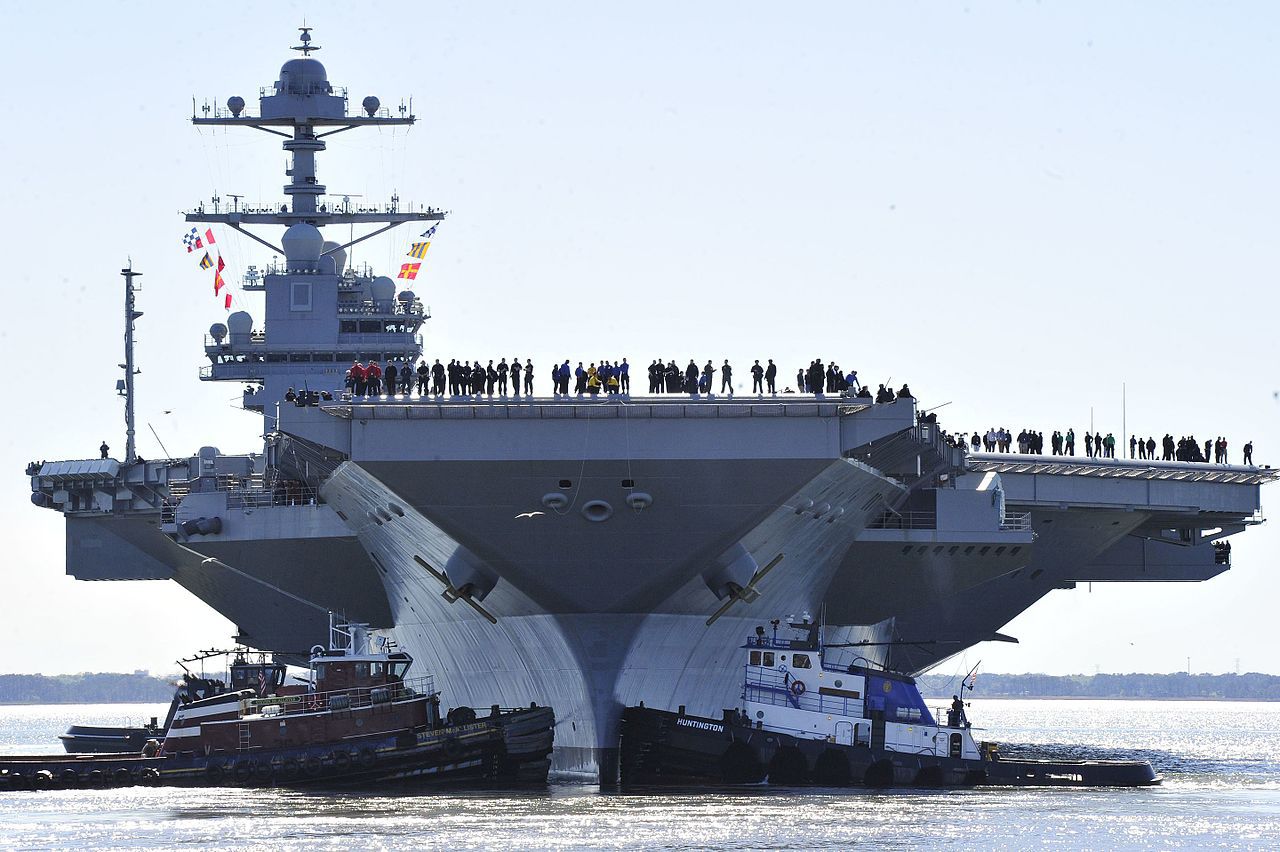
NEWPORT NEWS, Va. (April 8, 2017) – Pre-Commissioning Unit Gerald R. Ford (CVN 78) Sailors man the rails as the ship departs Huntington Ingalls Industries Newport News Shipbuilding for builder’s sea trials off the coast. The first- of-class ship—the first new U.S. aircraft carrier design in 40 years—will spend several days conducting builder’s sea trials, a comprehensive test of many of the ship’s key systems and technologies. (U.S. Navy photo by Chief Mass Communication Specialist Christopher Delano).
-He also notes Washington’s limited leverage without troops on the ground and with strained regional relationships, leaving sanctions and financial tools as primary instruments.
-The core warning is precedent: normalizing leader “seizures” erodes diplomacy and invites imitation.
Caracas After Maduro: The Best-Case Exit—and the Venezuela Civil War Scenario
This morning, the United States conducted a series of airstrikes against the Venezuelan capital of Caracas, evidently opening the way for a special operations mission that seized Venezuelan President Nicolas Maduro and his wife.
The situation in Caracas remains unsettled, with various factions vying for influence in the wake of the seizure.
Is America Going to Run Venezuela?
In remarks today, President Trump promised that the United States would “run” Venezuela until it could be turned over to a democratic government, and that additional military strikes would be forthcoming if the Venezuelan government did not comply with US demands.
What About the Law?
The legal justification for the operation is unclear, although the administration relies on domestic rather than international law.
The Trump administration has claimed, with some justification, that President Maduro’s government was involved with narcotics smuggling, and more broadly has argued that the Venezuelan government represents a destabilizing influence across Latin America.
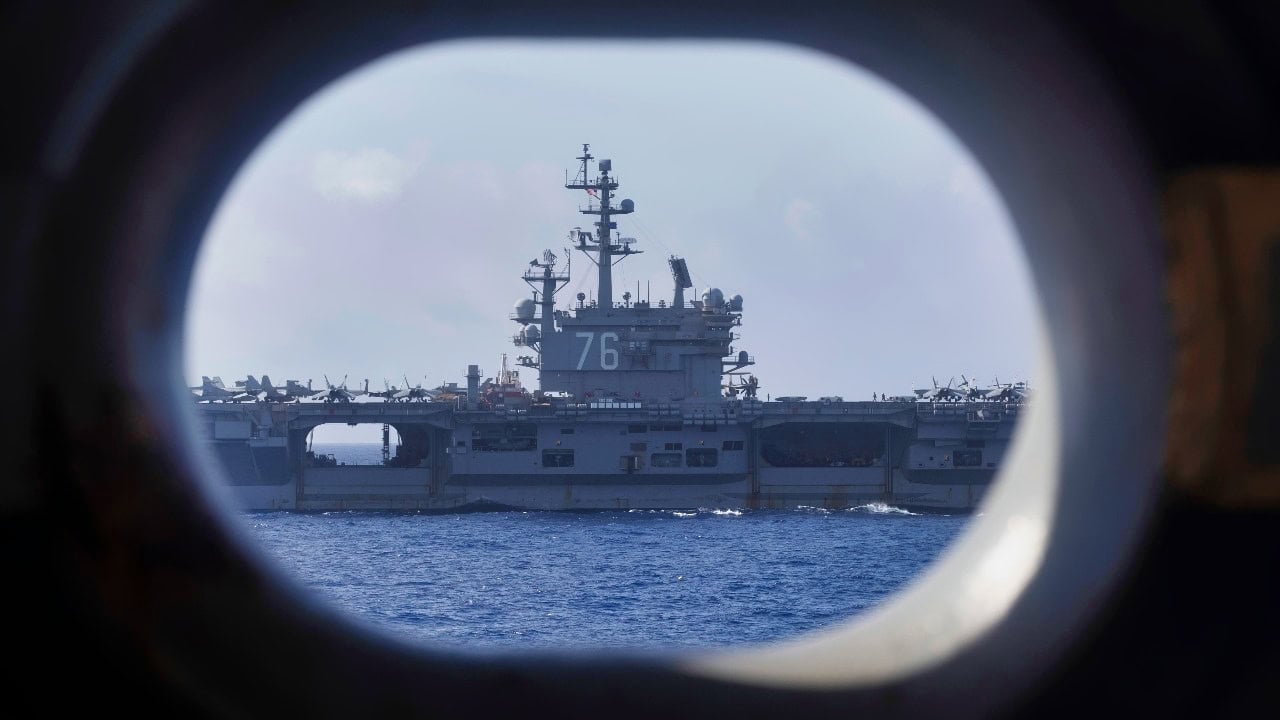
The aircraft carrier USS Ronald Reagan (CVN 76) sails alongside amphibious assault carrier USS Tripoli (LHA 7) during a photo exercise for Valiant Shield 2022, June 12, 2022. Exercises like VS22 allow forces across the Indo-Pacific the opportunity to integrate Navy, Marine Corps, Army, Air Force and Space Force to train in precise, lethal, and overwhelming multi-axis, multi-domain effects that demonstrate the strength and versatility of the Joint Force. Tripoli is operating in the U.S. 7th Fleet area of operations to enhance interoperability with allies and partners and serve as a ready response force to defend peace and maintain stability in the Indo-Pacific region. (U.S. Navy photo by Mass Communication Specialist 1st Class Peter Burghart)
Elements of the Trump administration clearly blame Maduro for the refugee crisis along the US border and for mismanagement of some of the world’s most significant oil reserves.
Trump emphasized both of these points in his remarks today, claiming that Venezuelans in the US would now be able to return home and that the oil industry would become immediately productive.
Venezuela’s Maduro Regime Is Not Just Maduro
And so Maduro is now in US custody.
But a regime is more than one person.
As of this writing, elements of the Maduro regime remain in control of the apparatus of the state.
That may change in the next few hours or the next few days.
If everything goes right, the rest of Maduro’s regime will collapse, the military will not contest a shift in power, a provisional government interested in democratic accountability will take control, elections will proceed, and a new regime with democratic viability will take power in Caracas.
This government will pursue friendly relations with the United States.
It May Not Go Smoothly
But… everything may not go right.
If Maduro’s successor (whether Vice President Delcy Rodriguez or some other figure) maintains control over the government and seeks to put down any unrest violently, Caracas could see considerable bloodshed in the coming days to no good effect.
If the military fractures rather than solidifies behind a single successor candidate, the country could see civil war.
U.S. Marines with Bravo Company, 2d Assault Amphibious Battalion, 2d Marine Division approach the USS Wasp (LHD 1) in assault amphibious vehicles off of Onslow Beach during a three-day ship-to-shore exercise on Camp Lejeune, N.C., June 27, 2020. During the exercise, the Marines conducted amphibious maneuvers and dynamic ship-to-shore operations with the USS Wasp (LHD 1). (U.S. Marine Corps photo by Lance Cpl. Jacqueline Parsons)
Prolonged unrest in Venezuela will be terrible for all of the ends that the Trump administration has purported to seek.
Civil conflict, in general, produces far more refugees than an authoritarian government. Criminal gangs (including drug cartels) thrive during periods of civil disorder. The Venezuelan oil industry depends upon a stable domestic order.
And notwithstanding the technically impressive nature of the strike, it leaves the US with limited avenues for influence over events in Caracas. The US does not have troops on the ground in Venezuela, in stark contrast to the situation in Panama in 1989 or Iraq in 2003. The Trump administration’s relations with Colombia have deteriorated, cutting off another avenue of potential influence.
To be sure, the United States has ways of impacting events in Caracas. The United States can help set the terms for the future of Venezuela’s economy through manipulating sanctions, access to the global financial system, and access to oil markets.
The Maduro regime was dreadfully unpopular across vast swaths of the Venezuelan public, and there is no shortage of pro-American potential candidates to replace Maduro.
While Venezuela’s neighbors have little interest in US-sponsored regime change, they also had little use for Maduro.
And of course, the United States can always attempt to sort things out through airstrikes and special operations raids. However, the use of additional kinetic force will likely do little to improve Venezuela’s long-term stability.
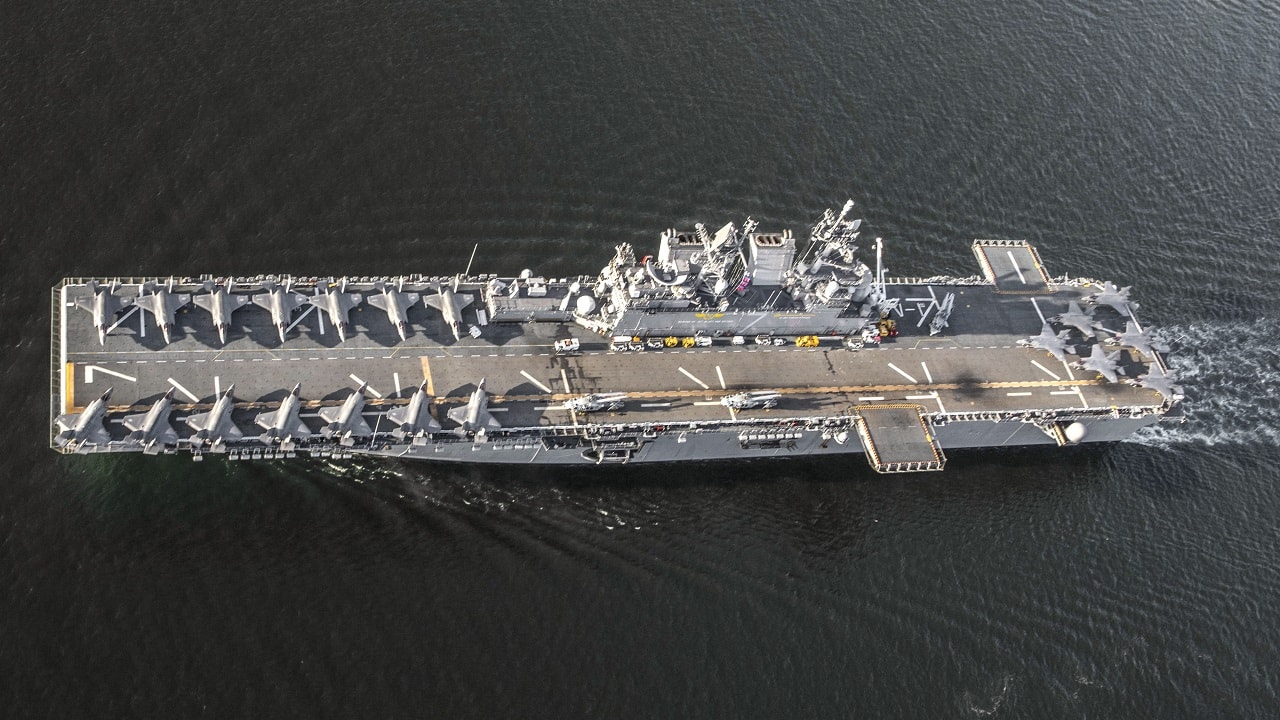
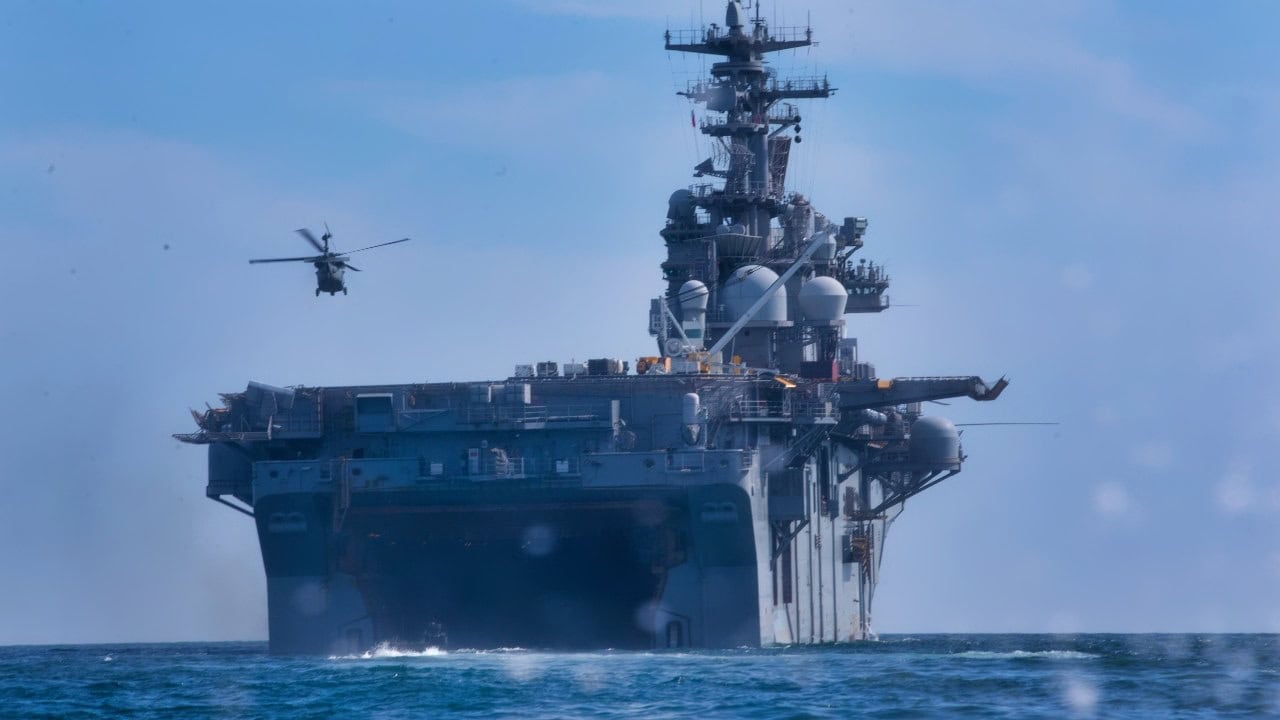
Amphibious assault ship USS Tripoli (LHA- 7) , departs Naval Air Station North Island, Calif., April 7, 2022. Tripoli completed flight deck operations with 20 F-35B Lightning II jets from Marine Fighter Attack Squadrons 211 and 225, Marine Aircraft Group 13, and 3rd Marine Aircraft Wing, as well as Marine Operational Test and Evaluation Squadron 1, as part of the U.S. Marine Corps’ Lightning carrier concept demonstration. The Lightning carrier concept demonstration shows Tripoli and other amphibious assault ships are capable of operating as dedicated fixed-wing strike platforms when needed, capable of bringing fifth generation Short Takeoff/Vertical Landing aircraft wherever they are required. (U.S. Marine Corps photo by Sgt. Samuel Ruiz)
However things work out in Caracas, the Trump administration has established an unsettling precedent. If the United States has the will and capacity to simply seize any foreign leader that it sees fit based on sketchy domestic legal claims, then no leader is secure, and no diplomacy can be conducted safely.
It may feel satisfying to grab a foreign leader out of his own safe house in his own capital city, but over the long run, it will make diplomacy more difficult; why would President Putin visit the United States if he worried about being grabbed off the tarmac in Alaska?
Moreover, virtually any country can bring charges against foreign leaders in its domestic courts and cite the Maduro precedent as justification for seizure.
It’s a terrible precedent for American foreign policy, and much worse if anyone else decides to take it up.
About the Author: Dr. Robert Farley, University of Kentucky
Dr. Robert Farley has taught security and diplomacy courses at the Patterson School since 2005. He received his BS from the University of Oregon in 1997, and his Ph. D. from the University of Washington in 2004. Dr. Farley is the author of Grounded: The Case for Abolishing the United States Air Force (University Press of Kentucky, 2014), the Battleship Book (Wildside, 2016), Patents for Power: Intellectual Property Law and the Diffusion of Military Technology (University of Chicago, 2020), and most recently Waging War with Gold: National Security and the Finance Domain Across the Ages (Lynne Rienner, 2023). He has contributed extensively to a number of journals and magazines, including the National Interest, the Diplomat: APAC, World Politics Review, and the American Prospect. Dr. Farley is also a founder and senior editor of Lawyers, Guns and Money.