
Synopsis: This piece explores how the outcome of the Ukraine war will shape Vladimir Putin’s political future and Russia’s trajectory.
-A frozen conflict or armistice that locks in limited territorial gains could let the Kremlin sell “not losing” as victory, entrenching a poorer, more militarized Russia under a tired strongman.
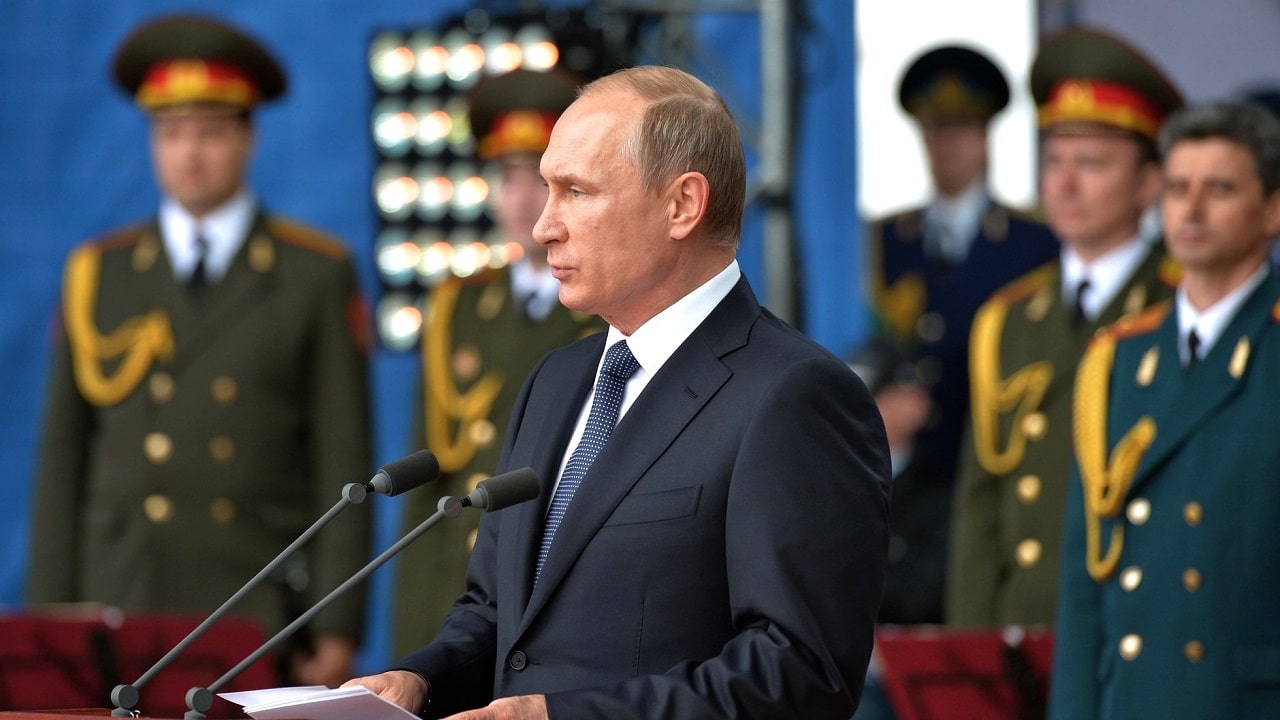
Vladimir Putin at the opening ceremony of international military-technical forum.
-A clearer battlefield setback, by contrast, would expose the war as a failed gamble, reopen elite rivalries, and force the succession question back into Russian politics.
-Either way, the author argues, the war’s end will mark a new chapter for Russia—and Putin’s grip on power will never be the same.
If Russia Loses in Ukraine, Does Putin Survive in Power?
Vladimir Putin is, by any measure, an unusually resilient political figure.
He has survived elite infighting, economic shocks, terror attacks, sanctions, and even a brief armed mutiny.
This record of endurance, remarkable as it is, sidesteps the question that matters most for Russia today: how will the war in Ukraine end, and what will that outcome mean for Putin’s future?
The answer will shape not only Europe’s security landscape but also Putin’s place in Russian history. A settlement the Kremlin can plausibly cast as success might allow it to govern for years to come. But if the result looks like defeat—plain enough that Russian elites and the public can see it—the once-unthinkable question of succession could return to Russian politics with real force.
It is difficult to see grounds for a sudden or decisive conclusion to this phase of the conflict. A more plausible trajectory would be a gradual evolution from high-intensity fighting toward a managed armistice, a negotiated or simply exhausted acceptance of current realities on the ground, limited by manpower and political constraints in Kyiv, Moscow, and Western capitals.
Indications from the peace talks so far—halting, informal, and mediated at every stage—point toward an eventual settlement defined more by territorial realities than by wartime maximalist goals. And the general pattern is familiar enough.
Image of Russia President Putin. Image Credit: Russian Government.
Termination of the war may come to resemble twentieth-century conflicts, like the Korean War, that reshaped the strategic landscape over time without producing a clear victor.
Control of territory and the security structure that follows matter more than rhetoric.
A Russian “Victory” that Preserves Power—But Does Not Restore It
Imagine a scenario in which Moscow consolidates and formalizes its current de facto control over Donetsk and Luhansk.
Ukraine remains sovereign, but its military options are constrained, potentially including limits on long-range missiles or phased Western support.
NATO membership would remain technically open but politically remote. Western governments, struggling with fiscal constraints and domestic fatigue, would be forced to accept what would amount to armed neutrality of a rump Ukraine.
In such circumstances, Putin could claim success. He could point to the argument that the war checked NATO’s expansion, secured the territories Russia identified as its priority, and demonstrated the state’s endurance under duress.
Russia’s internal communications networks—television, veterans’ groups, regional governors—can turn even ambiguity into a narrative of resolve. Continuity matters more than glory for most Russians, and the Kremlin understands that instinctively.
Russian President Putin. Image Credit: Creative Commons.
Yet this outcome would carry real constraints. Russia would still have slow growth, persistent sanctions, and a defense-heavy budget crowding out civilian investment. The war has accelerated technological dependence on China and worsened already severe demographic pressures.
Returning veterans will have an expectation of something tangible—care, status, compensation—that will weigh on the state. Putin could survive such an outcome. He would not preside over the restoration he promised but over a more limited state than the one he led into war. His legitimacy would rest on not being seen to have lost rather than on restoring lost greatness. Victory would be greeted with relief rather than jubilation.
That is the consolidation of Putin’s garrison state rather than an imperial revival. It could allow Putin to finish his tenure and guide a managed succession. The legacy, though, would be stability rather than renewal. A Brezhnev-like twilight to a presidency once imagined in grander terms.
Russian history offers a reminder here: after the Crimean War, the empire technically held ground, but the costs of maintaining that “victory” reshaped the state more than the conflict resolved external threats.
A Defeat that Forces the Succession Question
Turn the scenario around: Ukraine regains meaningful territory; Russian lines contract; Western support is robust enough to alter battlefield realities; NATO keeps its door open—cautiously, symbolically, but unmistakably. In that setting, the war would look less like a successful restoration mission and more like a failed attempt at revisionism. And Russians – from the people to the oligarchs – would notice.
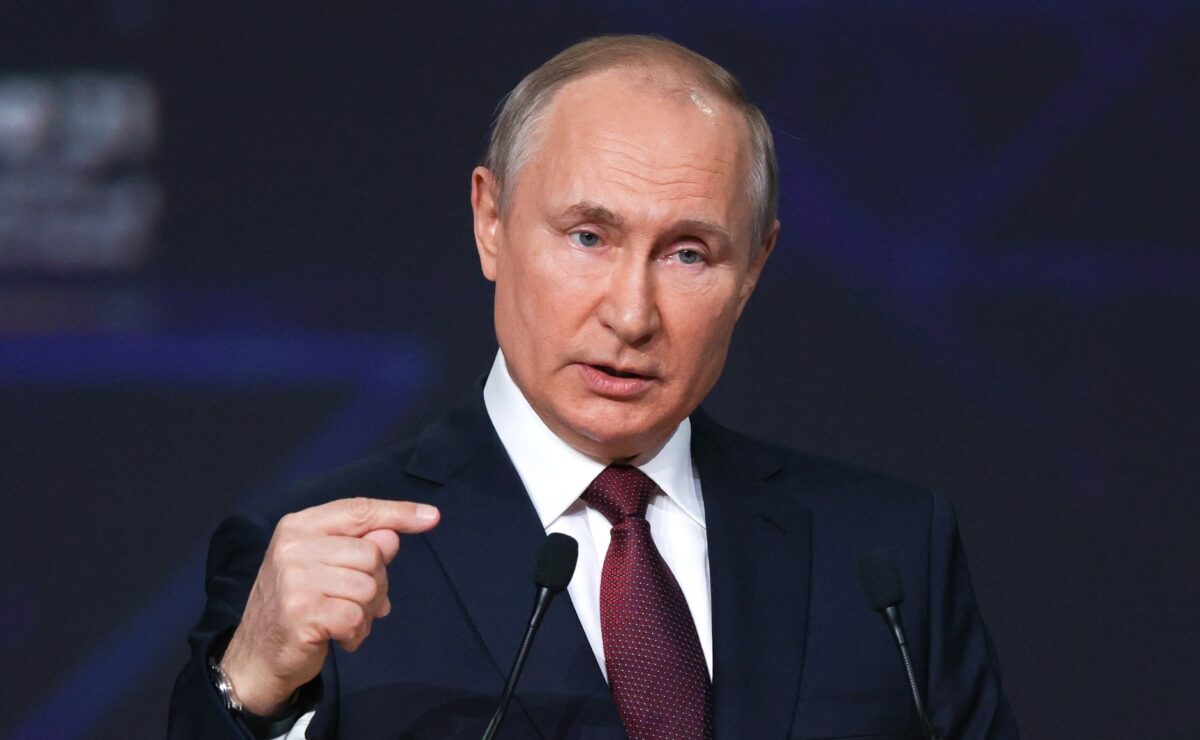
Putin at St Petersburg International Economic Forum plenary session. Photo: Russian State Media.
The internal consequences need not be dramatic in the short term. Putin’s system was built to prevent challengers from arising, and it has done that effectively.
But it remains brittle. And military failure would likely shatter it altogether. For if the war ends without the gains Putin has promised, blame will touch down where praise might have landed if the outcome had been victory: not with the institutions of the Russian state, nor even with the governing class of “kremligarchs,” but with the president himself.
Moscow’s elite politics has always mixed negotiation and rivalry among the security agencies, business interests, and regional authorities. When power feels secure, cooperation is the rational choice. When power slips, competition becomes tempting.
A Russia emerging from war under strain could see such intra-elite competition return. One faction might press for reopening to Europe. Another for deeper militarization. A third for closer reliance on China. The succession question, long silent, would enter political life. For a regime built around one man, that is not an administrative puzzle. It is a crack in the foundation.
Putin could remain in charge through repression. He might step back into a supervisory role while retaining influence.
Or he could fall, quickly; Russia has few historical examples of gentle exits after strategic failure. The end-state need not be democratic, but it would mark the end of Putinism as a settled governing formula. A messy hybrid of loss and compromise is entirely possible.
Why the Endgame Matters for More Than Russia
Western capitals sometimes speak of the war’s end as if it will clarify the stakes once and for all. In practice, it would only open a new phase. Even a minimal “victory” for Moscow could embolden Russia to step up its hybrid warfare attacks in the coming years.
A defeat could produce internal and external reordering reminiscent of the passing Soviet era but likely faster and rougher in tempo.
For Ukraine, NATO, and Eurasia, the implications diverge sharply. One direction points toward a fortified Russia, convinced that endurance pays. The other is in a wounded state, grappling with questions of accountability, transition, and nuclear stewardship under pressure. Neither scenario ends the story, but both change the plot in ways that will matter for decades.
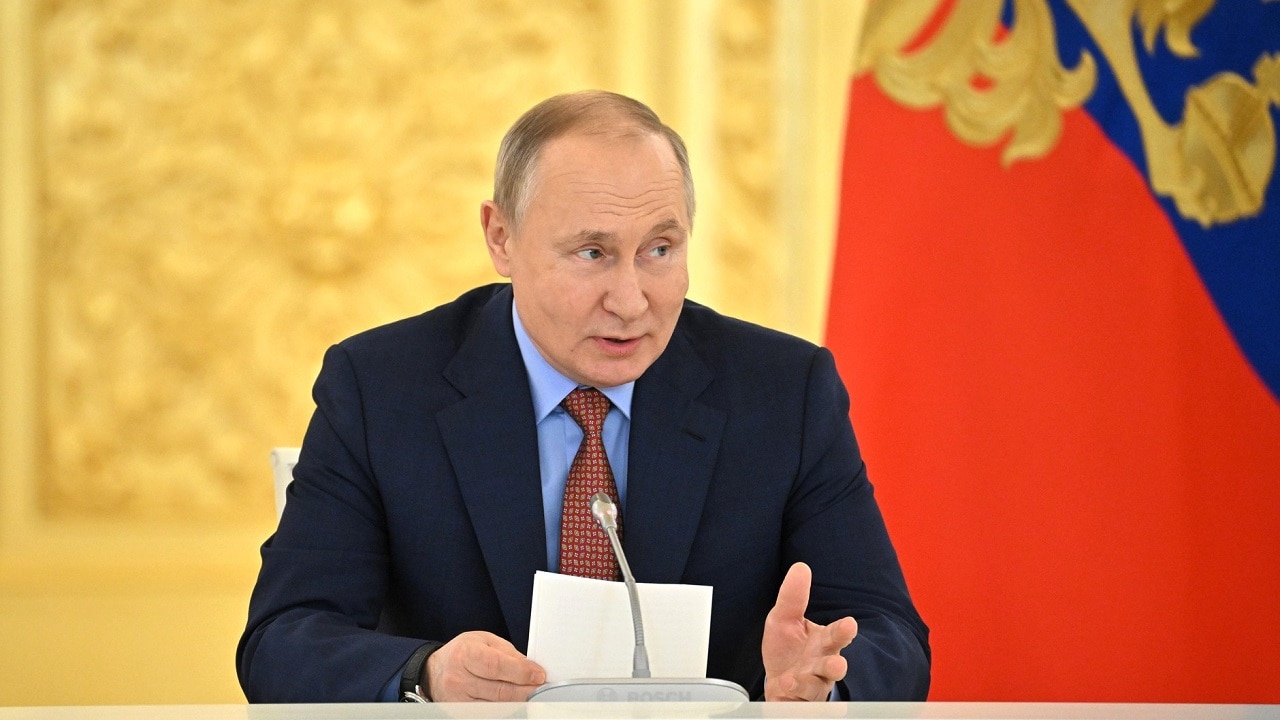
Russian President Putin. Image Credit: Russian Federation.
Putin has tied his legitimacy to a war that is already narrower in scope than when it began.
The settlement—negotiated, imposed, or reached by exhaustion—will decide not just borders but also futures. He may find enough to declare success, or he may face the costs of failure. Either way, the conflict ensures that Russian politics enters a new chapter. History rarely grants soft landings to leaders who gamble at scale and lose. And nothing in Putin’s invasion of Ukraine suggests that it will be the exception.
About the Author: Dr. Andrew Latham
Andrew Latham is a non-resident fellow at Defense Priorities and a professor of international relations and political theory at Macalester College in Saint Paul, MN. You can follow him on X: @aakatham.