
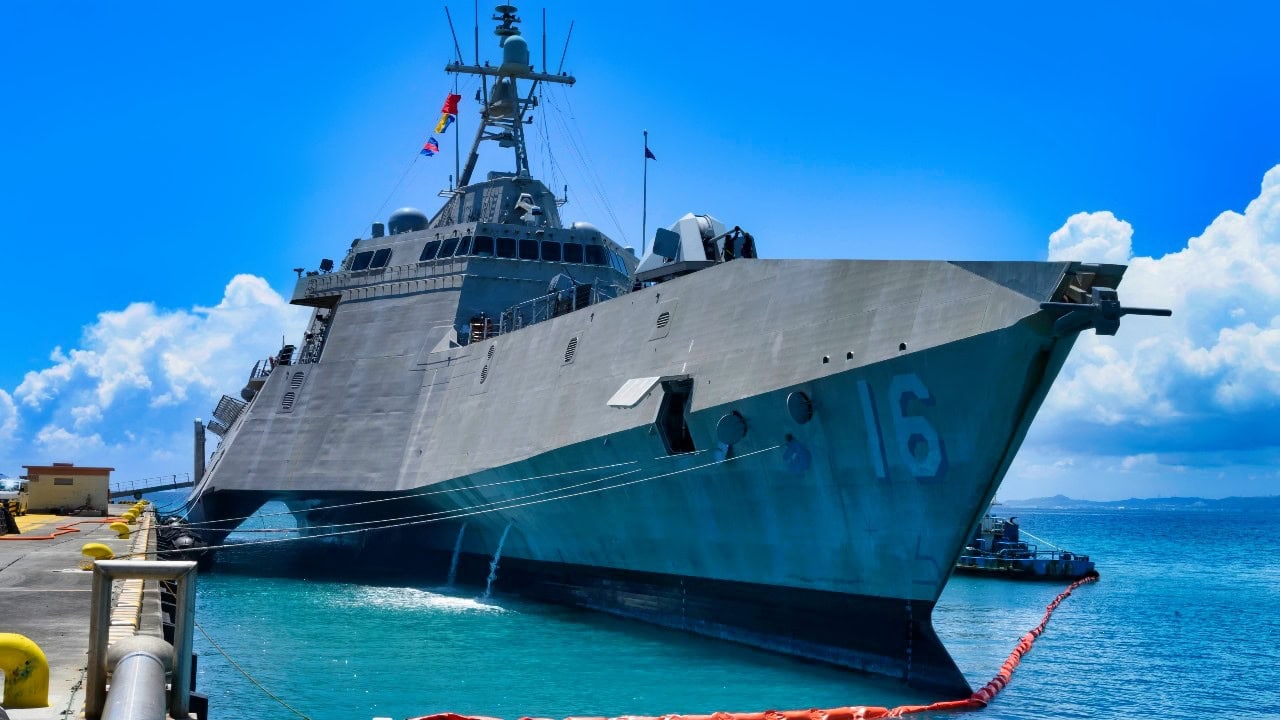
Key Points and Summary – The U.S. Coast Guard’s seizure of the tanker M/T Skipper off Venezuela, under a warrant tying it to Hezbollah and Iran’s IRGC-QF, marks a sharp escalation in Washington’s pressure campaign against Nicolás Maduro.
-The move has already spooked other ships, with multiple tankers making U-turns and more than 11 million barrels of crude now stuck off Venezuela.
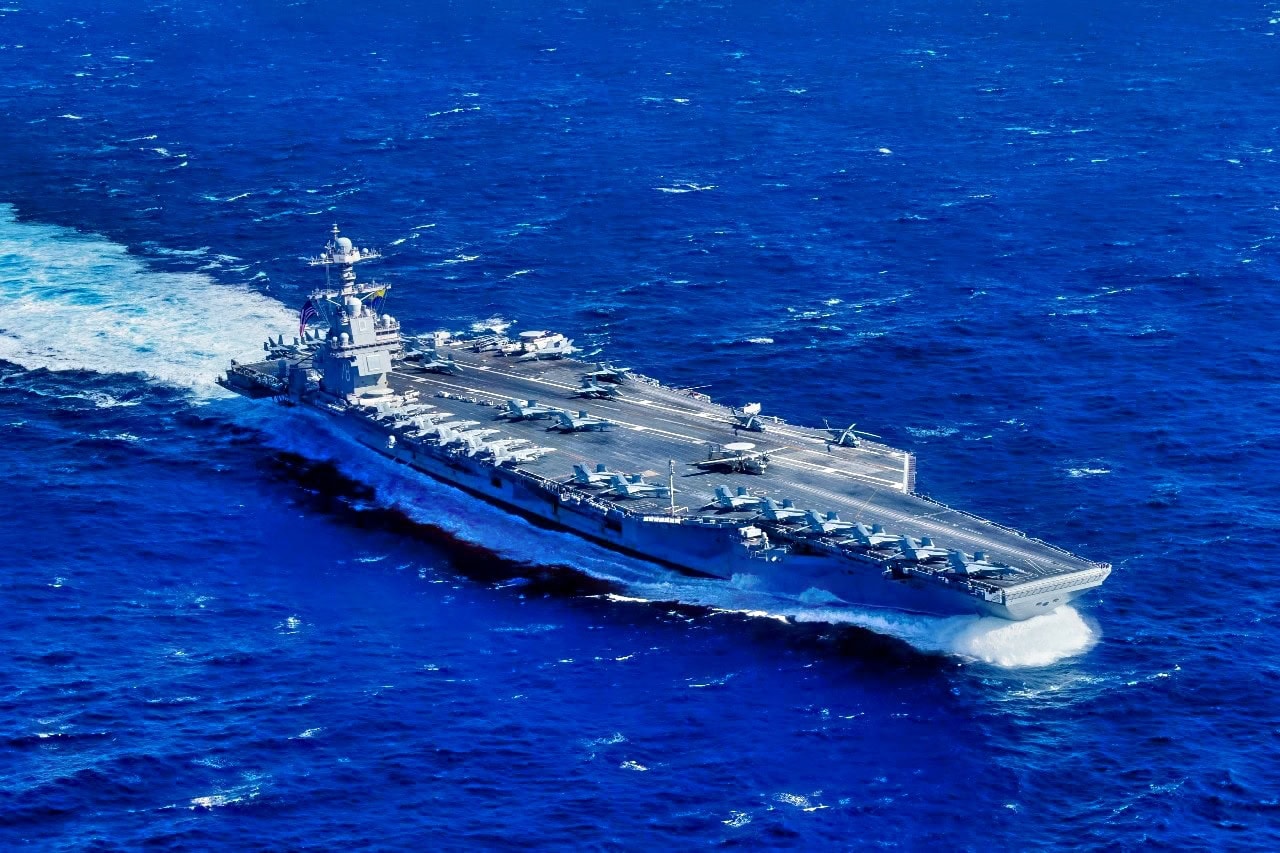
The world’s largest aircraft carrier, USS Gerald R. Ford (CVN 78), sails in formation with the Arleigh Burke-class guided missile destroyers USS Winston Churchill (DDG 81), USS Mitscher (DDG 57), USS Mahan (DDG 72), USS Bainbridge (DDG 96), and USS Forrest Sherman (DDG 98) in the Atlantic Ocean, Nov. 12, 2024. The Gerald R. Ford Carrier Strike Group is underway in the Atlantic Ocean completing Group Sail. Group Sail is the first at-sea integrated phase training event during a routine deployment training cycle. It is designed to challenge the Gerald R. Ford CSG’s ability to use the capabilities of the USS Gerald R. Ford (CVN 78), USS Winston S. Churchill (DDG 81), Carrier Air Wing (CVW) 8, Destroyer Squadron (DESRON) 2, and embarked Information Warfare team as a cohesive Strike Group to meet Navy and Joint Warfighting requirements that increases warfighting capability and tactical proficiency across all domains. (U.S. Navy photo by Mass Communication Specialist 2nd Class Maxwell Orlosky)
-Trump advisers hint more seizures—and even land strikes—could follow as the White House tries to starve Caracas of oil revenue.
-Critics warn the strategy may harden Maduro’s grip, fuel migration and drug flows, and eventually ripple into U.S. gasoline prices.
The U.S. Just Seized a Tanker Off Venezuela. What Happens Next?
The US Coast Guard, this week, seized the M/T Skipper, an oil tanker off of Venezuela, after obtaining a warrant, Axios reported.
It’s the latest escalation in the United States’ sabre-rattling towards Venezuela, which has included everything from blowing up boats in the Caribbean to sanctions against President Nicholas Maduro’s inner circle.
The Justice Department issued a press release earlier this week announcing that it had unsealed the warrant. Per the release, the US Department of the Treasury’s Office of Foreign Assets Control (OFAC) identified the M/T Skipper as “being used in an oil shipping network supporting Hizballah and the Islamic Revolutionary Guard Corps-Qods Force (IRGC-QF), both US Department of State-designated foreign terrorist organizations.”
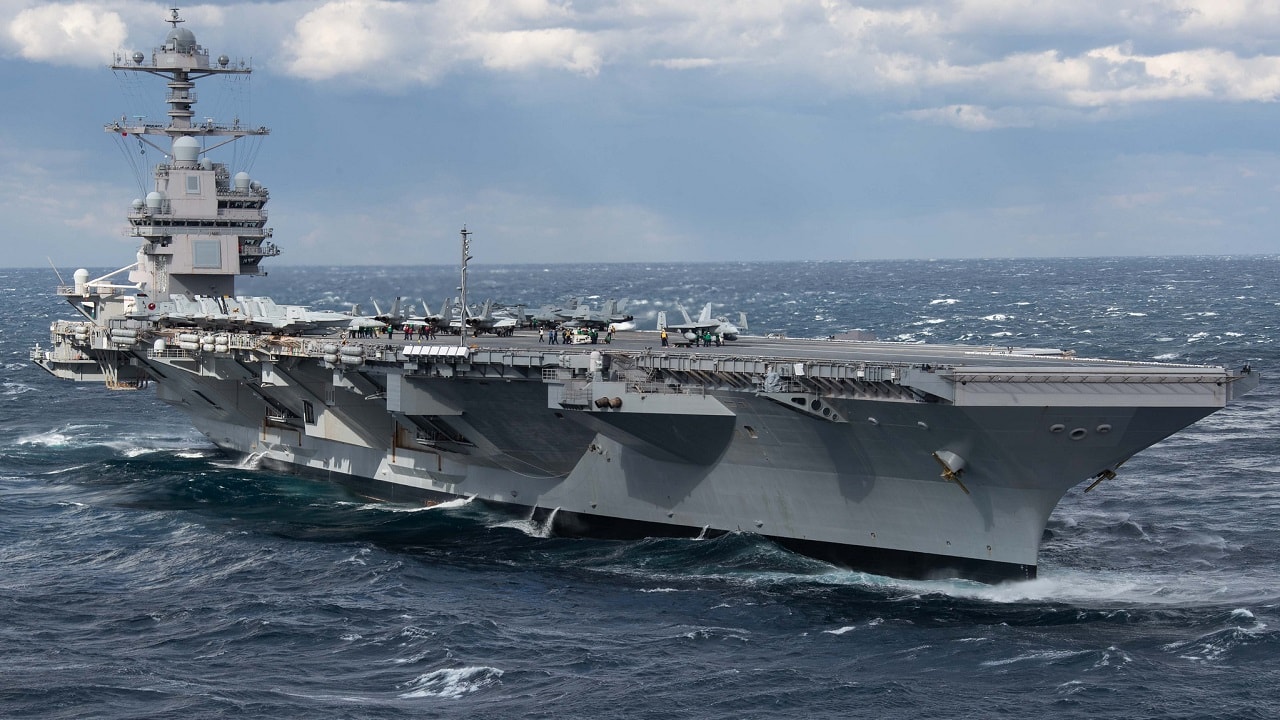
The aircraft carrier USS Gerald R. Ford (CVN 78) transits the Atlantic Ocean, March 26, 2022. Gerald R. Ford is underway in the Atlantic Ocean conducting flight deck certification and air wing carrier qualifications during the ship’s tailored basic phase before operational deployment.
Per Axios, the tanker was seized just before the warrant was set to expire on Wednesday.
“The FBI’s Counterintelligence Division and our partners will continue to enforce US sanctions and cut off our adversaries from financial markets and critical technology,” FBI Director Kash Patel said in the release. “The seizure of this vessel highlights our successful efforts to impose costs on the governments of Venezuela and Iran. Sanctions enforcement requires a whole-of-government approach, and the FBI is proud to be part of the team.”
The strategy, clearly, is to starve Venezuela of oil export revenue, hurt that country’s economy, and use the ensuing crisis to force out the Maduro regime.
Turning Around
Meanwhile, Reuters reported on Monday that the seizure of the tanker has caused other ships to turn around.
“A tanker carrying Russian naphtha for Venezuelan state oil company PDVSA and at least four supertankers due to pick up crude cargoes in Venezuela have made U-turns,” Reuters reported, citing ship monitoring data.
This follows Boltaris, a tanker under the Benin flag, making a U-turn last week and heading for Europe.
And it’s left a lot of crude oil in limbo.
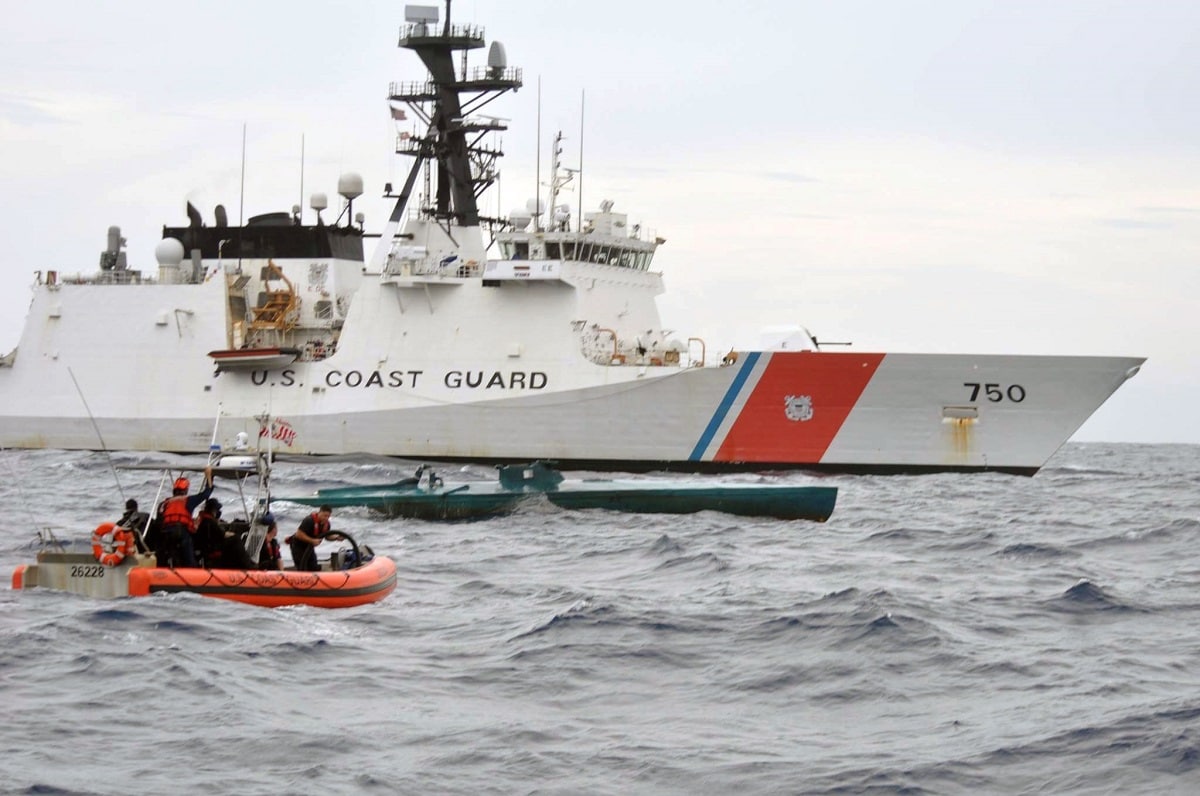
Coast Guard. Image: Creative Commons.
“The seizure left more than 11 million barrels stuck onboard other vessels in Venezuelan waters and has prompted some tanker owners to order U-turns to avoid problems, with an armada of US ships patrolling the Caribbean Sea,” the Reuters report said.
In fact, under pressure, the only tankers carrying Venezuelan crude to the US that have been allowed through are those chartered by Chevron.
Ready For More?
Per another Axios story this week, the US is not only poised to seize more tankers, but the president said last week it could include “land strikes on Venezuela.” It’s all part of a pressure campaign against Maduro.
“The president has many tools in the toolbox, and this is a big one,” an unnamed Trump adviser told Axios of the US strategy.
“It’s quite a buffet for the US to choose from,” Samir Madani, co-founder of the shipping-tracking firm Tanker Trackers, said of the 18 sanctioned ships that are currently in Venezuelan waters.
“We have to wait for them to move. They’re sitting at the dock. Once they move, we’ll go to court, get a warrant, and then get them,” the unnamed Trump adviser told Axios of the ships. “But if they make us wait too long, we might get a warrant to get them there.”
Venezuela Crisis: Could It Backfire?
The strategy of seizing tankers, while not as legally questionable as blowing up boats, could nevertheless backfire on the Trump Administration. That’s the argument made this week in the Washington Post by columnist Max Boot.
“Legal experts I’ve spoken to suggest that the oil tanker seizure, while controversial, has a stronger legal justification than the boat strikes,” Boot writes in the Post.
“The tanker confiscated last week was flying a Guyana flag, but Guyana said there was no record of the ship’s registration, which makes it a stateless vessel. The tanker has also been implicated in violating sanctions on both Venezuela and Iran. That could give the US government the right to seize it under American law.”
The columnist argues that seizing the tankers stands to do more to hurt the Maduro regime than blowing up the boats did. However, Boot argues, that doesn’t necessarily mean it’s a good idea.
“The Trump administration seems to imagine that such a crisis could force Maduro from power. But plenty of other despots, such as Fidel Castro, Kim Jong Un, and Ayatollah Ali Khamenei, have survived the impoverishment of their people,” Boot writes, while going on to note that the Maduro regime itself has survived economic calamity before.
“The more likely outcome is to exacerbate the very crises that Trump has cited as the reasons for his actions,” Boot argues. “But inducing another economic crisis in Venezuela is only going to make both problems — migrants and drugs — worse. After all, one of the central reasons some Venezuelans have taken to drug smuggling, and many others have fled the country, is the lack of jobs and economic opportunity. Those concerns would only be exacerbated by a US economic blockade, or by more direct US military action.”
What Does It Mean For Gas Prices?
The average gas price in the United States is now $2.85 per gallon, according to GasBuddy, marking a multi-year low. The same site forecast this week that gas prices on Christmas will drop to $2.79 a gallon, which would represent the lowest at the holidays since the pandemic year of 2020.
Will that be affected by the situation in Venezuela? Fox News looked at that question this week.
“In the event of regime change [or] substantial turmoil within Venezuela, you could see disruption to the related and supporting industries, everything from power to ports, that is an essential part of getting oil onto the market and from Venezuela,” Kevin Book, managing director of the research firm ClearView Energy Partners, told Fox.
“Venezuela currently produces more than a million barrels per day, approximately one percent of global supply,” Book added.
“But more importantly, second point, Venezuela’s oil is of a specific grade that is particularly useful for refineries in America’s Gulf Coast. And so the gasoline we produce and export to the world, manufactured from that grade of oil, could become slightly more expensive, not just because oil is off the market, but because a specific grade is also not available.”
About the Author: Stephen Silver
Stephen Silver is an award-winning journalist, essayist, and film critic, and contributor to the Philadelphia Inquirer, the Jewish Telegraphic Agency, Broad Street Review, and Splice Today. The co-founder of the Philadelphia Film Critics Circle, Stephen lives in suburban Philadelphia with his wife and two sons. For over a decade, Stephen has authored thousands of articles that focus on politics, national security, technology, and the economy. Follow him on X (formerly Twitter) at @StephenSilver, and subscribe to his Substack newsletter.