
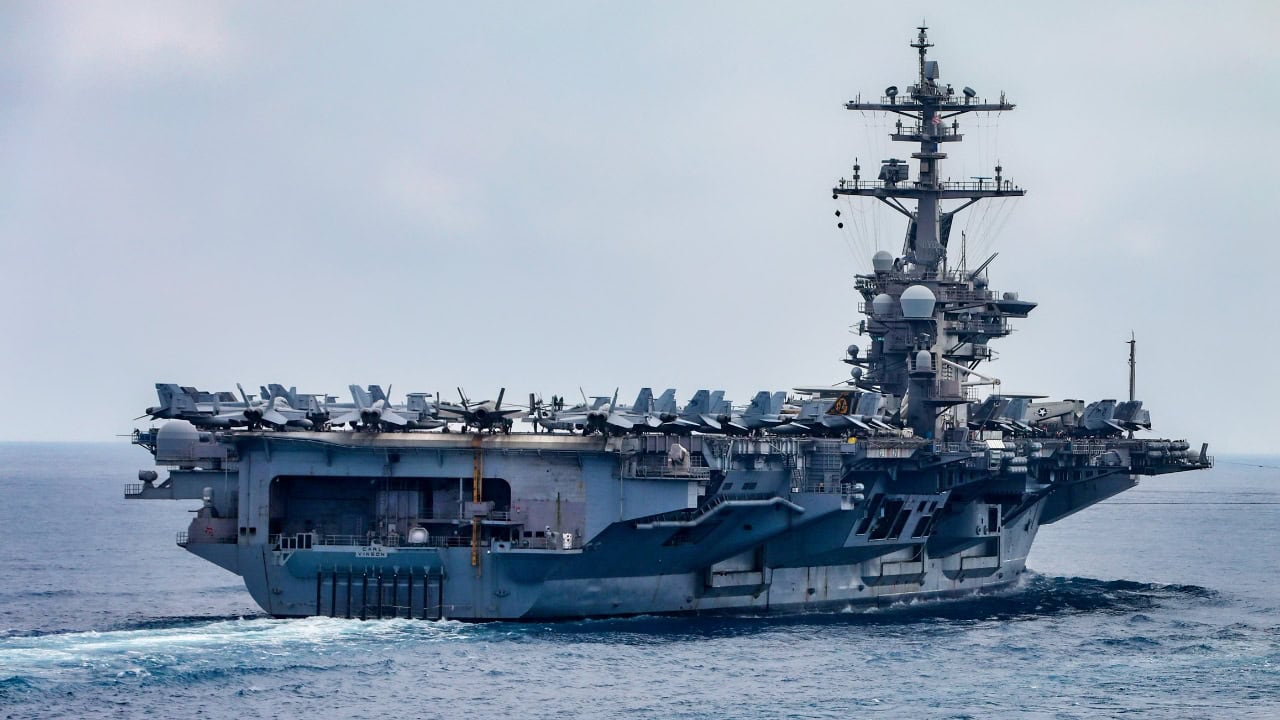
Key Points and Summary – In late November 2025, President Trump abruptly declared Venezuelan airspace “closed,” alarming Caracas and U.S. allies amid a growing American military and covert presence in the Caribbean. Officially, the move is framed around narco-trafficking, pressure on Nicolás Maduro’s illegitimate regime, and stemming migrant flows.
-Yet Venezuela’s vast underused oil reserves loom over every decision.
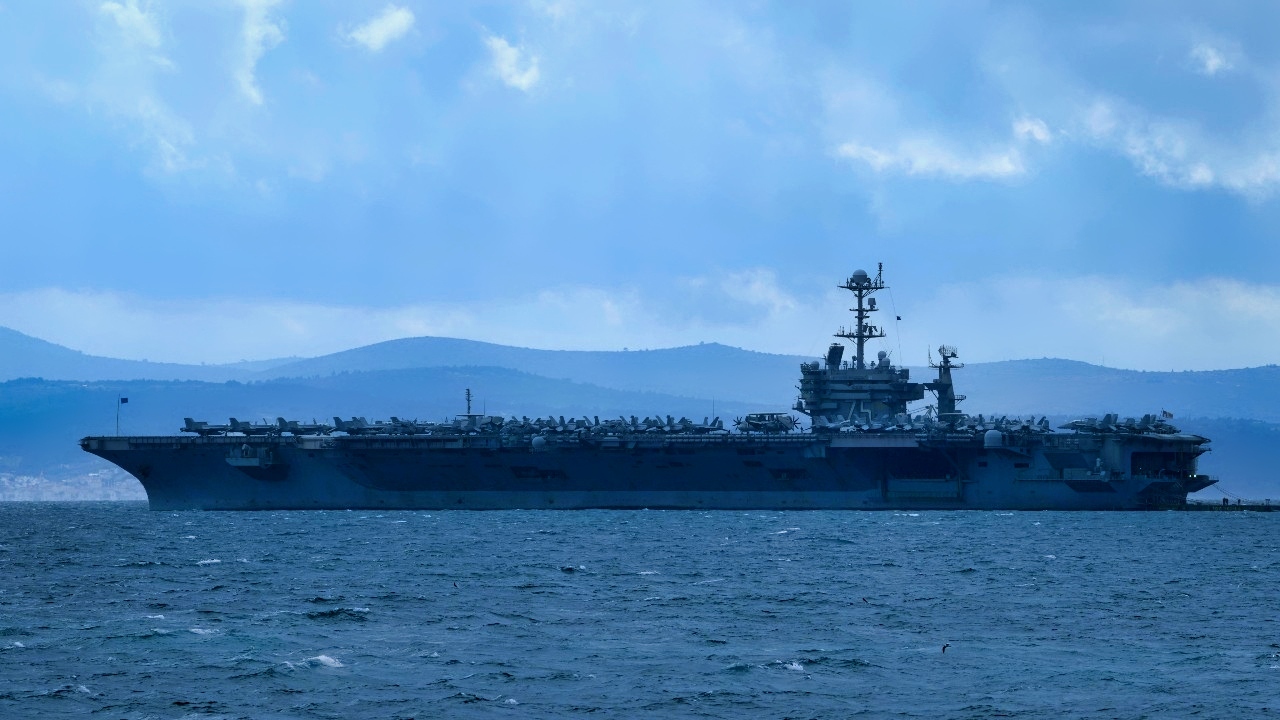
USS Harry S. Truman Aircraft Carrier. Image Credit: Creative Commons.
-Reviving production would take years of U.S. capital, technology, and political leverage, but could reshape both Venezuela’s economy and America’s energy position.
-Any hint of intervention for resources, however, risks fierce backlash across Latin America and at home—ensuring Trump’s Venezuela play will be judged through an oil lens.
Is Trump’s Venezuela Crackdown Really About Oil?
In late November 2025, U.S. President Donald Trump declared on social media that airspace above and around Venezuela should be considered “closed.”
The sudden announcement – issued without further clarification or even any visible enforcement – shocked Washington, Caracas, and indeed the rest of the world.
The move was denounced by the Venezuelan government as a threat, obviously, as well as a violation of its sovereignty.
For those who have been watching closely, however, perhaps the only shocking thing was that Trump didn’t immediately follow up on the comment by sending in American troops and invading.
That being said, there have been increased U.S. military and covert operations targeting drug trafficking networks operating out of Venezuelan territory.
The Trump administration has made it abundantly clear through the president’s own words and comments made by Defense Secretary Pete Hegseth that the goal in Venezuela is to dismantle narcotics cartels – but for a country sitting on top of the largest oil reserve on earth, some are questioning whether there may be a secondary motive.
Could oil be the real reason for all the recent action in Venezuela?
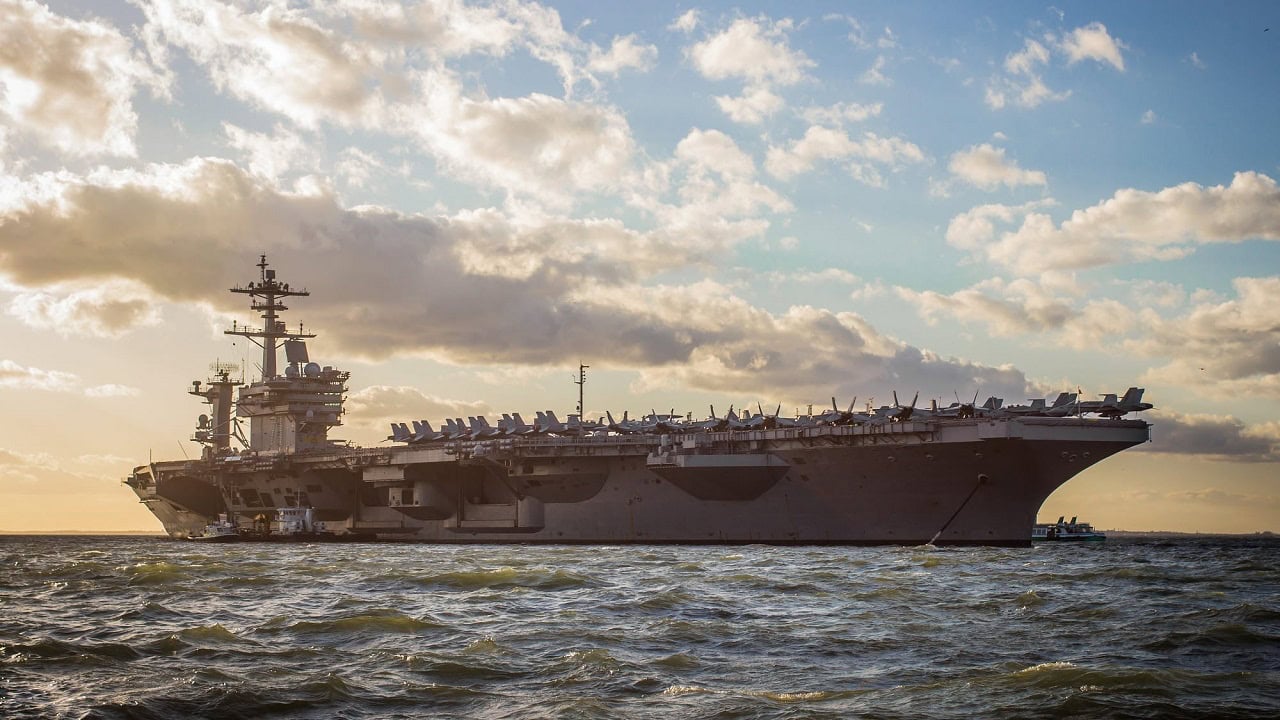
USS George HW Bush Aircraft Carrier. Image Credit: Creative Commons.
The Situation In Venezuela
Once a significant oil exporter, Venezuela has struggled over the past decade amid economic collapse, chronic mismanagement, and political decline thanks to the nation’s authoritarian government.
Under Nicolas Maduro, the government has faced widespread accusations of human rights abuses, electoral fraud, and repression of opposition. Over the last year, after a heavily contested election, mass protests have erupted throughout the country.
The United States’ response has taken various forms, though sanctions are central to it. Sanctions have been placed on key regime-linked individuals and entities, and diplomatic pressure has also increased.
Most newsworthy, however, is the United States’ increased military presence in the region – particularly in the Caribbean and near Venezuelan offshore waters. So when Trump announced the “closure” of Venezuelan airspace, the news immediately sparked concern that an invasion was imminent.
Now, though, it looks as though the announcement may be a precursor to something more calculated.
What Trump Says He Wants – and What He’s Signaling
Both in public and in closed doors, the Trump administration has laid out three primary justifications for its posture against Venezuela.
First, as mentioned, is the crackdown on narco-terrorist organizations in the region.
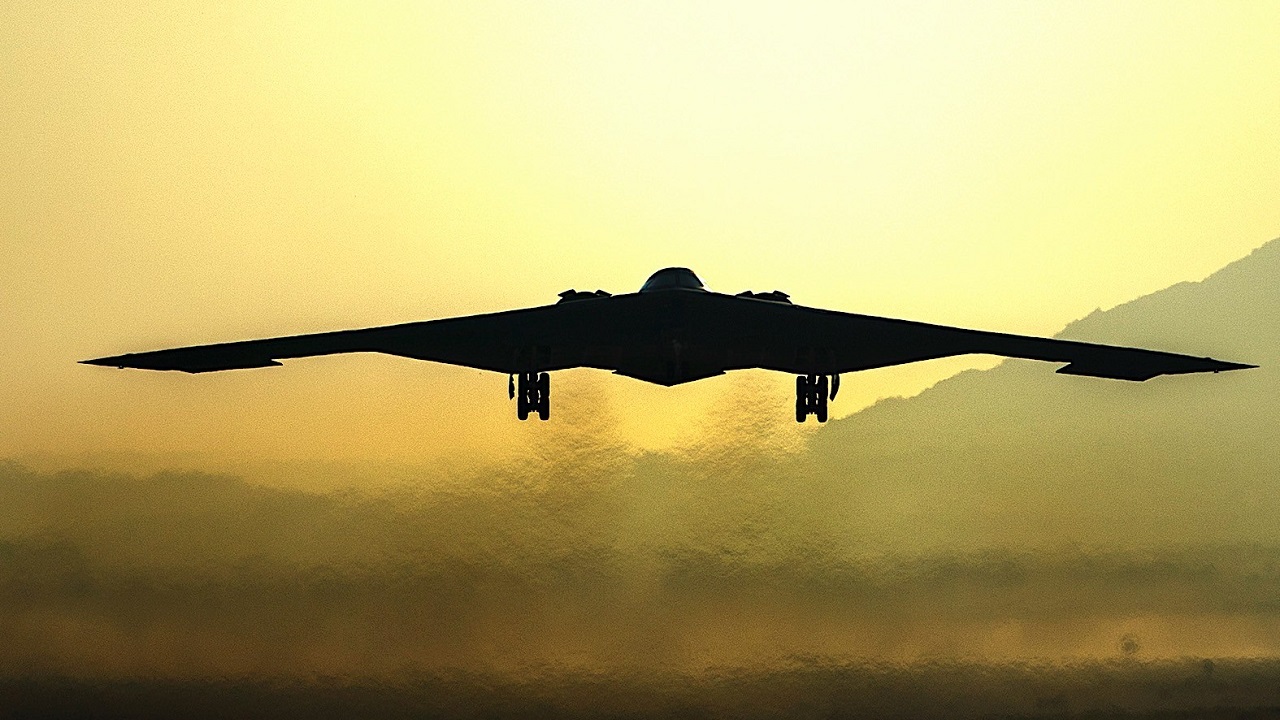
B-2 Bomber. Image Credit. U.S. Air Force.
Second is regime change – a more controversial position and one that the Trump administration is attempting to navigate in such a way that it does not alienate the Republican base. Trump is effectively demanding Maduro’s removal and, fairly, casting his government as illegitimate.
Third: migration and border security. Amid a broader crackdown on illegal immigration into the United States, Trump’s position on Venezuela is clearly also influenced by the fact that migrant flows from Venezuela continue to cause problems for the United States.
So far, the rhetoric has not escalated into military action beyond a naval presence in the Caribbean and maritime strikes against narco-traffickers – but it still could. And if it does, there’s a likely fourth consideration that the White House has almost certainly discussed internally: oil.
Venezuela’s Oil and Why It Matters
The truth is this: Venezuela holds the world’s largest reserve of crude oil. Recent estimates place those reserves at around 303 billion barrels – more than those of any other country, including giants like Saudi Arabia.
Most of that oil is located in the Orinoco Belt and is considered extra-heavy crude, which means it is exceptionally viscous and dense, making it more challenging to extract.
Venezuela is, therefore, under-invested and under-producing: it’s a country with vast amounts of potential wealth that now exports far less than it used to, and far less than it could if its politics were different.
In 2023, its crude oil exports were just $4.05 billion – minuscule compared with major oil exporters from all over the world.
As of late this year, official data puts Venezuela’s crude oil production at almost 1 million barrels per day, which is far below peak levels.
After decades of under-investment, ongoing sanctions, and the loss of technical capacity at the state-oil firm Petroleos de Venezuela SA, restoring full output would be a long and expensive process.
But it might be something that could be achieved with the input of the United States – and it’s hard not to imagine a scenario in which President Trump would seek to gain influence over Venezuela or strike one of his famous deals to extract that oil and inject some of that wealth into the U.S. economy.
Whether one believes Trump’s claims that the U.S. economy is the “hottest” in the world or not, Venezuelan oil would certainly turn up the temperature.
Think about it: seizing Venezuela’s oil reserves or applying political or military pressure to strike a deal would benefit both sides.
Reviving the Venezuelan oil industry would require years of investment, the rebuilding of pipelines, wells, and refineries, and restoring institutional capacity.
For Trump, that means the benefits would only be seen long after his presidency – but that only matters if he cares only about himself. It could also benefit Venezuela: after all, it wouldn’t easily be achieved without the help of a global superpower.
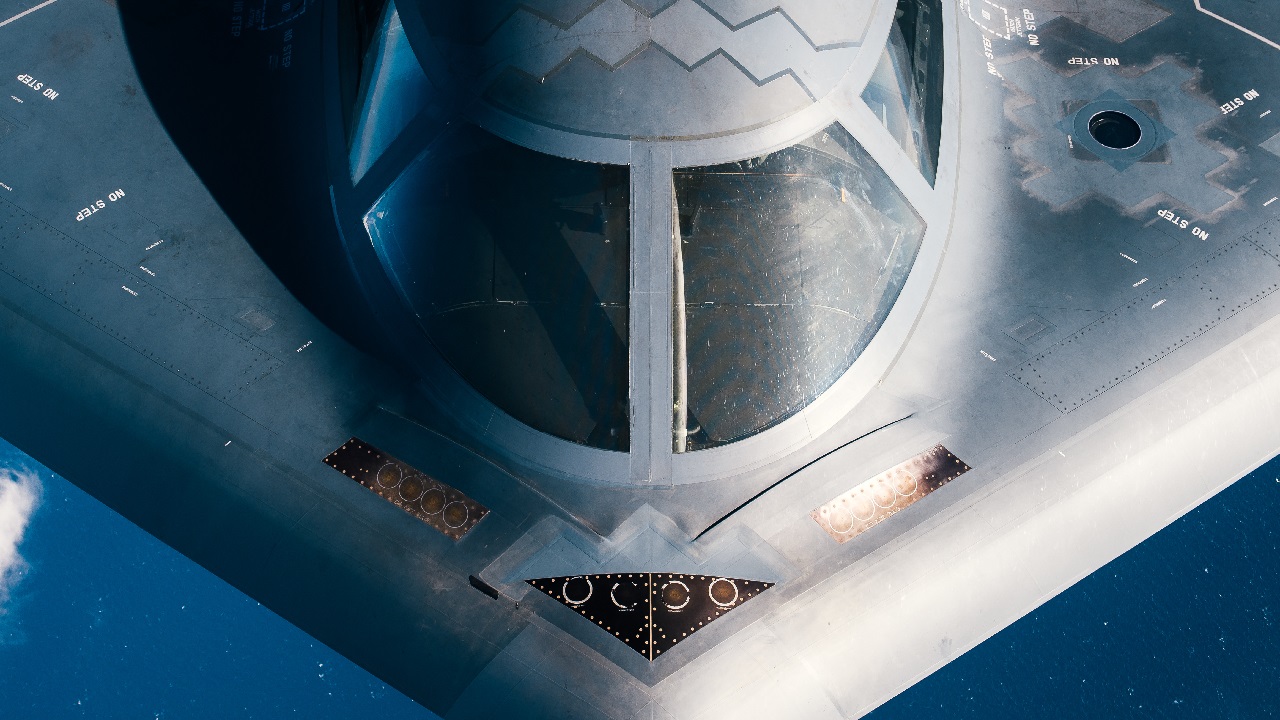
A U.S. Air Force 509th Bomb Wing B-2 Spirit refuels from a 351st Aerial Refueling Squadron KC-135 Stratotanker during the Bomber Task Force training exercise over England, Aug. 29, 2019. The B-2 aircraft will operate out of RAF Fairford, England, and will exercise there at U.S. Air Forces in Europe’s forward operating location for bombers. (U.S. Air Force photo by Staff Sgt. Jordan Castelan)
But at the same time, any decisions like this carry massive political and diplomatic risks.
An intervention that even hints at the possibility of a resource grab could provoke condemnation across Latin America, raise eyebrows across the Pacific, or even risk a political backlash against the Republicans in the short term, no matter how economically beneficial it could be.
The raw scale of Venezuela’s reserves, however, might make all of those risks worth it – and for a president seeking both a legacy and an opportunity to reverse America’s rising debt and apparent economic decline dramatically, it’s hard not to see why Trump may be considering it.
About the Author:
Jack Buckby is a British author, counter-extremism researcher, and journalist based in New York who writes frequently for National Security Journal. Reporting on the U.K., Europe, and the U.S., he analyzes and understands left-wing and right-wing radicalization and reports on Western governments’ approaches to the pressing issues of today. His books and research papers explore these themes and propose pragmatic solutions to our increasingly polarized society. His latest book is The Truth Teller: RFK Jr. and the Case for a Post-Partisan Presidency.