
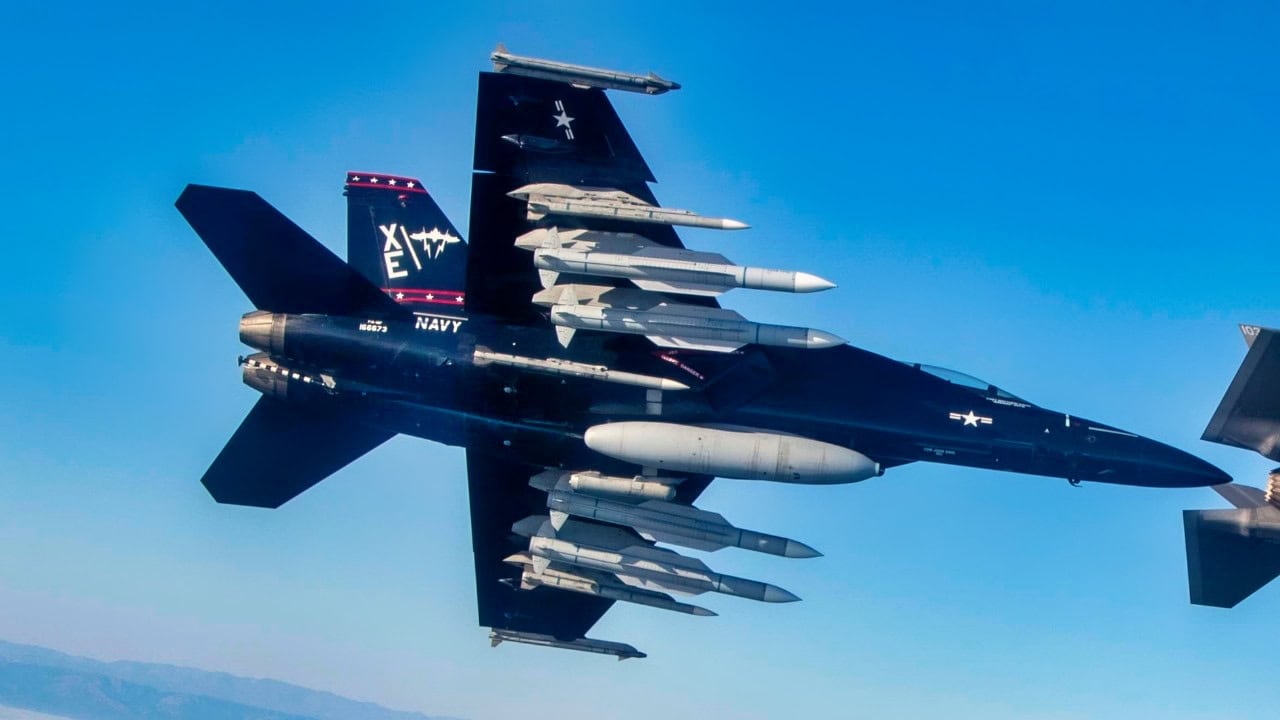
According to recent news reports, the U.S. Navy is making plans to launch a Blackbeard hypersonic missile from an F/A-18 Super Hornet by 2027. The program is part of a larger initiative to develop long-range, advanced weaponry on a larger scale and at lower costs.
The project is being developed by Castelion Corp, which has already received a contract worth more than $100 million to develop its Blackbeard missile. The project, if successful, could narrow the gap between the U.S. and China in hypersonic weapons.
The Blackbeard Hypersonic Missile
Blackbeard is being developed by Castelion, a relatively young defense firm founded by engineers from SpaceX and other commercial aerospace industries. The company was founded only a few years ago with the aspiration to create high-quality long-range weapons at a fraction of the cost of Lockheed Martin, Raytheon, or Palantir.
The company’s current mission is to create low-cost hypersonic missiles for the U.S. that can be manufactured in high volume at lower cost. The result is Blackbeard, a cheap hypersonic missile that reportedly has around 80% of the Precision Strike Missile (SrSM) ‘s capabilities but at a fraction of the cost.
Blackbeard is still in its early stages of development, and little information is known about its capabilities as a result.
The missile is reportedly capable of sustained hypersonic flight, exceeding Mach 5, but it is smaller and lighter than the massive multi-stage ballistic hypersonics that China fields.
The missile’s smaller profile allows it to be adapted for multiple strike platforms, such as tactical aircraft and MRLS systems.
Rather than relying solely on kinetic energy, Blackbeard incorporates guidance and control systems that enable it to maneuver in the terminal phase, making it difficult for most existing air defense systems to engage.
Why the U.S. Navy Wants Blackbeard
The U.S. Navy took interest in Castelion’s Blackbeard missile and is currently considering it for its Multi‑mission Affordable Capacity Effector (MACE) program.
Instead of demanding the longest possible range or the most advanced guidance package, MACE prioritizes affordability, manufacturability, and adaptability across different launch platforms.
Blackbeard fits this philosophy particularly well because it was designed from the outset with production constraints in mind, rather than being optimized first for performance.
In order to be compatible with the Navy’s MACE program, Blackbeard must meet a number of requirements.
It must be compatible with both the F/A-18E/F and the F-35A/C. It must also fit within the F-35’s internal weapons bays.
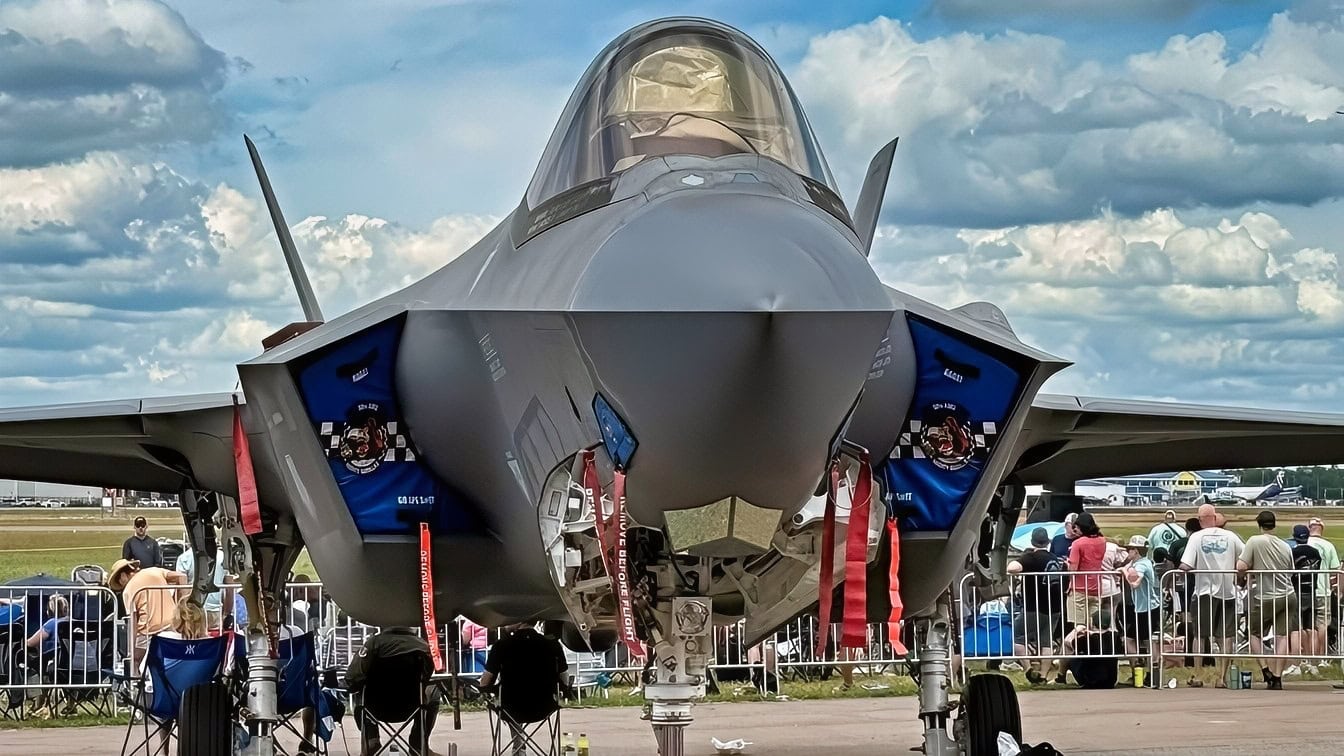
F-35C Lakeland Airshow Photo 19FortyFive Image Taken on 4/19/2026.
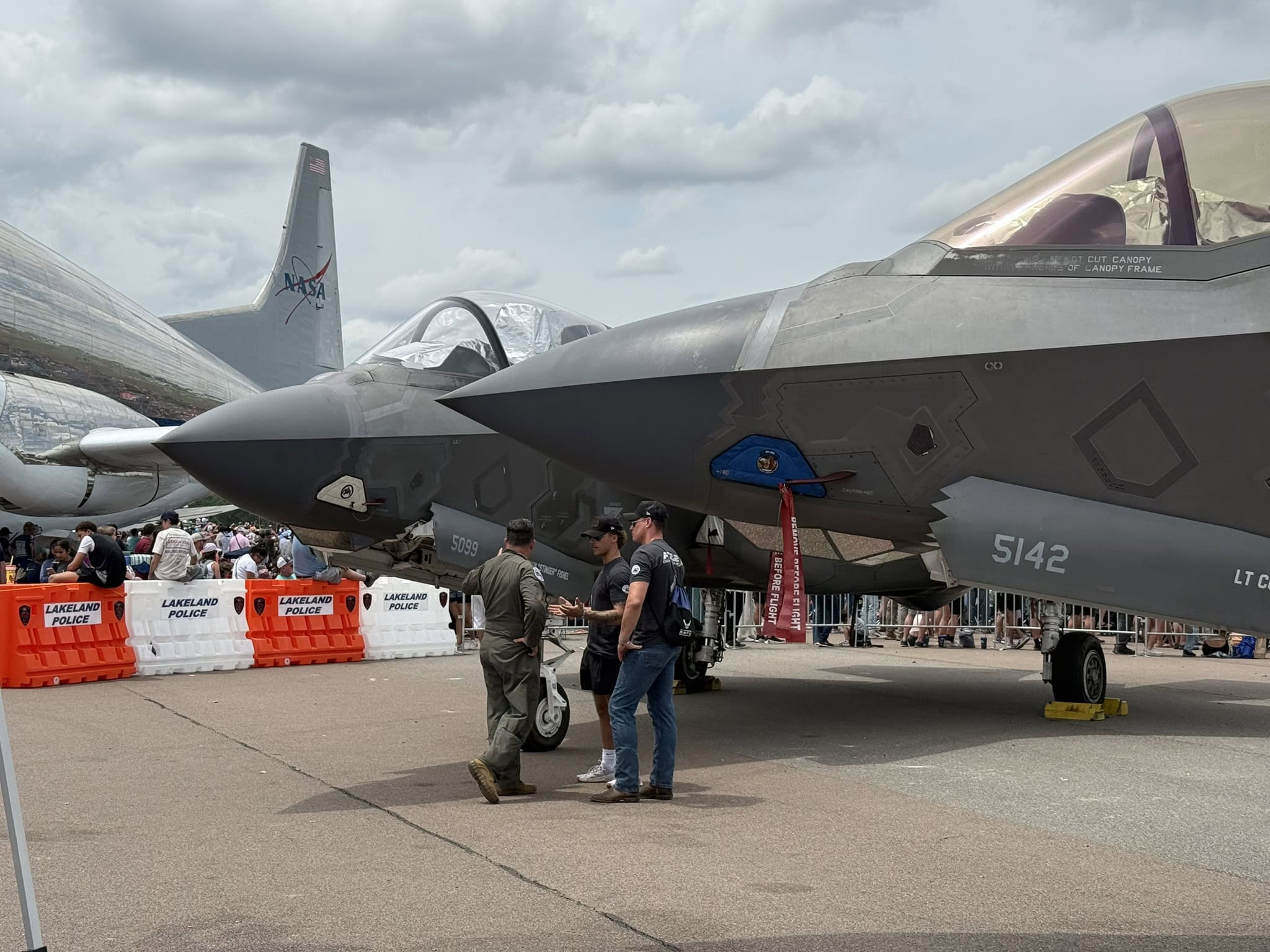
F-35C. Image Credit: 19FortyFive.com taken on 4/19/2026.
The missile must have a 75-lb warhead and guidance systems capable of detecting and hitting moving targets. Most importantly, it must have a unit cost of less than $300,000 per All Up Round (AUR) and a production capacity of at least 500 AURs per year. Castelion is currently working to ensure that Blackbeard meets all of these requirements by 2028, with testing completed by 2027.
The Navy has invested substantial resources in its MACE program.
In February, Catelion was given a contract of $49,998,005 for “full-scale prototypes, flight testing, and operational fielding to continue to expedite the Blackbeard Hypersonic Weapons development, integration, testing, and early operational capability.” More recently, the company was awarded another contract by the Navy, raising the total funds allocated to around $104,998,566. In total, the Navy has allocated approximately $379 million to the MACE project in 2026, with the goal of beginning operational fielding in 2027.
The Army is Also Interested
The U.S. Army has also expressed interest in acquiring Blackbeard.
A ground‑launched variant of the missile is being developed for use with the Army’s HIMARS rocket artillery system.
In 2025, the Army awarded a $25 million contract to Castilion to develop an MRLS-based variant of the missile. “The mission of Blackbeard Ground Launch (GL) is to attack/neutralize/suppress/destroy using hypersonic missile-delivered precision fires (seeker-based) against time-sensitive moving targets and hardened targets at a much-reduced cost per missile than currently exists in the Army inventory,” the Army Explained.
The Army is currently developing several advanced munitions for its MRLS systems, including the Long-Range Hypersonic Weapon and the PrSM. “Blackbeard GL is not a replacement for LRHW as it will not reach similar velocities nor range,” the Army explained. “The goal of Blackbeard GL is to deliver approximately 80% of the PrSM Increment 4 capability at a significantly reduced cost.” PrSM is still in development, with increment 1 costing around $1.6 per unit and increment 2 costing around $5.35 per unit. Blackbeard seeks to offer a low-cost alternative to work alongside these more capable but more costly munitions.
The integration and adoption of Blackbeard have obvious applications in the Indo-Pacific region.
China is currently a world leader in developing hypersonic missiles.
Its largest missiles have a range of around 5,000 km, which threatens sensitive installations as far out as Guam. While Blackbeard is significantly smaller than these LRBMs, it still offers a low-cost hypersonic missile for the U.S. Navy to threaten any Chinese naval assets operating near allied bases in the first island chain.
This helps to narrow the hypersonic gap between the U.S. and China, if only by a little.

In late March of 2022, the 846th Test Squadron at Holloman Air Force Base, N.M., successfully stopped a reusable sled traveling at 6,400 feet per second on a monorail, making it a historic event for the team’s Hypersonic Sled Recovery, or HSR, effort.
Castelion has invested heavily in manufacturing infrastructure designed to support high‑rate missile production. Its Project Ranger facility in New Mexico is intended to operate more like a modern aerospace production campus than a traditional defense assembly line.
The goal is to reduce development times, reduce per‑unit costs through repetition, and maintain the flexibility to iterate on designs as defenses and requirements evolve. If successful, this model could be applied to other classes of weapons, potentially reshaping large parts of the U.S. defense industrial base.
About the Author: Isaac Seitz
Isaac Seitz, a Defense Columnist, graduated from Patrick Henry College’s Strategic Intelligence and National Security program. He has also studied Russian at Middlebury Language Schools and has worked as an intelligence Analyst in the private sector.