

U.S. Navy Wants Global Hypersonic Missile Reach Across the Navy: The U.S. Navy just unveiled a new effort to develop hypersonic strike weapons that can fit inside the launch systems already installed across much of the fleet – an idea that could significantly expand naval strike capacity without waiting for costly ship redesigns or platform conversions.
The program, known as Flight Advancement of Structures for Hypersonics (FLASH), was announced by the Office of Naval Research this month as an Innovative Naval Prototype effort focused on a “surface-launched, tactical range, hypersonic strike capability” compatible with the Navy’s Mark 41 Vertical Launch System (VLS) and the Virginia Payload Module (VPM) used on submarines. The service said the program will design, manufacture, and flight test prototype vehicles to inform future decisions.
With a hypersonic weapons program already in place, FLASH ensures those weapons can be as effective as possible, making them usable on more than just a handful of ships and submarines.
Why the U.S. Navy Is Doing This Now
The Navy’s Conventional Prompt Strike (CPS) program is currently developing a hypersonic, boost-glide weapon system designed to target high-value and time-sensitive targets anywhere on the planet – potentially within one hour.
It uses the Common Hypersonic Glide Body (C-HGB) – a wedge-shaped, unpowered warhead – that was jointly developed with the U.S. Army. The Department of Defense announced a successful test of that glide body in 2020.
CPS, however, was not designed with standard fleet launch cells in mind. Instead, it requires larger dedicated launch tubes. That’s why the Navy selected the three Zumwalt-class destroyers as its first surface combatants to carry the weapon. The ships are already being modified to remove their Advanced Gun Systems and replace them with large missile tubes for CPS. Each Zumwalt is expected to carry 12 hypersonic missiles through four launch tubes.
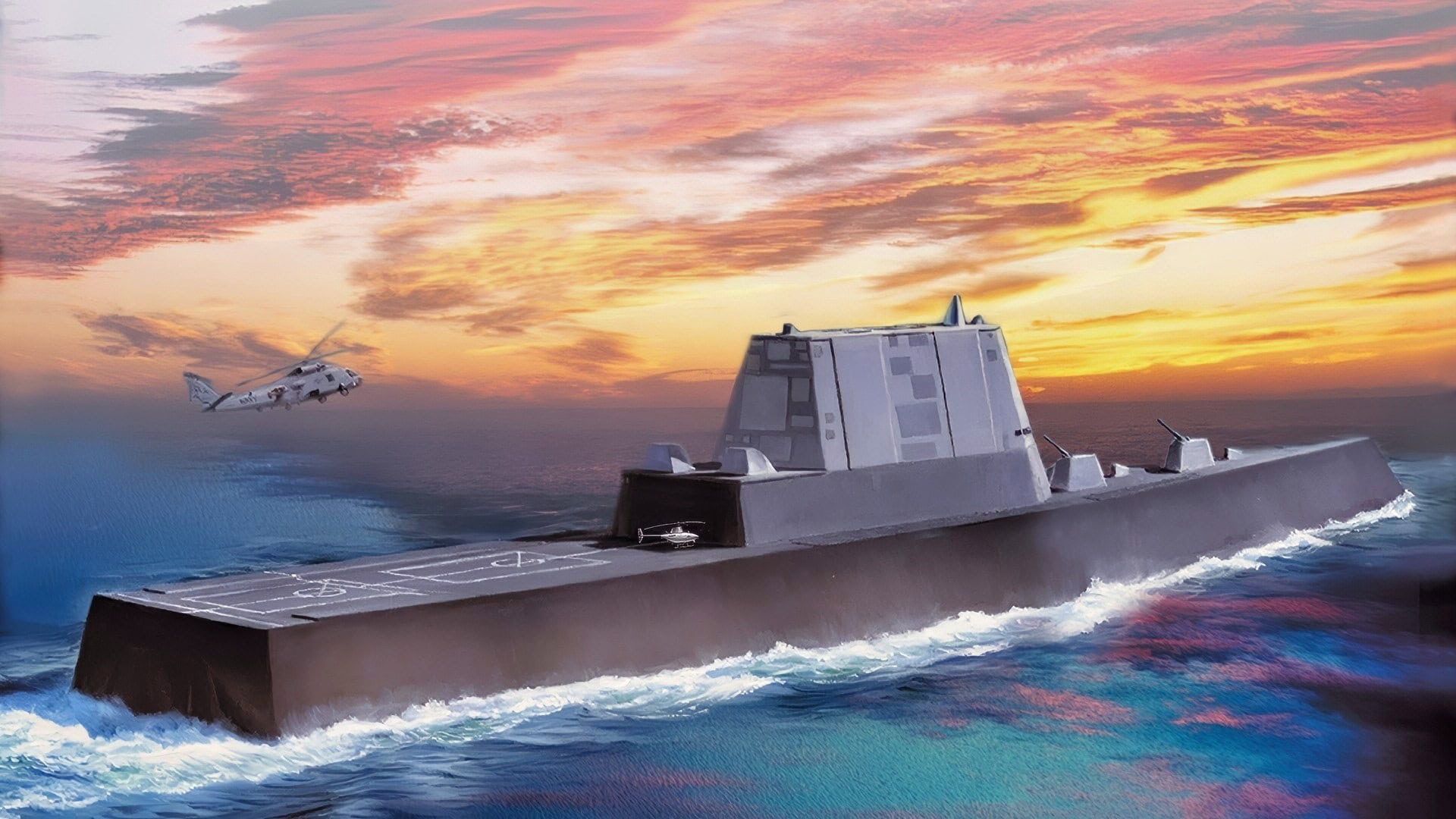
Zumwalt-Class Artist Rendering. Image Credit: Creative Commons.
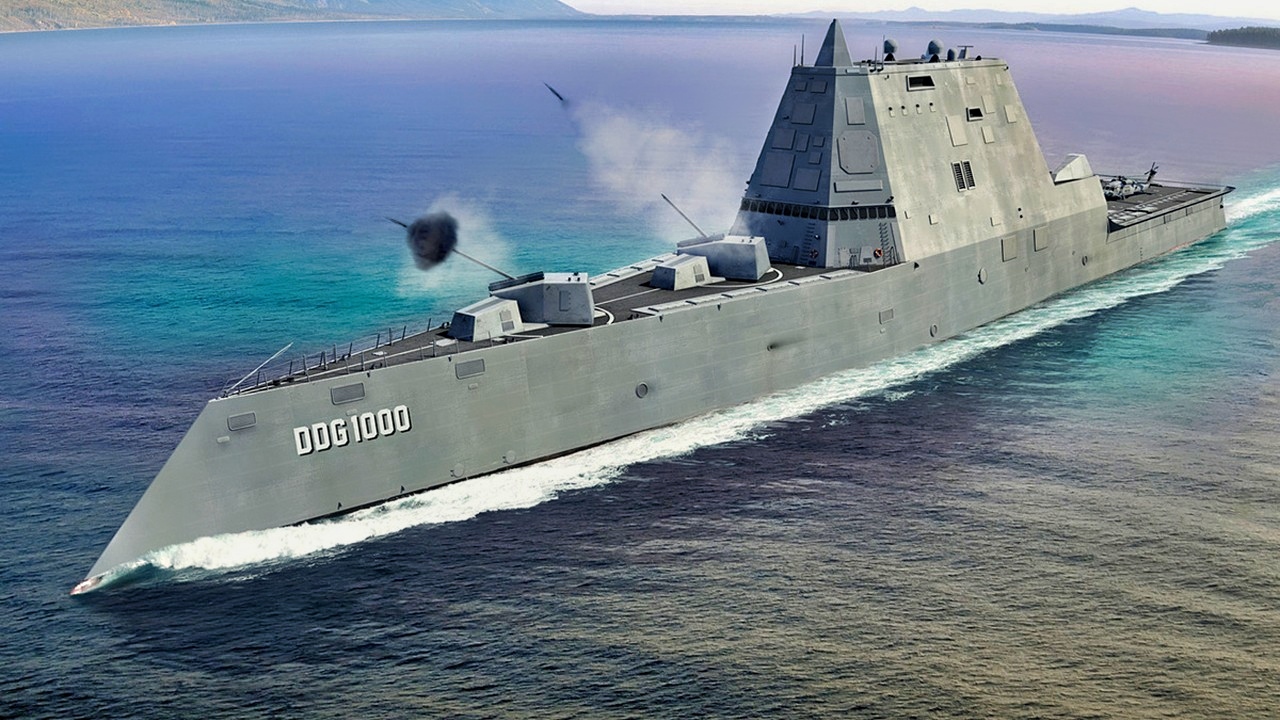
Zumwalt-Class U.S. Navy Destroyer. Image Credit: Creative Commons.
Zumwalt, then, means there will be a capability – but only on three ships. FLASH suggests the Navy is looking to establish a second path that could eventually extend to a much larger number of vessels.
Why Mk 41 Matters So Much
The Mark 41 Vertical Launch System is one of the most important pieces of U.S. naval hardware. It is the standard missile battery used across much of the surface fleet, especially Arleigh Burke-class destroyers and Ticonderoga-class cruisers, and is also used by allied navies. Lockheed Martin says the system exists in multiple configurations ranging from eight-cell modules to installations carrying more than 100 cells.
Today, those cells launch weapons such as the Tomahawk, SM-2, SM-3, SM-6, ESSM, and anti-submarine rockets.
A hypersonic weapon compatible with the same architecture would mean the Navy would not need entirely new classes of ships to field advanced strike missiles.
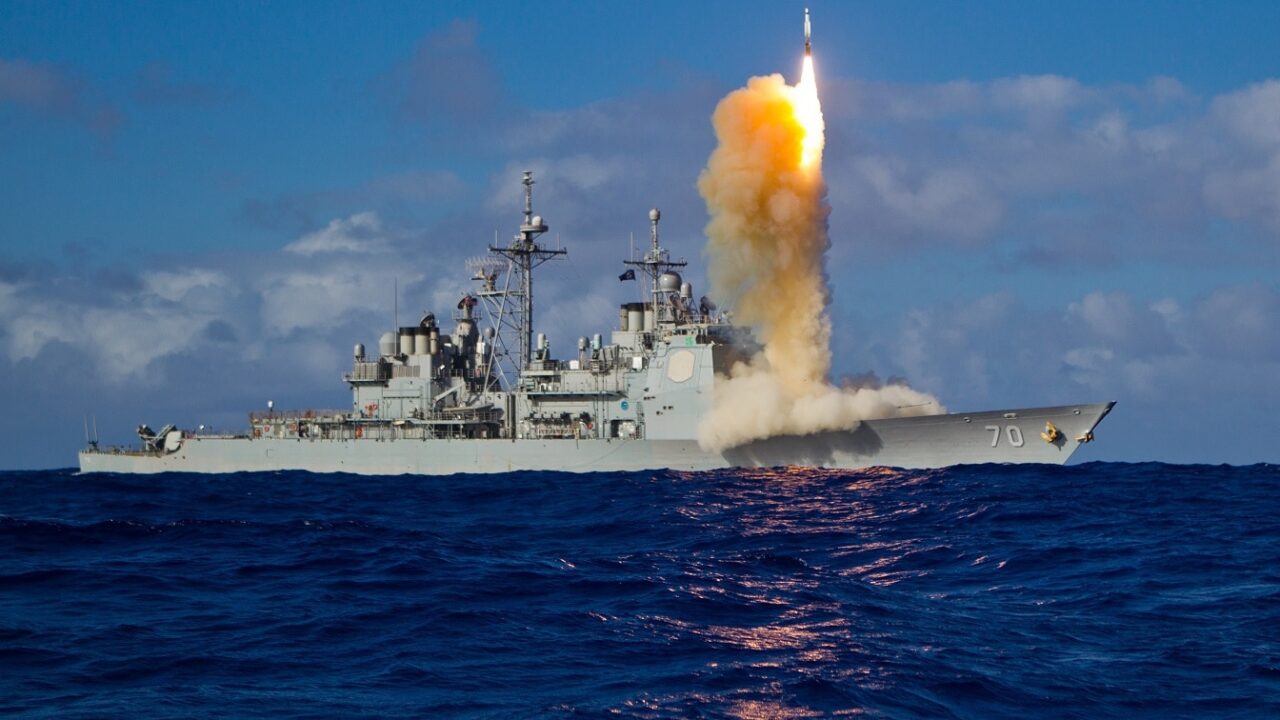
A Standard Missile-3 (SM-3) Block 1B interceptor missile is launched from the guided-missile cruiser USS Lake Erie (CG 70) during a Missile Defense Agency and U.S. Navy test in the mid-Pacific. The SM-3 Block 1B successfully intercepted a target missile that had been launched from the Pacific Missile Range Facility at Barking Sands in Kauai, Hawaii. Lake Erie detected and tracked the target with its on board AN/SPY-1 radar. The event was the third consecutive successful intercept test of the SM-3 Block IB missile. (U.S. Navy photo/Released)
That is strategically significant for several reasons, including the obvious: the Navy would achieve global reach across potentially all of its deployed strike platforms.
The Navy also has many more Burke destroyers than Zumwalt destroyers, which are already deployed globally. If a future FLASH-derived missile reaches production, the U.S. Navy would become significantly more deadly – and that could be achieved without converting every single destroyer to carry the weapons.
Submarines Could Be Upgraded, Too
According to the Navy, FLASH will also assess compatibility with the Virginia Payload Module, suggesting the service wants the weapon usable both underwater and at sea.
Block V Virginia-class submarines equipped with VPM are central to the Navy’s future strike plans, adding four large-diameter payload tubes capable of carrying seven Tomahawk missiles each.
The submarines are particularly important because the Navy is retiring its four converted Ohio-class guided missile submarines (SSGNs) this decade, removing a major source of Tomahawk capacity. VPM-equipped Virginias are part of the retirement plan – and a hypersonic weapon compatible with that architecture would increase their relevance and lessen the blow caused by the Ohio-class submarines with their unusually large launch capacity.
FLASH appears to point to a future in which the same family of strike weapons could be used on everything from destroyers to submarines.
Naval Warfare Is Changing
FLASH suggests the Navy is adjusting its approach to missile warfare. A small number of ultra-expensive weapons may look impressive, but they are less useful if only a few ships can carry them. In a major war, numbers are necessary – but there must also be availability and quick deployment.
The Office of Naval Research says FLASH will rely on more mature, proven technologies where possible, rather than depend entirely on experimental systems. In simple terms, the Navy seems to want a weapon that can be developed faster, produced more easily, and introduced with fewer delays than some earlier hypersonic efforts.

Hypersonic Missiles fired from B-52. Image Credit: Creative Commons.
That is particularly relevant in the Pacific, where U.S. forces would need firepower spread across many ships operating over vast distances.
A missile that fits launchers already installed on much of the fleet would be far more useful than one limited to a handful of specialized vessels.
It would also improve overall deterrence and widen the capability gap between the U.S. Navy and rapidly advancing adversarial forces.
About the Author: Jack Buckby
Jack Buckby is a British researcher and analyst specializing in defense and national security, based in New York. His work focuses on military capability, procurement, and strategic competition, producing and editing analysis for policy and defense audiences. He brings extensive editorial experience, with a career output spanning over 1,000 articles at 19FortyFive and National Security Journal, and has previously authored books and papers on extremism and deradicalization.