
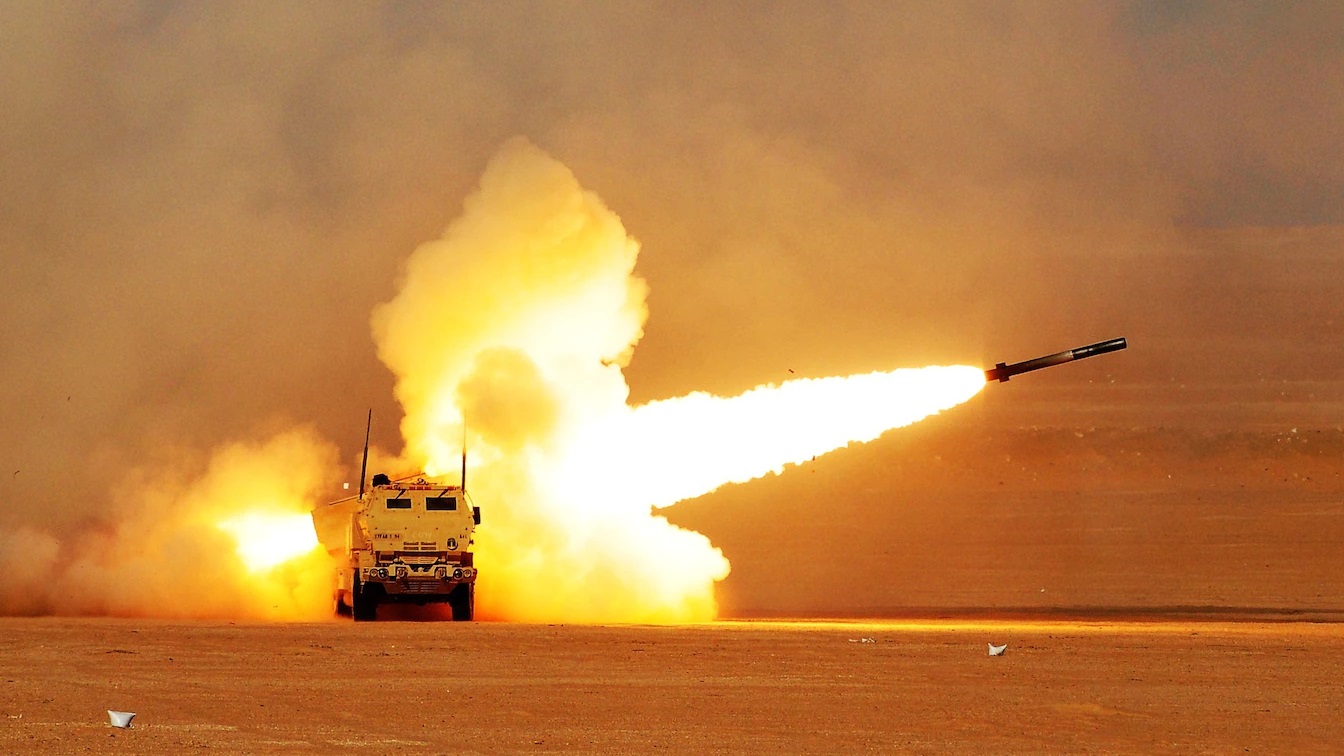
Key Points and Summary – Washington has parked serious naval and air power off Venezuela, seized ships, and signaled that Nicolás Maduro’s “days are numbered.”
-But turning pressure into a full-scale invasion is another matter. A ground campaign against a country the size of Venezuela would require at least 50,000 U.S. troops, staging bases regional governments are unlikely to provide, and a costly occupation President Trump says he wants to avoid.
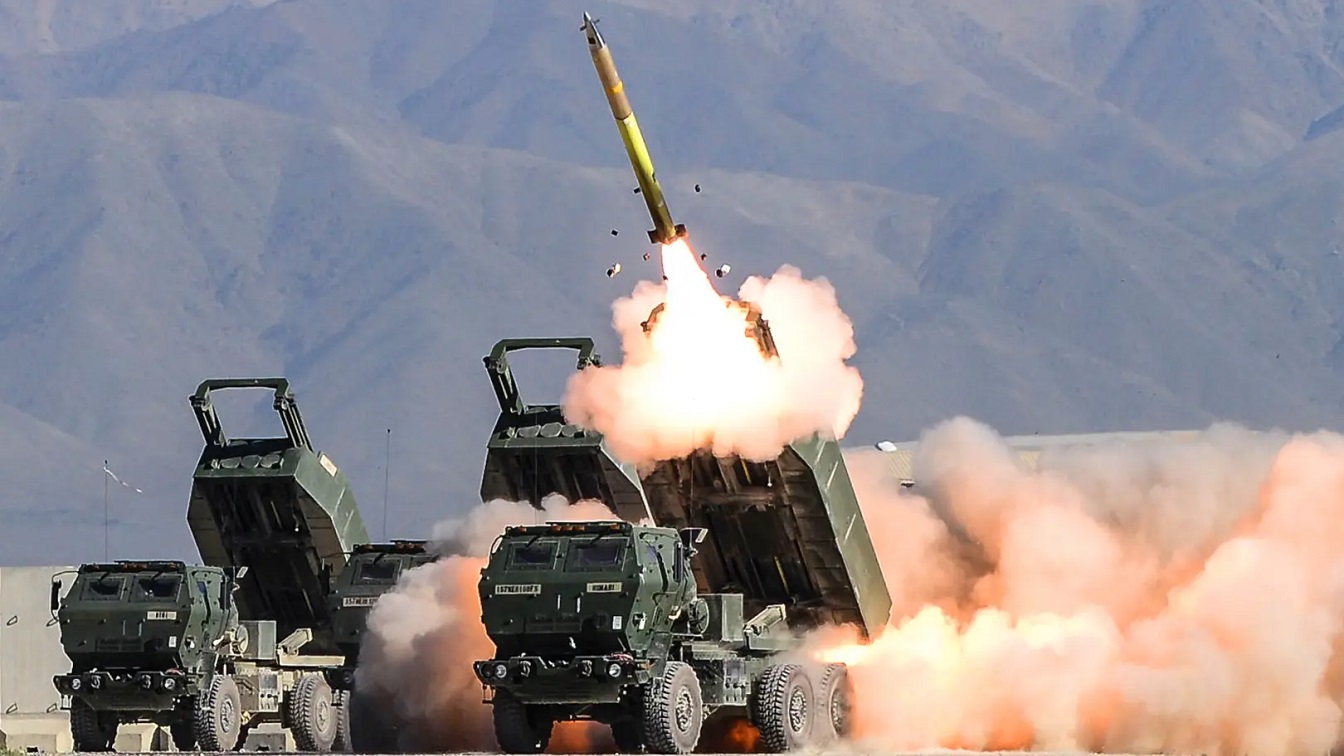
HIMARS Training: Credit – Wisconsin National Guard / Sgt. Sean Huolihan. Wisconsin National Guard / Sgt. Sean Huolihan
-Caracas fields a large but poorly trained force backed by one of the densest Russian-built air defense networks in the hemisphere.
-That reality points to a more likely option: a Desert Storm–style air and missile campaign aimed at regime pressure, not nation-building.
Inside the Pentagon Math on a U.S. Attack Against Venezuela
The United States has placed an inordinate amount of naval power in the Caribbean off the coast of Venezuela. The US Navy has been targeting what it believes to be narco boats off the coast and recently seized an oil tanker.
While President Trump, in his usual over-the-top style, said that he hasn’t ruled out a ground invasion of Venezuela, that prospect is extremely unlikely.
Trump did, however, state that Maduro’s “days are numbered” during a Monday podcast with Politico. He added that the US could be targeting narco traffickers in both Mexico and Colombia.
But while the Navy’s power projection off Venezuela’s coast is impressive, it isn’t manned nearly enough for a ground incursion into Venezuela. If regime change is what Washington is after, a ground invasion could potentially have the opposite effect.
Trump himself has stated that he doesn’t want to get involved in long, expensive, nation-building forays like the US was drawn into in Afghanistan and Iraq, which turned out badly. Trump has frequently stated that those are not in the US’s interests.
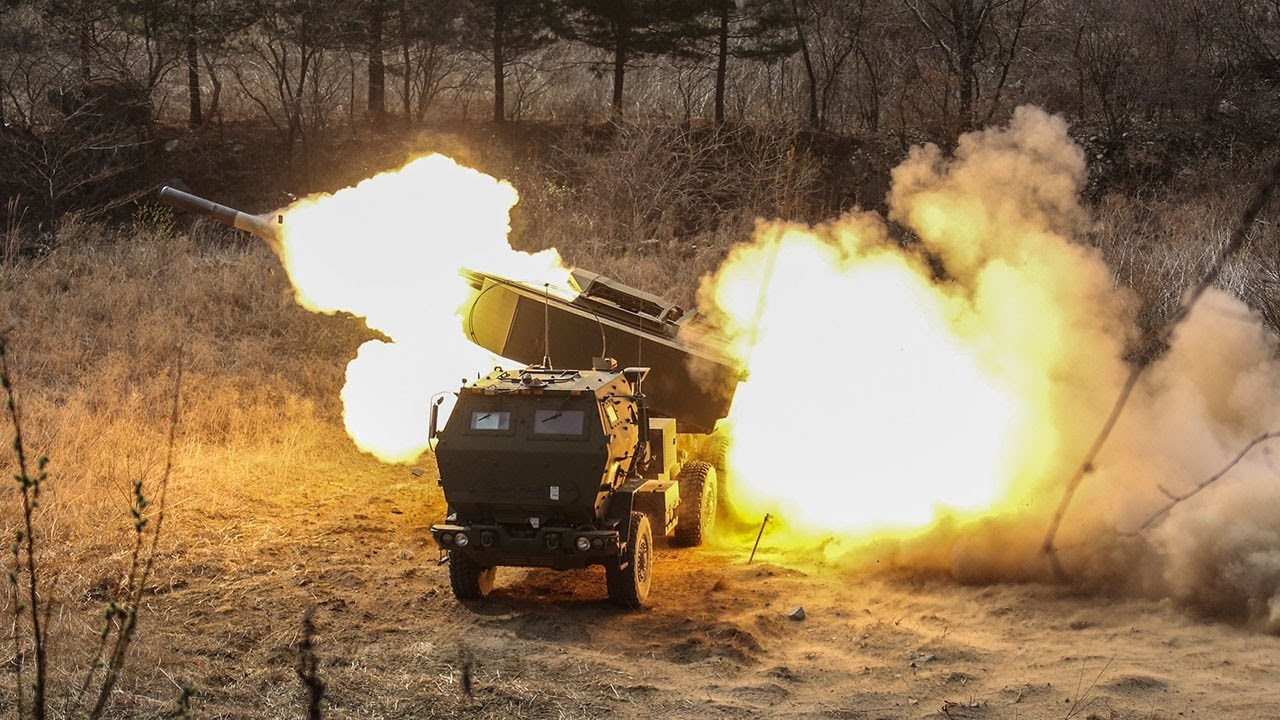
HIMARS attack. Image Credit: U.S. Military.
What would an invasion take? We’ll take a look at what it would entail, but the short answer is that it would take far more troops than are currently in the region.
Opposition Supports Trump
Maduro is not a popular figure in his country, and it is generally acknowledged that he stole the latest election last year. This month, opposition leader María Corina Machado had to sneak out of the country to Norway to accept a Nobel Peace Prize. She supports Trump’s efforts to destabilize Maduro’s hold on power.
“I believe that President Trump’s actions have been decisive to reach the point where we are right now, in which the regime is weaker than ever,” Machado said. “The regime previously thought that they could do anything … Now, they start to understand that this is serious, and the world is really watching.”
Asked whether she would support US military intervention in Venezuela, Machado said the country had already been “invaded” by Russian and Iranian agents, terrorist groups, and Colombian drug cartels that operate with impunity and fund Maduro’s regime.
The US Would Have To Mass Ground Troops First
The US would require a massive influx of ground troops to invade a country the size of Venezuela, with a minimum of 50,000+, which would be a complex, costly operation.
This would require moving thousands of troops to US territories or a friendly nation to prestage an invasion force. The number of Marines in the fleet off the coast of Venezuela is inadequate currently.
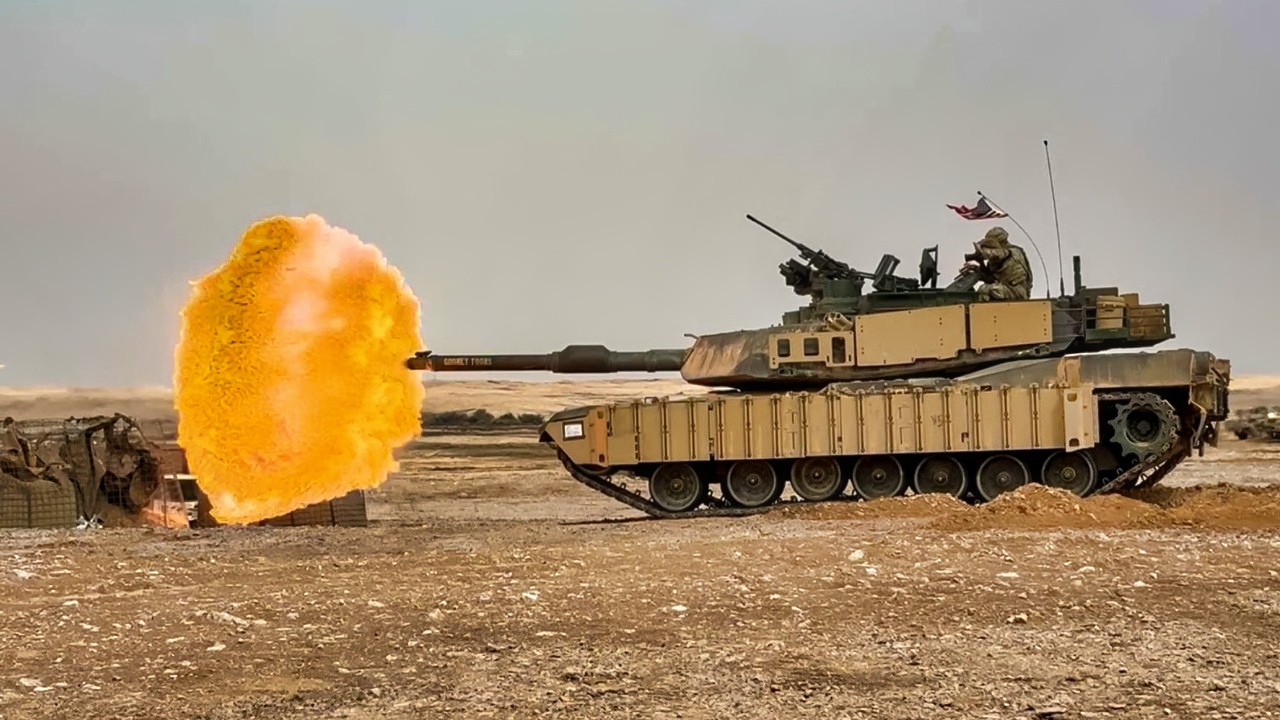
U.S. Army Soldiers assigned to Troop G, 2nd Squadron, 278th Armored Cavalry Regiment, Task Force Reaper fire a M1A2 Abrams tank within the U.S. Central Command’s area of responsibility during the Friendship 25 exercise, Feb. 12, 2025. Exercises like Friendship 25 develop U.S. and Royal Saudi Land Forces service members and enable increased military capacity to address threats to regional security. (U.S. Army Photo by U.S. Army Photo by Maj. Matthew Madden)
Colombia’s leftist president is very unlikely to allow such a move, and the other Latin American nations are not inclined to allow this either, despite Maduro losing allies in the region.
An Air War Would Take Time
Venezuela has more than 100,000 military and paramilitary personnel. Their training is poor, geared more toward internal civil suppression than to conventional warfare. The highly touted civilian militia is basically cannon fodder with little to no practical experience.
Due to economic collapse, collective, cohesive training and maintenance are nonexistent. Morale and pay (about $100 a month) are low. They train for asymmetric, guerrilla warfare resistance and use aging Russian military gear.
Many of their vehicles, aircraft, and other systems are down due to inadequate maintenance.
However, the nation has one of the densest, layered integrated air defense networks in the hemisphere. It features long-range S-300VM, medium-range Buk, and short-range Pechora systems, complemented by advanced Pantsir-S1 and numerous Igla-S MANPADS, creating a significant, albeit potentially maintenance-challenged, regional capability.
The air defenses are designed to deter incursions, with their core strengths lying in Russian hardware and strategic deterrence against smaller threats, despite questions about readiness and integration.
On paper, the 24 Su-30M Flanker fighters are arguably the best combat fighters in Latin America. But most of them are grounded due to economic woes. At least two have been lost due to crashes.
With no AWACS capability, the remaining Flankers, with numbers far below the 22 aircraft left, would be little threat to American airpower.
But a dedicated air war would take time, as all American airstrikes would have to come from carriers or involve long-haul flights from the US. Those factors would slow the suppression of Venezuela’s air defenses.
The B-2 bombers and F-35s currently deployed to Puerto Rico would be the weapons of choice, along with hundreds of Tomahawk cruise missiles that would seek out mobile missile launchers.
An Air and Missile Campaign Seems More Likely
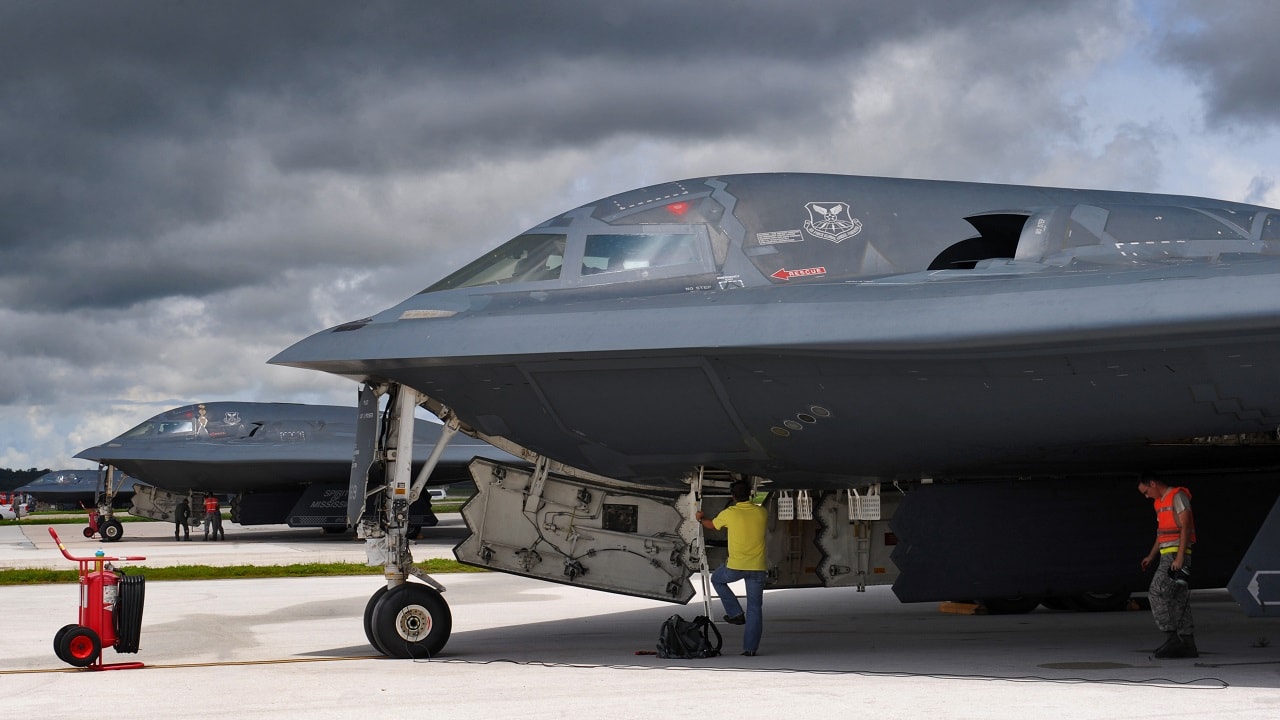
U.S. Air Force B-2 Spirit aircraft undergo pre-flight inspections prior to take off at Andersen Air Force Base, Guam, Aug. 11, 2016. More than 200 Airmen and three B-2s deployed from Whiteman Air Force Base, Mo., to conduct local sorties and regional training and integrate with regional allies in support of Bomber Assurance and Deterrence missions. (U.S. Air Force photo by Tech. Sgt. Miguel Lara III)
As the above discussion shows, on paper, the Venezuelan air defenses are dense, but their command and control would be severely tested.
A ground invasion, again, seems quite unlikely, because toppling Maduro won’t be hard. Still, the follow-on mission of trying to police a society rampant with collapsed social services would be the exact thing Trump campaigned against.
War on the Rocks wrote that, “regime loyalists, criminal syndicates, and colectivos — pro-government armed groups that police neighborhoods and terrorize dissidents — all compete for turf. Colombia’s National Liberation Army and dissident Revolutionary Armed Forces of Colombia factions operate openly from Venezuelan safe havens, running mining and smuggling routes, recruiting, and staging cross-border attacks. They would not go quietly.”
But if the US is insistent on regime change (and that appears to be the case), then they’ll try to neutralize Caracas’ air defenses, first with long-range missiles targeting air defense systems.
That would be followed by airstrikes against key targets using B-2 bombers and F-35s. The US would follow the playbook from Desert Storm and try to convince the Venezuelan military not to resist, with the stipulation that US airstrikes wouldn’t target them.
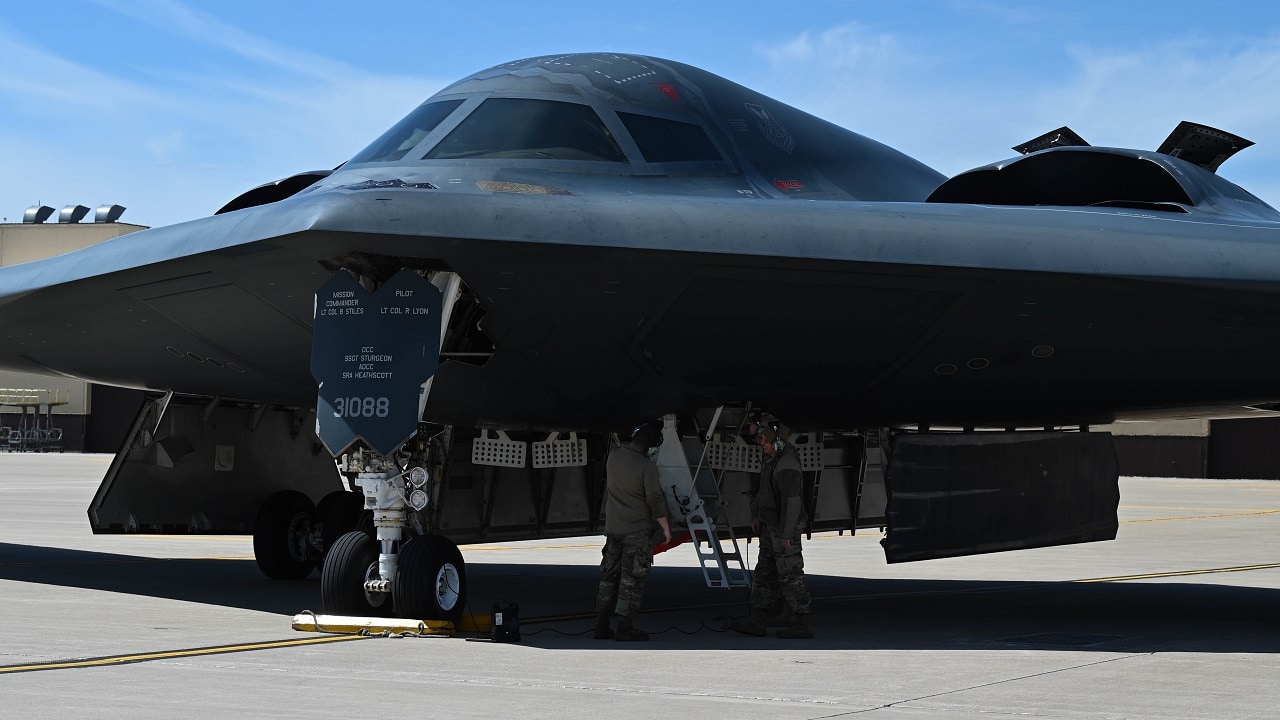
Crew chiefs assigned to the 509th Aircraft Maintenance Squadron prep a B-2 Spirit stealth bomber for a hot-pit refuel, at Whiteman Air Force Base, Missouri, April 4, 2022. Exercise Agile Tiger promotes resilience, innovation, competitiveness and process improvement, all talents required to address today’s complex challenges. (U.S Air Force Photo by Senior Airman Christina Carter)
The population, which was firmly behind the opposition in the election last year, would not support Maduro unless a ground invasion were to take place. Public uprisings would erupt as the country has suffered a tremendous socioeconomic collapse under Maduro’s regime.
The opposition will face a tough struggle of trying to right decades of corruption and poor leadership. That will require massive amounts of US financial support.
About the Author: Steve Balestrieri
Steve Balestrieri is a National Security Columnist. He served as a US Army Special Forces NCO and Warrant Officer. In addition to writing on defense, he covers the NFL for PatsFans.com and is a member of the Pro Football Writers of America (PFWA). His work was regularly featured in many military publications.