
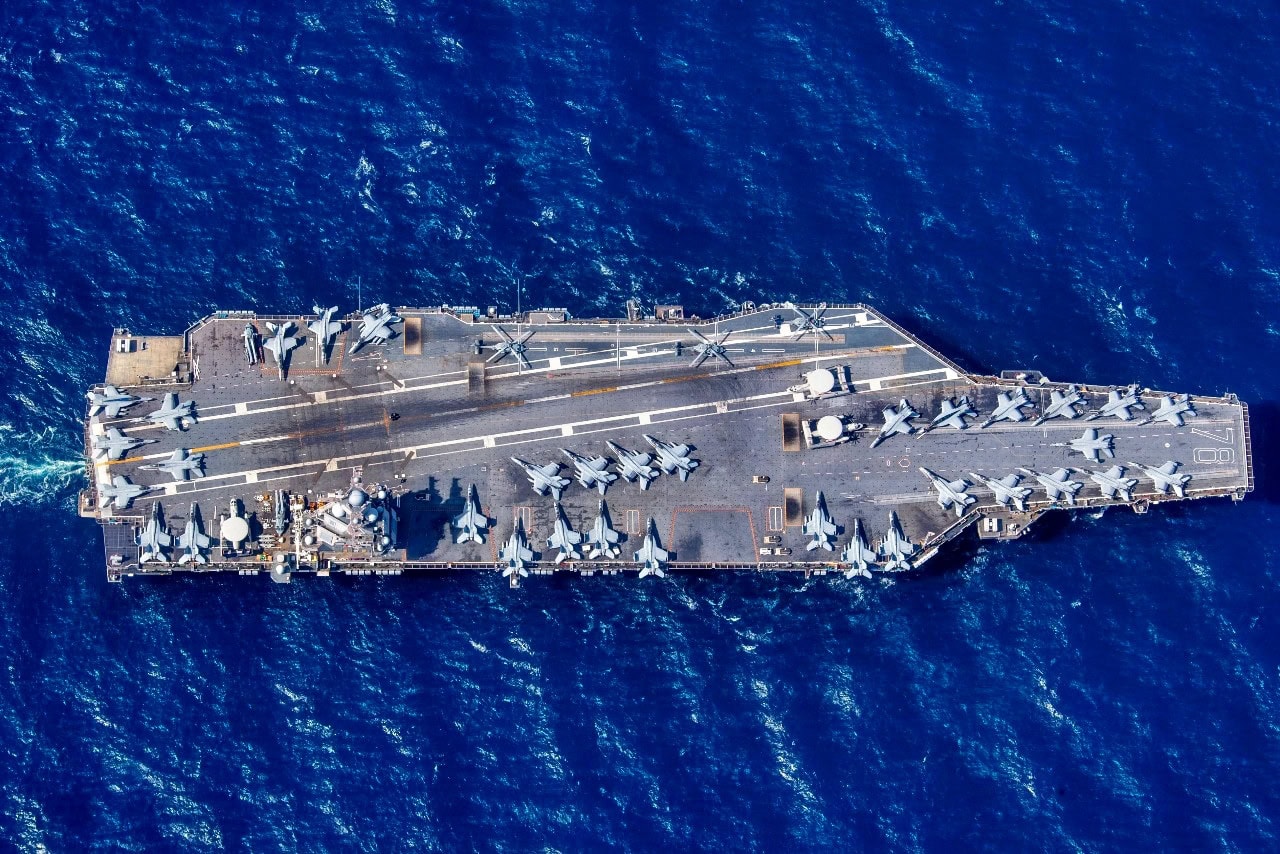
Synopsis: The piece argues that a U.S. military move against Venezuela would be an unnecessary gamble, even if it might unfold more smoothly than the 2003 Iraq war.
-The author contends Washington’s strategic priorities lie elsewhere, but notes the Trump administration’s focus on Western Hemisphere dominance and drug-related domestic politics could drive escalation.
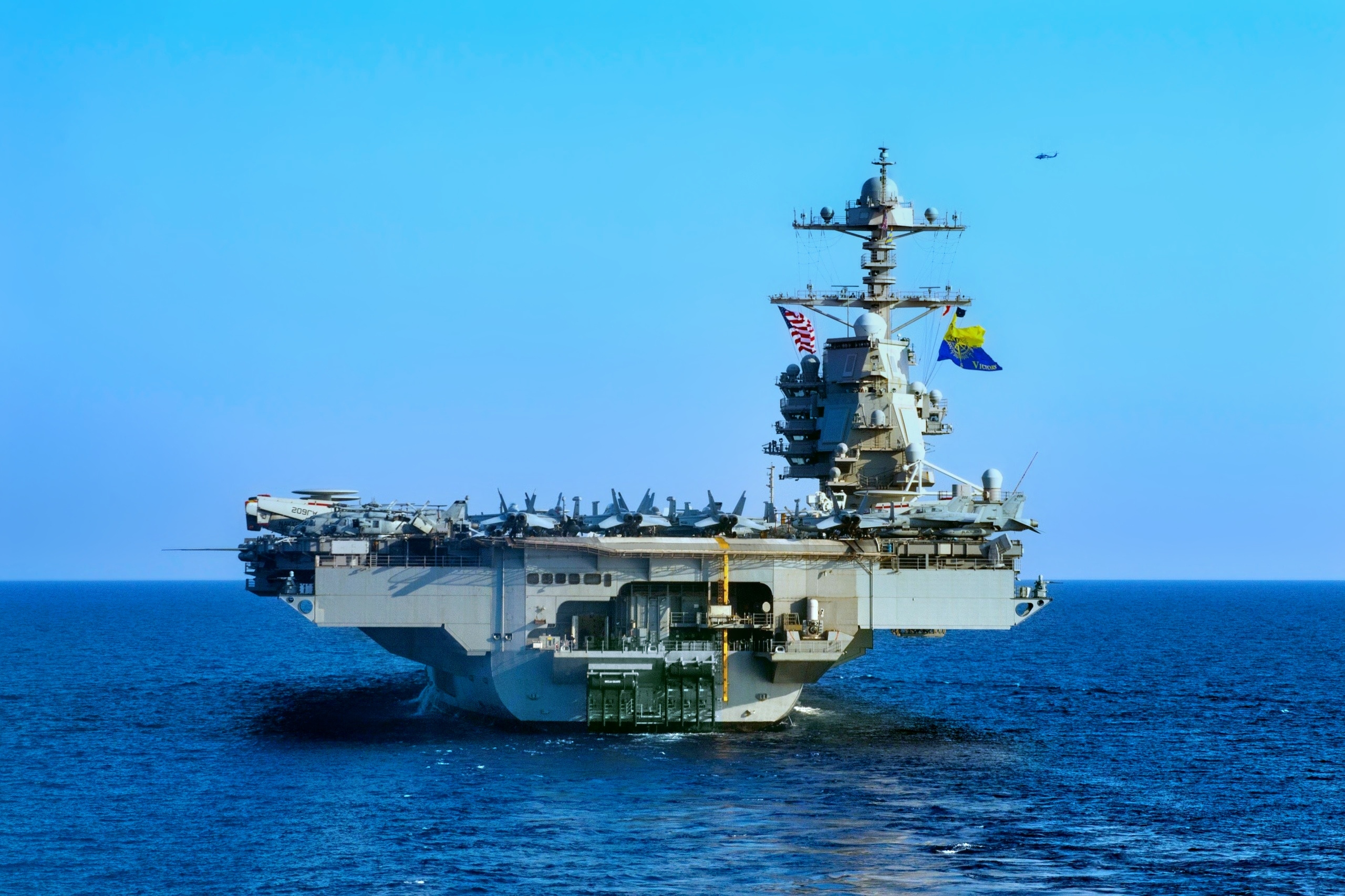
Ford-Class Aircraft Carrier. Image Credit: Creative Commons.
-Still, three factors could reduce “Iraq-like” blowback: Venezuela’s earlier democratic tradition, a largely democratic and broadly U.S.-friendly regional neighborhood that offers fewer insurgent sanctuaries, and a recognizable opposition figure positioned to assume authority after regime change.
Venezuela Does Not Have to Be Iraq Redux
It seems increasingly apparent that the administration of the current American president, Donald Trump, will move militarily against Venezuela. This is not worth the risk. Beyond its sheer proximity to the US, Latin America is only of middling importance to US security.
The stability of East Asia, Eastern Europe, and the Persian Gulf is all far more valuable.
But the new Trump administration’s national security strategy prioritizes US hegemony in the Western Hemisphere. And the problem of substance abuse—and drug production in Latin America—is a significant issue within Trump’s domestic coalition.
This has been the—highly questionable—rationale for the administration’s attacks on alleged drug-running boats out of Venezuela.
If Trump does take direct military action, the possibility of a quagmire is genuine. The US has a troubled record of fighting in fragmented, chaotic third-world environments, like Vietnam or Afghanistan. Shadows of the 2003 Iraq War and ensuing insurgency will hang over any US ground action in a failed state like Venezuela.
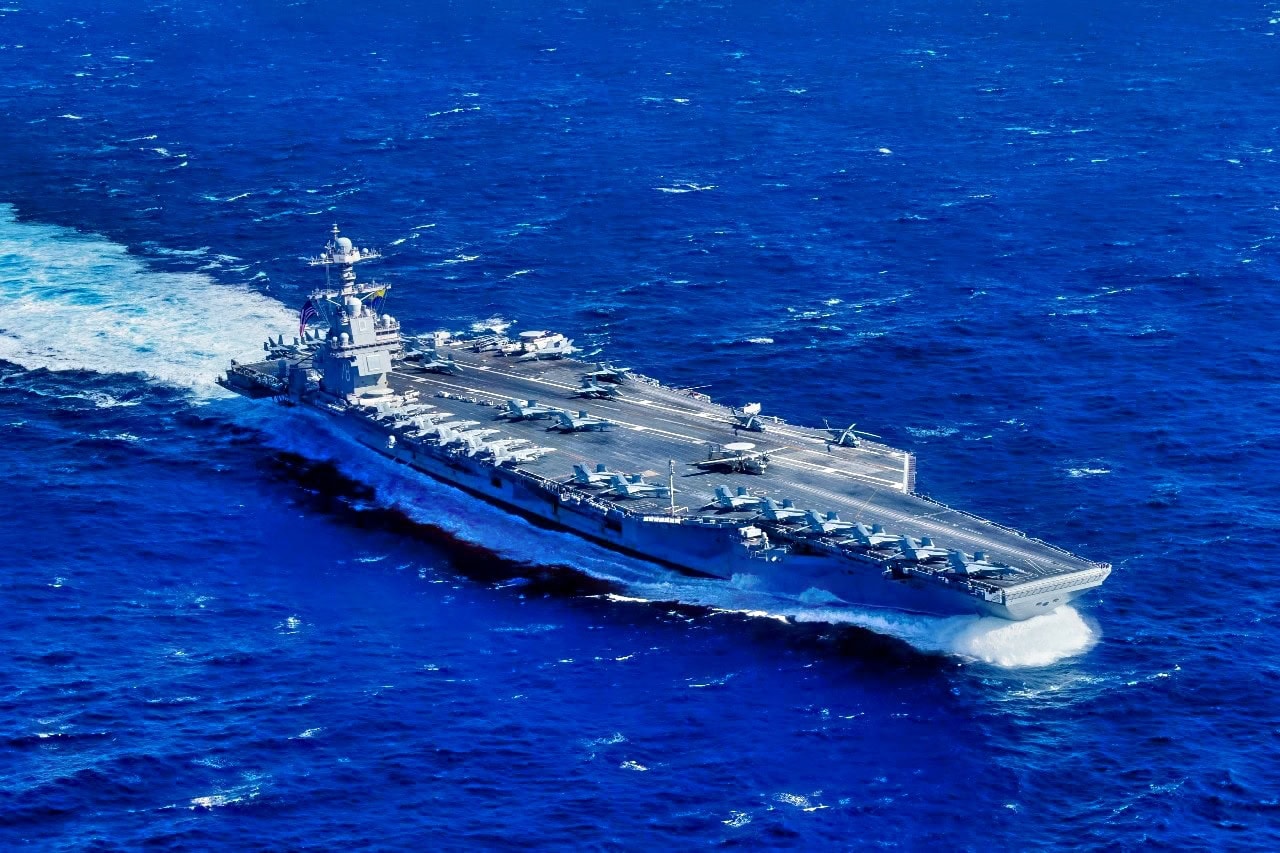
The world’s largest aircraft carrier, USS Gerald R. Ford (CVN 78), sails in formation with the Arleigh Burke-class guided missile destroyers USS Winston Churchill (DDG 81), USS Mitscher (DDG 57), USS Mahan (DDG 72), USS Bainbridge (DDG 96), and USS Forrest Sherman (DDG 98) in the Atlantic Ocean, Nov. 12, 2024. The Gerald R. Ford Carrier Strike Group is underway in the Atlantic Ocean completing Group Sail. Group Sail is the first at-sea integrated phase training event during a routine deployment training cycle. It is designed to challenge the Gerald R. Ford CSG’s ability to use the capabilities of the USS Gerald R. Ford (CVN 78), USS Winston S. Churchill (DDG 81), Carrier Air Wing (CVW) 8, Destroyer Squadron (DESRON) 2, and embarked Information Warfare team as a cohesive Strike Group to meet Navy and Joint Warfighting requirements that increases warfighting capability and tactical proficiency across all domains. (U.S. Navy photo by Mass Communication Specialist 2nd Class Maxwell Orlosky)
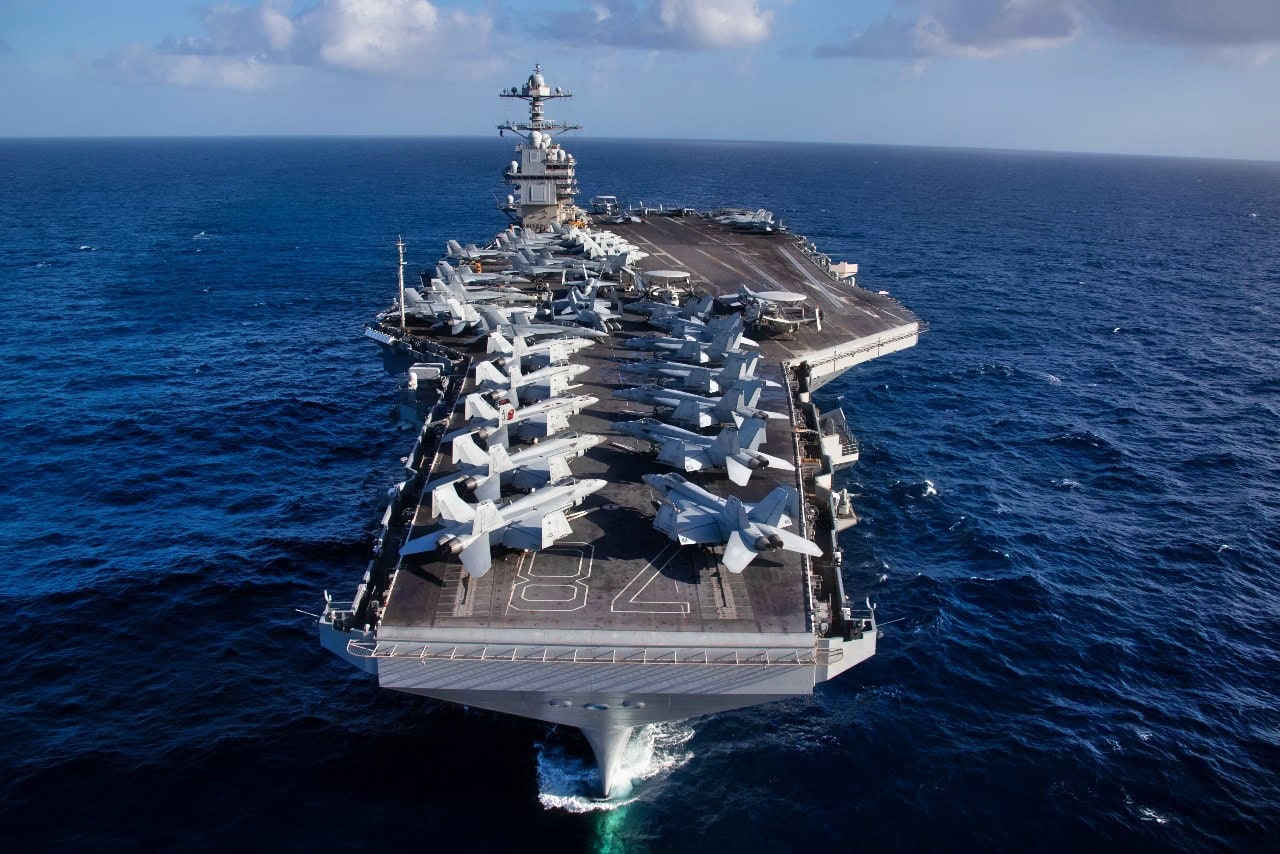
The world’s largest aircraft carrier USS Gerald R. Ford (CVN 78), steams in the Mediterranean Sea, Dec. 24, 2023. The Gerald R. Ford Carrier Strike Group is currently operating in the Mediterranean Sea. The U.S. maintains forward-deployed, ready, and postured forces to deter aggression and support security and stability around the world. (U.S. Navy photo by Mass Communication Specialist 2nd Class Jacob Mattingly)
A Venezuelan war is an unnecessary risk, but it should nevertheless go more smoothly than Iraq for at least three reasons:
Venezuela Has a Legacy of Democratic Institutions; Iraq did Not
One of America’s most obvious problems in Iraq was the lack of any democratic experience by the country’s major factions – Sunni, Shia, and Kurd. Saddam Hussein governed as an authoritarian, as had his predecessors.
Hussein notoriously promoted his Sunni co-religionists against the Shia majority, and they unsurprisingly sought payback on assuming power. Pre-war politics in Iraq were harsh and unbound, and post-war Iraq has struggled to overcome that.
Venezuela, by contrast, was a reasonably well-functioning democracy before Hugo Chavez undermined it in the late 1990s. Chávez won an election in 1998 and eroded the country’s democratic institutions to stay in power.
Current Venezuelan President Nicolas Maduro was an ally of Chavez and took over on his death in 2013. He continued the democratic backsliding that Chavez started. But decades of functioning democracy give Venezuela a significant, post-regime change advantage Iraq never had.
Venezuela’s Neighborhood is Reasonably Democratic and Pro-American; Iraq’s was Not
A second American problem in Iraq was an anti-American neighborhood that sympathized with the Iraqi insurgency and did not see the US as liberators. Iran particularly acted as a cross-border haven for various anti-American fighters.
And Sunni extremists around the Gulf traveled to Iraq to fight the Americans with little resistance from their fearful governments.
Maduro’s Venezuela, by contrast, is relatively isolated. Its only close regional partner is Cuba, a socialist backwater with no ability to help Maduro. Venezuela’s neighborhood in South America is fairly democratic and generally pro-American. Maduro is mostly isolated, and his neighbors will likely welcome his departure—even if they do not actively help the US push him out. There should be no safe havens to support an insurgency against the US or a post-Maduro regime.
A Legitimate Opposition Leader is Ready to Govern in Venezuela, which Iraq Lacked
The initial US war against Iraq under Hussein was relatively easy. Hussein’s army had been corroded by years of sanctions and corruption. In just six weeks, it was beaten. US troops are expected to leave the country by the autumn.
It was the unanticipated insurgency that kept the US in-country for years. What the US military calls ‘Phase IV operations‘ was the real problem. The most apparent phase IV issue was the lack of an Iraqi partner to whom governance might be passed. Iraq’s exile community lacked the local relationships needed to guide the country’s various factions. In practice, the US governed Iraq for nearly a decade.
This is far less problematic in Venezuela, where there is a clear opposition leader – María Corina Machado. Machado is, in fact, a Nobel Peace Prize winner for her efforts to resist Maduro and restore democracy to Venezuela.
Her party almost certainly won the 2024 Venezuelan presidential election. The Maduro regime likely faked the election returns. And she has supported Trump’s push to remove Maduro. Should that happen, she is far better prepared to assume legitimate power than any Iraqi exile ever was.
Still Risky
The best trait of Trump’s otherwise contentious governance style is his resistance to foreign adventurism. Trump likes to talk big, but in practice, he is extremely gun-shy. He almost certainly realizes that overseas incursions are a considerable risk to his presidency.
A Venezuelan intrusion would be a massive shift. But the costs and risks are likely much lower than those faced by his predecessors’ involvement in the Middle East.
Author: Dr. Robert Kelly, Pusan National University
Dr. Robert E. Kelly is a professor of international relations in the Department of Political Science and Diplomacy at Pusan National University in South Korea. His research interests focus on Security in Northeast Asia, U.S. foreign policy, and international financial institutions. He has written for outlets including Foreign Affairs, the European Journal of International Relations, and the Economist, and he has spoken on television news services such as the BBC and CCTV. His personal website/blog is here; his Twitter page is here.