
Key Points and Summary – President Donald Trump has announced a “total and complete blockade” of sanctioned oil tankers entering or leaving Venezuela, escalating pressure on Nicolás Maduro by targeting the regime’s main source of hard currency.
-The move follows a recent U.S. seizure of a vessel carrying Venezuelan crude and has already reshaped shipping behavior, with multiple tankers reversing course and others idling offshore as legal and insurance risks spike.
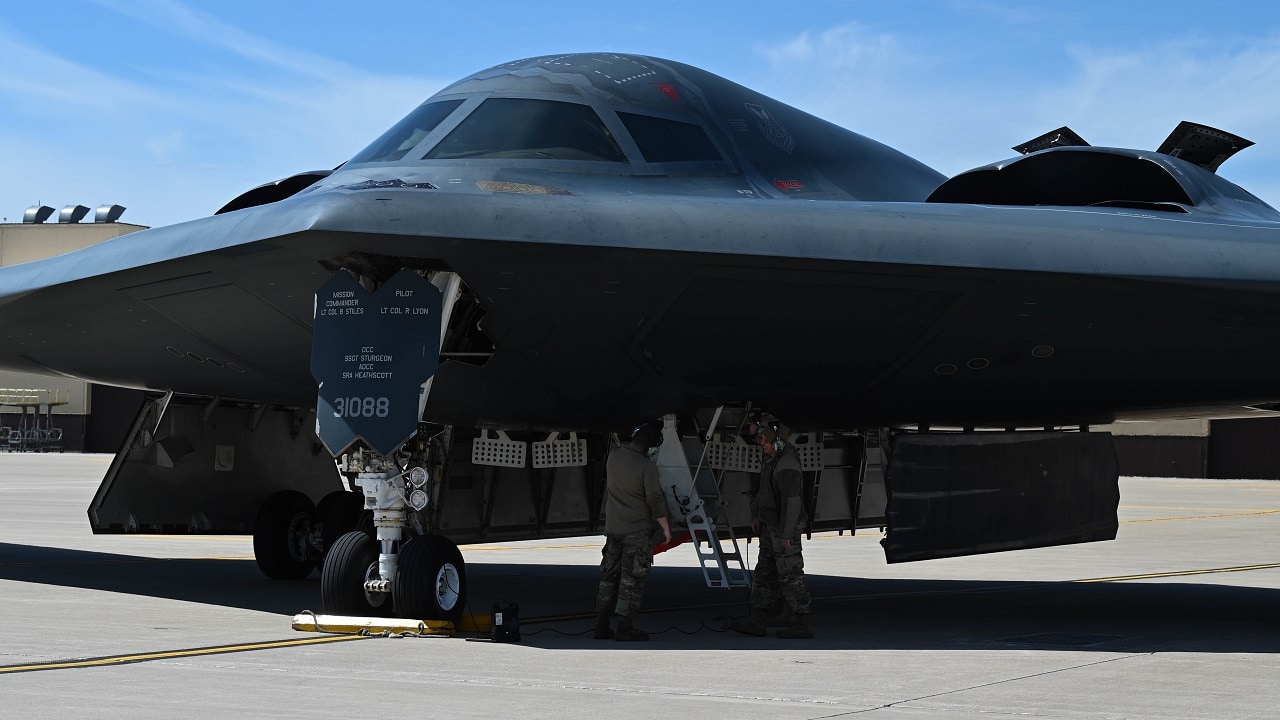
Crew chiefs assigned to the 509th Aircraft Maintenance Squadron prep a B-2 Spirit stealth bomber for a hot-pit refuel, at Whiteman Air Force Base, Missouri, April 4, 2022. Exercise Agile Tiger promotes resilience, innovation, competitiveness and process improvement, all talents required to address today’s complex challenges. (U.S Air Force Photo by Senior Airman Christina Carter)
-Supporters argue the blockade weaponizes U.S. maritime dominance to constrict revenue, reassert control of Caribbean sea lanes, and complicate Russian and Iranian energy links.
-Critics warn of market volatility, legal blowback, and unintended regional fallout.
Trump’s Venezuela Tanker Blockade Explained
The Trump administration’s announcement this week of a blockade on sanctioned oil tankers entering and leaving Venezuela marks the most aggressive escalation yet in Washington’s long-running pressure campaign against the government of President Nicolas Maduro.
While officials have stopped short of declaring a complete maritime embargo, the threat of vessel seizures from President Trump has already started to reshape global shipping patterns, disrupting Venezuelan oil exports and creating new volatility in energy markets.
The move follows the seizure of a huge crude carrier by the U.S. last week.
The vessel was transporting Venezuelan oil and was stopped by an operation carried out by U.S. forces in the Caribbean under a federal court warrant.
That action, widely publicized by the Trump administration, triggered immediate knock-on effects on tanker traffic throughout the region. Vessel-tracking data cited by multiple outlets show that several tankers scheduled to load crude oil in Venezuelan ports had abruptly changed course, while others have remained idled offshore rather than risk interception.
According to shipping monitors, at least four supertankers previously slated to lift Venezuelan crude reversed course in recent days. A separate tanker carrying Russian naphtha – a petroleum derivative – bound for Venezuela also turned back toward Europe. In total, more than 11 million barrels of oil are now reported to be stranded aboard vessels waiting in Venezuelan waters, as shipowners reassess the legal and financial risks of operating in the area.
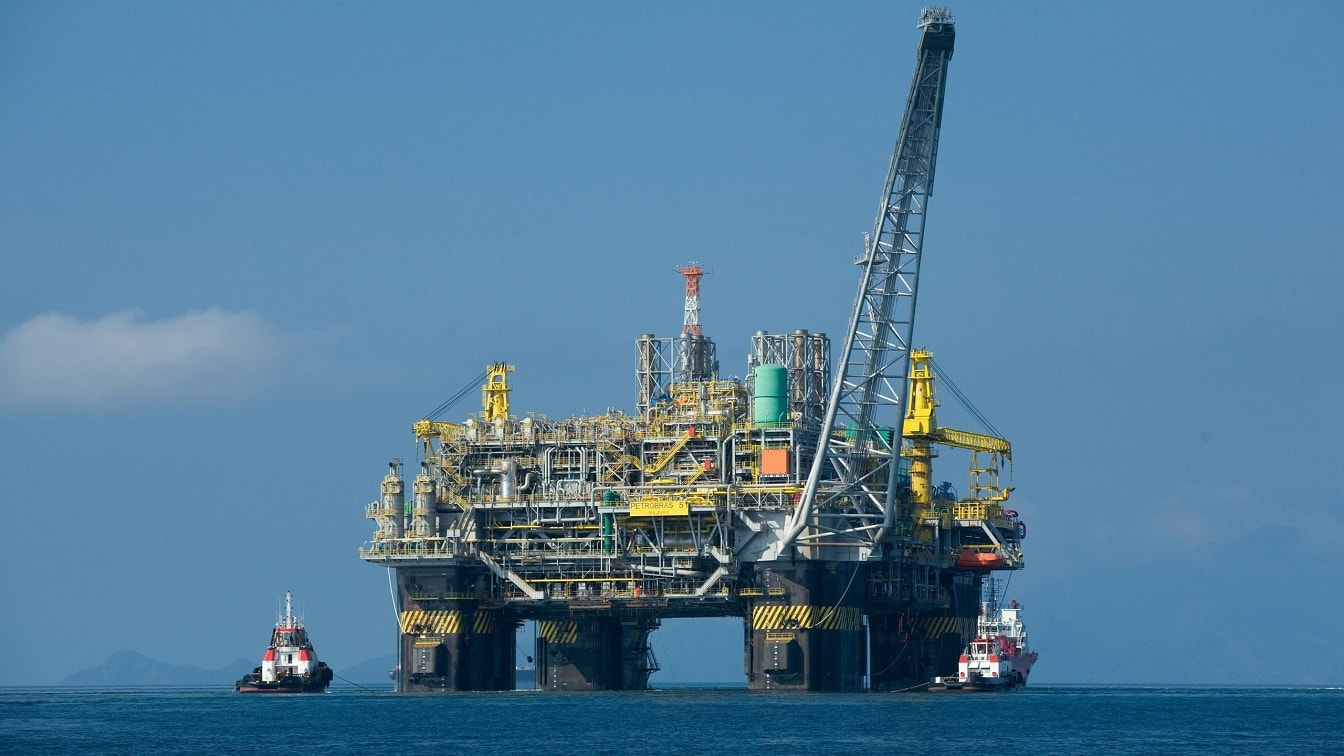
Oil Refinery. Image Credit: Creative Commons.
Why Trump Did It
President Donald Trump announced the “total and complete blockade” of sanctioned oil tankers on Tuesday, December 16. He warned that more U.S. military assets could soon be arriving to support the decision.
The U.S. president called on the leadership of Venezuela to give up oil, land, and assets to the United States – all of which he suggests were stolen from the United States.
“Venezuela is completely surrounded by the largest Armada ever assembled in the History of South America. It will only get bigger, and the shock to them will be like nothing they have ever seen before – Until such time as they return to the United States of America all of the Oil, Land, and other Assets that they previously stole from us,” the president said.
When Trump makes these claims, he is drawing on a combination of territorial, economic, and sanctions-related arguments – some of which are directly related to the United States, and others to Venezuela’s behavior towards other foreign governments.
In terms of land, Trump is referring to Venezuela’s claim over the Essequibo region – a vast and resource-rich area internally recognized as part of Guyana.
The dispute intensified after significant offshore discoveries transformed Guyana into one of the world’s fastest-growing oil producers, prompting Caracas to revive long-dormant sovereignty claims. From Trump’s perspective, Venezuela’s actions amount to an attempted land grab driven by hydrocarbons.
On oil, Trump’s logic is this: oil production controlled by Venezuela’s government represents stolen wealth because he views the Maduro regime – with good reason – to be illegitimate and sustained by coercion.
Oil Jack in the Sunset
Trump has repeatedly criticized U.S. policy decisions that eased sanctions and allowed limited operations by companies such as Chevron, contending that those decisions handed Caracas financial lifelines and weakened American pressure.
To Trump, Venezuela is not only attempting to seize land tied to oil resources abroad, but is also extracting and monetizing oil at home in ways that undermine American interests. In effect, an adversarial government is profiting from assets it believes should be denied to it politically and economically.
Trump is almost certainly also referring to the 2007 expropriation of U.S. oil assets by Venezuelan president Hugo Chavez. At the time, when oil prices were increasing, Chavez’s government nationalized the primary oil operations operated by foreign companies.
Despite overseas businesses investing heavily in the infrastructure that made oil extraction in Venezuela possible, their assets and operations were seized without any compensation.
For the last 20 years, the dispute has been left unresolved – and Trump seems set to do something about it finally.
To that end, the blockade serves multiple, overlapping objectives.
Operationally, it seeks to deter shipowners, insurers, and energy traders from touching Venezuelan crude by dramatically raising the legal and military risk of doing so, thereby constricting the regime’s primary source of hard currency.
Strategically, it reasserts U.S. dominance over Caribbean sea lanes at a moment when Russia and Iran have increasingly treated Venezuela as an energy and logistics partner.
If Trump pulls off whatever he intends to in Venezuela, it could hurt Iran and Russia at a time when both countries are arguably more hostile to the United States than ever before – even as Russia plays ball (to an extent) in ongoing negotiations over Ukraine.
The tanker blockade signals this: the Trump administration is now prepared to weaponize its maritime power and energy markets simultaneously, using control of the Caribbean sea lanes to choke off Venezuela’s revenue and weaken Russian and Iranian influence in the Western Hemisphere while simultaneously positioning the United States to reclaim leverage over the world’s largest proven crude reserves.
About the Author:
Jack Buckby is a British author, counter-extremism researcher, and journalist based in New York who writes frequently for National Security Journal and 19FortyFive. Reporting on the U.K., Europe, and the U.S., he works to analyze and understand left-wing and right-wing radicalization, and reports on Western governments’ approaches to the pressing issues of today. His books and research papers explore these themes and propose pragmatic solutions to our increasingly polarized society. His latest book is The Truth Teller: RFK Jr. and the Case for a Post-Partisan Presidency.