
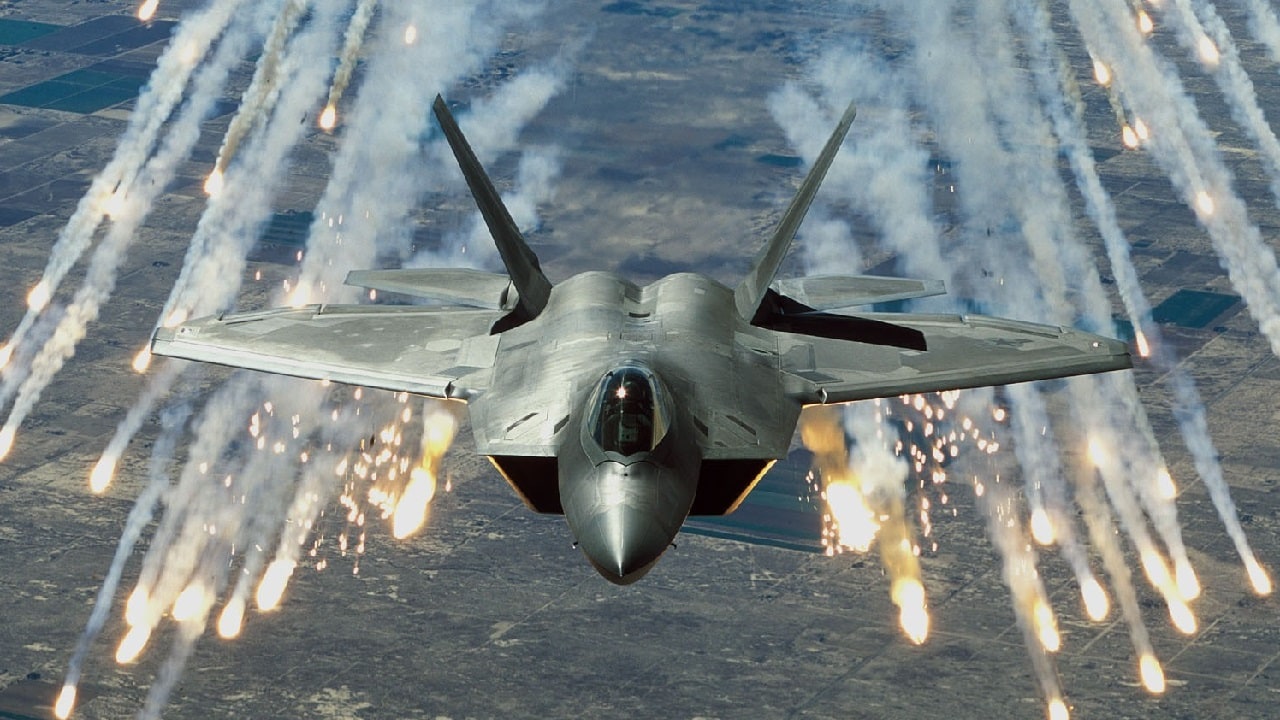
Key Points and Summary – Iran is still seething over Israel’s 12-Day War and America’s Operation Midnight Hammer, and Ayatollah Ali Khamenei has zero interest in resetting relations.
-He’s tying any talks to Washington abandoning Israel and pulling out of the region—nonstarters for Trump.
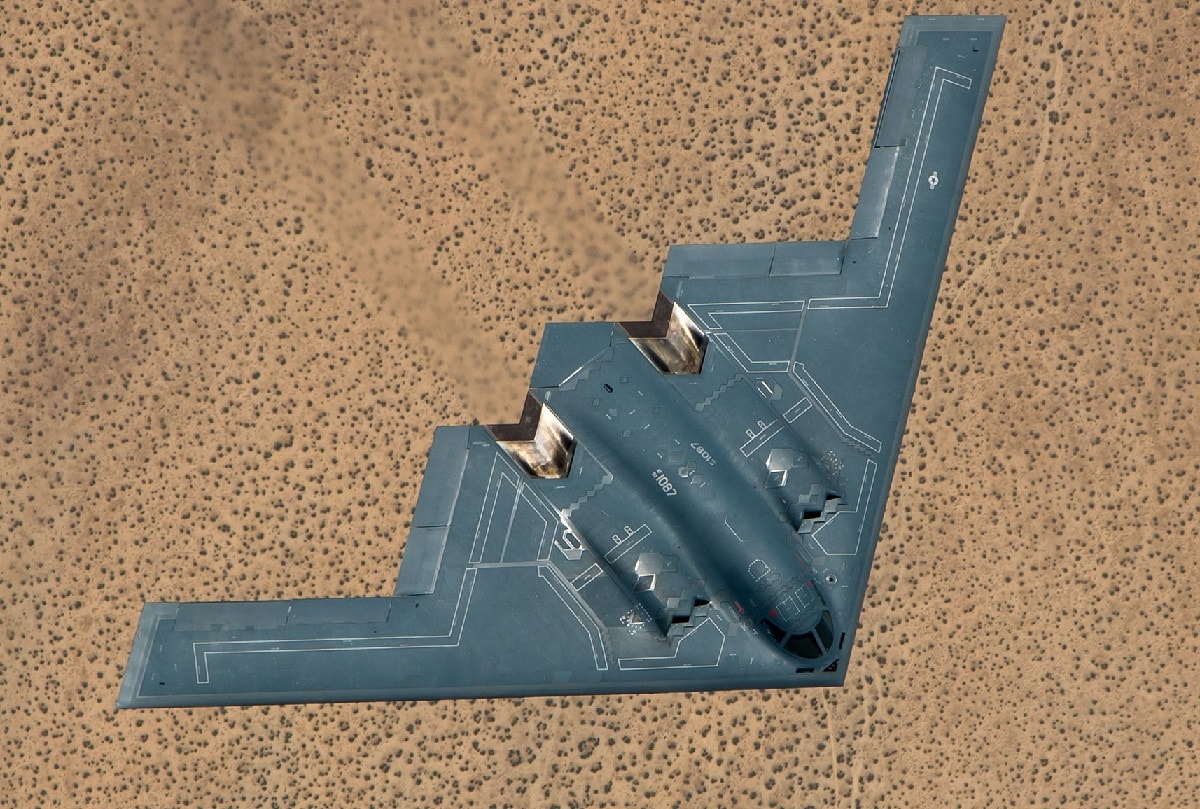
B-2 Spirit. Image Credit: Creative Commons.
-The new National Security Strategy largely sidelines Iran, counting on damaged nuclear sites and regional isolation to contain Tehran while the White House focuses on Russia and Ukraine.
-That leaves U.S. policy stuck on “manage, don’t engage,” with Israel as the wild card and the risk that proxies like the Houthis or Hamas could drag Washington back into confrontation.
Operation Midnight Hammer Didn’t Break Iran’s Will
Iran is still angry about Israel’s 12-Day War and America’s bombing of Iranian nuclear infrastructure during Operation Midnight Hammer. Iran’s Supreme Leader, Ayatollah Ali Khamenei, is as defiant as ever and has no interest in working with the United States and Israel for peace in the region.
This means that Iran is likely to continue pursuing a nuclear device and someday mate it to a missile, even though the Trump administration said the bombing completely destroyed the nuclear sites.
Khamenei is still hung up about US support for Israel and claims he will not engage in diplomacy with the Americans unless they quit supporting the Jewish state. The Iranian supreme leader wants the United States to pull all military personnel out of the Middle East, and he declared that the Americans should not meddle in the region’s affairs, Newsweek noted.
No Talks, No Peace
It would be challenging to execute a US grand strategy in the Middle East without some relations with Iran, even though Tehran is a state sponsor of terror and always wishes to destabilize the region. But that could be the new US doctrine – ignore the Iranians and make them an international pariah.
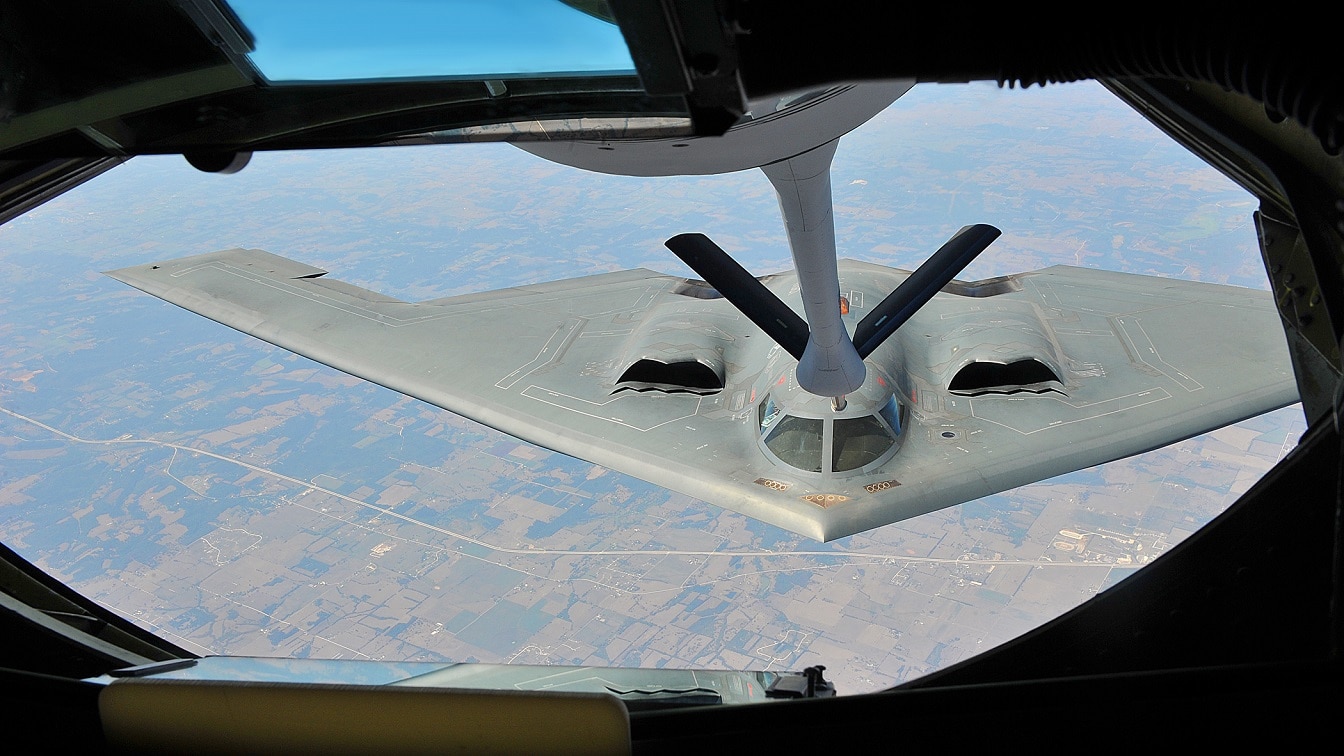
A KC-135 Stratotanker from the 22nd Air Refueling Wing refuels a B-2 Spirit from the 509th Bomb Wing, Aug. 29, 2012. A B-2 Spirit is designed to be very difficult to detect so it can better engage enemies during war efforts. (U.S. Air Force photo/ Airman 1st Class Maurice A. Hodges)
The New National Security Strategy Has Few Specifics on Iran
The White House’s latest National Security Strategy makes only three references to Iran, but it includes the following statement:
“Conflict remains the Middle East’s most troublesome dynamic, but there is today less to this problem than headlines might lead one to believe. Iran—the region’s chief destabilizing force—has been greatly weakened by Israeli actions since October 7, 2023, and President Trump’s June 2025 Operation Midnight Hammer, which significantly degraded Iran’s nuclear program. The Israeli-Palestinian conflict remains thorny, but thanks to the ceasefire and release of hostages President Trump negotiated, progress toward a more permanent peace has been made,” according to the strategy.
Energy Markets Could React to Diplomatic Impasse
Without Iranian influence on Hamas and Gaza, a long-range peace and stability outcome may be difficult to obtain. The diplomatic standoff between the United States and Iran could affect oil prices and the regional balance of power.
Israel would gladly attack Iran again, as would the United States, if both countries had actionable intelligence that Tehran decided to spin up its nuclear weapons program.
US Middle East Envoy Failed to Negotiate an Iranian Deal This Year
President Donald Trump has made a few diplomatic overtures to Iran. Steve Witkoff, Trump’s special envoy to the Middle East, tried to work with Iran on an agreement about Tehran’s nuclear weapons program early this year. Still, since then, Witkoff has been busy negotiating with Ukraine and Russia to end that war. In June, before Operation Midnight Hammer, Witkoff wanted a new “Trump deal” focused on Iran to achieve long-term peace between the two countries.
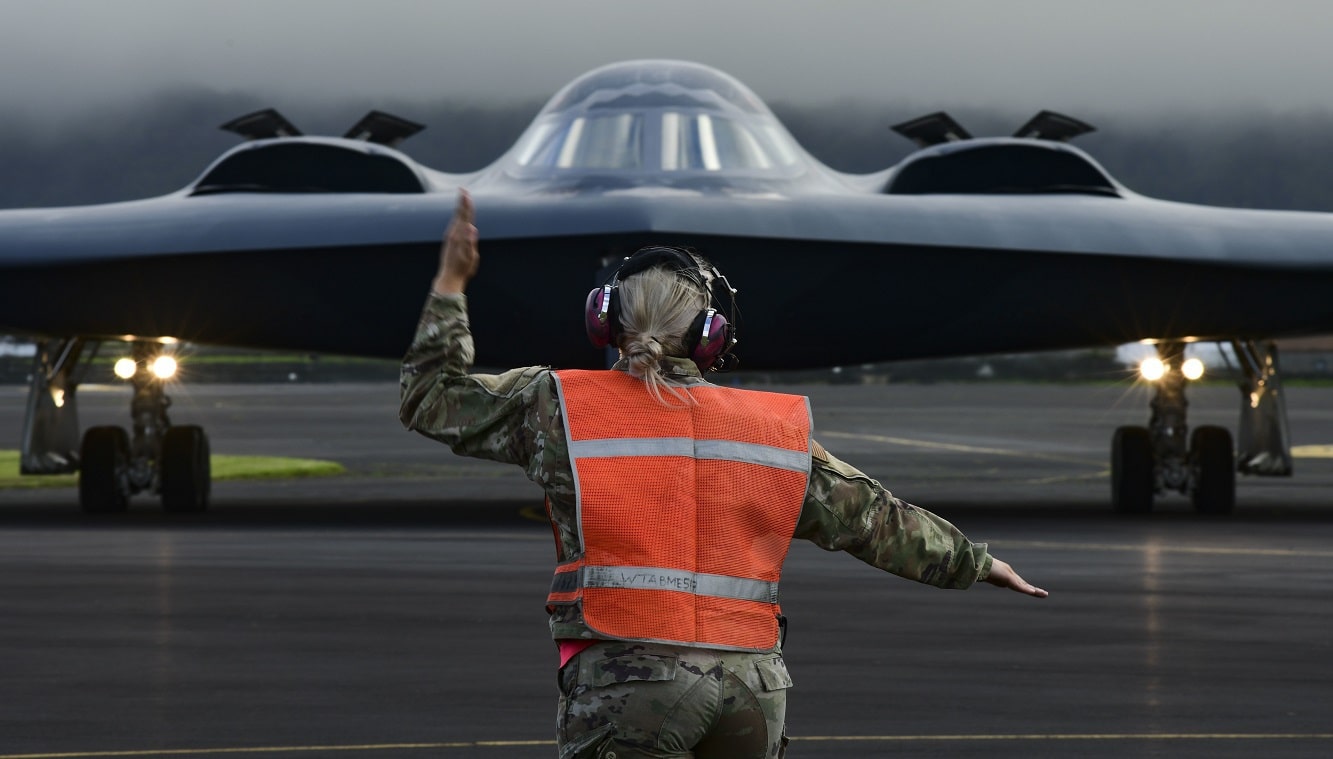
Crew chiefs assigned to the 393rd Expeditionary Bomb Squadron, prep a B-2 Spirit stealth bomber for take off, at Lajes Field, Azores, March 16, 2021. Three B-2s, assigned to Whiteman Air Force Base, Missouri, arrived at Lajes to hot-pit refuel prior to supporting several bomber task force missions in the high north. Strategic bomber missions are conducted periodically to enhance the readiness necessary to respond to challenges, in coordination with partner and allied nations, around the world. Members assigned to U.S. European Command regularly train, fight and live with allies and partners from bases in Europe, to ensure timely and coordinated responses when needed. (U.S. Air Force photo by Tech. Sgt. Heather Salazar)
“We are already talking to each other, not just directly but also through interlocutors. I think that the conversations are promising. ” We are hopeful that we can reach a long-term peace agreement that resurrects Iran,” Witkoff said in a June interview on Fox News’ “The Ingraham Angle” program, according to Reuters.
Iran Loves Celebrating the 1979 Islamic Revolution
Khamenei is still smarting from attacks by the United States and Israel. He used the anniversary of the 1979 US embassy hostage crisis to whip his audience into a frenzy during a speech last week.
He said that every American presidential administration since then has sought to weaken and humiliate Iran.
Khamenei wants his country to have complete independence and sovereignty before he will begin any new talks with the United States. He explained how the 1979 US embassy takeover was a “day of pride and victory,” Newsweek wrote.
Trump has said that he “blasted the hell” out of Iran and that Iran had “no nuclear capability” in a 60 Minutes interview.
Could Trump order another military strike during his administration?
This would require clear evidence from intelligence sources that Iran was resuming uranium enrichment. The president could hold the possibility of a further attack against Iran as leverage for future talks, but that assumes Iran would come to the table.
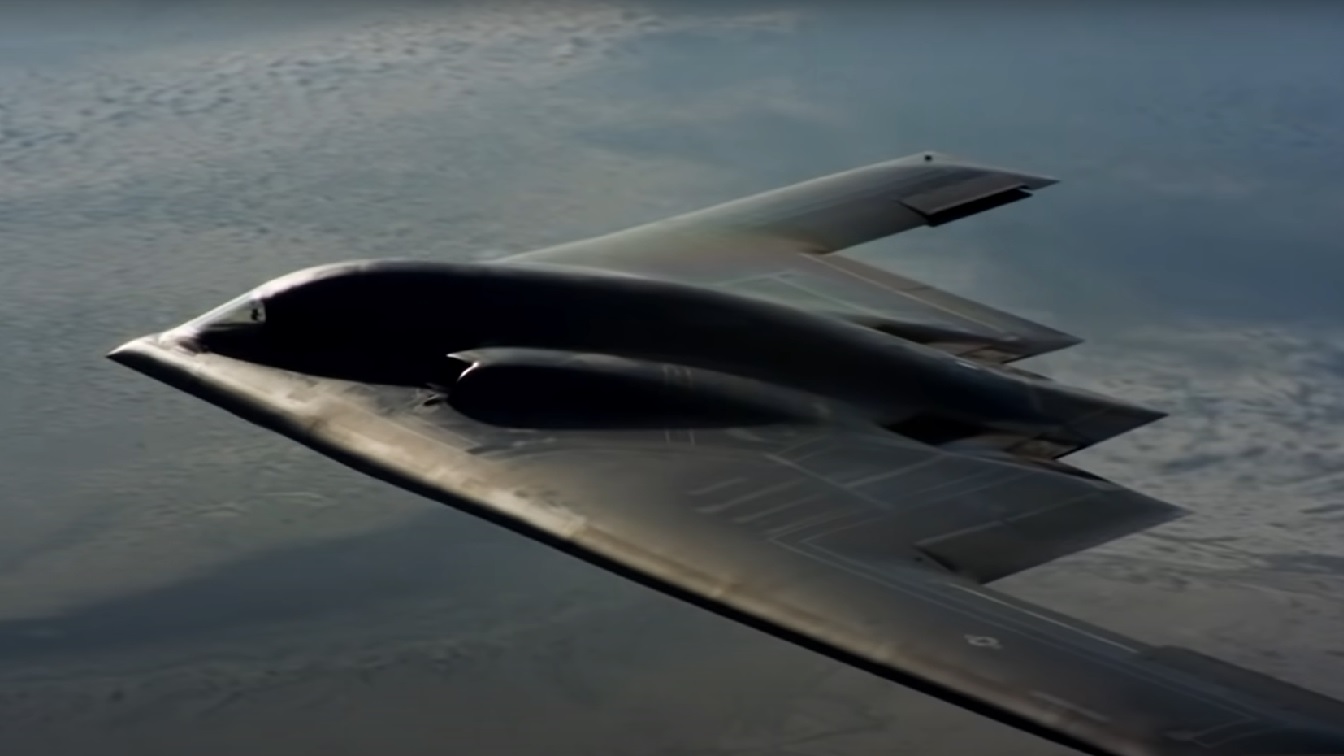
B-2 Spirit. Image Credit: Northrop Grumman.
Iran has dug in hard against diplomatic relations with the Americans, and no negotiations are possible in the near term. Israel would be against working with Iran for some comprehensive peace deal. The United States is more concerned with Russia and Ukraine anyway, and the Iranian situation is on the back burner. The National Security Strategy does not have a clear roadmap for dealing with Iran, and it looks like the status quo will be the policy toward Khamenei. That doesn’t mean Israel will stay peaceful against Tehran, and air strikes from that country could happen at any time.
What Happens Next with Iran?
We’ll see if Witkoff returns to the region with some peace plan. However, that is not likely to begin this year and may be put off until there is a ceasefire in Ukraine. Meanwhile, Khamenei will continue to shake his fist at the “American menace” and refuse any diplomatic overtures.
The country is still a state sponsor of terrorism, and they could even encourage the Houthis terrorists in Yemen to resume attacks on civilian and military shipping in the Red Sea and the Gulf of Aden.
The Trump administration will probably leave things simmering with Iran. The US government is used to defiant rhetoric from Khamenei, and unless the nuclear program heats back up, there is no incentive to make a deal with Tehran. The Israelis are the wild card and will significantly influence US policy.
If Iran encourages Hamas in Gaza to continue the war, then the Americans may request that Iran realize that they are making few friends around the world. But for now, Iran is not likely to change its policy of being a spoiler in the Middle East.
About the Author: Brent M. Eastwood
Author of now over 3,000 articles on defense issues, Brent M. Eastwood, PhD is the author of Don’t Turn Your Back On the World: a Conservative Foreign Policy and Humans, Machines, and Data: Future Trends in Warfare, plus two other books. Brent was the founder and CEO of a tech firm that predicted world events using artificial intelligence. He served as a legislative fellow for US Senator Tim Scott and advised the senator on defense and foreign policy issues. He has taught at American University, George Washington University, and George Mason University. Brent is a former US Army Infantry officer. He can be followed on X @BMEastwood.