Last December, the International Atomic Energy Agency (IAEA) assessed that “the significantly increased production and accumulation of high enriched uranium by Iran, the only non-nuclear weapon state to produce such nuclear material, is of serious concern” for the international community. Additionally, the US intelligence community’s 2025 Annual Threat Assessment said Iran “is not building a nuclear weapon and that Supreme Leader Ayatollah Ali Khamenei has not reauthorized the nuclear weapons program he suspended in 2003, though pressure has probably built on him to do so.” While successive US presidential administrations have warned Iran will never be allowed to acquire a nuclear weapon, the threat is assuming greater urgency and demands immediate action.
The Iran Challenge
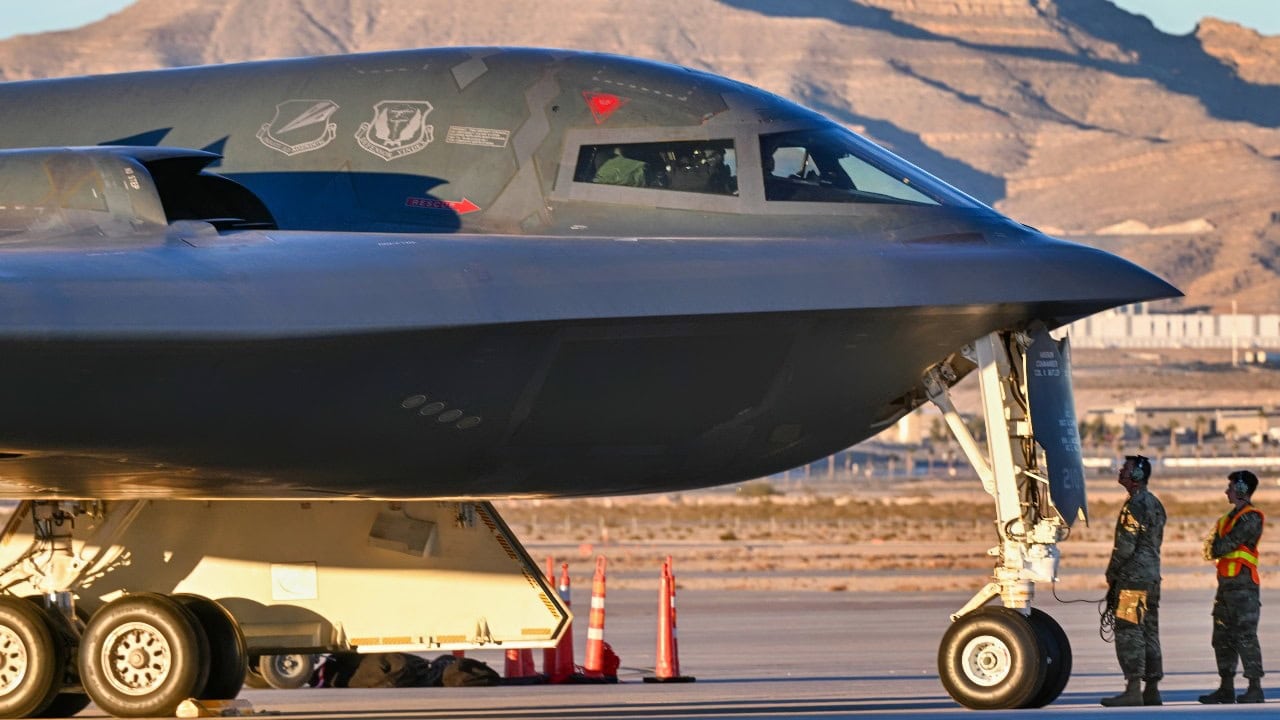
After issuing a February 2025 National Security Presidential Memorandum (NSPM) restoring “maximum pressure on the government of the Islamic Republic of Iran” and accompanied by a fresh round of economic sanctions targeting its ‘oil network,’ President Donald Trump offered Tehran a political and economic lifeline. In March, he sent a letter to Mr. Khamenei proposing negotiations over its nuclear program and establishing a 60-day compliance deadline, or the administration would find “other ways to resolve the dispute.” To underscore the latter, the US deployed B-2 stealth bombers to the Indian Ocean island of Diego Garcia as an unmistakable message to Iran.
This aggressive ‘carrot and stick’ approach is consistent with Mr. Trump’s inclination to drive a hard bargain. In a recent televised interview, he explained, “I would rather negotiate a deal. I’m not sure that everybody agrees with me, but we can make a deal that would be just as good as if you won militarily.” He also expressed hope that Iran would be willing to negotiate “because if we have to go in militarily, it’s going to be a terrible thing.”
Iran initially rebuffed the US offer and decried the efforts of (unnamed) “bullying governments” to impose new and unacceptable demands but subsequently agreed to participate in ‘indirect talks.’ What explains Tehran’s abrupt change in position?
Coming to the Table
One need look no further than Iran’s dire economic conditions, which include a currency collapse, rising unemployment, and sky-high inflation resulting in the impeachment and removal of the economy minister from office. Seeing a potential economic opportunity, the ‘moderate’ Iranian President Masoud Pezeshkian met with the Supreme Leader who “has no opposition to American investors in the country. “Let them come and invest.” Sanctions are once again driving Iran to the negotiating table, reminiscent of events leading to the 2015 Joint Comprehensive Plan of Action (JCPOA).
What is different today is the Trump administration’s ability to exploit Iran’s weakened geopolitical position. The October 7, 2023 Hamas attack against Israel has proven a strategic blunder for Tehran, resulting in significant degradation of its proxy forces—the so-called ‘Axis of Resistance’—and diminished influence in the region. For example, Hamas has been decimated and saw its leader, Yahya Sinwar, killed by Israeli Defense Forces (IDF) last fall. Additionally, the human suffering of the Palestinian people (with no end in sight) sparked protests calling for the group to step aside. Meanwhile, Hezbollah is reeling from IDF airstrikes that killed Hassan Nasrallah and persistent ground operations in southern Lebanon. Moreover, the ouster of former Syrian President Bashar al-Assad impedes Iran’s ability to provide military and logical support to Hezbollah, in addition to losing its ‘land corridor’ to the Mediterranean Sea. Finally, the US military is conducting relentless airstrikes in Yemen to degrade the Houthis’ ability to disrupt global maritime traffic and maintain freedom of navigation in the Red Sea.
More directly, IDF airstrikes have significantly damaged Iran’s air defenses and left its critical infrastructure vulnerable to future attacks while causing “deep alarm” in Tehran. The aerial attacks occurred after IDF and allied defenses successfully intercepted 99% of the more than 300 Iranian missiles and drones launched at Israel.
Preserving a Legacy
Considering Iran’s grim situation, it is unsurprising that Mr. Khamenei is willing to pursue negotiations to preserve the regime and secure his legacy. As an 86-year-old cancer survivor, he is keenly aware of his mortality and the urgency of establishing a viable succession plan. A successful nuclear deal would buy valuable time to stabilize the country and its economy.
The Trump administration would also benefit from a diplomatic ‘win,’ given its limited progress in resolving other foreign policy matters. For example, Russian President Vladimir Putin’s intransigence makes the likelihood of Ukraine war peace talks producing a successful outcome a distant possibility. Meanwhile, efforts to resolve the Gaza war and return hostages captured by Hamas appear stalled, and Israel has resumed military ground operations amidst a growing humanitarian crisis. These vexing problems are exacerbated by the global economic uncertainty surrounding US tariffs and a brewing trade war with China.
According to news reports and other accounts, the initial (indirect) talks in Oman went as expected, with both sides describing the meeting as “constructive.” As a further sign of progress, US Middle East envoy Steve Witkoff and Iranian Foreign Minister Abbas Araghchi spoke for around 45 minutes and future negotiations are scheduled to chart a path forward.
Can Trump Forge the Nuclear Deal?
Mr. Trump could use these negotiations to address his longstanding grievance that the JCPOA “was one of the worst and most one-sided transactions the United States has ever entered into” and failed to address Iran’s missile program while providing the regime with funding for its “terrorist proxies.” However, both sides are aware of the expiration of the JCPOA in October and the looming possibility of the United Nations imposing ‘snapback sanctions’ that would complicate (if not terminate) future negotiations.
The JCPOA took some 20 months of detailed and intense negotiations, and the abbreviated timeline argues against the Trump administration’s pursuit of some kind of ‘grand bargain’ with all stakeholders. This urgency to power the deal might explain why Europe has been sidelined from the talks even though the so-called ‘E3’ (Britain, France, and Germany) could trigger the snapback mechanism by the end of June.
Instead, current circumstances argue for using the 2015 Iran nuclear deal as a framework while making some much-needed modifications. For example, the US should insist on more robust and stringent monitoring of Iran’s nuclear sites, determining the appropriate disposition of existing uranium stockpiles, and abolishing the so-called ‘sunset clause’ that phased out uranium enrichment limitations and allows Tehran to pursue nuclear weapons in the future. In addition to sanctions relief, the Trump administration could offer to submit a final agreement to the US Senate for ratification to assuage Iran’s concerns about Washington’s enduring commitment to the nuclear accord.
While a JCPOA 2.0 might not be satisfying to Iran hawks and critics that favor a ‘bigger, better deal,’ the alternative is the use of military force to destroy Iran’s nuclear facilities that will further elevate tensions and risk US involvement in another major war in the Middle East. Instead, brokering a nuclear deal with Iran would enhance Mr. Trump’s diplomatic credibility and provide momentum to pursue other US interests in the region, such as expanding the Abraham Accords, a signature foreign policy achievement in his first term.
The stakes are high, but the potential reward is great.
About the Author:
Jim Cook is a Professor of National Security Affairs at the U.S. Naval War College. The views expressed here are solely those of the author alone and do not necessarily represent the views, policies, or positions of the US Department of Defense or its components, including the Department of the Navy or the U.S. Naval War College.