Key Points and Summary – Nicolás Maduro’s first appearance in a New York courtroom is the aftershock of Operation Absolute Resolve—a high-risk U.S. raid that seized him from a hardened bunker outside Caracas.
-The piece argues the mission’s shock value is only the opening act; the harder question is why President Trump authorized it and what follows.
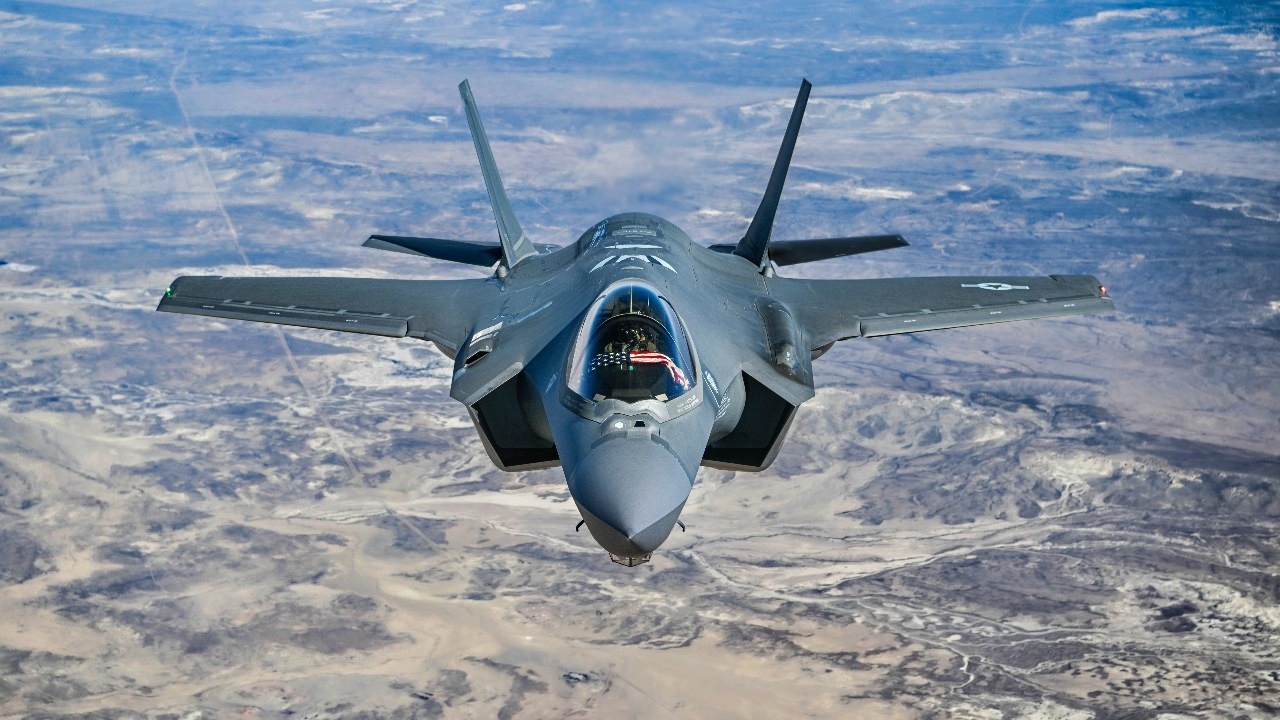
Maj. Melanie “Mach” Kluesner, F-35A Demonstration Team Commander, pilots an F-35A Lightning II after completing aerial refueling en route to Base Aérea No. 1 de Santa Lucía, Mexico, for the 2025 Feria Aeroespacial México (FAMEX), April 22, 2025. The teams participation highlights the strength of the U.S.–Mexico defense relationship and demonstrates the global reach and readiness of U.S. Air Force fifth-generation airpower. (U.S. Air Force photo by Capt. Nathan Poblete)
-Oil matters, but rebuilding Venezuela’s energy sector would demand enormous investment amid uncertain prices, making resource logic incomplete.
-Instead, the operation reads as a hemispheric signal—an updated Monroe Doctrine aimed at deterring rivals, including China—while U.S. public unease and Venezuela’s succession politics threaten to turn a tactical win into a strategic trap.
“Donroe Doctrine” in Action in Venezuela: What Maduro’s Capture Signals to Beijing
As Nicolás Maduro appeared in New York court on Monday, the question on most people’s minds is why—why did American President Donald Trump decide to pull the trigger on an operation to snatch the longtime Venezuelan strongman?
Over the weekend, some of America’s most feared special operators, Delta Force, in tandem with the US Army’s 160th Special Operations Aviation Regiment, flew into Venezuelan airspace and snatched Maduro from a protected military bunker outside the capital. It is difficult to overstate how risky the operation was, but although Maduro surrounded Caracas with some of Russia’s most vaunted air defense assets, and himself with Cuban counterintelligence operatives, Operation Absolute Resolve was shocking in its success.
In the space of just a few hours, the United States plucked Maduro and his wife from their mountain bunker with seeming impunity. Though one helicopter sustained some ground fire, it remained flyable throughout the operation. And while that fire wounded several American service members, no Americans were killed, nor was any American military equipment lost. It was, in short, an overwhelming display of American military prowess, and one that no other country in the world could have replicated with any reasonable chance of success.
Reporting suggests a Chinese delegation had been present during the operation, giving them, if not a crystal-clear picture of the events that unfolded, certainly a distinct impression of the most daring American raid since Operation Neptune Spear, the 2011 operation that killed Osama bin Laden in Abbottabad, Pakistan.
Though the timing of the raid was almost certainly coincidental, it may be interpreted in Beijing as a shot across the bow: a warning that Washington won’t tolerate foreign designs in the western hemisphere.
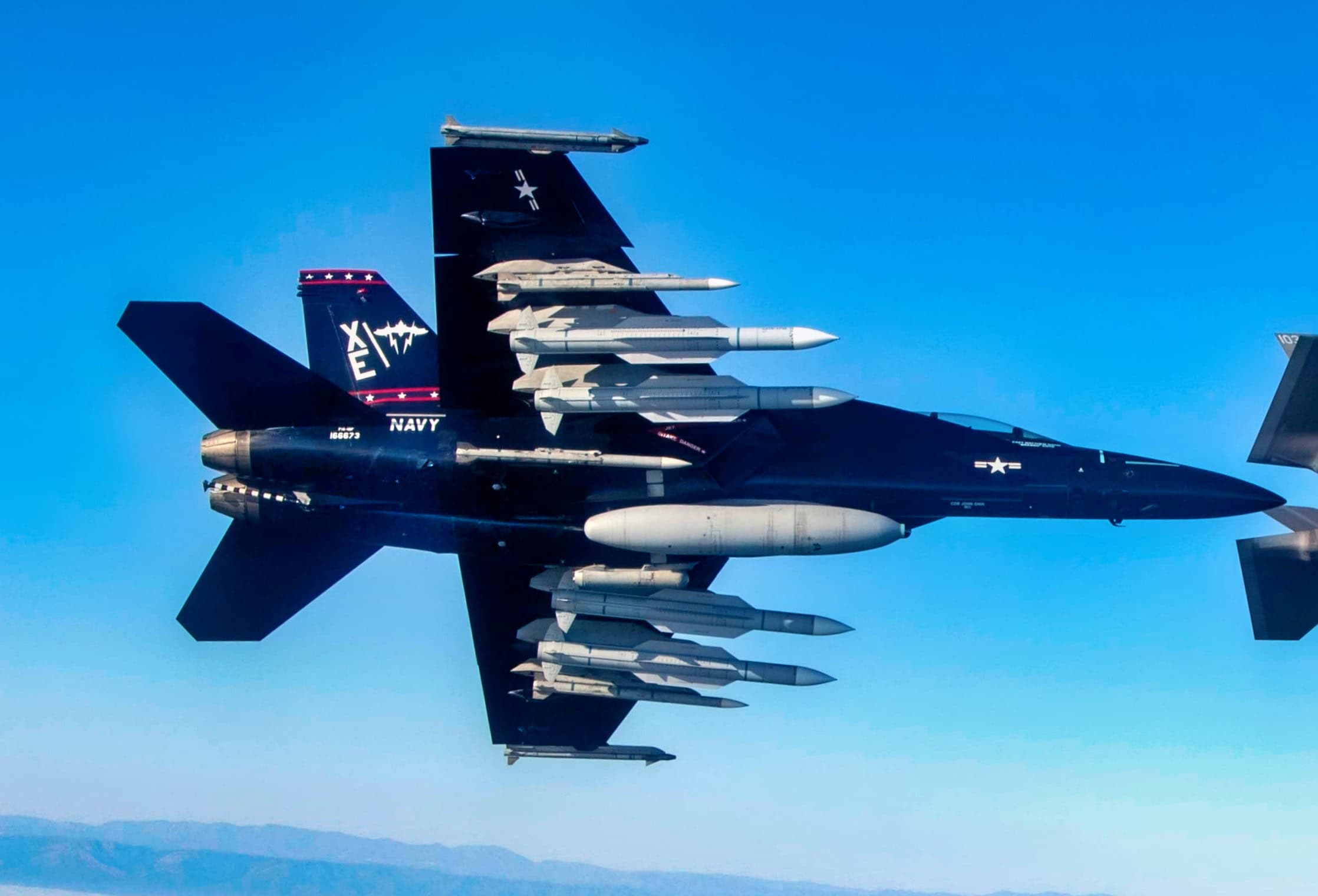
A U.S. Navy F/A-18F and F-35, both assigned to Air Test and Evaluation Squadron (VX) 9, fly over the Point Mugu Sea Range in Southern California with a U.S. Air Force F-15 during Gray Flag 2024 on Sept. 24, 2024. Gray Flag is an annual large-force test event that brings the joint force together to test and evaluate multi-domain systems in a maritime environment, ensuring our nation’s warfighters are equipped with effective, interoperable systems that will help them deter aggression, protect our nation’s prosperity and security, and return home safely to their families. (U.S. Navy photo by Lt. Cmdr. Kory Hughs)
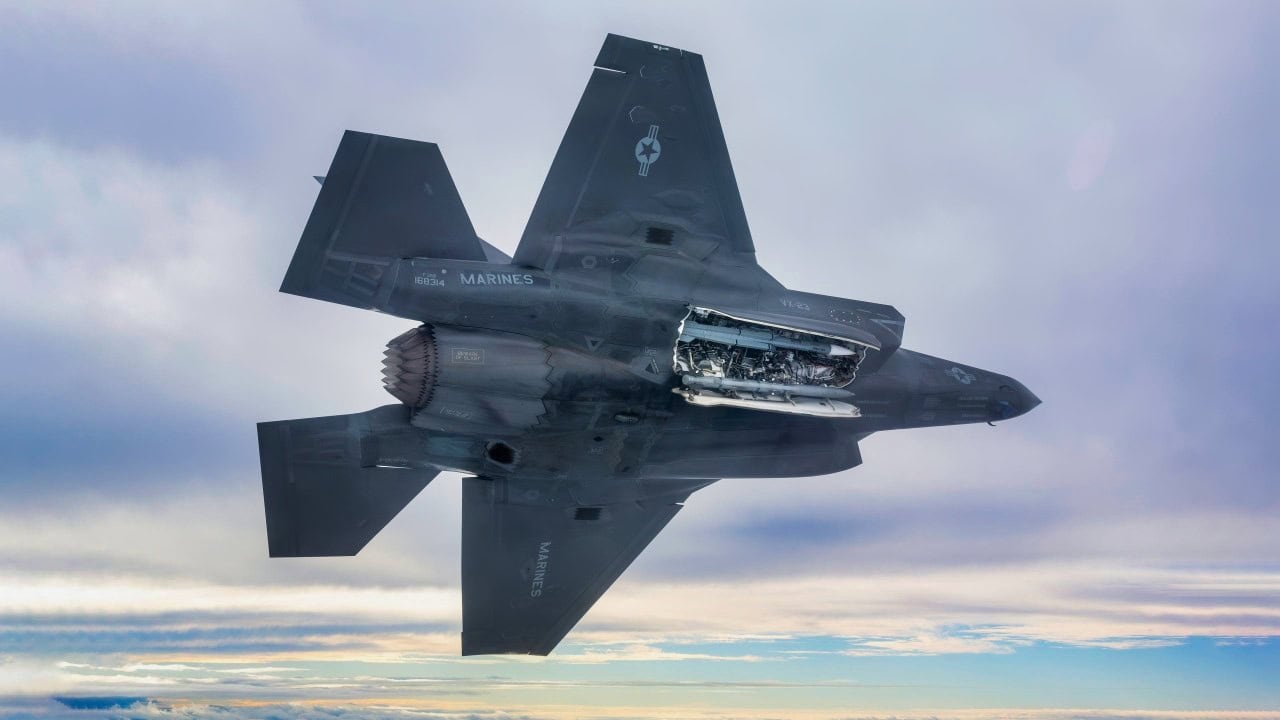
F-35B Armed with Meteor Missile. Image Credit: UK Government.
Parsing President Trump’s volubility is a fool’s errand. Much of what the president says does not come to pass, and it is even less an accurate bellwether of what is to come.
But one of the few constants in his thinking has been what he recently dubbed the “Donroe Doctrine,” a bombastic policy description that does not seem to differ significantly from the Monroe Doctrine.
It is difficult to avoid the topic of oil in any conversation about Venezuela. The country sits on nearly 20 percent of the world’s proven oil reserves, more than any other nation on Earth. The line of reasoning that Trump’s interest in Venezuela is purely one of resource extraction strongly resonates among both Chavistas and a significant subset of Americans and others in the West. But attributing President Trump’s interest in Venezuela solely to the country’s hydrocarbons would be, at best, an incomplete analysis.
Getting Venezuela’s oil fields active again will require a massive $110 billion investment in repairing the country’s fossil fuel infrastructure, crippled by years of underinvestment in maintenance and repair work.
The figure is staggering, estimated at more than double the amount of money America’s oil majors invested in 2024, and their response to President Trump’s assurances they would rush to invest has thus far been tepid.
The International Energy Agency’s forecast for crude oil indicates that supply will outstrip demand, raising the prospect of global surpluses that could depress prices near the breakeven price of $50 a barrel for Venezuelan fields.
While a price depression would be a boon for American consumers and harm Russia’s budgetary planning, it would strongly disincentivize investment by the global oil majors in Venezuelan energy.
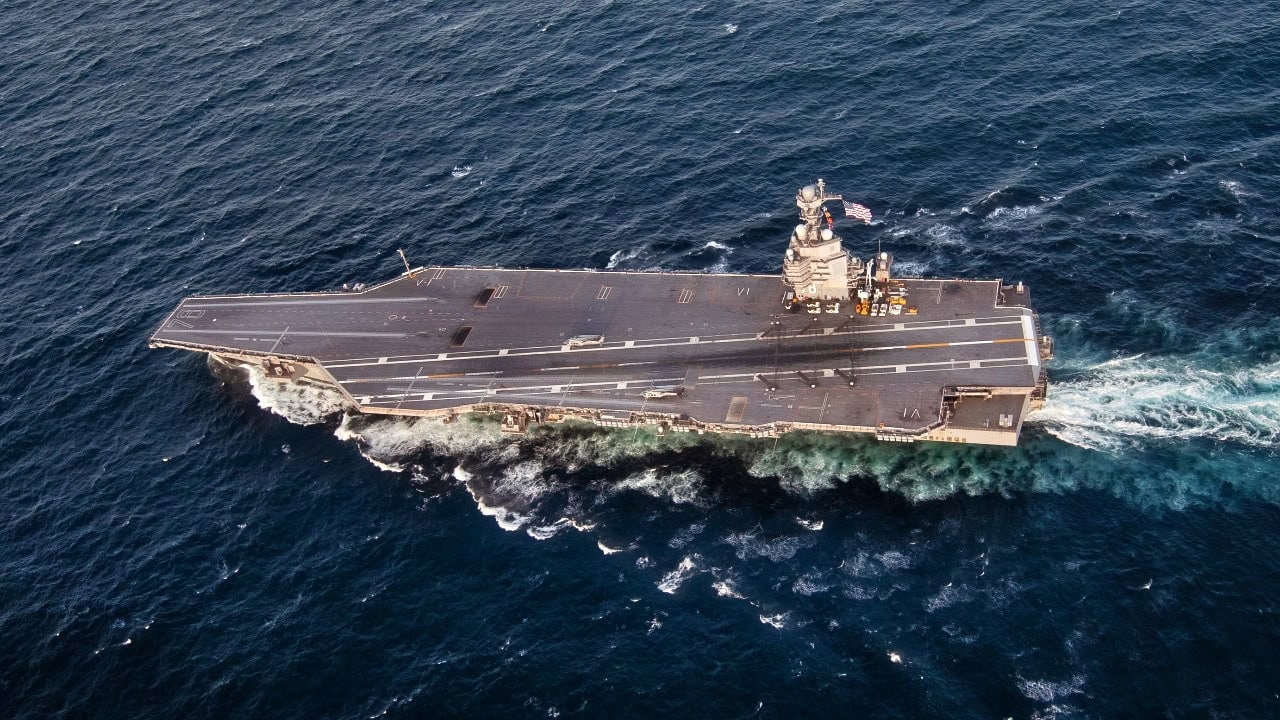
The Ford-class aircraft carrier USS Gerald R. Ford (CVN 78) and the Italian aircraft carrier ITS Cavour (CVH 550) transit the Atlantic Ocean March 20, 2021, marking the first time a Ford-class and Italian carrier have operated together underway. As part of the Italian Navy’s Ready for Operations (RFO) campaign for its flagship, Cavour is conducting sea trials in coordination with the F-35 Lightning II Joint Program Office’s Patuxent River Integrated Test Force to obtain official certification to safely operate the F-35B. Gerald R. Ford is conducting integrated carrier strike group operations during independent steaming event 17 as part of her post-delivery test and trials phase of operations.
Perhaps the most telling explanation for President Trump’s motivation in Maduro’s ouster came at the press conference he held with senior administration officials, detailing the operation. Secretary of State Marco Rubio gave a stark warning to America’s adversaries, urging them not to “play games” with President Trump.
The patchwork quilt of explanations given by the administration — indeed, by the president himself — is less an indication of divergent or even competing justifications than a reflection that complex geopolitical situations like the one Washington finds itself in now lack a concise, singular explanation.
The question now is, having accomplished an objectively herculean task with seemingly shocking ease, what comes next? Will President Trump echo the mission-accomplished attitude of the Bush administration circa 2003?
American midterm elections loom, and though the president enjoys an approval rating bump, voters are fickle and most strongly motivated by anger. According to a recent Reuters poll, 72 percent of Americans fear the United States will become too involved in Venezuela.
As more than a few presidential administrations have learned that if you break it, you buy it. President Trump has not ruled out additional strikes in Venezuela. However, preliminary reporting indicates that Venezuela’s Vice President Delcy Rodríguez is willing to cooperate with the United States to some extent.
But her path forward is deeply opaque, and she will have to overcome deep-rooted suspicion in Venezuela’s security forces. What is increasingly clear, however, is that the law of the jungle applies to American foreign policy in a way that it has not for many, many years.
About the Author: Caleb Larson
Caleb Larson is an American multiformat journalist based in Berlin, Germany. His work covers the intersection of conflict and society, focusing on American foreign policy and European security. He has reported from Germany, Russia, and the United States. Most recently, he covered the war in Ukraine, reporting extensively on the war’s shifting battle lines from Donbas and writing on the war’s civilian and humanitarian toll. Previously, he worked as a Defense Reporter for POLITICO Europe. You can follow his latest work on X.