
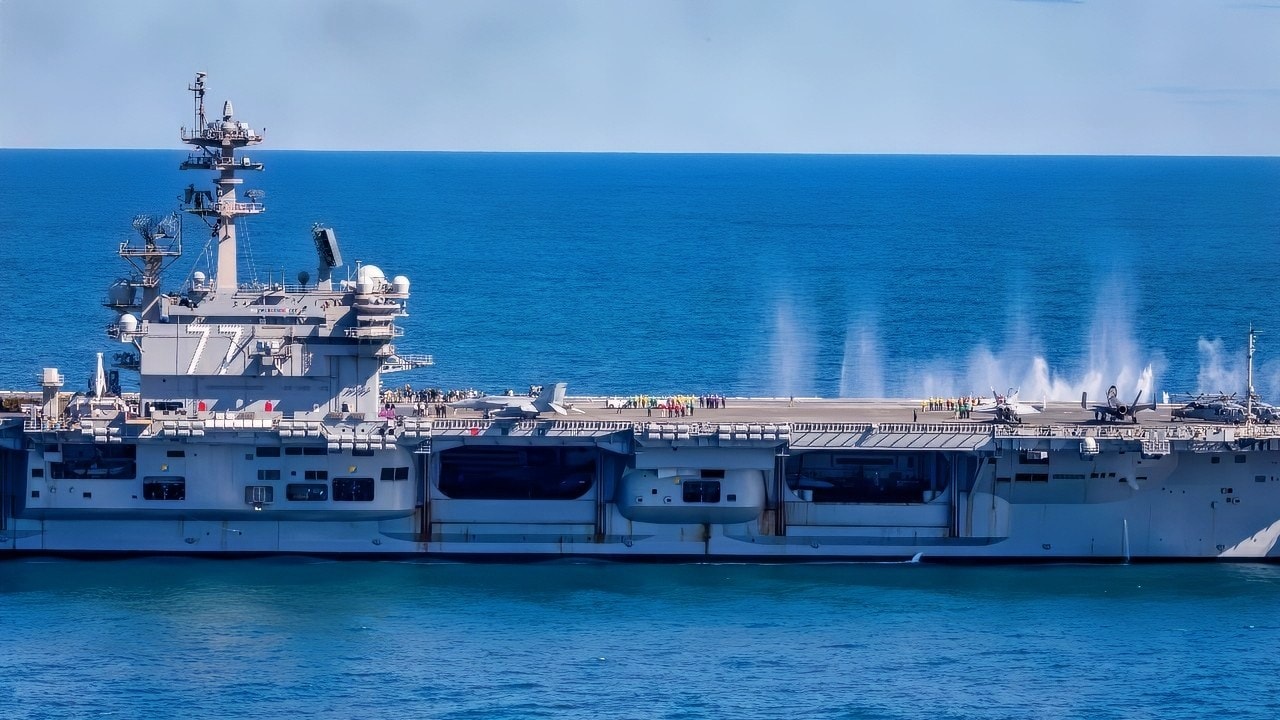
Key Points and Summary – President Trump says U.S. forces carried out overnight strikes in Caracas and captured Venezuelan leader Nicolás Maduro and his wife, extracting them from the country.
-The operation—described as a large, multi-domain assault supported by extensive air and electronic warfare—was framed as an apprehension mission built on months of intelligence work.
-Trump claims the U.S. will “run” Venezuela during an interim period to oversee a “safe” political transition, with Maduro transported to the United States to face charges.
-He also warned additional attacks remain possible and said U.S. firms will help rebuild Venezuela’s oil sector.
“Run It”: Trump’s Post-Maduro Plan for Venezuela, Explained
Speaking live shortly before noon on Saturday, January 3, U.S. President Donald Trump addressed the large-scale strikes carried out by U.S. forces in Venezuela overnight.
His remarks followed early-morning military action that, according to U.S. officials, resulted in the capture of Venezuelan President Nicolas Maduro, who has since been flown out of the country with his wife.
In comments previously posted on Truth Social, Trump confirmed that U.S. forces had conducted the operation in coordination with federal law enforcement agencies.
“The United States of America has successfully carried out a large-scale strike against Venezuela and its leader, President Nicolas Maduro, who has been, along with his wife, captured and flown out of the Country. This operation was done in conjunction with U.S. Law Enforcement,” the president said.
The strike follows weeks of heightened U.S. military activity in the Caribbean and northern South America, including the deployment of the aircraft carrier USS Gerald R. Ford to the region.
What Trump Just Confirmed
In his remarks, President Trump formally confirmed that U.S. forces had carried out a direct military operation in Caracas, describing it as an unprecedented show of American force ordered personally from the White House.
“Late last night and early today at my direction, the United States armed forces conducted an extraordinary military operation in the capital of Venezuela,” Trump said. The president characterized the strike as a decisive and overwhelming use of force, stating that “overwhelming American military power, air, land, and sea, was used to launch a spectacular assault.”
Trump described the target as a “fortified military fortress in the heart of Caracas,” adding that the operation was designed to “bring outlaw dictator Maduro to justice.”
The president called it “one of the most stunning, effective, and powerful displays of American military might and confidence in American history.”
Trump also praised what he described as the flawless execution of the mission, repeatedly noting that U.S. forces suffered no casualties or material losses during the operation.
“Not a single American service member was killed and not a single piece of American equipment was lost,” Trump said. He added that the scale of the mission made that outcome particularly notable, stating, “We had many helicopters, many planes, many people involved in that fight.”
Ahead of the address, the White House released video and photographic footage showing Maduro in U.S. custody, wearing darkened eyewear and earmuffs, holding a bottle of water.
Dan Caine Details How the Strikes Unfolded
In the early hours of Saturday, a coordinated U.S. military operation struck multiple targets across Caracas and northern Venezuela. The strikes began at around 2 a.m. local time, with witnesses reporting explosions and low-flying aircraft over the capital.
The operation was part of an extensive U.S. military buildup in the region tied to “Operation Southern Spear,” a months-long campaign involving naval deployments, air sorties, and prior strikes on drug smuggling targets.
U.S. special operations forces, reportedly including Army Delta Force units and aviation support, surrounded President Nicolas Maduro’s residence at the Fort Tiuna military complex in Caracas. Maduro and his wife, Cilia Flores, were captured by American forces during the raid and flown out of Venezuela.
Prior to the main assault, the United States had already conducted dozens of strikes against maritime and coastal targets alleged to have been involved in drug trafficking and applied sanctions and naval blockades to isolate Venezuela economically and militarily.
During the press conference, the Trump administration confirmed that more than 150 aircraft were involved in the operation. Providing additional details on the operation, Dan Caine, Chairman of the Joint Chiefs of Staff, said the mission – codenamed “Absolute Resolve” – was an apprehension operation specifically designed to capture Maduro and extract him from Venezuela.
Caine said U.S. forces spent months tracking Maduro’s movements, daily routine, and security arrangements, establishing what he described as a detailed “pattern of life” by early December. That intelligence groundwork, he explained, enabled planners to execute a clean and highly controlled operation. The final order to proceed, Caine said, was given directly by President Trump.
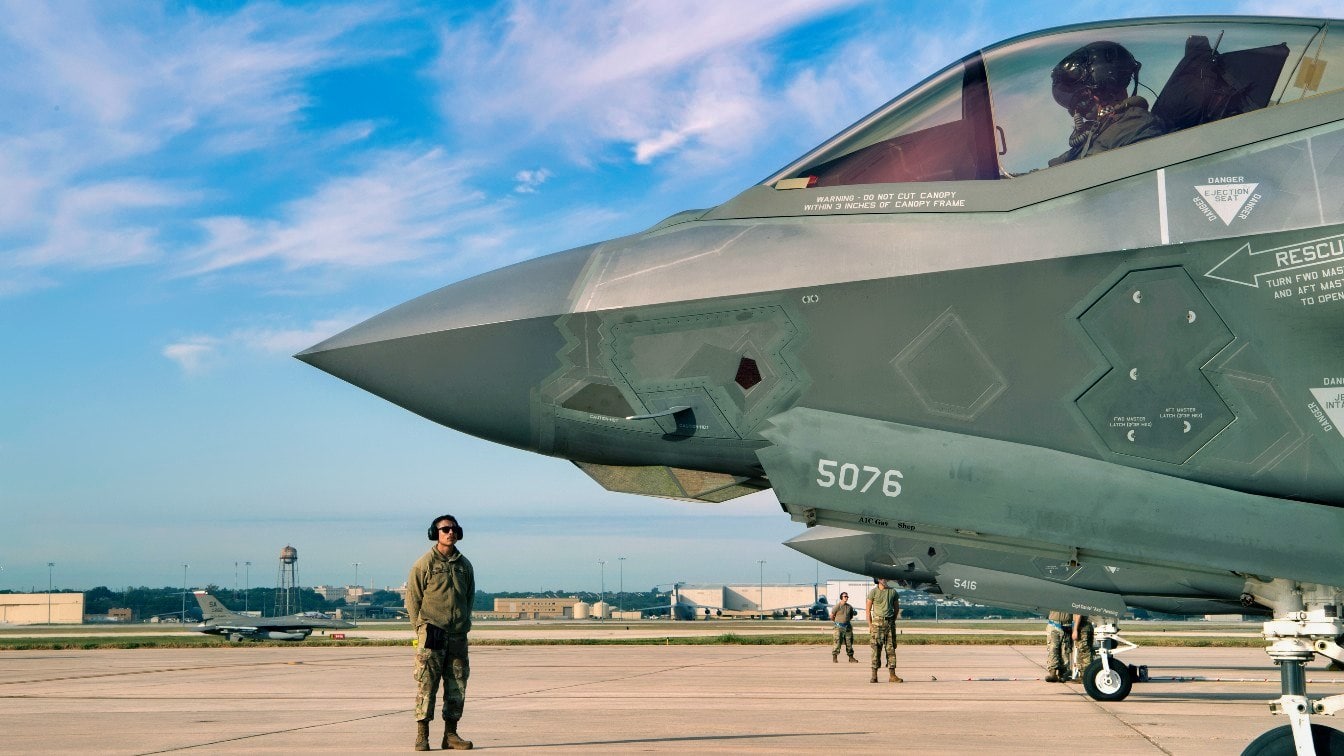
F-35s from the 62nd Fighter Squadron visit Joint Base San Antonio-Lackland, October 21, 2021. F-35 Lightning II aircraft traveled to JBSA-Lackland for a two week stay to train and fly with multiple different aircraft from the surrounding area to include the 149th Fighter Wing’s F-16 Vipers. (Air National Guard Photo by Staff Sgt. Ryan Mancuso)
According to Caine, the operation involved a large and complex air operation that included F-22 and F-35 stealth fighters, EA-18G Growler electronic warfare aircraft, helicopters, and unmanned systems. Those assets were used to suppress defenses, jam communications and electrical systems, and create a secure corridor for U.S. special operations to enter the Fort Tiuna compound and extract Maduro and his wife. He said that the scale of the air and electronic warfare effort was intended to minimize resistance and reduce the risk to U.S. personnel during the capture.
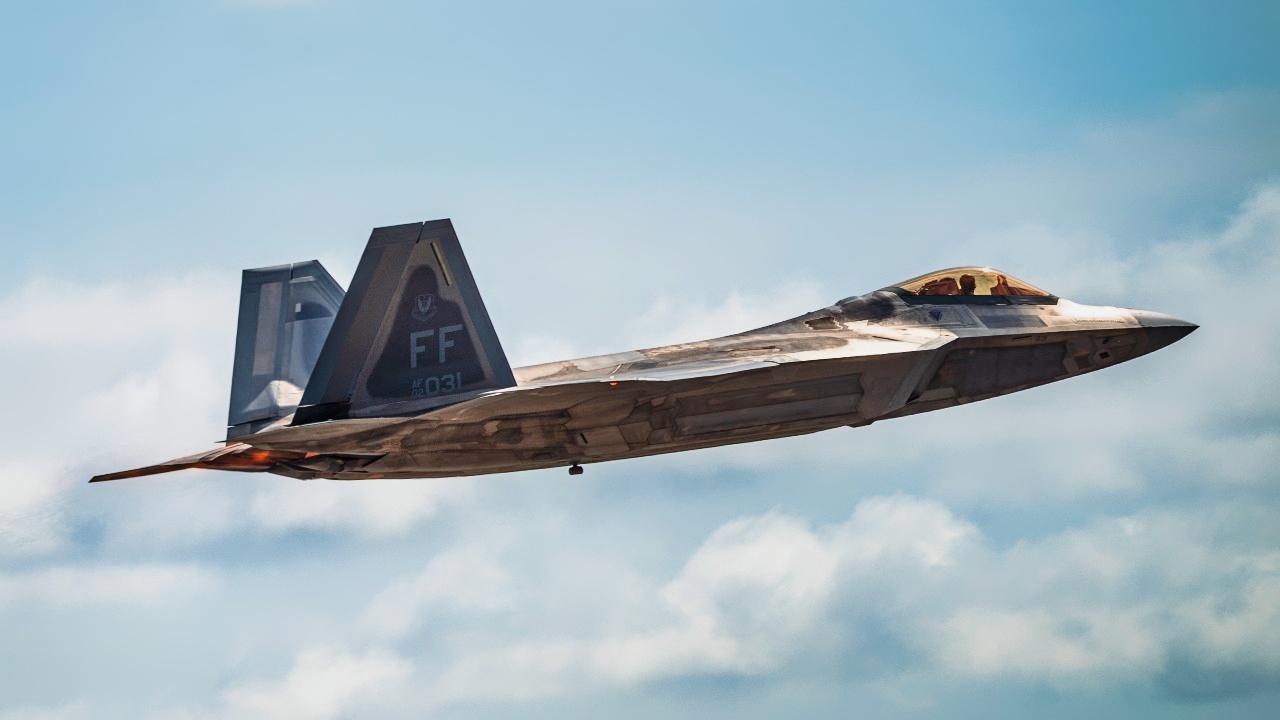
A U.S. Air Force F-22 Raptor assigned to the 71st Fighter Squadron, Joint Base Langley-Eustis, Virginia, takes off during Checkered Flag 25-2 at Tyndall Air Force Base, Florida, May 8, 2025. Air Combat Command’s Checkered Flag exercise simulates the full mobilization and deployment cycle, ensuring unit readiness for contingency operations. (U.S. Air Force photo by Airman 1st Class Zeeshan Naeem)
Trump Administration Answers Questions
In a question-and-answer session, Trump also addressed reporters’ questions on the scope of the operation, the status of Maduro, and the administration’s plans.
Asked by a reporter whether the United States ever considered killing Maduro, Trump responded, “It could have happened.”
-When asked how quickly new leadership will be in place in Venezuela, Trump responded that he would “like to do it quickly, but it takes a period of time.” Later in the session, he indicated it may take around a “year.”
-When asked about Chinese, Russian, and Iranian interest in Venezuela, Trump responded that they still had matters to “straighten out” with Russia, but in terms of countries that want oil, the U.S. will be “selling it to them.”
-When asked if he had a message to the people of Venezuela, Trump said, “You’re gonna have peace, justice…you’re gonna have some of the riches you have had for a long period of time but was stolen from you…you’re going to have a real country, potentially a great country.”
-On the Vice President of Venezuela, Delcy Rodriguez, Trump said that she held a long conversation with U.S. Secretary of State and said she would “do whatever” the United States needs. “I think she was quite gracious, but she really doesn’t have a choice.”
-When asked how the strike can be squared with his “America First” promise, Trump said, “We want to surround ourselves with good neighbors.”
-When asked about Cuba, Secretary of State Rubio said that if he was in leadership in Havana, he’d be “concerned.”
What Now?
With Maduro removed from power and in U.S. custody, Trump made clear that Washington does not intend to immediately hand control of Venezuela to a successor government or foreign adversary. Instead, he said the United States will directly oversee the country during an interim period, describing the decision as necessary to prevent another authoritarian takeover.
“We’re going to run the country until such time we can do a safe, proper, and judicious transition,” Trump said, adding that the administration does not want to risk a rushed transfer of power. “We can’t take a chance that somebody takes over Venezuela that doesn’t have the good of the Venezuelan people in mind.”
Trump repeatedly emphasized that U.S. control would remain in place until Washington determines that a stable transition is possible.
“We’re there now but we’re going to stay until such time that a proper transition can take place,” he said, later summarizing the plan more bluntly: “We’re gonna run it.”
The president said the interim period would focus on restoring basic governance, security, and economic conditions, while allowing Venezuelans living abroad to return home. “We want peace, liberty, and justice for the great people of Venezuela,” he said, including “many from Venezuela who are now living in the United States and want to go back to their country.”
Trump also confirmed that Maduro will be transported to the United States to stand trial.
“But captured along with his wife, Cilia Flores, both of whom now face American justice, Maduro and Flores have been indicted in the Southern District of New York…for their campaign of deadly narcoterrorism against the United States and its citizens.”
On economic policy, Trump said Venezuela’s oil sector will now face major reconstruction efforts, but acknowledged that oil production could not be quickly restored.
“As everyone knows, the oil business in Venezuela has been a total bust,” he said.
Under Trump’s plan, major U.S. energy firms will take the lead in rebuilding the sector.
“We’re going to have our very large United States oil companies, the biggest anywhere in the world go in, spend billions of dollars, fix the badly broken infrastructure, the oil infrastructure, and start making money for the country,” he said.
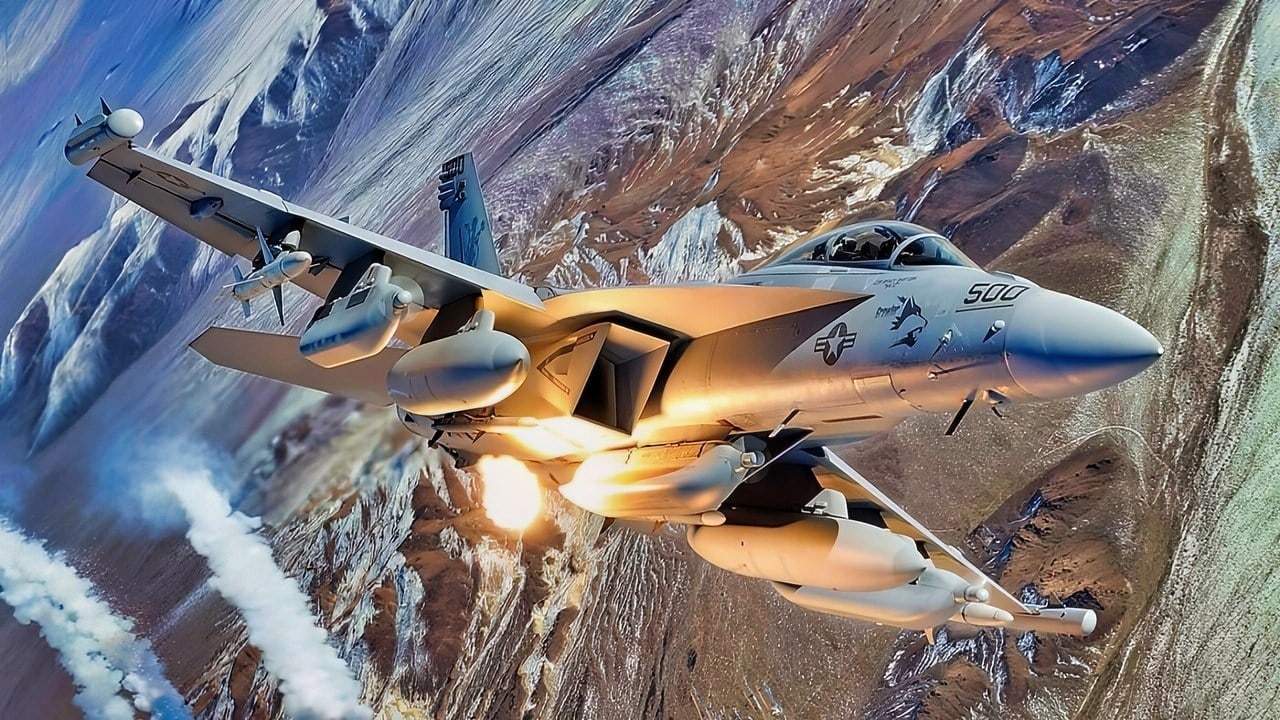
EA-18G Growler Firing Weapons. Image Credit: Creative Commons.
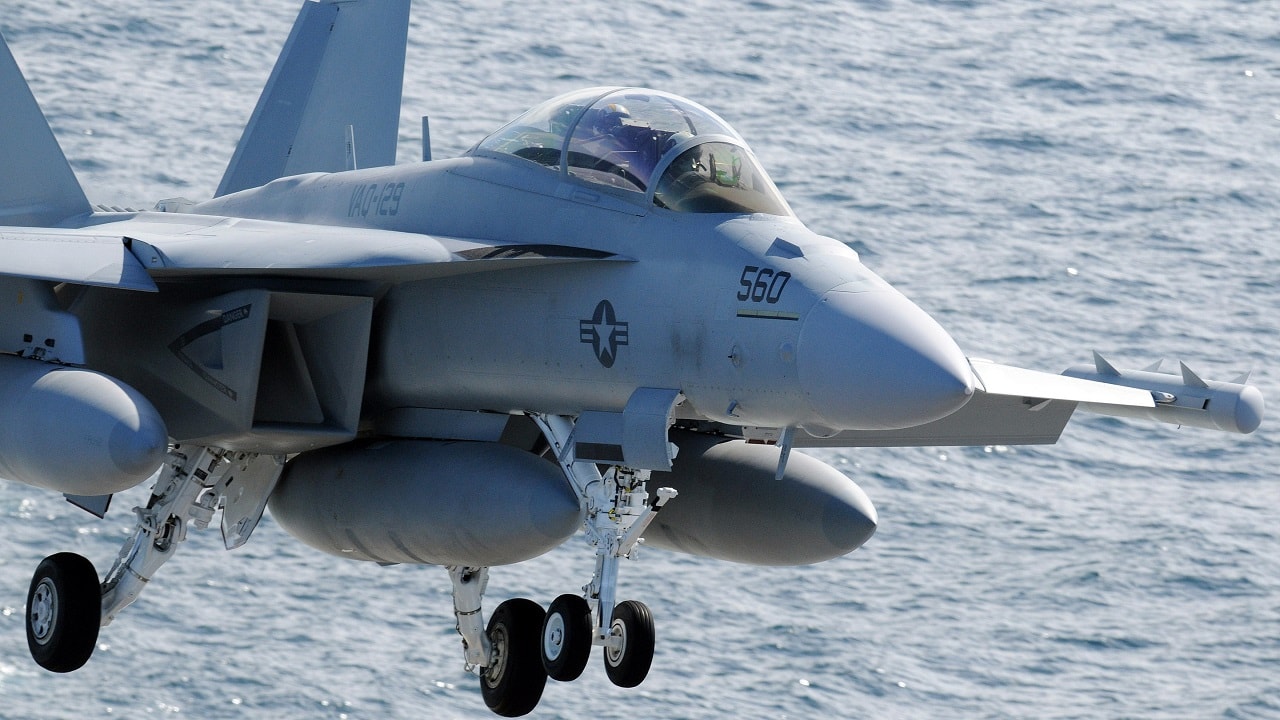
(Feb. 17, 2009) An EA-18G Growler assigned to the “Vikings” of Tactical Electronic Warfare Squadron (VAQ) 129 aligns itself for an at sea landing aboard the Nimitz-class aircraft carrier USS Ronald Reagan (CVN 76). The Growler is the replacement for the EA-6B Prowler, which will be replaced in the 2010 timeframe. Ronald Reagan is underway performing Fleet Replacement Squadron Carrier Qualifications in the Pacific. (U.S. Navy photo by Mass Communication Specialist 3rd Class Torrey W. Lee/Released).
Trump promised that the outcome would leave Venezuela “rich, independent, and safe.”
Despite Venezuela’s vast reserves, however, any impact on global oil markets is likely to be limited in the near term. The president acknowledged that infrastructure damage and years of underinvestment mean it will take time before production can meaningfully increase.
Trump also warned that U.S. military operations are not necessarily finished.
“We are ready to stage a second and much larger attack if we need to do so,” he said, noting that planners had initially expected a follow-on assault. “We actually assumed that a second wave would be necessary but now it’s probably not.”
Geopolitically, the operation carries significant implications for both China and Russia. A high-level Chinese delegation led by Qiu Xiaoqi, the Special Representative of the Chinese Government on Latin American Affairs, met with Maduro only hours before his capture by U.S. forces. The meeting was widely seen as a show of support for Maduro from Beijing.
Both Moscow and Beijing have expanded their influence in Venezuela and across South America in recent years, viewing the country as strategically important for energy access, military cooperation, and, in China’s case, a source of rare earth minerals.
Trump concluded his remarks, noting that the Venezuelan oil embargo remains in full effect and that the United States retains all military options until its conditions and demands have been fully met.
About the Author:
Jack Buckby is a British researcher and analyst specialising in defence and national security, based in New York. His work focuses on military capability, procurement, and strategic competition, producing and editing analysis for policy and defence audiences. He brings extensive editorial experience, with a career output spanning over 1,000 articles at 19FortyFive and National Security Journal, and has previously authored books and papers on extremism and deradicalisation.