

U.S. Warns Of Dire Consequences If Canada Walks Away From F-35 Deal
The United States has warned that the long-established North American Aerospace Defense Command (NORAD) deal with Canada could be fundamentally restructured if Prime Minister Mark Carney moves forward with rumored plans to cancel an order for a full fleet of Lockheed Martin F-35 fighter jets in favor of a less technically capable offering from Sweden’s Saab.
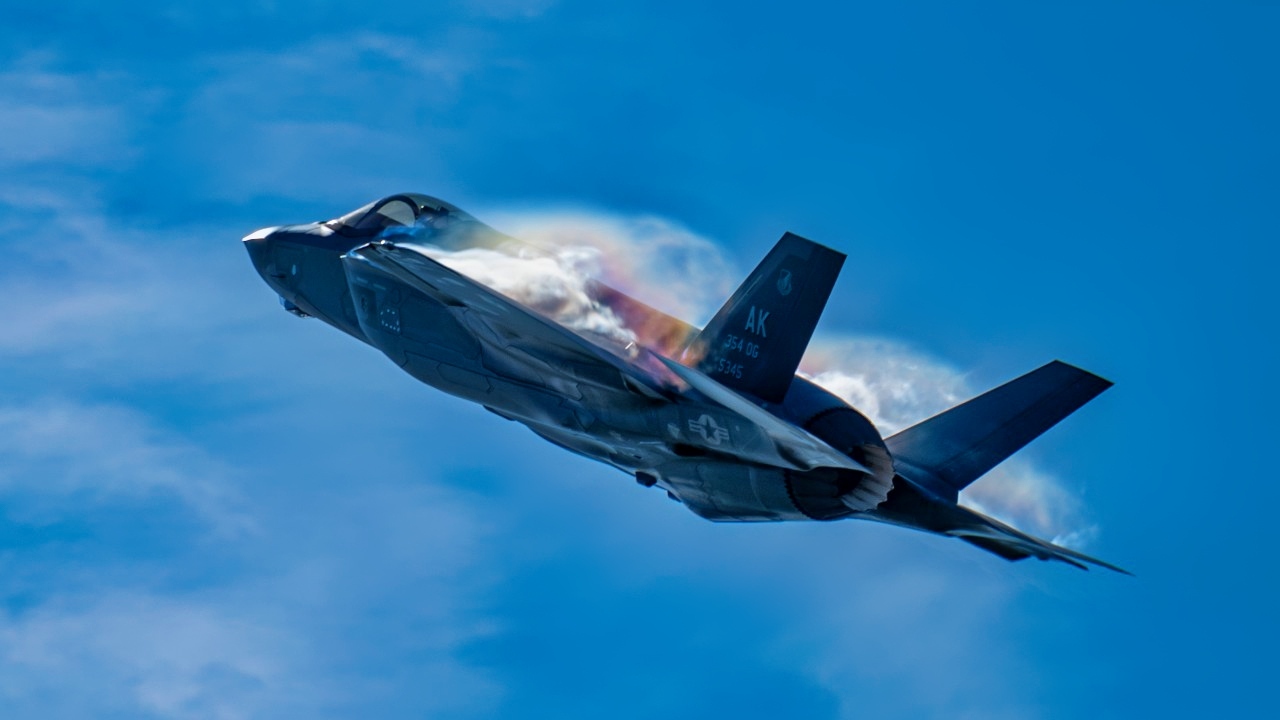
U.S. Air Force Maj. Kristin “BEO” Wolfe, F-35A Lightning II Demonstration Team pilot and commander, flies an aerial performance for the 2021 Arctic Lightning Air Show, July 30, 2021, Eielson Air Force Base, Alaska. The F-35 Demonstration Team utilized F-35s from the 354th Fighter Wing in order to showcase the combat capability of the Pacific Air Force’s newest F-35 units. (U.S. Air Force photo by Capt. Kip Sumner)
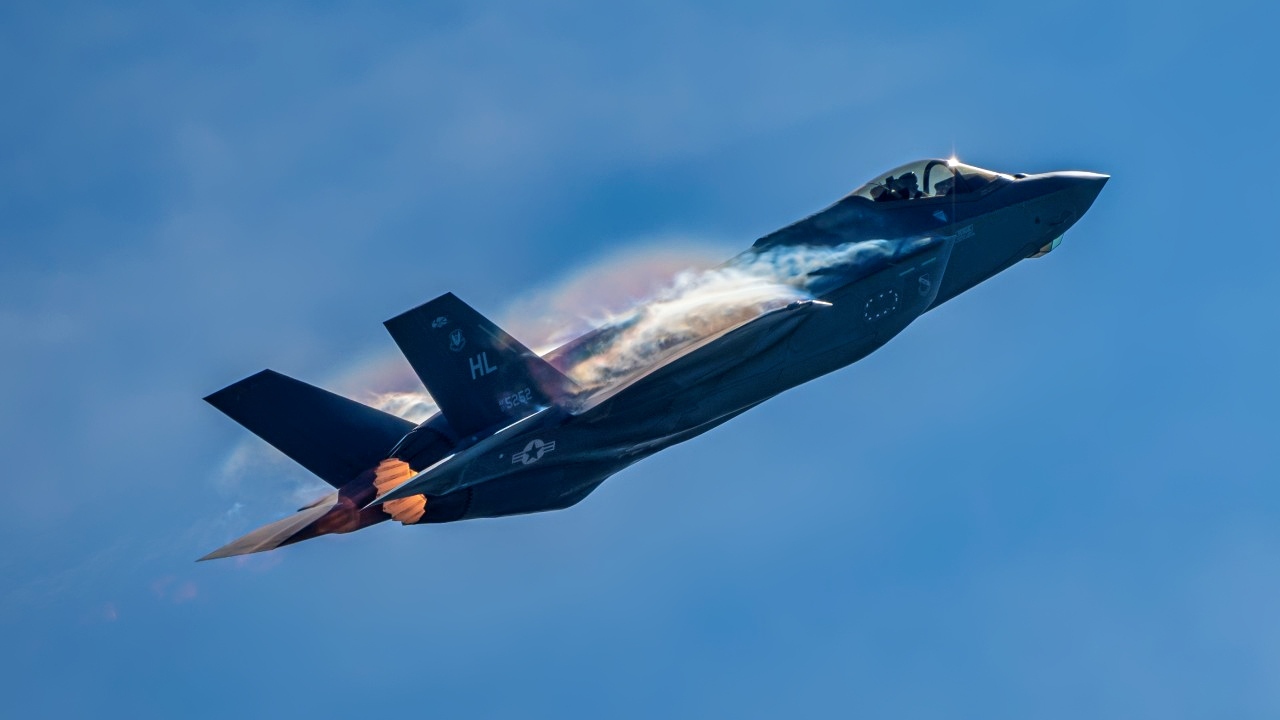
U.S. Air Force Maj. Kristin “BEO” Wolfe, F-35A Lightning II Demonstration Team commander and pilot, flies during a demonstration rehearsal at Hill Air Force Utah, April 28, 2021. The F-35A Lightning II Demonstration Team is part of the first operational F-35A wing for the Air Force, the 388th Fighter Wing, and flies over the Hill Air Force Base runway to practice and prepare for upcoming air shows around the world. (U.S. Air Force photo by Capt. Kip Sumner)
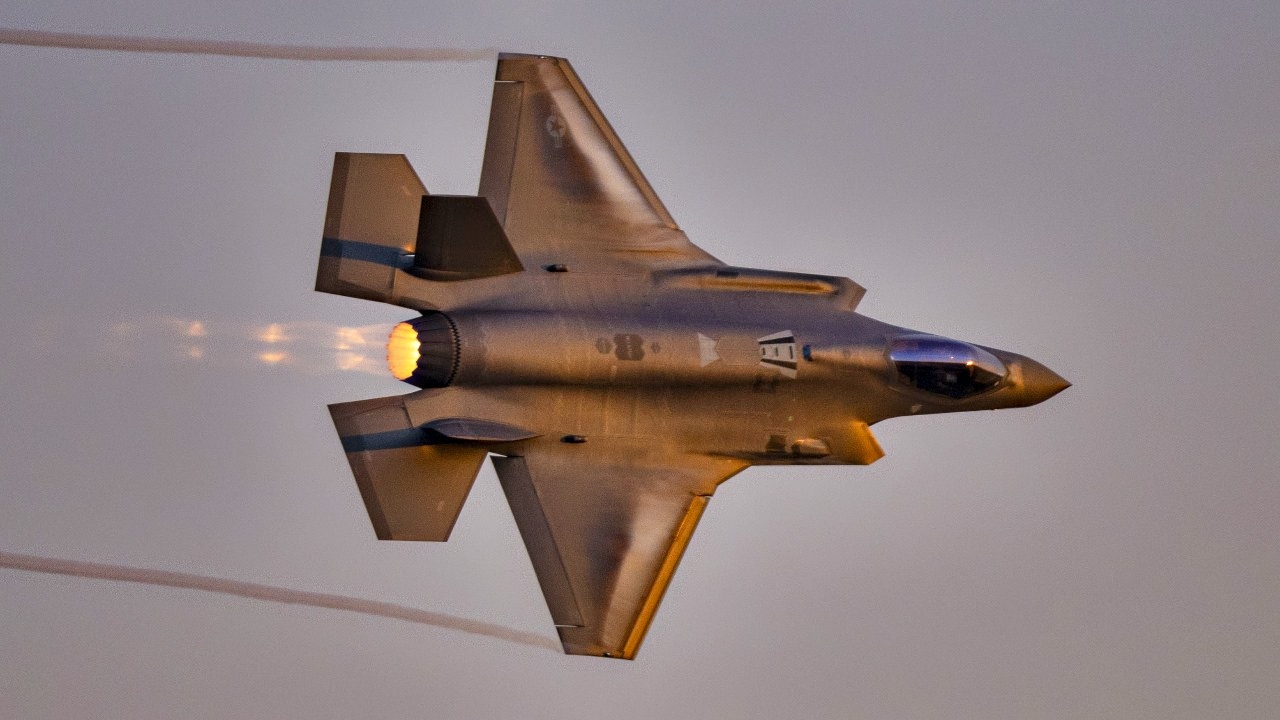
A U.S. Air Force F-35A Lightning II assigned to the F-35A Lightning II Demonstration Team performs at the Capitol Air Show over Sacramento, California, July 15, 2024. Innovations such as the F135 Smart Stacking Tooling Enhancement developed by the OC-ALC mechanics and engineers have significantly improved the rotor assembly process, increasing precision and enhancing the depot’s ability to produce the engine that powers the F-35 Lightning II. (U.S. Air Force photo by Staff Sgt. Zachary Rufus)
In recent comments, U.S. Ambassador Pete Hoekstra argued that if Ottawa does not move forward with the full F-35 buy, after more than a dozen aircraft were already delivered out of a planned purchase of 88, then NORAD “would have to be altered.”
Should Canada choose to field a mixed fleet of 16 F-35 fifth-generation fighter jets and 72 Saab Gripen E jets, Hoekstra confirmed that the United States would be forced to fly more fighters in Canadian airspace to meet its own defense requirements.
Hoekstra also defended the current setup, describing the decades-old agreement as “awesome” and noting that a response from the United States would be necessary should Canada choose to field a less interoperable – and less technically capable – 4.5-generation aircraft.
The comments should come as no surprise. Indeed, this was always going to happen. If Ottawa goes with the Gripen offering – along with the ever-growing promises of job creation in Canada that Saab has pushed from the beginning – it will be interpreted in Washington and elsewhere as a clear jab at the United States.
While there are legitimate gripes about the F-35’s readiness rates and recent controversies over rising costs, it is simply true that the F-35 is the best platform for Canada to maintain its NORAD commitments, protect itself, and prepare for the future. Canada’s own air force officials have said as much – not just when the original competition was won by Lockheed Martin, but in the wake of Carney’s announcement that he was reviewing procurement plans.
Choosing the Gripen on the basis that it will generate jobs may be easy to defend in domestic politics, but the message will be clear – especially combined with recent efforts by Carney to establish a firmer relationship with Europe and, incredibly, China.
What Just Happened?
Put simply, the United States is signaling that a decision on the F-35 deal could be coming soon and that it is prepared to take steps to ensure the stated goals of NORAD can be achieved without Canada’s support, if necessary.
NORAD, after all, is not just a symbolic agreement. This is a combined command built around shared tracking, rapid border intercept decisions, shared warning, and shared intelligence.
And, if Canada’s front-line fighter fleet is not interoperable with the rest of the North American air defense enterprise, then the United States will still defend the continent, albeit more unilaterally and with less “plug-and-play” integration with Canadian systems.
It’s hard not to see this as a political move, too: Carney ordered the review into the purchase of 88 F-35 fighter jets soon after assuming office, and despite the official findings of the review having been received in the middle of 2025, no decision has yet been publicly made. In the meantime, Saab has repeatedly increased its job creation offer to A) convince Ottawa to pull the plug, and B) provide a good political defense for Carney’s government should the decision be made in its favor.
How NORAD Works – And Why Canada Needs the F-35
NORAD is a binational U.S.-Canadian military command created in 1958 to provide aerospace warning, aerospace control, and maritime warning for North America. It operates through a shared network of radar systems, satellites, command centers, and fighter forces on both sides of the border. Aircraft from either country are capable of responding seamlessly to unidentified or hostile entries into American or Canadian airspace.
Because Canadian and U.S. fighters use the same radar and sensor feeds, they see the same tracked aircraft, missiles, and unknown contacts in real time and can be directed via linked command sensors.
The F-35 was built specifically for this kind of networked defense. Its onboard sensors automatically combine radar, infrared, and electronic surveillance data into a single view for the pilot, while secure datalinks allow it to send and receive targeting information with other aircraft, ships, and ground stations. That’s what makes the F-35 the obvious option, and why the F-35 decisively outscored the Gripen on the rated capability criteria during the Future Fighter Capability Project (FFCP).
No, the F-35 Isn’t Perfect – But It’s Better Than the JAS 39 Gripen
The F-35 is not without its challenges. Significant ones, at that. A December 2025 Pentagon Inspector General report found F-35 readiness struggled in fiscal year 2024, with jets available to fly only around 50% of the time, well below the Air Force’s minimum performance expectations, driven in part by maintenance shortfalls and parts shortages.
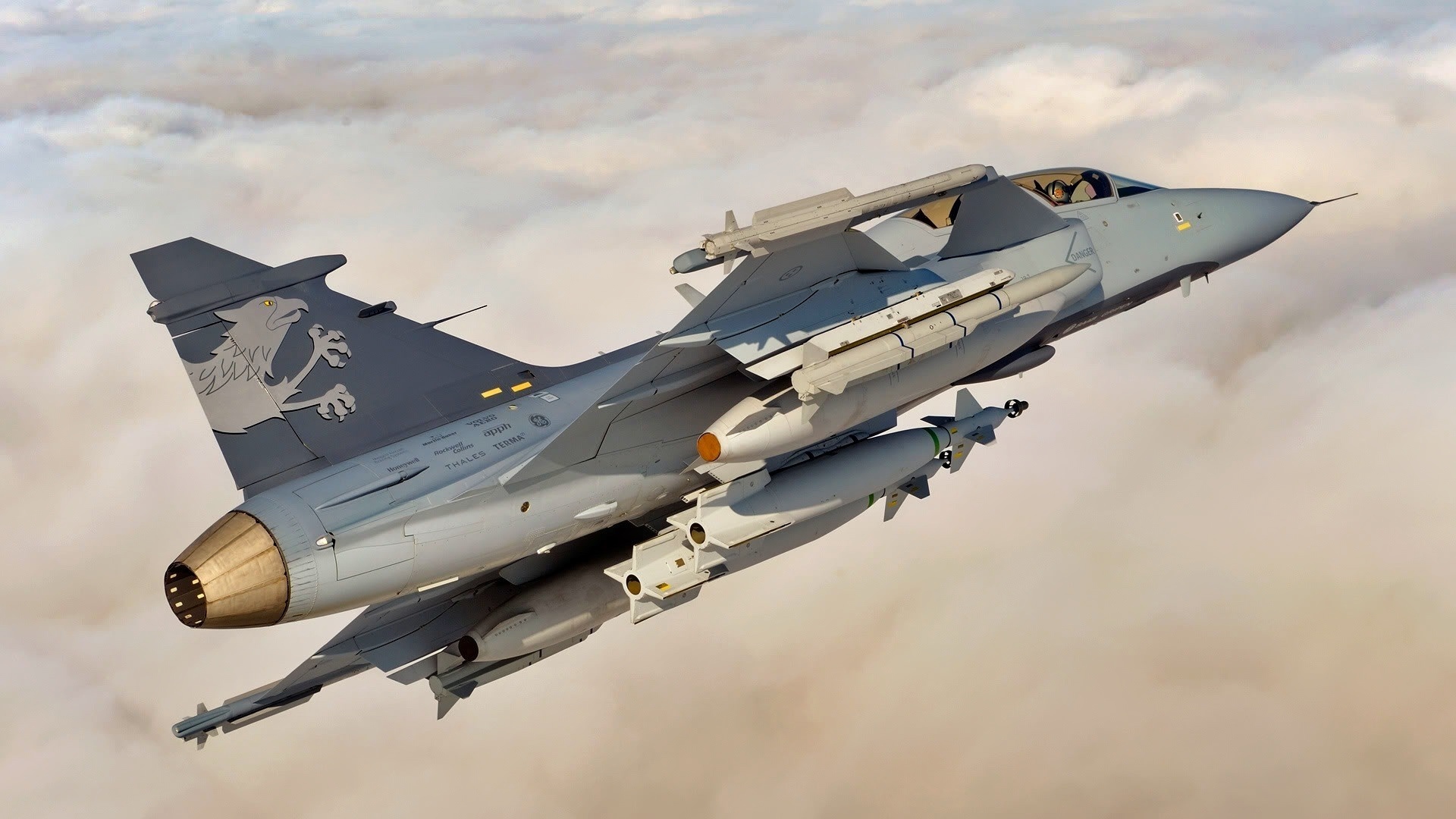
JAS 39. Image Credit: Creative Commons.
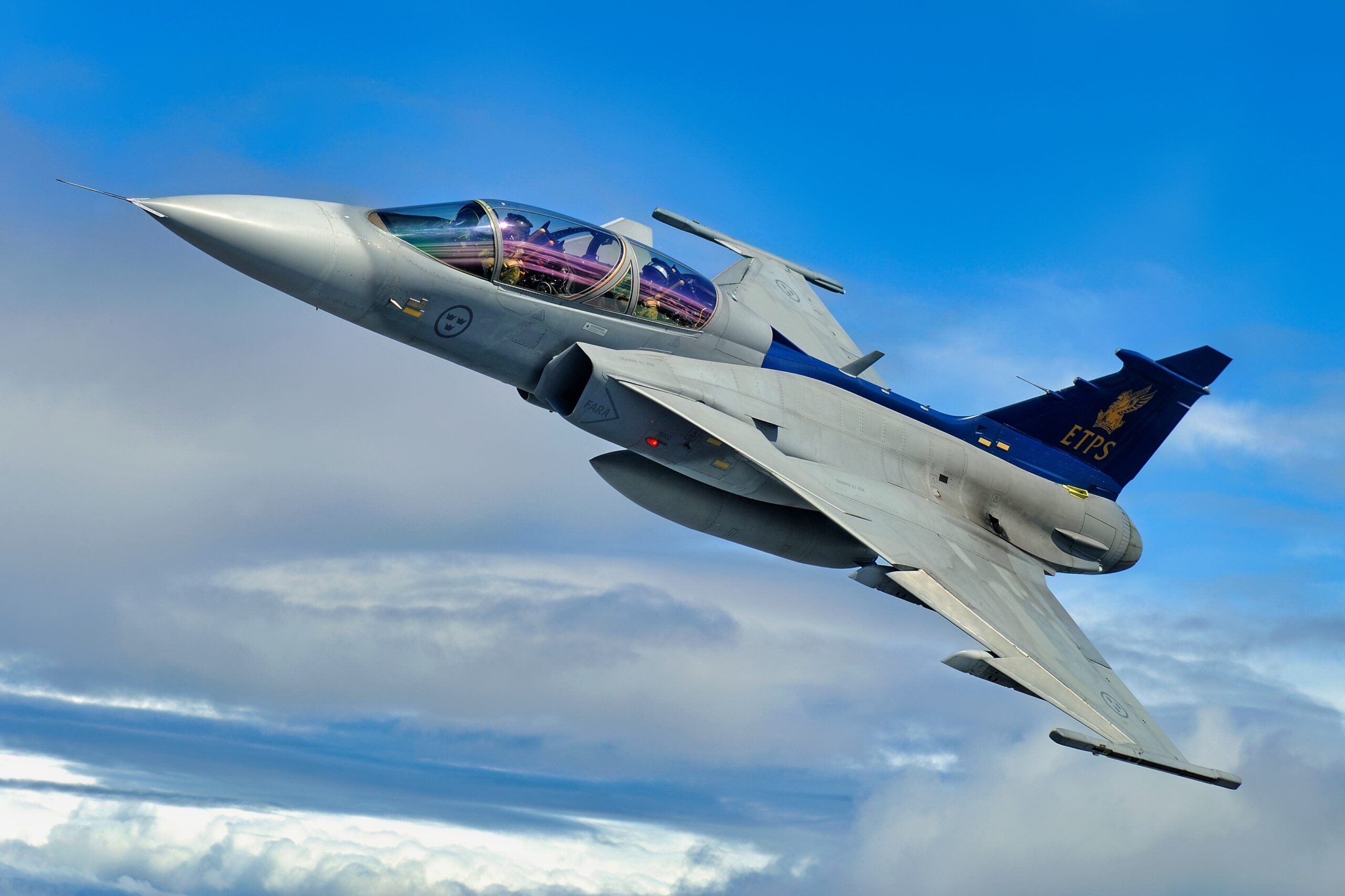
JAS 39 Gripen Fighter from Sweden. Image Credit: Creative Commons.
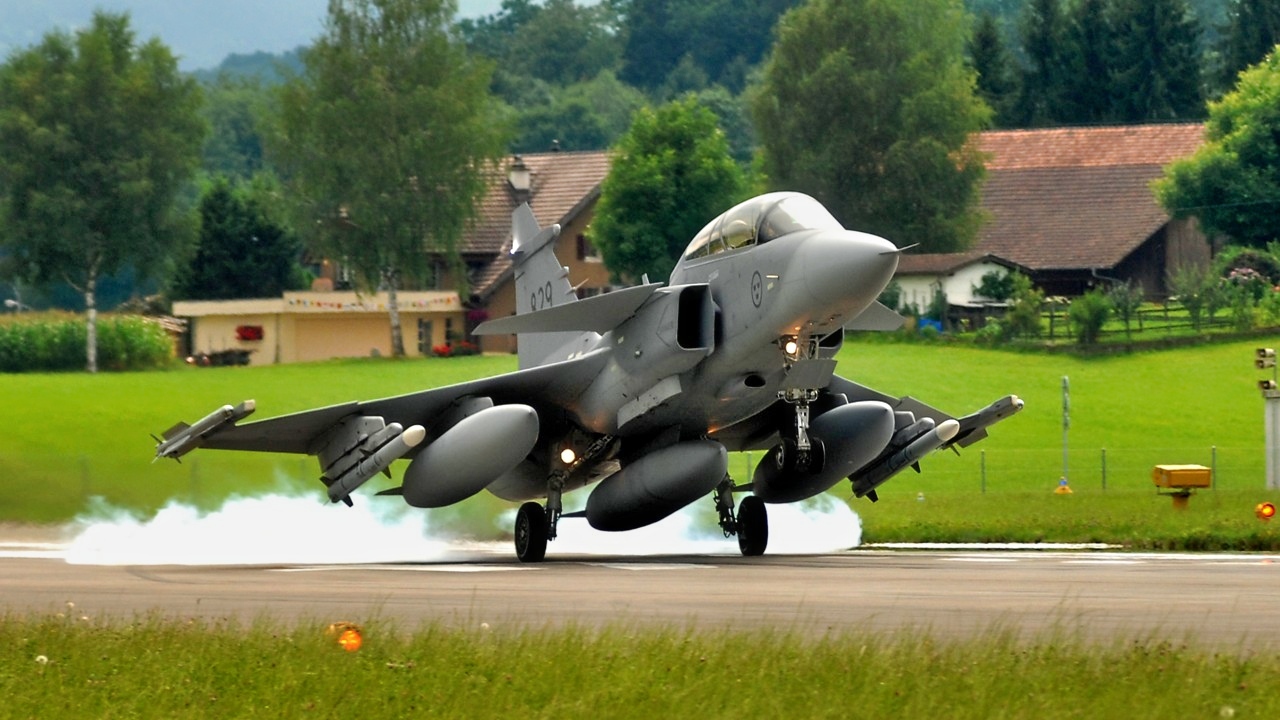
JAS 39 Gripen Fighter. Image Credit: Creative Commons.
That same audit also revealed details of sustainment contracts that lacked performance incentives tied to readiness, allowing low availability to persist with no repercussions.
Those challenges, however, do not negate the strategic design that makes the F-35 the best option for Canada – and indeed many of the United States’ allies. The fifth-generation architecture – from stealth and sensor fusion to secure integrated datalinks – was built for precisel the kind of joint, networked defense that NORAD demands.
Choosing the Gripen would be a political decision and nothing more – and the promise of 12,000 jobs, while of course welcome, would be little more than an excuse. In the long run, opting for anything less than an interoperable platform that is better suited for the future would fundamentally alter the nature of NORAD and risk long-term strain on the U.S.-Canada defense relationship that will extend well beyond any short-term trade disagreements.
About the Author: Jack Buckby
Jack Buckby is a British researcher and analyst specialising in defence and national security, based in New York. His work focuses on military capability, procurement, and strategic competition, producing and editing analysis for policy and defence audiences. He brings extensive editorial experience, with a career output spanning over 1,000 articles at 19FortyFive and National Security Journal, and has previously authored books and papers on extremism and deradicalisation.