
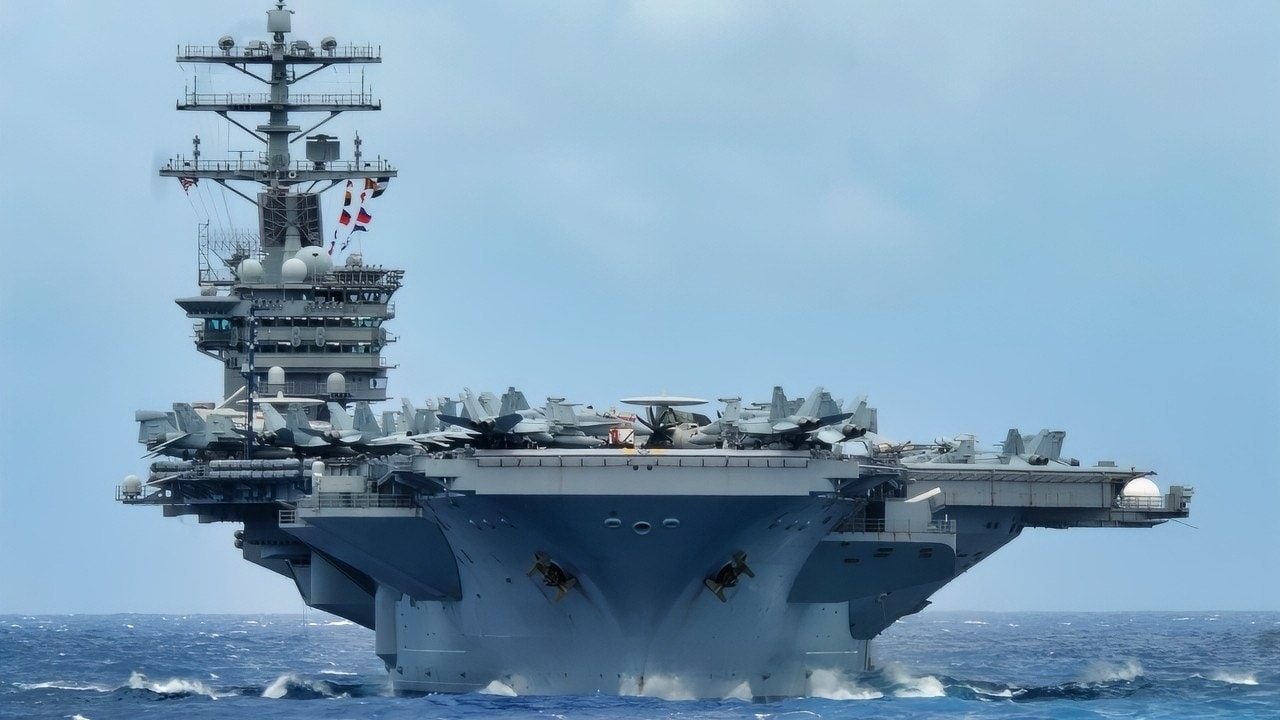
Key Points and Summary: She is 51 years old. She has fought in four wars. Her keel was laid down during the Nixon administration. She is currently sailing 12,400 nautical miles around Cape Horn because she is too big for the Panama Canal and the Navy needs to get her home one final time. The Navy just gave her a 10-month reprieve from retirement to keep the legally mandated 11-carrier fleet count in the books. That reprieve is the last one she is going to get. The USS Nimitz has earned the dignity of being decommissioned on schedule, defueled, and broken up for what she actually is — the prototype of a 50-year-old carrier design that the United States Navy needs to stop pretending is still the future.
The USS Nimitz Time Has Come: A Nuclear Aircraft Carrier That Must Be Retired
There is a moment in every great warship’s life when the right thing for her crew, her legacy, and her service is to go. For the USS Nimitz (CVN-68), that moment is now. As one retired U.S. Navy admiral told me just yesterday: “USS Nimitz is well past her prime now. She might be a nuclear-powered aircraft carrier, but the miles on her hull are starting to show. Time to let her go.”
The Navy’s oldest active aircraft carrier — the lead ship of the class that has defined American power projection for half a century — is currently in the middle of her final deployment, transiting around Cape Horn on her way from her old homeport at Naval Base Kitsap-Bremerton to her new and final homeport at Naval Station Norfolk. She is too big to fit through the Panama Canal. She is sailing the long way home — 12,400 nautical miles, roughly two and a half months at sea, transiting through Southern Command waters, participating in the Southern Seas 2026 exercise with regional partners, and arriving in Virginia for what the Navy now says will be a 10-month wait before nuclear defueling and inactivation begin in earnest.
That 10-month wait is what this article is about. It should not happen. The Nimitz has earned better. Here is the case for letting her go.
What The Reprieve Actually Means
Originally, the Navy planned to retire the Nimitz in fiscal year 2025. Schedule slips on her replacement pushed that to a planned May 2026 inactivation. On March 14, 2026, the Navy announced an additional 10-month extension, pushing decommissioning to March 2027 — exactly aligned with the projected delivery date for the second Ford-class carrier, USS John F. Kennedy (CVN-79).
The reason for the extension is not strategic. It is statutory. A 2011 law requires the U.S. Navy to maintain at least 11 operational aircraft carriers at all times. Decommissioning Nimitz on her originally planned May 2026 schedule would, on paper, drop the fleet below 11 carriers for the period between her retirement and Kennedy’s commissioning. The extension keeps the Navy in compliance with the law.
That is the entire rationale for keeping a 51-year-old warship in the fleet for an additional 10 months. Not capability. Not a warfighting need. Not a strategic gap that no other carrier can fill. A statutory headcount, at least in my opinion.
The Nimitz herself, by all available indications, is not being asked to perform meaningful operational work during the extension period. Defense reporting indicates she is not certified for national tasking — meaning she cannot be called on for the kind of high-end combat operations that the rest of the carrier fleet is structured around. Her Cape Horn transit is being framed as a “deployment” because it includes Southern Seas 2026 participation and partner-nation port visits, but the actual operational tempo bears little resemblance to that of a frontline carrier strike group operating in the Western Pacific or the Eastern Mediterranean.
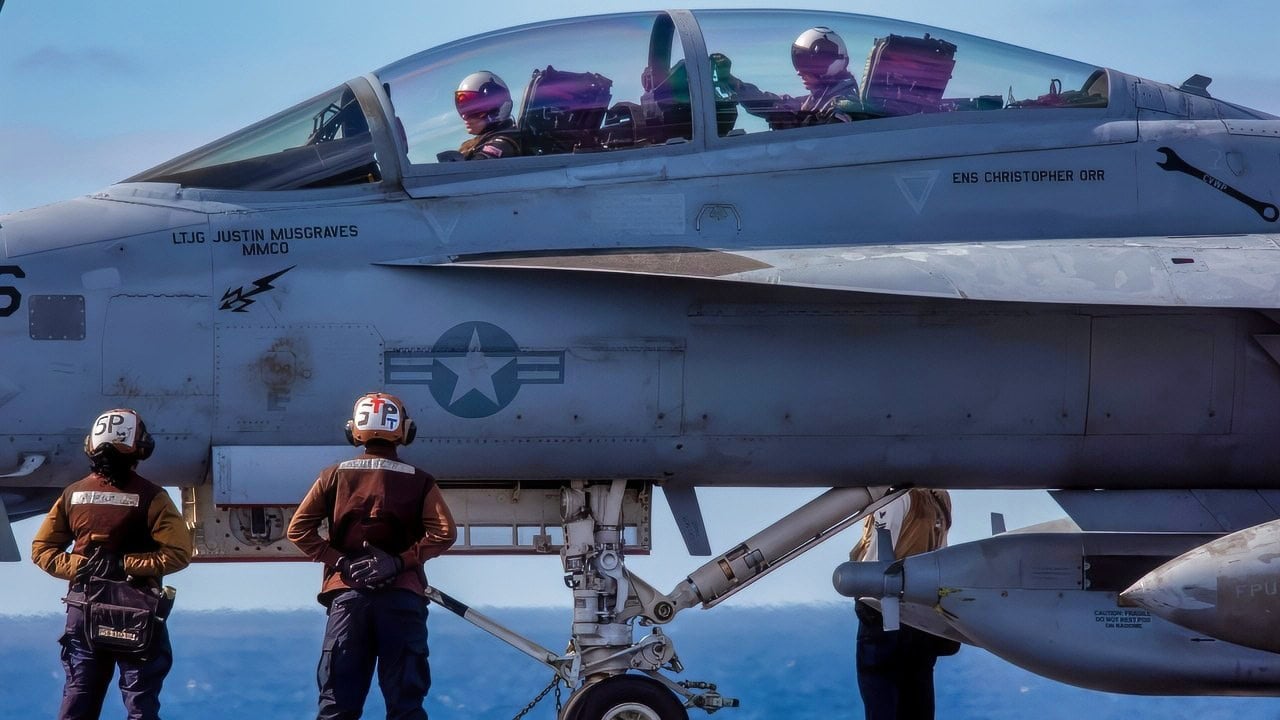
U.S. Navy Sailors prepare to taxi an EA-18G Growler, attached to Electronic Attack Squadron (VAQ) 133, on the flight deck of Nimitz-class aircraft carrier USS Abraham Lincoln (CVN 72) on Nov. 24, 2025. USS Abraham Lincoln (CVN 72), flagship of the Abraham Lincoln Carrier Strike Group, is underway conducting routine operations in the U.S. 3rd Fleet area of operations, demonstrating the U.S. Navy’s long-term commitment to a free and open Indo-Pacific. (U.S. Navy photo by Mass Communication Specialist Seaman Daniel Kimmelman)
What she is doing, in plain terms, is filling a hull number on a Pentagon spreadsheet.
What That Hull Number Costs
A nuclear-powered supercarrier in active service is not free.
Crew costs alone for a Nimitz-class carrier run into the hundreds of millions of dollars per year — roughly 3,000 ship’s company sailors plus another 2,500 in the embarked air wing during deployment. Maintenance costs on a 51-year-old hull are substantially higher than on a younger carrier; mechanical systems that were state of the art when Gerald Ford signed her commissioning papers in 1975 are now legacy systems requiring specialized parts, specialized expertise, and specialized workarounds.
The opportunity cost is the bigger number. Every dollar spent keeping the Nimitz operational is a dollar not spent on the Virginia-class submarine production rate the Navy desperately needs to raise. Every maintenance team assigned to keep her steam plant running is a team not assigned to the Ford-class teething problems that have grounded the lead ship’s full operational availability for years. Every aviator who logs hours in her air wing is logging hours on a platform that will not be in service when those hours matter.
The Navy is paying real money to keep an obsolete warship at sea so it can comply with a law that was written when the strategic environment looked nothing like it looks today.
What The Nimitz Has Already Done
The case for retiring her with honor rather than extending her further is, in part, a case made by the record itself.
Commissioned May 3, 1975, the Nimitz has served in four wars — Vietnam (briefly, in evacuation operations), the Iran hostage crisis (Operation Eagle Claw, 1980), the Gulf War, the global war on terror (multiple deployments to the Persian Gulf and the Indian Ocean post-2001), and continued combat support against ISIS as recently as her 2024-2025 deployment, during which her embarked Carrier Air Wing 17 conducted strikes against ISIS targets in Somalia.
That last deployment alone produced more than 8,500 aircraft sorties and approximately 17,000 flight hours. She sailed 82,000 miles. Her air wing executed combat strikes within weeks of returning to homeport. By any standard, she went out the way a warship is supposed to go out — flying, fighting, and earning her keep until the very last patrol.
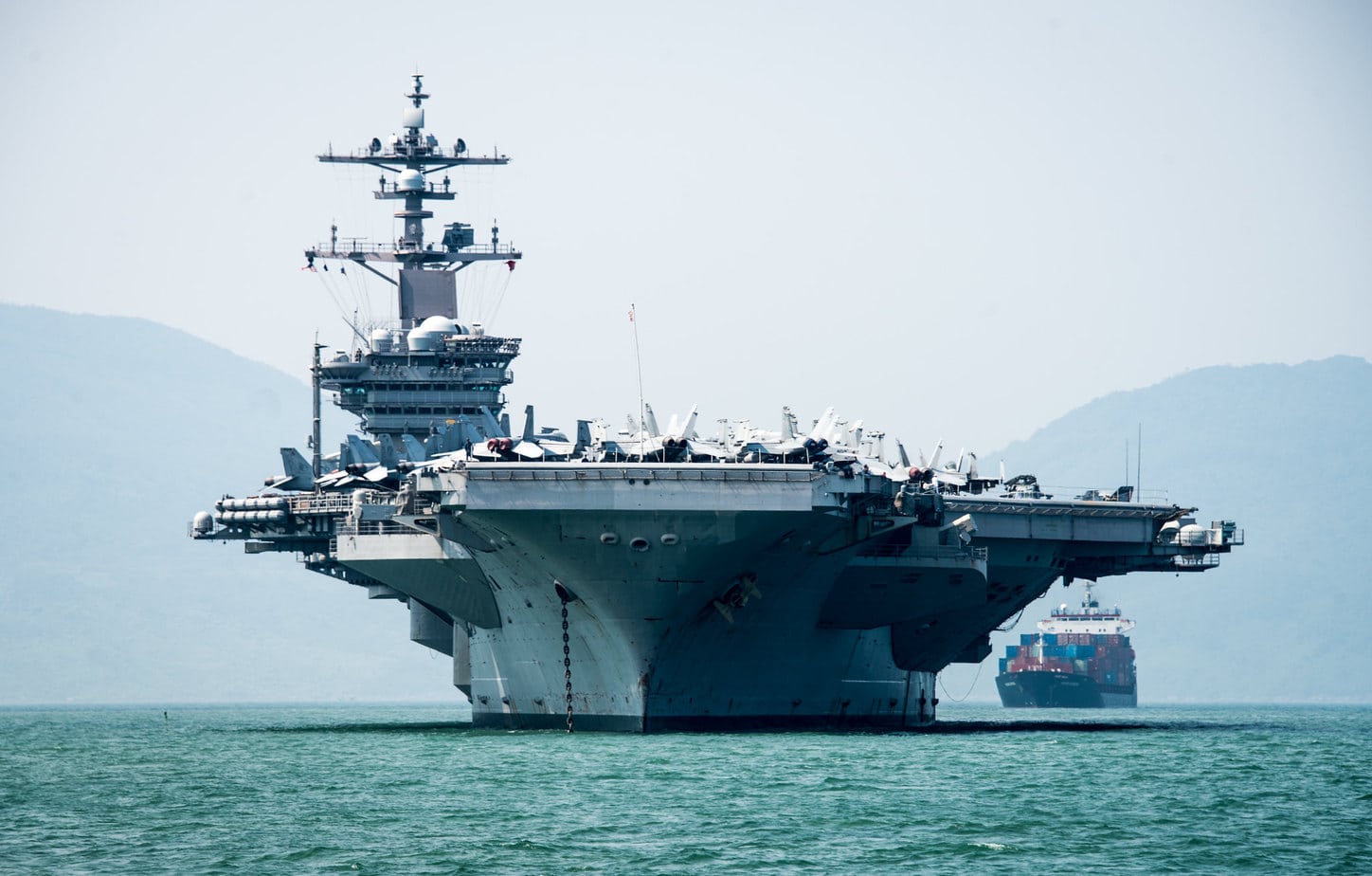
DA NANG, Vietnam (March 5, 2018) The Nimitz-class aircraft carrier USS Carl Vinson (CVN 70) arrives in Da Nang, Vietnam for a scheduled port visit. The Carl Vinson Strike Group is in the Western Pacific as part of a regularly scheduled deployment.
Her midlife refueling and complex overhaul concluded in 2001. The Nimitz-class hull is rated for approximately 50 years of service. She is now beyond that nominal lifespan — every additional month of operations is structural and mechanical territory that the original Newport News design specifications did not contemplate.
Why Holding Her Longer Is The Wrong Call
The argument for the extension is the 11-carrier statutory floor. The argument against it is twofold: the floor is increasingly disconnected from operational reality, and the Nimitz itself is not actually contributing to the floor in any meaningful way.
The 11-carrier mandate was written into law during a period when the U.S. Navy was actively producing carriers at a sustainable rate, when peer-competitor anti-access threats were nascent rather than mature, and when the political assumption was that the carrier was the unchallenged centerpiece of American naval power. None of those conditions still holds.
The Ford-class is delivering years late and over budget. China and Russia are fielding long-range anti-ship weapons that have even prompted carrier advocates to question the platform’s survivability in a peer fight.
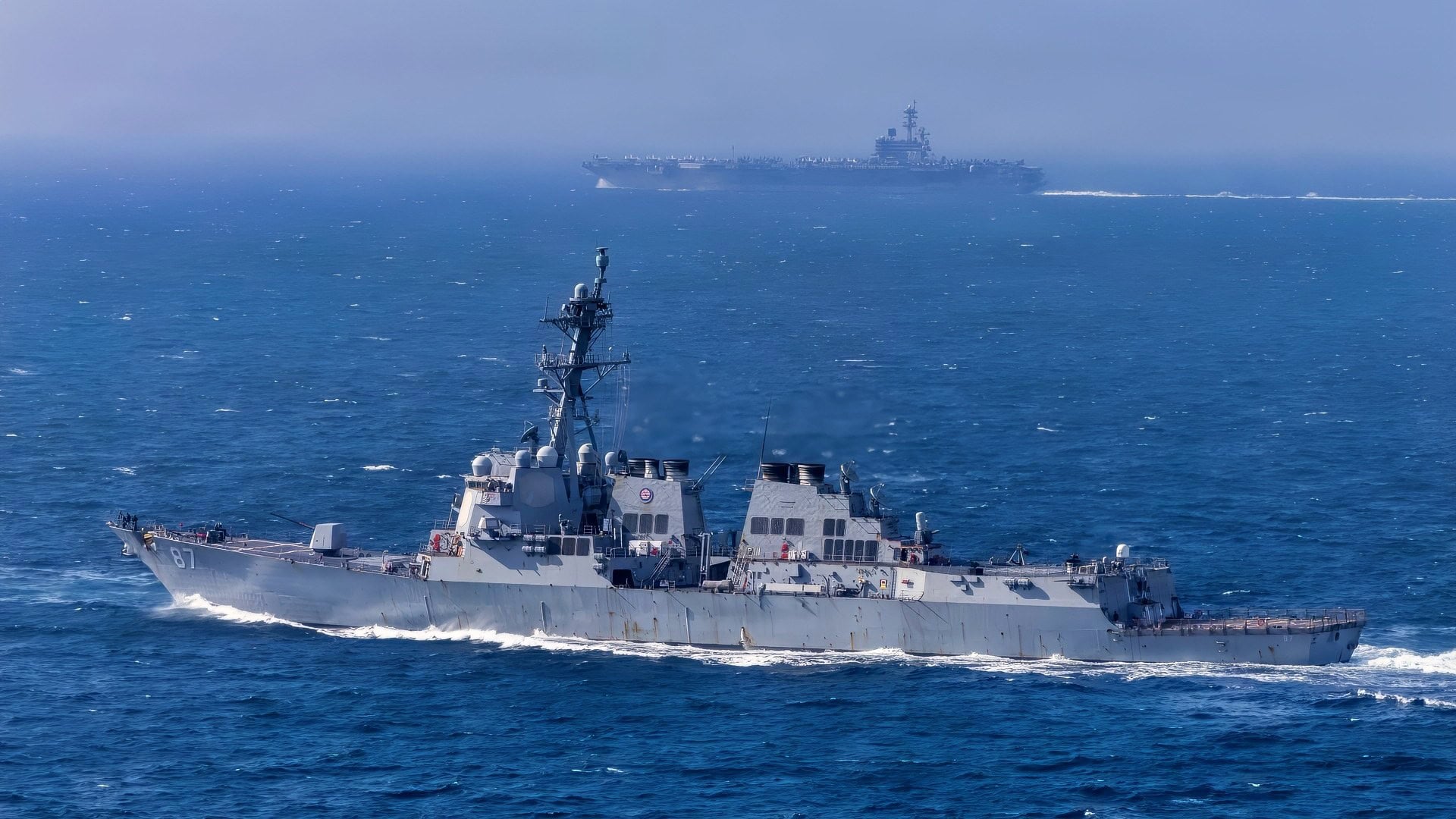
The Arleigh Burke-class guided-missile destroyer USS Mason (DDG 87) transits alongside the Nimitz-class aircraft carrier USS George H.W. Bush in the Atlantic Ocean, Feb. 21, 2026. The George H.W. Bush Carrier Strike Group is at sea training as an integrated warfighting team. Composite Training Unit Exercise (COMPTUEX) is the Joint Force’s most complex integrated training event and prepares naval task forces for sustained high-end Joint and combined combat. Integrated naval training provides combatant commanders and America’s civilian leaders highly capable forces that deter adversaries, underpin American security and economic prosperity, and reassure Allies and partners. (U.S. Navy photo by Mass Communication Specialist 2nd Class Jayden Brown)
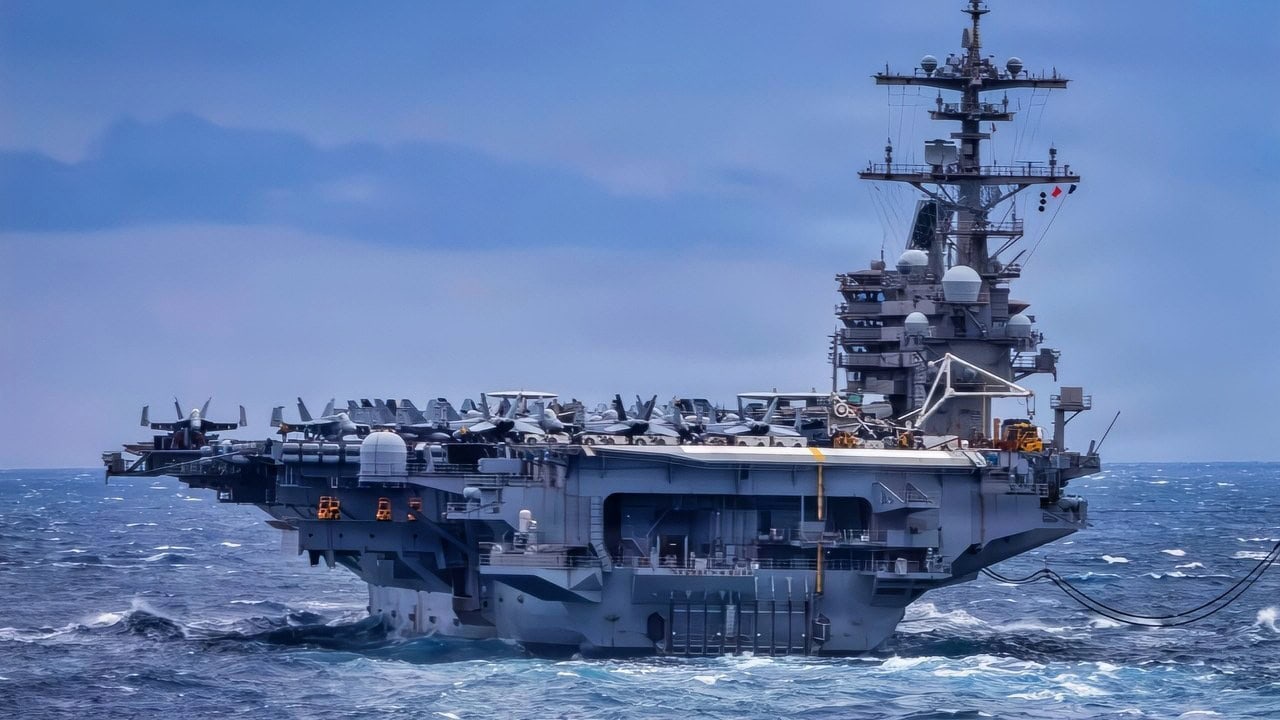
The Nimitz-class aircraft carrier USS George H.W. Bush (CVN 77) and the Henry J. Kaiser-class fleet replenishment oiler USNS John Lenthall (TAO 189) transfer cargo and JP-5 during a replenishment at sea in the Atlantic Ocean, Feb. 15, 2026. The George H.W. Bush Carrier Strike Group is at sea training as an integrated warfighting team. Composite Training Unit Exercise (COMPTUEX) is the Joint Force’s most complex integrated training event and prepares naval task forces for sustained high-end Joint and combined combat. Integrated naval training provides combatant commanders and America’s civilian leaders highly capable forces that deter adversaries, underpin American security and economic prosperity, and reassure Allies and partners. (U.S. Navy photo by Mass Communication Specialist 2nd Class Mitchell Mason)
And the operational reality of the current fleet — with USS Gerald R. Ford coming home from an unprecedented 11-month deployment, USS Dwight D. Eisenhower, USS George H.W. Bush, and USS Carl Vinson all rotating through high-tempo deployments — bears little resemblance to the assumptions that produced the 11-carrier law.
Keeping the Nimitz in service for 10 additional months does not address any of those problems. It addresses the optics of a temporary headcount drop. The actual operational fleet during the extension period is 10 carriers plus a 51-year-old warship not certified for combat tasking. A more honest reading of the strategic situation would be to either accept a temporary 10-carrier fleet, push to commission Kennedy faster, or amend the statute. Pretending the Nimitz still counts as the eleventh carrier is a fiction that costs real money and ties up real maintenance and crewing resources.
The Right Way To Retire A Great Ship
When the Nimitz arrives at Norfolk, the decommissioning process will begin in earnest. Nuclear defueling at Newport News Shipbuilding. Removal of the reactor compartment. Dismantling of combat systems and electronics. Eventual recycling. The entire process, for a Nimitz-class hull, takes years and consumes substantial shipyard capacity.
The dignified version of that process starts now, not in March 2027. Defueling preparation. Crew transitions to the next generation of carriers. Air wing reassignments. The Newport News inactivation work that the Navy has already begun funding through advanced planning contracts will run on its own timeline regardless of when the ship herself enters the shipyard.
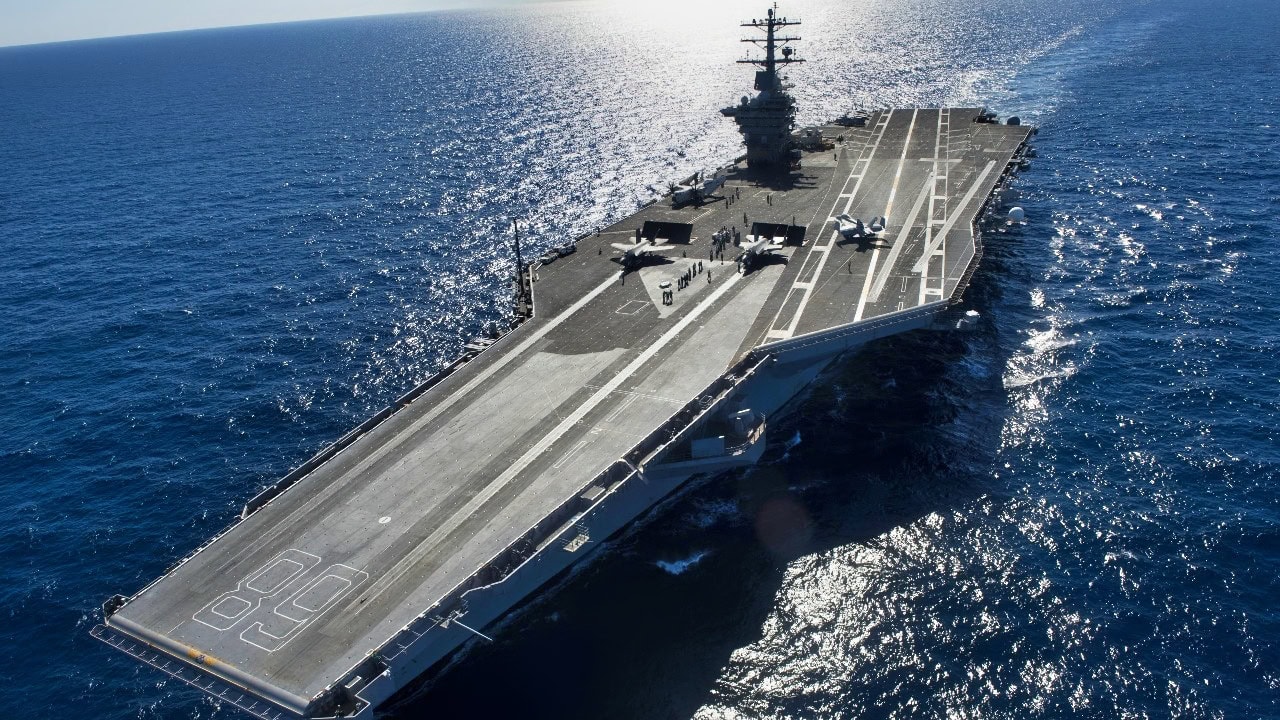
Ford-Class. Image Credit: Creative Commons.
The Ford-class will eventually replace her, however imperfectly. The USS John F. Kennedy is on track for commissioning in March 2027. The third Ford-class hull, USS Enterprise (CVN-80), is under construction at Newport News. The fourth, USS Doris Miller (CVN-81), follows. Whether the Ford-class is the right platform for the threat environment of the 2040s is a debate worth having — but the answer to that debate is not “extend the Nimitz further.” The answer is to either fix the Ford-class problems, accept a temporary drop in fleet count, or build something different.
The Nimitz herself is not part of either solution.
The Honor She Has Earned
There is a particular kind of respect that a navy owes to a great ship at the end of her service.
It is not the respect of pretending she is still useful in roles she can no longer fulfill. It is not the respect of sailing her around Cape Horn as a glorified ceremonial transit because the law requires the appearance of fleet strength. It is the respect of letting her finish her career while the record is still good, and the Nimitz’s record is one of the best in the history of the U.S. Navy.
Fifty-one years. Four wars. Tens of thousands of sorties. Generations of sailors who served on her, and went on to serve on every carrier that came after.
She has earned the right to go first — to be the first Nimitz-class carrier decommissioned, to set the institutional precedent for how this class of ship leaves service, and to do it on a schedule that reflects her actual operational state rather than a statutory accounting requirement.
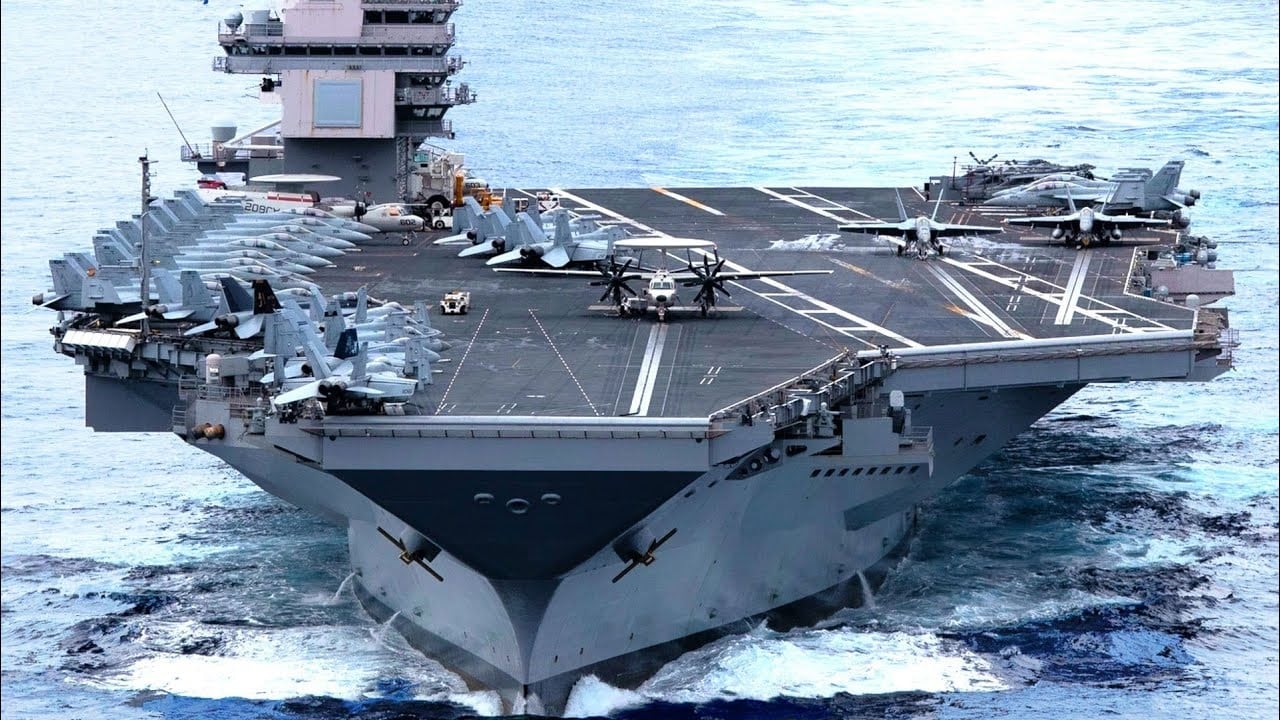
USS Gerald R. Ford. Image Credit: Creative Commons.
The Navy has now delayed that retirement twice — once when fiscal year 2025 became May 2026, again when May 2026 became March 2027. Each delay has come for the same reason: the carrier she was supposed to be replaced by is not ready.
That is not a problem the Nimitz can solve. It is a problem the Navy and Congress have to solve — by fixing the Ford-class production problems, by building the next generation of carriers on a schedule that actually delivers, and by being honest about what the 11-carrier fleet floor means in a strategic environment that has changed beyond recognition since the law was written.
Time to Say Goodbye to USS Nimitz
The Nimitz cannot keep waiting for the Navy to figure out its replacement timeline. She is too old. She is too tired. She has earned better than to be the float-test ship of the carrier industrial base. Bring her home. Defuel her. Break her up for what comes next. The right way to honor a great ship is to let her be done.
About the Author: Harry J. Kazianis
Harry J. Kazianis (@Grecianformula) was the former Senior Director of National Security Affairs at the Center for the National Interest (CFTNI), a foreign policy think tank founded by Richard Nixon based in Washington, DC. Harry has over a decade of experience in think tanks and national security publishing. His ideas have been published in the NY Times, The Washington Post, The Wall Street Journal, CNN, and many other outlets worldwide. He has held positions at CSIS, the Heritage Foundation, the University of Nottingham, and several other institutions related to national security research and studies. He is the former Executive Editor of the National Interest and the Diplomat. He holds a Master’s degree focusing on international affairs from Harvard University. Kazianis is Editor-In-Chief of 19FortyFive.

