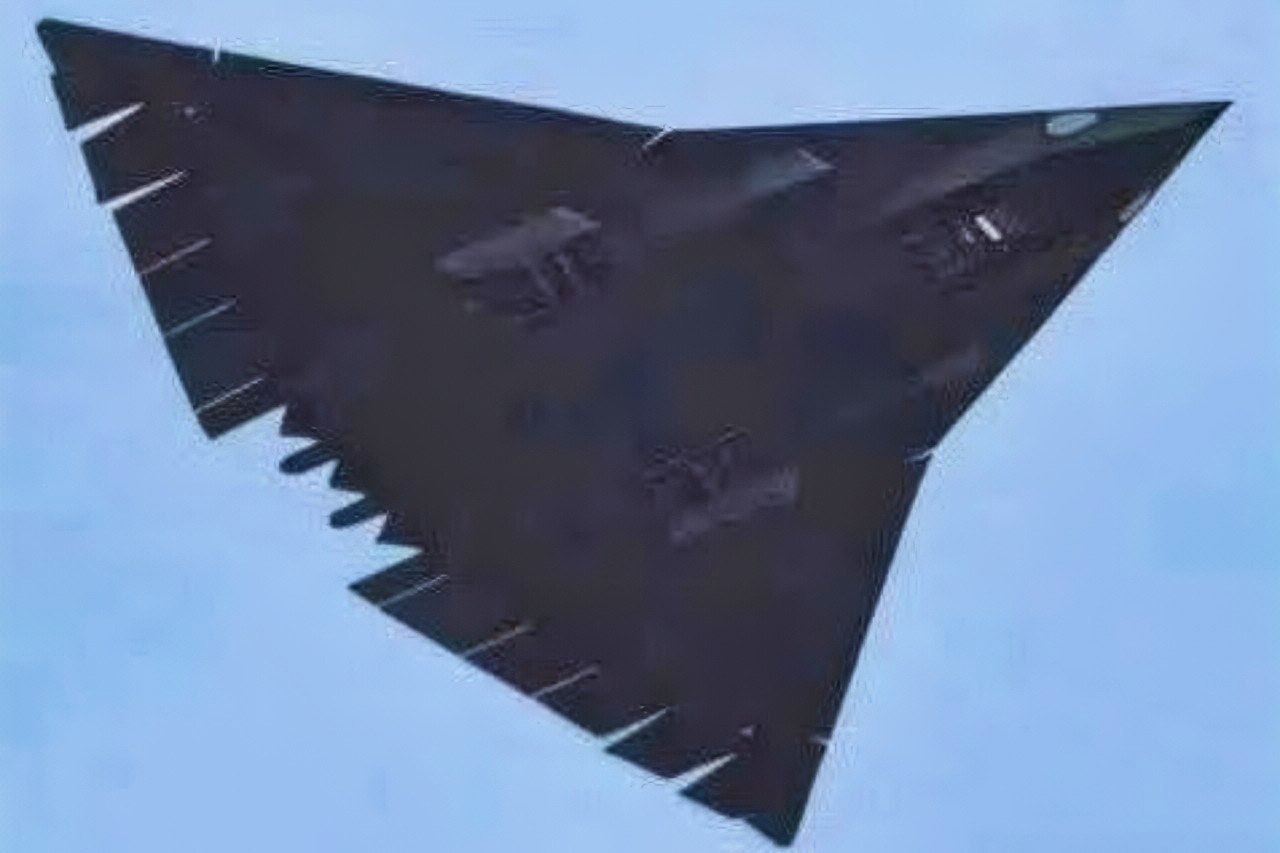
Synopsis: New long-distance video posted January 30 shows a fourth J-36 prototype in flight—another signal the program is cycling through prototypes at an unusually fast pace.
-The release pattern mirrors earlier rollouts: grainy “unauthorized” imagery from outside a factory perimeter, followed by more frequent sightings as testing matures.
-Prototype No. 4 appearing only 14 months after the first sighting is presented as evidence of heavy resourcing and priority backing from the People’s Liberation Army Air Force and Aviation Industry Corporation of China.
-Reporting cited by South China Morning Post argues this tempo could compress the path to final configuration, production, and entry into service—potentially by 2030.
New J-36 Prototype No. 4 Footage Signals a Rapid 6th-Gen Sprint
Progress toward the final configuration of one of the People’s Republic of China’s (PRC) 6th-generation fighters has taken another major step forward. On 30 January, video footage was posted on Chinese websites showing a fourth prototype of the Chengdu Aerospace Corporation (CAC) J-36.
The appearance of this fourth aircraft follows images posted on PRC internet sites showing the J-36 on the ground, with all three engines powered up and preparing for its first test flight. While those images appeared to be taken up close, the short video of the fourth J-36 that was posted on different PRC websites was like much of the footage seen to date of the previous three prototypes
The imagery was again captured from a long distance and appears to be from a video camera or smartphone held by an unauthorized observer outside the wall surrounding the CAC aerodrome.
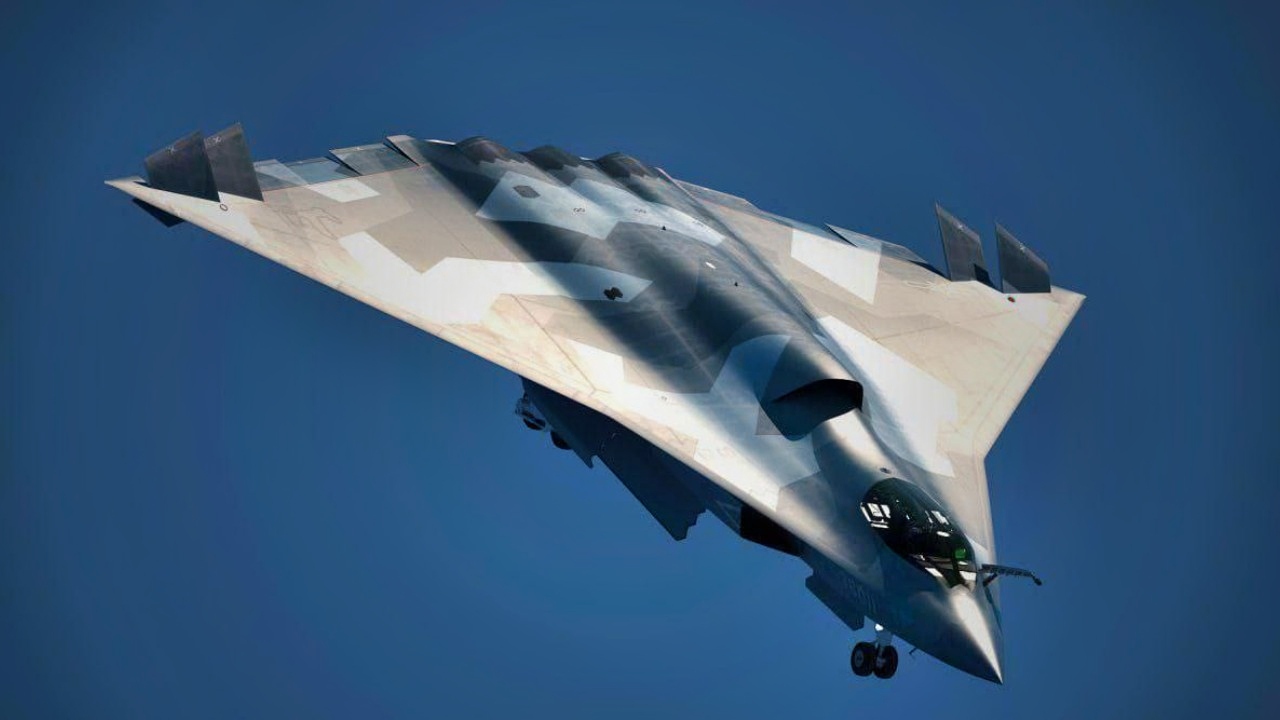
J-36 Fighter Artist Rendition. X Screenshot.
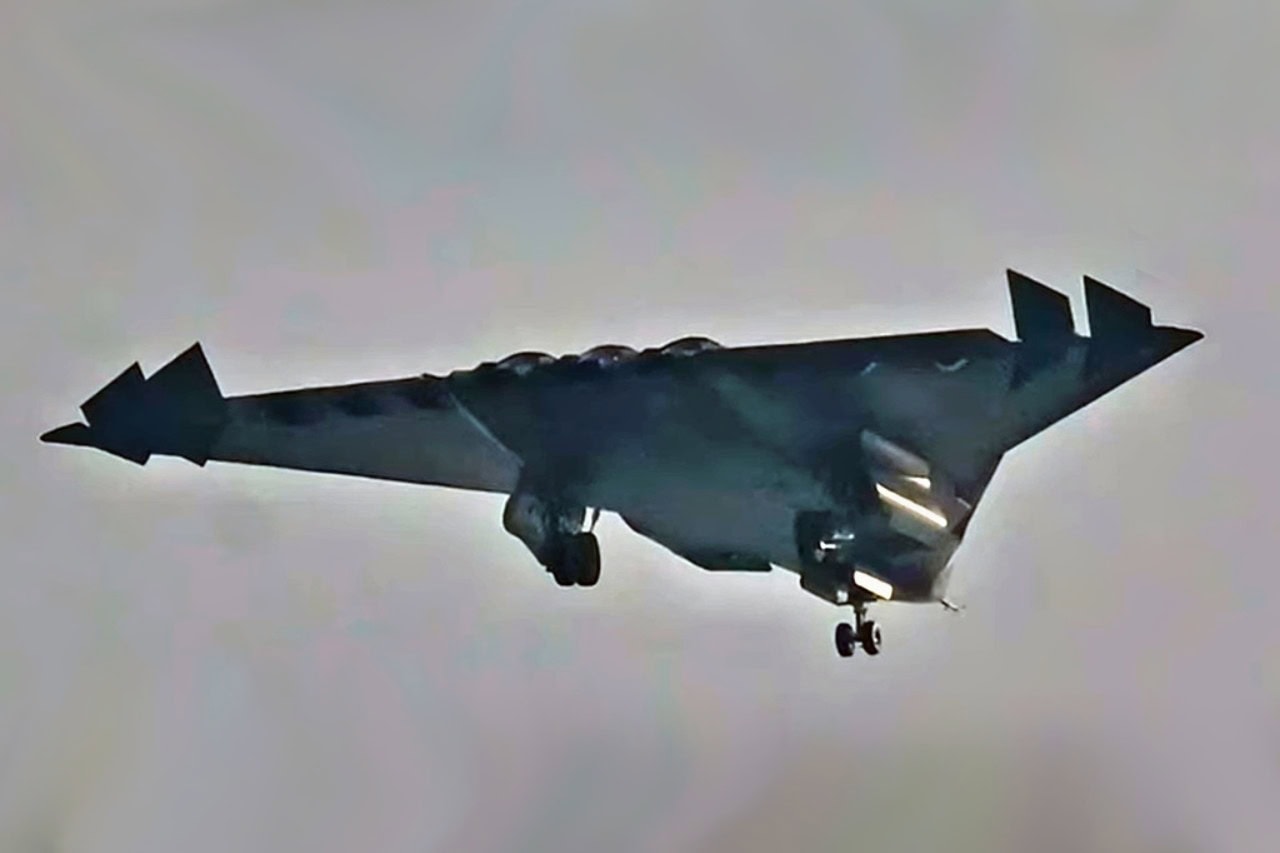
J-36 Fighter from China. Image Credit: Creative Commons.
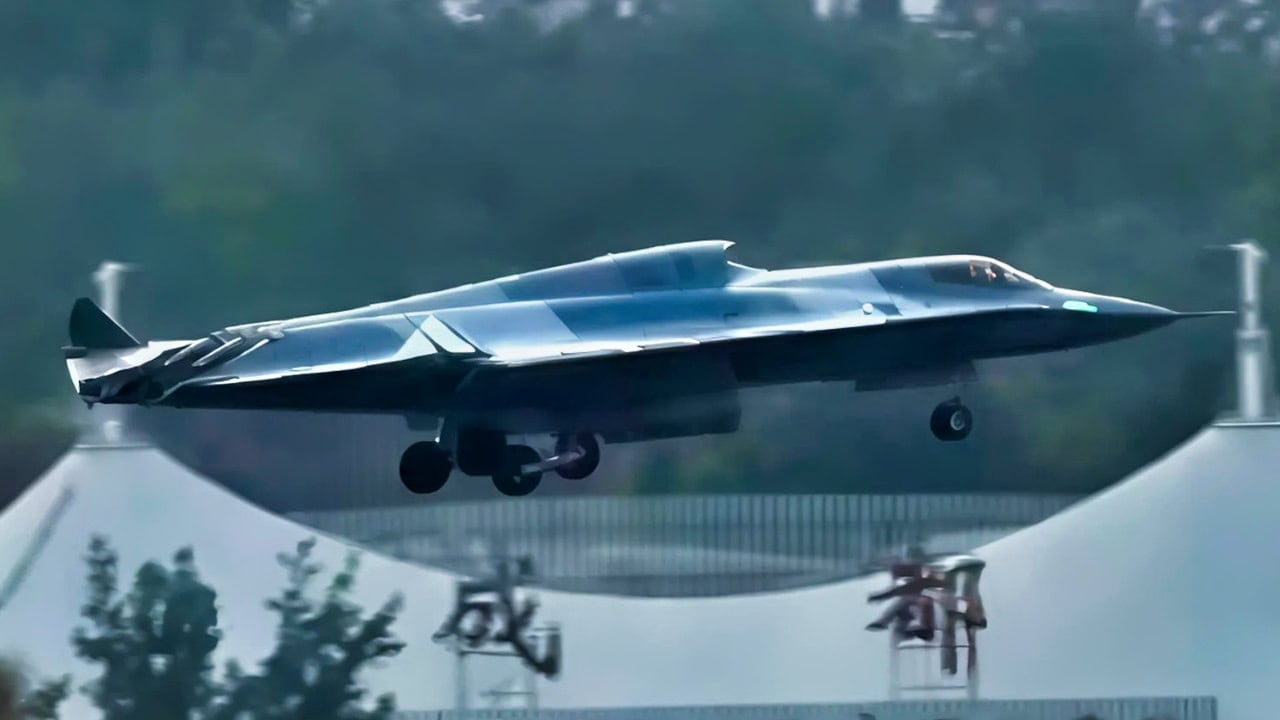
J-36 Fighter from X/Screenshot.
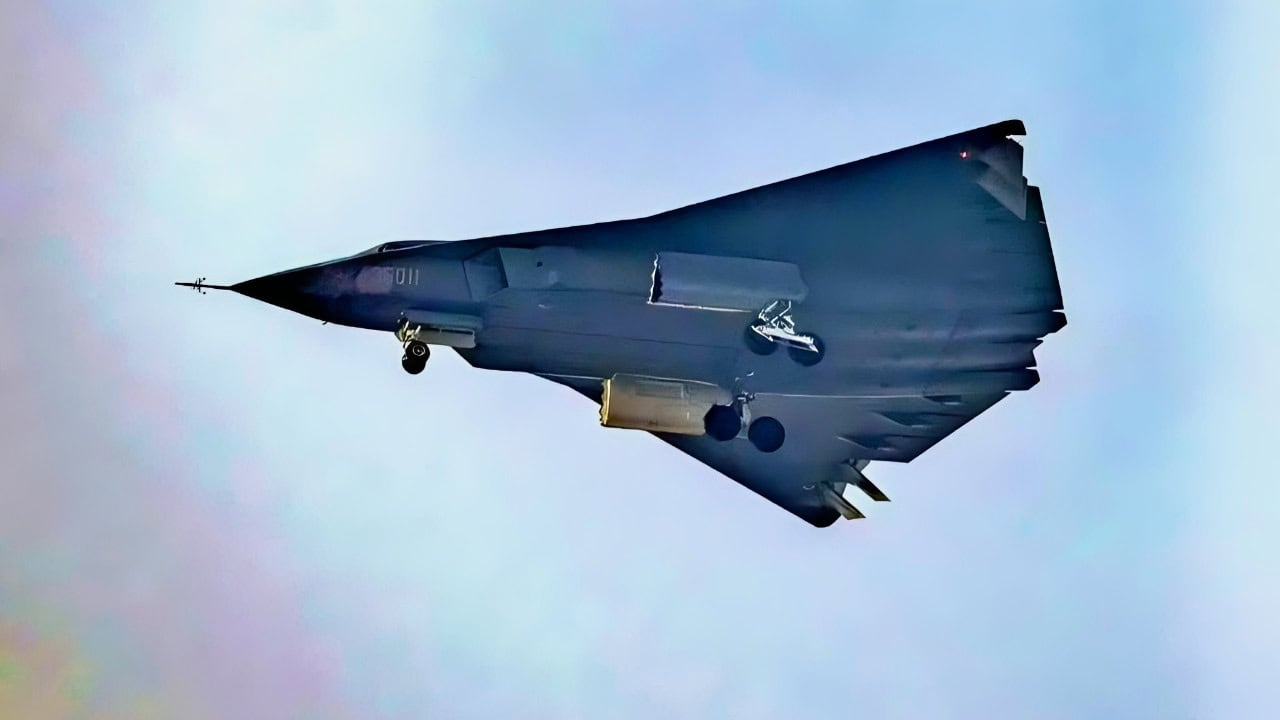
J-36 Fighter from China. Image Credit: X Screenshot.
But in the history of new-generation aircraft produced at the CAC design center and the co-located Aircraft Plant No. 132, there has traditionally been this staged, progressively sanctioned sequence of events leading to the official announcement and introduction of a new aircraft type.
As of this reporting, the existence of the J-36 – and even this designation of this design itself – has not been acknowledged by any PRC officials or institutions.
But the manner in which the aircraft’s existence is being made known to the world entirely fits this pattern of revelations that is very similar to that which was employed more than 16 years ago when another famous Chengdu aircraft, the J-20, was taken out from under wraps.
Accelerated Development
Chinese design bureaux building different versions of the same aircraft in the early stages of a program is not unusual.
The J-10 program began in 1988 and was only publicly revealed in 1994.
The CAC team then produced from six to nine prototypes for testing from 1999-2000.
The aircraft was flown for public viewing at Air Show China in Zhuhai only in 2008, and the latest version of the aircraft was shown only ten years later.
In contrast, J-36 prototype number 4 appeared only 14 months after the first prototype was revealed in December 2024.
It is also being shown flying only a month after the third J-36 prototype flew on 26 December 2025, which marked the one-year anniversary of the program’s public disclosure.
This is a shorter timeline than most other previous next-generation aircraft designs anywhere in the world – even in the PRC.
For those who have been following PRC aircraft development programs over the last two decades, the pace of the J-36 effort indicates an immense commitment of resources by the PLAAF and the Aviation Industry Corporation of China (AVIC).
The rapid progress in prototype development and validation flights is also seen as proof that this program has been given the highest possible priority by the PLAAF.
There is considerable evidence that substantial funding has been invested in the effort.
Expedited Entry into Service
If there is a common denominator among all 6th-generation fighter programs under development, both inside and outside the PRC, it is that they have evolved beyond the basic requirements that distinguish themfrom 5th-generation models.
Simply put, the aircraft must be heavier than any previous-generation design and capable of operating at much longer ranges.
J-36 is ultimately expected to have four times the range of the US F-22.

F-22 Raptor Fighter. Image Credit: Creative Commons.
The size of these next-generation aircraft is dictated by the need to carry a significant complement of weaponry housed in an internal weapons bay, a large volume of internal fuel, and onboard systems capable of handling multiple battle management functions while still operating as tactical fighter aircraft.
In recent decades, PRC fighter aircraft development programs have integrated major innovations in materials, propulsion, avionics, and sensors in parallel and expeditiously incorporated them into a new platform.
This considerably shortens the cycle from prototype construction to flight testing to final configuration to serial production, and ultimately to entry into service.
The Chengdu J-20, a 5th-generation fighter, entered service just six years after its “official” first flight in January 2011.
There is now every indication that the timeline between the J-36’s first flight in December 2024 and its being placed in PLAAF inventory could be even shorter.
Yang Shuifeng, who is the senior engineer and director of the performance research division at the Chengdu Aircraft Design Institute spoke in December 2025 to the South China Morning Post and explained how the PRC industry has been able to conduct its developmental processes more rapidly than in the West.
PRC designers criticize the US design process for failing to address technical challenges, for an overall decline in American manufacturing, and for mutually reinforcing management shortcomings. Among these are perennial budget overruns, slow adaptation of emerging military technologies, and a lack of understanding of peer competitors.
In a peer-reviewed paper that Yang and his design team published in the PRC Journal of Systems Engineering and Electronics entitled “Aviation equipment R&D management method based on rapid capability generation”, they state that CADI and other Chinese design entities have managed to correct and then modify aircraft designs at speed, while also streamlining R&D and manufacturing processes.
This efficiency may enable the J-36 to enter into full-scale production as soon as 2030, much sooner than any of the US or European 6th-generation programs. Barring dramatic shifts in the timeline for these Western programs, the US and others are likely to fall years behind the Chengdu effort.
About the Author: Reuben F. Johsnon
Reuben F. Johnson has thirty-six years of experience analyzing and reporting on foreign weapons systems, defense technologies, and international arms export policy. Johnson is the Director of Research at the Casimir Pulaski Foundation. He is also a survivor of the Russian invasion of Ukraine in February 2022. He worked for years in the American defense industry as a foreign technology analyst and later as a consultant for the U.S. Department of Defense, the Departments of the Navy and Air Force, and the governments of the United Kingdom and Australia. In 2022-2023, he won two awards in a row for his defense reporting. He holds a bachelor’s degree from DePauw University and a master’s degree from Miami University in Ohio, specializing in Soviet and Russian studies. He lives in Warsaw.