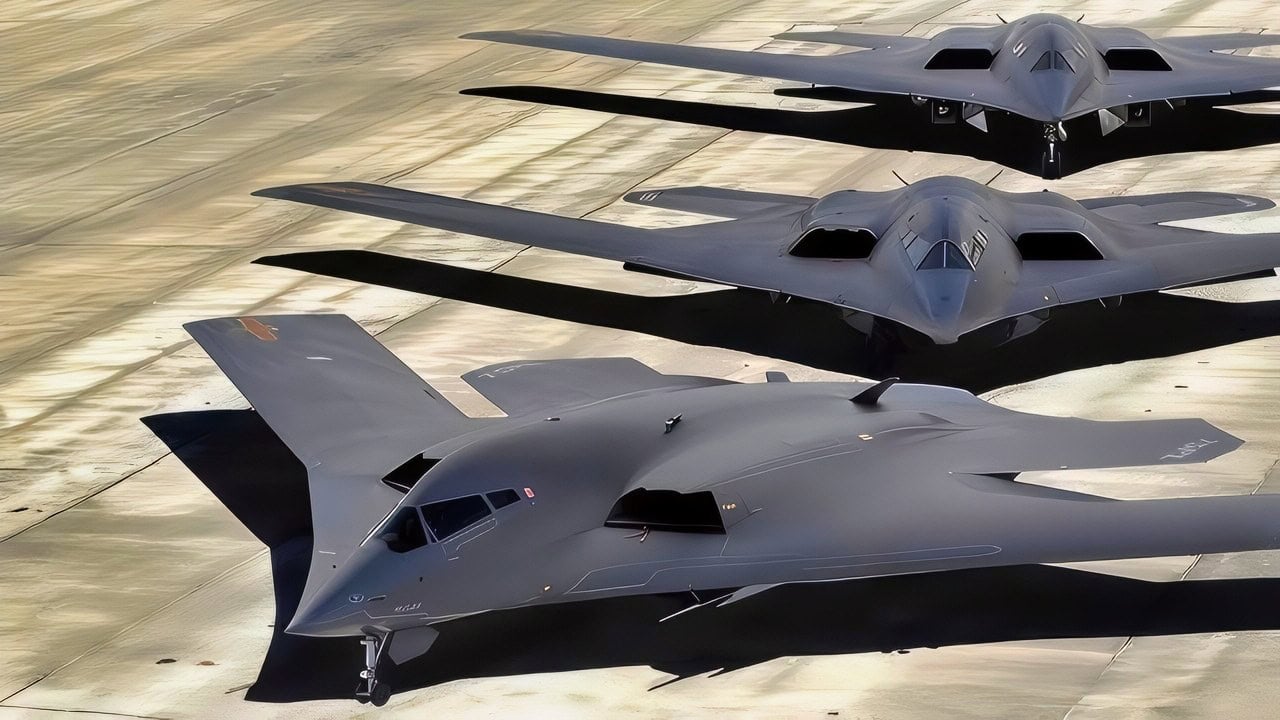
Summary and Key Points: Brandon J. Weichert, Senior National Security Editor and author of Winning Space, challenges the USAF Global Strike Command assessment of China’s Xian H-20 stealth bomber.
-While the Pentagon views the PLAAF as a “regional force” currently reliant on H-6 variants and Tu-16 derivatives, Weichert argues that the H-20’s debut will signal the end of American air dominance in the Second Island Chain.

B-21. Image Credit: Northrop Grumman
-This 19FortyFive report analyzes how the H-20—engineered for anti-access/area-denial (A2/AD)—will target transit hubs like Guam, leveraging Chinese production velocity to overwhelm the technologically superior B-21 Raider and B-2 Spirit fleets.
The War Zone has an interesting piece featuring comments from the United States Air Force Global Strike Command chief Gen. Stephen Davis, who basically says that China still lacks a true global-range bomber capability. Davis refers to China’s strategic bomber fleet as being “a regional bomber force at best.”
Washington’s Comforting Illusion on H-20 Bomber
When it comes to the vaunted, still developing, Xi’an H-20, China’s answer to the B-2 Spirit and B-21 Raider long-range, nuclear-capable bombers, Gen. Davis asserted that “They’re just not there yet.”
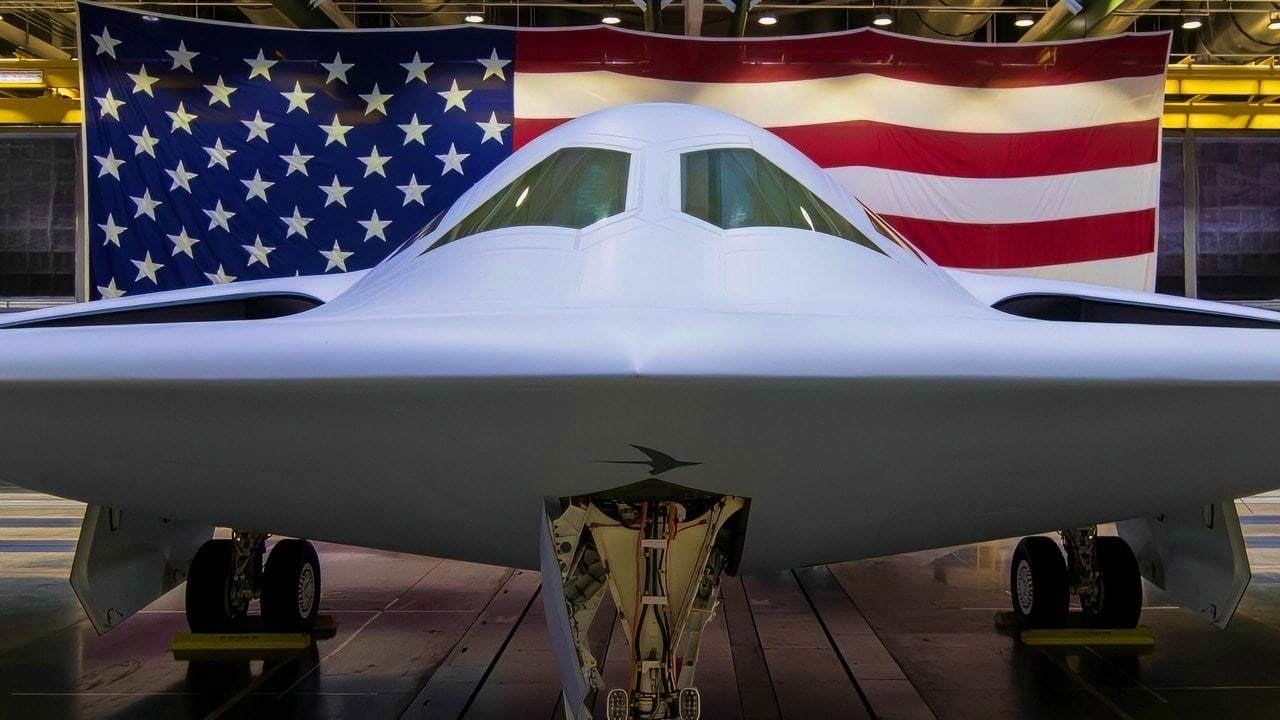
The B-21 Raider was unveiled to the public at a ceremony December 2, 2022 in Palmdale, Calif. Designed to operate in tomorrow’s high-end threat environment, the B-21 will play a critical role in ensuring America’s enduring airpower capability. (U.S. Air Force photo)
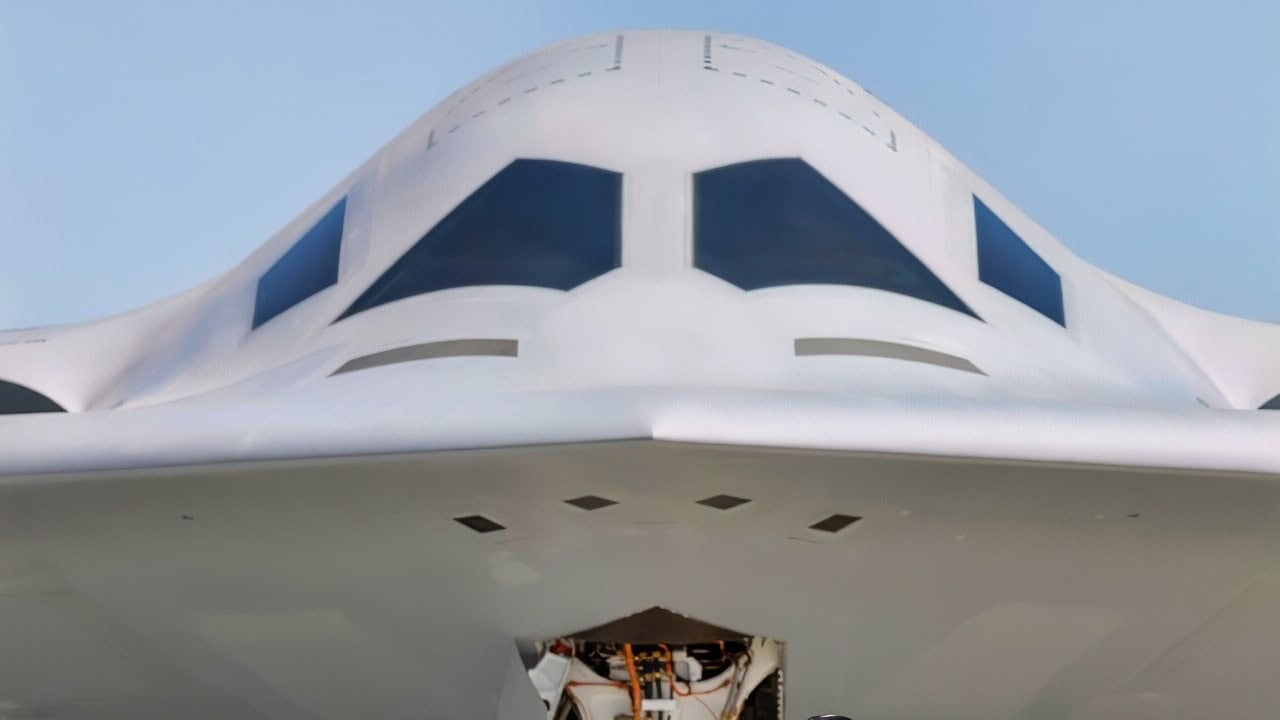
U.S. Air Force Airmen with the 912th Aircraft Maintenance Squadron prepare to recover the second B-21 Raider to arrive for test and evaluation at Edwards AFB, Calif., Sept. 11, 2025. The arrival of a second test aircraft provides maintainers valuable hands-on experience with tools, data and processes that will support future operational squadrons. (U.S Air Force photo by Kyle Brasier)
This is a ridiculous statement, and part of the ongoing strategic coping mechanism that American (and Western) leaders constantly engage in whenever the prospect of China catching up—and surpassing—the United States economically, technologically, and eventually militarily comes up.
Why China Only Needs Regional Dominance—For Now
General Davis is correct in stating that China is a regional bomber force.
Indeed, theirs is a regional military. A military that is specifically primed for dominance (for now) in the First (of three) Island Chain (the territories stretching from the Kamchatka Peninsula through Japan and Taiwan down to the Philippines).
That is precisely what Beijing wants (and needs) right now if it is to create for itself a true sphere of influence in the Indo-Pacific.
Once China has fully asserted its dominance over the First Island Chain, which it can now do because the Pentagon’s own recent Overmatch Briefing concluded that the Chinese military would soundly defeat the US military in a fight over Taiwan, it will then work to build for itself a global military. But these things take time. In the interregnum, China must demonstrate a reliable capacity to dictate terms in its own region.
American leaders assume that China is a static player. The reality of today (or yesteryear) will define China’s future. That is certainly not the case. American leaders argue that the H-20 is far less capable than either the US Air Force’s B-2 Spirit or the newer B-21 Raider long-range stealth bombers.
But this is rubbish. In a conflict, the H-20—coupled with the fact that these planes would be produced in abundance once they do debut—will be more than helpful for China’s Armed Forces.
The H-20’s Real Purpose
The War Zone article notes that China has faced design and technical hurdles in developing the H-20.
According to these sources, the Chinese are struggling to develop their new H-20 bombers with the low observability of the kind that the B-2 Spirit— and certainly the newer B-21—possess.
Meanwhile, the Pentagon has hinted that the H-20 could be operational in the next decade. The Chinese, meanwhile, indicate that the plane will be debuted within the next few years. And, when it does, that plane will pose a significant threat to the United States.
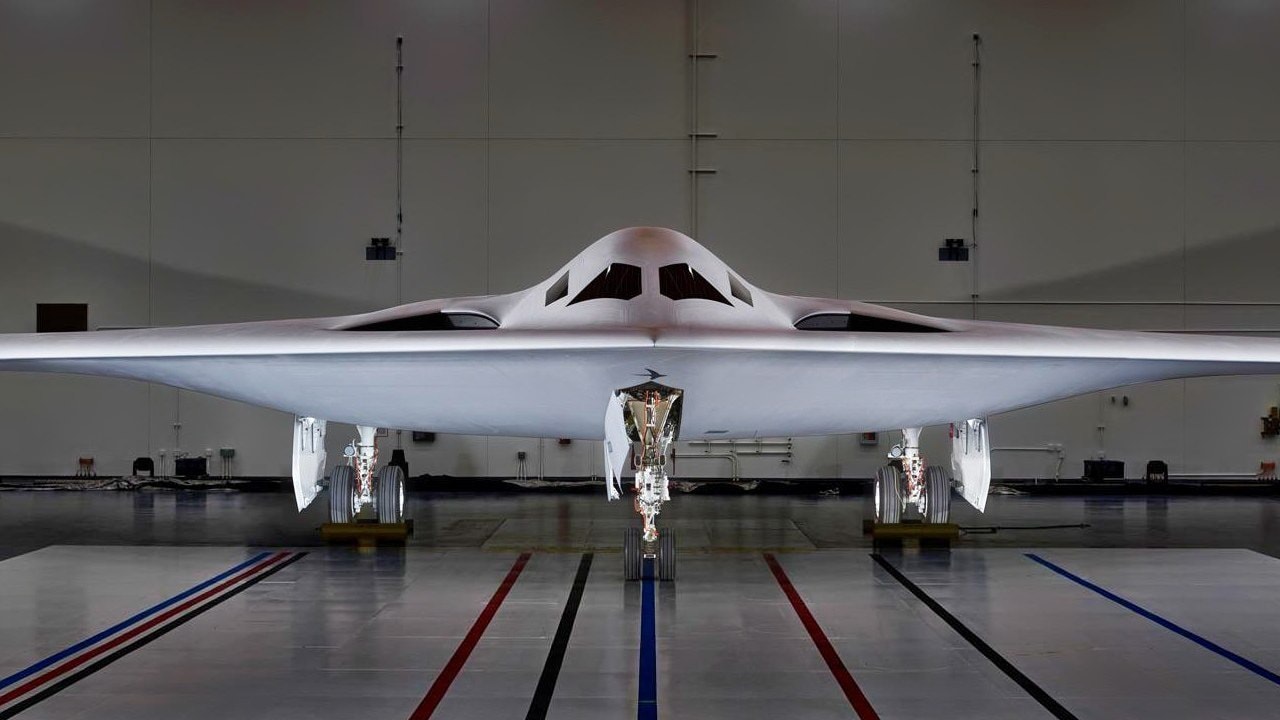
B-21 Raider Bomber U.S. Air Force.
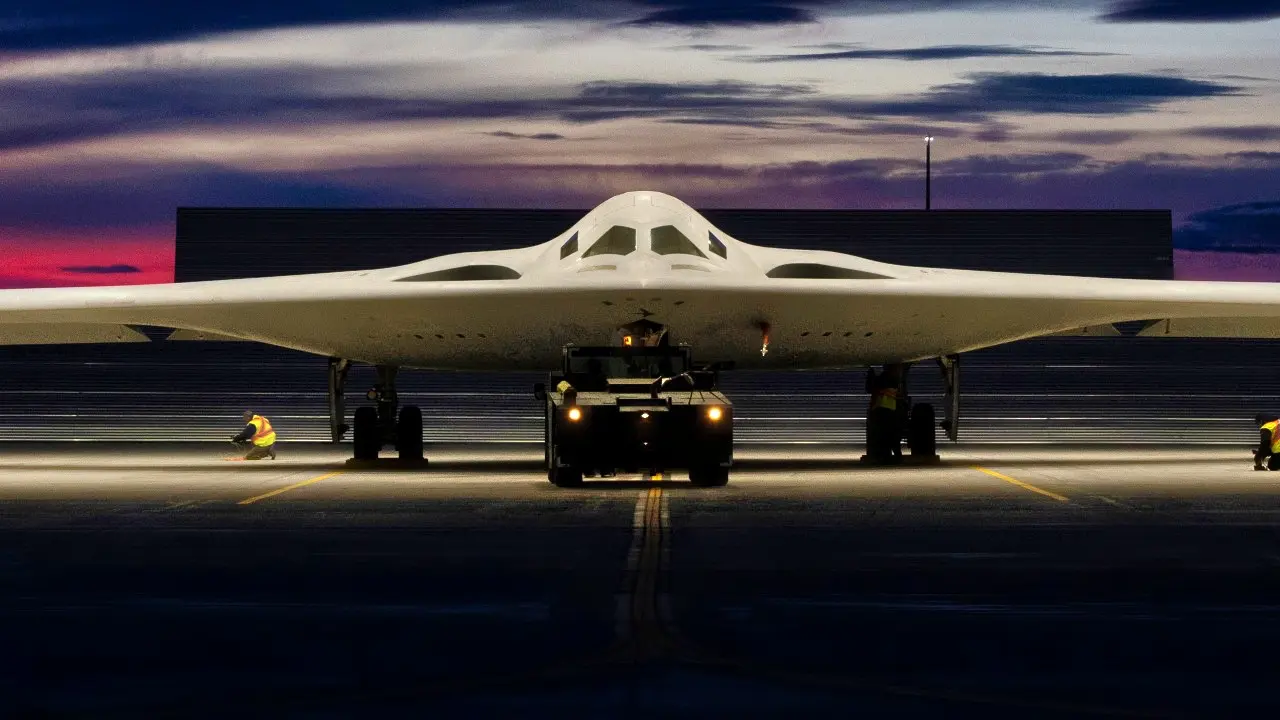
B-21 Raider Stealth Bomber.
Even though China has been investing heavily into developing their antique bomber force. Currently, H-6 variants of the modernized Soviet-era Tu-16 derivative comprise the Chinse play. Some of the H-6’s has modern capabilities, like aerial refueling and nuclear-capable, air-launched ballistic missiles.
The Strategic Risk of Assuming China is “Not Ready Yet”
H-20 could start appearing suddenly as a political weapon in China. This would shift China from regional anti-access/area-denial (A2/AD) power into a limited global strike actor. The H-20 will be used to target the Second Island Chain, which means that the threat to America’s main military transit hub in the Indo-Pacific, will only increase over the next five-to-ten years. The H-20 could also possibly involve itself on behalf of China in the Indian Ocean sealanes.
The Air Force gets it wrong again regarding a key capability and the intentions of its Chinese rivals.
Clearly, the US Air Force believes that China desires a B-2/B-21-type stealth bomber. China has not yet solved the technology or deployment hurdles, leaving it to its own devices and saying “tag, you’re it!” to the wider region is a truly awful idea.
Make no mistake: we have no clear understanding of their actual technological advances with the H-20. We’re just guessing. Given how China’s rise has progressed over the last several decades, I’d advise any U.S. leader not to draw sweeping conclusions about China’s true capabilities and intentions.
The real danger is not that China already has a world-class stealth bomber. The danger is that Beijing is building one while Washington relies on yesterday’s intelligence and today’s assumptions. When China finally rolls out the H-20, it won’t be to prove a point to aviation enthusiasts. It will signal that the era of uncontested American reach in the Indo-Pacific is ending.
By the time American planners stop screaming at each other and promising that China isn’t “there yet,” China will be. And when that day comes, the question won’t be whether the H-20 matches the B-21 Raider on paper.
The question will be whether America woke up in time to respond…or whether we spent the decisive decade reassuring ourselves while our rival quietly built the means to dictate the terms of the next war. Clearly, the US Air Force wants to keep deluding itself while the enemy in Beijing builds real systems to defeat us.
About the Author: Brandon J. Weichert
Brandon J. Weichert is the Senior National Security Editor at 19FortyFive.com. He was previously the senior national security editor at The National Interest. Weichert is the host of The National Security Hour on iHeartRadio, where he discusses national security policy every Wednesday at 8pm Eastern. He hosts a companion show on Rumble entitled “National Security Talk.” Weichert consults regularly with various government institutions and private organizations on geopolitical issues. His writings have appeared in numerous publications, among them Popular Mechanics, National Review, MSN, and The American Spectator. And his books include Winning Space: How America Remains a Superpower, Biohacked: China’s Race to Control Life, and The Shadow War: Iran’s Quest for Supremacy. Weichert’s newest book, A Disaster of Our Own Making: How the West Lost Ukraine, is available for purchase wherever books are sold. He can be followed via Twitter/X @WeTheBrandon.