
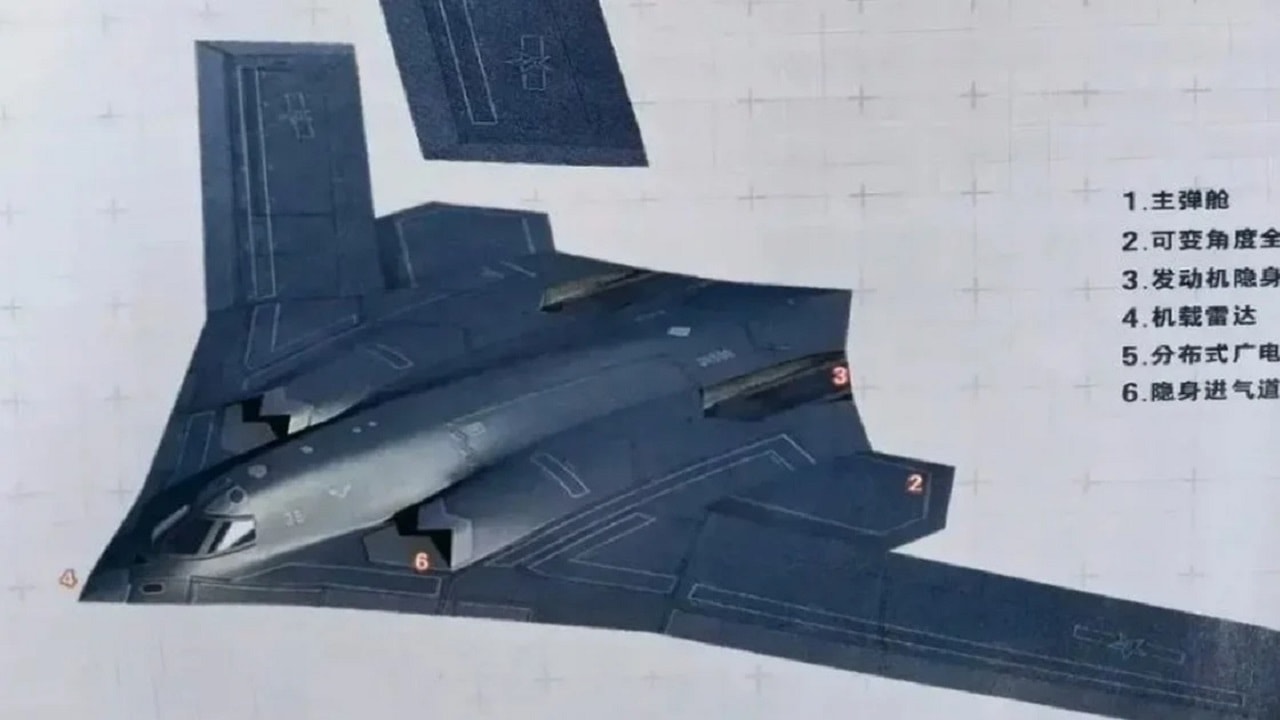
Key Points and Summary: Satellite footage leaked in 2025 might confirm that China’s H-20 stealth bomber is advancing, with the aircraft’s flying-wing design and estimated 8,500-kilometer range posing a direct threat to U.S. assets in Guam and beyond. Although experts have different opinions on such claims.
-While Beijing claims the H-20 is homegrown, analysts suspect the design was aided by stolen U.S. B-2 secrets, specifically citing the indictment of a Northrop Grumman engineer in the early 2000s.
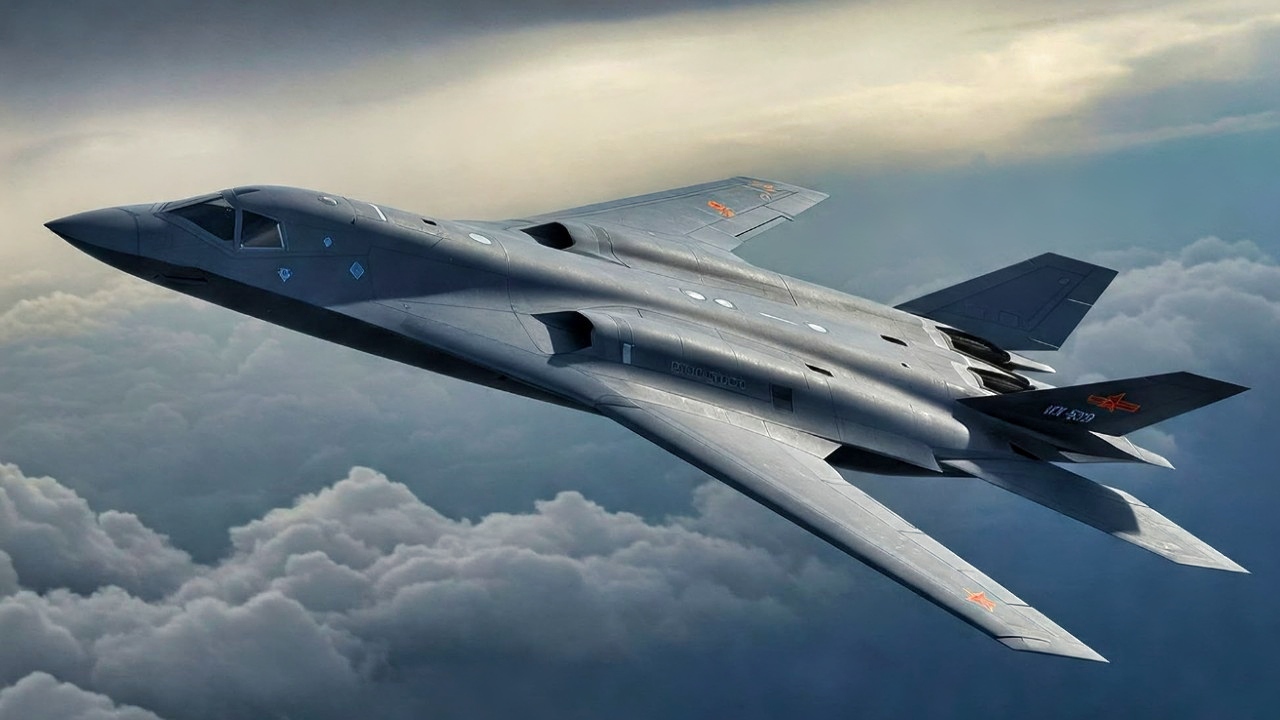
Computer Generated Image of H-20 Bomber from China. Image Created with AI help.
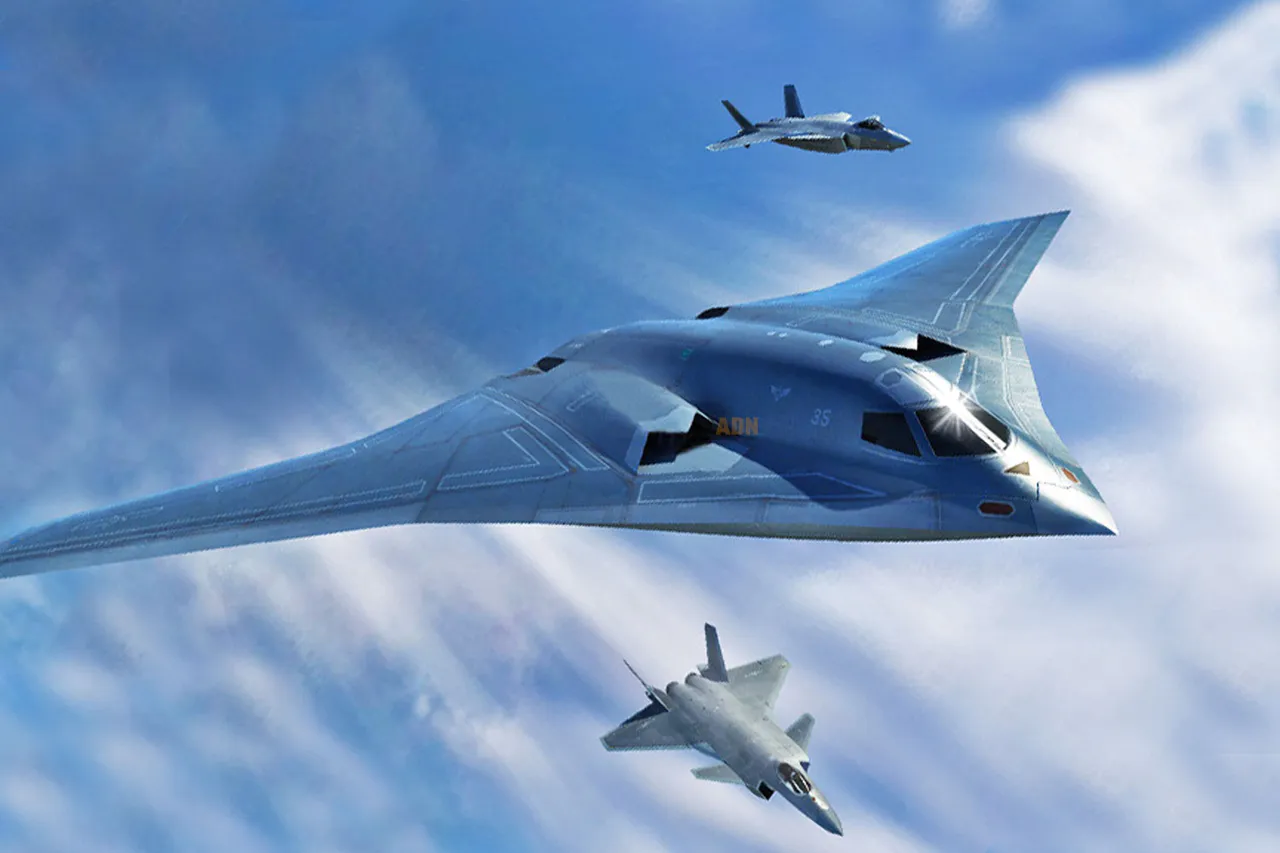
H-20 Bomber. Image Credit: Creative Commons.
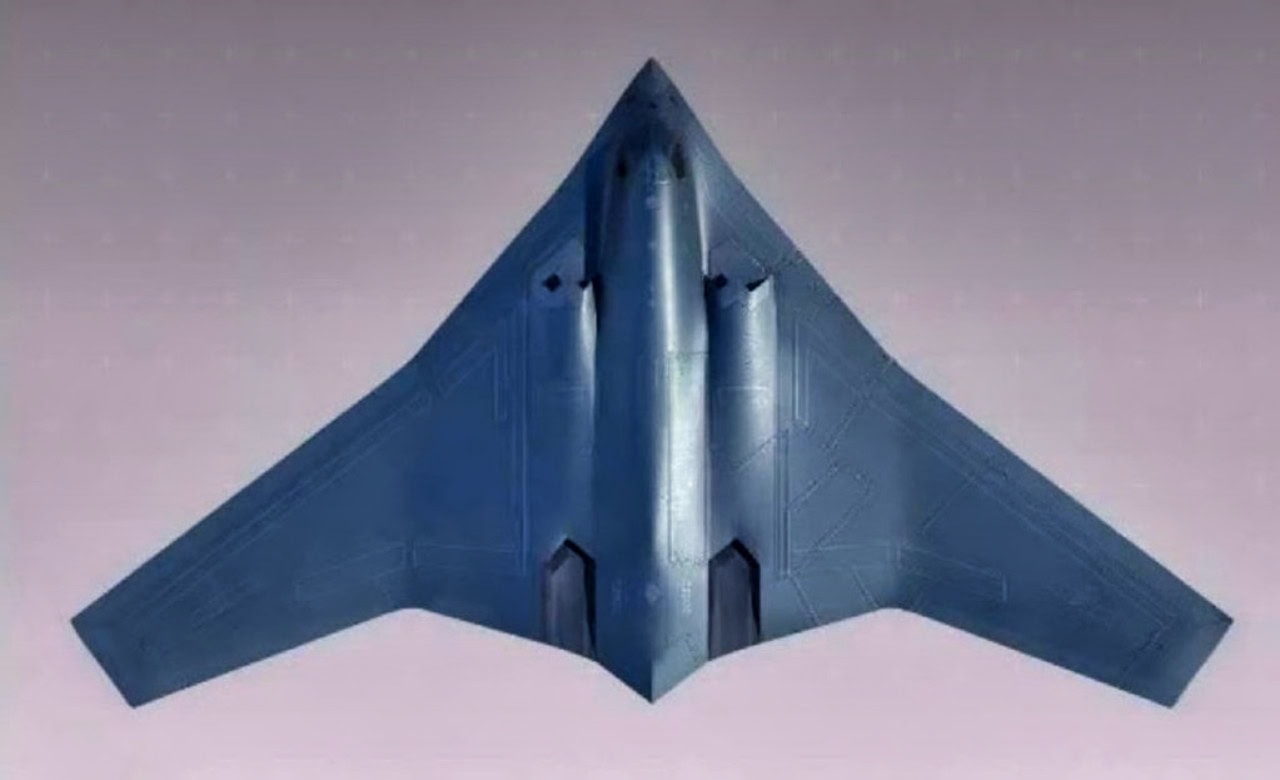
H-20 Bomber from China Artist Rendition.
-As the U.S. races to field its own sixth-generation B-21 “Raider,” both nations are competing to introduce the world’s first operational next-gen bomber to redefine global deterrence.
The H-20 Bomber Now Flying?
Stealth bombers play a key role in any nation’s deterrence strategy.
Over the summer, US-made B-2 “Spirit” bombers proved their worth after striking Iran’s nuclear assets in a high-stakes air campaign that crippled the regime’s WMD progress.
While America’s existing bomber fleet and upcoming B-21 “Raider” series are perhaps the most recognizable worldwide, other nations are staking their claim in the arena.
Both China and Russia are working to produce their own sixth-generation stealth bombers, the Xi’an H-20 and the PAK DA, respectively.
The H-20
Last year, the world got a better look at China’s first intercontinental range stealth aircraft. At least, according to some experts.
According to satellite footage leaked from a People’s Liberation Army Air Force base near Xinjiang province, the H-20 is advancing in its development.
The PLAAF first revealed its intention to field a next-gen stealth bomber one decade ago, when then-general Ma Xiaotian announced the H-20 project on the air force’s open day.
Over the last ten years, the H-20 has been mentioned by Chinese officials on numerous occasions. In 2021, the bomber’s flying wing design was used in a recruitment video for the PLAAF.
One year later, two separate prototypes of the H-20 aircraft surfaced online, at least, according to some experts.
In 2024, then-PLAAF deputy commander Wang Wei boasted that the upcoming stealth bomber would be unveiled soon, noting that there were no “technological bottlenecks” in its development.
Did the B-2 Inspire the H-20?
While Beijing claims the H-20 is an entirely homegrown design, US analysts suspect that the PLAAF was largely inspired by the American B-2 bomber project, at least in the initial phases of development.
In the early 2000s, one of Northrop Grumman’s lead engineers on the B-2 bomber, Noshir Gowadia, was indicted for selling information about the platform to China.
Additionally, in 2013, Andreas Rupprecht, an expert on Chinese aviation, published renderings of prototypes that suggested the development of a pending Chinese stealth bomber, indicating Beijing began working on the H-20 far earlier than the PLAAF’s original 2016 announcement.
H-20: What We Know So Far
While the majority of specs and capabilities surrounding the H-20 remain highly classified, certain assumptions have been made regarding the platform based on released images. Notably, the H-20 will undoubtedly prioritize stealth.
As detailed by Army Recognition, “The emphasis on stealth is evident in its flying-wing design, which likely includes radar-absorbent materials (RAM) and low-profile air intakes to minimize radar cross-section, making it suitable for operations in heavily defended airspace. Advanced avionics and electronic warfare systems are also expected, enhancing the bomber’s situational awareness and enabling coordinated strikes alongside other air, land, or sea assets.”
The Range
In terms of range, experts also believe the H-20 could travel up to 8,500 kilometers.
If this figure is accurate, Beijing would be able to reach well into the Philippines, Japan, and even the US territory of Guam.

The B-21 Raider was unveiled to the public at a ceremony December 2, 2022 in
Palmdale, Calif. Designed to operate in tomorrow’s high-end threat environment, the B-21 will play a critical role in ensuring America’s enduring airpower capability. (U.S. Air Force photo)
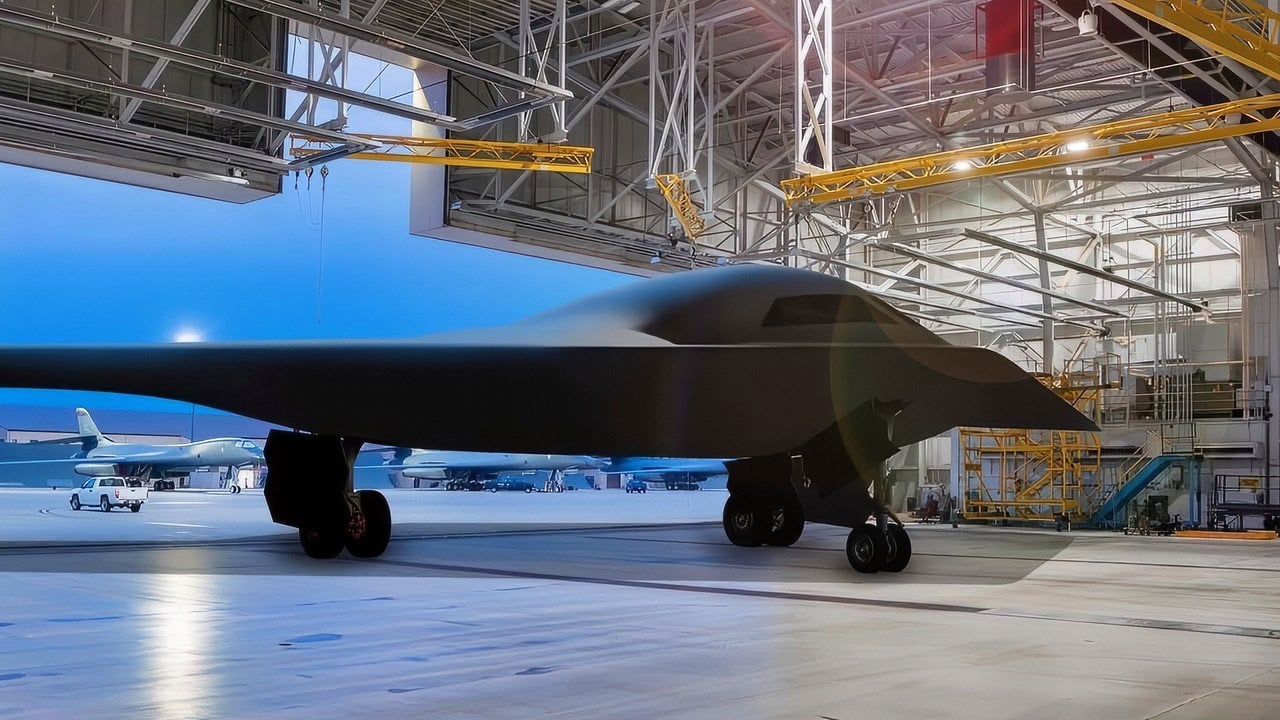
Artist rendering of a B-21 Raider in a hangar at Ellsworth Air Force Base, South Dakota, one of the future bases to host the new airframe. AFCEC is leading a $1 billion construction effort at Ellsworth to deliver sustainable infrastructure to meet warfighter demands for bomber airpower. (U.S. Air Force graphic)
Since many of the American military’s land-based air assets are positioned in Guam, China’s capacity to reach beyond the second island chain with the aid of a refuelable bomber would be particularly concerning to US national security.
What About the B-21?
Although China’s progress on its H-20 bomber is alarming, the US Air Force is simultaneously working to introduce its own sixth-generation counterpart promptly.
The B-21 “Raider” has made steady progress in development in recent years, signaling that the advanced bomber may join the Air Force’s existing bomber fleets in the very near future.
The dual-capable penetrating strike stealth bomber is being designed to function as part of a larger family of systems for conventional long-range strike.
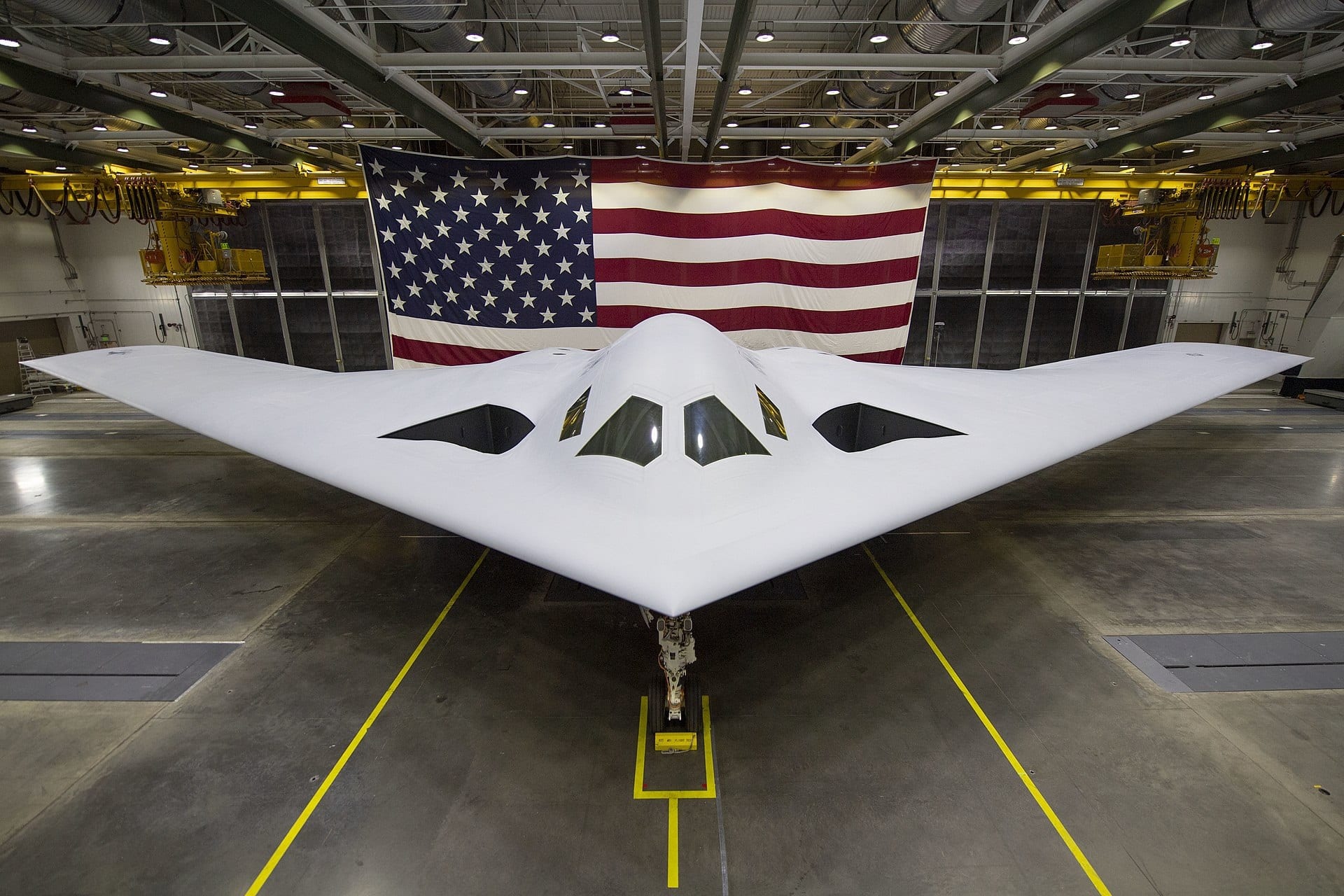
The B-21 Raider was unveiled to the public at a ceremony December 2, 2022 in..Palmdale, Calif. Designed to operate in tomorrow’s high-end threat environment, the B-21 will play a critical role in ensuring America’s enduring airpower capability. (U.S. Air Force photo)
The cutting-edge platform will be able to deliver both conventional and nuclear weapons, making it a key player in the US military’s future deterrence strategy.
While the Air Force has recently signaled that only 100 Raiders are planned, analysts and military experts across the board largely agree that a larger fleet will be essential to effectively counter Beijing if a full-on conflict erupts down the line.
Until the B-21 or H-20 officially reaches operational capacity, the race between Beijing and Washington to produce the world’s first-ever sixth-generation stealth bomber platform is on.
About the Author: Maya Carlin
Maya Carlin, national security writer with 19FortyFive, is an analyst with the Center for Security Policy and a former Anna Sobol Levy Fellow at IDC Herzliya in Israel. She has published over 1,000 articles in the last several years on various defense issues. Carlin has bylines in many publications, including The National Interest, Jerusalem Post, and Times of Israel. You can follow her on Twitter: @MayaCarlin.