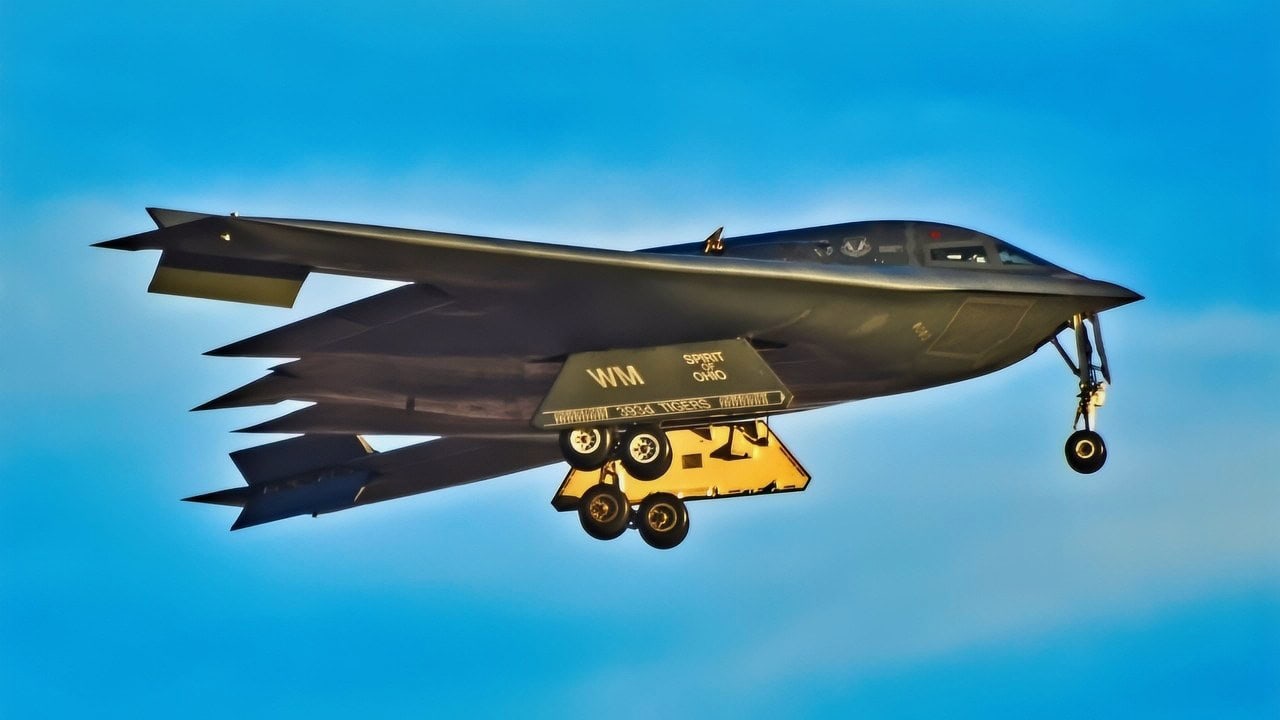
Synopsis: Chinese state television has teased the H-20 stealth bomber as “Coming Soon,” but the platform’s long-delayed arrival suggests potential developmental hurdles or the integration of advanced technology.
-Pentagon reports warn the H-20 could boast an 8,500-kilometer range and carry nuclear-capable CJ-20 missiles, threatening targets as far as Hawaii and the U.S. mainland.
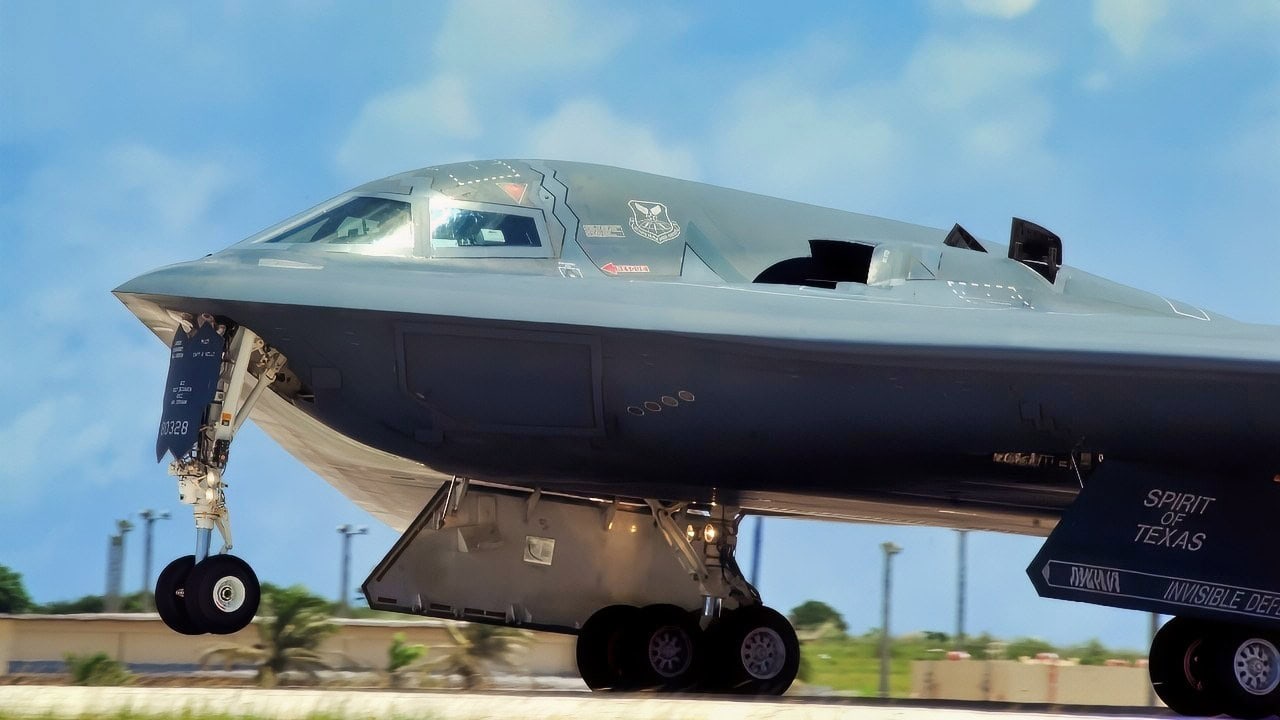
A U.S. Air Force B -2 Spirit aircraft deployed from Whiteman Air Force Base, Mo., launches from the runway at Andersen Air Force Base, Guam, Aug. 12, 2016. With its subsonic speeds and its nearly 7,000 mile unrefueled range, the B-2 Spirit is capable of bringing massive firepower, in a short time, anywhere on the globe through the most challenging defenses. (U.S. Air force photo by Senior Airman Jovan Banks)
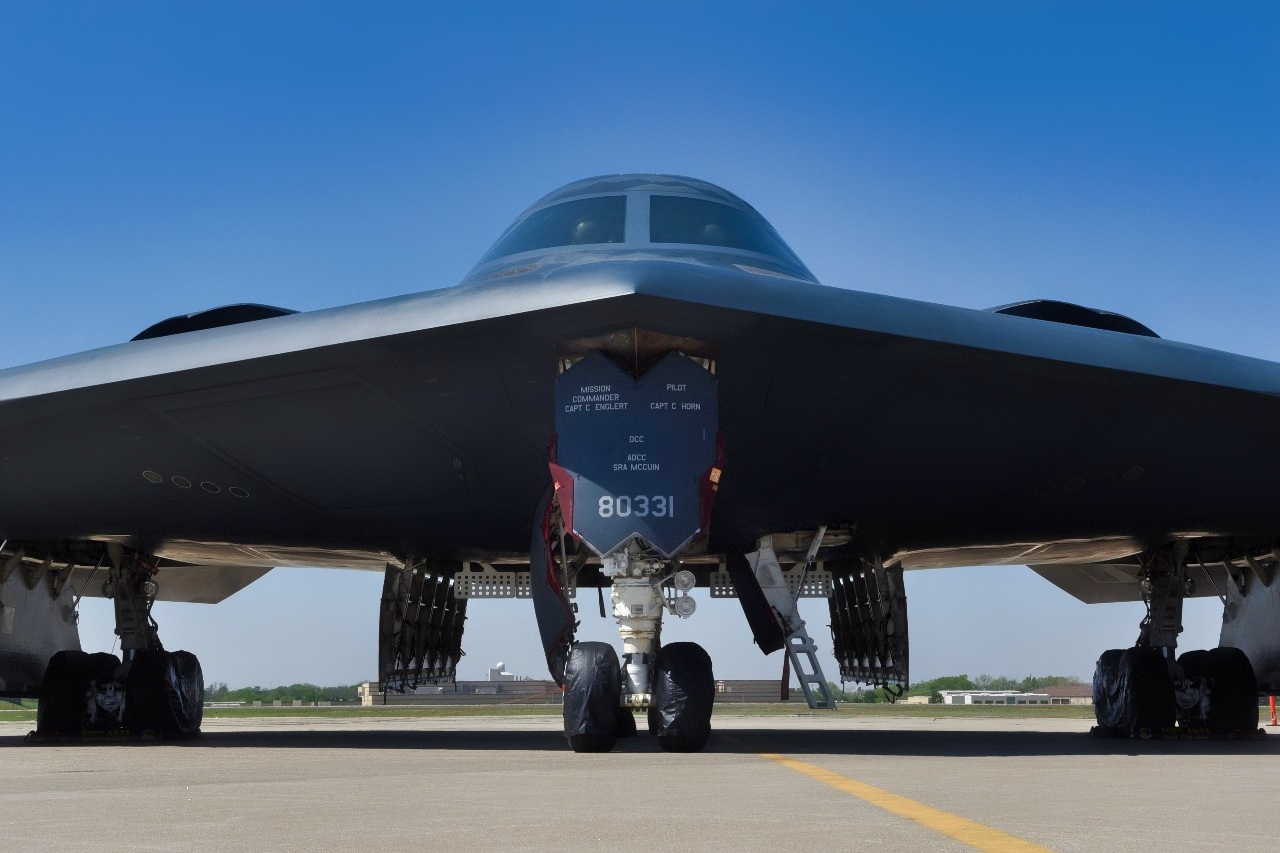
B-2A, serial #88-0331, ‘Spirit of South Carolina’ of the 509th Bomb Wing, Air Force Global Strike Command, on the parking ramp at Tinker Air Force Base, Oklahoma, during a visit April 11, 2017. The B-2A ‘stealth bomber’ visited the base to allow hundreds of personnel who work in direct support of the aircraft program through continuous software upgrades to see it in person and better understand the aircrafts’ role in the nation’s defense. (U.S. Air Force photo/Greg L. Davis)
-While its computing and stealth capabilities relative to the U.S. B-21 remain unclear, experts fear China’s mass production capacity could deploy a fleet of 50 bombers within a decade, creating a significant “nuclear-mass” threat.
The H-20 Stealth Bomber Threat: Real or Not?
“Coming soon” is Chinese state television’s advertisement for the future H-20, a stealth bomber intended to rival the U.S. Air Force B-21 with unmatched range, stealth and payload capacity.
Recent Chinese reports suggest the aircraft would be publicly unveiled soon—a vague comment that leaves the timeframe unclear.
The H-20 has rarely been shown at all by the People’s Liberation Army Air Force (PLAAF), but images of what might be the aircraft show an extremely stealthy blended wing-body fuselage.
The aircraft may indeed be coming soon, but it seems to be taking much longer than anticipated. So why is the PLAAF’s H-20 taking so long to arrive? The delay could signal developmental and technological challenges, but it might instead be a result of incorporating new generations of complex, highly advanced stealth technology.
Regardless, the mysterious Chinese H-20 stealth bomber is very much on the Pentagon’s radar.
It is expected to arrive within a few years and to attempt to rival the U.S. B-21 Raider as a long-range, nuclear-capable, high-altitude stealthy global threat.
What Does the H-20 Look Like?
Very little is known about the H-20. There have been few published renderings, and while the platform appears quite stealthy, top Pentagon weapons experts might worry most about the number of H-20s that could be produced.
The Pentagon’s annual military report on China has consistently cited the H-20 as a threat, stating as far back as 2018 that the H-20’s 8,500-kilometer range, especially if the aircraft were armed with 2,000-km-range CJ-20 air-launched cruise missiles, could “expand long-range offensive bomber capability beyond the second island chain,” placing areas such as Guam, Hawaii, and even the continental United States at risk.
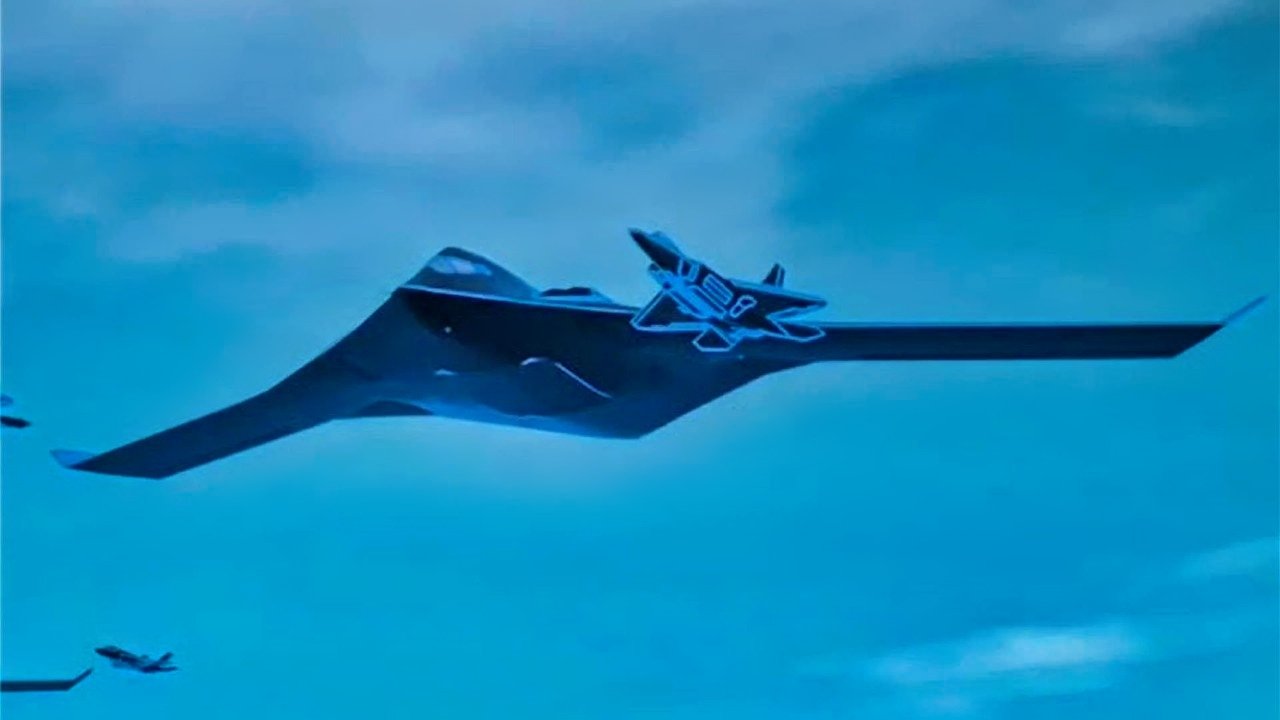
H-20 Bomber Image. Image Credit X Screeenshot.
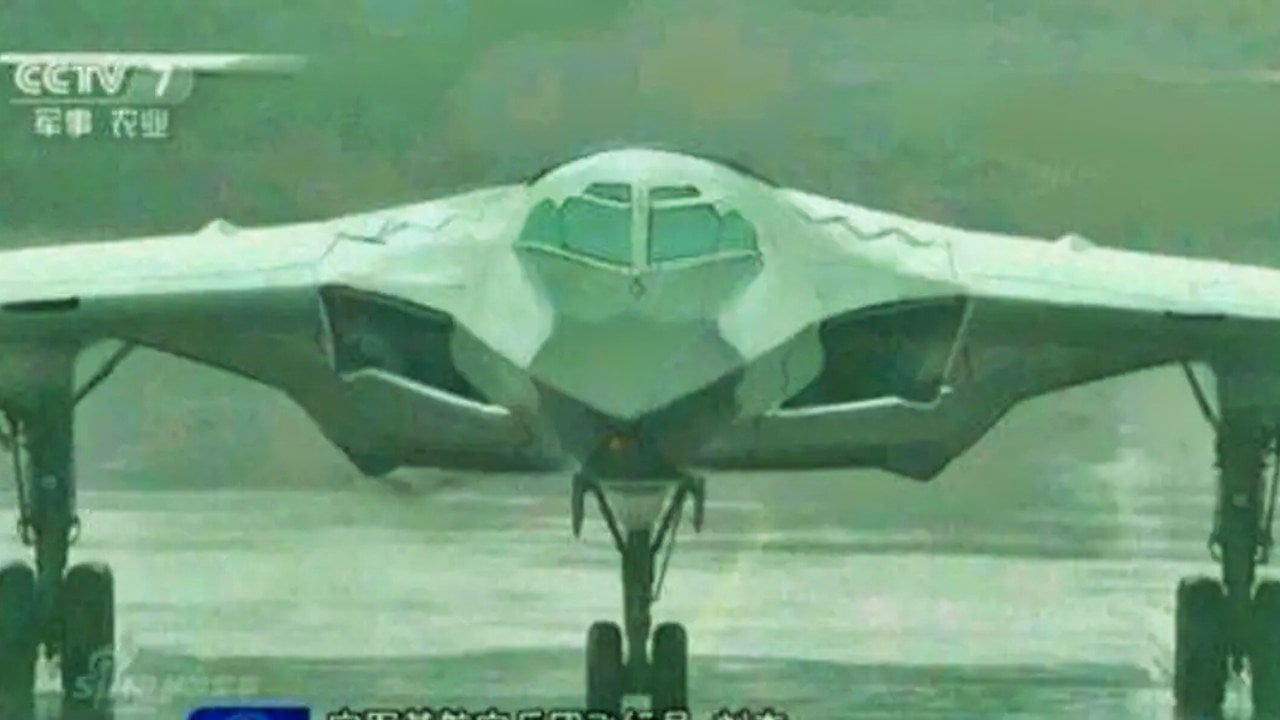
Image Credit of H-20 Bomber: Creative Commons.
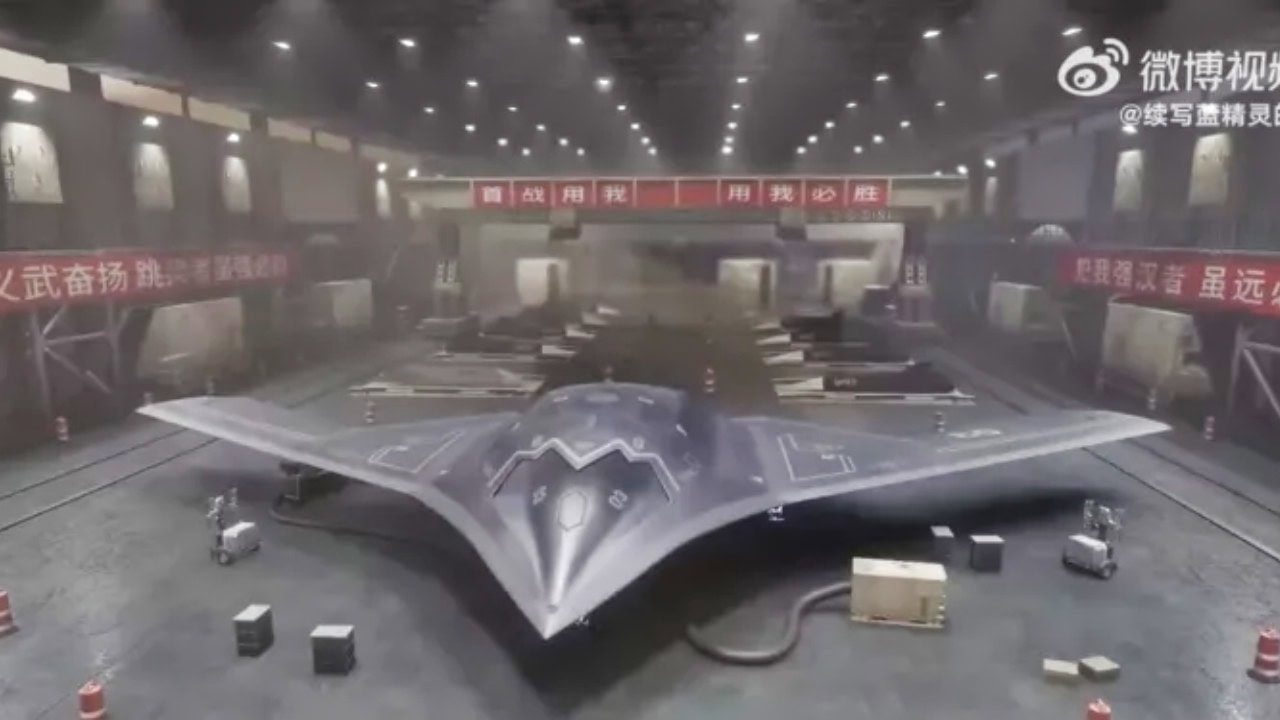
H-20 Bomber. Image Credit: X Screenshot.
The threat from the H-20 does not stop at the prospect of a single bomber and its ability to elude advanced air defenses; it also extends to the fear of a massed stealth bombing attack carried out at scale by multiple aircraft.
A formation of networked H-20s could subject large areas to the threat of cruise missile and nuclear attacks.
If the bomb-carrying capacity of the aircraft is anything like that of the B-2, it will be capable of traveling with a large, deadly arsenal of weapons.
H-20 “Mass” Attack
So it is more than a question of range and global reach; the H-20 could present a serious “nuclear-mass” threat, according to Pentagon researchers studying Chinese weapons and production capacity.
Unclassified Pentagon research assessments suggest that in less than a decade, China could deploy a fleet of at least 50 H-20 bombers capable of collectively attacking with hundreds of nuclear warheads.
There is also the threat of H-20s firing hypersonic weapons from the air—the PLAAF has already deployed an air-launched variant of its YJ-21 missile on an H-6K bomber.
H-20 Sensing and B-21 Raider Stealth Bomber
To rival the B-21, however, the H-20 would need to match the Raider’s computing, sensing, fire control and stealth properties.
There’s no clear indication of whether it can, and nothing immediately suggests the platform has computing, sensing, thermal management, or weapons integration capabilities sufficient to defeat U.S. air defenses and pose a strategic threat comparable to the B-21.
Very little is also known about the B-21’s capabilities. Still, Pentagon leaders describe it as a platform capable of operating as an airborne command-and-control system able to receive, analyze, and transmit time-sensitive combat data across domains while controlling drones from the cockpit.
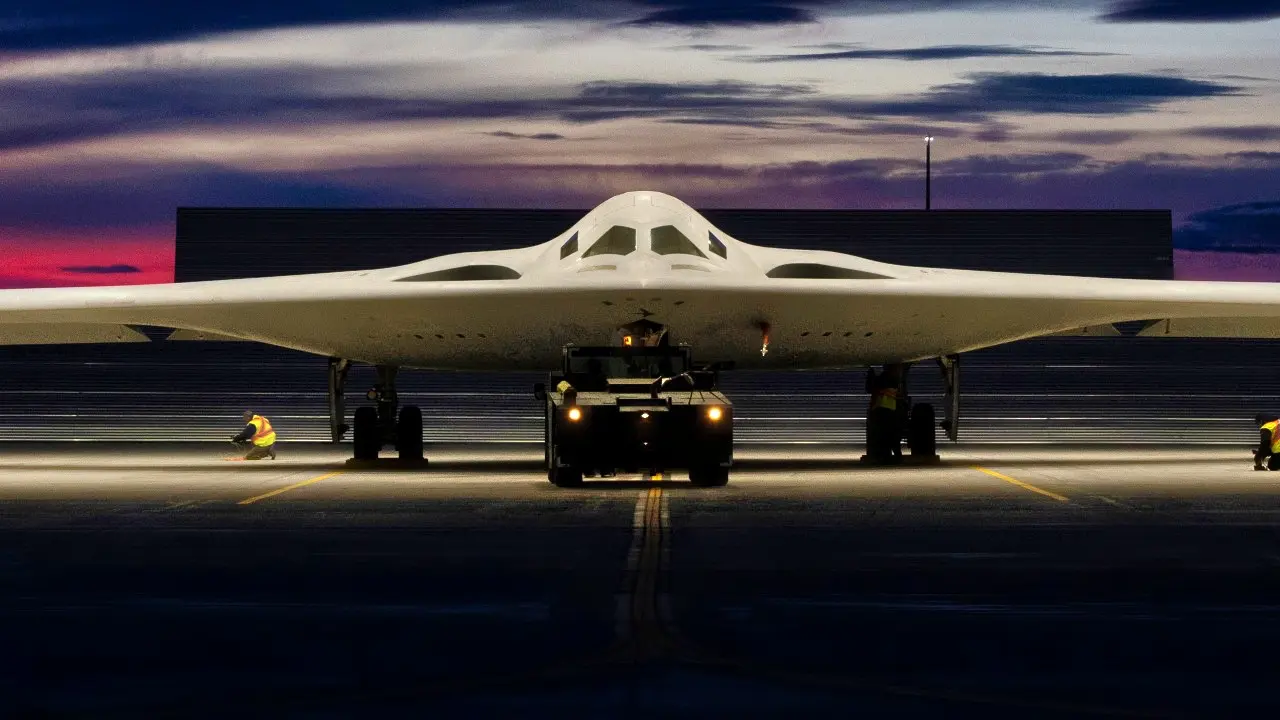
B-21 Raider Stealth Bomber.
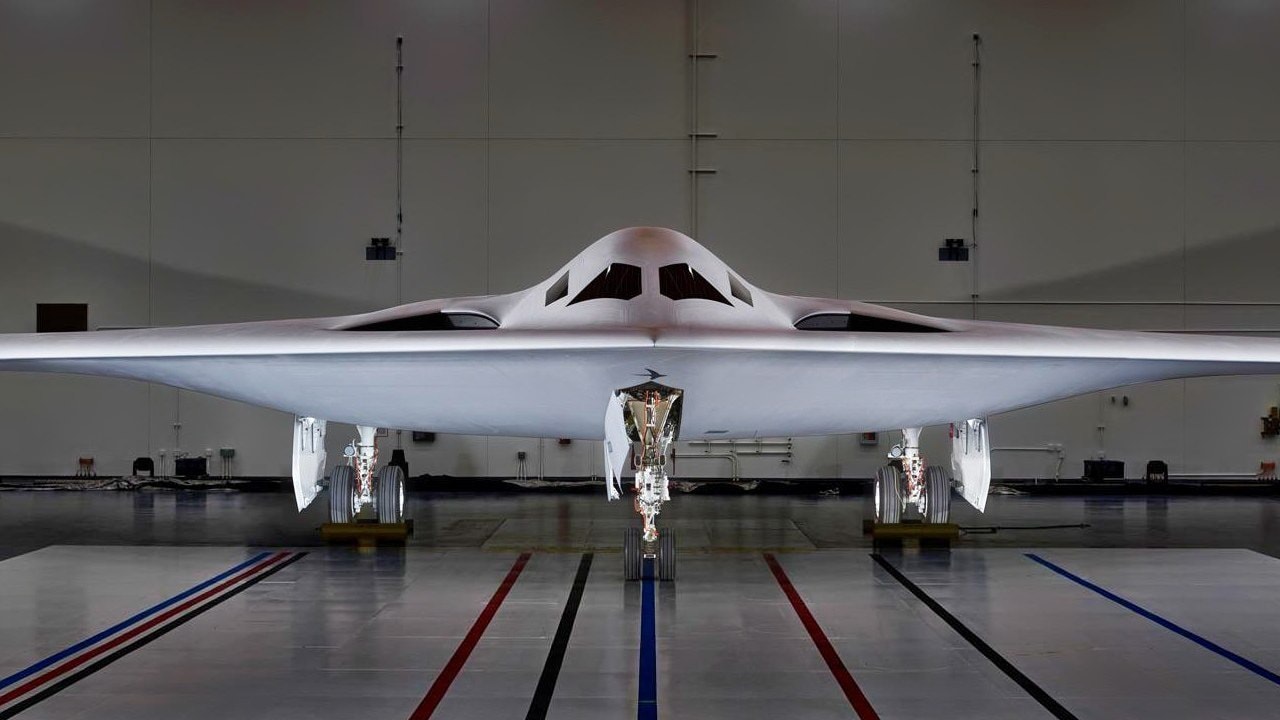
B-21 Raider Bomber U.S. Air Force.
The B-21 is understood to incorporate paradigm-changing new stealth technology.
China Construction
Therefore, while the H-20 may seem similar to a stealthy B-2 or B-21 in external configuration, the threat it presents is not exactly clear.
Nonetheless, thanks in large part to China’s civil-military fusion, the PLAAF is well known for its high-tempo production capacity—a future Chinese ability to mass an aerial nuclear attack is something the Pentagon is likely taking quite seriously.
About the Author: Kris Osborn
Kris Osborn is the President of Warrior Maven – Center for Military Modernization. Osborn previously served at the Pentagon as a highly qualified expert in the Office of the Assistant Secretary of the Army—Acquisition, Logistics & Technology. Osborn has also worked as an anchor and on-air military specialist at national TV networks. He has appeared as a guest military expert on Fox News, MSNBC, The Military Channel, and The History Channel. He also has a Masters Degree in Comparative Literature from Columbia University