
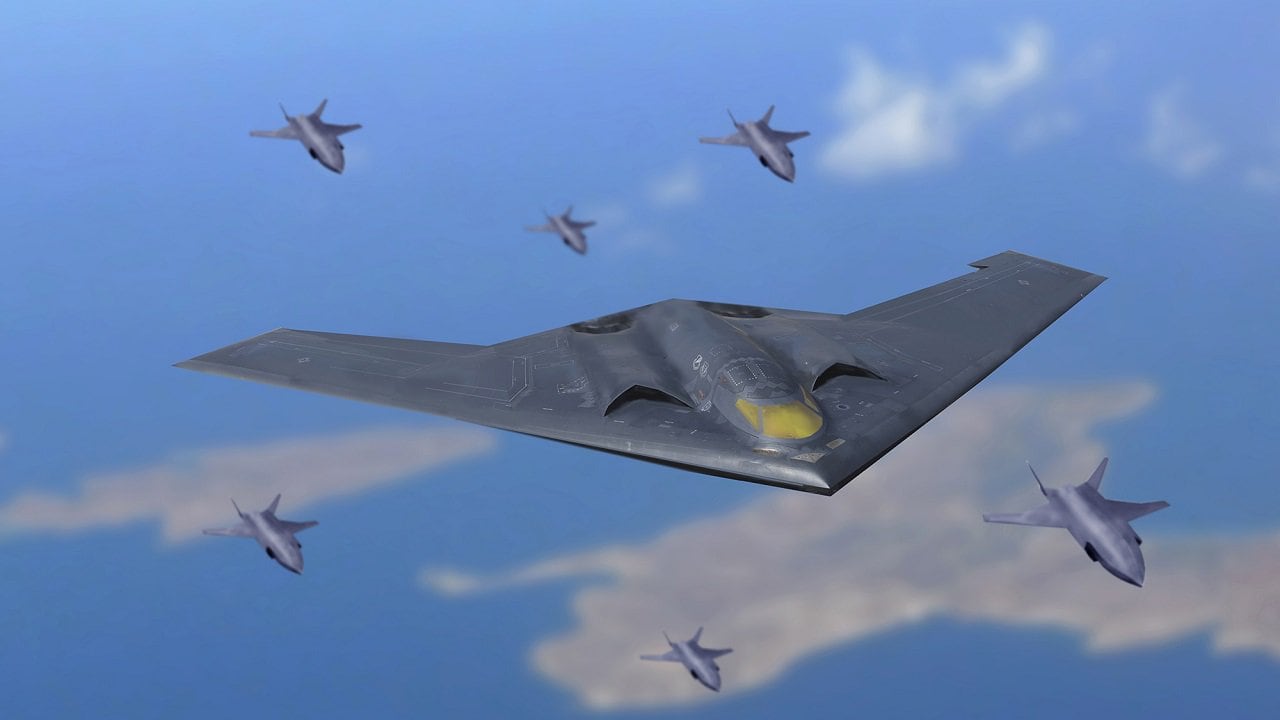
Key Points and Summary – The B-21 Raider is often framed as the B-2’s replacement, but its real value goes far beyond dropping bombs.
-Built around open-systems architecture and rapid tech insertion, the Raider is designed to evolve as threats change and to act as a penetrating sensor and command node inside Joint All-Domain Command and Control.
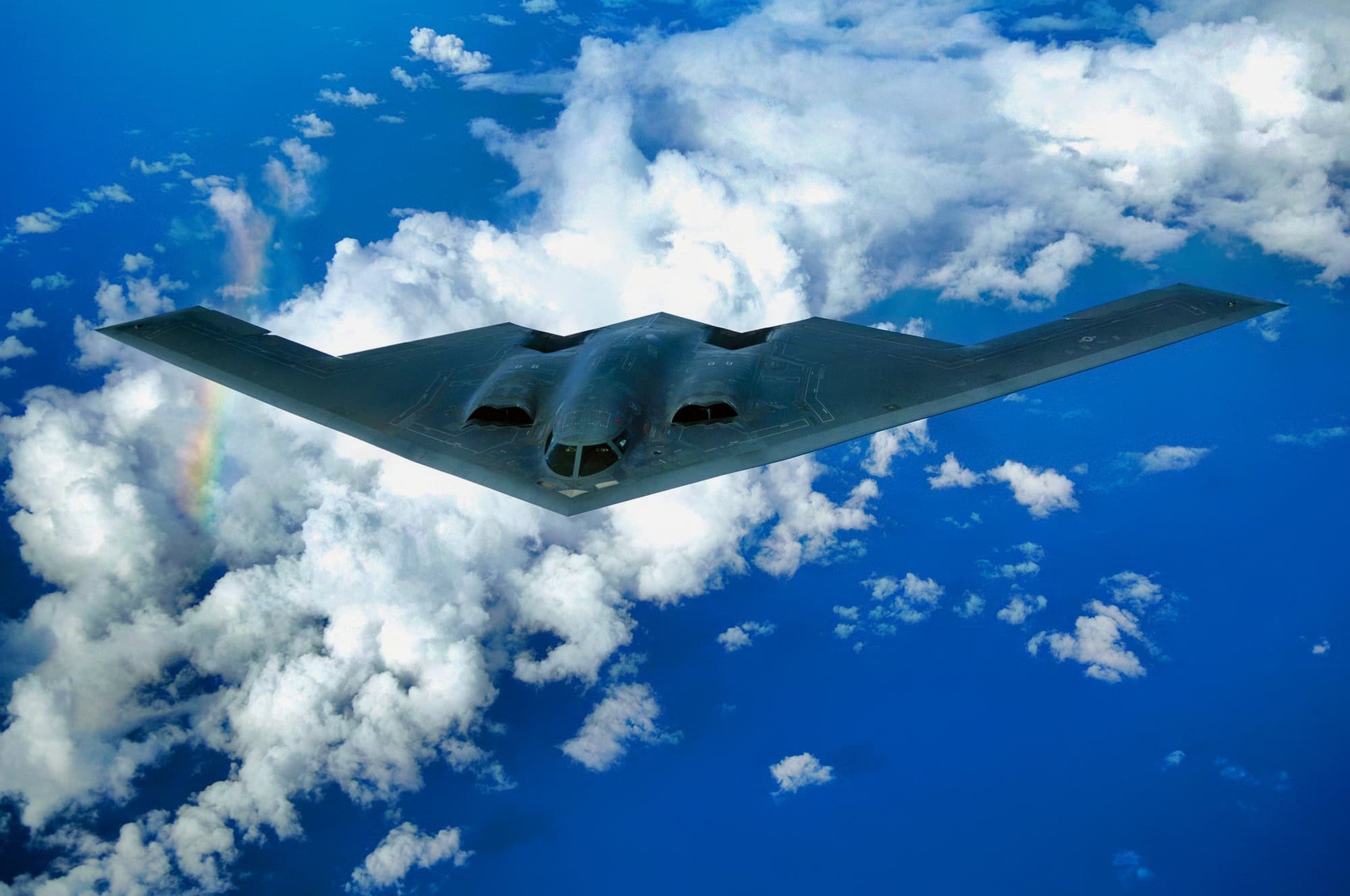
A B-2 Spirit soars after a refueling mission over the Pacific Ocean on Tuesday, May 30, 2006. The B-2, from the 509th Bomb Wing at Whiteman Air Force Base, Mo., is part of a continuous bomber presence in the Asia-Pacific region. (U.S. Air Force photo/Staff Sgt. Bennie J. Davis III)
-Operating deep in denied airspace, it will fuse and share data the way the F-35 does today, but at intercontinental range against the hardest targets.
-With at least 100 aircraft expected, the B-21 will reshape how the Air Force thinks about strike, sensing, and command-and-control.
The B-21 Raider Is So Much More Than a Bomber
The U.S. Air Force’s long-awaited successor to the B-2 Spirit, the upcoming B-21 Raider, is first and foremost a next-generation long-range stealth bomber.
But the program goes above and beyond that primary mission by developing an aircraft that is not only more advanced and easier to maintain than the Spirit but also a massive data-gathering machine.
Much like the F-35 is both the world’s most advanced fifth-generation fighter jet as well as a tool for gathering data from global air forces, the B-21 Raider – once fielded – will become a flying sensor for the U.S. Air Force.
It should come as no surprise, of course; a next-generation bomber must do more than simply move ordnance because the U.S. military increasingly assumes that future wars will be decided by how fast forces can find, understand, and strike targets across multiple domains.
To achieve that, situational awareness is key – and situational awareness is complicated when adversaries’ own assets are becoming more sophisticated.
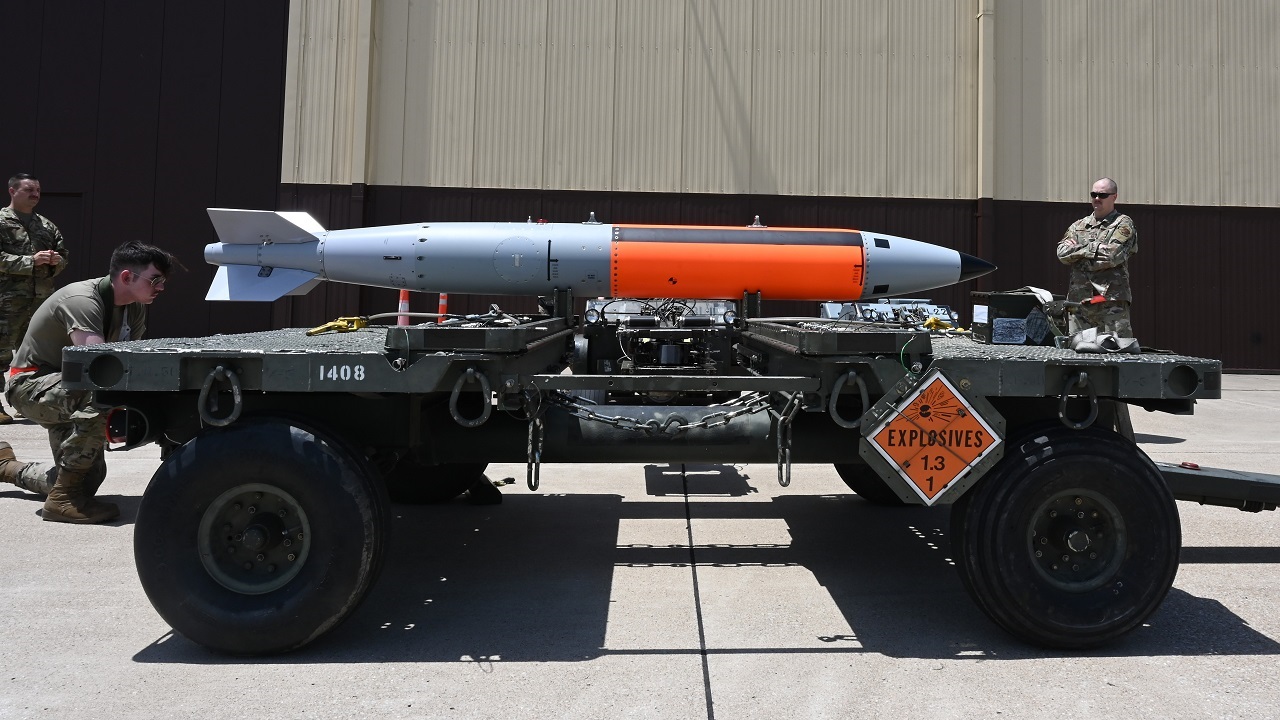
The 72nd Test and Evaluation Squadron test loads a new nuclear-capable weapons delivery system for the B-2 Spirit bomber on June 13, 2022 at Whiteman Air Force Base, Missouri. The 72nd TES conducts testing and evaluation of new equipment, software and weapons systems for the B-2 Spirit Stealth Bomber. (U.S. Air Force photo by Airman 1st Class Devan Halstead)
Survivability is not just about penetrating air defenses today; it’s also about maintaining a flow of data from sensors to decision makers and pilots.
And there is an abundance of evidence that the B-21 Raider is designed to make that simpler – and more effective – than ever before.
With a slated production objective of at least 100 aircraft, and major players in the space pushing for as many as 200, the Raider is expected to enter service some time this decade – and if the timeline holds, the B-21 will do much more than add a new penetrator to the U.S. Air Force’s inventory; it could reshape how the Air Force thinks about deep strike, sensing, and command-and-control, even in the most denied airspace.
Penetrator or Information Node?
The strongest indicator yet that the B-21 is meant to be more than a conventional bomber is not a rumor or any speculative matter, but the program’s official emphasis on open systems architecture and rapid capability insertion – meaning that America’s next stealth bomber is built with modular and standardized interfaces to make it easier to install new hardware and software.
In its public fact sheet, the Air Force says the Raider is being designed with open systems architecture to “reduce integration risk and enable competition for future modernization efforts to allow for the aircraft to evolve as the threat environment changes.”
In a separate Air Force news release that described updates to flight testing and production, the service once again stressed that open systems architecture and “rapid insertion of mature technologies” were a focus of the platform to keep pace with evolving threats.
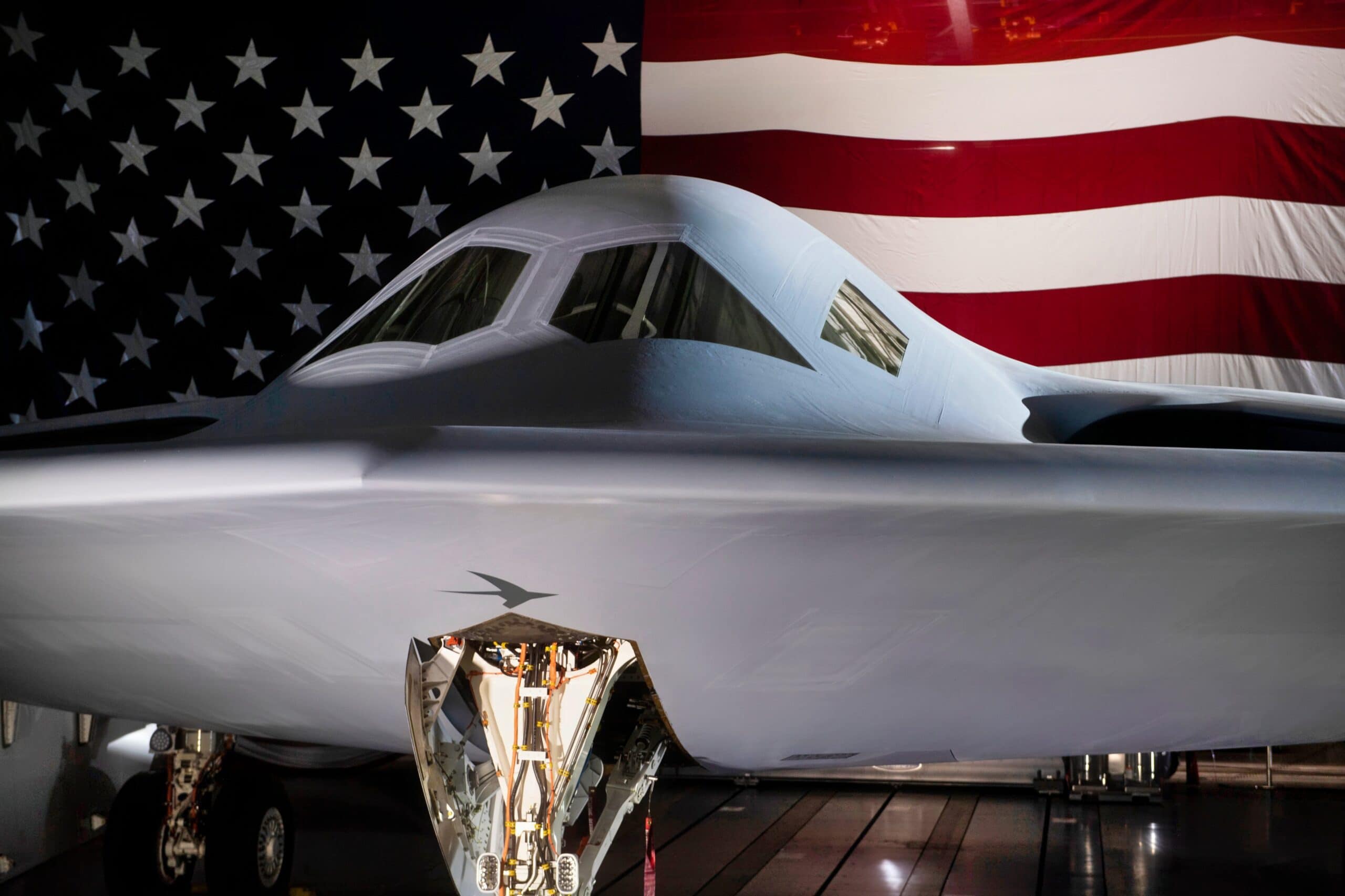
B-21 Raider. Image Credit: Creative Commons.
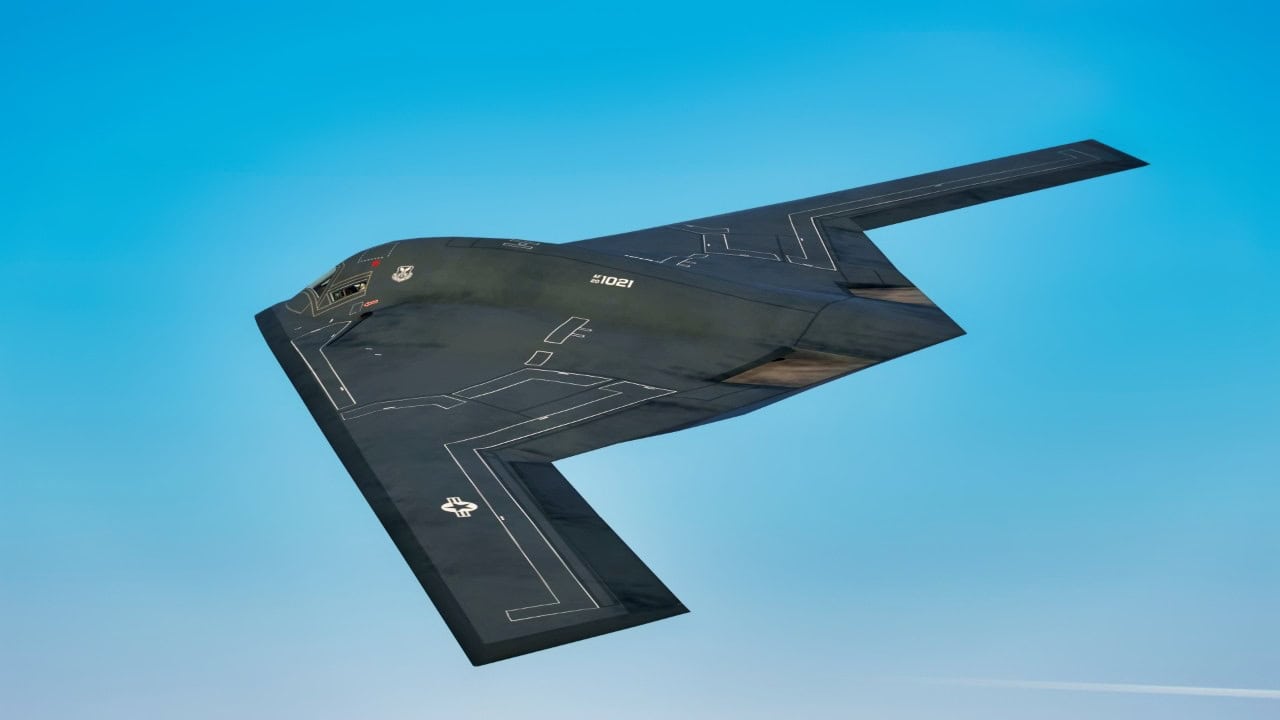
B-21 Raider Artist Rendering.
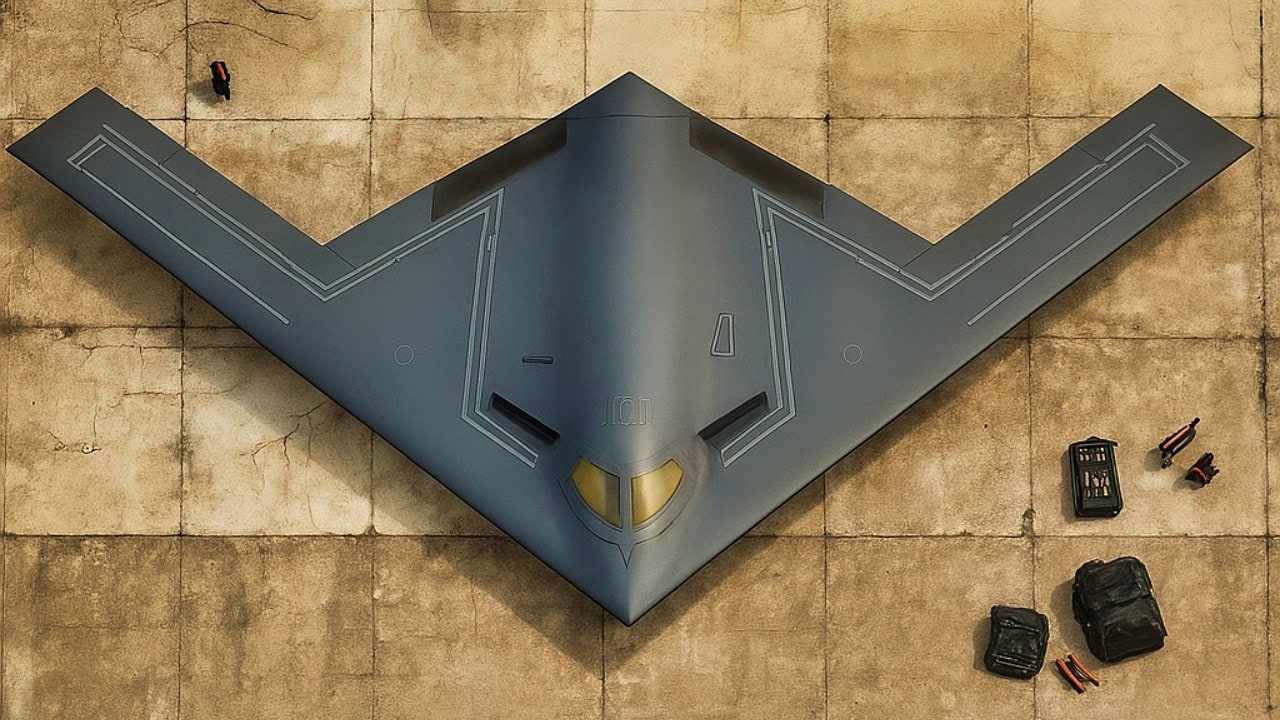
B-21 Raider Bomber. Image from U.S. Air Force and edited with AI software.
That’s broadly the same design philosophy that has made the F-35’s mission systems so central to its value. The F-35, in use by the U.S. Air Force and allied air forces all over the world, provides sensor fusion technology and “unprecedented situational awareness.”
The Joint Strike Fighter program’s official public site describes the F-35 as “more than a fighter jet” – and it’s no exaggeration. The F-35, after all, is well-equipped to collect, analyze, and share data as a force multiplier across airborne, surface, and ground-based assets.
The B-21 Raider will unquestionably do the same – but in a different role. The Raider will go above and beyond the F-35 as it can survive where other assets, including the F-35, cannot – making it hugely valuable as a forward node for sensing.
The leap from F-35 to Raider sensing is straightforward, then – and it aligns with how the Department of Defense describes Joint All-Domain Command and Control (JADC2): a concept to connect sensors and shooters across the services into one single network that improves joint operations.
The endgame appears to be the Raider operating as a forward node and the F-35 as a “quarterback” in contested airspace – fusing onboard sensors and then sharing the bigger picture. Then, a penetrating bomber built for long-range, high-threat operations serves a similar role but going much further.
Applying the Sensor Model to Strategic Bombing
What distinguishes the B-21 from earlier bombers is not just that it collects data, but where and how it can do so.
Unlike fighters and support aircraft, the Raider is designed to operate deep inside heavily defended airspace at intercontinental ranges, allowing it to observe adversary forces, air defenses, and movements in areas that other U.S. assets cannot safely reach.
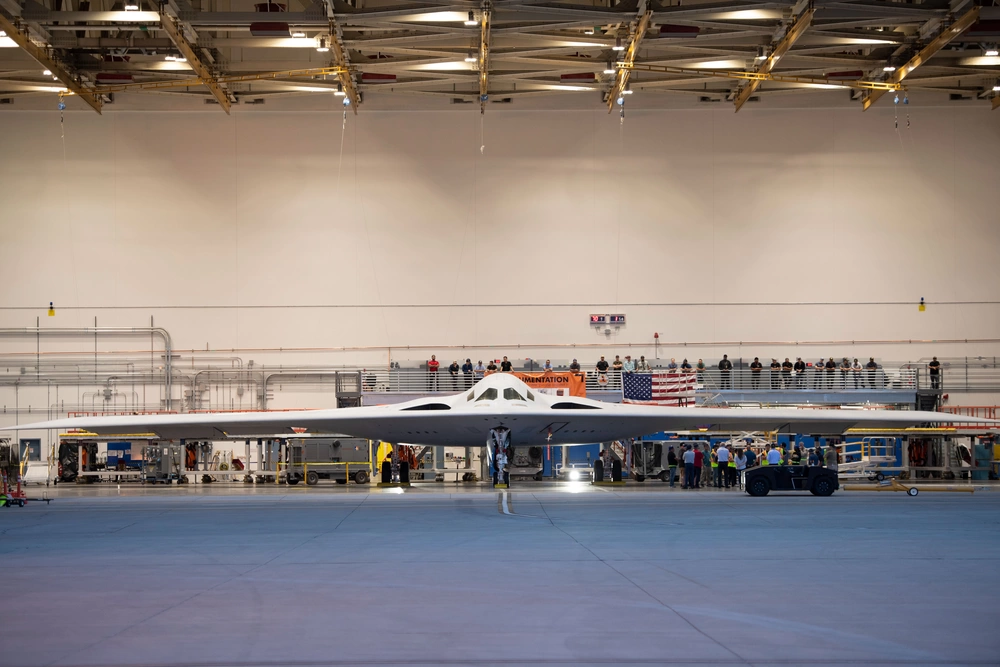
The B-21 Raider is designed with an open systems architecture, enabling rapid insertion of mature technologies and allowing the aircraft to be effective as threats evolve. The bomber was designed up front for supportability and maintainability-based upon decades of lessons learned and best practices from prior aircraft programs-to improve long-term affordability and outcomes in operations and sustainment. The B-21 first flight is anticipated to take place in calendar year 2023. (U.S. Air Force photo)
The Air Force is on the record stating that the B-21 will be integrated into joint and coalition networks and will evolve through software updates, too, meaning it will be capable of contributing information broadly throughout a conflict.
U.S. Strategic Command has also described the B-21 as the future backbone of the bomber force, citing its adaptability against advanced threats rather than single-mission strike roles.
So, the B-21’s future as a forward node is by no means contested or even speculative: this is the direction in which the platform is moving.
About the Author:
Jack Buckby is a British author, counter-extremism researcher, and journalist based in New York who writes frequently for National Security Journal. Reporting on the U.K., Europe, and the U.S., he works to analyze and understand left-wing and right-wing radicalization, and reports on Western governments’ approaches to the pressing issues of today. His books and research papers explore these themes and propose pragmatic solutions to our increasingly polarized society. His latest book is The Truth Teller: RFK Jr. and the Case for a Post-Partisan Presidency.