
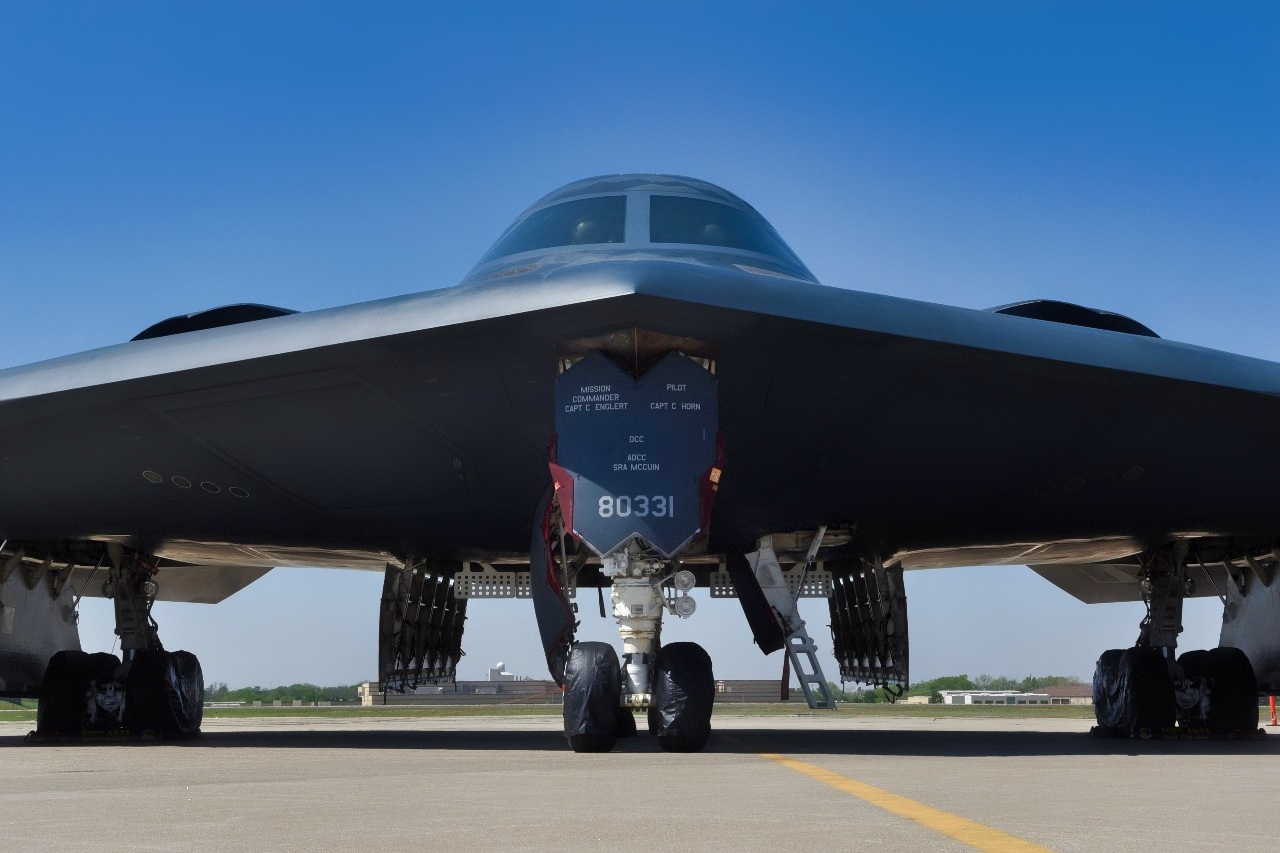
Key Points and Summary – China is pursuing the Xi’an H-20, a rumored strategic stealth bomber that would give Beijing something it lacks today: a true long-range, low-observable strike platform and a stronger airborne leg of its nuclear triad.
-The key question is not just whether the H-20 becomes real, but whether China can build it at scale—potentially as many as 100 aircraft within a decade, according to some speculation.
-If that happens, it could reshape Indo-Pacific planning by increasing pressure on U.S. bases, dispersal, hardening, and missile defense, even if it doesn’t guarantee Chinese air dominance.
Why China’s H-20 Could Force a Rethink of U.S. Bases in the Pacific
China is working to develop a strategic stealth bomber, the Xi’an H-20.
Whether it can succeed remains an open question—only the United States flies such a platform.
If China can field a stealth bomber, the question shifts to industrial capacity: How many stealth bombers can it build?
Defense writer Kris Osborn believes China may be able to field as many as 100 H-20s within the next decade.
The H-20 has not been publicly confirmed yet, so any talk of numbers is speculative, but if China could produce the H-20 at such a scale, it would fundamentally alter great-power competition in the Indo-Pacific.
Introducing the H-20
The H-20 would be China’s first true intercontinental stealth bomber. The aircraft would fill a longstanding gap for the People’s Liberation Army (PLA) by offering its Air Force offering a long-range, stealth air-strike option. Currently, the PLA has only the H-6, a Cold War-era, Soviet-licensed build that would not survive against U.S. systems—the H-20 would be a massive upgrade in Chinese capabilities.
The strategic motivation is obvious. The aircraft would complete China’s nuclear triad by providing an airborne leg. The H-20 would also allow China to project power beyond the first island chain, threatening bases, fleets, and infrastructure from greater distances.
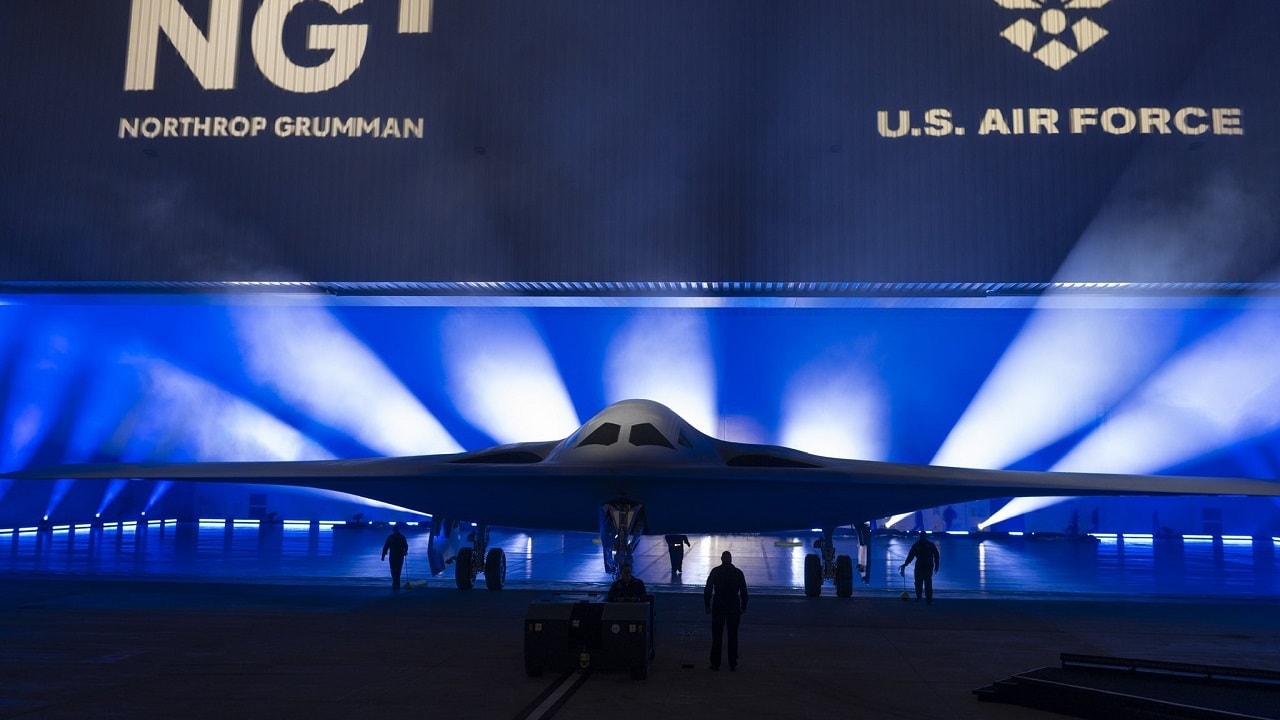
B-21 Raider. Image Credit: U.S. Air Force.
What We Know
Since the H-20 program has not been confirmed, technical specifications are inferred or assumed. The bomber is believed to be subsonic, with an emphasis on stealth, not speed. To enable intercontinental air-strike, the H-20 likely has a range of more than 5,000 miles unrefueled.
Like preceding stealth platforms, the H-20 likely features internal weapon bays, with a payload including long-range cruise missiles, conventional weapons, and, possibly, nuclear weapons. Stealth performance could be optimized for radar evasion and penetrating layered air defenses.
The H-20 is likely designed for stand-off and limited penetration, not deep-penetration missions or carpet bombing.
Tactically, the stealth bombers could perform a primary mission of long-range strikes against high-value targets.
Alternatively, the H-20 could launch cruise missiles from outside dense air-defense zones.
Potential targets could include U.S. and allied air bases—Guam and Okinawa—logistics hubs, or naval forces in transit. The H-20 would likely operate as part of a system-of-systems; it would be integrated into a wider web of sensors and weapon systems, rather than acting as an independent vessel.
H-20 Fleet: 100 Aircraft?
One-hundred stealth bombers is an ambitious projection. For example, the United States currently fields 19 B-2 stealth bombers. The forthcoming B-21, which is expected to enter frontline service in the next decade, may be fielded in numbers approaching or exceeding 100—but the U.S. has the benefit of experience gained through the B-2 program, not to mention a robust military-industrial pipeline.
From a technical perspective, a stealth bomber is a complicated and sensitive machine. There is a reason only the United States has ever fielded one. But China’s ambitions are obvious.
If China fielded 100 H-20s, it would not mean that 100 aircraft would be constantly available; at all times, portions of the fleet would be removed from frontline service for the sake of maintenance, training, etc. But 100 aircraft would be enough to create sustained operational pressure. For China, this would mean sufficient mass to complicate U.S. defense planning, with a credible second-strike ability and conventional deterrence.
China is not aspiring to project power the way the United States currently does—around the globe, nearly constantly. Instead, China aims to dominate the Indo-Pacific.
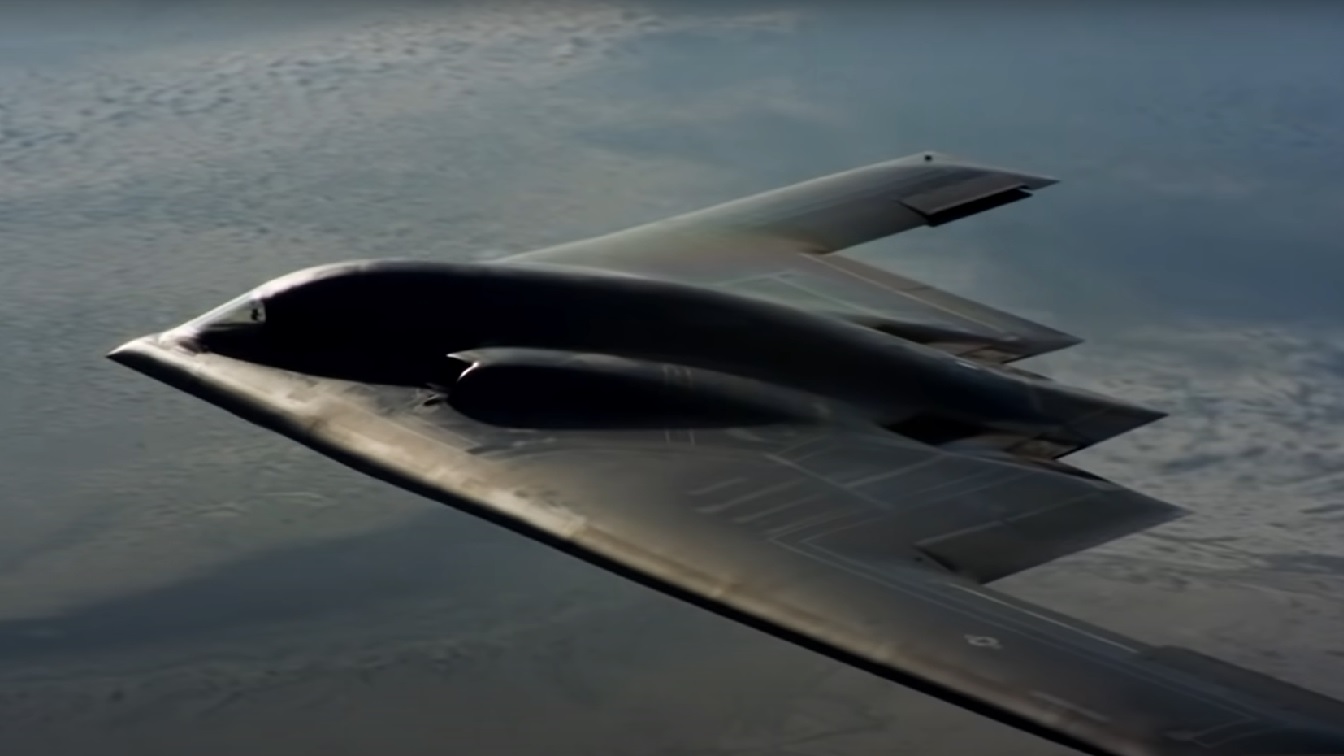
B-2 Spirit. Image Credit: Northrop Grumman.
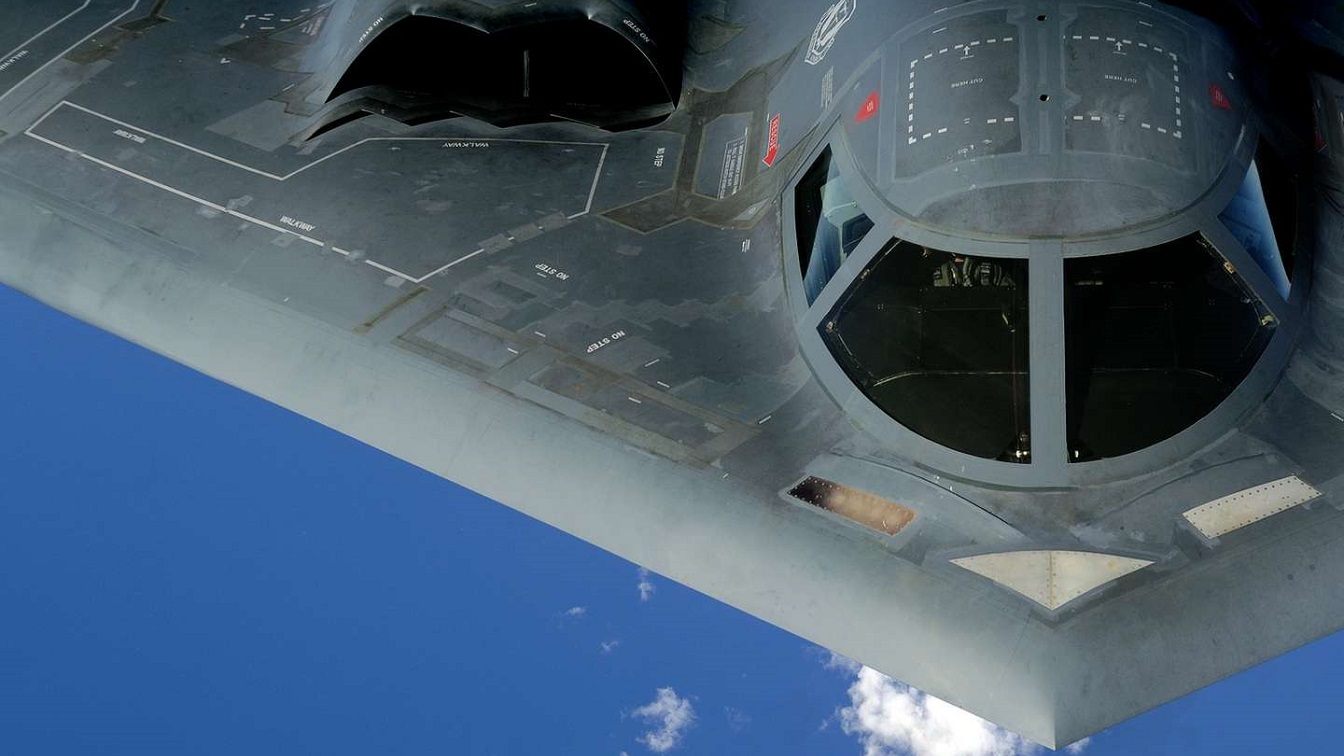
Image of B-2 Spirit stealth bomber. Image Credit: Creative Commons.
The presence of 100 H-20s would force the U.S. military to assume that its air bases are more vulnerable and that rear areas are no longer as safe as before. Increased pressure would be placed on missile defense, base hardening, and dispersal strategies. The U.S. might rely heavily on the B-21 to counter the H-20’s presence, or it might depend on long-range unmanned systems that can operate without putting a pilot at risk.
But the H-20’s presence, if ever it comes to pass, does not equate Chinese air supremacy. The U.S. still maintains an advantage in experience, regional alliances, and Intelligence, Surveillance, and Reconnaissance coverage.
A fleet of 100 stealth bombers would not overturn U.S. military dominance overnight, but it would present a meaningful inflection point.
China would shift from coastal defense to a more outward-facing, sustained strike capability.
About the Author: Harrison Kass
Harrison Kass is an attorney and journalist covering national security, technology, and politics. Previously, he was a political staffer and candidate, and a US Air Force pilot selectee. He holds a JD from the University of Oregon and a master’s in global journalism and international relations from NYU.