
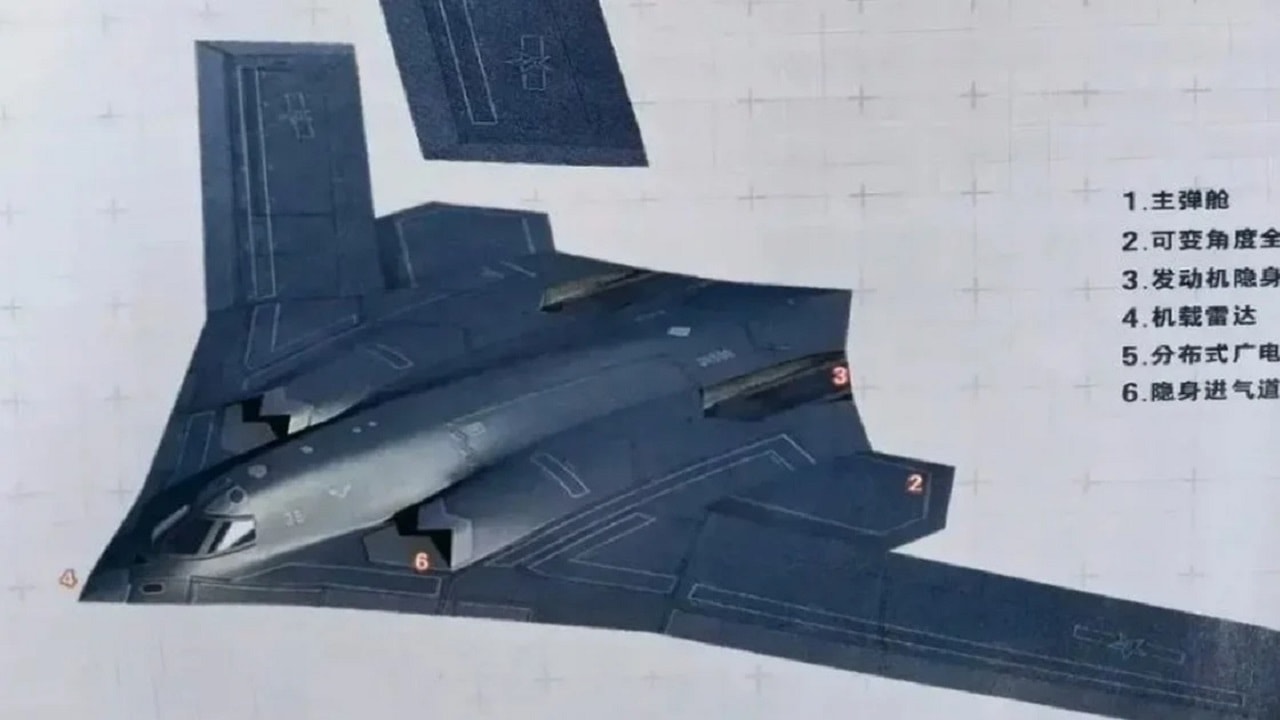
Key Points and Summary – China’s long-rumored Xi’an H-20 stealth bomber is edging closer to reality, and it will eventually reshape deterrence in the Indo-Pacific.
-Designed as a flying-wing, long-range platform capable of carrying both nuclear and conventional weapons, the H-20 is expected to strike as far as Guam, Japan, and deep into the First Island Chain.
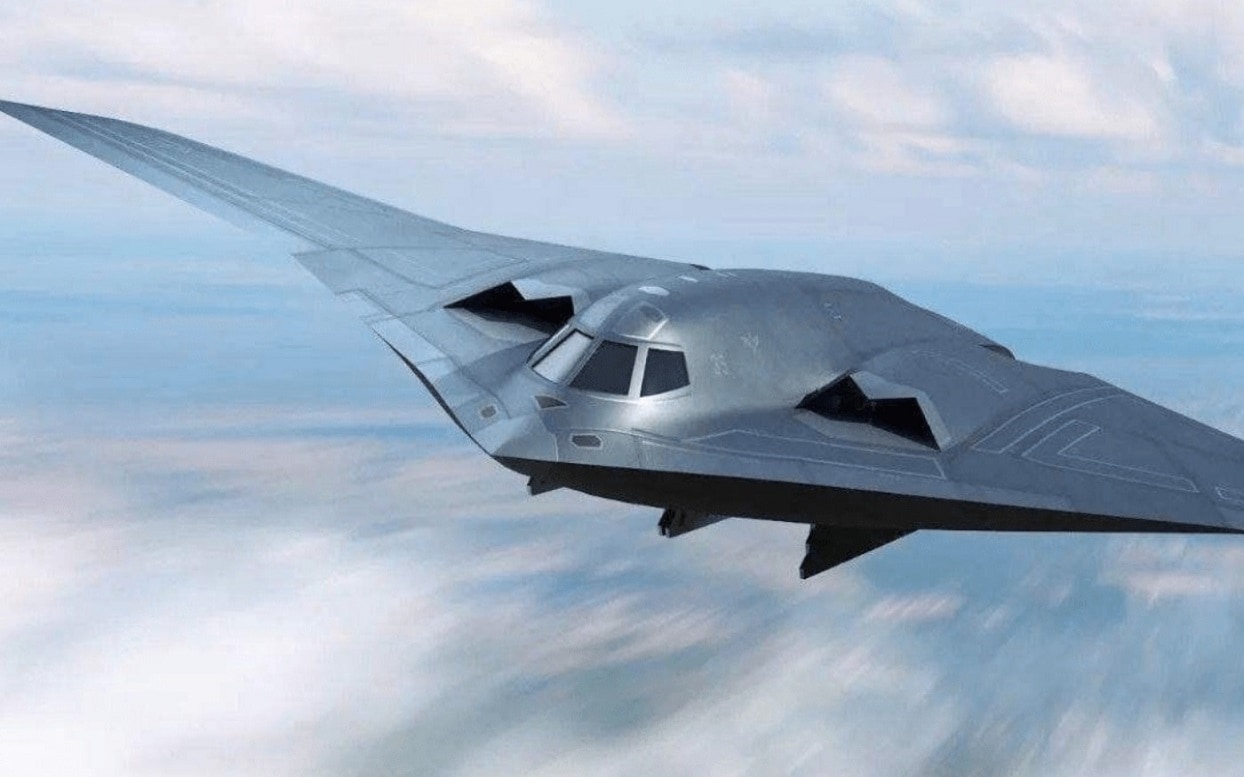
H-20. Image Credit: Chinese Internet.
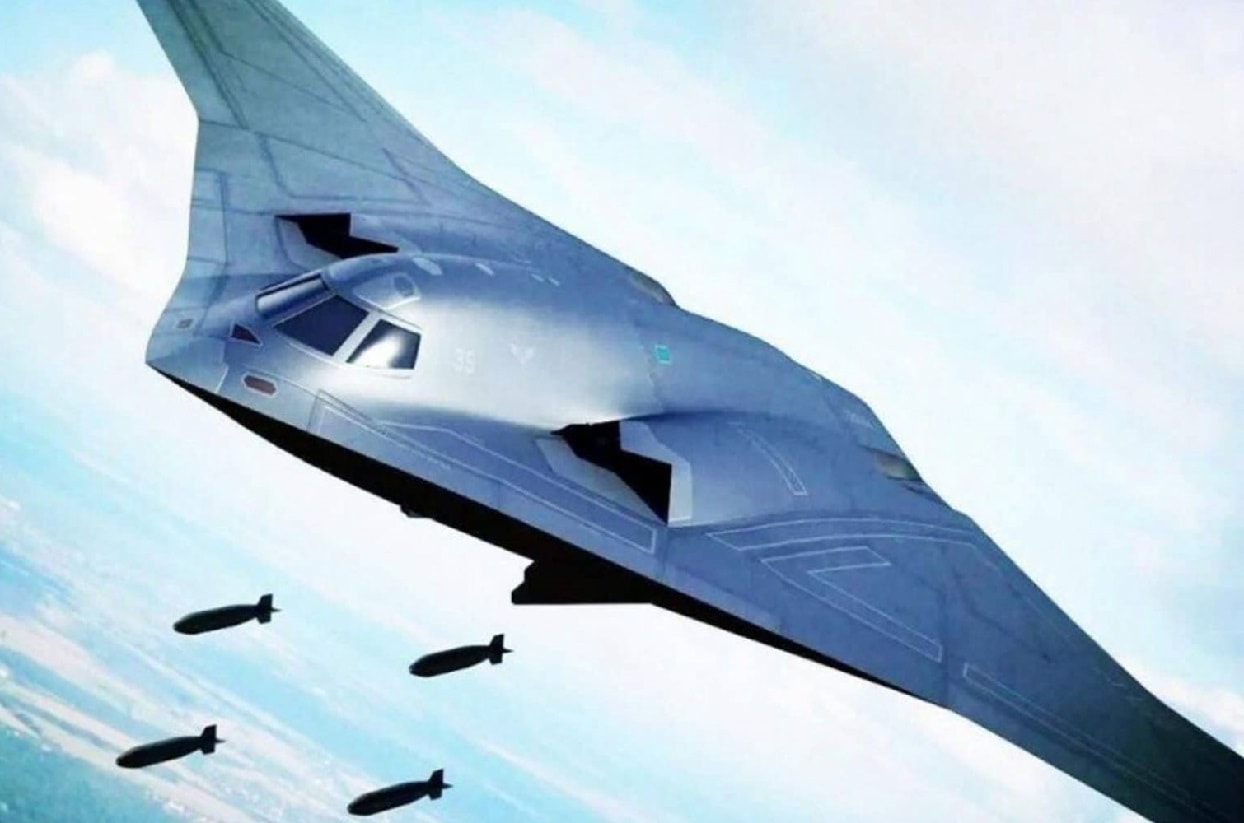
H-20. Image: Chinese Weibo.
-While it may not fully match America’s B-21 Raider, it will give Beijing a true penetrating bomber for the first time, moving Chinese power projection beyond missiles alone.
-The shift won’t be instant, but the U.S. and its allies will need new basing, defenses, and posture to keep up.
In 1 Word: History
China’s H-20 Will Change Everything – But Not Instantly
As Beijing inches closer to fielding its first indigenously developed long-range stealth bomber, the Xi’an H-20, the U.S. and its allies are watching, waiting, and preparing.
The idea of a long-range Chinese stealth bomber is concerning, and it should be, too.
For years, the H-20 has been a shadowy project shrouded in mystery – but growing evidence now suggests that the platform is closer to completion than some expected.
The H-20 could soon move from concept to credible platform, raising several important questions.
When, for example, will it fly? How will it change strategic calculations? And how will – or should – the U.S. and its allies respond?
What We Know So Far
The H-20 was unveiled to the public in the last decade. Chinese media announced in 2018 that the People’s Liberation Army Air Force (PLAAF) would reveal the H-20 stealth bomber during a 2019 parade – and before then, its development had been teased repeatedly in viral marketing campaigns.
The Xi’an Aviation Industrial Corporation, which is developing the aircraft, released a promotional clip in 2018 mimicking an advertisement for Northrop Grumman’s B-21 stealth bomber. So, the world knows the aircraft is real.
The H-20 is expected to be a “flying wing” stealth bomber capable of carrying both conventional and nuclear weapons.
When fielded, it will be the crown jewel in China’s long-range strike modernization effort – and even if the aircraft isn’t technically on par with the United States’ next-generation B-21 Raider, it’ll be effective enough to change global dynamics and strategic planning.
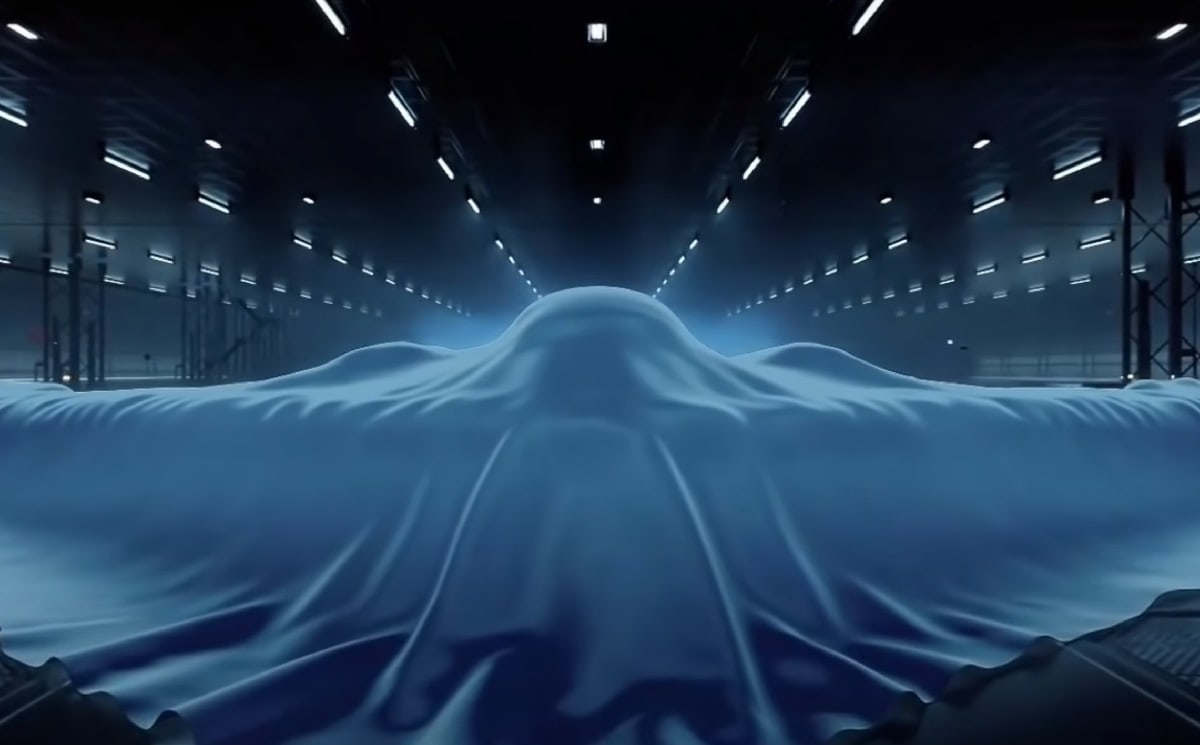
China’s H-20 Stealth Bomber? Video Screen Shot from YouTube.
The bomber is expected to have a range of anywhere between 8,500 km and 13,000 km – far enough to reach beyond the First Island Chain and into the Philippines, Japan, and even the U.S. territory of Guam in the most conservative of estimates.
Its internal payload capacity is also expected to be multiple tons, enabling it to deliver either conventional bunker-busting ordnance or nuclear munitions.
Strategically, the arrival of the H-20 would change the nature of Chinese deterrence and strike posture. Until now, much of Beijing’s long-range strike capability has depended mainly on missiles (both ballistic and cruise), as well as legacy bombers with limited survivability. The H-20, therefore, would provide a new, stealthy, and penetrating strike option that threatens U.S. bases, allied infrastructure, and even maritime logistics hubs – and do so with little to no warning.
But the road from concept to combat-ready is long – and while the H-20 is seemingly closer than ever to becoming reality, it’s still technically under development. But that doesn’t mean the U.S. shouldn’t be preparing; after all, the H-20 could well debut publicly (or operationally) in the 2030s.
Sure, it would take years more for a significant number of airframes to roll out and for the supporting infrastructure (like hardened bases, aerial-refueling tankers, trained crews) to be prepared – but the days of Chinese long-range stealth and strike are coming. And the U.S. and its allies will need to shift gears in response.
How Will the West Respond?
When the H-20 eventually becomes operational, the effects on U.S. and allied posture will be profound.
For the United States, it likely prompts a rethinking of its force placement throughout the Pacific. Key bases – like Guam, Okinawa, and parts of the Philippines – could find themselves within range of a stealth bomber that could strike with little to no warning.
That new dynamic would make hardened shelters more essential – and they would need to be built in a more dispersed manner, too.
On top of flexible basing, there would need to be more frequent bomber rotations and even a greater reliance on stealthy platforms like the B-21 Raider. That’s another argument for the U.S. Air Force to procure as many B-21 Raiders as humanly possible.
Allied partners would feel the same kind of pressure, too. Japan, Australia, and other close partners would need to accelerate their missile defense programs, harden their defenses, improve early-warning systems, and develop their own solutions for long-range strike and stealth capabilities.
For smaller regional states, this will be hard to achieve and could therefore lead to deeper integration with American architecture. It could also result in new, permanent basing agreements to offset the threat from China.
But beyond force posture, the existence of the H-20 would alter strategic calculations, too. Chinese leadership would likely feel far more confident in leveraging coercive tactics, meaning Beijing would employ tools to influence a target state’s behaviour without actually using force.
Utilizing the mere threat of its new assets, China might force the U.S. and its allies to strengthen its own deterrence, knowing that any crisis could carry the risk of cover bomber strikes and not just missile barrages.
The arrival of the H-20 won’t instantly rewrite the balance of power.
Still, it will undoubtedly change it enough that the West and American allies will be forced to behave differently, make new deals, and embrace new technology.
About the Author:
Jack Buckby is a British author, counter-extremism researcher, and journalist based in New York who writes frequently for National Security Journal. Reporting on the U.K., Europe, and the U.S., he analyzes and understands left-wing and right-wing radicalization and reports on Western governments’ approaches to the pressing issues of today. His books and research papers explore these themes and propose pragmatic solutions to our increasingly polarized society. His latest book is The Truth Teller: RFK Jr. and the Case for a Post-Partisan Presidency.