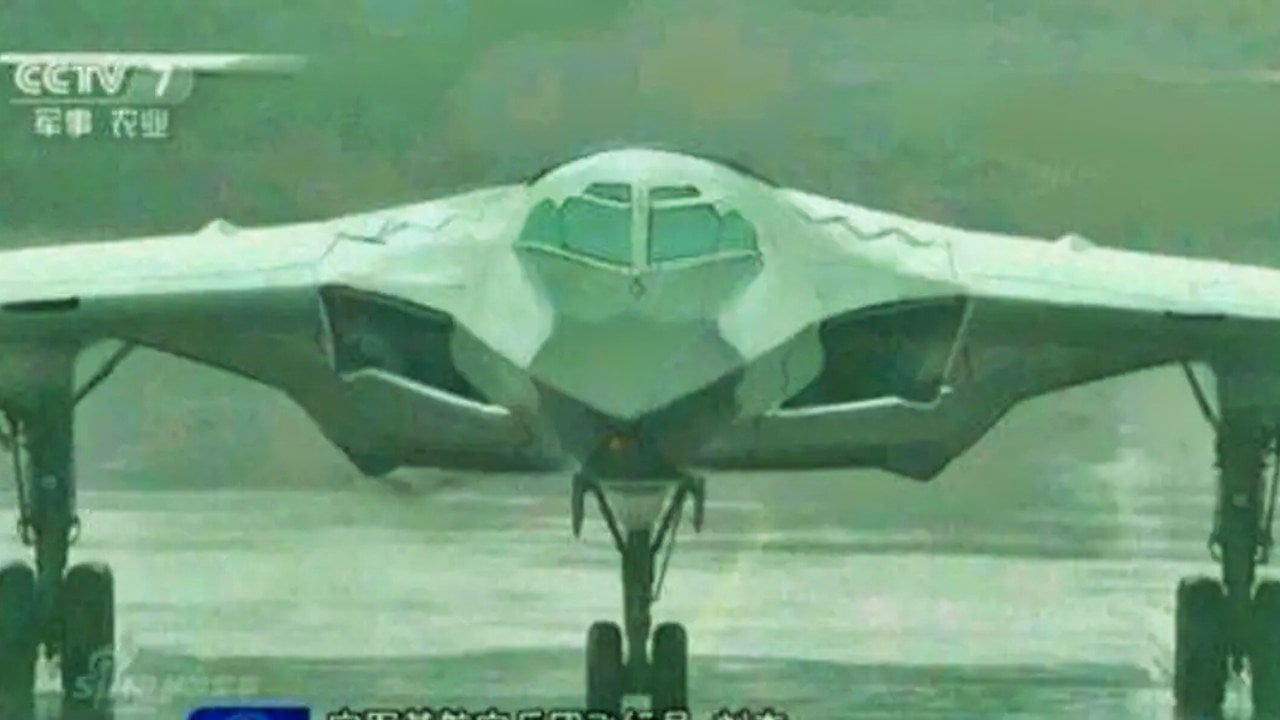
Key Points and Synopsis: The debut of China’s H-20 stealth bomber appears to be facing significant delays, with recent reports removing timeline estimates that previously placed its arrival in the next decade.
-While the aircraft features a flying-wing design similar to the U.S. B-2 and B-21 and boasts a projected 10,000 km range, Pentagon officials remain skeptical that its engineering and low-observable technology match American standards.
-Furthermore, analysts warn that the PLA’s lack of recent combat experience and persistent internal corruption may hinder the effective deployment of the system, even once it becomes operational.
Why US Officials Doubt China’s H-20 Can Match the B-21 Raider
There is little information available about China’s upcoming H-20. As analysts seek to puzzle out the strategic bomber’s future, delivery schedules stretch further into the future than originally planned.
A 2024 assessment of China’s military capabilities provided a broad overview of the H-20 program:
“The H-20, which may debut sometime in the next decade, will have a range of more than 10,000 km, enabling the People’s Liberation Army Air Force (PLAAF) to cover the Second Island Chain and into the western region of the Pacific,” the Department of Defense report explained.
“The H-20 bomber’s range could be extended to cover the globe with aerial refueling. It is expected to employ conventional and nuclear weaponry and feature a stealthy design.”
Interestingly, the next edition of that same report, which is updated annually, made no mention of the H-20 bomber at all.
The timeline for the H-20 bomber program seems to have been set back. Earlier this month, the Federation of American Scientists shared details about China’s various nuclear programs, and while the publication was not overly rich in detail, it did explain that the H-20 program is “delayed.”
Comparisons between the Chinese bomber and the U.S. Air Force’s B-2 Spirit are largely based on their similar outward appearance. Both bombers are flying-wing aircraft, a design that eschews a tail assembly and opts instead for a smoother, radar-eluding design.
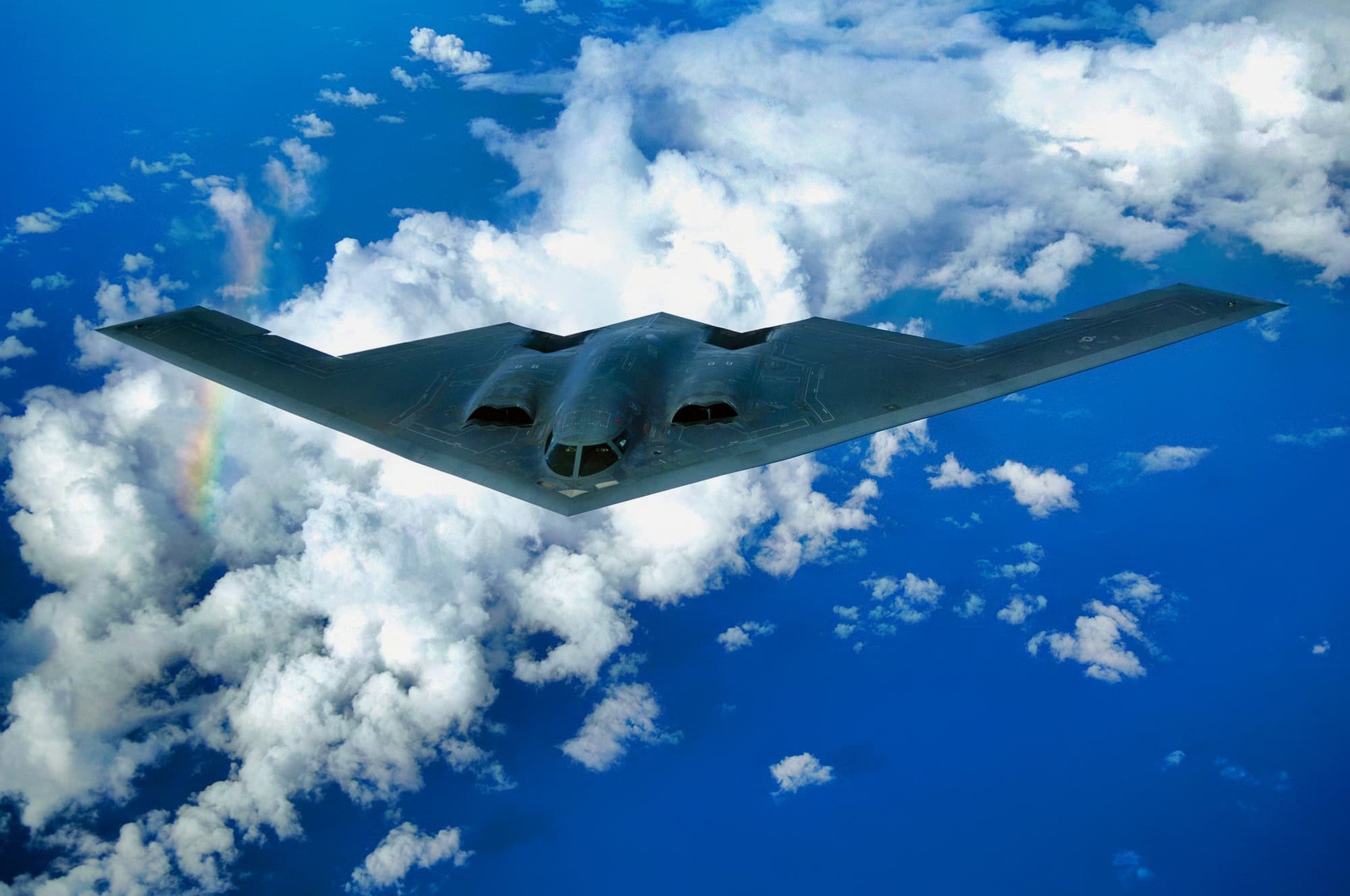
A B-2 Spirit soars after a refueling mission over the Pacific Ocean on Tuesday, May 30, 2006. The B-2, from the 509th Bomb Wing at Whiteman Air Force Base, Mo., is part of a continuous bomber presence in the Asia-Pacific region. (U.S. Air Force photo/Staff Sgt. Bennie J. Davis III)
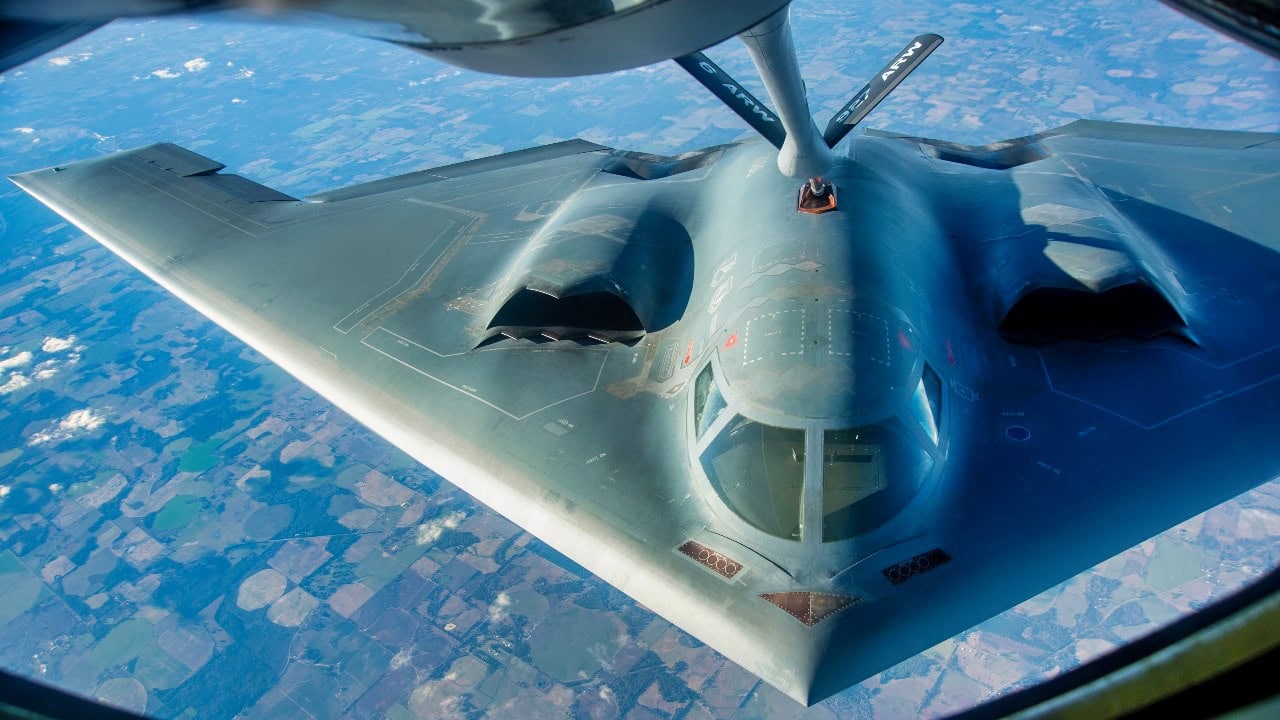
A B-2 Spirit assigned to Whiteman Air Force Base, Mo., receives fuel from a KC-135 Stratotanker, Feb 7, 2021. A B-2 Spirit performed alongside a B-1B Lancer and a B-52 Stratofortress for the Super Bowl LV flyover on Feb. 7, 2021. (U.S. Air Force photo by Airman 1st Class David D. McLoney)
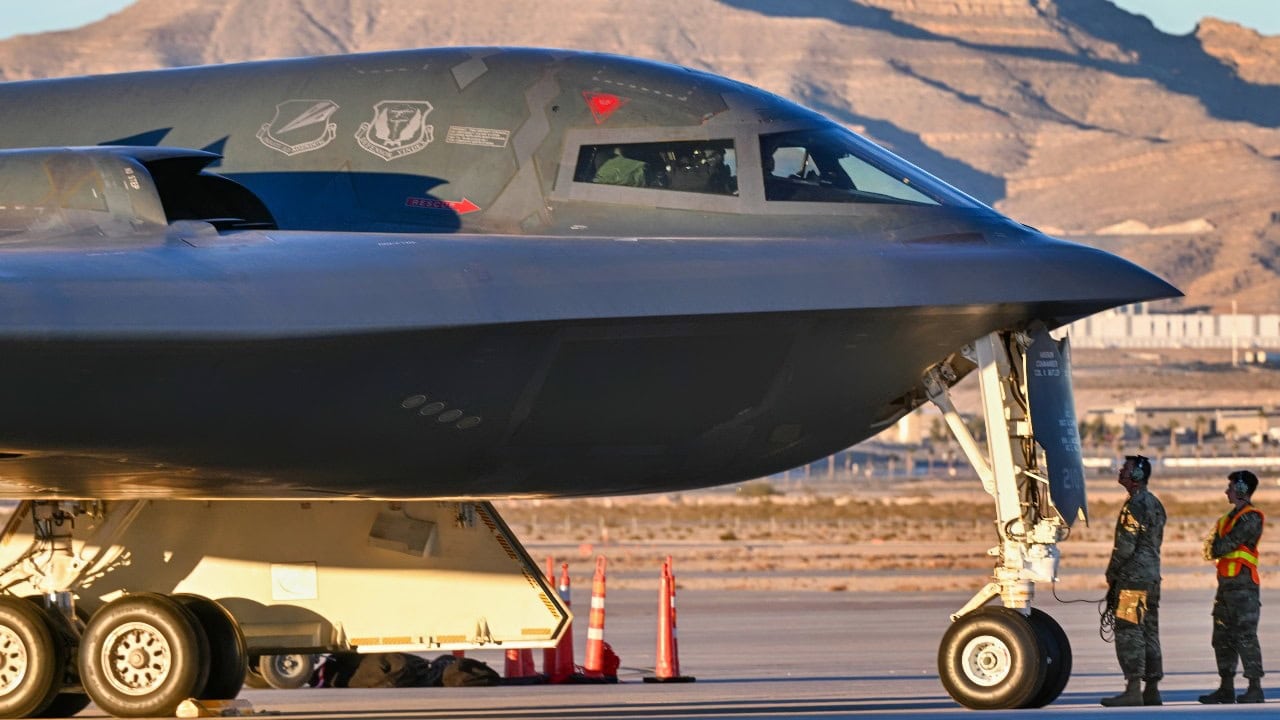
A B-2 Spirit prepares to take-off from Nellis Air Force Base, Nev. during Bamboo Eagle, Jan. 29, 2024. Bamboo Eagle provides Airmen, allies, and partners with a multidimensional, combat-representative battle-space to conduct advanced training in support of U.S. national interests. (U.S. Air Force photo by Senior Airman Bryson Britt)
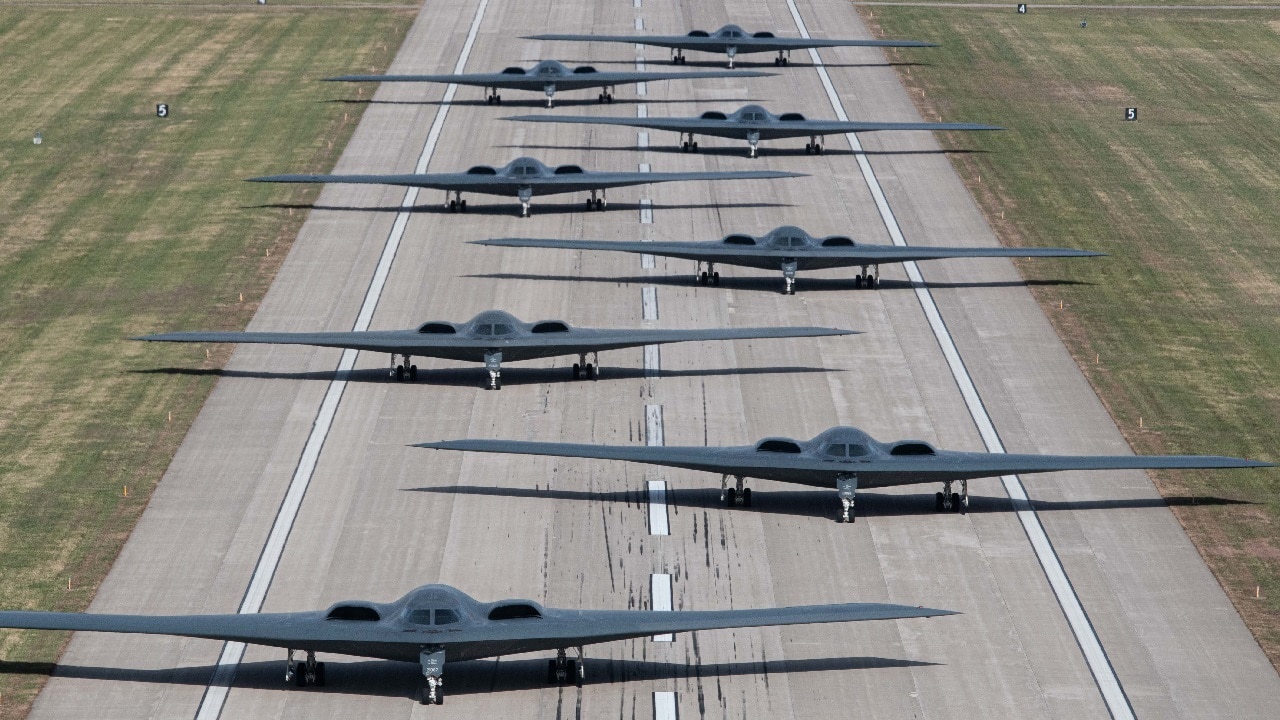
B-2 Spirit stealth bombers assigned to Whiteman Air Force Base taxi and take-off during exercise Spirit Vigilance on Whiteman Air Force Base on November 7th, 2022. Routine exercises like Spirit Vigilance assure our allies and partners that Whiteman Air Force Base is ready to execute nuclear operations and global strike anytime, anywhere. (U.S. Air Force photo by Airman 1st Class Bryson Britt)
It is a design consideration also shared by the B-2 Spirit’s replacement, the upcoming B-21 Raider bomber.
But looks can be deceiving. Appearance has limited bearing on how an aircraft is employed.
“The thing with the H-20 is when you actually look at the system design, it’s probably nowhere near as good as U.S. [low observable] platforms, particularly more advanced ones that we have coming down,” an intelligence official in the Department of Defense explained. “They’ve run into a lot of engineering design challenges, in terms of how do you actually make that system capability function in a similar way to a B-2 or B-21.”
Even the B-2 and the upcoming B-21 will play different roles for the U.S. Air Force.
The B-2 bomber was designed during the Cold War as a survivable strategic bomber, capable of penetrating even the most heavily-defended Soviet airspace to deliver city-destroying ordnance against important military and political locations.
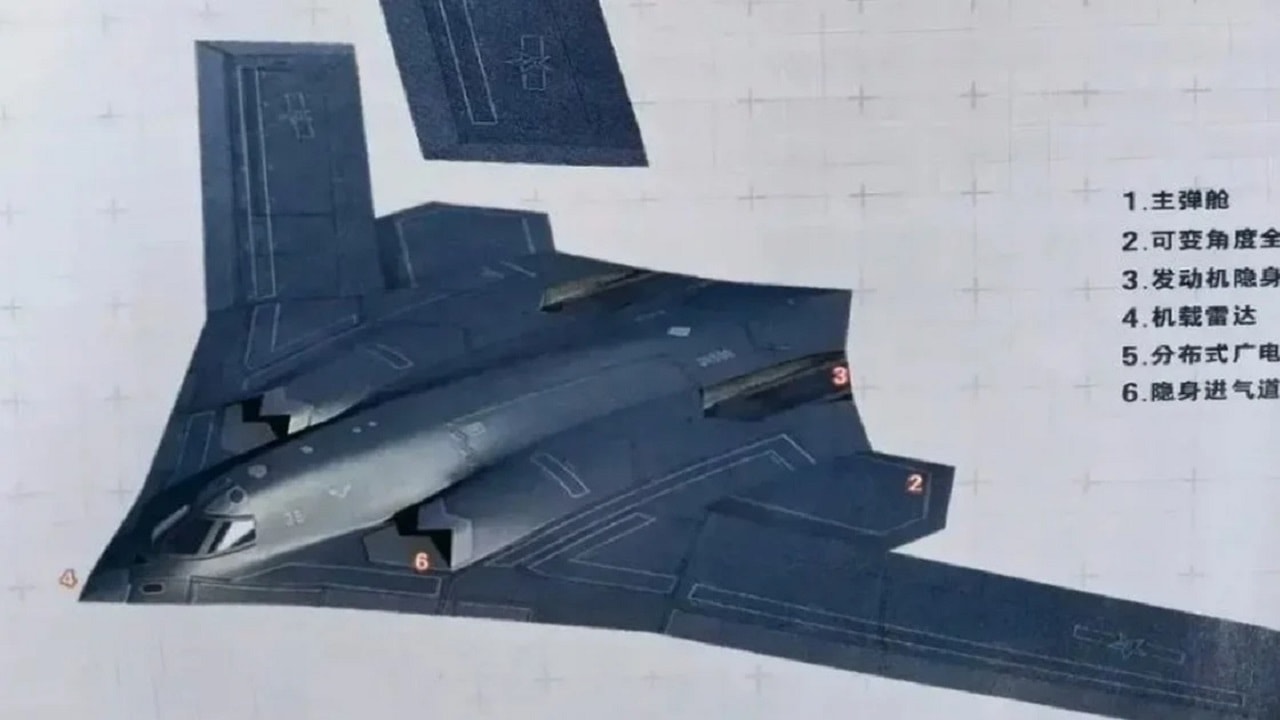
H-20 stealth bomber artist rendering. Image Credit: Creative Commons.
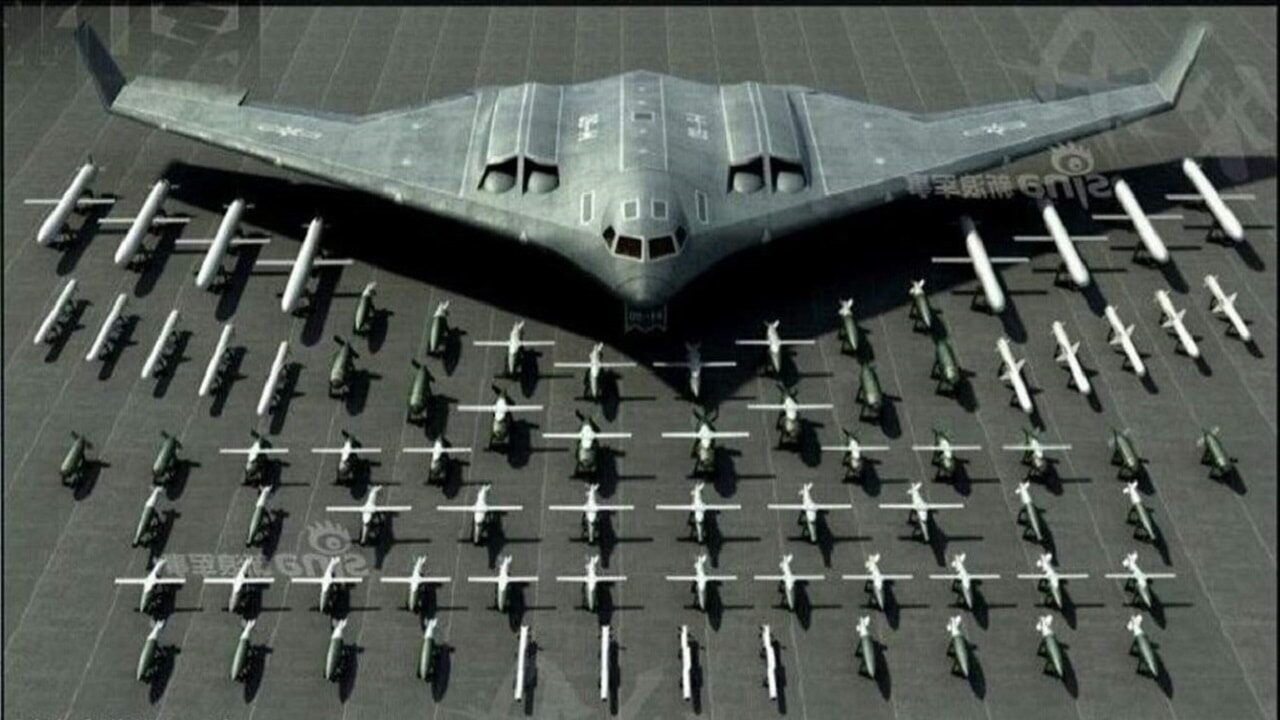
H-20 Stealth Bomber. Image Credit: Artist Rendering Chinese Internet.
The B-21 retains that mission profile but will also be capable of gathering and relaying real-time information about the battlespace to commanders and other aircraft.
“The biggest challenge for the Chinese side is actually not so much capability of actual systems, it’s more capability of personnel to effectively employ those systems at speed and at scale,” the intelligence official added.
“We, as a U.S. military, have a lot of experience fighting wars. And yes, you talk to any operator, and they’ll tell you all the problems we have, but quite frankly, we’re able to figure out how to execute kill chains. The Chinese don’t really have anybody right now at all, in the PLA, who’s actually been in a war.”
China’s last shooting war was a month-long border conflict with Vietnam in 1979. Though both sides claimed victory, the conflict ended in a stalemate, and Beijing withdrew its forces from Vietnam after just a few weeks.
Another potential obstacle for China is corruption within its armed forces—a deep-rooted structural problem that dates back decades. The PLA has modernized rapidly, and the pace of that transformation opens the door to bribery, embezzlement, and patronage.
The PLA’s involvement in commercial activities, as well as its opaque budgeting and political patronage, has kept the door open to kickbacks and falsification of equipment and readiness reports.
However, anti-corruption campaigns have been a hallmark of Chinese President Xi Jinping’s administration since his accession to power in 2012. Those campaigns have included high-level purges of PLA leadership, sweeping military reforms, and greater scrutiny of procurement and logistics chains.
And while Xi’s anticorruption drive has almost certainly curbed the more blatant instances of fraud within the PLA, it is unlikely that corrupt practices have been rooted out entirely.
What Happens Now?
Whatever any assessment says about China’s H-20 bomber, or the PLA more broadly, all remains hypothetical until tested by combat. “I don’t want to rely on the Chinese not being good,” the intelligence official said. “Because we’re not going to know they’re not good until they’re shooting at us, and I don’t want to be in a position where I find out, oh, they actually are that good.”
About the Author: Caleb Larson
Caleb Larson is an American multiformat journalist based in Berlin, Germany. His work covers the intersection of conflict and society, focusing on American foreign policy and European security. He has reported from Germany, Russia, and the United States. Most recently, he covered the war in Ukraine, reporting extensively on the war’s shifting battle lines from Donbas and writing on the war’s civilian and humanitarian toll. Previously, he worked as a Defense Reporter for POLITICO Europe. You can follow his latest work on X.