Last year a Pakistani fighter fired a Chinese-built missile at an Indian Rafale from 200 kilometers away. America’s best air-to-air missile, the one carried by the F-22 and F-35, maxes out at 185.
The F-22 and F-35 Have a Range Problem
As recently as May of last year, Indian Air Force pilots discovered that the Chinese-built PL-15 air-to-air missile was far more capable than anticipated when a Pakistani Air Force Chengdu J-10C fired at an IAF Rafale at a range of 200km.
The PL-15, a Chinese-engineered new-generation air-to-air weapon, is built to attack air targets up to 300km away, and its export variant, fired by Pakistan, is known to travel and achieve hits from as far as 200km.
This range is quite significant, particularly given that the U.S. Air Force’s AIM-120D air-to-air missile is cited as having a range of 160 to 185 km in a write-up on Globalsecurity.org. The exact range of the AIM-120D is not available, for security reasons, yet the unclassified range extends to 185km.
The AIM-120D AMRAAM equips the F-35 and F-22, and a fleet-wide software upgrade in recent years further “hardened” the missile against interference, improved its guidance technology, and extended its range.
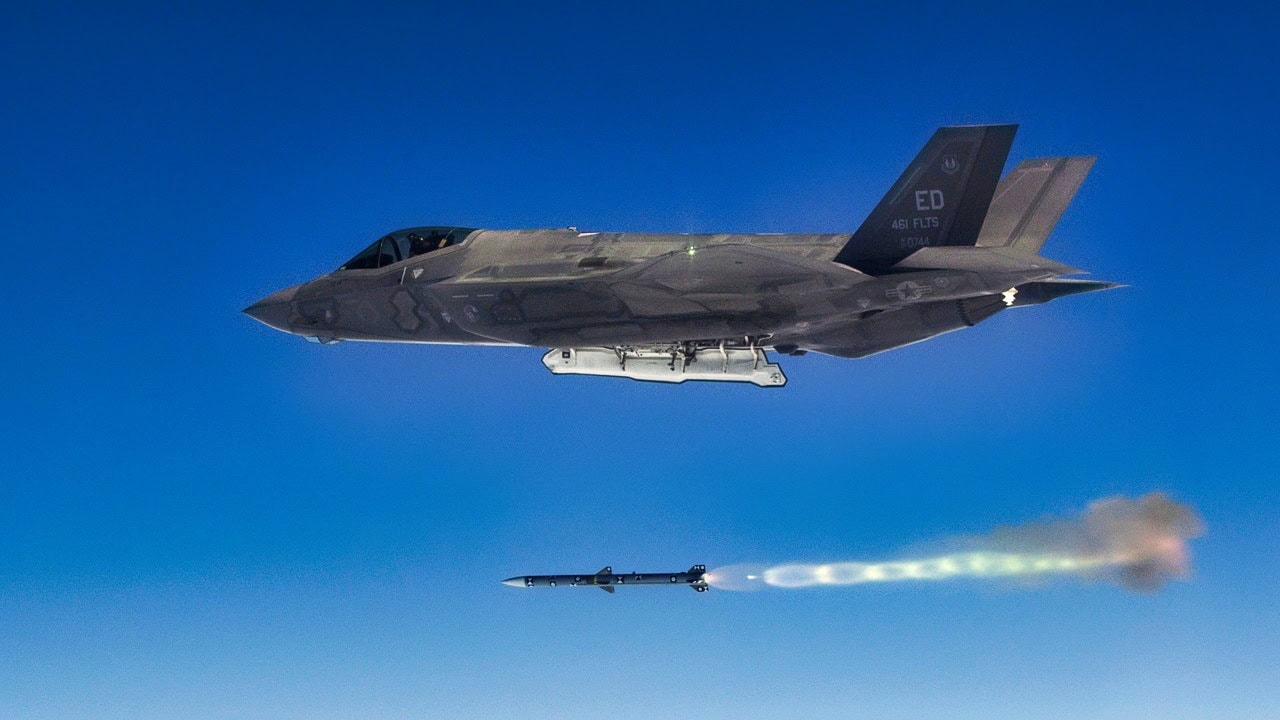
An Edwards AFB F-35A Lightning II fires an AIM-120 Advanced Medium-Range Air-to-Air Missile as part of Weapons Delivery Accuracy testing. The 461st Flight Test Squadron and F-35 Integrated Test Force completed WDA testing in early December, which concludes a large and important part of F-35 developmental test and evaluation. (Courtesy photo by Chad Bellay/Lockheed Martin)
However, what happens if an AIM-120D-armed F-22 encounters a People’s Liberation Army Air Force (PLAAF) PL-15 armed J-20?
Certainly, the outcome of an air combat encounter would depend on several critical variables, such as detection range, targeting, air maneuverability, and precision guidance, so an exact outcome could not be guaranteed.
There are, however, certain technological variables likely to inform the equation for range, speed, and targeting applications. The PL-15, for example, is engineered with longer-range, higher-resolution radar technology and, much like the U.S. Air Force AIM-120D, has anti-interference technology.
PL-15 dual-pulse motor
Perhaps of greatest significance, the PL-15 optimizes propulsion power with what’s called a “double-pulse” solid rocket motor. Unlike a single-burn motor, which powers most air-to-air weapons, a dual-pulse motor can shut down and reignite on command.
This allows the propellant to be consumed in two distinct phases rather than all at once, thereby optimizing propulsion by improving power efficiency and range.
In specific technical terms, a dual-pulse motor can generate a high-thrust boost followed by a second, delayed thrust phase for maneuvering as the weapon closes in on a target.
The famous European “Meteor” missile, now integrated onto the F-35, also uses a dual-pulse motor and is described as a weapon that can “out-run” enemy fighter jets.
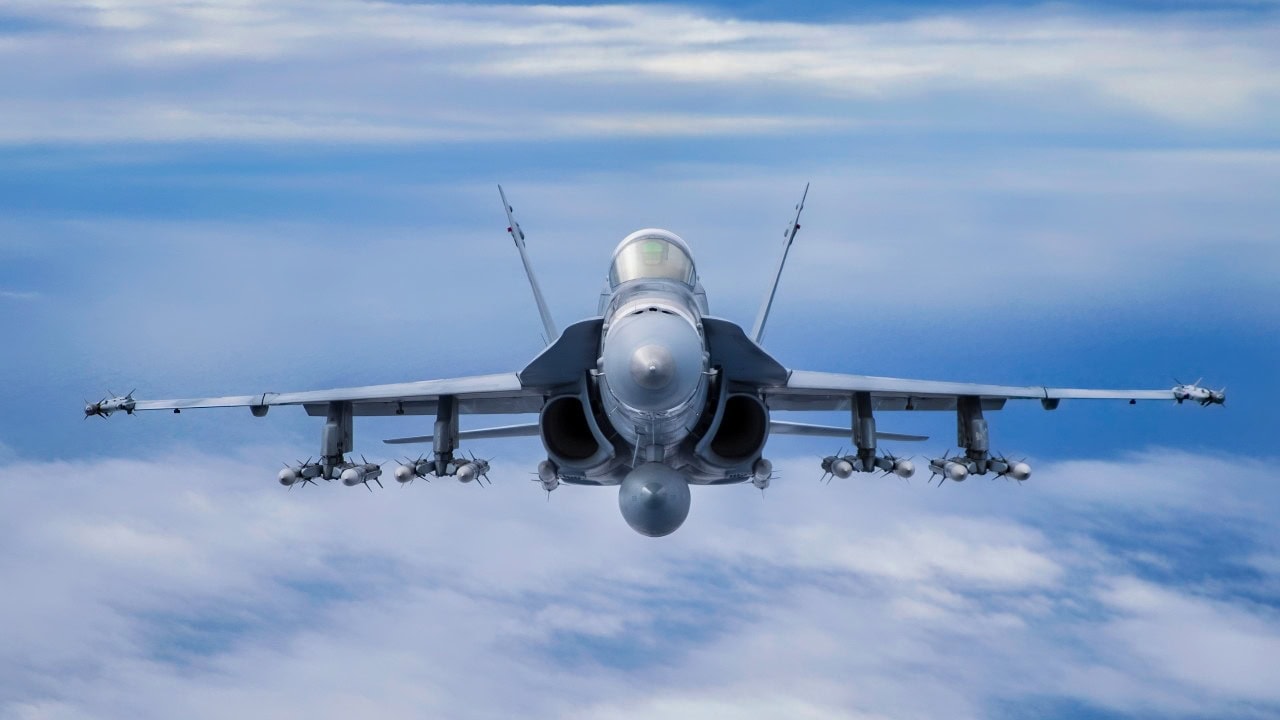
An F/A-18 Hornet with Marine Fighter Attack Squadron (VMFA) 323, MAG-11, 3rd Marine Aircraft Wing (MAW), carrying ten AIM-120 and two AIM-9X Air-to-Air missiles, prepares to refuel over the W-291 training area in southern California, March 6. MAG-11 supports and integrates aviation combat power and capabilities while enhancing 3rd MAW’s ability generate lethality for the supported Marine Air-Ground Task Force (MAGTF). (U.S Marine Corps photo by Sgt. Dominic Romero)
“The dual-pulse solid rocket engine is a kind of fuel charge divided into several sections with a flame-retardant heat insulation layer in the same combustion chamber. Each section of the charge has an independent ignition system. The control system determines the ignition time of each section of the charge to achieve the energy management mechanism is introduced to the working process of the engine to meet the technical requirements of the overall optimal trajectory of the rocket, and achieve the optimal allocation plan of the missile’s longest range, no escape zone, and terminal maneuverability,” a Globalsecurity.org essay states.
AIM-120D Upgrades
The software upgrades to the AIM-120D perform a similar function by improving energy management along the missile’s flight path.
Many additional details relevant to the AIM-120D are unavailable, so a specific, fully accurate comparison between the AIM-120D and the PL-15 may not be possible.
The PL-15 is also said to operate with a two-way data link, which enables the weapon to adjust course “in-flight” to accommodate changing target information.
Similar to a U.S. Tomahawk cruise missile, the much smaller PL-15 is networked and can redirect as needed, something of great tactical significance in any fast-moving, dynamic air-combat environment.
What’s less clear, however, is the possibility that the PL-15 can fire “off-boresight,” meaning turn its direction in flight to hit a target “behind” the aircraft; the U.S. AIM-9X does have this ability, as the missile can essentially fully “turn-around” to engage a target to the side or even behind the jet.
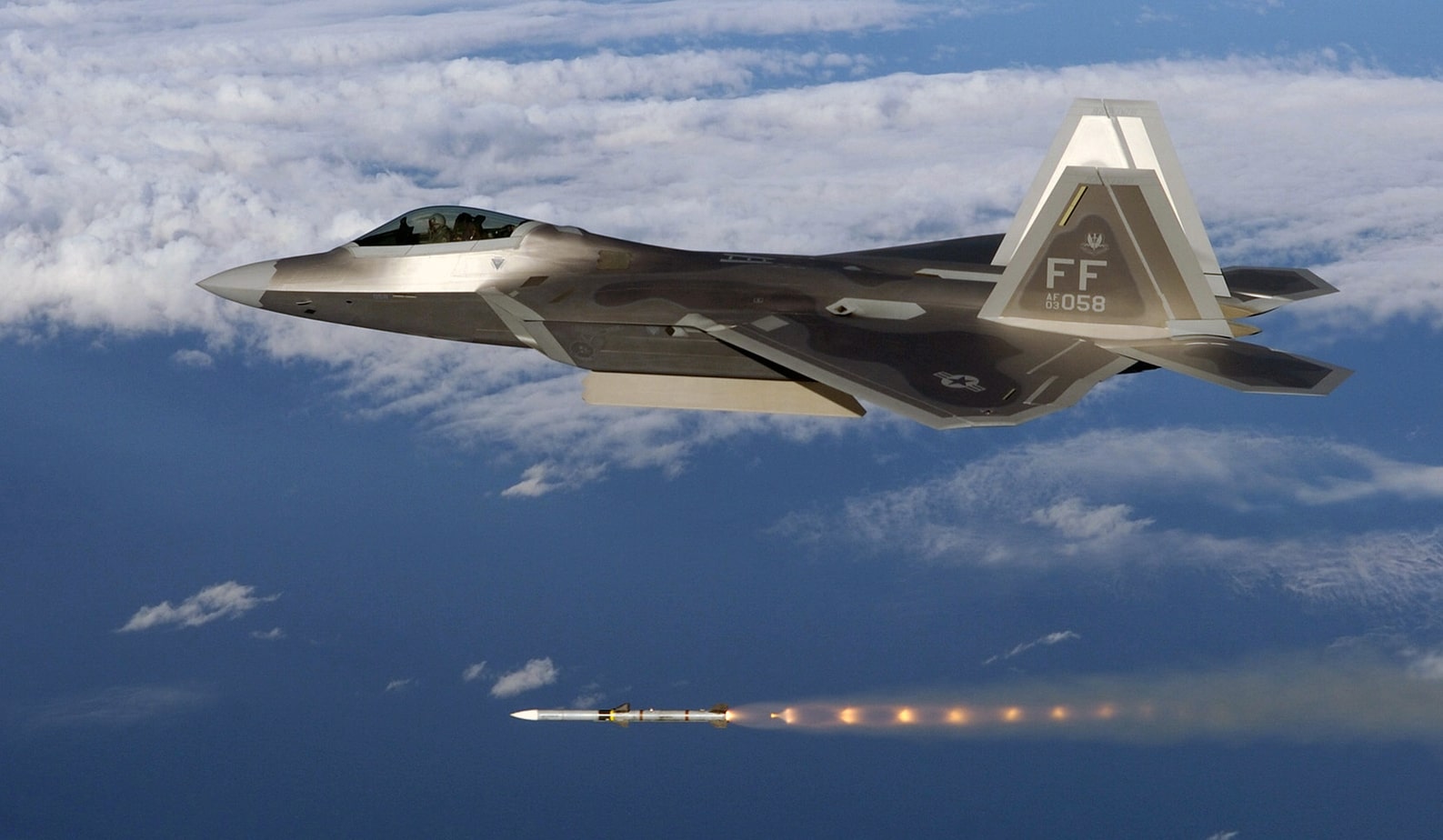
This F-22A Raptor from the 27th Fighter Squadron “Fighting Eagles” located at Langley Air Force Base, Virginia, fires an AIM-120 Advanced Medium Range Air-to-Air Missile (AMRAAM) and an AIM-9M sidewinder heat-seeking air-to-air missile at an BQM-34P “Fire-bee” subscale aerial target drone over the Gulf of Mexico during a Combat Archer mission. The unit was deployed to Tyndall AFB, Florida to support the Air-to-Air Weapons System Evaluation Program hosted by the 83rd Fighter Weapons Squadron also located at Tyndall.
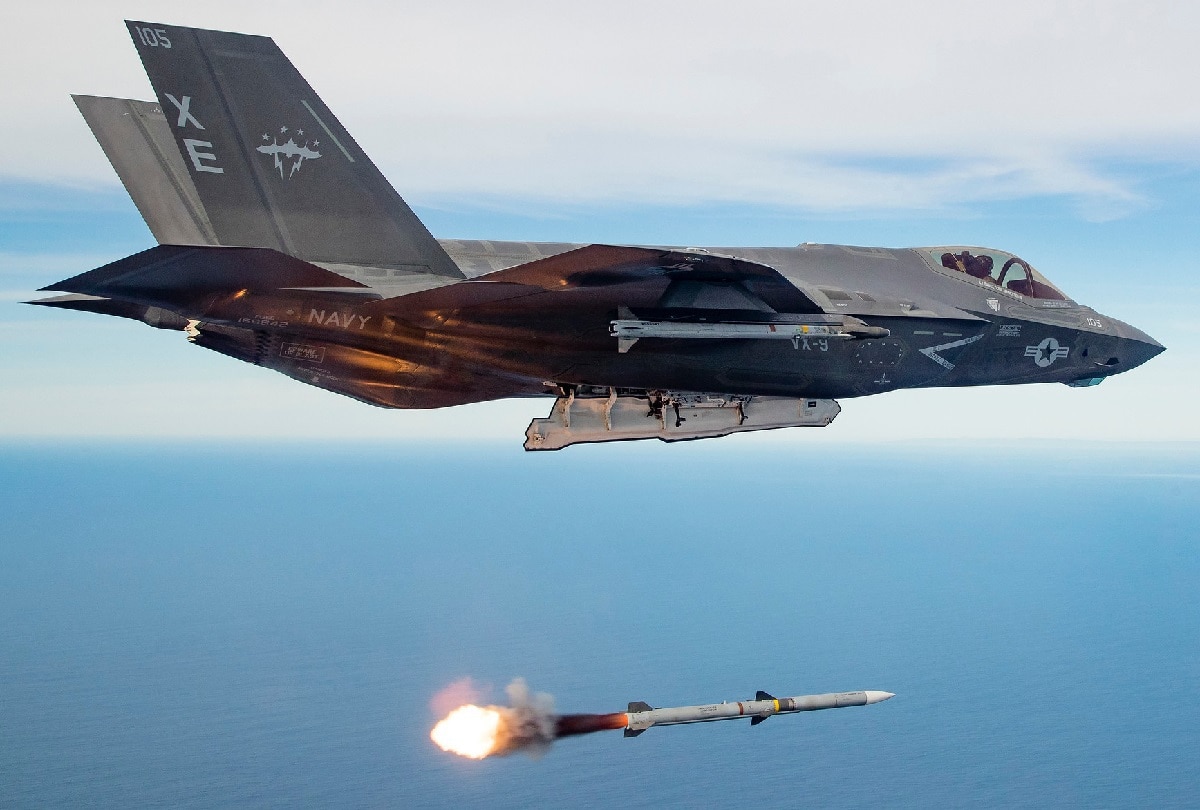
EDWARDS AIR FORCE BASE, Calif. (Jan. 24, 2019) U.S. Navy Lt. Daniel “Crib” Armenteros, piloting an F-35C Lightning II assigned to Naval Air Station China Lake’s Air Test and Evaluation Squadron Nine (VX-9), conducts the first live-fire test of an AIM-120 missile released from an operational Joint Strike Fighter. The advanced medium-range air-to-air Missile was released from the aircraft’s internal weapons storage bay over a controlled sea test range in the Pacific Ocean as part of efforts by the 412th Test Wing and Joint Operational Test Team at Edwards Air Force Base. (U.S. Air Force photo by Christopher Okula/RELEASED)
AIM-260
If there is an actual range discrepancy between the PL-15 and AIM-120D, meaning the Chinese PL-15 could “hit” an F-22 at greater stand-off distances, it might explain why the Air Force and Navy appear to be fast-tracking a “new,” ultra-fast, long-range AIM-260 air-to-air missile.
Live-fire testing has been underway for many years, and the expectation is that the AIM-260 will be fired from an F/A-18 Super Hornet and an F-22. Given this, there is little reason to imagine the weapon would not also arm the F-35.
Very few details about the AIM-260 are known for understandable security reasons, yet the question of longer range is quite significant, given the known performance parameters of existing advanced fighter jets.
The F-35, for example, has shown it can see and destroy groups of 4th-generation jets from ranges where it itself is not detected, so an ability to fire a faster, more precise, and longer-range air-to-air missile would greatly enhance this advantage.
There are many areas where air-fired weapons can be enhanced, and both the Air Force and the Navy have extensive experience upgrading weapons. It would not be surprising if the AIM-260 could fire “off-boresight,” as the AIM-9X does.
Hardening Missiles
Upgraded missiles such as these have been engineered for greater resilience in flight, meaning they have been hardened against enemy efforts to “jam” their targeting and guidance systems. One method of hardening or developing countermeasures against jamming is understood as frequency hopping.
A weapon’s RF signal can be programmed to switch to another frequency if the initial frequency is disrupted or jammed by enemy interference.
This, of course, increases the likelihood that the attacking missile will successfully continue through defenses to hit its intended target.
There are also new generations of seeker and sensing technologies enabling weapons to change course in flight and adapt as needed to changing target information. Many weapons are increasingly engineered with data links and built-in receptors that receive input and respond to new signals.
The SM-6, for example, can be fired from ships with what’s called a dual-mode seeker, meaning it can send its own forward “ping” in flight to adapt to moving targets and “track” a return signal.

A Falcon Heavy rocket launches into the sky, surrounded by smoke and fire during takeoff.
The U.S. Air Force is advancing quickly with a collaborative, networked weapons program known as Golden Horde, an emerging technology in which bombs can exchange key data while in flight to respond to changing target dynamics and transmit time-sensitive details among weapons.
The exact arrival of the AIM-260 is likely not publicly known, yet it would make sense if the weapon were moving into advanced phases of testing, development, and procurement.
About the Author: Kris Osborn
Kris Osborn is the President of Warrior Maven – Center for Military Modernization. Osborn previously served at the Pentagon as a highly qualified expert in the Office of the Assistant Secretary of the Army—Acquisition, Logistics & Technology. Osborn has also worked as an anchor and on-air military specialist at national TV networks. He has appeared as a guest military expert on Fox News, MSNBC, The Military Channel, and The History Channel. He also has a Masters Degree in Comparative Literature from Columbia University.