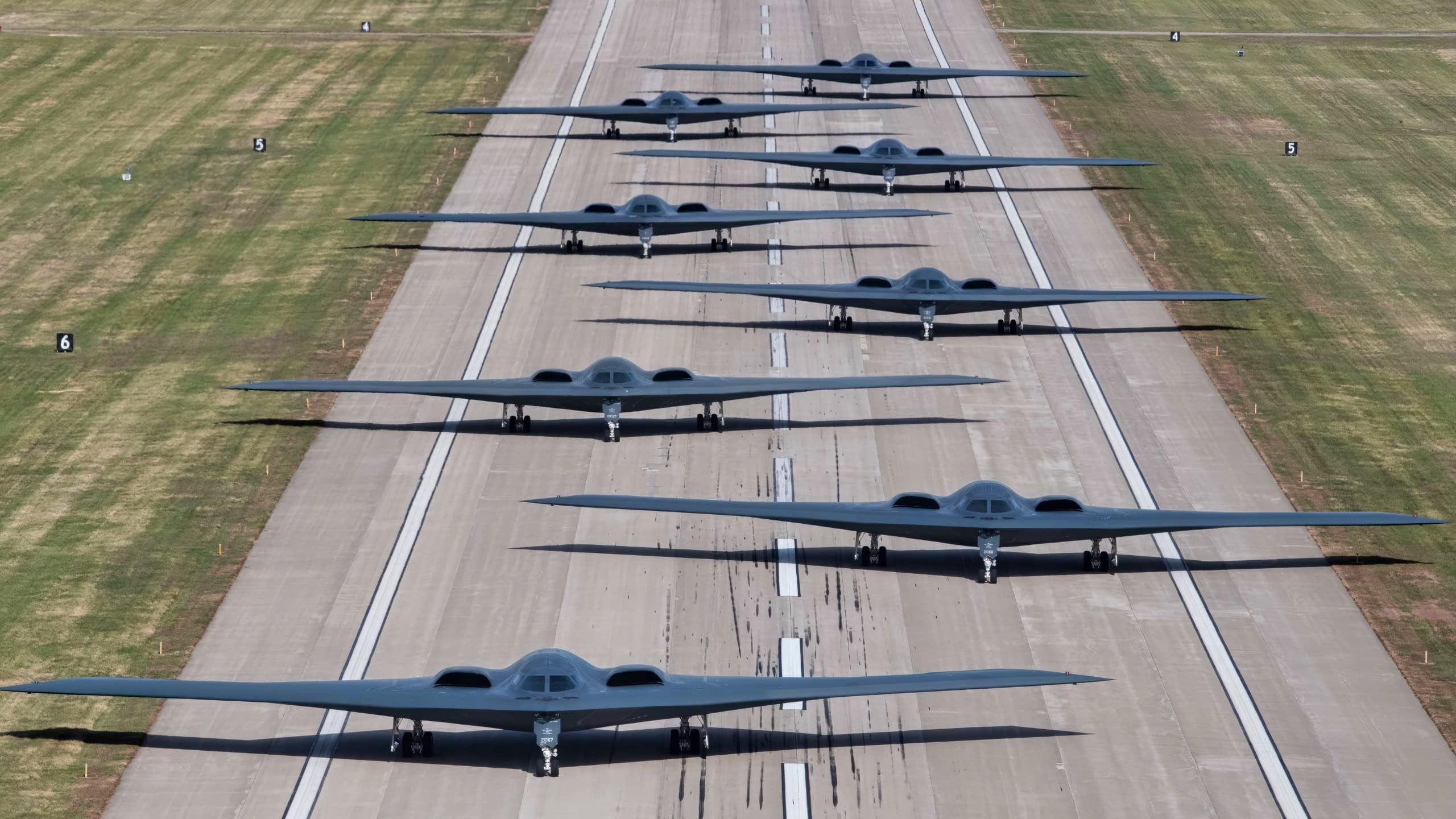
Summary and Key Points: The U.S. intelligence community has quietly acknowledged that its initial bomb-damage assessments of Iranian underground missile cities and launcher facilities overestimated destruction by at least 50 percent, according to analysis by Brandon Weichert, 19FortyFive’s Senior National Security Editor. The admission contradicts Trump administration claims that American and Israeli forces have “obliterated” Iran’s hardened underground network and exercised “total control” over Iranian airspace.
Iran Can’t Be Bombed Back to the Stone Age Afterall
In what came as a surprise to no one paying attention, the US intelligence community admitted that their initial assessments of damage to Iranian missile launcher capabilities and those vaunted Iranian underground missile cities were wildly inaccurate.
Iran: The Ultimate Mountain Fortress
In fact, shortly before the recent two-week ceasefire between the Islamic Republic of Iran and the United States took hold, US intelligence assessed that they had overestimated the air campaign’s destruction of those missile launchers and underground facilities by at least 50 percent.
That has not stopped the Trump administration from making the clearly specious claim that the United States and Israel have “total control” over Iran’s airspace or that they have “obliterated” those underground missile cities and missile launchers.
To understand the reasons why it’s so difficult to know whether the US and Israeli air forces have succeeded in destroying these underground facilities, one must first understand the geography of Iran.
Basically, Iran is a natural fortress, ringed with jagged mountain ranges, and invading this nation–or even launching airstrikes against targets buried deep beneath those mountains–is nearly impossible.
Iran has fortified and hardened its underground missile cities, using decades of lead time to prepare these critical facilities for what it anticipated would be a relentless air campaign.
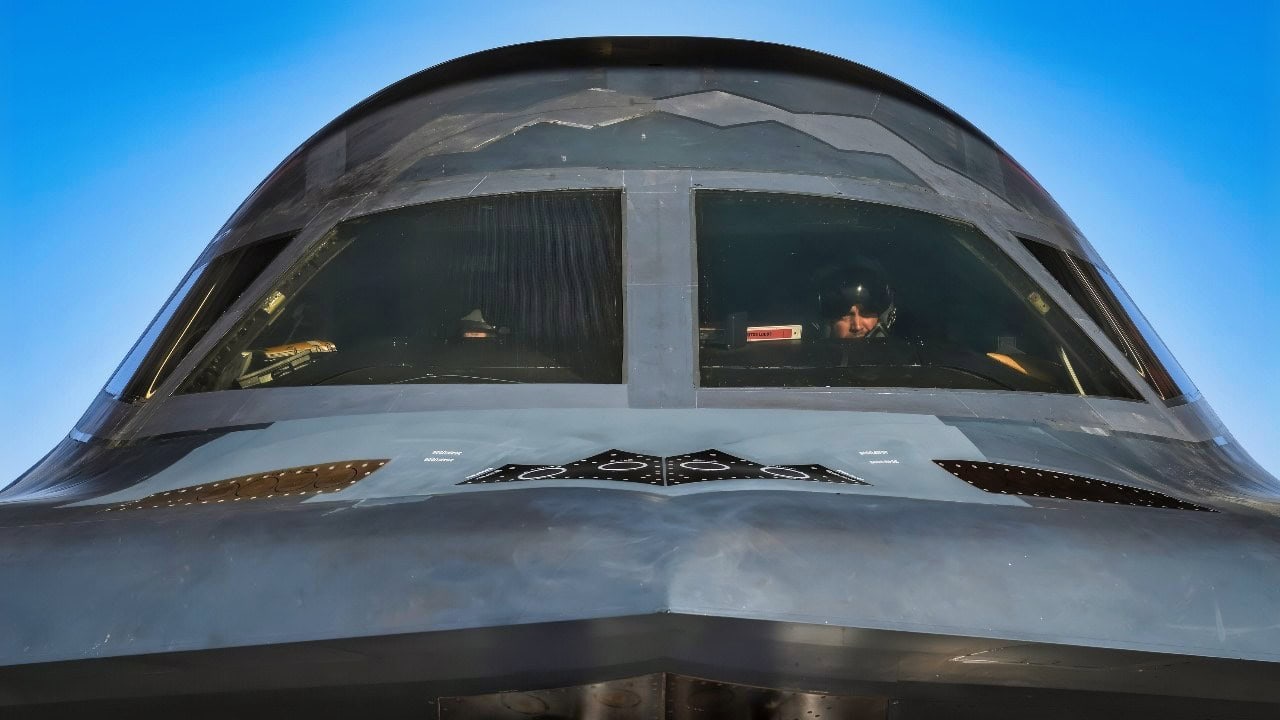
A U.S. Air Force B-2 Spirit aircrew performs pre-flight checks in the cockpit of their aircraft at Whiteman Air Force Base, Missouri, March 8, 2020. The B-2 took off from Whiteman AFB to support U.S. Strategic Command Bomber Task Force operations in Europe. The 131st Bomb Wing is the total-force partner unit to the 509th Bomb Wing. (U.S. Air Force photo by Tech. Sgt. Alexander W. Riedel)
Plus, Iran buries its underground facilities beneath layers of granite nd other hard-to-penetrate rock. Yes, the United States (and, by extension, Israel) possesses what are known as bunker-busting bombs.
For those weapons to effectively penetrate the layers of rock and concrete that the Iranians have hardened their underground facilities with, it requires perfect aiming from the air, and it means that the US Air Force and Israeli Air Force (IAF) must use bombs with yields far higher than what they’ve been using.
The Myth of the “Bunker Buster” Solution
Go back to the 12-Day War last year. Remember the fanfare that surrounded the weapons the Americans deployed against the suspected nuclear weapons development sites at Natanz, Isfahan, and Fordo.
The US Air Force dropped 14 GBU-57/B Massive Ordnance Penetrators (MOPs), which are the largest non-nuclear bombs in America’s arsenal. Developed by Boeing, this 30,000-pound bomb can penetrate over 200 feet of earth or 60 feet of reinforced concrete before detonating.
These incredible weapons are expensive and difficult to build. When Boeing first built the Air Force’s arsenal of GBU-57s, they ended up with around 30. Then came the B-2 airstrikes last year.
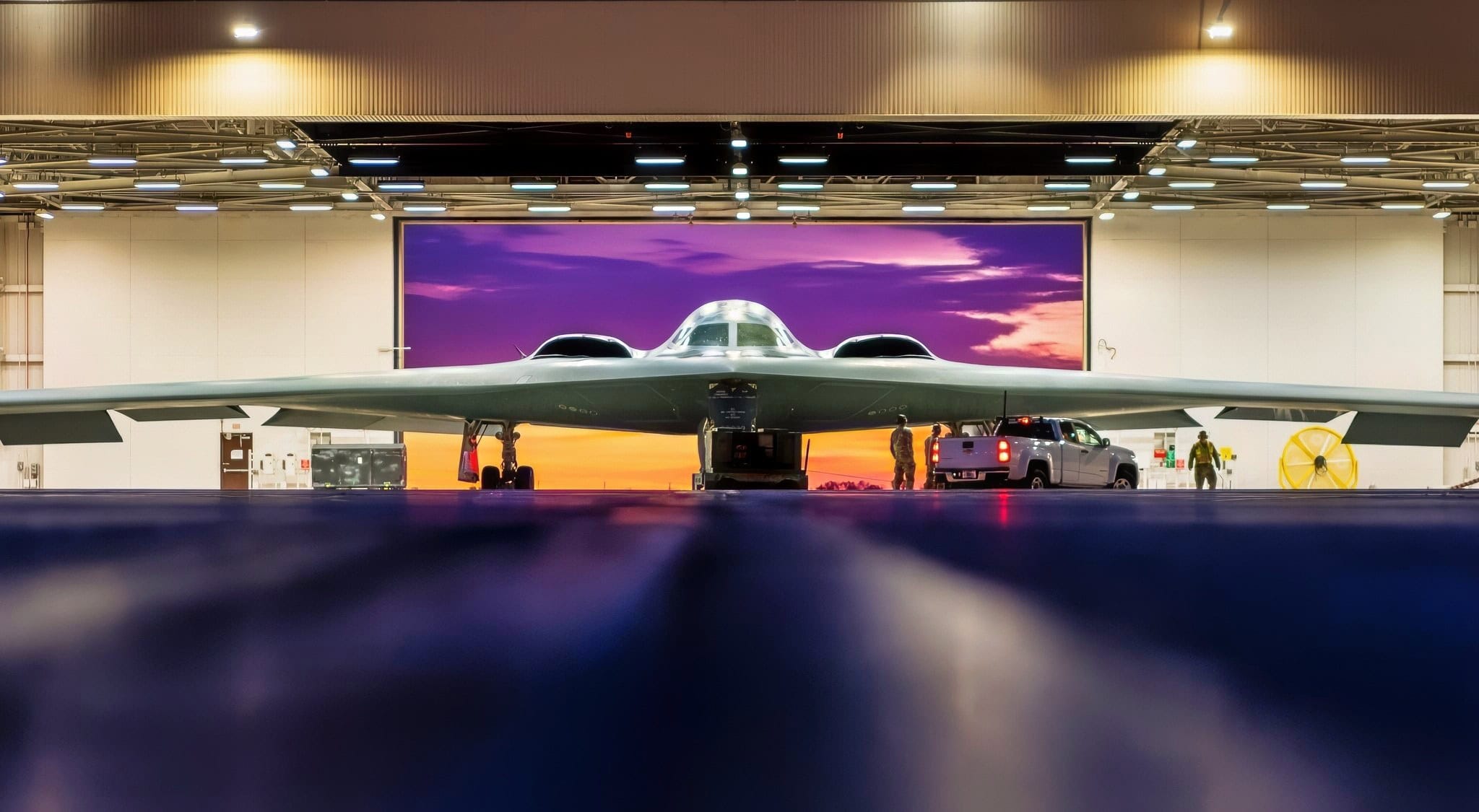
U.S. Airmen assigned to the 393rd Bomber Generation Squadron prepare a B-2 Spirit aircraft for flight during Exercise Global Thunder 26 at Whiteman Air Force Base, Missouri, Oct. 24, 2025. Global Thunder is an annual command and control exercise designed to train U.S. Strategic Command forces and assess joint operational readiness. (U.S. Air Force photo by Staff Sgt. Joshua Hastings)
Because information on US arsenals is classified, open source estimates are essentially informed guesses. If the original number of 30 units is correct and 14 were used, that leaves 16, though some sources suggest as few as 6 remain.
Even if it is the higher number, to accomplish the mission of truly destroying those underground Iranian missile cities, 16 would be an insufficient number.
America’s Stockpile Problem is Getting Worse
Replenishing those GBU-57 stockpiles takes anywhere between 18-24 months. The Pentagon has put in for a new round of GBU-57s, but they have requested an entirely redesigned tail kit, meaning that it will take up to 60 months for those new units to begin arriving.
The Defense Department assesses that new GBU-57s should be coming online around 2028, if all goes to plan. Given how broken the defense industrial base (DIB) is, one should be skeptical that any meaningful increase in the dire GBU-57 stockpiles will happen before the 2030s.
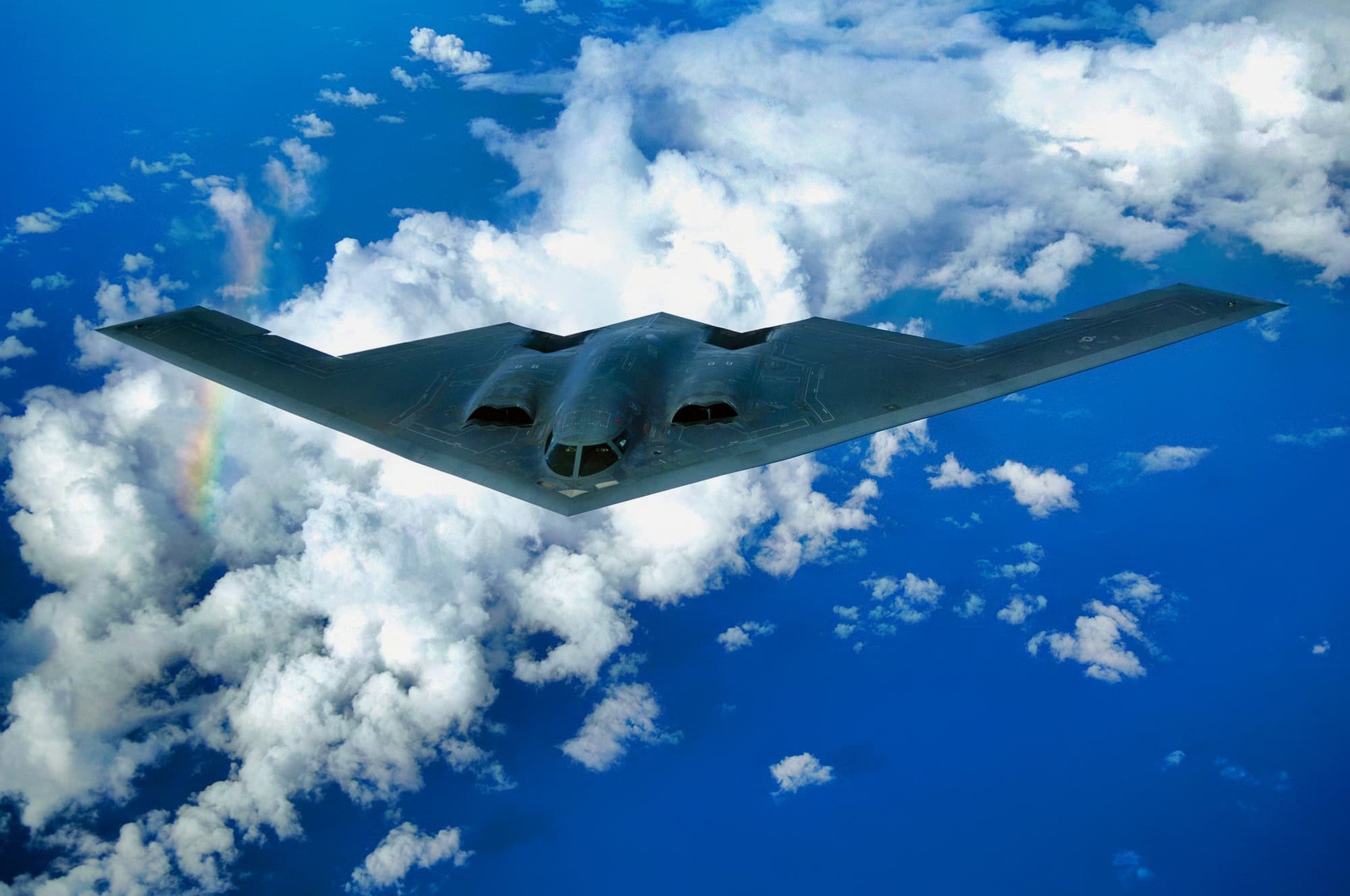
A B-2 Spirit soars after a refueling mission over the Pacific Ocean on Tuesday, May 30, 2006. The B-2, from the 509th Bomb Wing at Whiteman Air Force Base, Mo., is part of a continuous bomber presence in the Asia-Pacific region. (U.S. Air Force photo/Staff Sgt. Bennie J. Davis III)
Even with impressive display of technical skill on the part of Air Force targeters and with the massive ordnance brought to bear against those three hardened nuclear weapons facilities, the nuclear facilities were so deeply buried and hardened against bombardment that, a year later, the Trump administration claimed they had to restart hostilities, in part, to destroy the nuclear weapons facilities that they had originally claimed were “obliterated” in last year’s strikes.
Why Current Bombs Can’t Do the Job
Due to the dangerously depleted GBU-57 stockpile, the Air Force is relegated to employing bombs with smaller warheads. The most common bomb that the USAF and IAF employ against these suspected Iranian missile cities is the 2,000-pound bomb.
That’s less because those are the yields required to destroy those Iranian underground missile cities and more because those are the systems that both the US and Israel have in abundance.
But those classes of warheads are entirely insufficient for collapsing the Iranian underground missile cities.
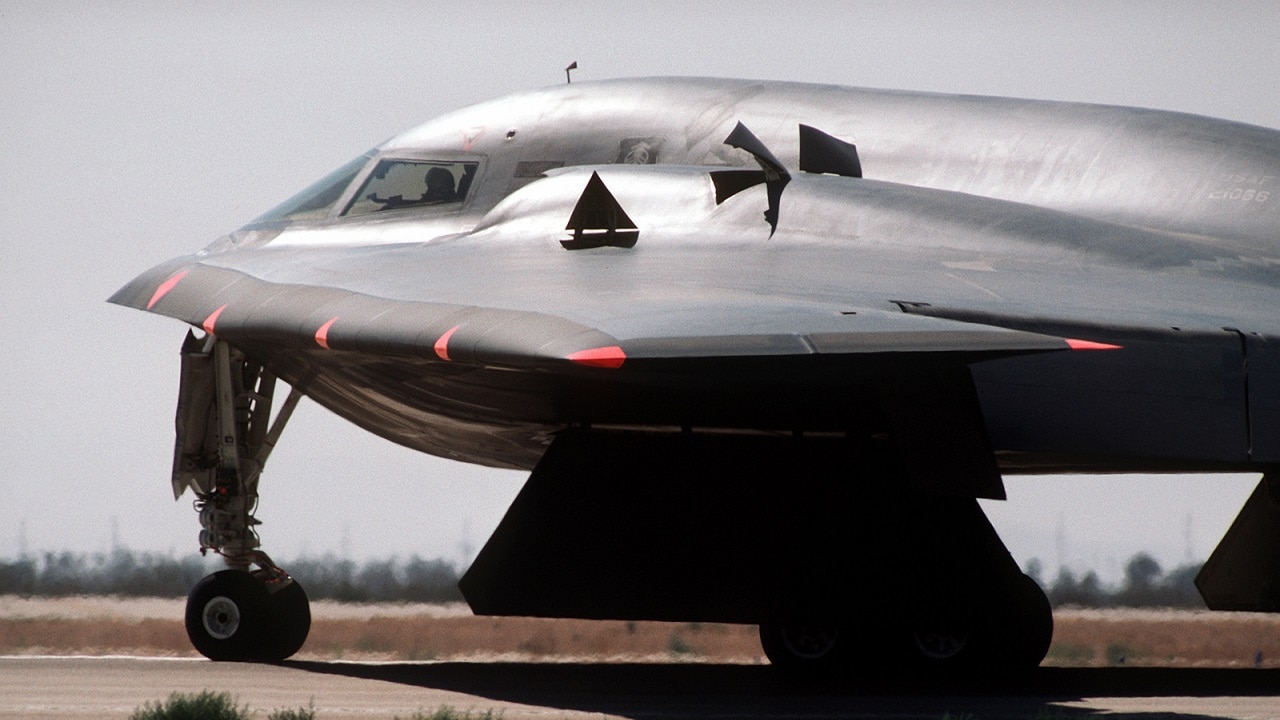
A left side view of the front of a B-2 advanced technology bomber aircraft as it prepares for its first flight, at the Air Force Flight Test Center.
Whenever the Americans and Israelis strike the underground missile complexes in Iran, they damage some tunnels or collapse the entryway to that underground missile city.
That damage, sadly, is always superficial because of how hardened the Iranians made their underground cities.
Iran’s Underground Network is Built to Survive
The Iranians have built such an extensive and interconnected set of tunnels to house, build, and launch their missiles and drones from that; in many cases, Iran’s military operations are not particularly impacted by these pinprick strikes.
And when they are impacted, the Iranians have strategically placed excavation equipment nearby so that they can quickly begin undoing whatever damage the US and Israeli bombs did to their underground missile cities.
As the Americans and Israelis struggle to destroy these underground missile cities, the Iranians continue using them to build and store new missiles and drones…and even to launch some of the missiles and drones from.
These facilities are only growing more powerful as Iran realizes the Americans and Israelis are unable to destroy them with the weapons they’ve got.
So, unless the Americans and Israelis are planning to use nuclear weapons to attempt to collapse the underground missile cities in Iran (that is not recommended), the US has failed to achieve its objectives against Iran’s warmaking capabilities, and the Iranians are even more hardened against US and Israeli airstrikes than they were before.
About the Author: Brandon J. Weichert
Brandon J. Weichert is the Senior National Security Editor at 19FortyFive.com. Recently, Weichert became the editor of the “NatSec Guy” section at Emerald.TV. He was previously the senior national security editor at The National Interest. Weichert is the host of The National Security Hour on iHeartRadio, where he discusses national security policy every Wednesday at 8pm Eastern. He hosts a companion show on Rumble entitled “National Security Talk.” Weichert consults regularly with various government institutions and private organizations on geopolitical issues. His writings have appeared in numerous publications, among them Popular Mechanics, National Review, MSN, and The American Spectator. And his books include Winning Space: How America Remains a Superpower, Biohacked: China’s Race to Control Life, and The Shadow War: Iran’s Quest for Supremacy. Weichert’s newest book, A Disaster of Our Own Making: How the West Lost Ukraine, is available for purchase wherever books are sold. He can be followed via Twitter/X @WeTheBrandon.