

One of the primary objectives of Operation Epic Fury was to degrade and destroy Iran’s offensive capabilities. While targeting Iranian leadership and naval vessels was accomplished relatively easily, the U.S. has had less success in destroying Iran’s large network of underground bunkers that assemble and store drones and ballistic missiles. These “missile cities,” as they are colloquially referred to, comprise the bulk of Iran’s ballistic missile production and, despite U.S. attempts to destroy these underground structures through the month of March, remain in operation.
The Development of Iran’s Missile Cities
Since the early years of the Islamic Republic, Iranian defense officials have regarded concealment and survivability as core requirements for deterrence.
This approach intensified after the Iran–Iraq War, during which Iranian cities and military sites were heavily bombarded, and Iran lacked both modern air defenses and effective long-range strike capabilities.
The experience convinced Tehran that above-ground factories, depots, and launch sites could not survive a high-intensity conflict against a better-equipped opponent. Over time, this led to a doctrine of decentralization and the systematic transfer of critical military infrastructure deep underground, often beneath mountains or remote terrain.
Rather than a single bunker or silo, a missile city typically consists of a network of tunnels, caverns, storage halls, and support rooms that can house ballistic missiles, cruise missiles, mobile launchers, fuel systems, spare parts, and command-and-control elements.
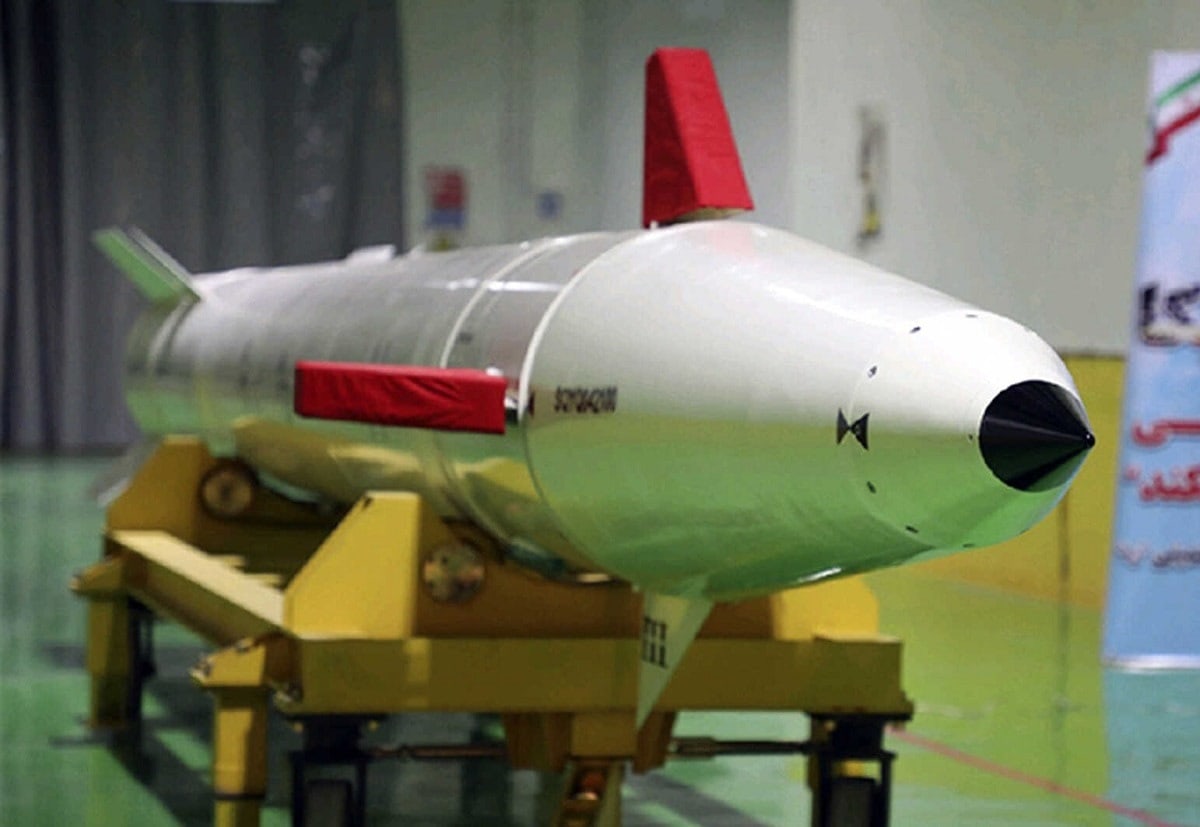
Iranian ballistic missiles. Image: Creative Commons.
Iranian sources have claimed that such facilities exist across much of the country, while independent analysts and satellite imagery suggest they are concentrated in strategically significant regions, particularly in mountainous interior areas.
Publicly released footage from Iranian state media shows long tunnels lined with missiles and transporter erector launchers (TELs), sometimes stretching hundreds of meters, reinforcing the impression of depth, redundancy, and scale that Tehran seeks to project to adversaries.
Hardened Underground Missile/Drone Factories
Over time, Iran’s missile cities transformed from storage sites to underground factories. According to Israeli sources, these underground missile factories are able to produce hundreds of ballistic missiles per month.
This transition reflects an effort to ensure continuity of production even during sustained air campaigns.
It is unknown how much of the production process takes place underground, but some analysts speculate that Iran uses underground halls for at least parts of assembly, integration, and storage, reducing visibility and shortening the time between production and deployment.
This integration of manufacturing and storage under hardened cover is designed to complicate adversaries’ efforts to conduct strikes or cripple Iran’s missile forces before they can be used.
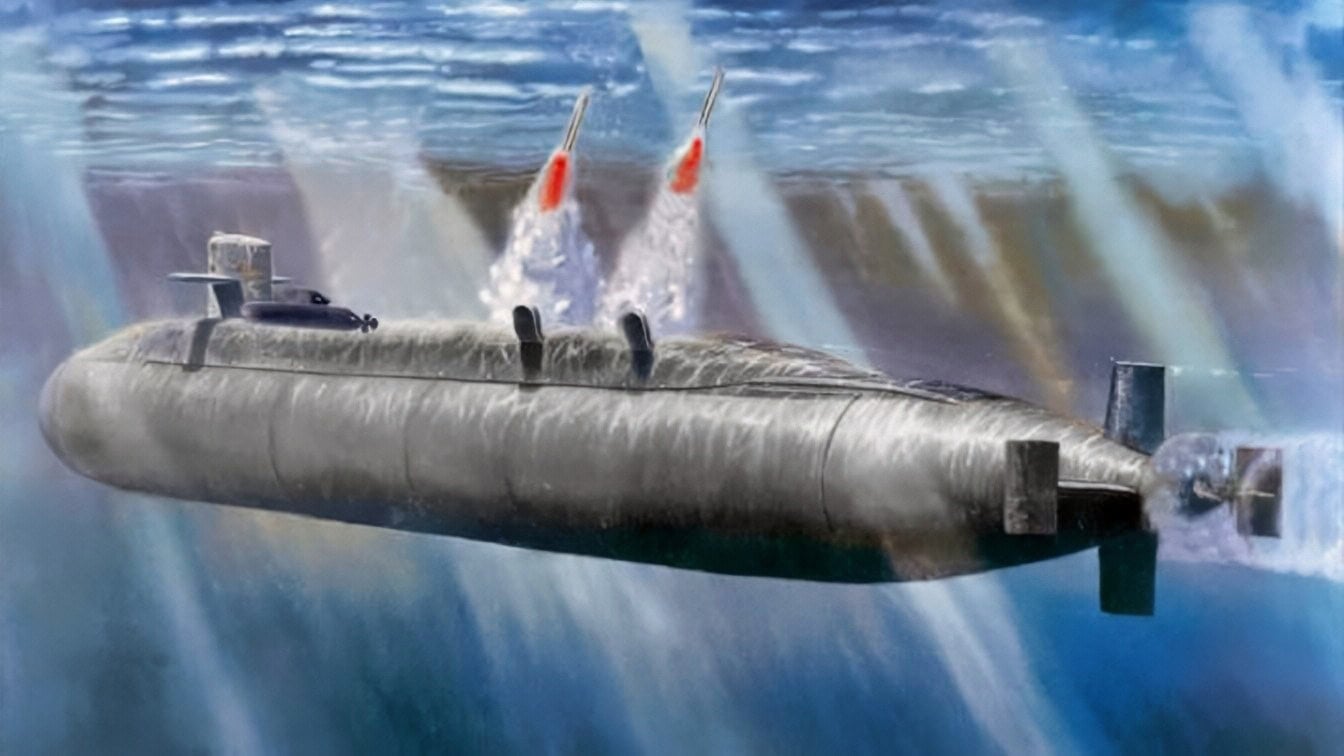
Puget Sound Naval Shipyard, Wash. (Aug. 14, 2003) — Illustration of USS Ohio (SSGN 726) which is undergoing a conversion from a Ballistic Missile Submarine (SSBN) to a Guided Missile Submarine (SSGN) designation. Ohio has been out of service since Oct. 29, 2002 for conversion to SSGN at Puget Sound Naval Shipyard. Four Ohio-class strategic missile submarines, USS Ohio (SSBN 726), USS Michigan (SSBN 727) USS Florida (SSBN 728), and USS Georgia (SSBN 729) have been selected for transformation into a new platform, designated SSGN. The SSGNs will have the capability to support and launch up to 154 Tomahawk missiles, a significant increase in capacity compared to other platforms. The 22 missile tubes also will provide the capability to carry other payloads, such as unmanned underwater vehicles (UUVs), unmanned aerial vehicles (UAVs) and Special Forces equipment. This new platform will also have the capability to carry and support more than 66 Navy SEALs (Sea, Air and Land) and insert them clandestinely into potential conflict areas. U.S. Navy illustration. (RELEASED)
Iran’s drone program, by contrast, is particularly well suited to underground and dispersed production.
The Shahed-series one-way attack drones, which have become central to Iran’s regional strategy, are comparatively simple to manufacture and rely on readily available materials and components.
This simplicity allows Iran to spread production across multiple sites, including underground workshops and small-scale facilities that can be concealed within existing industrial or military infrastructure. Western intelligence assessments and media investigations indicate that significant portions of Iran’s drone assembly capability are hidden or hardened, enabling continued output even when specific factories or depots are struck.
This resilience has been evident during recent conflicts, when Iran and its regional partners continued launching large numbers of drones despite intensive airstrikes on known sites.
Hard to Destroy, But Not Invincible
Despite their advantages, Iran’s underground missile and drone facilities are not invulnerable. Advances in intelligence, surveillance, and reconnaissance, combined with the development of more capable bunker-busting munitions, have reduced the protective margin once afforded by depth and hardening alone.
Throughout Operation Epic Fury, many of Iran’s known missile sites have come under attack by American airstrikes utilizing heavy bunker buster bombs.
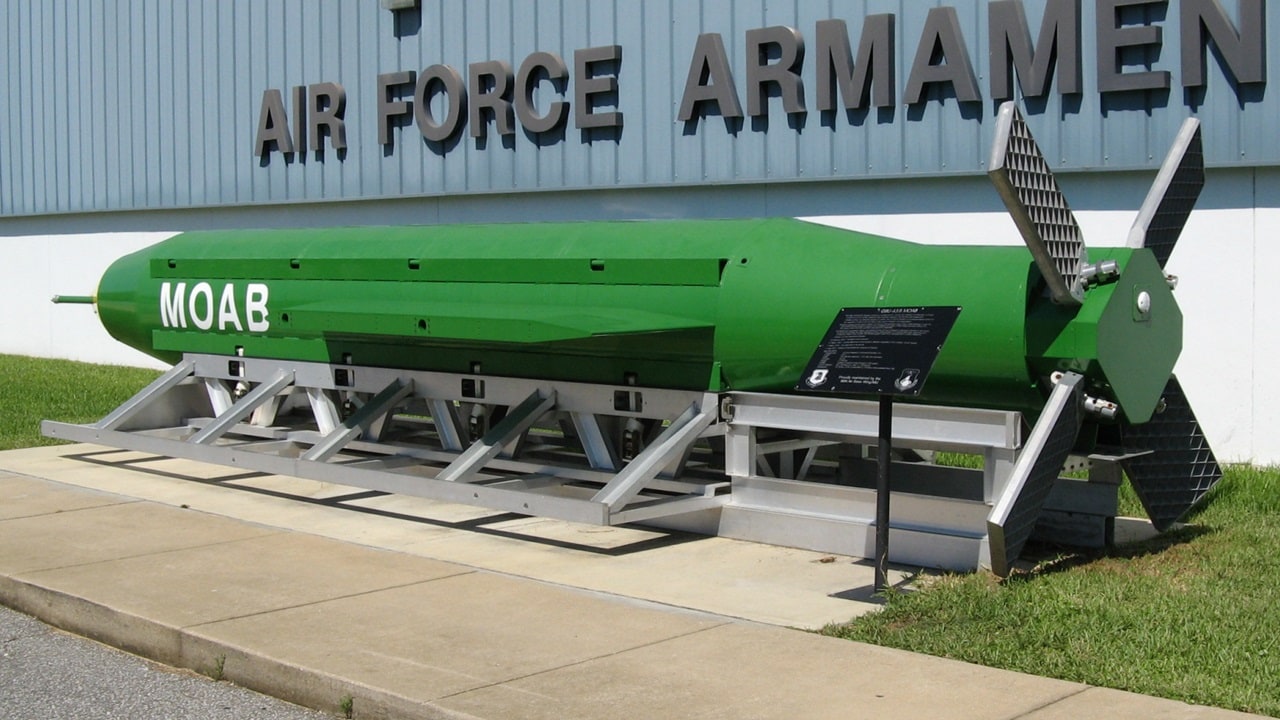
MOAB glide bomb, USAF Armaments Museum, Eglin AFB, Florida / 2007
Satellite imagery seems to show extensive damage at the entrances of these sites and bomb craters; however, the true extent of the damage is unknown.
Given the continued launches of ballistic missiles, it is reasonable to assume that production and storage capabilities have not yet been fully degraded.
Rather than relying on a small number of massive underground complexes, Iran has invested in multiple facilities of varying size and function, spreading risk and complicating targeting efforts for the United States.
This approach reduces the likelihood that a single attack, or even a series of attacks, could decisively cripple Iran’s missile and drone capabilities. In practice, this means that adversaries face a trade-off between committing substantial resources to sustained strikes or accepting that Iran will retain some ability to retaliate over time.
The Elusive Issue of Iran’s Missile Cities
With the current ceasefire in place, Iran has likely had time to begin repairs on any damaged facilities, with the aim of resuming manufacturing whenever it was disrupted.
If hostilities continue, Iran’s continued missile barrages will be an indication of how effective American and allied strikes have been at reducing Iran’s offensive capabilities.
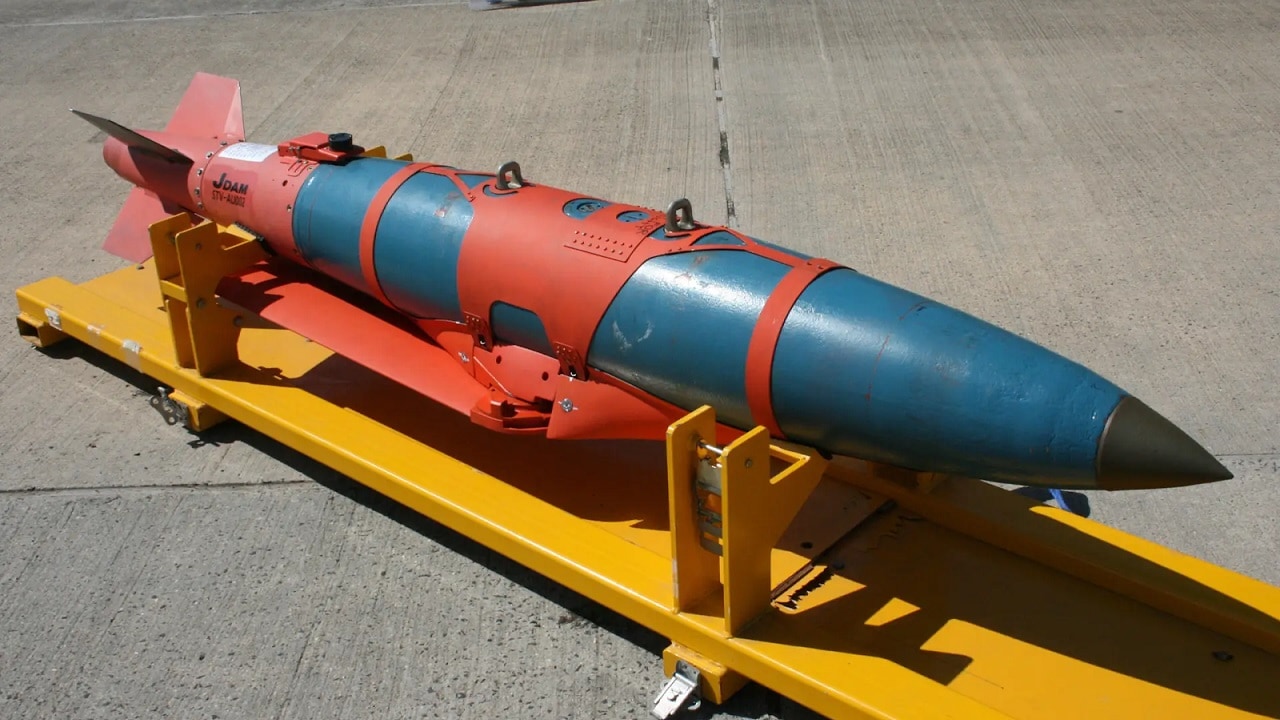
JDAM-ER via Australian Military.
Even if many launchers or production sites are destroyed, Iran’s remaining capabilities could still inflict damage through missile or drone attacks. For Iran, the underground network reinforces a strategy that relies less on traditional air power and more on asymmetric tools that can be preserved and employed under adverse conditions.
This has allowed Tehran to project influence indirectly through regional partners and to sustain pressure on adversaries without seeking air superiority in the conventional sense.
About the Author: Isaac Seitz
Isaac Seitz, a Defense Columnist, graduated from Patrick Henry College’s Strategic Intelligence and National Security program. He has also studied Russian at Middlebury Language Schools and has worked as an intelligence Analyst in the private sector.