
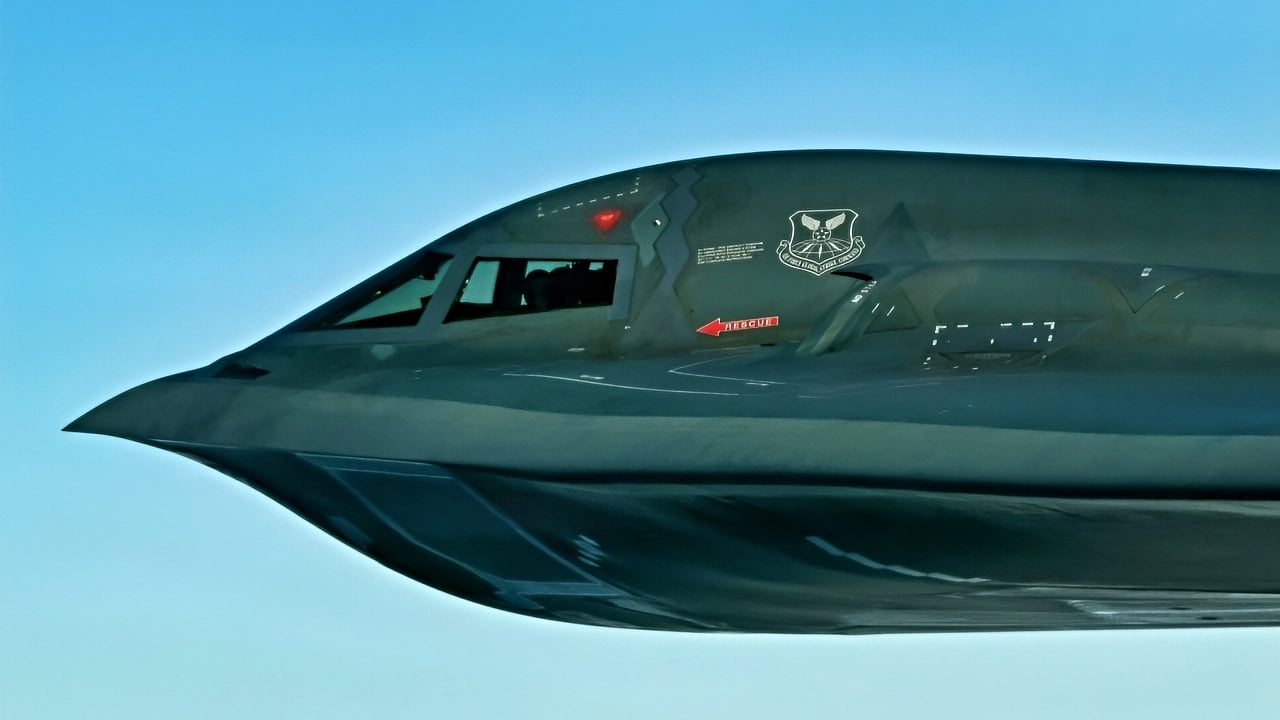
Iran Can Never Be Allowed to Have Nuclear Weapons. America Must Keep Going
When the U.S.-Israeli campaign against Iran broke out in late February, I told Roxom News that I did not believe that the conflict would be a prolonged, protracted war.
A month later, I still disagree with those arguing that the war will become the next Iraq or Afghanistan.
President Donald Trump seems to agree, too, telling reporters earlier this week that he believes the conflict could end within the next two to three weeks.
The president even indicated that the United States would be willing to leave the region even without a formal agreement with Tehran or opening the Strait of Hormuz, doubling down on his insistence that Iran must be prevented from building a nuclear weapon.
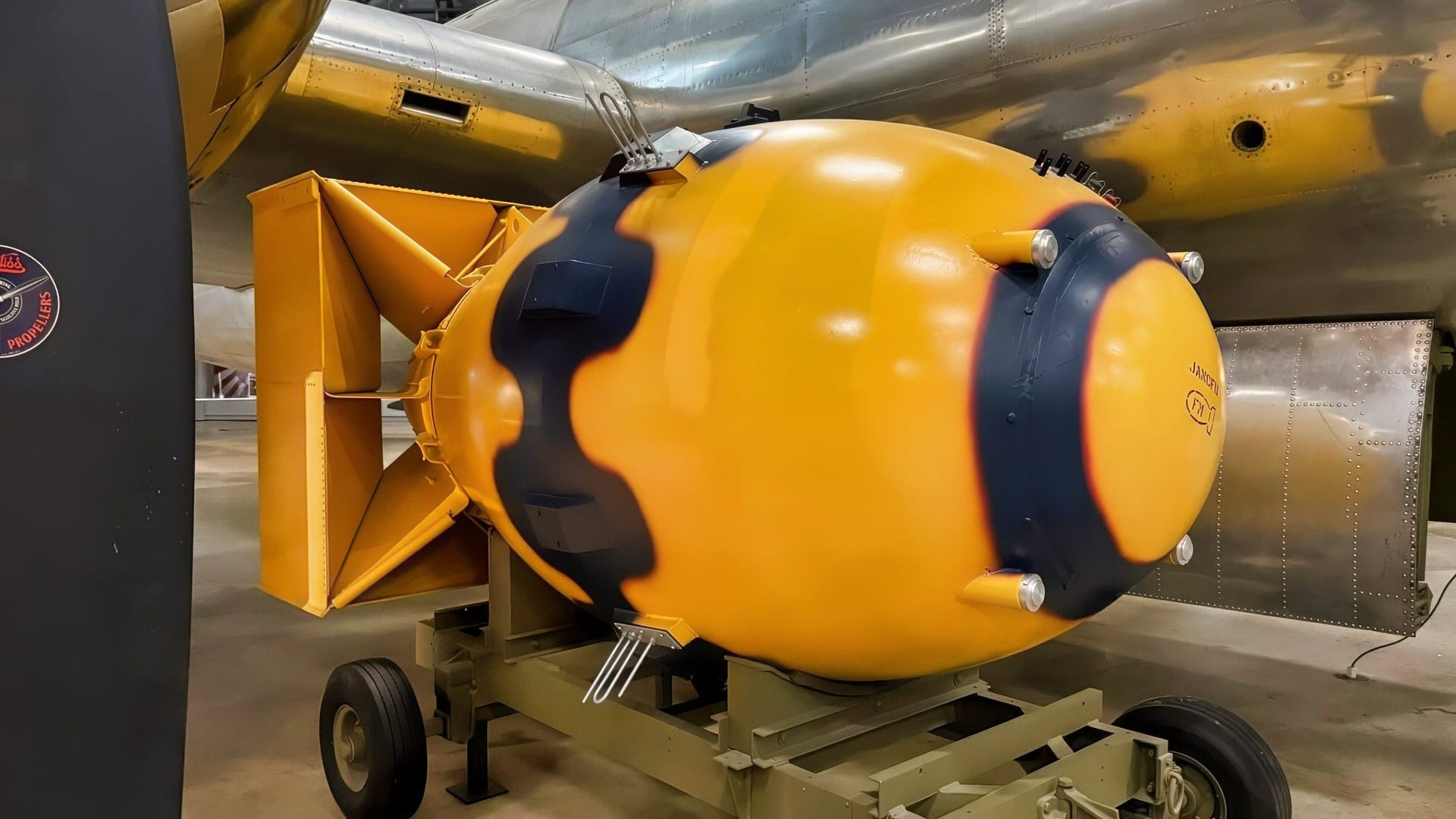
Fat Man Nuclear Bomb from the National Museum of the U.S. Air Force. 19FortyFive.com Image.
That two-to-three-week timeline is by no means unreasonable.
The United States and Israel have already destroyed at least one-third of Iran’s missile stockpiles, with another third believed to be damaged or inaccessible.
With more A-10 Warthogs on their way and the Pentagon promising to step up the intensity of the campaign in the coming weeks, it’s clear that Iranian conventional capabilities will be broadly destroyed by the time Trump decides to call it a day.
But that two-to-three-week deadline is ultimately political.
It may well be achievable, but sticking to it matters far less than achieving the stated goal of not only decimating what’s left of Iran’s nuclear program but ensuring it cannot rebuild a conventional force to facilitate taking another crack at building a nuclear weapon.
What Trump Said and What It Means
In his March 31 remarks, the president argued that U.S. objectives are close to completion. He doubled down on that message in his address to the nation on the night of April 1.
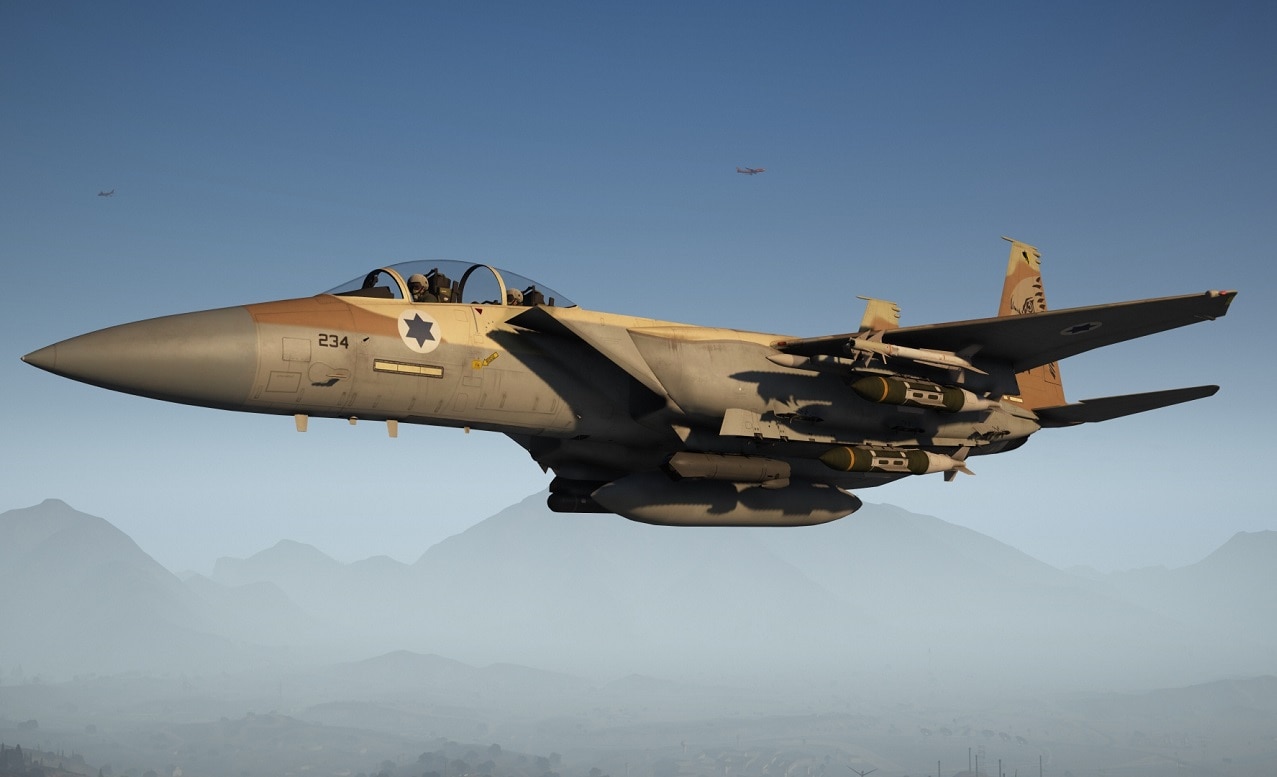
F-15I Ra’am. Image Credit: Creative Commons.
“Iran doesn’t have to make a deal, no,” the president told reporters. “No, they don’t have to make a deal with me.”
Writing on Truth Social, Trump also committed to leaving Iran without opening the Strait of Hormuz, encouraging other nations to take military action if they deemed it necessary.
“All of those countries that can’t get jet fuel because of the Strait of Hormuz, like the United Kingdom, which refused to get involved in the decapitation of Iran, I have a suggestion for you: Number 1, buy from the U.S., we have plenty, and Number 2, build up some delayed courage, go to the Strait, and just TAKE IT,” Trump wrote.
We know, therefore, exactly what Trump intends to do: to degrade Iranian capabilities in as short a time as possible, and then simply leave. A deal, should it happen, would simply be a bonus.
Why Trump Is Waging War Now
Since the 1980s, President Trump has warned that a nuclear-armed Iran would be a disaster for the world. He said in a recently resurfaced interview from 1980 that he would send in troops to Iran.
Speaking to Playboy in 1990, he remained consistent. “I’ve always thought about the issue of nuclear war; it’s a very important element in my thought process,” he said, adding, “I believe the greatest of all stupidities is people’s believing it will never happen…because everybody knows how destructive it will be.”
Trump correctly identified a threat that should be obvious to anybody who cares about the tens of millions of people living under the rule of insane Shia clerics, the safety of neighboring countries, and the long-term security of the United States and Europe.
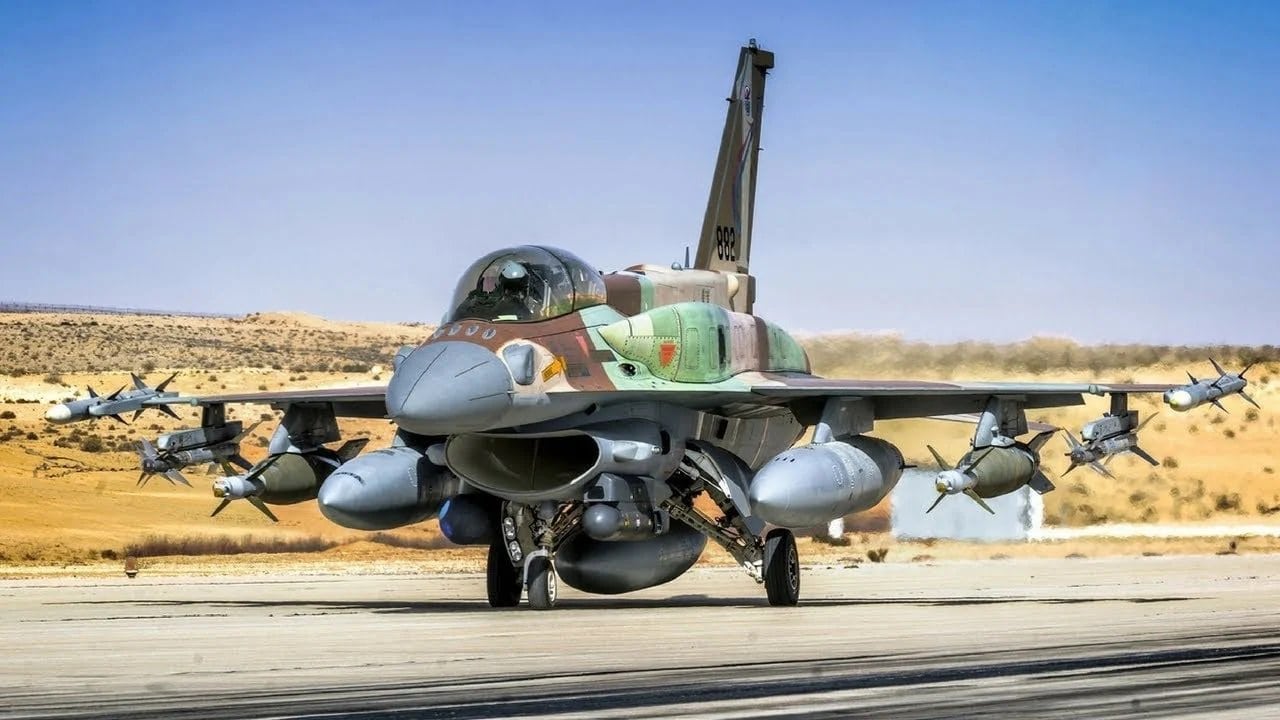
F-16I from Israel. Image Credit: Creative Commons.
For decades, the Iranian regime has insisted on maintaining the capability to enrich its own uranium, rather than relying entirely on imported fuel, which is the standard process for virtually every country producing its own nuclear power.
What’s more, its nuclear facilities were built in hardened structures deep underground. Putting aside the pedantry of exactly what date Iran would have technically been able to produce a nuclear weapon, their intention was obviously to achieve it at some point. There should be no doubt about that.
As of 2025, Iran had accumulated more than 400 kilograms of uranium enriched to 60 percent purity – just below weapons-grade, and enough for multiple nuclear devices if further enriched.
An Obvious Conclusion Amidst New Regional Dynamics
On top of its obvious nuclear ambitions, Iran has been accumulating a stockpile of thousands of ballistic missiles – a conventional weapons shield that long protected its nuclear program and allowed it to continually breach the terms of the Obama-era Joint Comprehensive Plan of Action.
The ongoing campaign against Iran was years in the making. The regime has repeatedly refused to engage in good faith and insisted on its “sovereign right” to develop nuclear technologies, and done so while chanting “death to America.” It is extremely easy to make the case that action should have been taken much sooner – but at the same time, the conflict is now taking place in a geopolitical environment that did not exist even a decade ago.
The normalization agreements between Israel and several Arab states under the Abraham Accords have reshaped the regional environment. Countries such as the United Arab Emirates and Bahrain now have formal ties with Israel, while Saudi Arabia has increasingly aligned itself against Iran’s regional ambitions, even without full normalization.
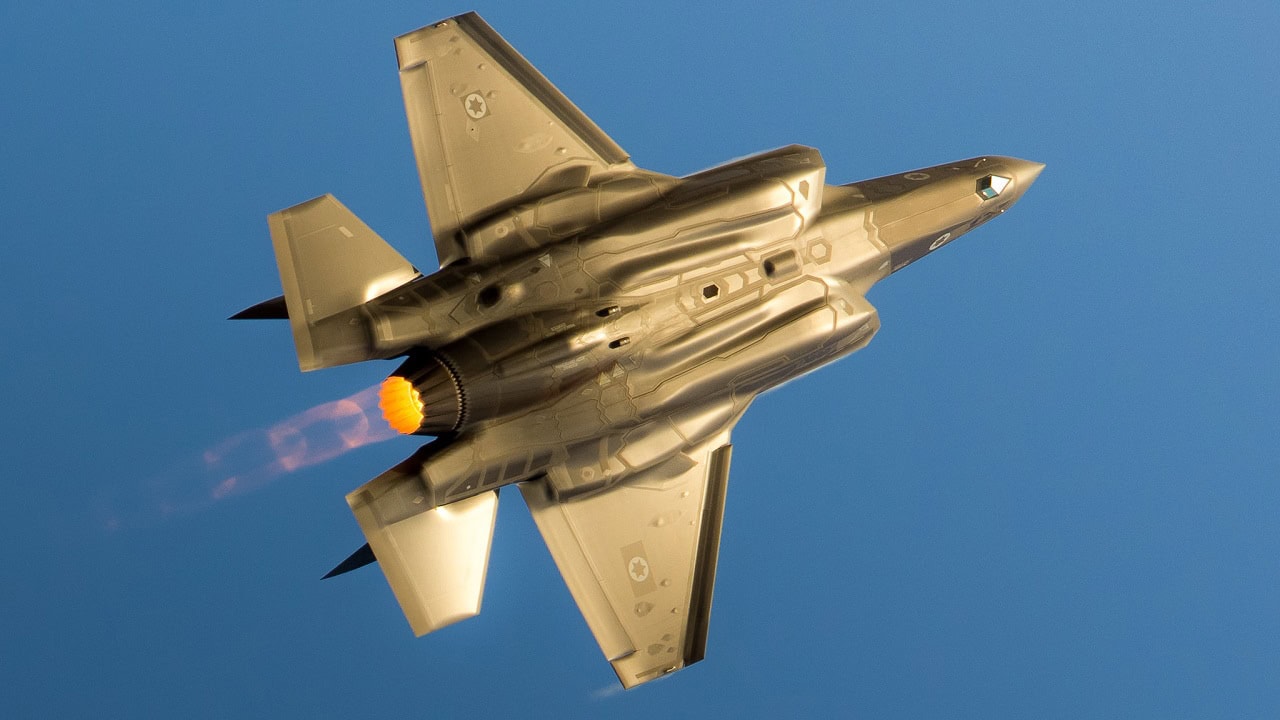
F-35I Adir. Image Credit: Creative Commons.
That’s significant because it means Iran is not just confronting Israel and the United States. It is facing a bigger regional bloc with overlapping security interests.
Winning Matters More Than An Arbitrary Deadline
If the war is to end within Trump’s stated timeframe, the nuclear program must be neutralized – otherwise, it will be hard to honestly claim victory.
That would include destroying what’s left of the country’s enrichment facilities, as well as conversion and storage sites. Previous strikes damaged the Natanz and Fordow enrichment facilities and the sites at Isfahan, but had not completely eliminated Iran’s capabilities.
Secondly, Iran’s missile infrastructure must be degraded to the point that it cannot sustain regional coercion. That means targeting and destroying launch sites and storage depots, and disabling command networks. Substantial progress has already been made here, and the movement of additional air assets to the region indicates that the bombardment of these sites is about to intensify.
Crucially, though, the regime must also be left in a position where it cannot quickly reconstitute either capability. This does not require regime change, but it does require preventing whoever is in charge from rebuilding in the near term.
If these conditions are not met, the two-to-three-week timeline becomes little more than a political benchmark rather than a meaningful measure of success. A rapid conclusion to the conflict would clearly be preferable because war carries an immediate human cost and it is already disrupting global markets. But the priority here must be outcome, not speed. If achieving the stated objectives requires a slightly longer timeframe – three weeks, four weeks, or longer – then that trade-off will be justified.
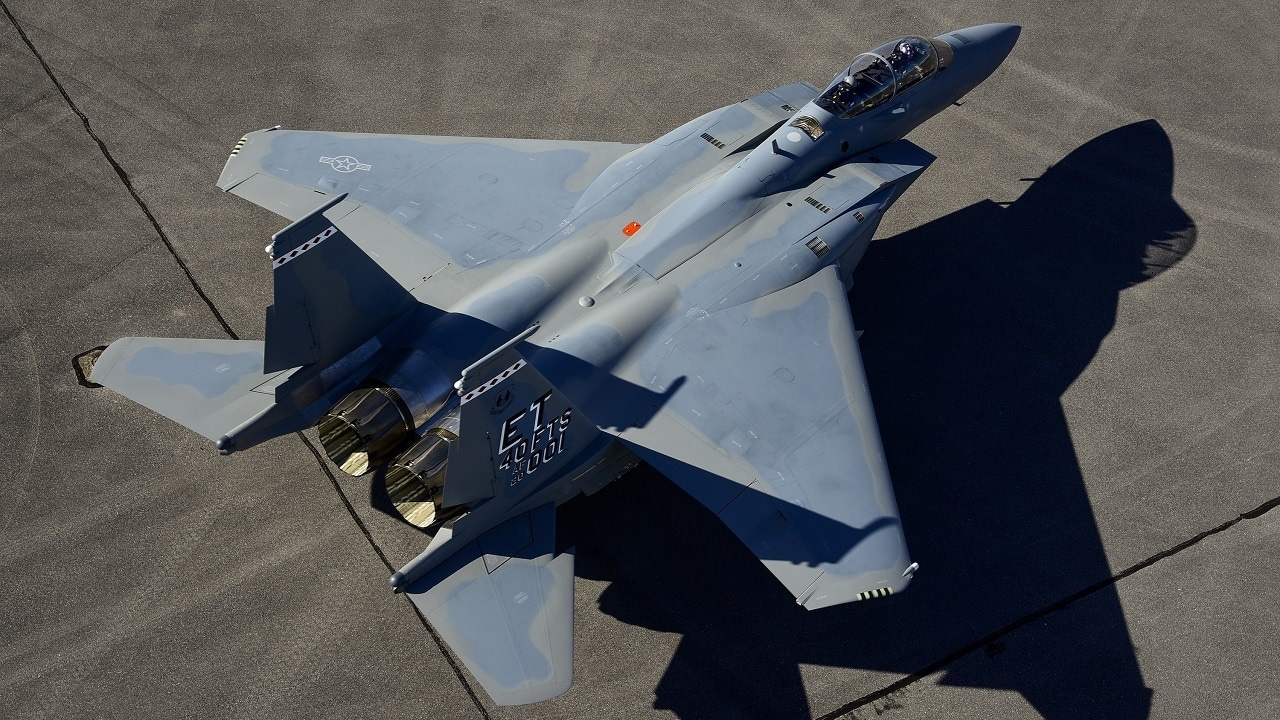
The F-15EX Eagle II, the Air Force’s newest fighter aircraft, arrives to Eglin Air Force Base, Florida March 11. The aircraft will be the first Air Force aircraft to be tested and fielded from beginning to end through combined developmental and operational tests. The 40th Flight Test Squadron and the 85th Test and Evaluation Squadron personnel are responsible for testing the aircraft. (U.S. Air Force photo/1st Lt. Karissa Rodriguez)
A decisive result that removes Iran’s ability to rebuild its nuclear and missile capabilities would avert years, if not decades, of renewed uncertainty, escalation, global economic damage, and negotiations with a regime that clearly does not want to negotiate.
In that sense, the deadline Trump offered the world this week simply doesn’t matter.
MORE: Trump Could Break NATO For Good
About the Author: Jack Buckby
Jack Buckby is a British researcher and analyst specializing in defense and national security, based in New York. His work focuses on military capability, procurement, and strategic competition, producing and editing analysis for policy and defense audiences. He brings extensive editorial experience, with a career output spanning over 1,000 articles at 19FortyFive and National Security Journal, and has previously authored books and papers on extremism and deradicalization.