
Yes, Donald Trump Can’t Easily Leave NATO. But He Can Break It
Trump told The Daily Telegraph this week that NATO is a “paper tiger” and that he was “absolutely” considering pulling the United States out of the alliance. European allies declined to join or support the war in Iran. That, apparently, was the final straw. The threat landed hard in allied capitals and harder still in the headlines.
It also missed the point. NATO does not have to be abandoned to be broken.
Congress settled the legal question in 2023: according to the National Defense Authorization Act (NDAA), a president cannot withdraw the United States from NATO without a two-thirds Senate vote or an act of Congress.
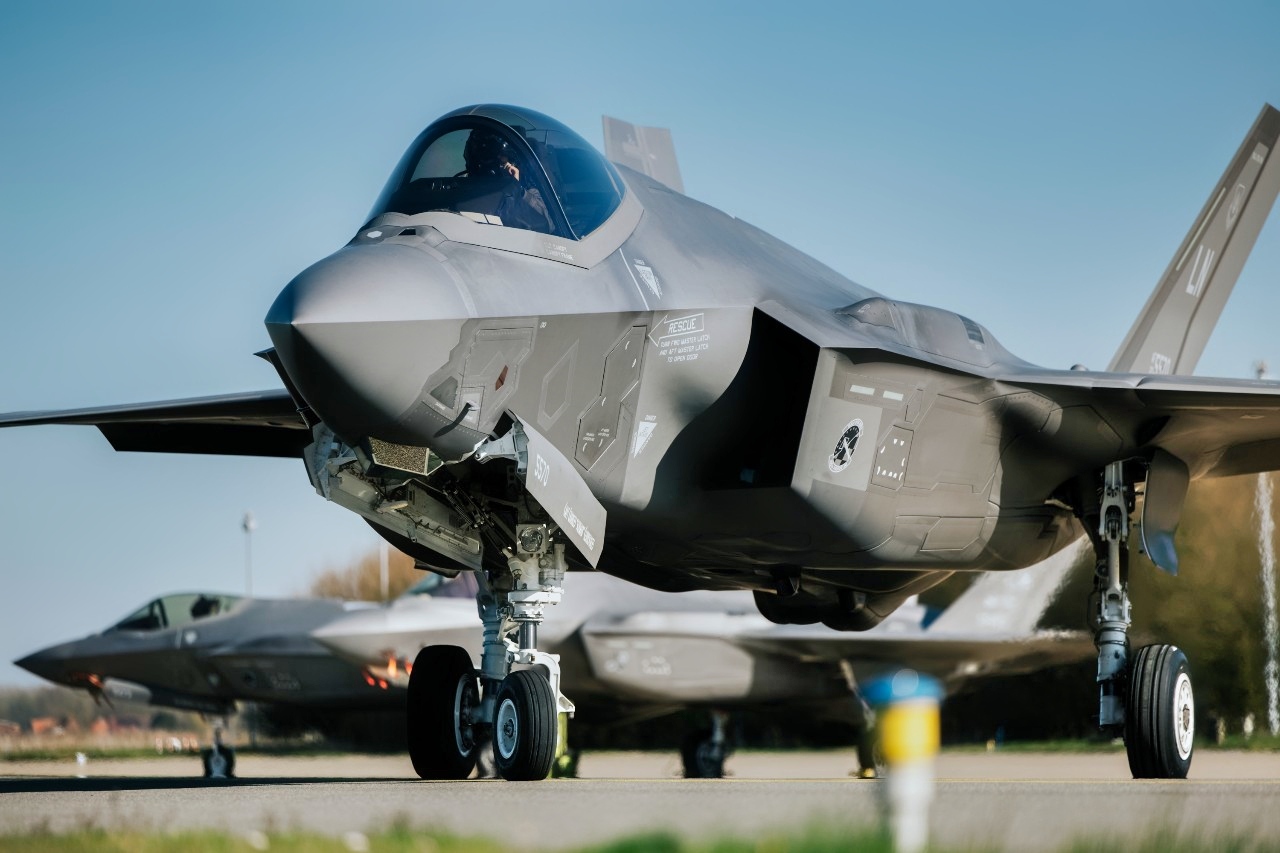
A U.S. Air Force F-35 Lightning II taxis during a cross-servicing event at NATO Allied Air Command’s Ramstein Flag 2025 exercise April 4, 2025. Successful cross-servicing at RAFL25 is an example of the importance of integrated logistics and maintenance training that enhances U.S. warfighting readiness by strengthening United States Air Forces in Europe – Air Forces Africa’s ability to deploy, sustain, and project fifth-generation capabilities across the European theater. (Royal Netherlands photo by Sgt. Maj. Jan Dijkstra)
Sen. Thom Tillis, the top Republican on the Senate NATO Observer Group, has been explicit on the point, insisting that presidential claims to a unilateral authority to withdraw are “factually not true.”
For many in Washington, Tillis’s assurance is being treated as dispositive.
It is not.
The Statute Covers One Failure Mode
Tillis himself pointed to a second failure mode—and it requires no vote at all. Trump “can poison the well,” he said.
He “can make it [NATO] functionally defunct.” That is not a hypothetical. It is a description of a mechanism that requires no signing ceremony, no Senate fight, no court challenge.
What it looks like: a drawdown of forward-deployed forces in Europe, announced or not.
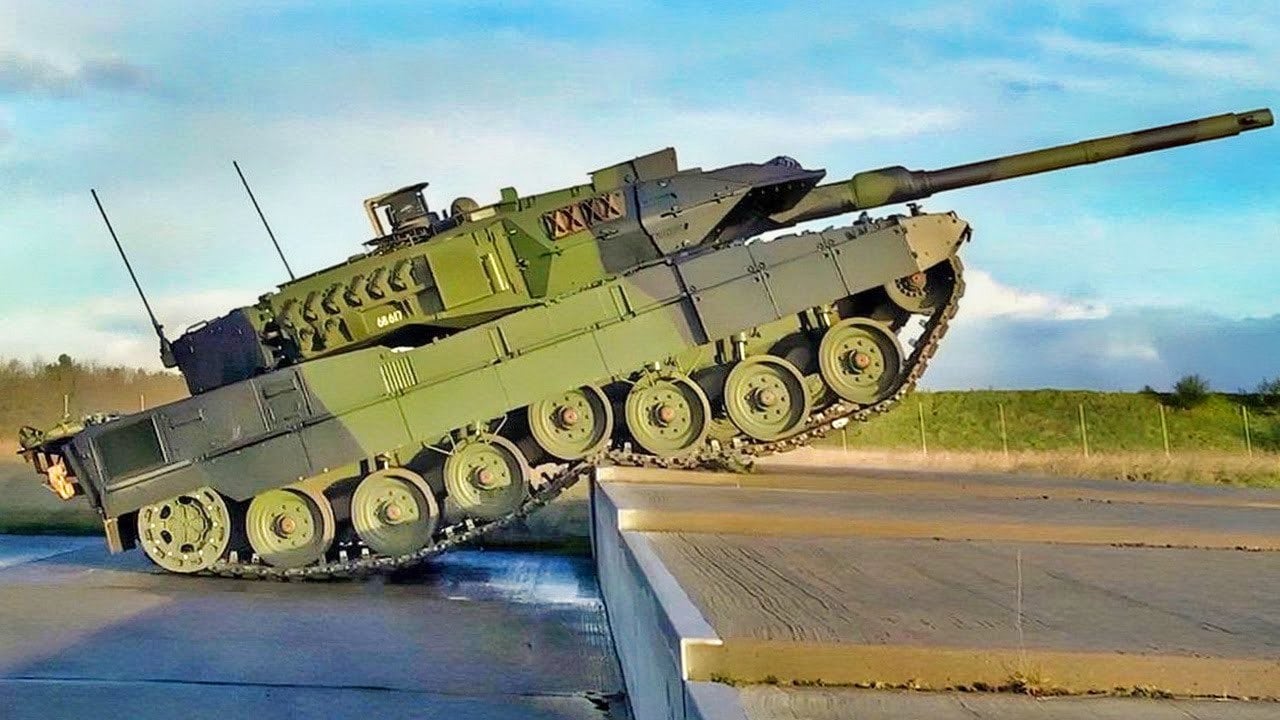
NATO Leopard 2 Tank. Image Credit: Creative Commons.
A renegotiation of basing arrangements that quietly reduces U.S. presence and access.
The ceding of the SACEUR role — already reportedly under Pentagon consideration before this week’s remarks — which strips the alliance of the integrated command architecture that gives it operational meaning. A degradation of intelligence-sharing relationships built across seventy-five years of interoperability.
Not one of those moves needs a Senate vote. Every one of them hollows out the alliance.
Deterrence Runs on Credibility, Not Treaty Text
NATO’s deterrent has never been the text of Article 5. It has been the credibility of the commitment the text represents — the belief, sustained across decades and tested across crises, that an attack on a NATO member brings the full weight of American military power in response.
That belief doesn’t switch off. It erodes. It erodes through signals sent by the Trump Administration: “paper tiger;” “Absolutely considering” withdrawal; “One-way street.”
They reach Moscow before they reach Brussels. In Moscow, nobody is reading the NDAA.
What Russia and China Are Calculating
Russia has spent the better part of a decade testing the load-bearing capacity of Western collective defense — in Georgia, in Ukraine, in the grey-zone campaign targeting Baltic and Nordic infrastructure, in the sustained pressure on Article 5’s eastern flank designed specifically to find the point at which the guarantee stops being believed.
It doesn’t need proof that Article 5 is dead. It needs sufficient doubt about whether Article 5 would be honored in a test. Russian military planning has long treated NATO cohesion as the primary problem to solve. Washington is now solving it for them, at no cost to Moscow.
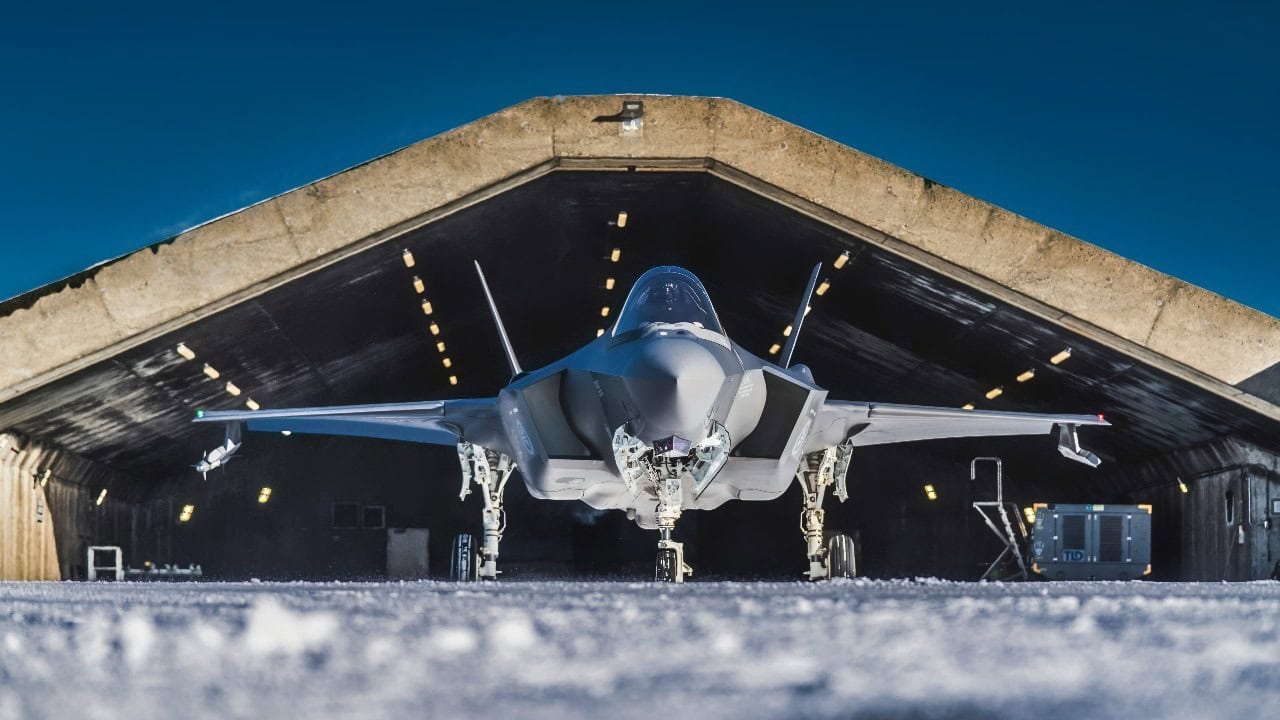
A Royal Norwegian Air Force F-35 Lighting II fighter leaves its shelter at Keflavík Air Base in Iceland. Norway sent the fighters to Iceland, which doesn’t have its own air force, in February 2020.
Beijing is running the same numbers. China has watched American alliance management closely for years. A patron openly questioning the value of its own commitments is data. It gets filed. It feeds directly into Chinese assessments of alliance reliability in a Taiwan contingency.
The allies who declined to support U.S. operations against Iran were not defecting. They were adhering to the alliance’s core logic.
NATO is a collective defense arrangement for the Euro-Atlantic area, not a mechanism for wars of choice. Treating this as betrayal confuses two distinct questions: what allies owe the United States when Europe is threatened, and what they owe it when Washington acts alone.
The Gap Europe Cannot Close
European defense spending is rising. The capability gaps are not closing fast enough to matter. Strategic airlift, precision munitions, integrated air and missile defense — none of it is replaceable by European investment on any near-term timeline.
The nuclear umbrella is the widest gap of all. Extended deterrence relies solely on American credibility.

The Ariete is often described by many as the worst tank in NATO.
No European government can replicate it, and the path from here to something that approximates it runs through a decade of procurement cycles, industrial development, and doctrinal integration that cannot be compressed.
France has an independent nuclear deterrent. It covers France. It does not, for the moment at least, cover Poland or Estonia or any of the frontline states now quietly asking what an American Article 5 guarantee is actually worth.
Pulling back U.S. commitment before that capacity exists does not rebalance the alliance. It breaks it.
Law Can’t Save the NATO Alliance
The 2023 law was written to stop a withdrawal letter. It stops one. What it cannot do is compel the United States to behave like a committed ally — to honor its basing obligations, sustain its intelligence relationships, or make its nuclear guarantee credible to the states sheltering beneath it.
The law can stop a signature. It cannot manufacture resolve.
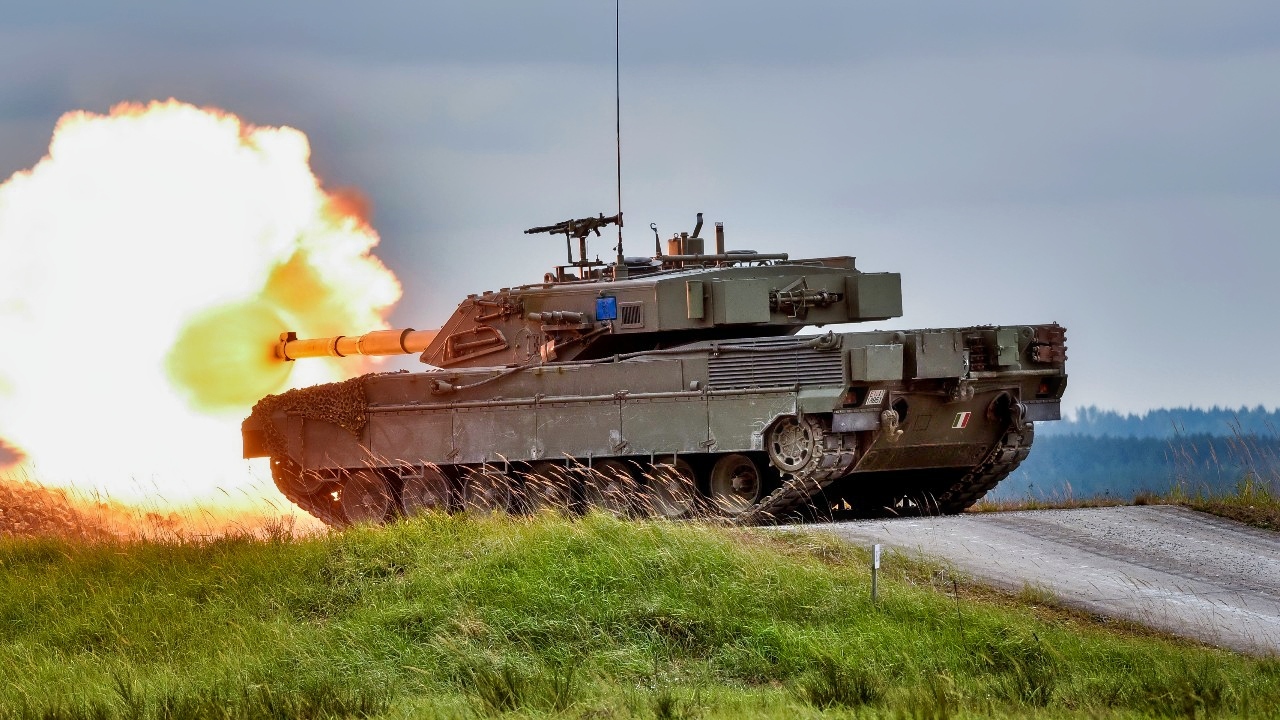
An Ariete Italian tank, fires at their target, during the Strong Europe Tank Challenge (SETC), at the 7th Army Joint Multinational Training Command’s Grafenwoehr Training Area, Grafenwoehr, Germany, May 12, 2016. The SETC is co-hosted by U.S. Army Europe and the German Bundeswehr, May 10-13, 2016. The competition is designed to foster military partnership while promoting NATO interoperability. Seven platoons from six NATO nations are competing in SETC – the first multinational tank challenge at Grafenwoehr in 25 years. For more photos, videos and stories from the Strong Europe Tank Challenge, go to www.eur.army.mil/tankchallenge/ (U.S. Army photo by Spc. Nathanael Mercado/Released)
A defense planner in Warsaw is not reassured by the NDAA’s text. He is reassured by American behavior. Right now, that behavior is doing something the statute cannot prevent: it is turning a legal guarantee into a conditional one.
And once that shift takes hold — once Article 5 is seen as contingent rather than automatic — the alliance has already begun to fail, whether Washington ever files the paperwork or not.
About the Author: Dr. Andrew Latham
Andrew Latham is a professor of international relations and political theory at Macalester College in Saint Paul, MN. You can follow him on X: @aakatham. He writes a daily column for 19FortyFive.com.