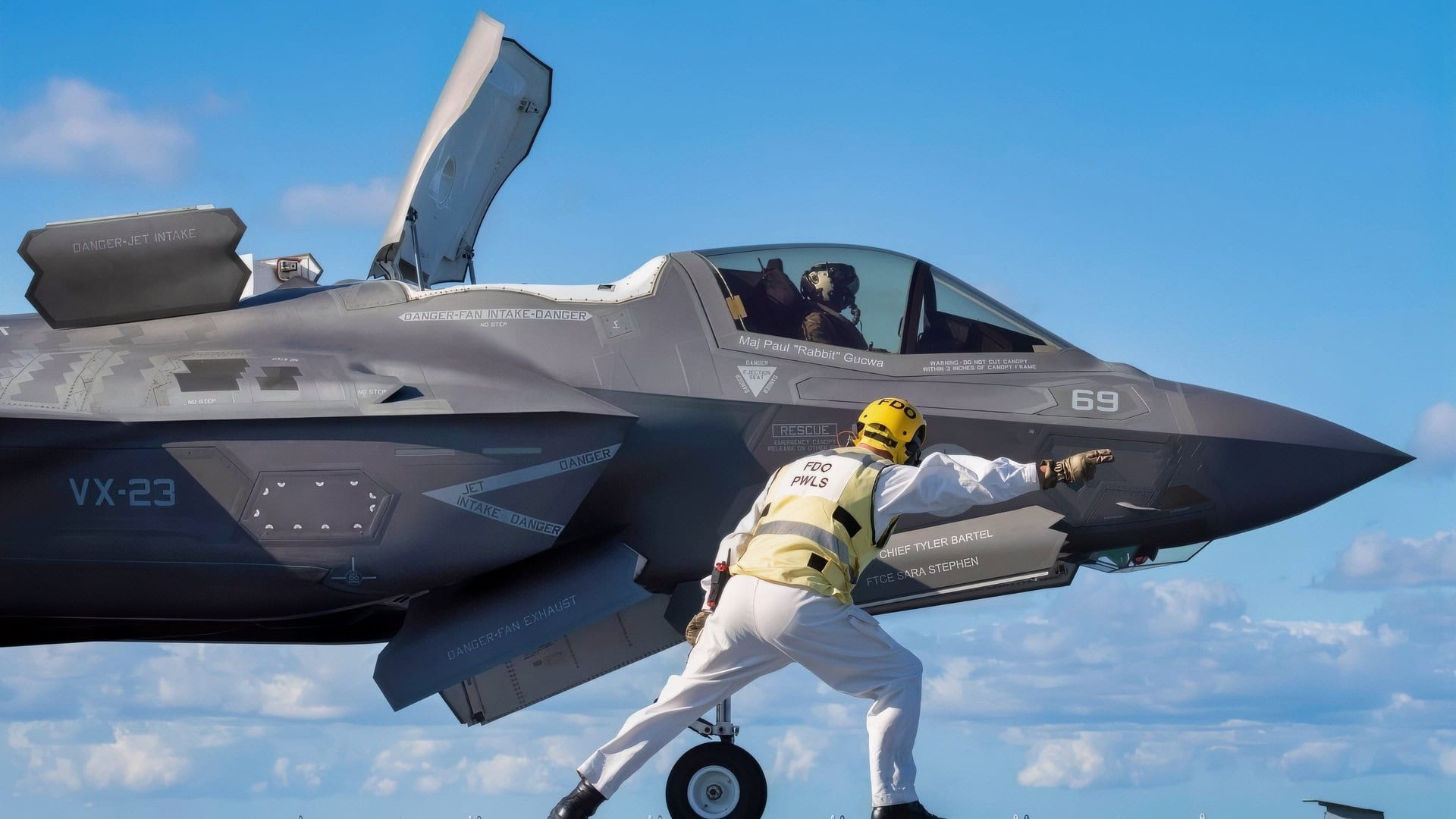
The growing fleet of US Navy America-class amphibious assault ships is designed to leverage a blend of technological advances, including the ability to project airpower in a maritime environment in ways previously not possible.
The arrival of the F-35B and upgraded MV-22 Osprey offers the Navy and Marine Corps a new generation of airpower projection capability, one key reason the first several America-class amphibious assault ships were built without a well deck for launching fast-attack watercraft or conducting full-scale amphibious assaults. This ability is, of course, always critical.
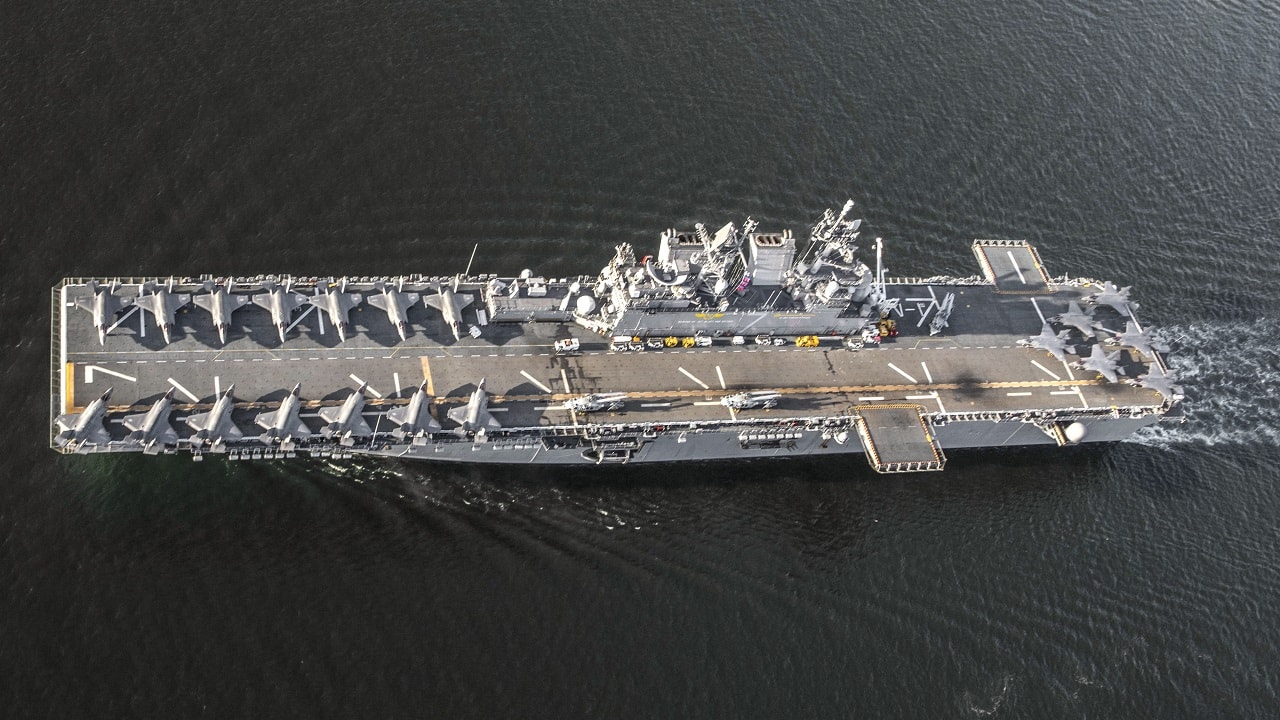
Amphibious assault ship USS Tripoli (LHA- 7) , departs Naval Air Station North Island, Calif., April 7, 2022. Tripoli completed flight deck operations with 20 F-35B Lightning II jets from Marine Fighter Attack Squadrons 211 and 225, Marine Aircraft Group 13, and 3rd Marine Aircraft Wing, as well as Marine Operational Test and Evaluation Squadron 1, as part of the U.S. Marine Corps’ Lightning carrier concept demonstration. The Lightning carrier concept demonstration shows Tripoli and other amphibious assault ships are capable of operating as dedicated fixed-wing strike platforms when needed, capable of bringing fifth generation Short Takeoff/Vertical Landing aircraft wherever they are required. (U.S. Marine Corps photo by Sgt. Samuel Ruiz)
Yet, the need to capitalize on the range, sensing, and attack capabilities introduced by the Osprey and F-35B does impact the tactical equation in a variety of key respects.
America-Class: Built for Air Attack
Similar to the first-in-class USS America, the USS Tripoli has been engineered with a specific F-35 and Osprey tilt-rotor aircraft-oriented aviation configuration with extra hangar space, additional fuel storage, and other key provisions intended to enable amphibious air-attack platforms.
A report from the Naval Sea Systems Command several years ago says the ship’s “design features an enlarged hangar deck, aviation maintenance facilities realignment and expansion, a significant increase in available stowage for parts and support equipment, and increased aviation fuel capacity.”
Both the USS America and USS Tripoli are capable of deploying with as many as 15 5th-generation F-35Bs, bringing previously unprecedented stealthy 5th-generation air attack and sensing to evolving concepts of amphibious warfare.
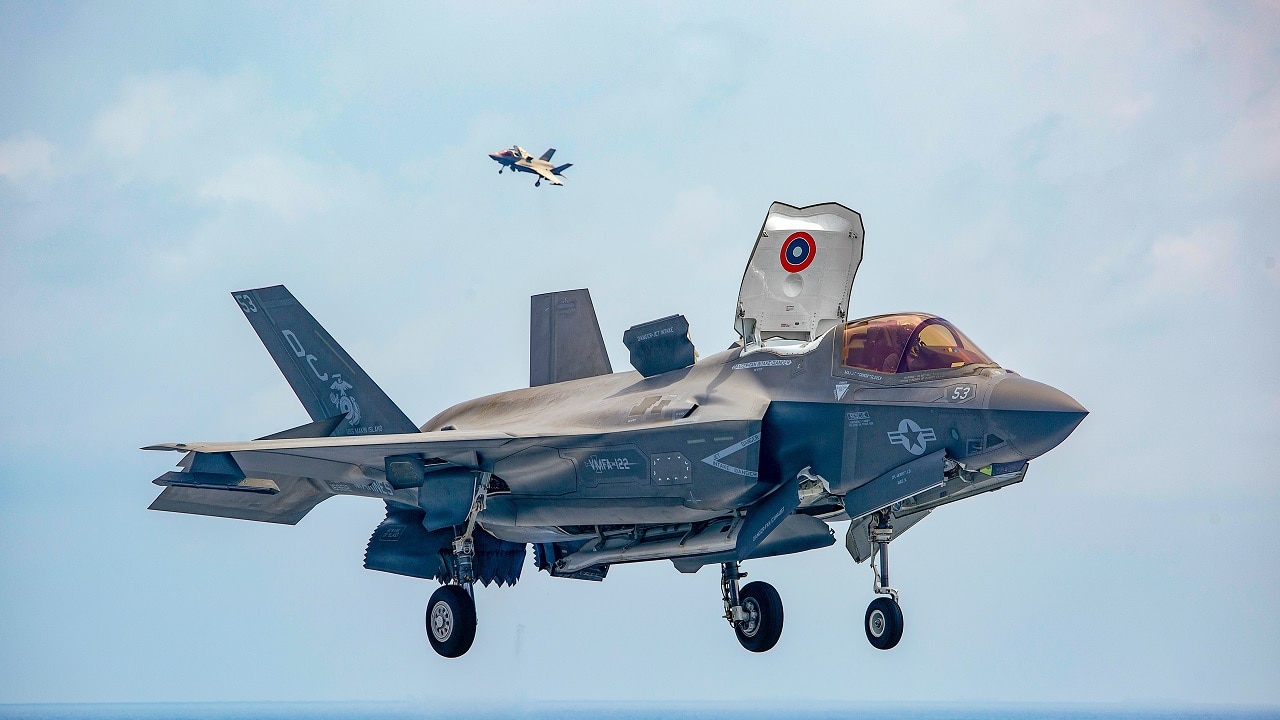
(April 8, 2021) U.S. Marine Corps F-35B Lightning IIs assigned to Marine Medium Tiltrotor Squadron 164 (Reinforced), 15th Marine Expeditionary Unit, land on the flight deck of the amphibious assault ship USS Makin Island (LHD 8). The Makin Island Amphibious Ready Group and embarked 15th MEU are operating in the U.S. 7th Fleet area of operations to enhance interoperability with allies and partners and serve as a ready response force to defend peace and stability in the Indo-Pacific region. (U.S. Marine Corps photo by Cpl. Patrick Crosley)
The third America-class ship, the USS Bougainville, has now “hit the sea,” bringing a sea-based form of manned-unmanned teaming, ship-to-shore amphibious attack, by launching manned and unmanned amphibious vessels from a well deck.
The USS Bougainville will also incorporate next-generation aviation while bringing back the timeless ability to attack land from the ocean, albeit in a way different from how it was historically conceived.
The Bougainville features additional design features, including additional ICU-capable hospital beds, X-ray rooms, and even an on-board surgical team. The ship is also receiving a Raytheon-built A/N SPY-6 v3 Enterprise Air Surveillance Radar, intended to support air and cruise missile defense from aboard the amphibious assault ship. This EASR radar is also being built into Ford-class carriers.
A New Generation of Amphib
The America-class ships were engineered to conduct dispersed amphibious assault operations across a wider envelope, with increased use of networking, unmanned-manned teaming, and 5th-generation air support.
The growing number of unmanned systems and the increasing levels of autonomy with which they operate can enable the America-class ships to operate as “host ships or “mother ships” supporting a large number of unmanned systems, coordinating mission details.
The big-deck amphibs can perform command and control for dispersed groups of surface, undersea, and air unmanned platforms to support multi-domain operations.
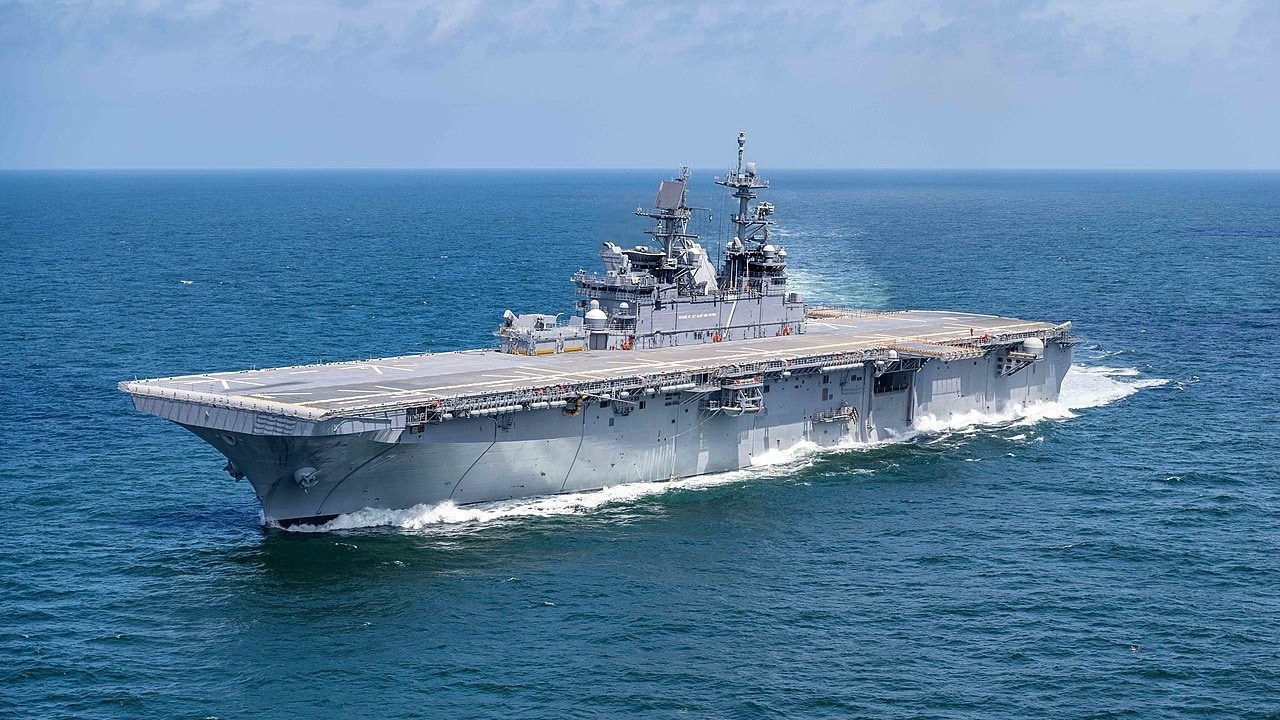
The U.S. Navy amphibious assault ship USS Tripoli (LHA-7) conducts builder’s trials in the Gulf of Mexico on 15 July 2019. Tripoli was scheduled to be commissioned in May 2020 and was the third U.S. Navy ship named for the Battle of Derne in 1805.
In recent years, the Navy has continued to intensively pivot toward greater use of unmanned systems, sea basing, and expeditionary operations, often with the idea that big-deck amphibs such as the USS Bougainville can serve as “mother ships” or floating bases from which to launch and operate large-scale amphibious assault operations.
Concepts of operation for an amphibious assault have been evolving rapidly, with the emergence of new levels of autonomy, unmanned systems, and AI-enabled command and control.
New Amphibious Warfare
Future amphibious warfare will not resemble the linear, condensed assault on Iwo Jima in WWII, but rather be more symmetrical, disaggregated, multi-domain, and driven by long-range weapons and AI-enabled unmanned systems.
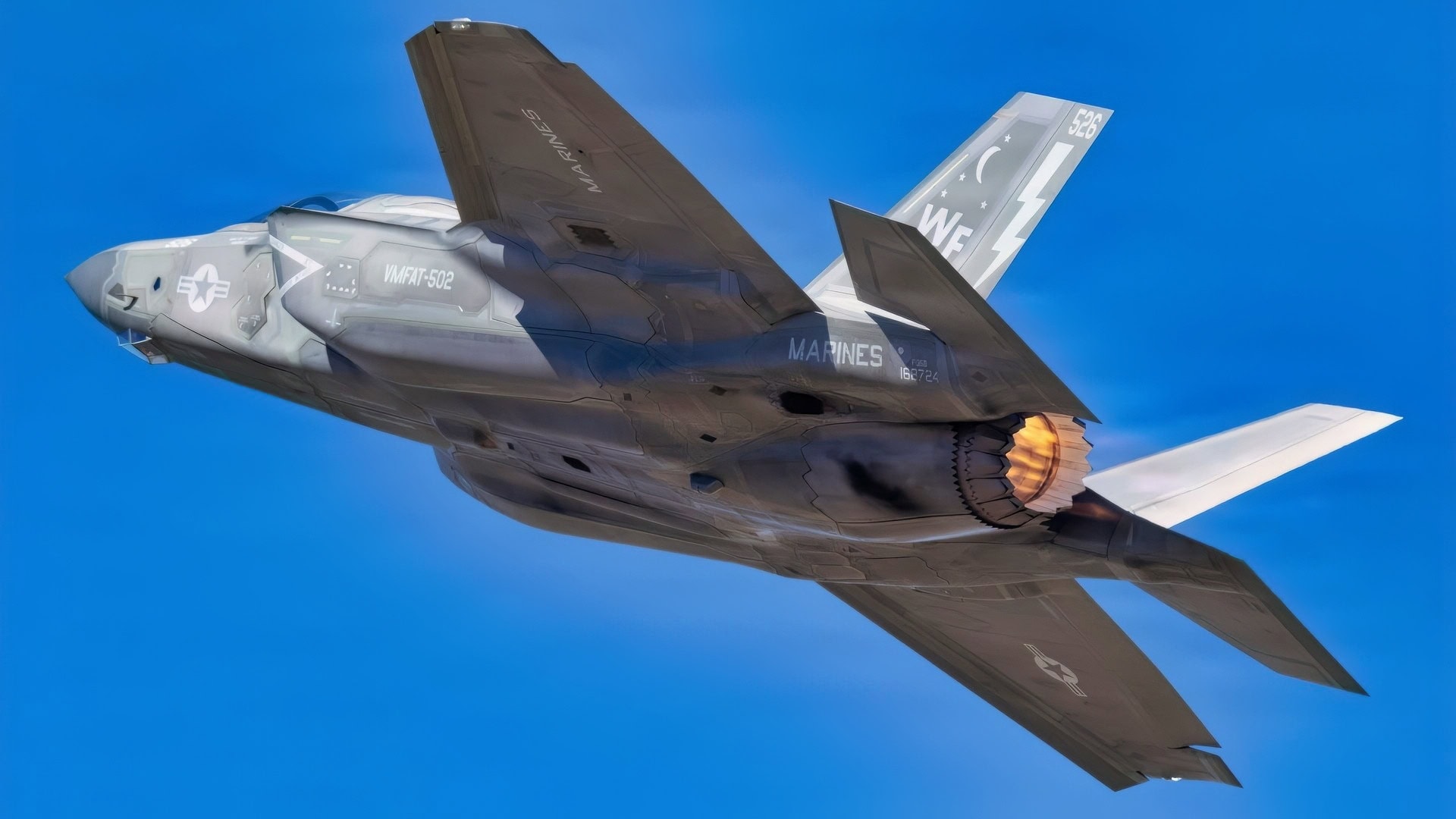
A U.S. Marine Corps F-35B Lightning II lights its afterburner and climbs during the Luke Days 2026 airshow, Saturday, March 21, 2026, at Luke Air Force Base, Arizona. The Marine Corps F-35B Lightning II demonstration showcases the maneuverability and advanced technology of a fifth-generation fighter. Demonstrations like this reflect the cutting-edge capabilities that allow the joint force to maintain air superiority in modern combat operations. (U.S. Air National Guard Photo by Tech. Sgt. Hampton Stramler)
This thinking is likely one reason the Navy ensured a “well-deck” was returned to its amphibious assault ships with the third America-class amphibious assault ship.
The America-class supports the evolution of the Amphibious Ready Group structure and mission alignment more fully in a modern threat environment where adversaries operate longer-range, more precise weapons, fortified by high-resolution sensors.
This means approaching amphibious forces might not wish to be concentrated, aggregated, or condensed, as it could increase their vulnerability to incoming enemy fire.
About the Author: Kris Osborn
Kris Osborn is the President of Warrior Maven – Center for Military Modernization. Osborn previously served at the Pentagon as a highly qualified expert in the Office of the Assistant Secretary of the Army—Acquisition, Logistics & Technology. Osborn has also worked as an anchor and on-air military specialist at national TV networks. He has appeared as a guest military expert on Fox News, MSNBC, The Military Channel, and The History Channel. He also has a Masters Degree in Comparative Literature from Columbia University.