
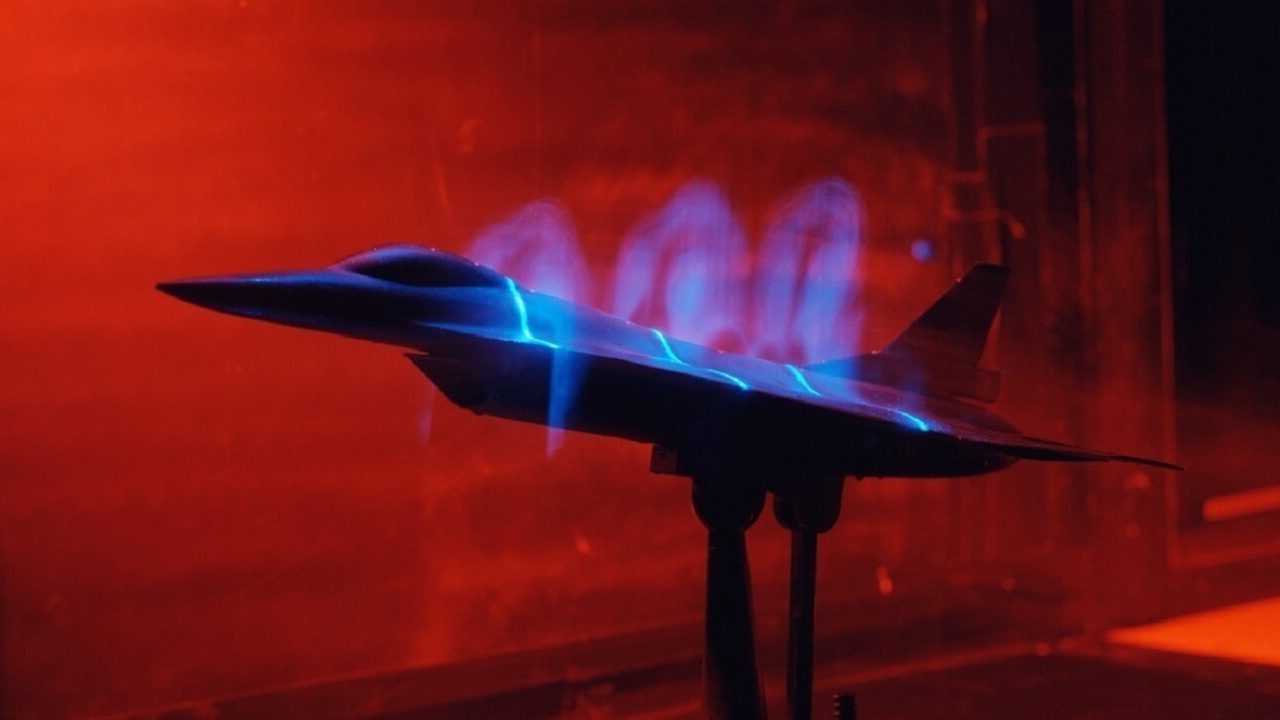
F-16XL: The Strike Fighter That Lost to the F-15E and Found a Second Life at NASA – General Dynamics spent $65.4 million through the first flight of the F-16XL, according to NASA’s comprehensive history of the program. The first of two prototypes took off from Fort Worth, Texas, on July 3, 1982. Its enormous cranked-arrow wing made it look only partly related to the lightweight F-16 from which it had started.
The original goal was to solve a problem created by the F-16’s growing mission list. The aircraft had been designed as a lightweight fighter, but the Air Force increasingly used it for ground attack. External bombs, fuel tanks, and targeting equipment added drag, reduced speed, and consumed the limited number of weapon stations.
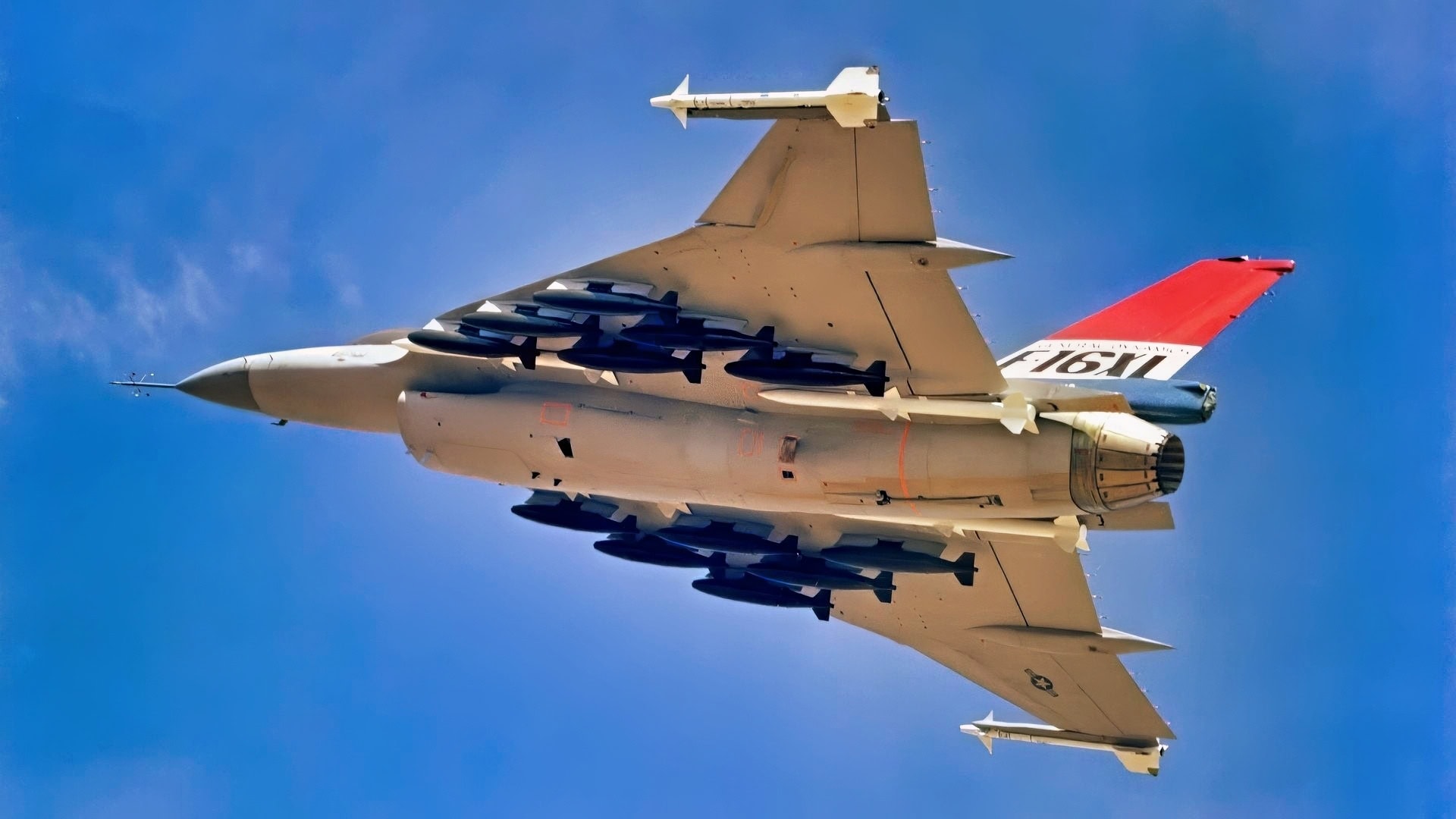
An air to air left underside view of an F-16XL aircraft. The aircraft is armed with two wing tip mounted AIM-9 Sidewinder and four fuselage mounted AIM-7 Sparrow missiles along with 12 500-pound bombs.
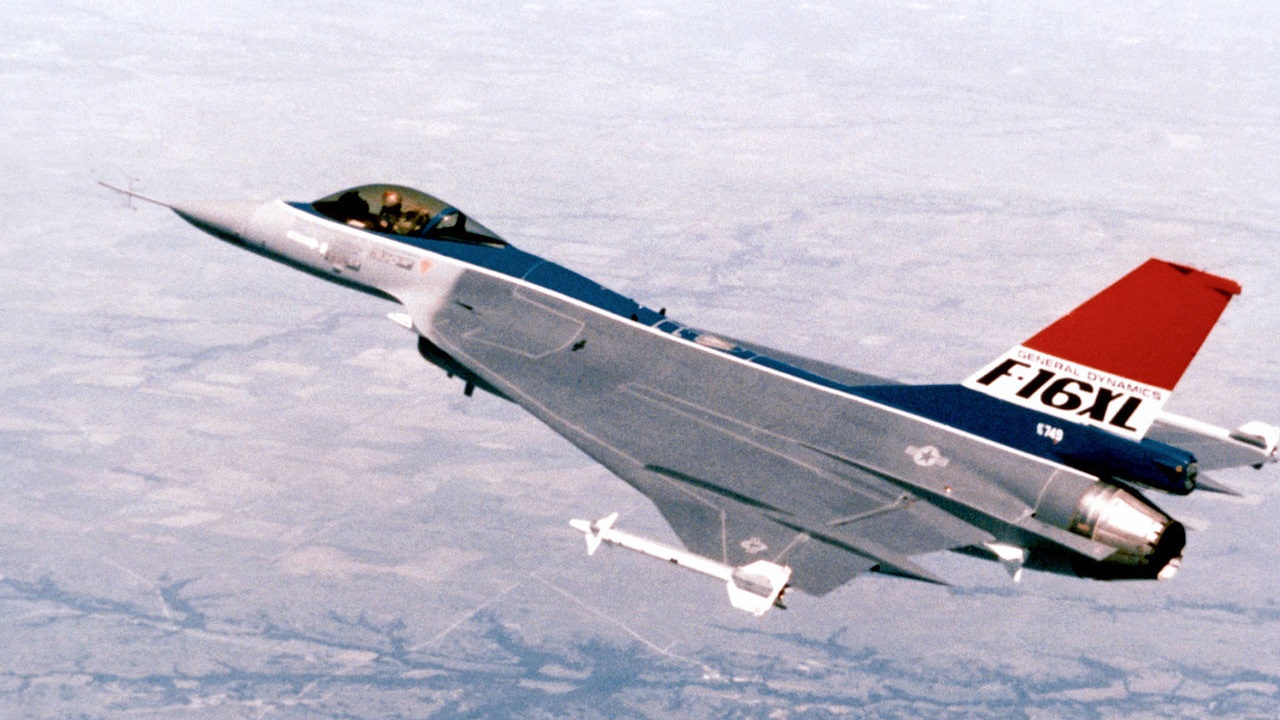
F-16XL. Image Credit: Creative Commons.
The F-16XL promised greater range, a much heavier weapons load, and more efficient flight at transonic and supersonic speeds. Its wing was about 115 percent larger than the standard F-16 wing, while the fuselage grew by 56 inches. Internal fuel increased to about 11,200 pounds.
Flight testing showed that the design delivered much of what General Dynamics had promised. The XL could carry twice the payload of a standard F-16, up to 40 percent farther without external fuel tanks. It still lost the Air Force competition to the larger, twin-engine F-15E Strike Eagle.
SCAMP Turned the F-16 Into a Long-Range Strike Aircraft
The program began in the late 1970s as the Supersonic Cruise and Maneuver Prototype, or SCAMP. General Dynamics wanted to apply NASA research on highly swept wings to an operational fighter. The company hoped to improve supersonic efficiency while preserving enough commonality with the F-16 to keep development and operating costs under control.
NASA contributed wind-tunnel research and aerodynamic expertise. General Dynamics examined several possible wings before settling on the cranked-arrow configuration. The leading edge used two different sweep angles, creating a broad inner section for fuel and weapons with a narrower outer section shaped for high-speed flight.
The company converted two early F-16 development airframes. Ship No. 1 became a single-seat aircraft powered by a Pratt & Whitney F100 engine. Ship No. 2 became a two-seat aircraft and later received the more powerful General Electric F110. The two jets gave the Air Force a direct look at possible single-seat and two-seat production versions.
The result was much more than a normal F-16 upgrade. The XL lost the horizontal tail, received strengthened landing gear, new composite skin panels, and extensive internal changes. That scale of redesign explains why the F-16XL became one of the Air Force’s most enduring fighter-bomber what-ifs.
The Cranked-Arrow Wing Added Fuel, Range, and Weapons
The standard F-16 wing covered about 300 square feet. The XL wing exceeded 660 square feet and held roughly 5,000 pounds of fuel, compared with about 1,150 pounds in the original wing. The additional internal fuel reduced the need for external tanks, leaving more stations available for weapons while cutting drag.
One representative test configuration carried twelve 500-pound Mk 82 bombs, four AIM-7 Sparrow missiles, and two AIM-9 Sidewinders. NASA’s history calculated that the XL could fly that load about 44 percent farther than a standard F-16 carrying six Mk 82s and the same air-to-air armament.
Proposed layouts provided as many as 27 weapon locations across the enlarged airframe. Not every station would have been used simultaneously under every mission profile. The design still allowed bombs, missiles, targeting equipment, and fuel to be distributed with less aerodynamic penalty than on a standard F-16.
The wing produced a 25 percent improvement in lift-to-drag ratio at Mach 1.4. Ship No. 1 approached Mach 2 during testing. General Dynamics had hoped for sustained supersonic flight without afterburner, now commonly called supercruise, but the prototypes did not achieve it.
Other compromises emerged. Takeoff and landing distances were longer than desired. Flight-control issues remained unresolved at the end of the initial evaluation. The enlarged wing created high induced drag during sustained subsonic maneuvering, while the heavier aircraft retained only one engine. It lost speed rapidly during prolonged high-g turns.
The F-15E Won the Dual-Role Fighter Competition
The Air Force needed a fighter capable of attacking deep targets at night and in poor weather while retaining strong air-to-air capability. The competition placed the F-16XL against a strike version of the F-15, then called the Dual-Role Fighter program.
The two proposals offered different answers. General Dynamics produced a substantially new airframe around an existing F-16 cockpit, engine and systems. McDonnell Douglas adapted the mature two-seat F-15D, adding strike avionics, more fuel and air-to-ground weapons while preserving much of an aircraft already in production.
Cost did not give either proposal a simple advantage. Estimates preserved in NASA’s program history placed development of the production F-16 version at $473 million, compared with $275 million for the F-15E. The structural changes made the XL more expensive to finish. A projected 400-aircraft F-16E purchase still came to $11.4 billion, below the F-15E estimate of $15.2 billion, because each proposed F-16 remained cheaper.
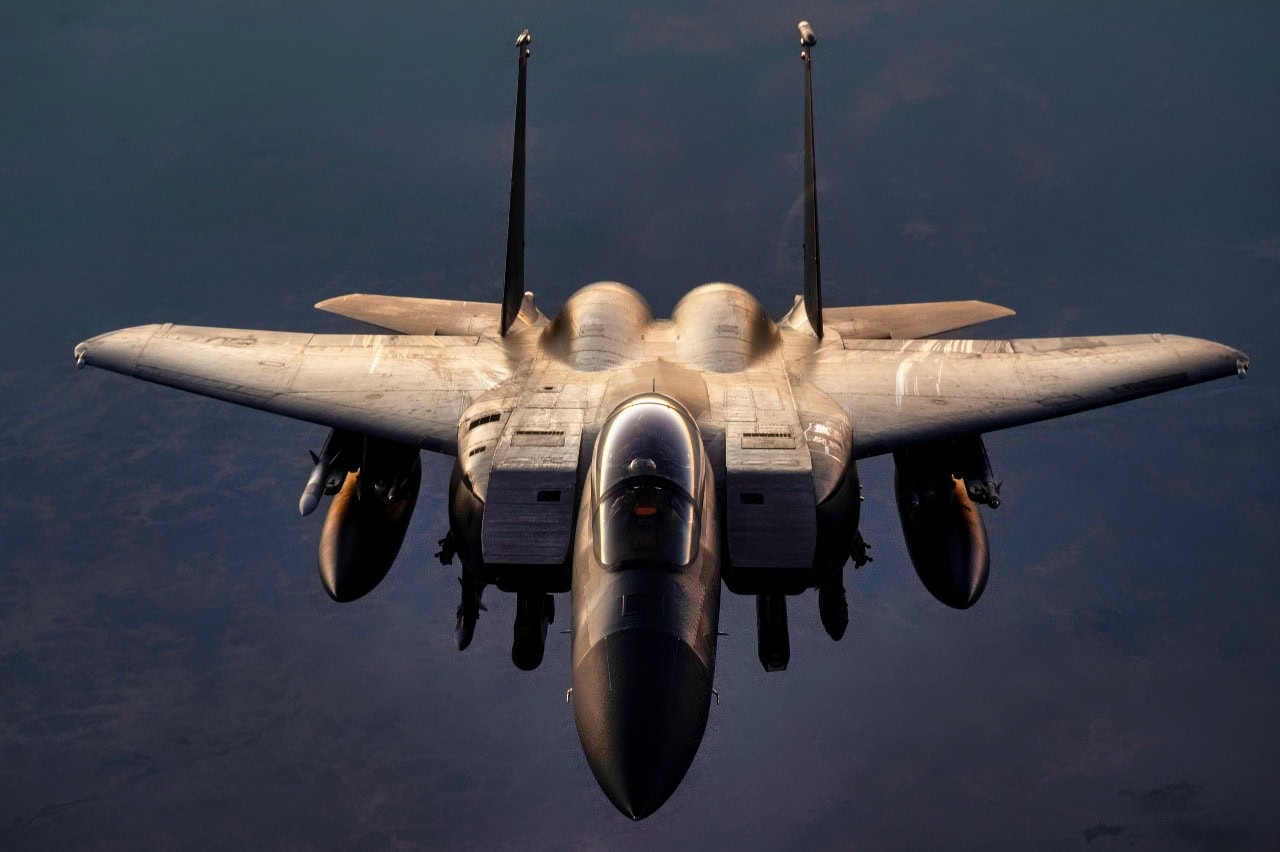
A U.S. Air Force F-15E Strike Eagle flies over the U.S. Central Command area of responsibility, Jan. 7, 2025. The F-15E’s superior maneuverability and acceleration are achieved through its high engine thrust-to-weight ratio and low-wing loading. (U.S. Air Force photo by Staff Sgt. William Rio Rosado)
The Air Force judged the F-15E to be stronger across the entire mission. It offered two engines, two crew members, a larger radar, greater sustained performance and more room for future avionics or weapons. Its mature production base also reduced development risk, the central issue behind the continuing argument over whether the Air Force made the right choice.
On February 24, 1984, the Air Force selected the F-15E. The decision did not establish that the F-16XL had failed as an aircraft. It established that the service preferred a larger platform for complex, long-range, all-weather strike missions. The case for the rejected design still attracts attention because the XL delivered exceptional range and payload from one engine.
Limited testing continued into October 1985, including evaluation of the F110 engine aboard Ship No. 2. The two prototypes had accumulated nearly 800 sorties by the time development ended. They returned to storage at General Dynamics in Fort Worth without entering production.
NASA Recovered Both Prototypes From Storage
NASA needed a research aircraft with a highly swept wing for its High-Speed Civil Transport program. The F-16XL’s planform resembled concepts being studied for a future supersonic passenger aircraft, giving the two stored fighters a second mission.
The single-seat aircraft arrived at NASA’s Dryden Flight Research Center in 1989. Ship No. 2 followed in February 1991. NASA modified the aircraft for experiments involving supersonic laminar flow, advanced computer modeling, high-speed aerodynamics, sonic booms, and flight-control technology.
The most ambitious work placed a titanium glove over part of Ship No. 2’s left wing. More than 10 million microscopic holes covered the surface. An internal suction system pulled a small amount of air through the holes, helping maintain smooth laminar flow instead of the turbulent airflow that increases drag.
Flight tests demonstrated that supersonic laminar-flow control was technically possible. The engineering required to manufacture, clean, and maintain millions of holes proved impractical for a large commercial aircraft. NASA still gained valuable information for computational fluid dynamics models and future high-speed designs.
The F-16XL Flew Close Behind an SR-71
NASA also used the single-seat XL for sonic-boom research. In July 1993, it flew as close as 40 feet below and behind an SR-71 traveling at Mach 1.8. Instruments on the F-16XL measured pressure changes near the Blackbird before the shock waves spread toward the ground.
The work helped engineers evaluate computer programs intended to predict and reshape sonic booms. Later accounts of the F-16XL’s research flights with the SR-71 reflect how far the aircraft’s second career moved from its original strike mission.
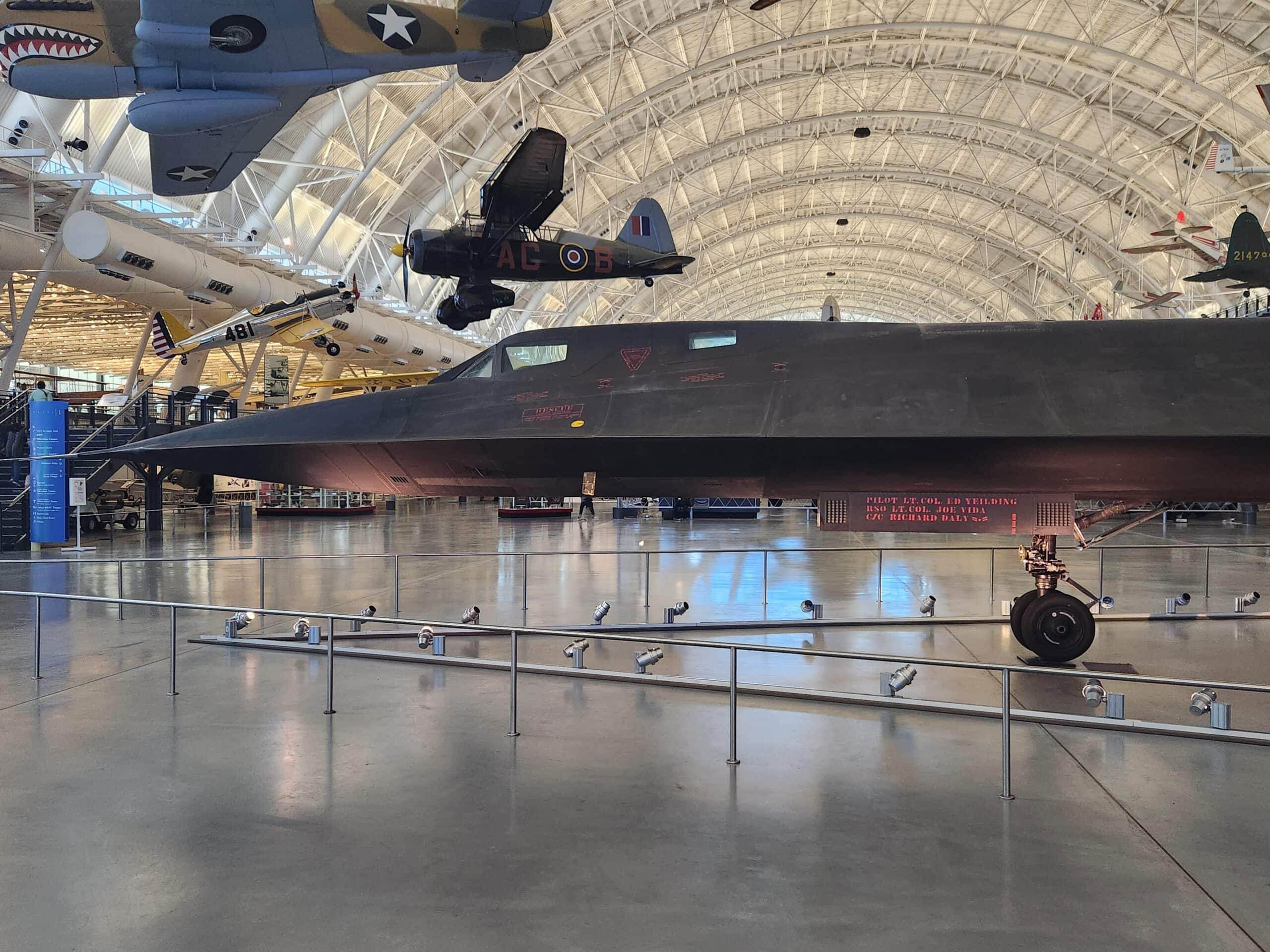
SR-71 from 19FortyFive.com original picture archive. Image taken at the Smithsonian.
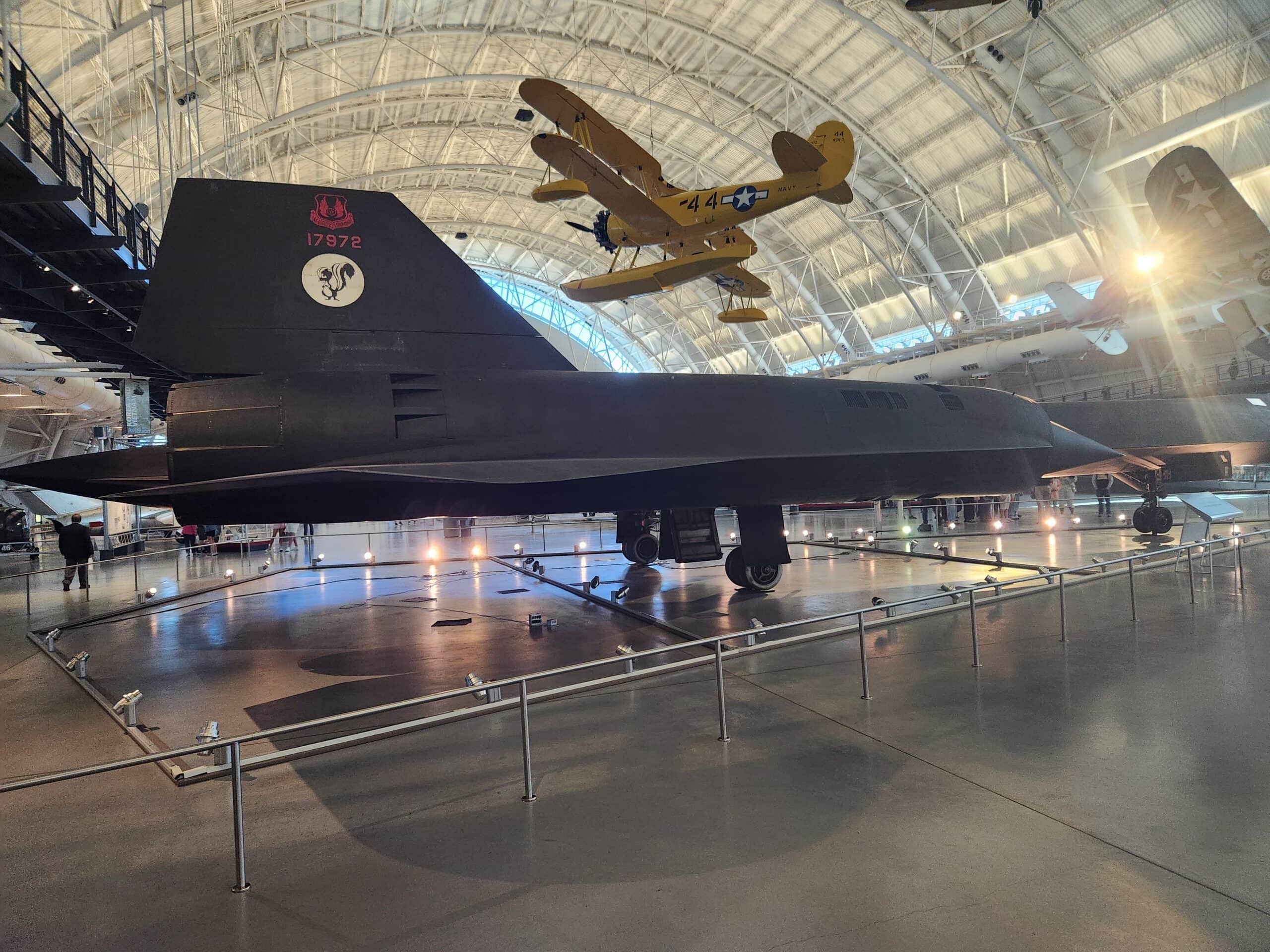
SR-71 from 19FortyFive.com original picture archive. Image taken at the Smithsonian.
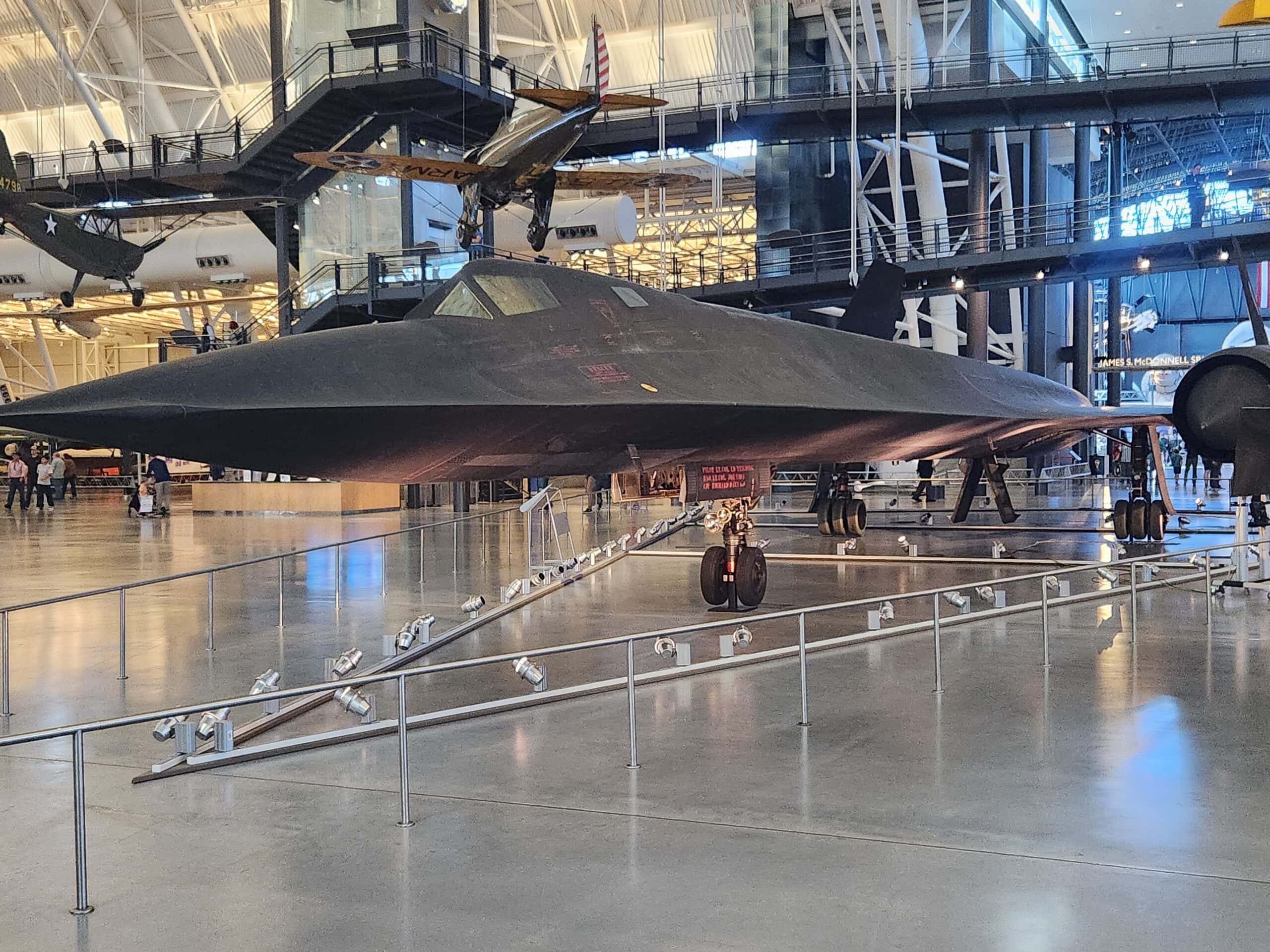
SR-71 from 19FortyFive.com original picture archive. Image taken at the Smithsonian.
NASA’s Cranked-Arrow Wing Aerodynamics Project collected detailed information on the complex vortices moving across the wing. Ship No. 1 also received a digital flight-control system to replace its original analog computer. The upgraded aircraft made its first DFCS flight on December 16, 1997.
These programs gave the F-16XL a research value that an operational squadron could not have provided. The aircraft helped validate design tools used across military and civil aviation, even though no production fighter adopted its complete configuration. Its NASA work remains a major part of the history of the two surviving prototypes.
The Final Low-Boom Proposal Ended in 2009
NASA later considered returning one F-16XL to flight as a low-sonic-boom demonstrator. Ship No. 1 completed taxi work in late June 2007, the last time either aircraft moved under its own power. The proposed modification did not receive the funding needed for flight testing.
The low-boom study ended in 2009, leaving both aircraft permanently retired. Ship No. 1, serial number 75-0749, is now listed in the Flight Test Museum’s aircraft inventory at Edwards Air Force Base.
About the Author: Harry J. Kazianis
Harry J. Kazianis (@Grecianformula) was the former Senior Director of National Security Affairs at the Center for the National Interest (CFTNI), a foreign policy think tank founded by Richard Nixon based in Washington, DC. Harry has over a decade of experience in think tanks and national security publishing. His ideas have been published in the NY Times, The Washington Post, The Wall Street Journal, CNN, and many other outlets worldwide. He has held positions at CSIS, the Heritage Foundation, the University of Nottingham, and several other institutions related to national security research and studies. He is the former Executive Editor of the National Interest and the Diplomat. He holds a Master’s degree focusing on international affairs from Harvard University.

